Author: Shreya Srivastava

  • Essential Content Marketing Tips from Smitha Hemmigae

    Essential Content Marketing Tips from Smitha Hemmigae

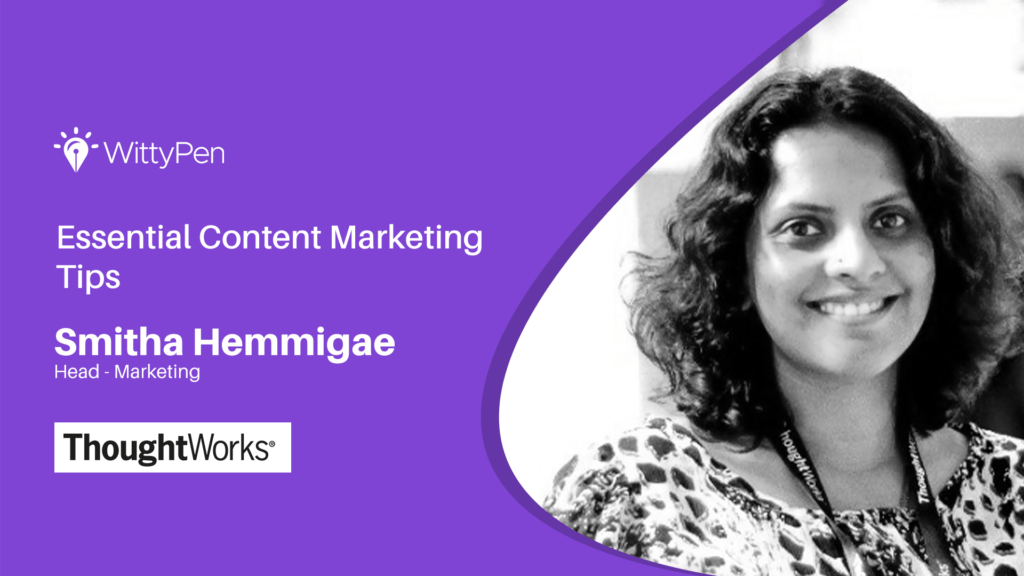
    We interviewed Smitha Hemmigae, who heads marketing at ThoughtWorks India to understand her perspective on content and the trends in content marketing.

    Before going to the content marketing tips given by Smitha, here’s a little read about her and ThoughtWorks.

    About Smitha

    Smitha currently heads marketing at ThoughtWorks India. Prior to joining ThoughtWorks, she was the Sr. Director, Marketing at CSS Corp where she headed influencer relations (analyst and public relation), content and digital marketing. Apart from this, she’s also worked at Unisys Corporation, Logica and Infosys.

    Smitha is a seasoned marketing professional who has the experience of working across various industries, and she brings relevant marketing experience in the Public Sector, Insurance, Healthcare and Life Sciences industries.

    About ThoughtWorks

    ThoughtWorks is a privately owned, global technology company with 42 offices in 15 countries. It provides software design and delivery, and pioneering tools and consulting services. The company is closely associated with the movement for agile software development and has contributed to a range of open source products.

    What’s the true definition of content according to you?

    For me, content is anything that is put together in words that helps solve the problems of your target audience and also helps in better branding. Content can be present online and offline – Forums, social media, white papers, case studies, brochures etc.

    How important is content marketing according to you?

    Content marketing is not just a buzzword, in fact, it is the go-to place for all brands. To sustain in the market today, adopting content marketing is critical. Marketing as a whole has many components – PR, Webinars, offline events etc. And all of these components have an underlying layer – content.

    You need to understand the pulse of your audience and solve their problems through the content you create. And while you present your content – you must craft it into a story- because we as humans love compelling stories.

    Content is the key differentiator between brands because all other things that your brand does and stand for can be replicated. To beat the competition, you must produce unique content.

    Is content curation important?

    Original content any day grabs more eyeballs. It will eventually help you achieve your final goals- sales, conversions, traffic etc. But having said that, even curation is important and there’s a way to go about it. For example, you can create whitepapers around stories that trend with your perspective added to it. A topic like “how to do content marketing when the budget is low” is not a new one – but we can add some of our techniques to it.

    What are your core priorities in terms of content?

    Priority number one is to repurpose content in every format that gets consumed. For example- we can convert a lengthy whitepaper into a quick blog, interactive infographic or a social snippet. This would ensure higher traffic, more brand visibility and eventually more conversions for the brand.

    Priority number two is to create content that is tailored to a specific audience. For different audiences, our content needs to be different depending on their needs and requirements. A content piece meant for a CIO will be visibly different from that of a CFO. So the need here is to create persona-based content.

    The third priority is to create content that’s conversational – content that involves the users to take action and participate.

    How do you create a buyer persona?

    We reach out to the customers, and also take customer surveys to understand their current pain points and larger requirements.  We also rely on analyst firms like Nelson Hall to supplement our research.

    What are the best content marketing strategies according to you?

    There are certain strategies that we follow for our brand, and they are:-

    1. Our process starts by building a target persona, and accordingly, we figure out how we can create content that provides value to this persona.
    2. We dedicate ample amount of time to blogging. We have about 110 books in 20 years and hundreds of thought-leadership papers that are read and shared extensively. The information that we put up is in-depth, exhaustive and is shared with everyone. We believe that the more you share, the more you learn and the better you collaborate.
    3. Thirdly we also try to focus on how our content can enable sales. Prospective clients always evaluate your expertise in the subject matter and would want to see similar case studies. So, we believe that it is important to create content that is well-researched, in-depth and has a competitive edge.
    4. We understand the importance of consistency in content creation and distribution and hence we follow that. Consistency can help build a brand’s value in the longer run.
    5. For us the measurement of output is critical. And it needn’t just be views, clicks and likes. The metrics are much deeper. For example, we focus on how many times have we been able to repurpose content or how big of an influencer network were we able to create or how many times are we being talked about in forums.

    How frequently should you be creating content?

    Ideally, 20 pieces of relevant good quality content should be produced in a year. You do not need to create thousands of pieces of irrelevant content. If you do 20 and repurpose each of them 5 times – you easily get about 100 pieces of valuable content. And these pieces should be thoroughly promoted on different channels.

    What is more important – Evergreen or Viral Content?

    It’s a combination of both. Let me give you an example. Last year we participated in Nasscom Global Conclave, and we wrote a paper on a framework that would allow the GIC’s (Global in-house centres) to transform from shared services centres to innovation centres. This was shared with about 1500-2000 people. At the same time, we were also doing a workshop, where we gave out brochures with the QR code that redirected back them to this paper. We also did PR mentions, emailers – that all again redirected the audience to the same white paper. It garnered a lot of visibility and readership and became viral.

    The paper was so relevant to the GIC’s that they took a hard copy of it whenever they had client meetings. Although the whitepaper was created for an event with the purpose of creating virality, it ultimately turned into an evergreen content piece.

    Why do some companies fail to do well in content marketing?

    Well, many marketing companies might be successful in creating good content, but they often fail at promoting it well. So, the ideal advice to them is to use a combination of online marketing strategies such as SEO, SMM, SEM to promote and distribute content well and have better search engine ranking.

    Is it important for a company to have brand guidelines?

    Content should be similar in terms of tonality and brand language -It could be either conversational or formal. Not only the types of  content, but even the visuals need to have consistency. Your audience should be able to identify your brand through its tone, font and colours.

    Are there any campaigns that did well and you want to share with us?

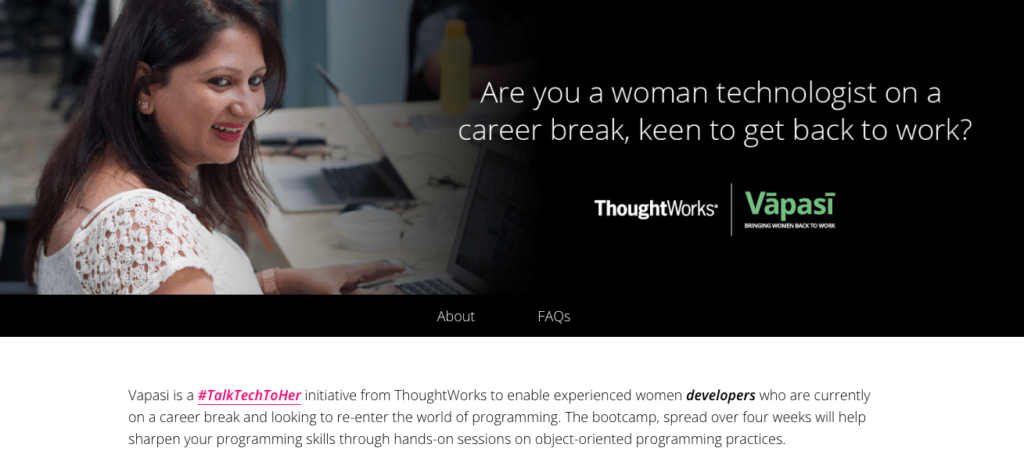
    Yes, there are two that I would want to talk about. The first one was “Talk Tech To Her”. This was an initiative aimed at getting the women back who took a career break to re-enter workspaces. This was not just about incentivising them and having policies and leaves in place. This was about promising them something intangible – The aim was to make sure that their voices are heard and they don’t feel differentiated.
    Talk tech to her

    We promoted this event through PR, Hackathons, Webinars, blogs and social media. This helped us in getting a lot of awareness and made this whole initiative a big success.

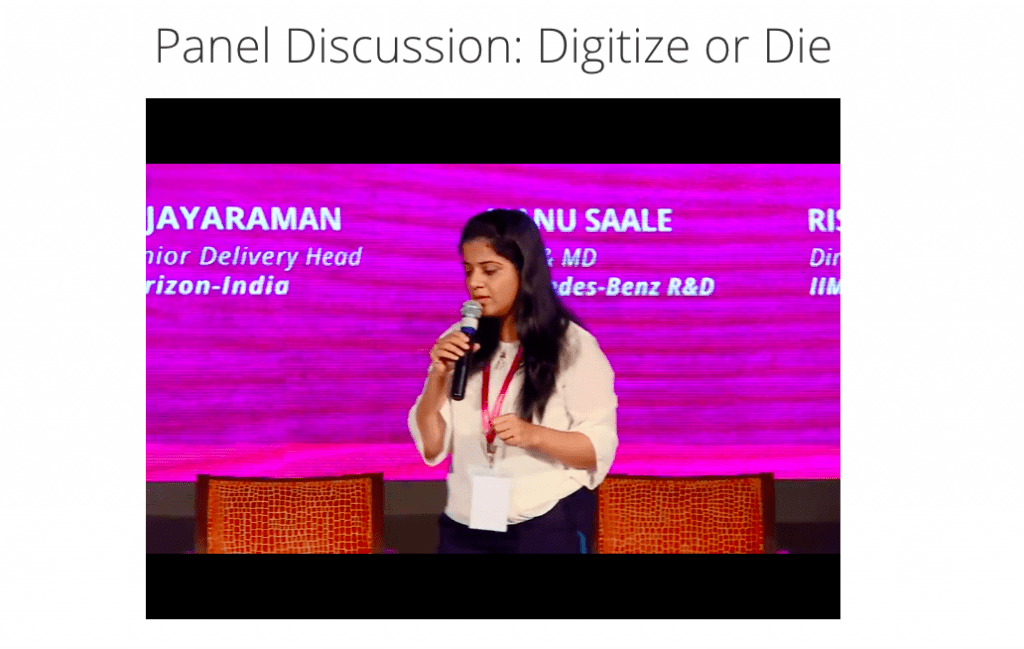
    The second initiative was “Thoughtworks Live India 2017”.
    Thoughtworks live

    The theme of the event was how successful businesses of the future are always going to be led by courageous executives who embrace digital at their core and help their organisations adapt to change, calibrate and stay nimble.

    There were 6 whitepapers written for the event – and they have been the most engaging content pieces that we have sent to the market so far. They have been used in media, newspapers and have also been repurposed by us in blogs and social snippets.

    Are there any content marketing tips that you would want to give to the marketers of today?

    Yes, there are some content marketing tips that marketers should take a note of.

    1. You must create a robust content marketing plan in line with what your market wants
    2. Consistency is very important in the creation of content – because there are many players in the market wooing the same audience with similar products.
    3. Be a storyteller and cater to the emotions of your audience. You need to be empathetic and take people through various emotions while you create content.
    4. You need to keep its simple- avoid using lots of jargons and flowery language – it might distract your user from what you are essentially trying to say.

    Conclusion

    With this, we have come to the end of our interview with Smitha. We thank her from the bottom of our heart for taking out the time to answer our questions and giving some valuable content marketing tips.

  • 5 Signs You Should Invest in off-Page SEO Optimization

    5 Signs You Should Invest in off-Page SEO Optimization

    Search Engine Optimization has two parts – On-Page and Off-Page optimization. On-Page optimization is figuring out the right meta tags, page titles, page speed, and interlinking for your website. Off-Page optimization is about building your brand’s authority by using quality links, social media, and good relationships with influencers and customers.

    While brands continuously work on optimizing their website, they often do not take enough care of Off-Page SEO optimization. There are various reasons that support Off-Page SEO optimization. Have a look at them below.

    – It helps in achieving positive audience interactions for your brand.
    – You can get brand mentions, positive reviews, and links through Off-Page SEO optimization.
    – It can help in increasing the traffic and conversions for your website
    – It also helps in getting higher search rankings on Google and other search engines.

    Therefore, in this blog, we will talk about 5 Off-Page SEO techniques that can help you achieve the above.

    1. Have a Kick-Ass Customer Service

    Your customers are of utmost importance to you.
    So, you must provide excellent customer service, and make sure that all the grievances and complaints of your customers are resolved.
    This way every customer will feel special while he or she interacts with your brand.

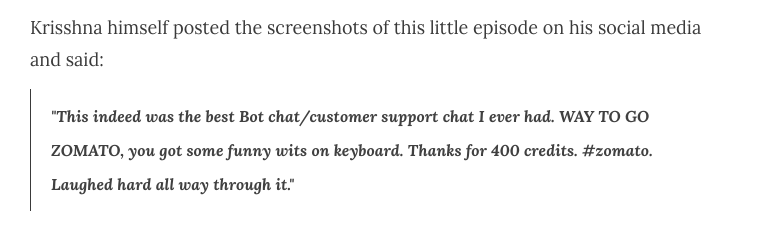
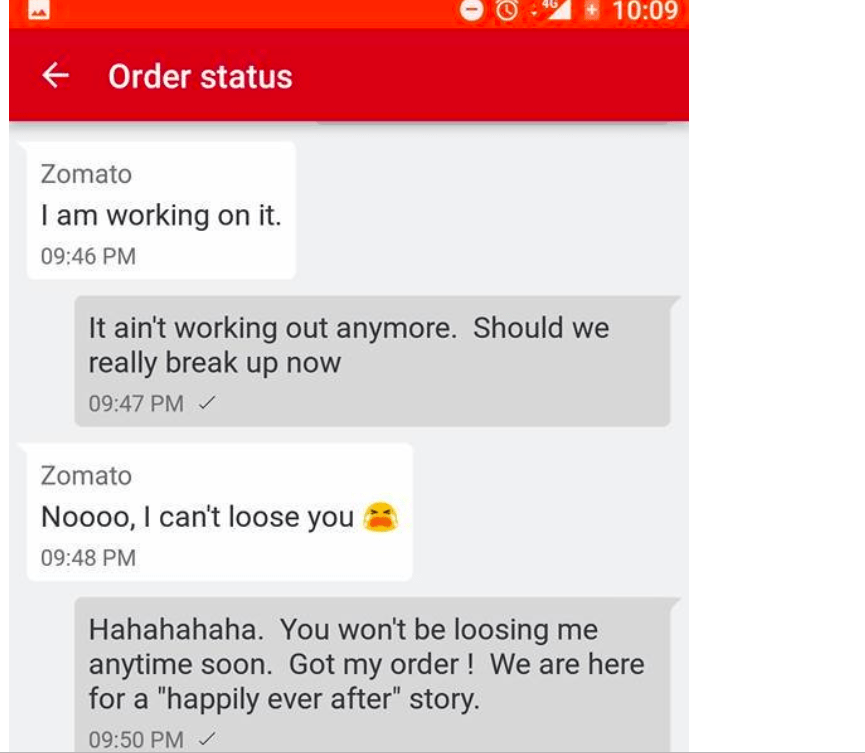
    Some brands that have been exceptionally good with customer service include Zomato. Check out this amazing experience with Zomato that a customer shared himself.

    Zomato Customer Care

    Here is the link to the full article.

    A brand like Zomato, which provides a great customer experience can easily get plenty of user-generated content and rave reviews.

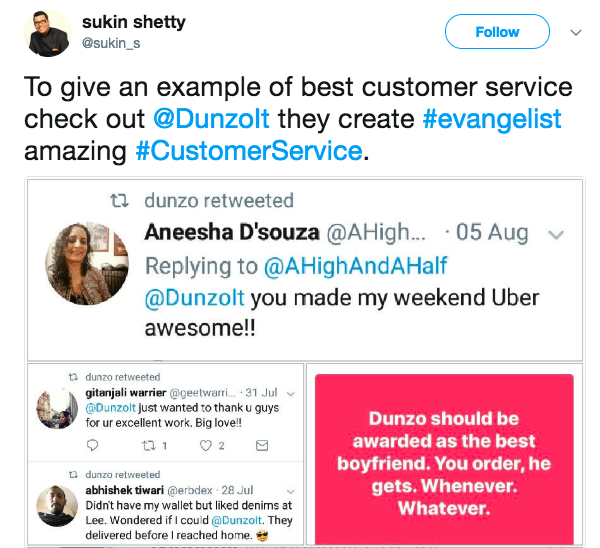
    Another example is Dunzo, a hyperlocal, concierge services startup from Bengaluru. Dunzo’s customer care does a great job of garnering positive customer reviews. Here check it out yourself.

    Zomato Customer Care

    Dunzo Customer Care

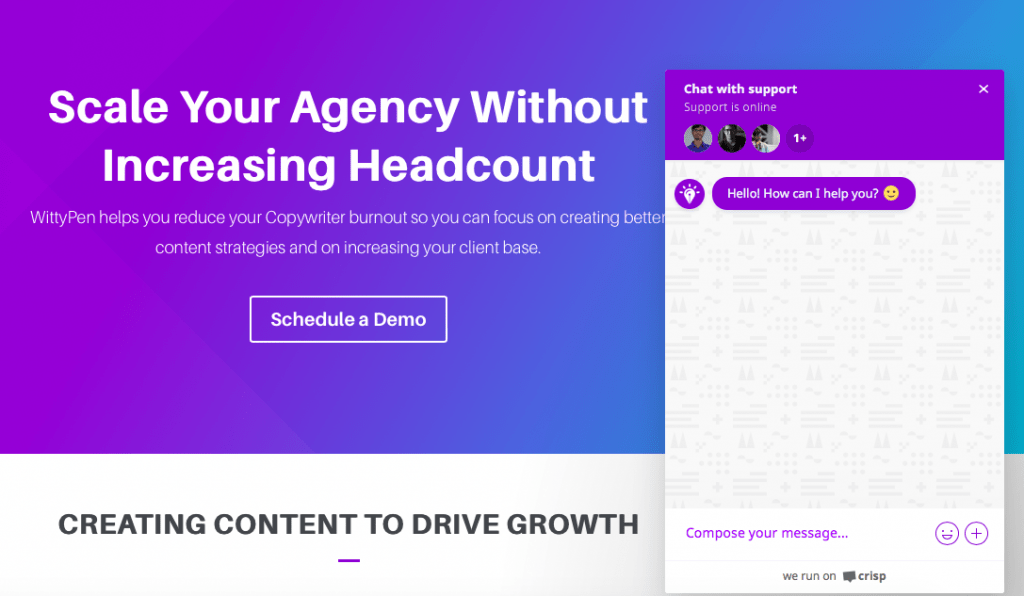
    We understand the importance of a good customer experience. Therefore we at WittyPen ensure that all our customers needs are met and their experience is hassle-free.

    WittyPen customer experience

    2. Do Well With Guest-Posts

    Focus on building long-term relationships with influencers and brands rather than just wanting short-term gains – backlinks. Backlinks would eventually come through influencer marketing.

    But it won’t come anytime soon if you just focus on having transactional relationships. So it seems to be the right time to bid goodbye to “give and take” behavior.

    Instead, you must engage with the social media platforms and websites of your potential publishers, editors, influencers, and brands online.

    Also, you should read, review and comment on their work. It takes time to build a long-lasting relationship. But once built, it stays forever and can help your brand build authority in the longer run.
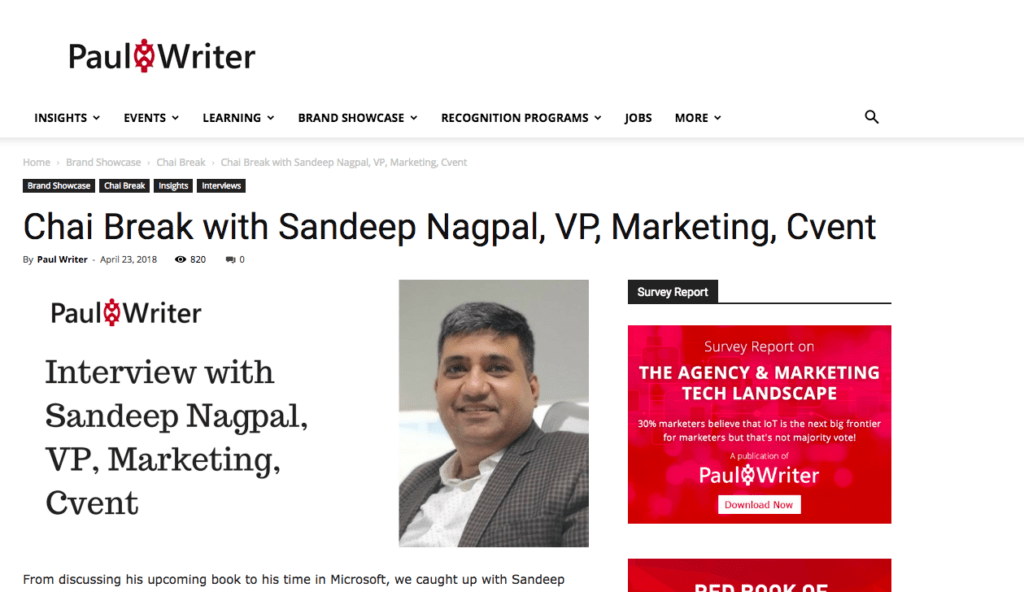
    Paul Writer does an amazing job with guest posts.

    Guest Post

    Guestposts help businesses garner a lot of domain authority. And we at WittyPen understand that.

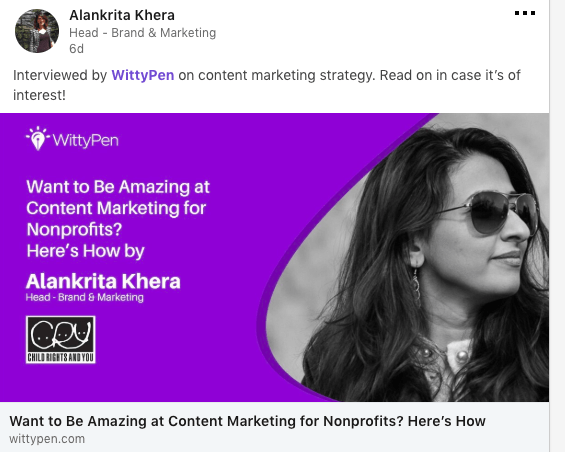
    So we too invite industry experts to share their views on various aspects of content marketing. You can check out some of these articles right here. (These include interviews with Canva, FactorDaily, WebEngage, CRY , DHFL and more)

    Interview with CRY

    These posts have helped us get a lot of visibility and brand awareness – because the industry experts who were interviewed shared them on their personal social media handles.

    Social Sharing of Our Content by Industry Experts on Their Personal Handles.

    You can check the one by WebEngage here, and the one by FactorDaily here.
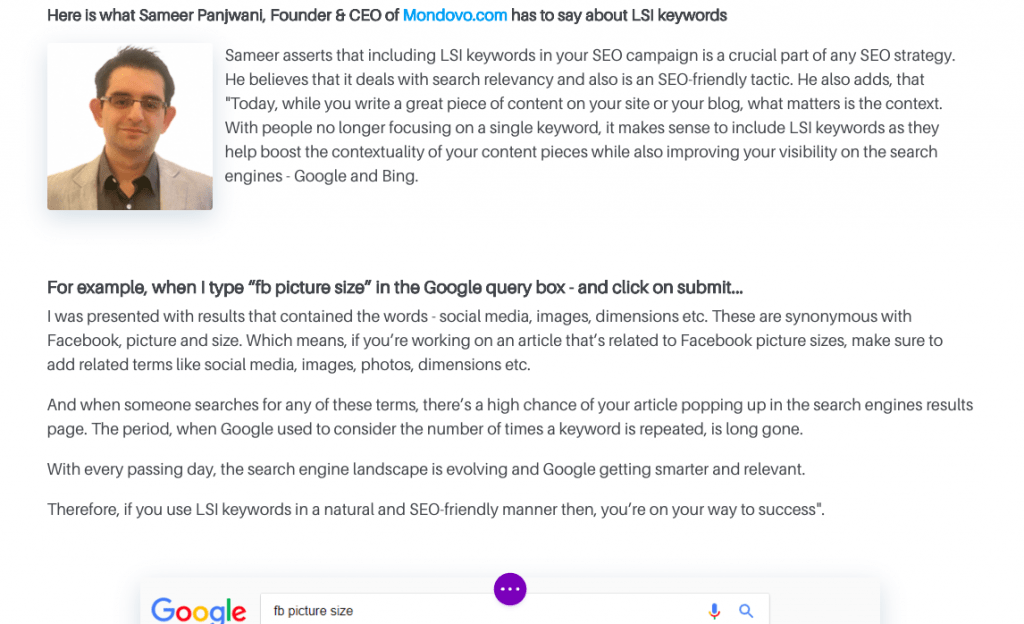
    Another example is our guest post with Mondovo. We approached Mondovo for a guest post in the month of February, and a few days later we also made an infographic on their blog, and guess what! We got a backlink from them.

    Guest Post By Mondovo

    Mondovo interview

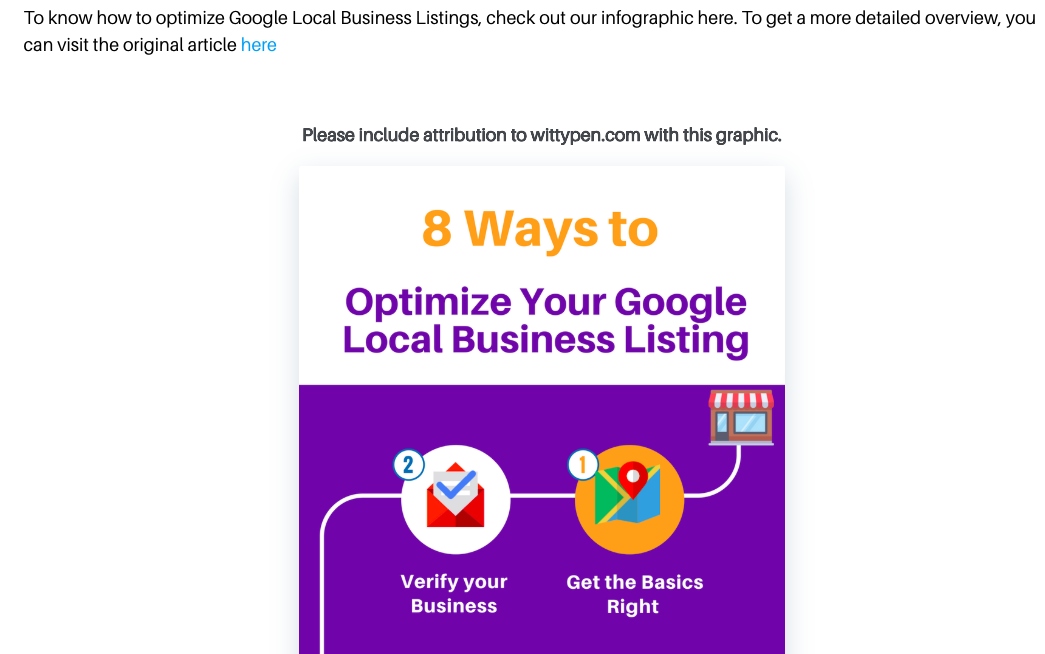
    Our infographic on Mondovo’s Blog.

    Infographic

    Mondovo’s backlink to WittyPen

    Mondovo's backlink to Wittypen

    So guest-posting brings in results, but with time. But those results are totally worth the time and effort.

    3. Experiment with different types of content

    Apart from writing your regular text blogs, you must experiment with different types of content.
    Because the audience today consumes all types of content, especially videos and images.

    Therefore you must invest in these content formats- you can create them easily in-house with so many free tools.
    Always do SEO checks before you post. Here is a 7 SEO checklist to help you out.

    For their new product, Cornetto Oreo, the brand has done a brilliant job with online video marketing. The advertisement is short and to the point. It showcases the product – delicious Oreo crumbs with a mix of vanilla cream, wrapped in a first-ever chocolate cone. It’s definitely a mix made in heaven and nothing less than a #PerfectMatch

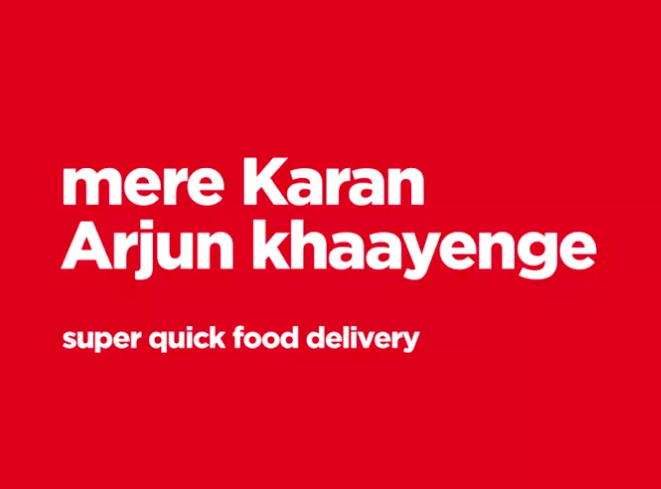
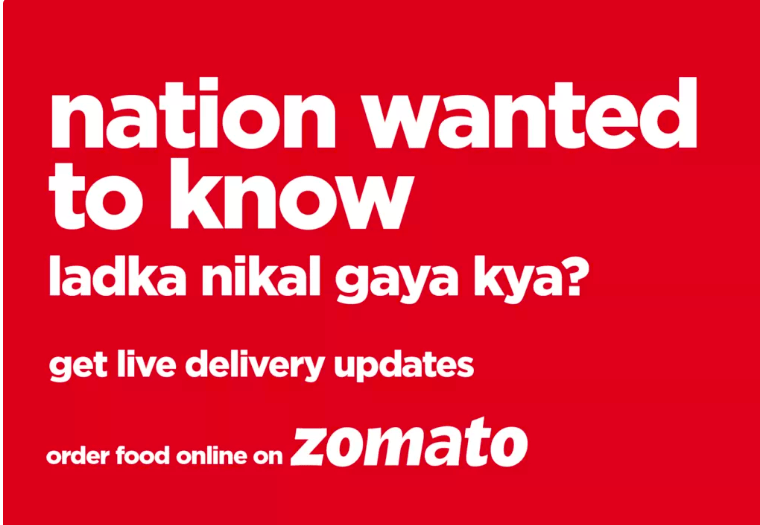
    Zomato again does a brilliant job with plain yet hilarious creatives.

    Zomato Ads

    Zomato Ads

    4. Evaluate your user’s search intent

    It is very important to be visible to your audience. Most of the time, despite having a stellar product, our audience doesn’t choose us.
    The reason is – we aren’t matching our offering to the needs of our prospective audiences.

    So, we would be able to present a solution – our product/services to their problems at the right time if we know their intent.
    There are many ways to do this – You can also use Google Keyword Planner, Moz Keyword Explorer, Google Autosuggest, forums like Quora and Inbound.org as explained in this blog to know the kinds of questions asked around a particular keyword.

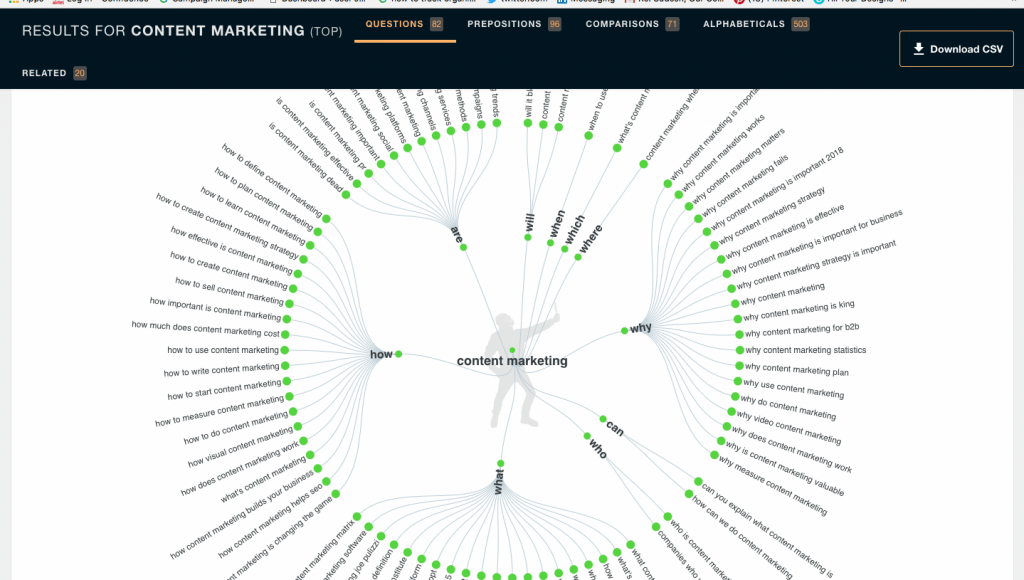
    You can also use tools like Answer the public to know the questions that are frequently asked around a certain keyword.

    Answer the public

    5. Be active on social media

    Social media is the place that your audience will go to once they discover your brand. The reason – is they want to read comments, and reviews about what you do – and also interact with you. Most importantly, ask questions.

    So it is very important to have a presence on social media to not only answer the questions of new users but also to engage old users.
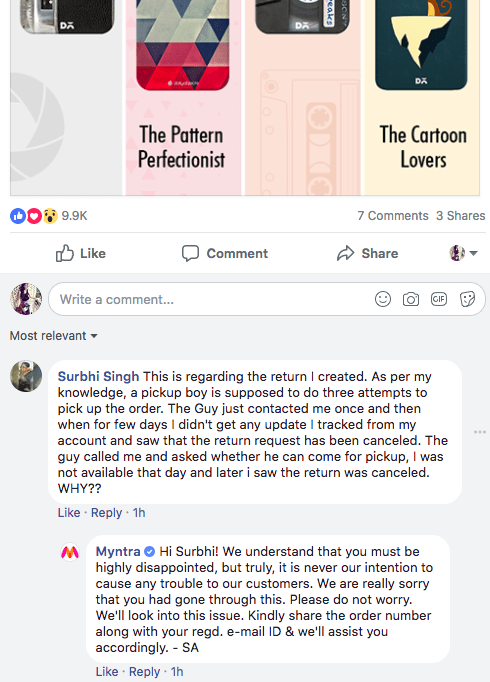
    A brand like Myntra that’s super popular and is very active on social media. It responds to customer queries and complaints almost immediately.

    In the below example, a customer has expressed her dissatisfaction, and Myntra has responded instantly- thus making way for a good customer experience.
    A personalized and timely approach by a brand makes the user feel important and trusts the brand even if it makes a mistake.

    Myntra Query

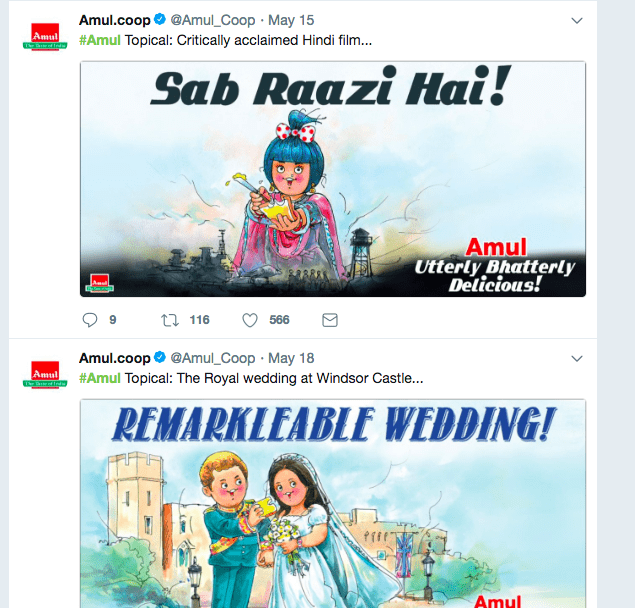
    Amul comes up with the most engaging posts on Twitter. It makes sure to sync its posts with what’s trending, and hence gets lots of engagement.

    Amul Twitter

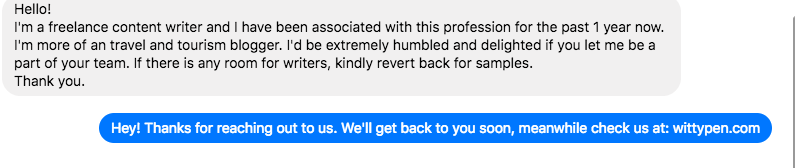
    We at WittyPen also make sure that we respond to all the queries and complaints on time.

    WittyPen Chat

    Unsatisfied customers can be very vocal on social media, and any communication, especially negative spreads like wildfire. So, that’s another reason that you must attend to all your customer queries and solve their problem at the earliest.

    Conclusion

    This brings us to the end of our Off-Page SEO techniques. We hope that these were helpful to you.Here are some more SEO blog tips. If you are looking out to build great content for your website, then download the e-book right now!
  • Want to Be Amazing at Content Marketing for Nonprofits? Here’s How

    Want to Be Amazing at Content Marketing for Nonprofits? Here’s How

    “This post is a part of our Content Salad series, where we invite industry experts to share their knowledge. The content marketing insights of CRY – Child Right and You a top non-profit organization , is offered to give you a glimpse of the thought process of leaders in the industry and a chance to learn from the best”

    Alankrita Khera is the Marketing & Communication Head for CRY, one of the most popular non-goverment organization in India. An MBA grad MBA grad from Welingkar Institute of Management, Mumbai, she is passionate about writing and currently working on a book that explores human relationships.
    Content marketing for nonprofits is challenging.

    A nonprofit organization has its mission and values that speak volumes. A content marketing strategy for nonprofits is needed to drive communications.

    The key to communicating a compelling story about your nonprofit organization is developing a content marketing plan. Alankrita Khera from CRY talks to us about developing a content strategy for nonprofits.

    About CRY

    Child Rights and You is a top non-profit and non-government organization in India working towards the upliftment of underprivileged children across supported child welfare projects and engaged in restoring the children’s basic rights.

    About Alankrita

    After almost a decade in broadcast media, where she worked with the likes of Times, UTV and Viacom18, Alankrita decided to immerse herself in the non-profit sector – working towards better futures for marginalized children.

    She is currently heading marketing and communications at CRY – Child Rights and You. A writer at heart, she is currently working on a book that explores human relationships and is passionate about travelling and immersive experiences. A vocalist trained in classical music, she spends her spare time advocating for animal welfare.

    What is your definition of content marketing?

    Content marketing, in my opinion, refers to the creation and distribution of content that is interesting and relevant to your target audience – with the objective of acquiring and retaining them as brand patrons.

    Such content could be educational, insightful, inspirational or simply entertaining in nature; that doesn’t aim to push your target consumer to make a purchase decision but instead nudges you into their consideration set. Content marketing strategy isn’t just a mix of social media and blogs; it’s a combination of various different channel techniques in today’s context.

    Videos, podcasts, emails, webinars, infographics, memes, quizzes, fun score generators, assessments – even books and movies! The Lego movie is a great example; it was essentially a product advertisement marketed in a way that made their TG want to consume it. And guess what, the subsequent increase in their sales offered proof of the pudding when they surpassed even Mattel!

    We looked at some of the blogs by CRY, and we think they are very inspirational. Take a look at the blogs by CRY.

    1. The Colours Of Childhood
    CRY BLOG

    1. The more you give, the more you get
    CRY BLOG

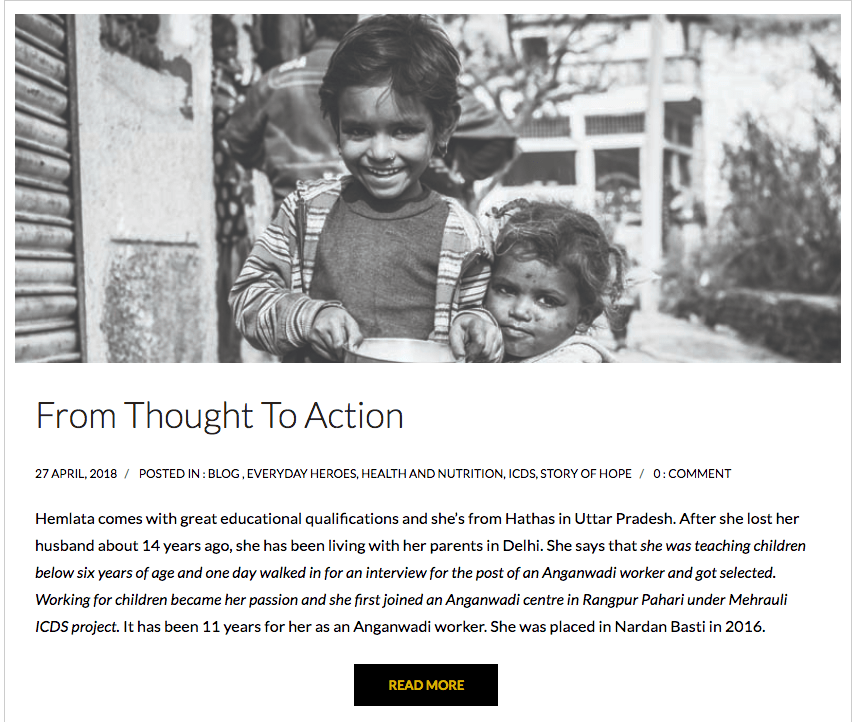
    3.From Thought To Action

    CRY BLOG

    There is a huge increase in the growth of content marketing, what do you think about that?

    Advertising today has become more of a nuisance for the average consumer than before. Want to buy a car? Switch on the television or open up Facebook and you’d be sampling a dozen different purchase prompts by a wide variety of brands – all vying for your elusive mind space.

    A purchase decision effectively goes through 4 stages – awareness, research, consideration and finally the purchase itself. The period starting with awareness and going all the way to research is what Google calls the Zero Moment Of Truth. That point in the buying cycle where a brand isn’t aware of the potential consumer who is already looking them up in order to evaluate whether they fit in their consideration set or not.

    This is the point where traditional advertising fails because of stimulus overload.

    The consumer is seeing so many purchase prompts, all of which are effectively saying the same thing. This might lead to your brand getting no brand recall.

    Marketers have begun to understand this; thus there has been a sudden spurt in content marketing, and it has become the buzzword for so many brands.

    In fact, it’s also a great tool to aid the second moment of truth – which is essentially the point at which the consumer decides how his experience with your brand has been. Through content like product tutorials, FAQs and even community updates, you can ensure a holistic experience for your existing customers which, of course, aids retention.

    Which aspect(s) of content marketing are the most important to you?

    There isn’t any single aspect that warrants more importance than the other. As a marketer, I essentially like to follow a three-pronged process that starts with evaluating the objective of my content marketing strategy and identifying pain points that it aims to address my target audience.

    Then will come the part of conceptualizing and creating the said content in a way that’s mapped to the said pain points and is interesting as well as relevant for my targeted audience. The final step will be building outreach and engagement for the same and analysing performance to make tweaks real time as and when required.

    The one thing that encompasses this entire process is an understanding of your target group itself – demographics and psychographics that influence your strategy right from content creation to platforms for outreach. Content mapping to the customer journey is critical.

    What according to you makes for a remarkable piece of content?

    1. An attention-grabbing title/headline – a sparkling introduction that fuels audience curiosity
    2. A topical and popular topic that’s relevant to and is customized for the identified audience base
    3. Something that creates value for the end user/viewer and has long-term rather than short-lived relevance
    4. A narrative that invokes emotion in addition to laying down facts – it increases the chances of the content piece being shared by the end user/viewer
    5. Something that establishes a unique opinion or perspective on behalf of the brand
    6. Short form content that tells a story – that is quick and relatable to the audience

    Is there a need for you to constantly create new content?

    For me, specifically in my current role, yes. The non-profit sector does not function like other industries; we’re not addressing a consumer pain point through a product or service. The idea of charity weighs on everyone’s mind as everyone wants to be a good citizen and do good for those who need it the most. But it is not a priority that drives regular/focused action in most of the cases.

    A core non-profit marketing objective is to generate awareness about the problem and break the apathy around it to facilitate donor/volunteer action.

    For this, it is essential to create content that catches your attention and stands apart and is very prevalent.

    How important is it for you share content on social media?

    Social media remains to be the biggest platform on which content marketing is hinged – especially if you do not have marketing budgets. And a non-profit needs to reach a massive amount of people within any said target segment. So, it is very important.
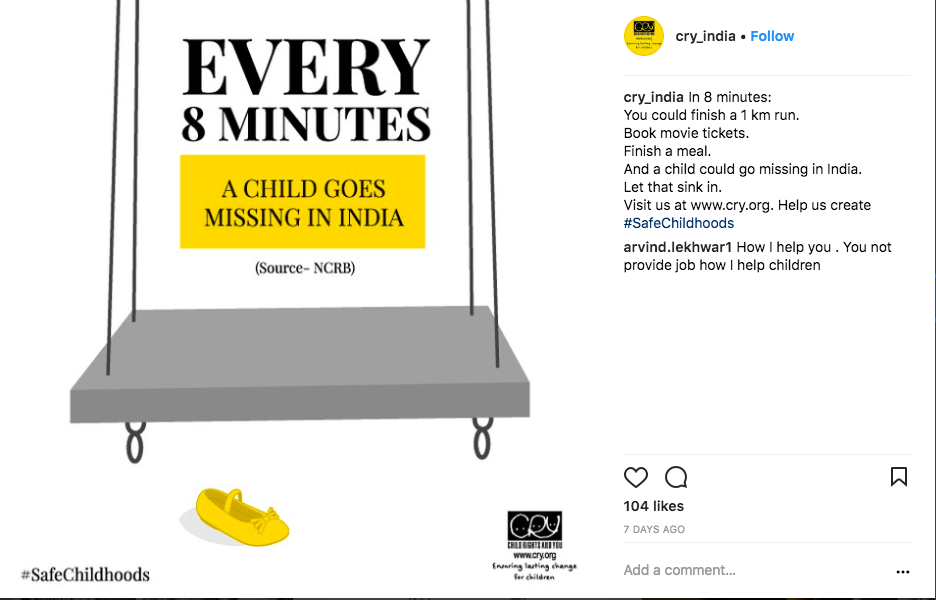
    Instagram Posts of CRY

    CRY instagram

    CRY instagram

    CRY instagram

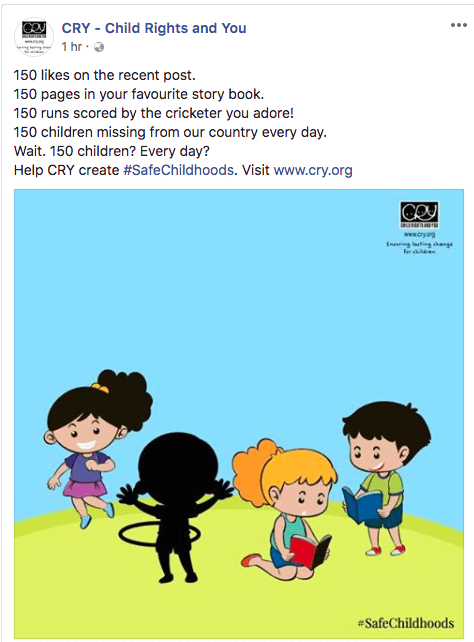
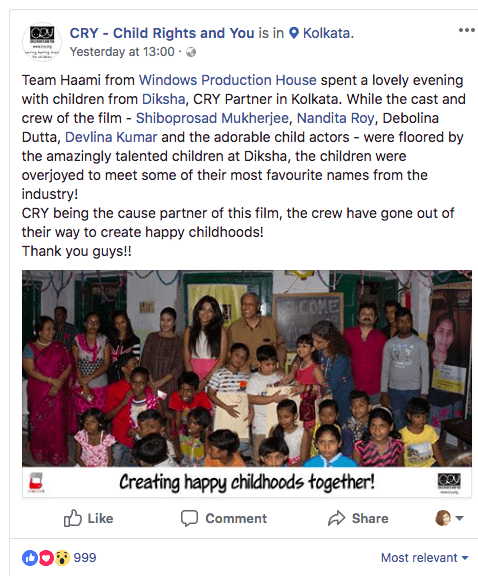
    Facebook posts of CRY

    CRY Facebook

    Facebook CRY

    What is more important – Evergreen Content or Viral Content?

    In general, evergreen content has a longer shelf life than viral content. It can facilitate prolonged and sustained traffic and can control the context effectively without the brand running the risk of building up negative sentiment – which is often the case with viral content.

    To be able to choose one depends on the brand and its objectives. Personally, however, I feel like brands should build a solid foundation of lasting engaging content that is mapped to their consumer base. Longevity always wins, in my experience.

    Is there any campaign that you are proud of and would share with us?

    At CRY, we created 16 short films in 2017-18 on either extremely negligible budgets or completely pro-bono thanks to the support of our partners. This film on child marriage won a gold at the Woodpecker Film Festival, this one helped us build salience around the issue of child labour, this reminded our audience that all children have dreams irrespective of their socio-economic background and this brought back the focus on girl child. Such content not only helped us raise our brand recall but also kickstarted conversations around the issues in question – through last year, our social media audiences have grown almost 4 times in size!

    Check out their campaigns here.

    CRY | Mothers Day Campaigns

    CRY | The Power of Your Hands | Child Labour Campaigns

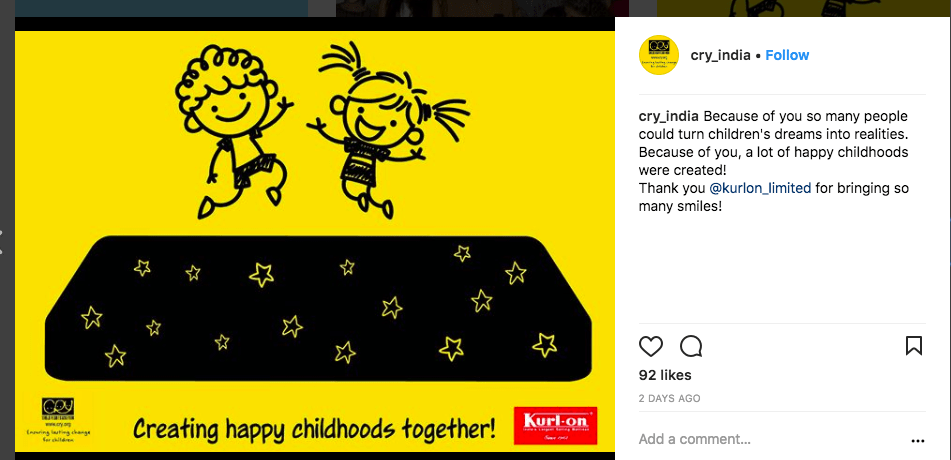
    CRY | Dreams Unlimited Campaign

    CRY | Women of Tomorrow Campaign

    Any tips for marketers of today?

    1. When formulating your content marketing strategy, do not go solely by mass trends or ape what your competition is doing. The idea is to stand out in a way that’s specifically targeted to your target consumer. Understand your reader personas (those who’ll consume your content but may not necessarily buy). Then filter that understanding into a narrower set of buyer personas (a subset of the reader funnel who’re more likely to make a purchase decision). Then conceptualize your content marketing mix accordingly.
    2. Focus on quality over quantity. While you do not want to have long gaps between serving consumable content to your audience to keep them engaged, you also don’t want to fall prey to putting out stuff that isn’t valuable enough to your target consumer. Also, analyse how your content is doing regularly through website content audits against set key metrics – traffic, engagement and conversions. Your strategy should be fluid, not set in stone.

    Conclusion

    We would like to thank Alankrita for taking out the time to respond to our questions and telling us about content marketing for non-profits. Content Marketing for any industry is challenging, and Alankrita has given some valuable insights that are extremely beneficial to us and other content marketers out there.
    If you want to get your content strategy right, download the e-book below.

  • A foolproof formula for a great content marketing strategy – Interview With WebEngage

    A foolproof formula for a great content marketing strategy – Interview With WebEngage

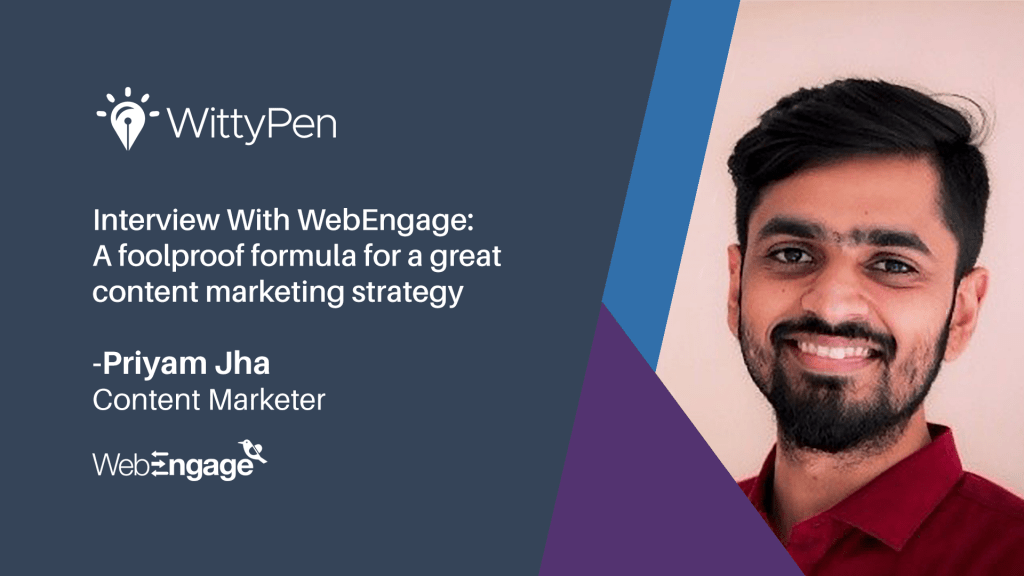
    Content marketing is not just a buzzword, it is the go-to place for all marketers. A brand gets noticed by its users if the content that it produces is helpful. To drive profitable customer action, it is important to have a content marketing strategy that focuses on creating valuable, relevant, and consistent content. Priyam Jha, from WebEngage talks to us about the importance of content marketing, the dos, and don’ts of content marketing, and the way to go about creating an effective content marketing strategy. Before you read up on the interview, here’s a little information about WebEngage and Priyam.

    About WebEngage

    WebEngage is a multi-channel user engagement platform that automates communication across users’ life-cycle. It enables you to connect with them through these channels – Web Messages (notification, survey, and feedback), In-App Messages, Push Notifications, Emails, and Text Messages.

    Quick Demonstration of how WebEngage works

    About Priyam

    Priyam works as the content marketer for WebEngage. He is responsible for all content marketing initiatives to drive traffic, engagement, and leads, that deliver sales and customer retention. Content categorization, structure, development, distribution, and measurement all come under his area of work. He has previously worked and interned with organizations like Zepo.ini, and MTR FOODS PVT. LTD and Chevrolet India.

    What is content marketing according to you?

    Content marketing according to me is the process of creating helpful information that actually helps to solve the problems of various people. The reason we create content is to impart knowledge and empower our consumers. It helps us in establishing ourselves as thought leaders in our domain of work and also builds trust amongst our users. And I am happy to admit that we have been able to create a big funnel of visitors for our website, without being overly promotional about what we do.

    What aspects of content marketing are the most important to you?

    Content marketing is the sum of content creation and content promotion. Let me talk about them one by one.

    Content Creation

    Content creation is extremely important. But you need to know the intent of your target audience and create the right types of content. You need to solve a palatable problem that most of them might have – and not just shoot in the dark.

    Content Promotion

    The other half of a content marketing strategy is content promotion and most marketers don’t give enough importance to it. Your content might not be able to grab enough eyeballs if you do not promote it well. Creating a good blog might capture the attention of your already existing audience, but if you distribute it on various channels, you can amplify the reach by manifolds.

    What according to you is a remarkable piece of content?

    Personally, for me, there are three things that make content a remarkable piece – structure, purpose, and readability.

    Content flow and structure are imperative.

    If you have a good structure around your content, then you can talk about your product in a more compelling way. Also, a good structure can help you craft a story around your product or services, and your audience would love that piece of content. For example, our blog “Why Multi-Channel Marketing Is The Key To Growth “is well-structured, has a defined flow, and showcases some comprehensible examples.

    Multichannel marketing

    Then you need to ask yourself the purpose of writing content. You can ask yourself questions like

    • who is it that I am targeting?
    • Is it better than the rest of the blogs on the same topic
    • is it going to solve some problems for x users

    An example is our blog called  11 In-App Messaging Best Practices To Boost User Retention Rate This blog is made with the purpose of giving tips to marketers about In-App Messaging practices that will help them retain their customers better.

    11 in app push messages practices

    Finally, your content needs to be very simple and readable.

    Simple content doesn’t mean mediocre content. For example, a technical piece has a certain tonality and an audience. But the author should make sure that it’s also readable to people with lesser or no knowledge of the subject. An example that I would like to explain this to you with is our blog – What is a WebHook? Many people might not know what a WebHook is, but the way our author has written it, someone new to it with no prior knowledge can also easily get a grip on it. And would not bother looking elsewhere for answers.

    Webhook Webengage

    What are the essential steps for creating a good content marketing strategy?

    Personally, I follow set of steps, that I will share with you. They are:-

    1. Understanding my target audience
    2. Creating a buyer persona or a user profile
    3. Understanding the search intent for my product.
    4. Conducting research on the market, and our competitors.
    5. Determining the end goal of my content marketing strategy.
    6. Determining the key metrics
    7. Plan and create a quarterly content calendar.
    8. Plan content distribution alongside content development and mark those dates on the calendar.

    Here’s a simple guide by WittyPen for creating an editorial calendar.

    What platforms do you use for content sharing?

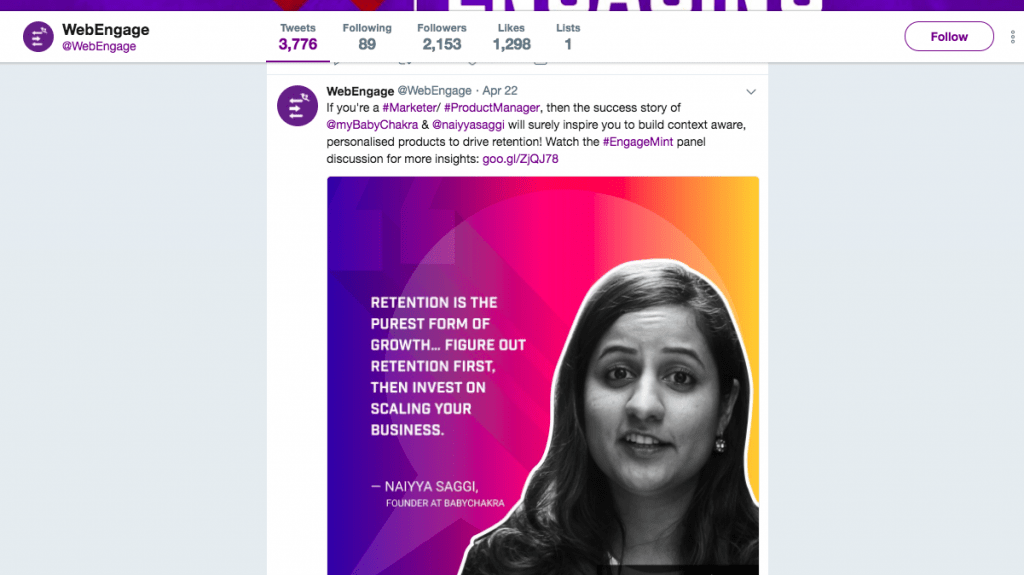
    For a platform like WebEngage, platforms like Twitter and Linkedin work well. The reason is – We have positioned ourselves as thought leaders in the domain in that we work, and we find people with the same bent of mind on those platforms. They relate to our content and have opinions on it as well.

    twitter

    Linkedin Webengage

    How important are keywords for you?

    Crucial is the word. If you don’t focus on the right keywords, you are painting in the dark. You need to know the keywords that your users are using. Keywords help you in understanding the user’s intent. For us, a mix of head and tail keywords work well.

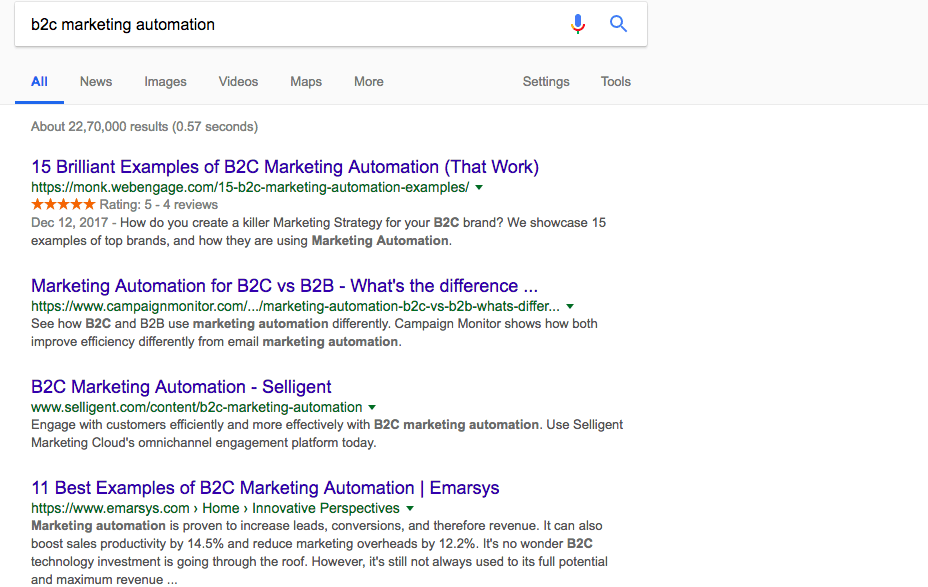
    Head keywords drive the necessary traffic and spread the word like fire, whereas tail keywords help us in meeting targetted audience.  We have a very good SEO team, that goes an extra mile to optimize our website. In fact, I am proud to share that we have been ranking number 1 on page one for the keyword “b2c marketing automation” for the longest time. Also, there has been a mammoth increase of 70% in our website traffic.

    keyword ranking

    What’s more important – Viral Content or Evergreen Content?

    Well, content helps both marketers and customers and it has to be a healthy blend of both. While viral marketing through content grabs eyeballs, evergreen content, on the other hand, is there to stay and gives your brand the status of a thought leader.

    Any tips for marketers?

    So the first tip for them is to be educated about the latest trends in the industry. Content marketing as a field is ever-evolving, and therefore it is imperative to stay knowledgeable to be ahead of everyone else.

    And the second tip is to research. You must research your industry, competitors, your audience, and everything that can help you produce the best content for your brand.

    Conclusion

    This was our last question on the list and we are grateful to Priyam for taking out the time to answer our questions. His content marketing tips are very beneficial, and would surely help us and others become better at what we do – Content marketing.

  • Importance of Content Marketing Campaigns for Your Business – Tips from Abhash Kumar

    Importance of Content Marketing Campaigns for Your Business – Tips from Abhash Kumar

    “This post is a part of our Content Salad series, where we invite industry experts to share their knowledge. FactorDaily is a technology news site from India that offers us insights on technology and the world around us. This interview with Abhash Kumar, who was the Head of Marketing at FactorDaily till February this year is offered to give you a glimpse of the thought process of leaders in the industry and a chance to learn from the best.”

    An MIT Alumnus, Abhash Kumar has gained marketing experience from renowned companies like YourStory Media and FactorDaily. He is passionate about humanizing the online marketing space, psychology, and experimentation-based systems. In this interview, he has provided valuable insights about the importance of content marketing with FactorDaily as an example.

    Promotion through flashy ad banners might catch the attention of your users for a small while. But soon, it will be a forgotten memory for them. So, if you want to go for something permanent that doesn’t constantly burn a hole in your pocket – then look no further.

    Your answer lies in content marketing, Content is the most powerful tool for any brand that works multiway – It drives brand awareness, creates brand authority and most importantly forms a connection between the brand and its users.

    We discussed the importance of content marketing with Abhash who, at the time of this interview, headed marketing at FactorDaily. And he gave us some really interesting insights. We will get to them. But first, take a moment and read up a little on FactorDaily and also get to know Abhash.

    About FactorDaily

    FactorDaily is a technology news site based in India that provides insights on companies, culture, future, and lifestyles.

    About Abhash

    Abhash is a seasoned professional in digital marketing and has over 4 years of experience in the same. Before FactorDaily, he has been an early employee at now renowned brands like YourStory and Byju’s. He had also helped co-found Gyan Lab (kidovators.com in its current avatar) and has freelanced for a variety of education and training based projects. He is crazily passionate about humanizing the Online marketing space. And believes that education will turn on its head by 2035. He specialises in helping organizations with their online outreach, blogging, marketing products to netizens effectively and building reputations via human connections for Online businesses

    Why is content important?

    Content is the king according to me. For a media company like FactorDaily, it is their bread and butter. Even for the non-media companies content serves as a crucial element in communicating the brand’s language to the audience. You should not go wrong with your content marketing strategy and it should be in sync with your audience’s thought process

    What’s your target audience?

    Well, at FactorDaily, we cater to the tech Junta, people who live and breathe technology. These guys want to be on the top of their technology game. This set of people are looking for insights that will help them make sense of the way our world is changing because of technology, and also empower them with ideas to compete in this new world. They are specifically interested in upcoming tech trends and topics such as blockchain, artificial intelligence, robotics, drones and machine learning etc.

    Tell us about your team. How do they work around creating good content?

    Well, the team is comprised of veteran tech journalists, who work their fingers to the bone to deliver quality content.  This is pure-play journalism.

    The reporters go out and get the scoops.  And the stories are original, in-depth, fact-based and very comprehensive. The reporters do a maximum of 1 to 2 stories a week. This results in a high-quality output.

    What is the revenue model?

    At this stage, our aim is to build a strong set of loyal readers, and that is the utmost priority. Ensuring that will take care of the revenue and the revenue channels are being figured out along the way.

    We want to be in the league of ” WIRED” and “Harvard Business Review”. Currently, there is the website and mobile web version where serve quality, fact-based, deeply-researched journalism to our audience. This content is free for consumption.

    What social media channel works the best for you?

    Twitter works very well for us as opposed to Facebook. The reason is our audience – our audience is discerned and well-read. Secondly, our content does not fall into the category of “viral content” and is of the deeply-researched and long-form kind and hence, Twitter is our realm.

    content marketing interview with FactorDaily

    Also currently we are not investing in paid ads – our kind of content is not the one that you shove into people’s feeds with a google or a facebook ad. The high quality of journalism speaks for itself and our readers refer our work to newer set of audiences. Apart from Twitter, we do very well on Google News also.

    Google news

    Additionally, our presence on Hacker News and Reddit is also good.

    Is there any referral traffic?

    Yes, there is. Our content is very unique – most of our pieces are breaking news. This leads to us being quoted and backlinked by established media players. So, there is a lot of referral traffic as well.

    Factordaily referral traffic

    Referral Traffic

    What’s your customer journey like?

    Well, the reader lands on our website to read one of our pieces, and there we have two lead capture forms – Email Newsletter and Whatsapp Capture form. The first one which is a newsletter – if someone subscribes to that, we start sending them the day’s stories through email. These stories are about companies with a huge technological footprint in India  or about frontier technologies (like AI, Blockchain, Drones, Robotics etc)

    Newsletter

    The other is a WhatsApp capture box, where the user can choose to subscribe to our stories and breaking news on their whatsapp. It is a simple process. They will be redirected to their phone whatsapp or whatsapp web after entering their name in the capture box.

    Whatsapp Message

    What are your core priorities in terms of content?

    Like I said earlier, our high quality of journalism speaks for itself.   But as far as marketing is concerned, we want to focus on emails as our primary channel. We want to make email our content hub, and not just a place where people click and get redirected to other places. The email campaign content should be extremely powerful.

    Any tools that you use for measuring the impact of content?

    We don’t invest in a lot of unnecessary tools. We stick to Google Analytics. Impressions and pageviews don’t matter as much as subscriptions to newsletters, Whatsapp does. Another important metric that we track is the time spent on each article. That helps us in gathering information about what our reader’s preference is.

    What’s your strong suit?

    There are three. And I am proud to talk about them. One is the editorial perspective that we get from the seasoned journalists who have previously worked with media giants. The content they produce is first rate and first hand. Second is the clean design that we have – many of our design creatives have the look of graphic novels. The best part is that our designers sit with the editorial team, so the story ideas are discussed at the same time as creative ideas. Therefore, the results are streamlined well.

    Content marketing Creatives

    The third is our readability – Since we don’t have myriad of ads on our websites, our readers find it easy to browse through our site. Their experience is by default good.

    Any tip to young marketers?

    Yes. Content marketers today should focus on content distribution. Most of the marketers spend all their time in creating content but don’t promote it well.

    80% of the time should be spent on distribution. An example of good content distribution is ClearTax- They are in the right forums such as Quora and they do their content distribution very well.

    Cleartax

    Secondly, Content marketing can be a trap for many. Content marketing doesn’t come for cheap considering the resources that are involved from ideating to implementing it. For example, I was in touch with this ticketing company who wanted to start their blog from scratch.

    The ideal advice to them would be to leverage an already existing platforms that have massive distribution instead of investing in creating content themselves. The idea is – You should invest in content the right way through the right channels. The event company would get far more traffic by a) sticking to their domain of expertise c) creating awareness through an established content platform with good outreach

    Goals of the near future

    One of the immediate goals is to build a personalization engine based on user logins so that readers spend time reading stories of their interest. There are some major updates in the works but I am not at liberty to discuss them currently in public

    Coming to an end

    We had a great time interviewing Abhash, and we would like to extend our heartfelt gratitude to him for taking out the time for answering our questions,and telling us about the importance of content marketing. Content was, is and will always be the king. Employing content the right way will take you a long way. If you want content that is meaningful, and can create value for your brand, then download the e-book right below!