Author: Shreya Srivastava

  • Building Website Backlinks – The Perfect Guide

    Building Website Backlinks – The Perfect Guide

    Website backlinks play an important role in determining the rank of a webpage. A webpage that has a good number of relevant backlinks tends to rank higher on all major search engines including Google.
    Sameer Panjwani, CEO of Mondovo talks about what website backlinks are and how a brand can build them to enhance its domain authority. But first let’s get to know all about Sameer and Mondovo.

    About Mondovo

    Mondovo is a software platform that helps you track the success of your SEO activities online and shows you opportunities for growth. The software also allows you to keep tabs on the SEO activities of your competition, thus giving you ideas on what you could be doing better for your site.

    About Sameer

    From 2005 till date, I have been in the field of digital marketing. I have built and successfully marketed products and services mostly around SEO. These products have served over 25,000 clients till date.
    To me, marketing is like a puzzle that needs solving, and I am fascinated by the different approaches by which we can solve this puzzle. My mission is to build products and offer services that get clients an extremely high ROI on their marketing spends, irrespective of the marketing channel.

    How important is SEO for any brand?

    I am completely biased towards SEO since that has been the bread and butter of my business for years. I will admit though, the dependency on search engines, as a channel of customer acquisition, has reduced in the past few years with the emergence of social media as a viable alternative.

    However, there is, and will always be, a very large segment of the population that still relies on Google to find information, products and services. So, search engine optimization will continue to play a very important part.

    SEO is only going to get tougher with every passing day but for those who dominate the rankings for their primary business terms, they will see at least 5x the returns as compared to anyone just relying on paid advertising as a medium of customer acquisition.

    What are website backlinks in SEO and how can you establish trust and domain authority through it?

    The word “World Wide Web” originates from the concept that the Internet consists of a bunch of useful websites that are interconnected via hyperlinks.
    These hyperlinks, more commonly known as links, are the means to discovering other pages on the web. So it’s based on this principle that search engines like Google are able to crawl the web; and it’s based on the number and quality of such links you have pointing to your site, that Google would assess your popularity.
    When Google ranks sites on the web, their first criteria is the quality and relevancy of information that the sites have to offer.

    However, since the web is a crowded marketplace and there are likely to be a number of similar sites offering quality solutions, a factor that helps Google distinguish one site from another is how popular the site is in terms of its’ backlinks. These backlinks, aka votes, are what help pip one site over another in the search engine results page.

    If website backlinks are that important, what can one do to get more of them?

    To get website backlinks is the equivalent of getting other people to include a link to your site when they publish some content on theirs.Now that’s hard.
    It’s especially hard if your site consists only of pages talking about you, your company, and the services it offers. Think about it, why would someone link to a commercial site like that? So before we even get into what we can do get more website backlinks, we need to answer this question to ourselves, “Who would likely link to me and why?”.

    If we think on those lines, there are a multitude of ideas that we will get. If you think deeper, you’ll figure that if you’re going to have any chance of getting website backlinks on a sustainable basis, you’re going to need quality content that others would like to reference/share from within their sites.
    Having content is key to building website backlinks on a sustainable basis. It’s going to be hard otherwise.

    That’s not to say that you can’t get website backlinks without content. There are many companies that do. However, those are cases of the companies either having great branding & PR or having great products; in both these cases, there is usually a constant flurry of press mentions and blogger activity around what these companies do and so there is a natural flow of website backlinks. That’s why bigger brands usually do well on search. If you fit into this category, you might get away with not needing to build any content. If not, you’ll need some content that others will have reason to link to from within their site.

    There are many ways to build quality backlinks to your site, right from the simple and most obvious method of guest posting on other sites, to more advanced link building methods mentioned out here.

    If most links point to content, how would one create backlinks for their brand?

    As I mentioned earlier, it’s hard to get links pointing directly to your branded homepage or your product/service pages.
    Some methods that come to mind are:

    • Digital PR
    • Getting listed in the relevant Industry & Trade Associations / Directories
    • Getting your partners/vendors/suppliers to link to you
    • Getting bloggers and influencers to review you/your product/your service
    • Get interviewed by other publications
    • Participate in podcast interviews
    • Check the resources/list pages that your competitors are listed in and try to emulate those links
    • Guest blogging with links to your brand either in the Author Bio or as a relevant mention within the context of the article

    All these are tougher tactics to execute but they can be done and are important.

    Are there any tools that you use to evaluate the quality of website backlinks?

    There are primarily 3 companies in the industry that provide the best sources of backlink data: Ahrefs.com, Moz.com and Majestic.com
    Each of these providers(backlink checkers) have their own proprietary scoring algorithms that they use to rate backlinks. Ahrefs has the “DR” (Domain Rating) metric, Moz has “DA” (Domain Authority) and “PA” (Page Authority), Majestic has “TF” (Trust Flow) and “CF” (Citation Flow).
    Which of these is the best metric? I would use a combination of these along with manually reviewing the backlinks. These metrics can help quickly filter out any links that have poor scores.

    Any parting thoughts about link building?

    Link building is critical to the success of your site in competitive industries. However, it is not something that should be considered in a silo. Great content is the foundation required for link building to work. This is an area where most people go wrong, they don’t give enough importance to quality content. Then another mistake is for those who do spend time in building content, they don’t do anything to try building links to those content assets. That’s another big mistake. So those are two things that must be kept in mind with link building: build content regularly + do what it takes to get the word out to other bloggers => guest blog on others’ platforms and link back to these content assets of yours from there.

    Conclusion

    We would like to heartily thank Sameer for giving us valuable insights on building website backlinks. These tips are helpful in finding quality backlinks for establishing brand authority and ranking higher on search engines.


  • Use These Effective Content Writing Tips From IBM To Improve Your Brand Awareness

    Use These Effective Content Writing Tips From IBM To Improve Your Brand Awareness

    Effective content writing plays a key role in marketing success and lead generation for any company. Good Writing leads to better communication and drives search engine results, increase in traffic and also leads to establishing brand authority.
    Matt from IBM sheds light on the importance of effective content writing for your business. Before proceeding ahead to the insights by Matt, here’s a little read about Matt and IBM.

    About Matt

    Matt Alexander has been working in the capacity of a marketing professional over 7 years handling different roles, and he is currently working as a Content Marketer for IBM Hybrid Cloud for the North America market.

    About IBM

    IBM is a wonderful company to work for – strong in values and people oriented. IBMers strive to change how the world works by building smarter businesses.

    How important is content marketing to your brand?

    Content marketing is vital to help influence conversions. Customized content helps in building good relationships with your customers and improves brand reputation.

    What role does effective writing play in content marketing?

    Written communication is an integral part of communication. Ability to tell a story in fewer words is the norm of the day. Quality over quantity matters. The language must be simple and enticing flowing in the form of a story. Hence all brands must ensure that their teams have good writing skills.

    What are the important factors for effective writing?

    Writing should always be done with the ability to consume the audience’s interest. It should be short and crisp. The words should be simple and the tone should be refreshing. I feel the Headline is the most important part of the article given individual’s short attention span. If the headlines capture the attention of your audience, they will be more likely to read the article. The content needs to have a clear Call To Action.

    You can check out WittyPen’s blog on how to craft catchy headlines here.

    In what ways can you use effective writing to convey your brand’s message?

    3 values of the IBM Brand are :

    • Dedication to every client’s success
    • Trust and personal responsibility in every relationship
    • Innovation that matters for the company the world

    Overall, we need to make sure our marketing efforts resonate these values in whatever product we market. I am responsible for marketing IBM Hybrid Cloud solutions for our clients. We should firstly understand that our messaging should be uniform across all platforms. We have positioned IBM Cloud as The Cloud for the enterprise, built for all applications, Artificial Intelligence ready and Secure to the core. Everyone who markets IBM Cloud, should convey this overall message.

    Content can be made in the form of blogs, whitepapers, case studies, client references, videos, video blogs, webinars, infographics emailers, etc depending on each buyer’s stage in the buyer journey. Discover, Learn, Try, Buy, Adopt and Advocate are the 6 stages in the buyer journey.

    Each of these content needs to educate the audience about the product in a simple manner and entice them to take action.

    Is it important to just write effectively or are there other factors also involved that lead to brand awareness?

    Writing effectively is only half the mission accomplished. Promotion and distribution is a very important factor too. We need to first understand our target audience, their industry, pain points and their stage in the buyer journey before we pitch our content to them. While pitching content, we need to be aware of the social media platforms they are most active in. A one size fits all approach doesn’t work. A tailored approach is most effective in making sure people consume our content.

    Please share some campaigns by IBM that demonstrate the success of effective writing.

    1. Watson on Jeopardy
    2. Smarter Planet
    3. The Cognitive Era ( A new era in technology, a new era in business)

    Any tips for effective content writing to the marketers?

    Yes, there are a few content writing tips that I personally also follow.
    Research says that 88% of people who read a headline will most likely be read the entire article. So start by writing an effective Headline that captures the audience’s attention. Keep it short and crisp. Include numbers or ask it in the form of a question which will rouse the audience’s interest. Example – How to save 10 Lakhs each year on storage solutions?

    Make sure the content in the body is told in the form of a story. Avoid unnecessary jargons. Use simple language. Lastly, include a compelling Call to Action which entices the audience to take action.

    Effective writing also helps you with search engine optimization. So if you are looking at ranking high on search engine pages, you must ensure that you provide the best marketing content that’s relevant to your audience.

    Conclusion

    We heartily thank Matt for taking out the time to talk to us about the importance of effective content writing. We now understand that effective content writing can help in boosting one’s content strategy and enhancing the brand’s engagement with the users

  • Why Combining SEO and SEM Is Actually Good for Your Business

    Why Combining SEO and SEM Is Actually Good for Your Business

    One dilemma that most of the marketers face is to choose between the very powerful strategies for their brands – SEO and SEM. SEO is about optimizing your website to get better rankings in search results while SEM leads to your brand getting more visitors through PPC or advertising.

    Gur Baltej who previously worked as the Digital Marketing Manager at Times Internet sheds light on why combining SEO and SEM strategies is actually good for your business. But before moving on to that, here’s a little read about Gur and Times Internet

    About Gur

    Gur is an Anthropology graduate with 11 years of experience in Digital Marketing in running campaigns for multiple companies across verticals. He started his career with Google India managing campaigns for US & UK advertisers. Post that, He joined HealthKart- India’s largest online health & fitness store- & managed their entire paid online marketing function. His last job was with Times Internet Limited digital products company where he managed digital marketing campaigns for some of their top products.

    About Times Internet

    Times Internet Ltd has 39+ digital businesses & its websites are among the fastest growing Web/Mobile based networks worldwide. It is the digital venture of Times of India Group and reaches over 270 million monthly unique visitors who collectively spend over 10 billion minutes across all its products and services.

    What is SEM?

    SEM or Search Engine Marketing refers to running paid campaigns on search engines. It is used to bring traffic to your site & achieve the business’ goal of bringing traffic to the site or take the desired action on the site like generating a lead or transaction.

    What is the role of SEM in your brand’s overall marketing strategy?

    SEM plays an important role in marketing strategy to achieve desired business’ results. It provides a quicker way to show your site on SERP & get quicker results. It is an important source to increase & bring additional traffic on your site. Businesses are increasingly allotting more budgets to SEM.

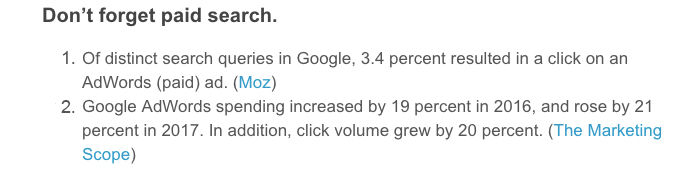
    Google AdWords spending increased by 19 percent in 2016, and rose by 21 percent in 2017. In addition, click volume grew by 20 percent (The Marketing Scope)

    Example SEM

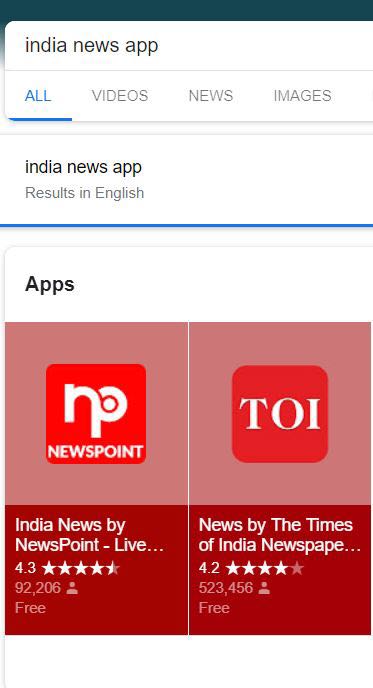
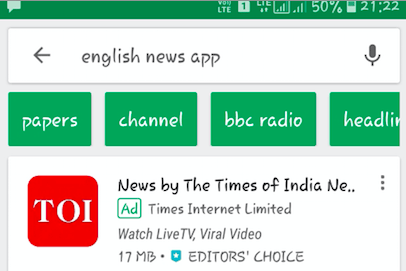
    For example, sites like Times Of India whose goal is to increase traffic on the site & stay ahead of the competition in terms of traffic, used Search engine marketing as an integral part of their strategy. Also, NewsPoint app, winner of Best News App Award by CMO Asia for 2017 & 2018, relies heavily on SEM strategy to get app installs.

    What do you think is more important – SEM or SEO?

    Both are important as they serve the purpose of driving your business. However, SEM being a paid part, depends on the type of business & the budget you have.

    1. Free organic traffic from SEO is desired by all but may not fulfil your traffic goals.
    2. SEM steps in here as an additional source to increase traffic on the site.
    3. SEO takes time to show results & this gap can be filled by SEM.
    4. You may not be able to do SEO for all the relevant products but you can use SEM to drive traffic to them.

    Explain to us a marketing strategy that integrates both SEO and SEM.

    While there is a difference between SEO and SEM, there are some similarities as well.

    Two things common to SEO & SEM are keywords & content for the page & ad text. Below are the processes in short.

    For SEO, you’ll need to zero in on the products/services whose pages you’d want to appear in the top search results. Based on those, you need to find out keywords create content for their pages. You can use the basic Google Ads Keyword Planner to find the keywords based on the volume of traffic.

    To know the traffic as well as organic competition for keywords, you can use tools like KW Finder. Take out the top 100 KWs & use them in your Content’s title, body & rest of the content on the page. Try not to just stuff keywords in content for the sake of it. Content should be original & relevant to the user. Similarly, use the keywords in your on-page SEO like page title, meta title, meta description & others.

    For SEM, take out keywords from Keyword Planner for the product or service whose ads you’d want to show on SERP. (For e-comm, Shopping campaigns & ads using Product feed & not keywords are more used these days but do have some keyword search campaigns ready). If you are using the previous Keyword Planner, it will provide related keyword ideas as well as ad group ideas.

    You can take ideas from there to create ad groups with a different set of keywords. Make sure that you use the keywords in your ad text as well as the ad is relevant to the landing page of your ad.

    Please share with us some campaigns that have done really well

    One of the most successful TIL campaigns were in tapping the regional markets with regional language campaigns for driving traffic for some of its brands. Google made a case study out of it. If you see, Google India Year in Search 2017 Report, it says that searches in local languages have increased by 10X & 2 in 3 searches are coming outside of Top 6 Metros.

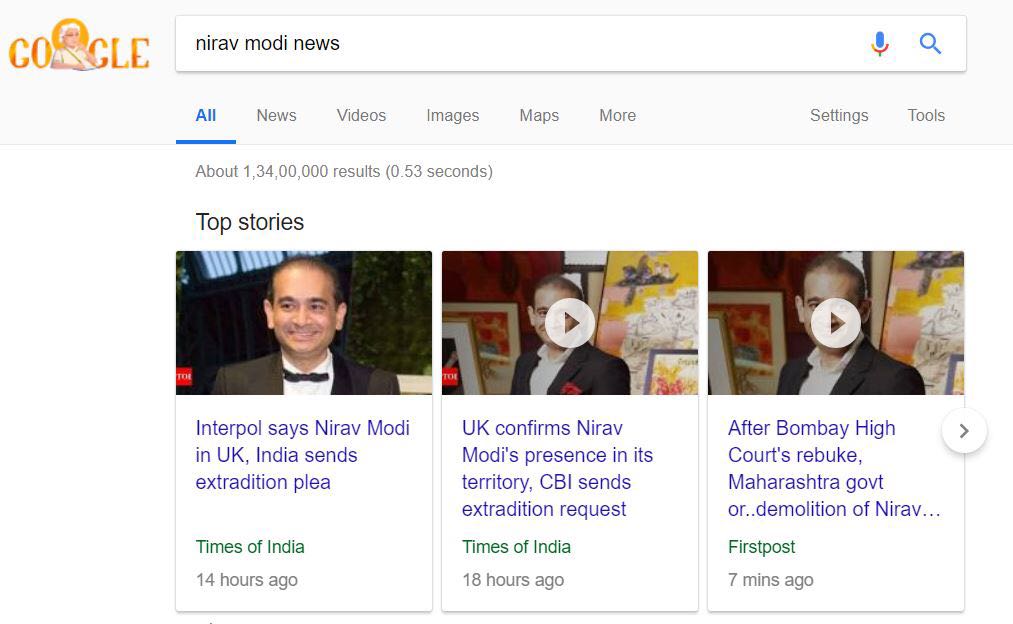
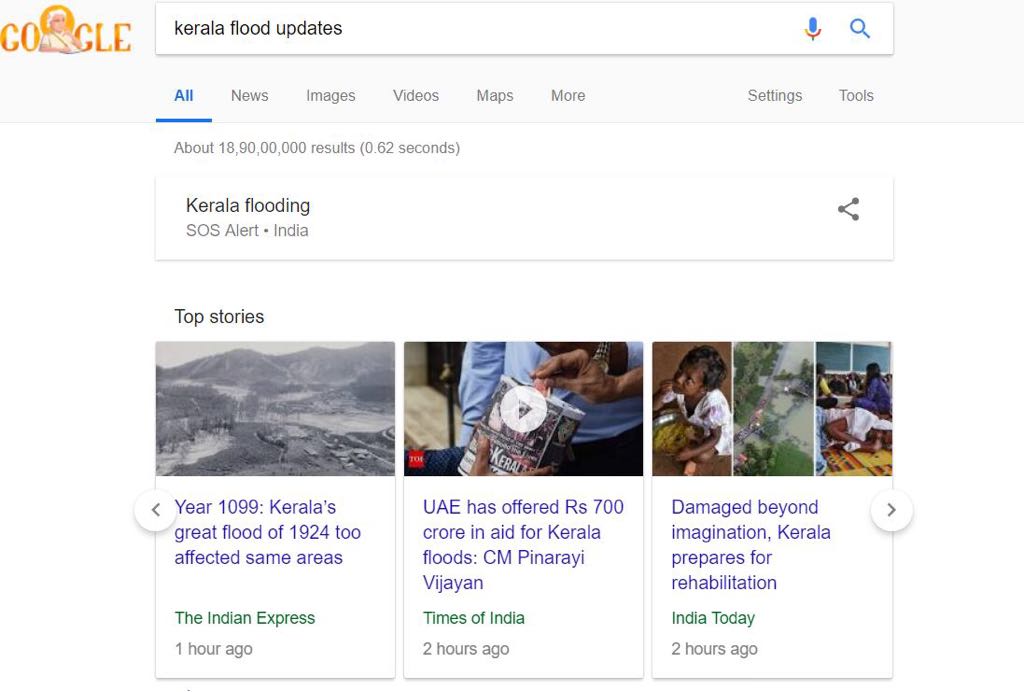
    Search Engine Results For Times (SEO)

    Times Internet Ads

    SEO results - SEO and SEM strategies

    Times Internet Ads

    SEM Mobile Ad For Times

    SEM Results - SEO and SEO strategies

    Talking about e-commerce, HealthKart campaigns for Protein Supplements did great in driving sales volume. The key was to create campaigns with generic keywords based on sub-categories as well as brand & product-specific campaigns.

    content marketing example of healthkart

    content marketing example of healthkart

    marketing example of healthkart

    Any tips to marketers today

    1. Use a healthy mix of SEO marketing & SEM per your business needs & budget.
    2. Be patient with SEO marketing. Use both on-page & off-page techniques to get the maximum out of Search engine optimization.
    3. Set specific KPIs to measure the performance of SEO & Search engine marketing campaigns. Keep a regular check, make changes & optimize whenever required.
    4. Keep yourself updated with latest changes & releases in SEO algorithm & SEM campaign features & functionalities.
    5. Finally, your user is paramount. Ensure that your content & campaigns are highly relevant to user needs. If you are able to give the users what they require & give them a delightful experience, your job is done

    Conclusion

    We heartily thank Gur for providing us with valuable insights on both SEO and SEM strategies. Now, we know that a brand can deliver best results if it effectively combines its search engine marketing strategy with search engine optimization.

  • How to Build Thought Leadership for Your Brand Through Content?

    How to Build Thought Leadership for Your Brand Through Content?

    Thought leadership and content marketing are directly related. Through good quality, relevant and well-researched content, your brand can establish itself as a thought leader in the industry. Also through great content, your customers and peers will treat you as the subject matter expert and will rely on the thoughts that you put across.
    Swati from Isobar Commerce India talks about how one can build thought leadership through content. But before going to the interview here’s a little read about Isobar and Swati.

    About Isobar Commerce India

    Isobar Commerce India is the e-commerce platform & solutions arm of Isobar. Our team of thinkers, storytellers, and engineers define, design and deliver solutions that turn business visions into effective realities. We deliver global integrated platforms and solutions for clients informed by local insight and using our Salesforce, Adobe, SAP Hybris, Magento and Sitecore relationships and expertise.

    About Swati

    Swati is the Marketing Manager at Isobar Commerce India and is responsible for driving all the marketing activities for India market. She is a Marketing Enthusiast with 7+ years of experience of working in different aspects of Marketing & Branding. She likes to work with different industries as it compels her to bring new and different marketing ideas to the table.

    She has experience of working with diverse industries such as – Healthcare, Revenue Management Software, Travel Technology and now E-Commerce Technology. She completely goes by the adage – “Content is the King” and believes that a good content has the capability to catapult even a small brand overnight.

    When she is not busy making marketing plans, she is busy making travel plans as she loves to travel around the world and believes that travel can change your life in the most unexpected ways.

    What’s the role of content in today’s world?

    In earlier days, content marketing was just about differentiating your brand from your competitors, but over the years, it has assumed much powerful role – that of a “brand advocator”. Every prominent brand has a wealth of informative and valuable content to support “what it does” and “how that would help the audience”. It’s imperative to build trust and connect with your audience and content is the easiest way of doing that. When your audience reads your content, they develop an opinion and image of your brand. It’s very important to constantly feed your audience with valuable content to keep that opinion positive throughout.

    What is the defined audience for your brand?

    We provide E-Commerce platform and solutions to consumer brands and as such, we are part of the B2B marketing arena. All the consumer brands, whether big or small, aspiring to make their brand omni-channel and build brand commerce are our target audience.

    What is thought leadership for any brand?

    Thought leadership is the ambition for any brand of being viewed as a credible industry expert, one which offers something worth listening to. Thought leadership is about delivering answers to the biggest questions of your target audience in the formats your audience likes to consume and becoming an authority on all the relevant topics your industry is dealing with.

    Is building thought leadership an important step in a brand’s content marketing strategy?

    Thought leadership is an extension of content marketing. When combined, they make a powerful driving force for brand affinity and awareness.

    Thought leadership is about building a relationship with your audience which can be earned only through trust and reliability. Content marketing allows brands to showcase their industry expertise to their audience and helps them make an informed purchasing decision by providing them with insightful and valuable knowledge throughout their purchasing cycle.

    Any piece of thought leadership content – a blog post, infographic or whitepaper shows customers how much knowledge you have about the industry and the challenges they are facing. Customers tend to go for the brands that help them better understand their problems and the solution options they have. Content marketing thought leadership acts as a crowd differentiator for the brands and helps them become go-to-source for all the information their audience needs.

    How can you use content to build thought leadership in a noisy marketplace?

    To cut through the noisy marketplace, you need to create thought leadership content which is informative yet opinionated.

    At Isobar Commerce India, we identify topics that are unique and directly associate with what we do as a company. We also constantly identify what our audience expects from us, what questions they are asking. We build from there – we try to answer those questions by building thought leadership content pieces around them, in different formats – blog articles, case studies, infographics, whitepapers and videos. The idea is to create valuable resources in different formats as one size doesn’t fit all, similarly, one format doesn’t appeal to all.
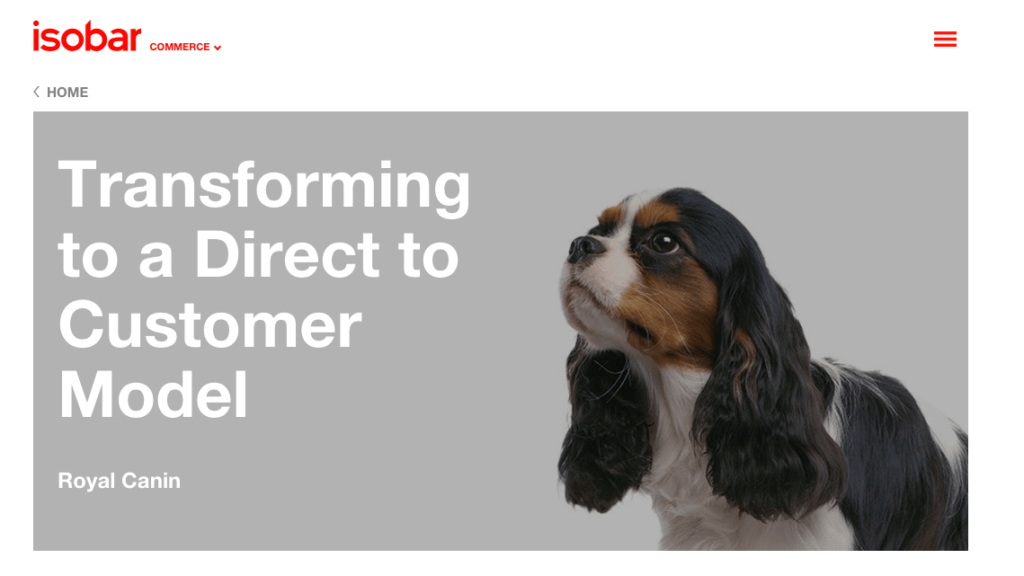
    A Case Study By Isobar

    Isobar content marketing case study

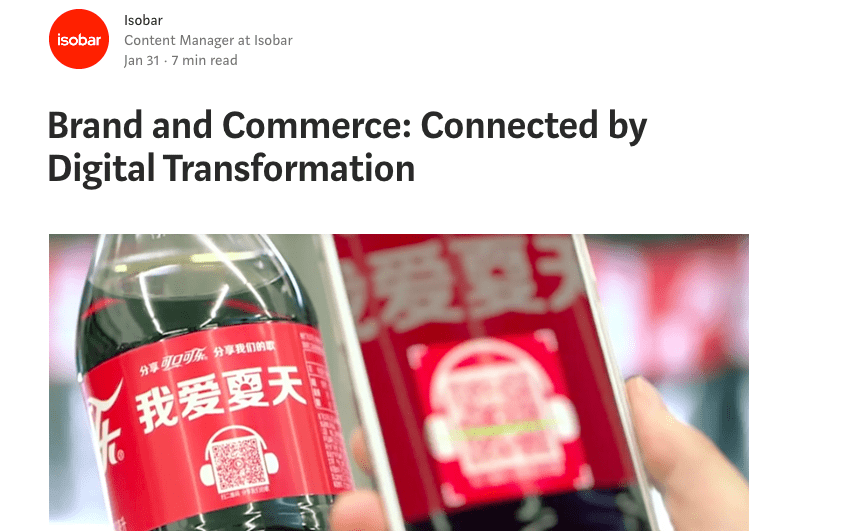
    A Blog Post by Isobar

    IsoBar

    How would you use social media to influence thought leadership?

    Social media offers a unique opportunity for brands to establish thought leadership. Social media platforms have the power to amplify your thought leadership content by manifolds. It’s a great way to improve your brand’s visibility, share your perspectives on ongoing trends and topics, and establish yourself as an expert in your niche.

    It provides different ways to share your message and content. In order to be a thought leader, you need to start by listening to what your audience wants to hear from you. It’s important to be relevant in order to be heard and build your thought leadership around it.

    Even if you don’t have enough time to create lengthy pieces of thought leadership content regularly, social networking sites offers great options to stay connected to your audience and be a thought leader with just a few words. Those few words itself can be tremendously influential. Share helpful articles, curated content by other industry leaders, the latest industry trends and news, these let your audience know that you are constantly providing them the information they need. This way you not establish yourself as a thought leader but you also keep your audience engaged with regular updates.

    Are there any brands that have done a good job in positioning themselves as thought leaders?

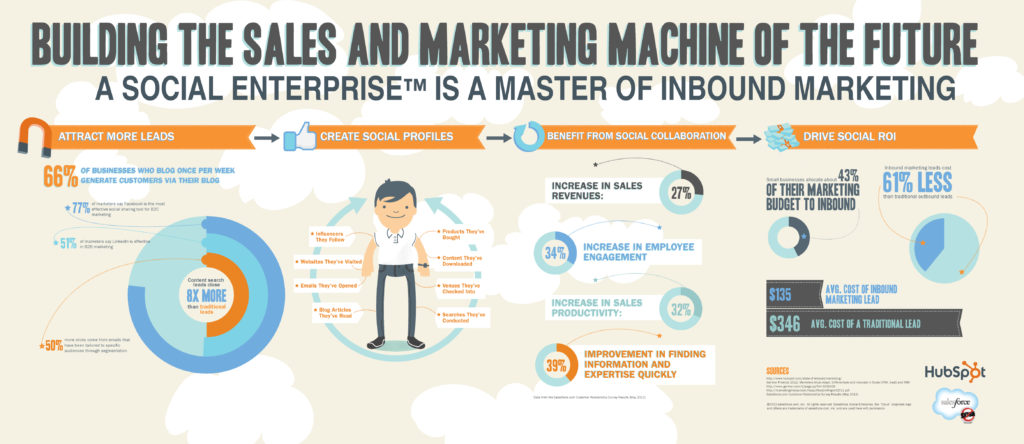
    I think HubSpot, an inbound sales and marketing software company, has done a tremendous job in establishing itself as the thought leader in inbound marketing strategies. HubSpot strives to teach businesses how to execute inbound marketing strategies and has developed various forms of thought leadership content to guide brands.

    You can find marketing studies, self- conducted surveys, infographics containing latest industry trends, digital marketing posts, “how to do” self-help articles – just about anything you need help with in inbound marketing, on their website. They publish these thought leadership pieces with the intent to help brands better their inbound marketing efforts.

    Hubspot

    Any blogs/content pieces that you want to talk about

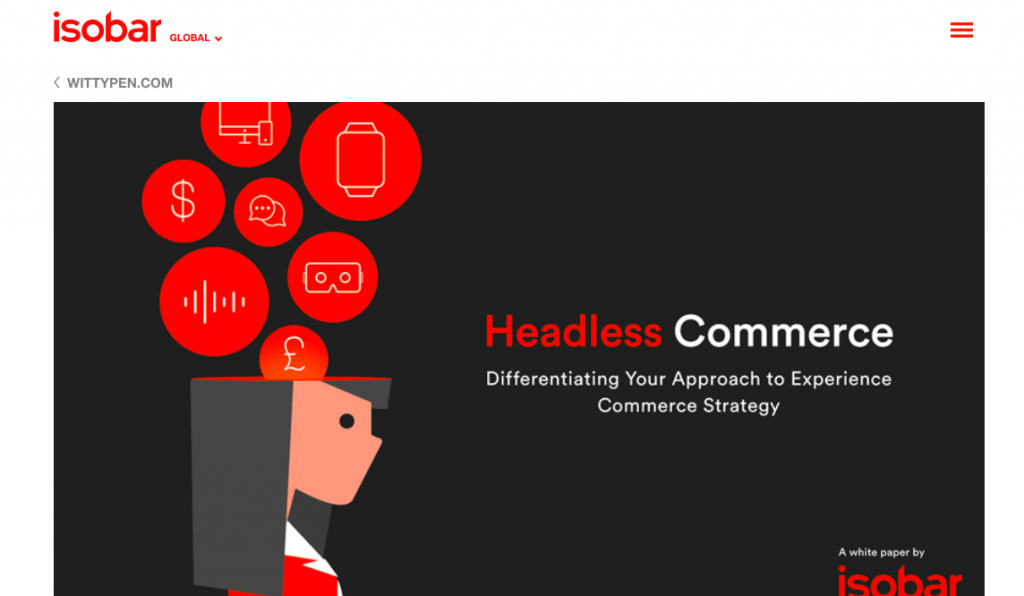
    We recently published a whitepaper on Headless Commerce explaining how brands can leverage Headless Commerce to create experiences across an entire ecosystem of touchpoints. Authored by the Isobar UK and Global team, the white paper explains how the Headless Commerce approach provides brands with greater control over the UX, building a foundation to create long-term customer relationships that can deliver sustainable business growth.

    IsoBar

    Here is the link to the whitepaper on our website.

    Are there any essential tips/suggestions that marketers of today can use for building thought leadership content?

    Most of the times, marketers get carried away with the idea of building thought leadership content pieces. It’s important to know the do’s and don’ts of building thought leadership.

    1. Don’t sell your brand: You should strive to be a resource for useful information for your potential customers. All your thought leadership content pieces should contain valuable and actionable content for your audience. Don’t try to sell your brand through these content pieces, otherwise, it will just become another form of advertisement and your customers will lose interest in them. A genuine blog post, whitepaper or infographic will keep people interested in revisiting your website.
    2. Create your own niche: Thought leadership is about creating your own unique identity in a sea of brands. It’s about being a master of one rather than a jack of all trades. It’s about being a go-to-source in your own niche environment. One article on a unique topic would give you much more credibility than thousands of articles on a vague topic.
    3. Build a conversation with your audience: Pay attention to your audience. Listen to what they want. Churning out pieces of thought leadership content mindlessly would do no good to you unless you provide your audience what they actually need. Listen to what they are asking on social media and Google search, take polls to ask them what’s working for them. This will not only help you in engaging with your audience but would also give you ideas about what your next thought leadership content should be.

    Conclusion

    Thought leadership is not about blowing your trumpet, telling the world that your brand is the best. It’s about building trust with your audience by becoming their go-to-brand for niche valuable resource!
    We heartily thank Swati for taking out the time to answer our questions. These insights have been truly valuable and will help us and others out there to become a thought leader in our respective niches.

  • Native Advertising Tips That Every Marketer Needs To Know

    Native Advertising Tips That Every Marketer Needs To Know

    Lots and lots of content gets produced on a daily basis. But often it doesn’t reach your audience. Reason – There aren’t enough people to consume content that gets created on a massive scale.

    These native advertising tips are the perfect solution to this problem. It’s a great way to distribute your content and extend its reach by leveraging the exposure and brand equity of other publishers. It is also a smart way to connect with consumers and get them to engage with your brand.

    Gaurav Sahota from Medlife sheds light on how content can be used alongside native advertising to promote your brand. But first, let’s have a quick read on Gaurav and Medlife.

    About Gaurav

    Gaurav has been passionate about Performance Marketing & its nuances for quite a while now. He believes that brands today are battling algorithms to stay ahead of their game in the online marketing sphere.
    And this has led him to understand how the core functionalities of Digital Marketing can be used to push buyer behaviour.

    Presently, Gaurav works at Medlife as Digital Marketing Manager for OTC Business (pinhealth.com) & is exploring the trends that command the e-commerce sphere in Pharmaceuticals. He feels that while marketing for this sphere is challenging, its results are what drives him to work harder.

    Gaurav also feels lucky to have worked in various verticals such as F&B, Hospitality, Travel & Adventure, Forex, Telecom and Mobile VAS.

    In his free time, Gaurav spends a lot of time updating himself on the music industry.

    About Medlife

    Medlife provides a wholesome ecosystem where a patient can get e-consultation from a Doctor, opt for lab tests, as well as access to prescription and OTC medicines at discounted rates with the comfort of doorstep delivery.

    For Tushar who’s the CEO and co-founder of Medlife, the reason to create this venture through which people could gain access to multiple healthcare services came from a personal experience where he had to walk up to 40 miles from his home to purchase medicines for his parents.

    Tushar says “Over a period of time, I realised that the healthcare system in India is extremely chaotic. People don’t know where to go to locate the right specialist, find all of their prescribed medicines or even find a good laboratory for their tests. Sometimes, they have to travel to different places to avail these services. I believe that if a person is ill and is already anxious about the disease itself, there should be no need for them to stress any further in getting treatment.”

    Being operational from more than four years, Medlife now processes over 8,000 deliveries a day (including private-label products) that amount to $4.6 Mn (INR 30 Cr) a month and expects 15-20% business growth month-on-month.

    What’s native advertising and how does it affect content marketing?

    You could say it’s a good mix of pull & push marketing. Native advertising is different from regular text ads on Google’s homepage, where the user is stating his needs then & there; it is not to be confused with social media banner ads either.

    By definition, native is a person born in a specified place or associated with a place by birth, where he/she might or might not subsequently stay.

    Similarly, Native content is a piece of content that fits in the environment where it is served, & when you pay to be a part of such environment it becomes native advertising. Native ads match the look & feel of the content or placement where they are served or received.

    On the other side, content marketing has a bigger horizon, wider & long term focused goal. It’s an approach that enables you to connect with consumers on a deeper, more committed level for the longest period of time. For example, being a pharmaceutical company we have a content marketing plan for the next year which includes PR, earned media reviews, blogs, info-graphics designed to interest & share the benefits of online pharma. As part of our larger strategy, we may rely on native advertising to amplify the reach of our online content.

    What are the different types of native ad formats?

    The Interactive Advertising Bureau has set some guidelines for native advertisements & added native advertising into 6 categories, but commonly used are:

    In-Feed Ads

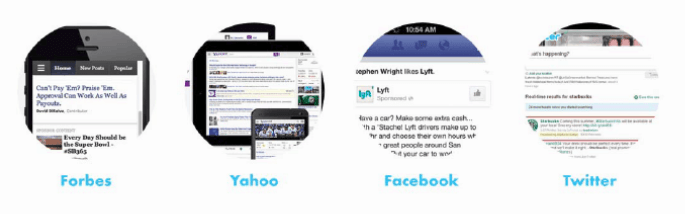
    Users will see sponsored content ads from advertisers while they browse original content on their social media feed.
    The best example is Facebook news feed ads.

    Facebook, Twitter, Yahoo and Major News Houses all offer in-feed ad units

    Recommendation Widgets

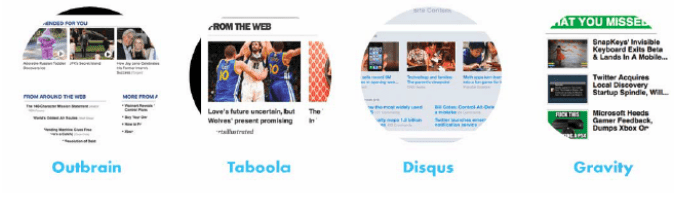
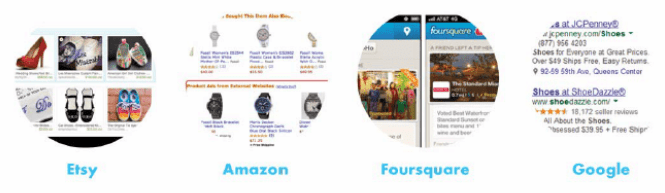
    At the end of nearly all articles, you often encounter ‘Recommended For You’ & ‘You May Also Like’. These widgets are called as recommendation widgets. Advertiser pay to reserve these ad slots to get some traffic back to their websites

    Promoted Content

    Most of the E-commerce players give an option to promote your products. E.g, while searching for any product on Amazon you may have encountered with some promoted brands

    From OTC to Pharma we use native ads in almost every business unit. We mostly use In-feed ads on social media & third party websites. I personally feel that In-feed ads work best as they are highly targeted. This is primarily because they match the two important criteria – website content & user interest

    How can you differentiate between native advertising and a regular ad?

    When you go to a website, you see a banner ad at the top of the page or smaller ads next to the main content. These are display ads. Regular ads show up based on several criteria, including how much the advertiser paid for the spot, the content’s relevance to the website and its audience, and whether you’ve had any interactions in the past.
    Instead of looking like a traditional ad, native ads mirror the tone, style and format of the site’s content. At the same time, you will also find a term “Sponsored” or “Promoted” to distinguish it from regular content.

    Can native ads appear to be a little sketchy?

    Yes, native ads can appear to be a little sketchy if not targeted properly. Some native ad platforms and publishers allow irrelevant or unrelated content with their index content to earn some extra bucks. This can be misleading for the audience.

    Can you share some ad campaigns that are doing really well for your brand pertaining to native advertising?

    We are using multiple ad networks, social media & vendors including in-house programmatic to leverage native advertising. As we have different business verticals we have multiple checkpoints & criteria before choosing any native format or network.

    For OTC, in native marketing, I’m spending most of my budgets on Facebook News Feed ads followed by Google Smart Campaigns.

    For Pharma & Medicine, we are using Content DB, Times Columbia & In-house programmatic to run native advertisements; recently I have seen a CTR of 10% which is way higher than regular ads.

    Native Ad Medlife

    Native Ad Medlife

    Native Ad Medlife

    Any tips on native advertising to content marketers?

    Choose the right format

    Not every native ad format suits every advertiser’s needs. Choose the one that establishes you as authority, and pick the advertising options that describe your product & services the best.

    Stay customer centric

    Understand your audience before creating any native ads. Be customer-centric, remember how you make customers feel, you need empathy for good customer experience.

    Create engaging content

    Try to educate & entertain your visitors, be a problem solver, and not a product seller especially when you from the B2B industry

    Use A/B testing

    Your headlines and ad copies are fundamental hooks in native advertising, A/B testing can help you rapidly judge how compelling your titles and descriptions are, and pick those that are getting the most engagement.

    Create an action plan

    An action plan is a major ingredient in your native strategy. Listen and understand, know your audience. Check what is working for you, build great content, listen to the feedback, learn and repeat.

    Conclusion

    We are living in a content-heavy world, and these native advertising tips offers marketers a way to reach out to their audience without being overbearing.
    We heartily thank Gaurav for shedding light on the importance of native advertising and sharing some great tips on the same. These insights will surely help brands in expanding their market reach and in improving engagement with their customers.