Author: Shreya Srivastava

  • How to Build Traction and Generate Leads for Fintech Business Through Content Marketing?

    How to Build Traction and Generate Leads for Fintech Business Through Content Marketing?

    Fintech- combines payments, finance and banking; one of the most balanced industries for the disruption that has arrived at early mass acceptance. Fintech industry is on a booming side with a focus on placing the customers on top. There has been this ease of depositing cheques while commuting and managing finance portfolio on the go, Communication between people has changed with advancements in the blockchain, digital currencies, payment gateways, e-commerce and crowdsourcing. In this blog, we will talk about how to build traction and generate leads for FinTech business through content marketing.

    Why other marketing strategies are not as efficient as content marketing

    There have been scenarios where marketing strategies such as PPC, list purchase, trade shows etc provides instant fulfilment in minutes. But these marketing techniques have been too expensive or at times not as efficient as is thought of. For example, if any business primarily uses PPC to generate leads, it needs to bid for a click. The business spent a handsome amount and received a good number of leads for that particular month. How about next month then? Again and again one needs to put in a huge sum to for the leads to come on a continuous basis.

    Therefore, this means that, if you stop investing in bids, leads would stop. This goes for list purchase and trade shows too. Let us take another scenario now, where a business concentrates more on blogs and article postings to promote their product or brand. Let us assume that this blog generates the same number of leads in a month as in PPC. Over the time, your article/blog post will still be there for the viewers to read them and can get leads every month. This is why content marketing strategies provide scalable, predictable and cost-effective lead flows.

    Important factors to consider for Fintech companies for customer acquisition, retention and trust-building

    • Customer understanding – Understanding of buyer persona is crucial for Fintech industries as that allows them to create a targeted content distribution strategy.
    • Flexibility – Customers crave for convenience, and hence flexibility is a desired quality for FinTech players.
    • Transparency – Grey areas in finance are not favoured by customers, and they want black or white.
    • Product customization – Customers prefer products that are tailored to their needs as that helps them relate to the product better.
    • X-Factor or Differentiator – There has to be an element that differentiates one’s product from others for the customer to choose.
    • Greater variety – Customers want variety, and therefore companies should strive to provide interesting concepts that are helpful also.
    • Seamless experience – User-friendliness has been a sought-after quality for the longest time. Hence is mandatory for the FinTech companies to provide a solid experience to consumers.

    FinTech companies should focus on these factors while they utilize customer data and craft a content strategy.

    Role of content in Fintech arena

    • Digital financial behaviours and preferences of customers and businesses keep changing. Content provides the necessary guidance to them and helps them know the in-and-out of the finance companies. Through right content, they understand how beneficial finance companies are for them and they can measure risks with confidence
    • Through content businesses and consumers can improve their financial management.
    • Content allows the customers to make right choices and lays down the potential risks of new technology.
    • Content encourages partnerships and new technologies. It paves way for the FinTech to spread its wings to wider horizons.
    • Content puts rest to the what if’s, rumours, insecurities and instils a sense of confidence in the users.
    • Content solves real issues of users by offering solutions in an honest and objective way.

    Now let us shed some light on how to build traction and generate leads for FinTech business through content marketing.

    How to build traction for Fintech?

    One of the biggest challenges for any business whether established or a startup is- how to build traction for their brand as this is what makes or break a business. Even while building a strategy for traction there are challenges like lack of time, confusion about what to prioritise etc. ‘

    So, yes, one of the best solutions to build traction and generate leads for fintech business on a long run is the SEO as it is the great inbound marketing channel. But it takes at least 6-8 months to get results out of it. Whether you want to wait for six months or get on the road to meet people to get traction is what needs to be prioritized. Now, what does one need to do from the day one for generating buzz and awareness?

    1. One of the most basic things to start off is to think why your product is useful. Then the next step is to start reaching out via emails, phone calls and even via social media channels.
    2. Utilizing social media channels through ads, campaigns, creating content that will attract your target audience
    3. Writing and posting informative blogs on a continuous basis, with relevant keywords can get you straight to the viewers.
    4. Make full-fledged use of social media marketing
    5. Building PR via avenues such as forums, groups, communities, LinkedIn and other forms of print media too.
    6. Making use of content marketing resources
    7. Using AI in content marketing.

    1. Evergreen Strategies

    1. SEO/SEM – SEO or SEM will forever be one of the greatest avenues for Fintech business to essentially target their users and get going towards building your brand. Start creating your content and link it on a frequent basis.
    2. Plugins – Make use of the plugins to tap into Google directories allowing your content to be optimized so that it can be searched as and when required. Though this would take some time but would yield results in a long run.
    3. Social Media – A huge section of your audience is on social media, thus twitter marketing and other forms of marketing are essential. Create a page for your business and start publishing and sharing the links there. Create videos related to your product or service and share or link them to your social media page as this will return organic traffic to your business.
    4. Visuals – Videos, infographics are the most compelling form of content that catches the users attention. Infographics too explain in brief about the facts and figures associated with any product or service. They also explain how a user can get benefit out of it. Videos & infographics are considered as one of the best content marketing methods as they educate users by engaging them with their content.

    2. Create Marketing Resources & Collaterals

    It is easy to write content about what your Fintech company offers. However, what really matters to your audience is the proof of benefits that you have provided to the consumers similar to them. This is where they look for company booklet which explains your company resources, skills, a catalogue of your products explaining in detail about the benefits of their use, previous customer references and reviews, video testimonials that helps in building trust and process documents that helps in understanding how the products/ services are implemented and last but not least compliances and guidelines you follow. Fintech deals with finances online and thus it is important to follow the rules and regulations. So it is important to be cautious as customers’ sensitive data and information like name, address, bank details, registration numbers etc are all involved.

    How do you generate leads with content marketing?

    All the above-mentioned aspects are driven by the content. As mentioned the only way to build your customers is to educate them and in order to educate, one must know who their target consumer is. For example, if you are a mobile commerce platform, you would want to reach all consumers who use internet or smartphones. This would also include consumers who would want cashless transactions. Here we list some of the ways that help in lead generation-

    1. Understand and map user journey

    Customer Journey

    It is essential in Fintech business to map prospect journey as it assists in creating a process between sales and marketing teams within an organisation. It ensures visibility between teams and brings inaccurate prospects in the sales channel. This also helps in measuring sales and marketing activity costs and knowing the barriers in the process. Mapping process for prospect journey includes-

    1. Spreading awareness within your target market and audience as to how you can be of value to them. The key is not to explain what you do but how your business could be of importance to them.
    2. Engaging your audience and provide a solution that could Interest them is another challenge. But can be achieved easily if you are fully aware of your target markets and the audience. Since you understand your market well, it is easy to provide with content which can engage the prospects. This does not necessarily mean that they would buy. Thus a business wants to have right marketing materials, demos, proper sales tools etc that could create interest in prospects to buy.
    3. You know your prospect is convinced about your offering but haven’t bought yet. Thus, keep following up with the prospect while it is still in sales funnel and try to communicate about your offerings and how they can benefit from it making their lives better and easier.
    4. Now, you have converted your prospect into a customer and this is the action point where you must emphasize on keeping the customer satisfied throughout the collaboration.

    2. Set up a marketing automation process

    With huge targets to meet and business objectives set to achieve your targets, one of the greatest issues holding up your business growth is TIME. With the number of tasks in marketing process such as social media, blogging, email campaigns etc, marketing professionals need to time and manage these activities so as to drive leads and revenue for organisation. For this reason, organisations utilize automation software to automate lead generation and marketing tasks and save time on traditional sales aspects.

    Here is an article that talks about how Fintech giant FIS got tremendous results after using market automation. Another example is Mindmatrix that helps finance industries sell faster.   Mindmatrix

    3. Segment your audience

    Any lead generation marketing starts with identifying your target audience. For this:

    1. Analyse your product offering and look at your current customer base
    2. The best way to determine your target audience is to check your competition
    3. Look out for the demographics and history where the similar products are being used or have an opportunity for
    4. Understand the market scenario and evaluate your decision

    Once you have defined and evaluated the segments most likely to buy your product or services, start researching well about the target market, their preferences and choice of browsing device and the best time your audience can read your content. An example of a tool that helps in segmenting and profiling your audience is roialty.  

    4. Create downloadable content for consideration stage

    When consideration stage is concerned, here are the steps to create content-

    1. If you are well aware of buyer needs, characteristics and desires, it becomes easy to create content specific to each stage of buyer journey. To start with, understand where your buyers’ research for the information. For example- if they are more into reading articles and blogs to get relevant information, you can create tailored content that speaks to them and provides answers to their questions.
    2. In consideration stage, buyers understand their needs and problems and thus research for the best solution to their problems. Since the buyer does not decide on any specific product at this stage, it is important to design keyword specific content based on their solutions. Some of the content documents include webcasts, whitepapers, videos, blogs, testimonials, expert guides etc which serves as ready reference for buyers to compare price and benefits. Now the buyer can make use of Call to action wherein they can download the content and shows interest in the product or services.
    3. Since the buyers do not make a decision during this stage, it is important to look out for buyer pain points and create content around the same. For example, Garnet Capital Advisors published a whitepaper like this.
    Whitepaper

    5. Create landing pages to convert based on audience segments

    As you know well about your target segments, you can create unique landing pages based on specific categories. Since each visitor is unique, they will react in a different way towards the landing pages. Segmentation helps you in building landing pages that is a mixture of videos, images, documents and call-to-action for a particular user. Segmentation also helps in focusing on elements of the webpage such as emails or PPC ads, through which there is an increase in traffic on the website.

    For example, Lendingkart has made a landing page for their high-intent users.

    how to build traction and generate leads for FinTech business through content marketing.

    The Takeaway

    Great content is extremely powerful. It serves in a similar manner as analyst report or any media article. With the right content marketing strategy in place, even the companies with a low profile and less marketing budget can generate leads for fintech business and reap the benefits of disrupting an age-old industry. Content marketing is the verified way to make a lasting impact on prospective consumers, driving traffic and generating sales.Follow these examples of fintech businesses for content marketing for more insight.


  • How to Write Catchy Headlines to Drive Engagement & Conversion

    How to Write Catchy Headlines to Drive Engagement & Conversion

    Whether it is a blog or a landing page or a listicle, the headline serves as the face of any content. This make it very important to know how to write catchy headlines that can drive engagement.

    Content experts firmly believe that headline is the most critical element of your marketing copy. The saying “first impression is the last impression” makes a lot of sense when we talk about headlines.

    Catchy headlines have the ability to capture the interest of your audiences in a span of just a few seconds. A not so impressive headline can have them bouncing off of your website, skipping your blog or leaving your email unopened, no matter how great your offer, never to return.

    Your headlines have the power to distinguish you from your competitors and also create a strong loyal base of customers.Not paying enough attention to headlines is one of the most common mistakes professional writers make. It is also said that headlines in SEO storytelling are the hardest part of content marketing. Agreed, it requires some creative and smart thinking. But all those efforts are totally worth it when your customers start to engage with your content.

    Have a look at this video and learn to write catchy headlines!

    We hope that this video was able to explain you about how you can craft winning headlines.

    Happy Writing!

  • Keep an eye on the Content Marketing Trends of 2018

    Keep an eye on the Content Marketing Trends of 2018

    Technology evolves and so does the content marketing industry. Content marketers around the globe are working hard on creating unique content every year. According to the 2017 benchmarks and trends report from CMI, more than 60% of the B2B marketers reported that their content marketing strategies are more effective than the previous year.  In this blog we want to talk about the content marketing trends of 2018 that we think will surpass the previous years.

    Some of the major content marketing trends of 2018 are:-

    1. Video Content will supersede all other formats

    Video seems to be the future of content marketing. Content marketing through video has been growing by leaps and bounds. This, in fact, is a very powerful tool for you marketers to get connected to your audience and is also revenue generating. According to Wyzowl statistics, 63% of businesses have started using video marketing in 2018.

    Out of those 82% of businesses feel video marketing is an important part of their strategy. Video content marketing is progressing rapidly and will reach new heights sooner than we think. This trend is fueled by 83% of businesses believing that video marketing gives them a good ROI To put an emphasis, we will share across more reasons that will convince you of the effectiveness of video marketing.

    Check out our blog on The Rise of Video Marketing in 2018

    a) A video guides the audiences comprehensively through their customer journey.

    Targeted video content marketing helps the audiences at different stages to connect with the brand better, right from when they are aware of the product to the time when they actually consider buying it. You will get a clearer understanding by looking below at our videos on Volvo.

    b) Video content marketing is solely based on the needs and wants of audience

    Video content marketing is super successful because it understands the problems of audience and solves it too.

    c) It is engaging, educational, fun and also inspires people.

    When it comes to providing true value to the audience, video content marketing is a pro at it. It provides valuable information that helps people out rather than just focusing on the brand’s agenda.

    You will get a better understanding by looking at what Volvo offered.
    Volvo truck’s popular featuring Van Damme and Enya soundtrack has been loved by many for the incredible stints and overwhelming music.

    Now we will talk about how Volvo has smartly designed a video marketing funnel so as to effectively reach out to all its audiences. This is exactly where we will explain how video content marketing touches different phases of the customer journey.

    So the first video is at the very top of the funnel, basically to make the audience aware of it.
    Here, Volvo is not trying to sell their product/s, but rather they are trying to get their audience engaged with the brand. The Epic Split is one example, as is The Hamster Stunt, which features a hamster driving a truck through a dangerous quarry. This ad generated millions of views through organic and paid search on social media because people have been simply amused and amazed at the wonderful concept. Have a look at it yourself.

    The second video is in the middle of the funnel.This basically connects with the audience that is contemplating on taking the product.
    The brand offers interesting and educational product videos for each of their truck ranges. These videos give a complete picture of the features, benefits and design aspects of the product. This example, of the Volvo FH series, uses a blend of live action and animation to give viewers a comprehensive understanding of how the trucks look and function.The third video is in the last stage of the funnel. This basically connects with the audience that has decided to take the product.

    Volvo’s FAQ videos make it easier for the buyer to differentiate between its products and competitors and simplifies the buying process for the users. These videos are called _One Minute About _that are informational and give details on the automatic traction control of the trucks that it offers. These are handy for customers who have active queries. You can have a look at one of the videos here.

    2. Internet of things is taking the audience away from the screen

    Customers now no longer have to depend on their computer screens to get content. Internet of things has made content so easily available to us that we can be hands-free while we get useful content.  For example, Amazon’s voice service Alexa is a direct doorway to some fantastic content. Most of the B2B companies use Alexa to build traction and generate leads through content marketing. You will get a better understanding through the examples below.

    Marketing School

    Neil Patel has smartly used Alexa to give 10 minutes of actionable marketing advice every day. This is easy enough to listen to while you’re getting ready in the morning or for a quick break in the middle of a Netflix binge.

    3. Most of the brands will embrace personalization

    Every customer is different and so are his/her needs. With evolving businesses, strategies and customers it is important to deliver an experience that is flawless. This experience should be unique and should only cater to the needs of that one individual or a set of individuals with similar needs. Generalization of content is a big no in the content marketing industry.For this most companies use content marketing resources and AI in content marketing.

    In a July 2016 research by Forrester Consulting(commisioned by Persado), emphasises the rising significance of personalization in the emerging content marketing sphere. When a group of senior marketing executives were asked about their approach to personalized marketing, 67% said they used behaviour-based data to develop content based insights and emotions, the second-most popular answer.

    content marketing trends of 2018

    Most content marketers like you would use content personalization as a significant tool in their marketing options. The key is to not go overboard and craft overly personal messages that might creep out your audience.

    Instead, it is to know what are the current and potential challenges that they have, and how can your brand solve the problem and help them to move ahead.

    A perfect example of personalization is what the brand Vidyard did. Vidyard’s Kyle Jepsen and his team took personalization to a whole new level. The video that we will share below shows Kyle addressing individual customers with their specific needs. They could have easily generalized the script and just changed the names, but they chose not to.

    Have a look at it yourself 🙂

    4. Surge of content distribution

    In the bigger scheme of things, content creation is just half the battle won. It is content distribution the other half that makes your content strategy an overall success.

    Not having a proper content distribution strategy is a big no-no in the content marketing realm. Because there is a lot of content that gets produced every single minute.

    This infographic from Domo explains just that.

    content marketing trends of 2018

    5. Rise of influencer campaigns

    One of the top content marketing trends of 2018 will see many brands aggregating influencers to attain their marketing objectives. These influencer groups have the potential to reach out to a wider set of people.

    Content marketers like you will use influencer campaigns for building digital word of mouth. The aim of these influencer campaigns would not be confined to promotion, rather it would focus on building a relationship, trust and experience.

    Hence they plan to strengthen the beliefs of their audience through referral programmes, advocacy loyalty.

    The influencers can be broadly divided into three groups: mega-influencers (usually celebrities), macro-influencers, and micro-influencers.

    The below example explains clearly as to how influencer marketing solidifies a brand’s value and establishes a trust factor in the minds of its audience.

    Old Navy
    Old Navy, associated with social media influencer Meghan Rienks to appear in a series of promotional posts on Instagram, Twitter, and YouTube.

    In the videos, Rienks shows fans how to style outfits for different occasions (e.g., a holiday party, and big date night) using pieces from Old Navy. Rienks is extremely popular for her comedy sketches and lifestyle content. She has a huge follower base on social media, which is equal to a whopping 1.3 million Instagram followers and 2 million subscribers on her YouTube channel.

    A post shared by oldnavy (@oldnavy)

    Trends are predicted on the basis of data gathered from industry, but trends are not to be worshipped as the holy grail. It is important for you and your brand to do your own research.

    You should evaluate if these trends are beneficial for your brand. Therefore don’t just simply follow the herd. Keep an eye on the content marketing trends, data and statistics, and integrate them only you find them useful.

    With this, we have come to the end of the blog. Hope you got a good understanding of the upcoming content marketing trends of 2018.

    Happy Writing!

  • Do you lack design skills or resources? Here is what you should do

    Do you lack design skills or resources? Here is what you should do

    Are you a content marketer who constantly frets about the lack of design resources in your company?

    If yes, then your problem is not a new one. This is the elephant in the room that we all really need to talk about.

    Design resources or design skills are expensive and most often not easy to find. It is a good idea to have in-house resources and also have some third parties outsourced for your design requirements.

    But what is a bad idea is to depend on them completely. So as a content marketer, it is important to have a sense of self-sufficiency, because there are times when deadlines are close, and your designers are already piled up with heaps of work.

    Then, there are times when your third-party resources bailout at last moment due to their other commitments. And you can’t just be a crybaby and put in demands like ” I want a graphic designer” in front of your boss. You need to be your own boss then and take prompt measures.

    Sometimes such times lead to disastrous designs made in the eleventh hour by you and maybe your colleague who unwillingly helps you out. Avoid that.

    Plan and prepare in advance.

    What is required is a little design knowledge, because it never hurts to have that. We want to talk about marketing collateral design and some online design tools that can help you teach fundamental design skills.

    This won’t require you to enrol in any of the professional graphic design courses. All you would need is patience, efforts and plenty of smart work.

    Before talking about polishing your design skills, we would also want to press on the need to have a better design in your brand strategy.

    Below are some statistics that would give you an idea of how important design is for brands and marketers.

    • 37% of marketers said visual marketing was the most important form of content for their business, second only to blogging (38%). (Source)
    • Given 15 minutes to consume content, two-thirds of people prefer to read something beautifully designed (as opposed to something plain). (Source)
    • If the content or layout of a website is unattractive, 38% of people will stop engaging with it. (Source)
    • When people hear information, they usually only remember about 10% of that information three days later. But if a relevant image is paired with that same information, people will remember 65% of the information three days later. (Source)
    • Tweets with images receive 150% more retweets than tweets without images. (Source)
    • Not getting enough likes? Facebook posts with images get 2.3 times more engagement vs. those without images. (Source)

    So, these statistics lucidly tell us that a brand’s recall value increases by manifolds when there is an attractive visual element to it. Therefore design is an integral element of any brand and a marketing strategy fails to run properly without an impressive design.

    Now is the time to talk about some online design tools that will teach you basic design skills.

    1. Canva

    Canva helps in creating social media and blog graphics. It offers a browser-based account as well as iPhone and iPad apps. In order to use it, you would have to create an account with Canva. The good part is that you get a lot of free templates, icons, designs, fonts without subscribing to the premium model. You also have an option to upload your own designs. This is one of the top design tools for any designer at the beginner level.

    2. Beam

    This is a free online tool for making charts. This is offered by platform Venngage, You don’t have to even take the pains of making your account. You will just need to enter your name and email address in order to download your data visualization (you can also opt to embed it or share it on Facebook and Twitter). Beam is fantastic as it allows you to choose from several different types of graphs and colour palettes, and you can edit the data in a spreadsheet, similar to PowerPoint — but the end result will be much better looking than a regular old slide deck.

    Beam

    3. Pixlr

    This is the perfect tool for editing pictures by giving them a smooth finish. And it is not just any regular photo-editing tool, its functionality is at par with photoshop. Pixlr is similar to photoshop in many ways except one, its price. It is free of cost and comes handy at times of need.

    Here is a mini tutorial that will explain the process of using this tool:

    4. Coolors.co

    You are ready with your basic design and layout, but you think it needs more colours to look appealing. This is when you resort to Coolors.co. This offers inspiration via a website, iOS app, Adobe add-on, and Chrome extension. The colour palette generator that it offers is amazingly done, it changes out swatches at the simple touch of a space bar, and you can input your existing brand colors to get complementary suggestions. You can also browse pre-created color palettes in a different tab.

    Coolors.co

    Here is a quick video on how to go about using this:

    5. Iconfinder

    This is the hub to find pre-made icons. It saves a great deal of time when you have deadlines to meet and very little time to brainstorm and create your own icon. They offer a mix of free and paid icons, as well as subscriptions, so there are various options to fit your budget.

    6. Recite

    This web-based free tool makes it simple to create and share a quote. Not only can you create quotes, you can instantly post them to Facebook, Twitter, Pinterest, Tumblr, and StumbleUpon from the Recite website, or download the image directly to share later.

    RECITE

    7. ColorZilla

    This is an extension for Chrome and Firefox and it is an expert in telling the precise six-number hex code for any pixel on a website. This even saves the history of color swatches you’ve picked, which is very helpful if you’re browsing the web and see a color you like that you want to save quickly.

    ColorZilla

    Here is a quick video as well that explains all about it

    8. Whatfont

    While ColorZilla lets you know the color code, Whatfont helps you hover over a font anywhere on a website page and automatically pulls the font name from the HTML code. This can be added easily as an extension to Chrome and Safari.

    Whatfont

    So, with this, we have come to the end of our list and we would just like to add that: In the realm of content marketing, a brand gets a face value by virtue of two components text and design. These two components work parallely,just as the benefits of sales and marketing working together to deliver a great content strategy. However, it is the element of design that makes your content alive, so you should always focus on bringing a solid design element to your brand. We hope that this article was of help to you. Here are some content marketing tips to keep your content marketing plan in shape.

  • WittyPen launches Content Marketing Resources

    WittyPen launches Content Marketing Resources

    The need for good content resources

    Great experiences matter. This holds very true for brands like yours and mine. If your audience is not satisfied with the kind of content you provide, then your brand is up to no good. That is why it is very critical to have a content hub of sorts, i.e a place for all sorts of content marketing resources for your audience

    Why did we go for content marketing resources?

    We wanted to have a hub where we had all the content centralized. Like a one-stop shop for our audience. The idea stemmed from the fact that we often hop on to different places on the web to get the “right” content and it consumes a lot of our time.

    Therefore, we have built a content hub that has brand’s content, curated content, social media content etc in just one place. We as a brand believe that these content marketing resources will help us in stitching the disparate content together and also give us a better control. We also believe that the content marketing resources are evergreen and will be utilized for longer as opposed to the content that is viral now, but might not be tomorrow.

    Through this we will be able to speak to the right person in the right content, because we will be able to target specific person/s, industries or verticals.

    Furthermore, this will help our audience to find a steady flow of helpful information and entertaining snippets.

    Before we proceed ahead, we would like to share our logo for our brand new project.

    content marketing resources

    You can check out our project here.

    Let us also have a look at some brands that have their own pool of content marketing resources.

    1.Txchnologist is a content hub created in partnership with GE. The Txchnologist hub shares content related to the great content marketing challenges of industry, technology and ingenuity. They post content that examines ideas that will shape societies, from the developing world to our frenetic and growing cities.

    Click on the link to know more about it.

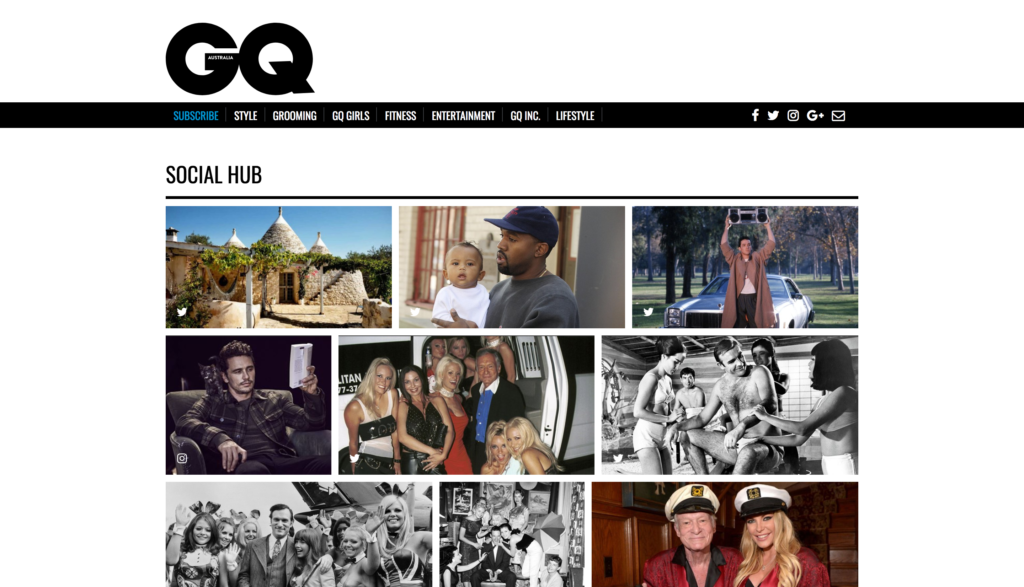
    2. Condé Nast owned publication, GQ showcases its content in a beautiful interactive hub. GQ consistently shares content about success, style, fashion and has a provocative mix of great writing & strong visuals.

    content marketing resources

    Follow GQ to know more about it.

    In conclusion, we would like to mention that content marketing resources for us is a way to diversify the type of content we produce. And through this we want to benefit our users in skipping the hassle of looking out for content.

    Our suggestion to you marketers: Make a content pool of your own and improve your content distribution strategy 🙂

    Our suggestion to you customers: If you are looking out for good content, then ours is the right place.

    We love feedbacks(Positive, more ;)). So, keep showering your valuable feedbacks on us, we are eager to know how you like our platform.