Author: Shreya Srivastava

  • Interview with RentSher: How to build a content strategy that stands out?

    Interview with RentSher: How to build a content strategy that stands out?

    Great content sets your brand apart from the masses, and can effectively deliver your brand’s message to the audience. Posting relevant, meaningful content on your website and social media will boost your search engine rankings and will also position you as a brand expert.

    This blog contains the content marketing interview with Murali G.A, head of digital marketing at RentSher, where he talks about the importance of content in today’s day.

    But before moving to the interview here’s a little read about RentSher and Murali

    RentSher

    RentSher is a major online rental marketplace for Events, Electronics and Medical Equipments. It is scalable as a marketplace and enables social sharing and promotions.

    With mass consumerism picking up in India, the team believes that people are bound to have spare products to share, rent or sell.

    Murali G.A

    Murali heads Digital Marketing at RentSher, where he works towards strategizing, planning, creating and implementing the campaigns for RentSher to increase brand awareness, website visitors and leads. He also handles various Social media platforms like Facebook, Twitter, Google+, Pinterest and Instagram for RentSher to promote their services.

    Content marketing interview with RentSher

    Q1 What is the relevance of content in today’s day?

    Murali’s Answer: Content plays a major role in online marketing and creating good content is essential for any brand. Be it a B2B or B2C organization, content creation for your website and other mediums of promotion is critical.  Before hopping on to writing “good” content, know your audience and their needs. Creating content without research and analysis is a waste of time and efforts.

    So, you need to be judicious about crafting a good marketing strategy.

    Q2 Explain us a little about how you use content for your brand.

    Murali’s Answer:  Our presence is across PAN India and we use content to reach out to more and more people. Our business model caters to both customers(B2C) and startups, corporates(B2B)

    This means that content marketing for B2B and B2C verticals simultaneously happens for our brand.

    Acquiring customers is by default the strategy of any brand, but our focus is to also retain them. With our present content strategy, we have been able to achieve a 40% retention rate. The loyalty of customers matters to us a lot, and therefore we continue to be in touch with them even after sales.

    We make sure that we provide offers and update them with new arrivals so that they stay engaged and also have a brand recall.

    Q3 Is there a difference in the content that goes out to your two different audience categories – Customers(B2C) & Businesses(B2B)?

    Murali’s Answer: Yes, the approach is different for both segments.

    B2B Segment

    For our B2B content marketing segment, we focus on creating whitepapers, case studies, customer testimonials and newsletters.

    We believe that white papers are great when we cater to corporates and startups because they by nature are very detailed and can help the clients take faster decisions.

    • Content marketing Case studies help us in being more credible in the eyes of our consumers.
    • Testimonials are the living proof of our successful services and hence work like a digital word of mouth for us.
    • Updating our clients with new product listings and features happens through monthly newsletters.

    B2C Segment

    For our B2C segment also, we send out newsletters, but with a different approach, tonality and design. Apart from this, we focus largely on social media handles to increase customer engagement.

    To provide a visual appeal, we create short videos on youtube about our products,services and events that take place through us.

    Their Social Media Handles

    We had a chance to look at the social media handle of RentSher, and we noticed that,
    They haven’t used content that glorifies their products and services. Instead, their content is straight-forward and focuses on user benefits.

    Twitter

    For example, in their Twitter Post about home & kitchen appliances they have mentioned the home-delivery of those products.

    This is a great post because,

    • Content talks about benefits that users will get upon buying the products
    • Because of the non-salesly approach, users will not shy away from exploring the products.
    Rent Sher Twitter Content Marketing Examples

    Facebook

    Next, in one of their Facebook posts, they talk about a birthday party that they organized for one of their customer’s daughter.

    This is a great post because,

    • Through the personalized approach of addressing customers by their names, they are making the customers feel important.
    • At the same time, through this approach, they are reaching out to new people who might have a similar need.
    Rent Sher Content Marketing Examples

    Linkedin

    Their SlideShare about easy DIY Valentine ideas is wonderful.

    This is a great post because,

    • They are providing the right type of content at the right time to users.
    • The users will refer the brand to their friends because they themselves found it useful.
    Rent Sher Content Marketing Examples

    Youtube

    Here is an example of an interesting short video made by RentSher about what they do. This quick video talks about how you can rent items online without hassle.

    Q4 Are there any tools that you focus on?

    Murali’s Answer: We do not want to unnecessary invest in a lot of tools.

    We use only a few of them, like Google Analytics, Google Adsense and Google Adwords. We track customer activity through Google Analytics, this includes – the source that they have come from, where they are landing, the points that they drop off at and many more. This gives us a fair sense of how to move ahead towards our goal in a better way.

    Q5 Do you consider Blogging as an important part of your content strategy?

    Murali’s Answer: Blogging is very important to us. Our aim is to have blogs that our users find useful, and also enjoy reading them. For example, we have a blog called “Significance of costumes for Janmashtami and Independence” This is an interesting read for the users, as it brings them closer to the festivals by giving them necessary information about god and leaders.

    And at the same time, it benefits us, because we can talk about the costumes that we rent out during the festival.

    Rent Sher Content Marketing Examples

    Another one that I want to talk about is – How to Earn Extra income Without Investment?

    Here, we have a catchy headline, which draws people to our website. After landing on our blog, there are two good things that happen,

    • The users learn about how they can get extra income through the p2p lending business model.
    • They will be confident in exploring the rest of the website because they found this particular blog useful.

    Rent Sher Content Marketing Examples   You can check out RentSher’s other blogs here.

    Q6 A successful campaign that you want to talk about?

    Murali’s Answer: Yes, there is a recent one that we ran for Christmas. The idea was to create buzz much before the actual festival date. We started promoting our products 10 days prior to Christmas on social media and through emails. On different days, we highlighted different products and services and the result was phenomenal.

    We got double the number of orders than we expected. Additionally, we got orders for New Year’s too.

    Our intention for this campaign was to attract corporates that organize Christmas events for their employees.

    However, to our surprise, we also got orders from individual customers through this campaign. So it was a double win for us.

    Rent Sher Content Marketing Examples

    Rent Sher Content Marketing Examples

    Q7 Any advice to the content marketers out there?

    Murali’s Answer: Well, it is very important to be in tandem with all the team members.

    I am talking from my personal experience. The Christmas campaign that I spoke about had surpassed our expectations, and there was more demand than supply.

    The situation didn’t go out of our hands because our different teams(the ones handling backend and marketing) were well coordinated.

    Thus, it is important to stay ahead of things and avoid poor customer experience.

    Another suggestion for the content marketers is to be very aware of the audience that they cater to. Especially if they have multiple audience segments. The idea is to classify them into different lists and create content that suits each of them.

    There is no one strategy that fits all.

    You need to think of many ideas according to the many customers you have, and then only will your content  strategy be successful.

    So, with this, we have come to the end of our content marketing interview. We heartily thank Murali for taking out the time to talk to us and sharing some important insights that will benefit us and other content marketers.

    Content can help a brand get the right audience at the right time.

    However, creating good content doesn’t come easy. We at WittyPen can write quality content for your business which will boost your marketing efforts in no time.

    Download the E-Book to get started with us!

  • Interview with DHFL GI: The Perfect Content Marketing Plan for More Conversions

    Interview with DHFL GI: The Perfect Content Marketing Plan for More Conversions

    Content is the backbone of any brand that is out there. Without the right content, a brand may get crippled and can fall down. So it is important to have a well-researched and a well-documented content marketing plan that complements the ideology of your brand.

    To reinforce the importance of content, we asked one of our industry experts, Subhash Dawda, head of content at DHFL General Insurance some questions about succesful content marketing. But, before we proceed to that part, we would like you to know a little about Subhash.

    About Subhash

    Subhash started writing at the age of 16 years. He loved writing since he was young, and slowly converted his passion into his profession. He freelanced for long, with some of the most prominent brands such as One Plus and Gillette. He credits these brands for giving him a lot of exposure to the world of content. Post his MBA, he worked with TheBagTalk, who he had also freelanced with earlier. Together they produced some amazing content.

    Presently, Subhash takes care of the content strategy at DHFL general insurance.
    He says that ” Content is the centrepiece of what we do here”.

    Content is a part of thought leadership, inbound marketing, SEO, audience building and segmentation. Audience engagement and segmentation are the most crucial aspects for us.

    Targeting audiences purely on customization is our key. Warm, hot or cold leads, people who know something, a lot or nothing about what we stand for, we target them all in different ways.”

    The question-answer round 🙂

    So, we had a lot of questions in our mind, and we shot them all one by one. Our first question was,

    Why is content so important to you?

    Subhash’s take on this,
    “Content is the king, and it might be the pauper in cases where it is misused”

    Brands today, a lot of them focus on “Selling”. People, your users don’t like that. We at DHFL GI, believe in caring for our audiences, by making content that reaches out to a larger set of people, helping them in ways that may not be directly related to selling insurance. We want to make our communication helpful and make them understand that we are not there only at the time of sale, but we are there throughout their customer journey.

    It becomes quite challenging for a company like ours where we encounter our customers once or maybe twice a year. So, the plan is to stick on for longer without shooing away our audience through “flashy” sale slogans.

    Our communication is focused on “We care”.

    Not only post sales but at the beginning, in the middle and every other time, we project ourselves as the “people who care for you”.

    We focus on the four lines of business –  health, motor, travel and home. Our content marketing program focuses on how can we help our users to stay better at all of these, like how can our users travel better or how can they ride better?

    For instance, our blog on “how to take care of your hair while you ride, or what are the group formations you should follow while you ride together with rider friends?”, focuses on aspects beyond insurance. We are trying to think like a rider does, and we do it because we do not want to give the usual “insurance dope” to our users, that other brands may offer.

    Here is a screenshot of their blog on Group Riders: Your Full Guide.

    DHFL insurance

    We at WittyPen personally think that this is a great step taken by Subhash and his team. This is customization done right. Through blogs like these, the team at DHFL GI understands the pain points/concerns of their audience. And tries to solve them, rather than just sell what they have. This is what makes them one of the best insurance companies in India.

    They have some other interesting blogs as well. For example, they have written about “How To Manage Pain While Biking”?, Tips On Using The Best Helmet, Traffic Fines That You Could Potentially Face and may more.

    You can check them out here.

    Subhash further adds,

    Every insurance brand out there has hundreds of blogs that just list the products, their features and that’s that. We here are focusing on identifying needs and educating them further on it. When you look at a third-party liability blog, it tells you about the product—as well as explains whether it’s the correct insurance for you or not. So your decision is much easier.

    Third party liability insurance

    When we further asked about the major platforms that they use for promoting and sharing content, Subhash said,

    Our aim is to have maximum interaction happen on our website, and we want our users there to be engaged and take actions. Social media is used to proliferate the content ahead, and ultimately land them on our website.

    We evaluate our next course of action based on how our users are responding to the content we serve. Our websites will soon open newer vistas, such as infographics, varied story-based landing pages, videos, etc and then we will have many more ways of making them stay for longer on our platform.

    His answer to “What are your core priorities in terms of content?”

    Getting free traffic through SEO.  Making our audiences our hero. Helping them get the most through what we offer. And finally, break the walls that conventional insurance companies have built.

    Challenges in content marketing

    We know that creating content comes with a lot of challenges. We even wrote a blog about it 🙂

    Now DHFL GI is an insurance company, a finance company to its core. And, usually, for finance companies, it is very difficult to establish trust in the minds of users.

    When we asked the same question to Subhash, he responded by saying,

    As far as trust-building is concerned, we didn’t have to worry about that much. We have had our group brand “DHFL Home Loans” and their ambassador Shahrukh Khan to create that element of brand recall and trust”

    But the part about engaging people with finance, and especially insurance is a tough nut to crack. This is where our main challenge lies.

    To get people buy online is not easy. Ours is a low engagement product and has a longer process. Not many times do people consider it. Hence, there is a continuous battle for traffic.

    Even though India’s got some of the cheapest insurance globally, insurance is still a push and not pull market.

    Our purpose is to make insurance more exciting for our users to consume. So, we take a better route, where we make people understand that it is not about bundled insurance or more profitable insurance. It is about what is the right fit for you.

    We educate them and build a story around products that are not easily sellable.

    We also think that, that any content strategy should have a healthy blend of paid and organic marketing. Facebook algorithms pay lesser attention to organic posts these days, so it is pretty important to have a paid strategy well integrated with your organic strategy for a wider reach.

    His take on the target audience,

    Content creation depends completely on who you are targeting. There is no one TG that we are targeting. Sometimes we talk to parents, and sometimes the young millennials who ride bikes. Our tonality and language changes while we address the different segments.

    Women are a key influencer group for core purchasing TGs. So, for example, from a health insurance perspective, women as caregivers play a major role in influencing the decision-making process.

    Another example of an influencer group is parents, parents are very concerned about their children’s’ safety while they ride. So, we have a blog addressed to them, that talks about the gears that their children should have when they ride.

    DHFL safe riding for children

    When asked, Are tools important? His response was,

    Tools are, of course very important. The biggest brands with great content strategy track every single customer movement.

    But tools are not the only criteria that you should be looking at. There are deeper metrics that you should be focusing on.

    Do you think that the biggest of brands out there would have been focusing on tools when they just started out?

    No. In their nascent stage, they would have just started out with a basic website, where the focus would be only on CONTENT.

    For any field that you want to specialize in, knowing the fundamentals first is important. So start small and create content that resonates with your audience’s mindset.

    What will you do with tools, when you don’t have data to analyze?

    First, bring in that audience, get your graph of traffic up, and then start analyzing, measuring and implementing the multi variants.

    We personally use Google Analytics, at DHFL GI. In my previous jobs, we’ve used KissMetrics, Fullstory and a few more. For us, Fullstory works wonders, because it gives us a full record of user activity through video sessions. Their important actions are recorded, and that helps us to create content accordingly.

    His take on the important metrics tracked and audience insights at DHFL GI

    Well, while we focus on the basics such as shares and likes, what we really care about are the in-depth metrics such as the time spent on our blog, average page depth, and more. This is what enables us to tweak content in specific ways that might appeal to users.

    Bounce Rates are also important because there might be a lot of headlines that are catchy, click-baity and shareable, but the content inside might not strong enough to hold the users.

    Audience insights help us in creating a perfect content marketing plan to improve readability and traffic

    There are certain topics that we as a team are very excited about and we think that they would click with our audience.

    But insights from the audience might tell us a different story altogether. So, that makes us go back to the board, brainstorm and draft content that can work better.

    Audience insights are very helpful and can help us content marketers at every step in the customer journey.

    For example, an important insight that we gathered was the readership on long-form content. People don’t have a lot of patience while they read elaborate content. But recent data shows that Page 1 posts on average are at least 1900 words long. This put us in a state where we had to constantly battle between readability and SEO.

    So, the solution to this was to have the meat of content in the very beginning.

    Even if our audience doesn’t read the entire piece, they will surely take something helpful and interesting out from their initial read-only.

    The audience insights from long-form content also allowed us to come up with another really cool idea. It was to hook our audience through a unique way.

    We ran a test blog, which is essentially India’s first talking blog that has a character talking to the audience. Our plan was to have this character at places, where our audience might potentially drop off, and through this, we created a hook that sort of could pull them back or make them stay longer.

    This character is a real person and not a mascot, and we did this because we wanted our audience to relate to the character. The best part about this character is that it addresses you by your name, every time you visit the blog.

    talking blog

    We have also put downloadable content at many of these potential drop-off points. Through this, the users will feel that they have taken something useful even when they did not read the blog completely. In the future, we want to focus on more evolved and conversational chat-bots, and we are working on them.

    So, we asked Subhash our last and the most important question,

    We have also put downloadable content at many of these potential drop-off points. Through this, the users will feel that they have taken something useful even when they did not read the blog completely. In the future, we want to focus on more evolved and conversational chat-bots, and we are working on them.

    So, we asked Subhash our last and the most important question,

    Any advice to the content marketers?

    To which he responded,

    There are several factors that you should consider while you draft your content marketing strategy. And these suggestions hold true for people aspiring to be content marketers as well.

    Research Well
    Being a writer is different from being a content marketer. You can write all you want, and all that you like if you are a writer. But if you are a content marketer, every piece that you write will have an approach and a thought process. You need to write according to “who”, “when” and “why”.

    You need to have your competitors and non-competitors, jotted down. You need update yourself with the latest trends in the industry, and you need to know your users really well. Have a formula in place, and then sit down and write. And also remember, having a formula also doesn’t mean that your content piece will be successful in the first attempt.

    The industry is constantly moving, and there are changes every single day. You might have to produce different type of content every day.

    Be sensitive to the needs of your audience
    You need to be considerate and very sensitive to the needs of your audience. Just because you have the power of the pen, you can’t write anything. Today, social media is a very powerful tool, and the audience is very vocal about their concerns.

    It is funny to think that it is easier for negative content to get virality as compared to positive content.

    So, if there is some content that you write that offends your audience, then there is a good possibility that your brand may be heavily criticized on social media.

    You need to be able to communicate your message properly by not being too intrusive, and by not being too creepy. Even if you have to sell something, you need to do it subtly.  Voice your concerns, but don’t force your perceptions and draw a line. So to keep consistency in your content always keep a marketing strategy checklist.

    General industry is as difficult as a Niche one
    So if you have ventured out in an industry that is very niche, there would be challenges in your content statergy. There would be a very targeted audience, and there might be gaps between the audience and brand. It might also be difficult to create engagement and educate people about the brand.

    But that does not mean, that creating content for a field that is already there is easy. Because then, you have so many people to compete with, and content out there is generated like goods in a factory. So, there are thousands of people who are doing what you do. Therefore, you need to create content that is really unique.

    For this, an important parameter is to map customer journey. Creating content is a much easier process if you have a customer journey in place.

    You would know the exact content type for a certain audience at a certain stage.

    At DHFL GI I’m happy to work as part of a marketing team that is constantly on the cutting edge of technology and the fact that we can do such experiments with content is a clear mandate from our leadership which helps us go beyond traditional marketing models.

    Concluding

    We had a great time interviewing Subhash. We had a lot to take home – newer perspectives, challenges that we were unaware of, and solutions that can really work.

    We heartily thank Subhash for taking out time to answer some of the most important questions about content marketing.

    At the end of it, we just have to say that content marketing is a field that is ever evolving and rapidly booming. If your content marketing plan is good, then you can easily create a brand recall in the minds of your audience.

    We at WittyPen constantly try and create content that matters. If you are looking out to get some awesome content for your brand, then download the E-Book rightaway.

  • What Are LSI Keywords and How Can They Impact Your Blog?

    What Are LSI Keywords and How Can They Impact Your Blog?

    Google and other search engines are constantly trying new algorithms to enhance the user experience while you search for something. The way they work is pretty simple. They want to eliminate all content that’s low-quality and present high-quality long-form content to their users. They use crawl bots for this purpose.

    The bots index, categorize and crawl through the content on your website to understand its relevance with respect to the user’s intent of the search.

    While most of us are aware of how critical primary keywords are, we often forget the importance of LSI keywords. Don’t know what exactly are LSI keywords?

    What are LSI keywords?

    LSI stands for Latent Semantic Indexing. These keywords allow search engines to decode websites/web pages better and hence provide better and more relevant results to a search made. LSI keywords also avoid keyword spamming and keyword stuffing.

    The idea behind using LSI keywords is great and beneficial. Whenever a blog is written, we do not tend to “naturally use” keywords redundantly. We structure them and, many times, stuff them.

    We “naturally” use a lot of synonyms and keywords related to the topic.

    And, LSI takes those synonyms and relevant keywords into account. Search engines use this process by linking related words together and by analyzing how certain keywords appear on web pages in combination with other related keywords or synonyms, or similar concepts.

    Because of LSI, smart engines are able to tell that Sania Mirza plays Tennis and Narendra Modi is related to politics and India.

    Satish Sen, an SEO expert at Rubique, adds to this by saying, ” Rather than using the same keyword phrase again and again in your content, make content more unnatural and spammy. Adding LSI keywords in content provides more information that makes sense and means more possible searches in the long run”.

    Gaurav Sahota, Senior associate of digital Marketing at OnMobile Global Limited, also believes that LSI Keywords determine the thematic relationship between the concept of the web page & content. He says that”Undoubtedly, LSI keywords are key ingredients in the era of semantic SEO.

    With recent algorithmic updates like Rankbrain, Google is moving towards Machine Learning & Artificial Intelligence term frequency (TF) & Inverse document frequency (IDF) is no more a game of keyword repetition”.

    Here is what Sameer Panjwani, Founder & CEO of Mondovo.com, has to say about LSI keywords

    Sameer asserts that including LSI keywords in your SEO campaign is a crucial part of any SEO strategy. He believes that it deals with search relevancy and also is an SEO-friendly tactic. He also adds, that “Today, while you write a great piece of content on your site or your blog, what matters is the context.

    With people no longer focusing on a single keyword, it makes sense to include LSI keywords as they help boost the contextuality of your content pieces while also improving your visibility on the search engines – Google and Bing.

    For example, when I type â€œfb picture size” in the Google query box – and click on submit.

    I was presented with results that contained the words – social media, images, dimensions etc. These are synonymous with Facebook, picture and size. This means if you’re working on an article that’s related to Facebook picture sizes, make sure to add related terms like social media, images, photos, dimensions etc.

    And when someone searches for any of these terms, there’s a high chance of your article popping up on the search engine results page. The period when Google used to consider the number of times a keyword is repeated is long gone.

    With every passing day, the search engine landscape is evolving, and Google getting smarter and more relevant.

    Therefore, if you use LSI keywords in a natural and SEO-friendly manner, then you’re on your way to success”.

    Examples of LSI Keywords

    (Follow Mondovo on Facebook, Twitter, Linkedin, Google Plus & Youtube)

    Types of LSI keywords?

    LSI keywords can be clubbed into two categories; Synonymous LSI(sLSI) Keywords and Related LSI(rLSI).

    We will explain both with examples to give you better clarity.

    1. rLSI keywords

    Relating keywords help Google identify what the content is all about. For example, if you write an article about the keyword Apple, rLSI will help you determine whether you are writing about a fruit or a brand.

    If related keywords such as iPhone and Mac OS are found, then Google will semantically index it with the brand Apple and rank it accordingly. However, if keywords such as Pie, Recipes, or Juice are found, Google will know it’s referring to the fruit. There are two services such as InboundWriter and lsikeywords.com, with fantastic algorithms that will return a high-quality list.

    Another method to identify these keywords is to do a search on Google. At the bottom of your search page, you can easily see suggested searches. These searches would be related to your keyword.

    For example, the phrase “best face scrub” gets a variety of new terms associated with it, such as dry skin, blackheads, acne, etc.

    Types of LSI Keywords

    rLSI keywords are helpful as they can diversify your content and broaden its information.

    2. sLSI keywords

    Google presents the most synonymous word to the search term in order to give the best experience to the user. Here, the search results are impacted on a micro-level, that is, at the keyword level. These keywords are easier to identify and are usually boldened in Google’s search results. For example, top, face, and scrub have been replaced by best, facial, and exfoliate.

    Another way to look at sLSI keywords is to use Google Keyword Planner. You can enter your keyword and switch to negative keywords. Doing this would give you synonymous keywords to your primary keyword.

    So, here we have used the keyword cloth and have put a negative keyword filter on. Therefore, we get results such as dresses, diapers, etc, that are synonymous with a cloth.

    Are long tail keywords the same as LSI keywords?

    There might be similarities between Long tail keywords and LSI keywords, but they are not the same. For any primary keyword, LSI keywords are a mix of long-tail keywords, synonyms, and acronyms.

    For example, if our primary keyword is the bag, then your LSI keyword could be “best bag in India” or “best suitcase in Europe”.

    So, here the first keyword is a long tail keyword of our primary keyword, bag. However, the second one replaces bag with its synonym, suitcase, and forms a completely different keyword. So, it is safe to say that for a given keyword, its long tail keyword is its LSI keyword, but the reverse does not hold true.

    How to use LSI keywords in SEO?

    Now there are different ways in which LSI keywords can be incorporated in enhancing SEO. We have listed them all 🙂

    Use LSI Keywords in the  Meta-Description
    The usage of LSI keywords in meta-description is always helpful. Apart from using your main keyword in the meta description, using the LSI keyword should be used, too, as this ensures Google gives you more priority.

    This will help you in getting a higher rank. Here is an example that will give you better clarity on this. So, here the keyword is motivational, and its synonym “inspirational” is used in the meta-description.

    Examples of LSI keywords

    Use the main keyword and two semantic keywords in your Content

    LSI Keywords complement the primary keywords, and adding two LSI keywords along with one primary keyword can help you avoid keyword stuffing and, eventually, the Google penalty.

    I have an example here from Legal Morning which makes the use case quite clear. Here, the primary keyword used by the author is professional Wikipedia editing, and LSI keywords such as “professional Wikipedia editor” and “get paid to edit Wikipedia.” were incorporated into the content.

    Use LSI keywords in SEM

    You can insert LSI keywords in your Pay-Per-Click Campaigns. By choosing LSI keywords along with variations of the main keyword in your ad campaign, your ads will show up more frequently and rank higher. Here is an example of using LSI keywords in an ad.

    Some other ways of using LSI

    You can bring your dead content back. Read below to learn how!
    You can use LSI keywords to your main keyword phrase, and through this, you can make your old content alive and make it rank again.

    The added LSI keywords will make Google spot and rediscover your content. You should have your old and original keyword phrase in place and add one LSI keyword to it. This will definitely increase the traffic to your website. You can see results sooner than you expect

    Another way to use LSI

    Optimize your image with LSI Keywords. So, if you have an old image or an image that has been used many times, you can make it live by using the LSI keyword to rename the image each time you use it. This will optimize the image for each piece of content it’s used for.

    Word of caution

    Make sure that you don’t over-optimize your page with one particular LSI keyword. Overusing an LSI keyword will again put you in the zone of keyword stuffing and might attract a not-so-pleasant Google penalty. So, use one particular LSI keyword once in a page.

    How will you find out the LSI keywords:
    Here is a LINK to some tools that you can use to find LSI keywords.

    Wrapping Up

    Success in SEO is a difficult task for content marketers, as the competition is very tough, and new content gets produced every single minute. Using LSI keywords will not only add variety to your content but also greatly improve its ranking and search results.

    Along with pumping life into outdated content, LSI keywords make sure that your content is not spammy and it stays far away from Google’s penalty radar. It can improve your blog’s authority and increases the average time spent by users on your website by making the flow smooth.

    So, we hope that with this article, you learned what are LSI keywords and can structure a better content strategy by knowing how to use LSI keywords, along with the best white paper practices.

    P.S. – “How to use LSI Keywords” is actually an LSI Keyword for my Primary keyword phrase, “What are LSI keywords?” 🙂

  • Content Marketing Challenges and Ways to Deal with Them [Updated]

    Content Marketing Challenges and Ways to Deal with Them [Updated]

    Consumers today have a strong appetite for good content, and anything that fails to match up to their standards is deemed to be indigestible by them. They want content that empowers them in taking the right decision, content that satiates their curiosity and content that is JUST RIGHT.

    Therefore brands worldwide work hard on creating a strategic marketing approach that’s focused on creating and distributing relevant, valuable and consistent content. The motive behind this is pretty simple, to attract and retain their target audience and to prod them into taking an action .

    So, a good content strategy not only drives profitable consumer action but it also gives an opportunity to brands to become the best in the eyes of their users.

    A recent survey by Zazzle media reported that 79% of marketing professionals that were quizzed felt that marketing is either very or quite effective.

    Despite, content marketing’s star quality, there are innumerable content marketing challenges that content marketers face to get their content strategies right.

    So let us talk about some of the biggest challenges in content marketing.

    1. Content Marketing ROI

    Demonstrating the true value of content marketing efforts has been a pain point for many of you marketers. With so many parameters to judge and measure, it becomes increasingly difficult to measure the ROI on content marketing. You might feel elated when some of your content pieces really do well, but that is not the sole criteria for measuring your ROI.

    For ROI, you need to steer away from metrics like page-views, blog comments, page-likes or social shares and move on to a bigger picture to measure your efforts correctly.

    Because if your content strategy, on the whole, is unable to make your brand meet its marketing objective, then it is a fail.

    Don’t worry just as yet. Because we have here certain indicators that will give you a true value of your efforts rather than just a superficial picture.

    Here they are:

    • Lead Conversion

      You should be confident about the leads that you generate via the content that you produce. This is what truly projects the ROI over your content efforts.  In short, this provides a true value to your business
    • Lead Retention

      Is your content good enough to retain leads? If not, then you need to start working harder on creating content that leaves a long-lasting impact.
    • CTA’s

      These are visible indicators of how well your content works. Any inactivity here means that there is a change in content strategy that you must bring about.
    • Cost per acquisition/lead

      If there is an increase in cost-per-lead or acquisition, then your content efforts need to be relooked at. This is the most fundamental and rock-solid parameter that can enable you to make better decisions.
    • Duration of the sales cycle

      It’s pretty simple. Shorter sales cycle mean better content marketing and vice-versa. If your content marketing efforts take longer to convert the lead into a customer, then it’s time to reinvent them.

    2. Monitoring the performance of your content

    Measuring the ROI efforts will help you gauge how effective your efforts were with respect to the investment made. But, when we speak of performance, we talk about whole new content marketing challenges.

    Therefore, to measure and analyze the performance of your content, you need to make a different set of metrics. Before hopping on to those metrics, here are a few suggestions that we think can help you in deciding the right course of action.

    a) It is always advisable to not have too many metrics in place. Focus on less, and prioritize.
    b) Build a strong reference point for your brand and set your sight on metrics that align with your marketing objective.
    c) Have a clear idea of interpreting and measuring your results.

    Some crucial metrics that you can track:

    • Engagement time

      While most of you would want to keep an eagle eye on page views, it is equally important to focus on the time that your users spend on your content. A tool like chartbeat can be of great help.

    Here is a quick demo of the same.

    [youtube https://www.youtube.com/watch?v=E503iNQgx5k?rel=0&showinfo=0]

    Another tool called hotjar also helps in recording the time that each user has spent on your website. A quick video here would give you a better idea.

    [youtube https://www.youtube.com/watch?v=XZSDpnu7DoA?rel=0&showinfo=0]
    • Sources and Devices

      Knowing where your customers come from can help you craft a content strategy that gives you better results . For example, your targetted audience uses Twitter and Facebook and you push same content on both. But, while doing that you realize that the content pieces on twitter are doing phenomenal,and the open rates on mobile are higher as compared to desktop. This helps you in maximizing your efforts in the right direction.

    Google analytics and Kissmetrics are some of the tools that can greatly assist you in doing this. An image below will give you better clarity.

    challenges in content marketing

    • Shares and mentions

      This is an important metric as it tells you the impact of your content on users. If your content is shared by your users, then you know that your content strategy is quite right. So, by analyzing this you can figure out the frequency and the medium where your content is shared. With that knowledge, you can channelize your efforts in the right direction.

      Tools such as Mention & Simply Measured are great for evaluating the social media activity around your brand’s content.
    • New Versus Returning Users

      You must chalk these metrics out in sheer detail. While, a new customer is a boon to your brand, a returning or a loyal customer is a living testimonial.

      So you should give careful attention to indicators such as how many days/months later has a customer visited your site, how often they purchase a product from you, the kind of products that they buy the most etc.

      Tracking these parameters will make you deep-dive and create content that is tailored and will definitely sustain that loyalty.

    Here is a blog by us that will help you in differentiating between your new users and returning users.

    3. Competition with paid promotion

    Agreed, that you produce great content, but sometimes it is not enough. The content landscape is shifting gradually towards the realm of paid promotion. The reason is simple, social media giants are leaving no stone unturned in empowering marketers. They are offering increasing ways of segmenting your audiences, thus giving you full power to know your audience.

    On the other hand, advertising does not build trust. It creates awareness. It does not form a personal bond, it promotes your brand.

    So, what’s the solution?

    Content marketing or Content Advertising?
    The solution is to be tactful, identify the need of the hour and content marketing challenges and strike a wise balance. If you want to position your brand as the “best in the industry”, then you cannot really afford to just place your bet on one channel. You need to embrace the best of both worlds.

    To figure out how to combine an effective content marketing and advertising strategy for your brand, you need to focus on the following

    • Your goal/objective
    • Your Budget
    • Target market
    • Content Type
    • Your audience’s Social media behaviour/consumption pattern
    • Device compatibility of content
    • Desired outcomes

    So a combination where you can reach out to your audiences faster in shorter time spans(through paid advertising), and at the same time engage customers in the long run(through content marketing) is an ideal.

    4. Unrealistic Expectations

    Now, these expectations can be from two sources.

    From your team
    From yourself
    So, Let’s talk about them one by one.

    • Case 1

      Presenting the business case for content marketing in front of your managerial team can be a daunting task as it comes with a set of challenges. Most of the managers and executives expect a “quick” return on their investment from content marketing.

      You need to make all the stakeholders understand, that content marketing is unlike traditional marketing strategies that show an immediate result. Content marketing is a gradual process, but it has long-term benefits that sustain. Success through it does not come overnight, and it takes time to build trust and credibility.

      A snapshot of Wordstream’s traffic over a period of 6 years shows how long it actually takes for the content marketing efforts to show results.
    content marketing challenges patience

    It took 2.5 years for the traffic to grow considerably and it was 4 years later when they saw a major traffic boom. It takes time, but it is worth it.

    • Case 2

      You need to set REAL expectations for yourself as well. Focus on achievable traffic and engagement, rather than aiming too high too fast. Don’t deem your content strategy as a failure if you don’t get “your” desired results.

      Therefore, through this, we understand that a good content strategy is fruitful but requires patience, constant effort and a strong strategy.

    To get steady results you need to do the following:-

    • Publish consistently

      Have a schedule in place, and editorial calendar that helps you decide and map things correctly. And consistency does not mean bombarding content everywhere, there needs to be a strategic approach to what content goes on which platform. Our blog on how to make your editorial calendar will surely help you create a structured schedule.
    • Produce relevant & variety of content

      Make sure that the content you produce is worth your users’ read. If it does not match with your users’ frequency then it is a complete waste of time, effort and money. You need to create content that grabs the attention of your audience and leaves them wanting for more. You need to create content that connects with them on an emotional level. It should be informative, unique and downright impactful.
    • Writing for a niche industry

      Writing for a niche industry with a very small target audience might seem like a nerve-wracking task. Apart from catering to a smaller sector of an audience, other challenges include positioning yourself as a go-to brand for your service/product or you establishing yourself as a leader in that specific field.

    So, these challenges might look daunting, but there are ways to combat them.

    You can read about them below.

    1. Seek and use expert sources

    Your audience will already be aware of your arena of service or product. So, producing content that’s basic and entry level will be deemed as invaluable to your audience. it is advisable to base your content on expert sources. You can do this by referring to industry blogs, or by interviewing experts. This would result in high-level, relevant & informative content that will add value to your brand and establish your brand’s authority.

    2. Keep an eye on the latest trends

    Staying up-to-date with the latest news concerning your industry is a great way to stay on top of your game. Discussing trends through your content on various platforms is a winning strategy for your niche brand.

    3. Create content in a format that would be consumed the most

    For example, if you are a finance company that gives out small-sized loans to salaried employees, then you can craft content in different formats for users in different stages of their purchase cycle. if your user has just become aware of your business, then you can establish your brand’s identity by giving white papers or e-books that talk about the various facets of your business. Finance is a tricky game, and for users to believe in what you do, you need to give them that assurance.

    You can check out one of our articles on content marketing for Fintech.

    4. Create content that educates people

    It is very important to have content that educates people about the problem that you are solving. By educating them, you are also establishing your identity as a thought leader, thus differentiating yourself from your competitors.

    We have here a list of a few experts from our industry with their opinions on the content marketing challenges that they face.

    Nikita

    Nikita Veerabhadraiah
    Content Marketer – Whatfix
    • Creating unique content that offers value to its readers

      One approach most content marketers take to create content is spinning the already existing content. This, having been repeated over and again has resulted in throwing out the same information with zero or very little varying value addition to the readers. A simple way to overcome this is to rely on sources other than the internet to create content. A few may include reading books, talking to veterans etc. This gives the content marketer an edge that the others don’t have thus enabling them to roll out content that is both, unique and valuable.
    • No direct or immediate impact on sales due to which content marketing is usually undervalued.

      This is still a very prominent challenge that prevails in the ecosystem. While it is true that the effects of content marketing are realised over time and cannot be reflected immediately, it is also possible to measure some aspects immediately. This could be the time spent on the article, SERP, Engagement received views etc. Besides, one can also cater to specific business objectives by vigilantly drafting the sales funnel and catering to the need in hand. Setting benchmarks and continually overgrowing these would give any content marketer the power to deduce the importance and impact of content marketing thus providing scope to void the challenge.
    Priyam Jha

    Priyam Jha
    Content Marketer – Webengage
    • Internal Challenges

      Convincing people higher up in the organization to be on the same page as you regarding Content strategy was a struggle. People expect Content Marketing to bring instant revenues for the business and want you to align your outlook similarly. This led to differences in opinion regarding the actual content topics: 1 team wanted more of sales oriented content that extolled the virtues of the brand directly, and the Marketing team wanted to build a knowledge base via thought leadership content. We overcame this by maintaining a balance between the two areas. You can’t solely be focussed only on one area and hope to create an effective content strategy. It is important to be perceived as an industry expert to build trust in the industry, and this can be leveraged by creating content that is linked closely to lead generation.
    • External Challenges

      How to create content that performs? This is an active problem that every content marketer faces. We were struggling to create highly engaging content that was going to drive traffic to our website. To tackle this, we invested time in understanding our Target Audience. It was important to create a reader profile, and understand their problems so that we could create better quality content that is considered valuable. Keyword Research, Competitor Analysis, and regular Feedback from the blog readers are crucial to understanding what works in the industry, and what it is that you should be writing about.
    Purnima Bali

    Purnima Bali
    Content Marketer – Isobar
    • There is a lack of research

      Most content is generated without proper study and research about the theme and topic and ends up seeming like an attempt to meet the word limits with generic information. The solution is well-researched and in-depth content that actually provides value to the users.
    • No clear objectives or metrics are set to measure the impact.

      It is important to know how well or badly your content has performed. Without a measurement or an evaluation, your content strategy is a fail.
    • Vehement inconsistency amongst cross-channels

      Brands present on multiple platforms do not follow consistent tonality. You can easily notice brands having a ludicrous conversation on Twitter, or other social media platforms while their website puts across a stiff demeanour. Therefore it is crucial for a brand to have the same voice, brand language and tonality for the audiences to identify them.
    • Overselling

      Overselling when companies have a massive reach seems almost irresistible, but they have plenty of other things they could be talking to their audience that is engaging and useful.
    • Vague/ terrible headlines

      Headlines should avoid being click-baitish, it must stand on its own and make sense when the rest of the content is available only by clicking.

    Final Word

    Content marketing challenges are growing, perhaps much more than it was earlier. But then, you need to think of ways to overcome the challenges and stick to your strategy  Generate leads using content marketing . Use content strategy convert visitors to customers. The key is patience. Content marketing continues to be one of the most effective methods to expand your business and get you an increased return on investment.

  • Lifestyle Business – How to Build Traction and Generate Leads Through Content Marketing

    Lifestyle Business – How to Build Traction and Generate Leads Through Content Marketing

    How to build traction and generate leads through Content marketing?

    Now, brands out there are continuously striving to fill the aspirations of people like you and I. But brands take a different approach, they don’t just portray themselves as a product or service through a flashy logo or a catchy slogan. Instead, Lifestyle brands keep in mind the needs of their target audience. Their message is in concordance with the aesthetics, ideals and aspirations that their audiences identify with. Their content is meaningful and serves the very purpose of catering to the lifestyle of people.

    What Is an Effective Content Strategy for Your Lifestyle Brand?

    There is no single element responsible for a successful content strategy. Instead, multiple formulas, trials and errors, permutations and combinations are responsible for delivering an effective content strategy. You might have a blog that’s engaging or perhaps visuals that are interesting and shareable. But there has to be one base strategy that accumulates all the elements together. Individual elements don’t work in the longer run. There has to be substance and permanency. For this, you might have to brainstorm with the team and define your target market. After this, you will have to ask yourself certain questions about your target persona. These questions could be: –

    1. Age & Gender
    2. Income
    3. Interests/Hobbies
    4. Sources of influence(blogs, celebrities or other influence)

    These questions will help you in crafting content better. When you have answers to these questions then you will speak the language of your customers and create engaging pieces of content; content that your customers can relate to. When you have a content strategy that aligns with the interest of your audiences, then you will not only attract customers but convert them.

    How Is It Possible for Lifestyle Companies to Develop Trust in Their Customers?

    To create a successful lifestyle brand, it is important that the brand forms a deep connection with its target audience. Most of the brands fail to fill the gap because they do not match their values with the target audiences. Brand’s voice, persona and ideology should resonate with its users and its marketing efforts should remain consistent across the board.

    Marketing for your brand should not be done for the sole purpose of creating buzz. Instead, your efforts should be maximized in turning your users into brand advocates and loyalists. Lifestyle brands should focus on user-generated content and their communities to maximize customer acquisition and retention. Their audience should be the heroes and the decision makers.

    How to Build Traction for Lifestyle Brands?

    One of the biggest challenges for any lifestyle business whether established or a startup is- how to build traction and generate leadds through content marketing for their brand as this is what makes or break a business.

    Even while building a strategy for traction there are challenges like lack of time, confusion about what to prioritise etc. So, creating engagement without compromising the brand’s value is a tough nut to crack. But there are ways to solve this problem, and we will talk about some ways that can help build traction and generate leads for a lifestyle brand.

    1. Blogging Is an Evergreen Strategy

    This is old but gold. Blogging never gets out of fashion, and by writing shareable blog posts you can tell your audiences more about you. You can write impactful blog posts that can include how-to articles, behind-the-scenes info, new product launches, and Q&As with internal experts. And this can be followed by opinions, feedback and suggestions on the topic to propel interaction. However, the takeaway is that a generic blog will not help you win the race. The competition is high and your users have a wide variety to choose from. Therefore, if you really need to see your blogs garnering results, then you have to invest properly in it and create meaningful content.

    Example:

    Wholesale foods through its blogs and articles have made sure that it does not just appear as a grocery store to its audience. Rather it has positioned itself as a lifestyle choice in the minds of its users. Its articles talk about how one can save money but still stay healthy. Wholesale food believes in healthy living and wants to help people make healthier choices. For this, the brand uses a lot of proactive language such as “I want to learn/do” as a search option in its navigation bar. This makes the audience feel that they are active players in the entire process and their role is the very important. Therefore. through such content in its blogs, Wholesale food is not just attracting new customers, but also establishing long-term associations with users.

    Food tech content marketing example

    2. Get Personal

    Personalization has been the in thing for the content marketing arena for brands. A study by Accenture showed that eighty-one percent of consumers wanted brands to get to know them and understand when to approach them, as well as when not to.Companies use AI in content marketing and content marketing resources to understand their audience better. Personalization using AI in content marketing and content marketing resources and social media can work very well together. To know more about your customers, you should visit platforms that are most likely to be visited by your audience. Social media is one of the most significant tools that can promote your lifestyle brand’s name in the right sense. Through social media, you can also collect data and gather insights about your target audience. When you have your buyer persona created, you can easily craft content according to their needs.

    Example:

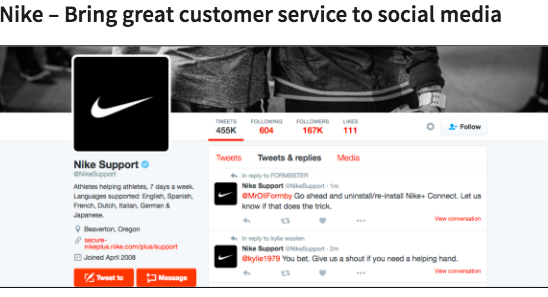
    Nike is an apt example that uses social media like Twitter to enhance customer experience.  @NikeSupport on Twitter is super quick to respond to customer queries and complaints. This solidifies the relationship between the brand and its customers.

    Nike Lifestyle Marketing example

    3. Creating an Effective Video Strategy

    Brands are invested in video marketing in 2018. In fact, they are not just creating effective YouTube channels, they’re also embedding YouTube videos on their own websites. According to a research, the top marketers have an average of 181 videos, while the bottom has 29. Also, marketers with a better strategy and results produce videos with varying video lengths, ranging from 30 seconds to 20 minutes.

    Example:

    Travel portal Ixigo’s  CEO Aloke Bajpai aims to make travel an enjoyable and informed experience for their users with their apps, content and research website. For this rolled out a very interesting and unique marketing campaign “Know and go” on Youtube. The ad film captures the aspirations of a small boy who wants to visit TajMahal after watching it on TV, but he is unable to because he gets a no from his father. What he does about it is something that you can enjoy watching here.

    Through this, they were optimistic about reaching out to  many more travellers across geographies and strengthen their positioning of being the most trusted travel website in India.” Another example is MakeMyTrip, they believe that Youtube/Video is a very powerful channel that, if utilised well, can create a deep positive impact on consumers. Their video series ‘Customer First Stories’ captures the happy stories of customers, where they address specific hurdles that MakeMyTrip sorted out enabling a hassle-free journey. These videos, a minute or more in duration have received tremendous appreciation. You can watch them here.

    4. Being a Part  of Communities

    Quora has a huge base of monthly visitors amounting to 1.5 million.  You can use Quora to build authority on your chosen topic, learn from others, answer questions about your product directly and find out the questions people are asking about your product or industry. By signing up on popular q&a sites like Quora or Reddit or a group on Linkedin you can build authority on your chosen topic, learn from others reach out to audiences that are asking questions that your brand can answer. Here the idea is to spread knowledge and not promotion. Therefore, you can answer questions such as “What are the upcoming lifestyle brands” or maybe “Which recent products have affected the lifestyle of millennials in a profound way”. And you can give your website or product as a reference.

    Example:

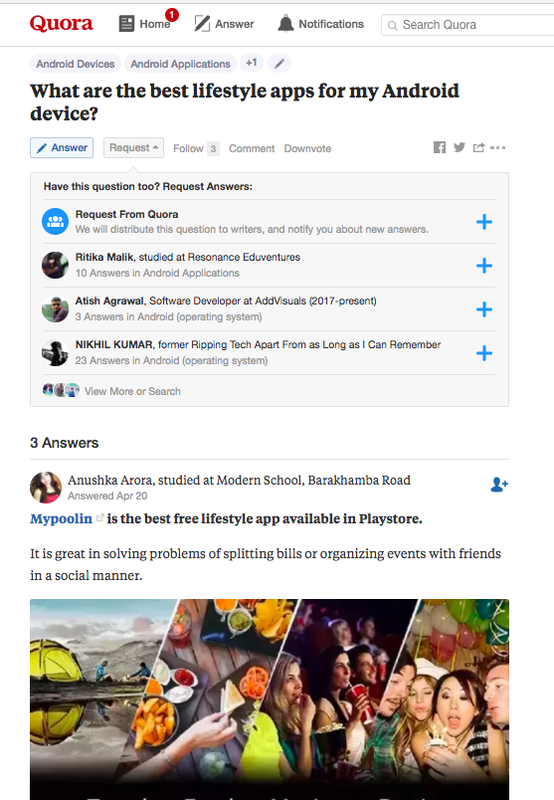
    You can post questions like the one in below and can add relevant answers to form a community and get associated with more people.

    Quora lifestyle content marketing example

    5. Pin Pinterest to Your Content Market Strategy

    Pinterest is blooming and brands are now using this platform to showcase what they have got. It is gaining popularity amongst the masses across the globe prodding businesses to flock towards it. A research showcased that 93 percent of the pinners use Pinterest to make a purchase. It is also one of the biggest sources of referrals for them. Another research showed that 55% shoppers rely on Pinterest to make their choices. Pinterest differs from other social media because people usually land on this platform to discover something new. And this is exactly what the brands worldwide should tap into.

    Example:

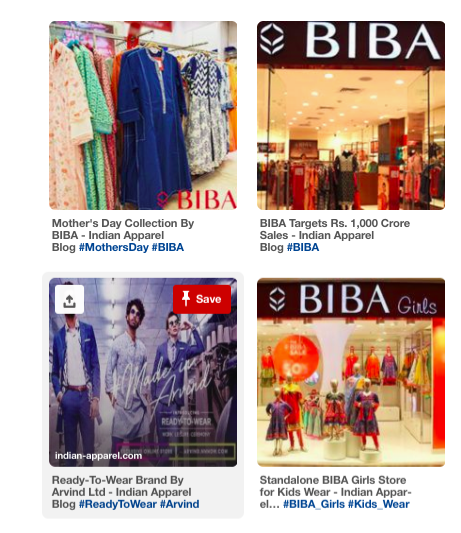
    The ethnic wear brand BIBA is one of the most loved in the country and has made traditional attire fashionable and trendy.  The brand had introduced a Mother’s Day collection on Pinterest. This was a blend of elegant outfits, comprising salwar kameez, dupatta, ethnic & mix and match.

    6. Hashtag Your Way In

    Hashtags and twitter marketing can increase your follower base by leaps and bounds. Here are some reasons that consolidate this statement: – Hashtags are searchable, and by using them, you are increasing the chance of being found by members of your target audience.

    Hashtags bring conversations on the same topic in a single thread and makes it convenient for users to understand, evaluate and compare ideas. So basically, if there is a trending conversation that your lifestyle brand can contribute to, then you should use that hashtag as a part of your social media posts.

    • You can run social media contents and have your participants use a specific hashtag. This will help you organise your contest better and also spread awareness about the brand at the same time.
    • You can increase your follows and engagement considerably on Instagram by looking for popular hashtags that adhere to your brand services, offerings and values.
    • You can use Twitter’s Trending News for promoting your brands. Use the news hashtag that is trending in your posts for the day.

    Another mind-blowing way to combine Twitter & hashtags are the relatively new Twitter chats. Here users answer questions and discuss topics with one another by including a specific hashtag in their tweets.

    Example:

    Nykaa did wonders with its #BackToBlack contest. The contest was easy to play and the rewards were hard to resist, so there were many who played to win. Read below to understand it.

    7. Instagramming the Right Way

    Gone is the time when Instagram was just known for cool filters and quirky selfies. Instagram now has a huge base of 700 million active monthly users. Instagram is now a platform that represents many brands and enhances their value.

    Example:

    Adidas on Instagram has about 15 million followers and has a high influence on the platform. They majorly use Instagram to promote their brand and engage their audience with interesting visual content and videos. Every image contains an Adidas product and most of the images have women. This is a smart move by the brand as Instagram’s sixty-eight percentage of users are women. Adidas is seen to be consistent in its tone and quality, and strategically crafts its content according to its target base.Follow these Instagram content marketing examples for a better idea.

    8. Outreach

    There is no denying that influencer outreach gives higher ROI’s. People always look up to these influencers and their viewpoints. And if the influencers have something positive or interesting to say about the brand, then their followers will take their word and spread it too. A report by Twitter said that forty-nine percent of consumers trust recommendations and suggestions from influencers while making decisions to buy. We will quickly give you some reasons that will convince you to try out influencer outreach.

    • Word of mouth and brand advocacy works wonders if influencers are in the picture. This is because the influencers are more capable of making any lifestyle brand sound more authentic and relatable. They can maybe write about and photograph a brand’s products in a more natural way, such that it does not seem promotional.
    • Not only can the influencers talk about their viewpoint on your brand with ease, but they can easily form a connection with the audience by giving away your coupons or freebies. Free coupons or giveaways seem more attractive when given by a celebrity or a person with reach.
    • Influencers can be very creative with videos. So, for example, if your product needs to be explained well, you can request your influencer to show your product in a tutorial format.  This creates a lot of interest amongst users and they interact by reviewing, commenting or purchasing. These videos are also good in the longer run, as these videos are not just limited to one campaign. They work wonders even after your campaign is over.

    Example:

    Philips had introduced its latest kitchen appliance Air Fryer in 2012 and there were very few who knew its application and use. It allowed deep frying of a variety of food items with 80% less oil consumption. Despite such a huge feature, the Air Fryer remained relatively unknown in the market. This is where Philips along with its digital agency Ogilvy One roped in Sanjay Thumma who is known for his cookery channel on YouTube called Vahchef. The campaign started a six-month long show called “Philips Superchef” that managed to create a lot of awareness amongst consumers. You can watch it here

    The Takeaway

    Lifestyle brands don’t sell products, instead, they sell aspirations. Therefore they capture the long-term vision of their users of who they want to be or what would they like to possess. These brands promise and declare that they can make these visions and aspirations into a reality. But for them to claim something like this and for the users to believe in this, the brands need to speak with utter honesty. This honesty coupled with passion will allow them to form strong & long-lasting bonds with their audience.

    Lifestyle brands should make sure that their audiences do not feel susceptible and regretful after the purchase. Their promises should evoke loyalty and belief in the minds of users. This blog guided you on how to build traction and generate leads through content marketing, we hope it was helpful.