Category: Content Writing

  • 12 Free Content Analytics Tools (Tracking Tools) To Build SEO Strategy

    12 Free Content Analytics Tools (Tracking Tools) To Build SEO Strategy

    In the digitally expanding marketing world, content is the lifeline of all online marketing campaigns. While engaging and quality content is key to a successful content marketing strategy, what qualifies and succeeds as good content can still be a puzzle. Content analytics tools are the key to that puzzle and they help you get a comprehensive understanding of which content is working for your audience and why.

    Content analytics tools help evaluate your content in clear terms of the returns they generate. They provide the marketer with a clear picture of the positive and negative factors of a content marketing strategy that can affect a marketing campaign.

    Apart from post publication analysis and audience feedback, content analytics tools clearly systematize the performance of your content. It helps you identify and eliminate the factors which hinder your performance. Unlike popular belief, content analytics are not restricted to website visitor tracking but include many sub-categories as well.

    While content monitoring can be an expensive affair, here are some free content analytics tools which are a boon to any marketer wishing to excel at content marketing.

    12 Best Content Analytics Tools for Successful Content Marketing

    1. Google Analytics

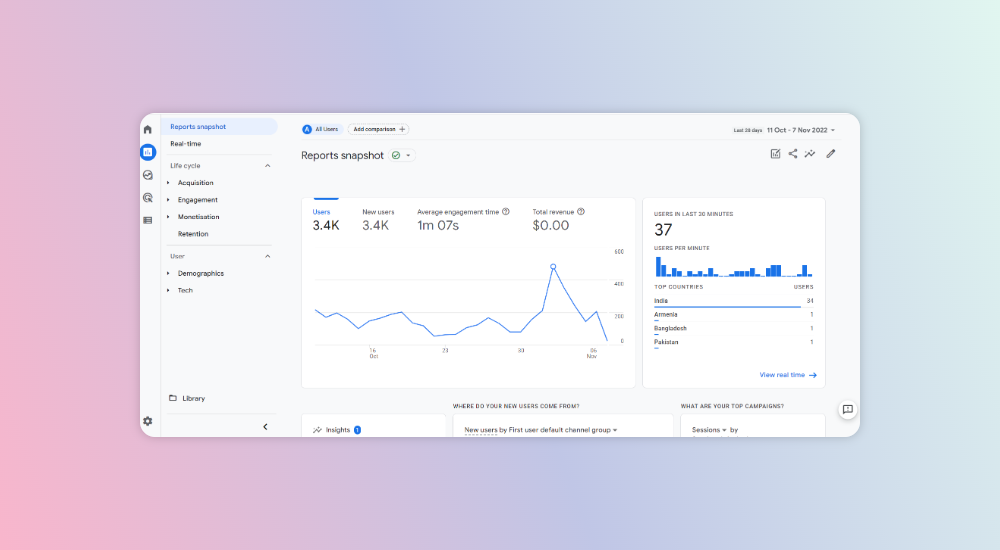
    Considering that 80% of internet activity happens through Google, one cannot ignore its own web analytics tool: Google Analytics. Despite being the most obvious one, it is the most helpful and user-friendly tool. The marketer simply has to create a Google Analytics account and copy the provided code on the business’ website.
    Google Analytics

    It then automatically collects, monitors, and presents data. It is a website activity tracker which allows the marketer to create customized reports and displays results without any delay. It specializes in website visitor tracking. There are numerous google analytics alternatives that provide condensed reports of various parameters offered by the former along with a few new ones.

    2. Open Web Analytics

    Open Web Analytics

    OWA is a fairly simple web analytics free online software with a huge storage capacity. It allows you to track multiple websites. Similar to its peers, OWA provides comprehensive insights like views, unique visits, referrals, bounce rates, etc. However, it additionally tracks each visitor’s click-streams and points out where exactly on a page did the click occur.

    3. Serpstat
    Serpstat

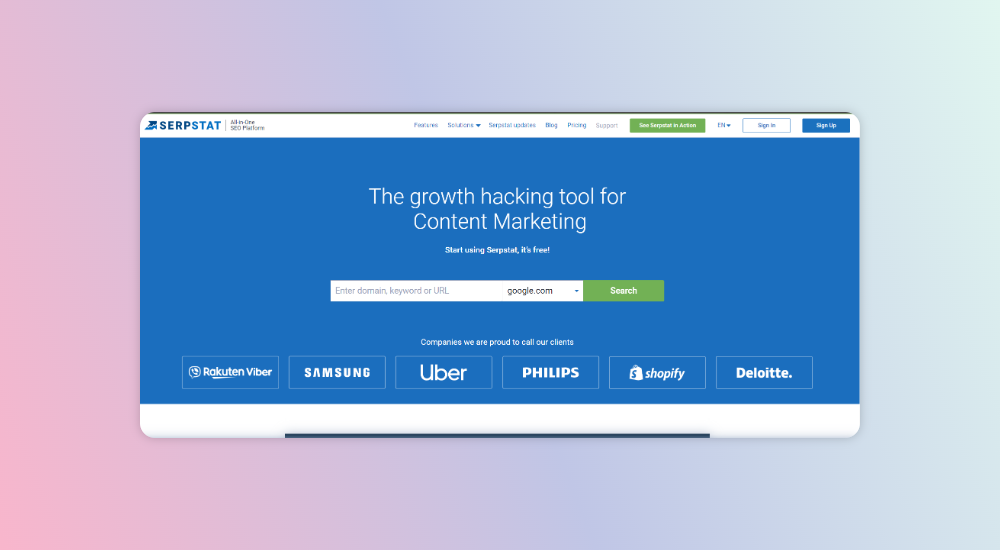
    Serpstat is your go-to tool for measuring SEO success and getting real time web analytics. It provides details on search crawlers, results page ranking in the context of keyword search, page analysis, backlinks, internal links, etc. Moreover, it provides detailed tips on how to boost your ranking and leave your competitors behind at an affordable sum.

    4. Cyfe Data Mashup Widget
    Cyfe

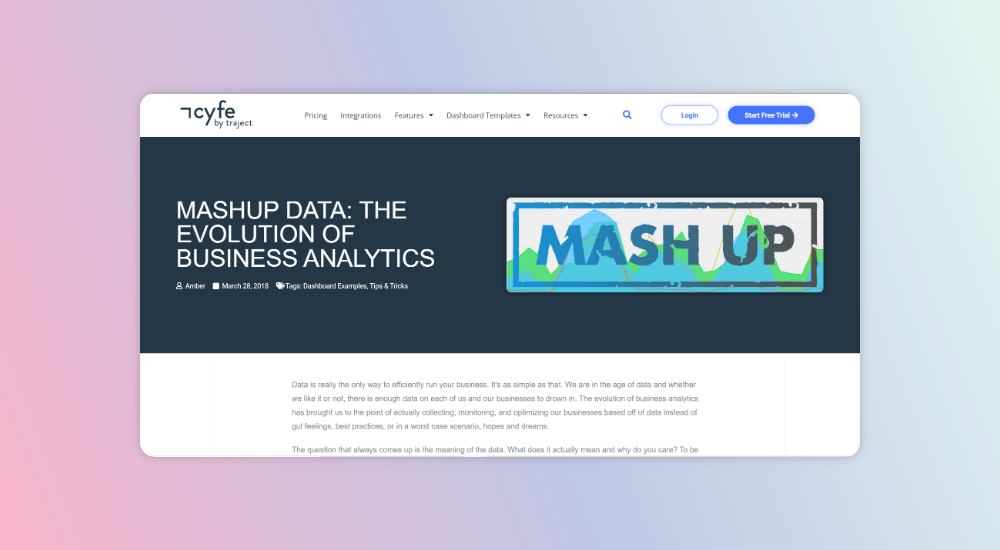
    Cyfe is an ideal website analytics tool for social media tracking. It mashes up multiple analytics reports and draws analogies between them to show how one factor impacts another. It merges real-time web analytics with social media analytics. For e.g: How does your Instagram post increase, website visitors?

    This is a clever way to get an integrated analysis of your online activity and understand the effects of your social media campaign on your content strategy and web activity.

    5. Headline Analyzer

    CoSchedule

    Many websites use clickbait which is just misleading content crafted to generate clicks on a particular link. This not only annoys viewers but also decreases your credibility. Sometimes, the search engine may flag your website as a clickbait generator without the marketer actively doing so. Headline analyzer is a tool that helps you improve your page heading and titles to attract more visitors and drive website traffic. It is a free online content analytics tool that simply asks for your basic details.

    6. Salesmate

    Salesmate

    Content is evaluated in terms of lead generation. These leads are then converted into sales through promotional and direct marketing. Salesmate is an analytics tool that monitors the articles, blogs, and visual content which generate leads.

    It forecasts sales based on the insights it provides to the marketer such as the products your readers were most interested in, referrals, contact information, etc. This provides real-time sales data for effective targeting. It is a highly affordable CRM software too. It is a good google analytics alternative if your business’s digital marketing needs are superior to most and rely strongly on online sales and leads.

    7. Keyword Density Checker

    Keyword stuffing incurs the wrath of search engines and can give your website a bad name in the engine’s list. Keyword density checker monitors the number, strength, and frequency of keywords in your content and provides you with an ideal solution to increase your search ranking.

    8. PlagiarismCheck

    Search engines flag your website if they find duplicate and plagiarized content. It decreases your credibility. PlagiarismCheck is a tool that helps you check the originality of your content.

    9. Search Combination Tool

    Finding the right words and phrases for your content to attract visitors can often be confusing. This is an effective tool that helps you find the correct combination of phrases that visitors usually search for. All you have to do is insert a list of keywords under which you are aspiring to be ranked.

    10. Crazy Egg

    Crazy Egg

    Crazy Egg is a content analysis tool that provides heat maps to better understand your website activity. It gives insights about which content among images, videos, parts of a blog, etc. attracts the most attention from visitors. It provides easy-to-understand graphics to analyze website visitor tracking performance.

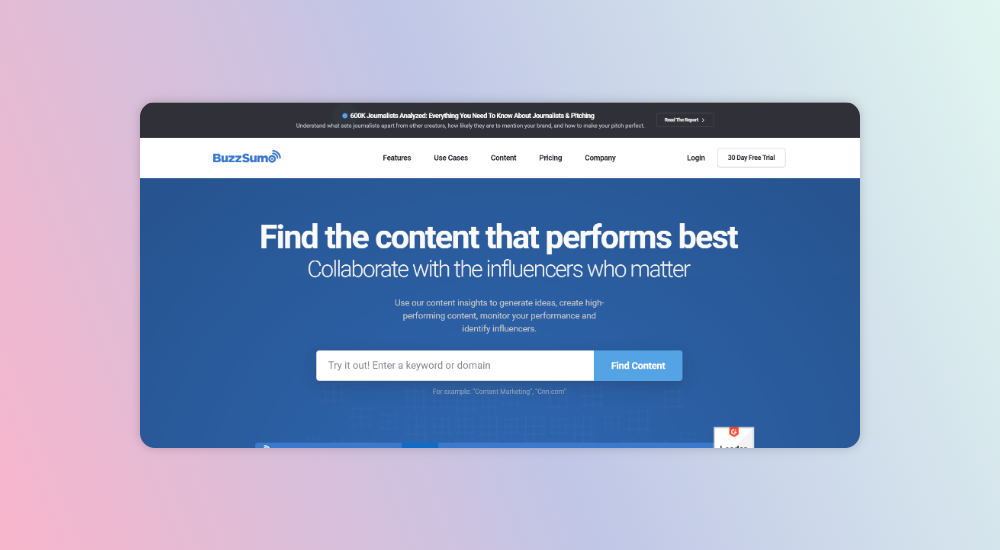
    11. BuzzSumo
    Buzzsumo

    BuzzSumo has an interesting mix of content analytics tools that not only provide you with insights about your content but also about the content which is popular in that particular genre. Similar to most free analytics tools, you can track visitors, referrals, bounce rates, etc. with its help, but what stands out is that you also gain an understanding of why your competitor’s content is more successful.

    12. Pingdom

    Your website’s technical set-up is a crucial ranking factor that helps you appear on the SERPs. Pingdom helps you monitor your digital experience and even provides solutions to make your website faster. It even alerts the marketer when a problem is detected in the running of your website.

    Suggested Reading: 22+ Content Writing Examples, Useful Tools & Best Practices

    Ramp Up Your Content Strategy

    Once you are equipped with these content analytics tools which enable you to target and market your content efficiently, you can embark on the journey to strengthen your SEO strategy. You can also check out our latest blog to gain insights into the process of optimizing your content.

    Retrospection with real-time web analytics is the stepping stone to long-term brand equity and marketing success. With the availability of numerous free content analytics tools, you will be effectively equipped to control the amount and kind of traffic you attract. Merging this digital marketing canon with your overall marketing campaign will ensure effective results.


  • The Ultimate Guide To  Content Creation During COVID-19

    The Ultimate Guide To Content Creation During COVID-19

    Content is, and always has been, a driving force that powers marketing campaigns. And looking at the recent events, it is all the more important to drive feelings of empathy, trust, and transparency for your brand through your content creation during COVID-19. 

    The validation of this started midway through March, when the leadership across companies, like Freshworks, Zoho, Amazon, Adobe, etc., demonstrated first-hand the key aspects of empathy, trust, and transparency across their communications channels.

    Here’s how it helped. As soon as the news of the pandemic came out and a nationwide lockdown was imposed, the leaders came forward and assured their customers about their Business Continuity Plans. That helped them build trust and avoid customer churn.

    That’s not a one-time activity, however. You need to keep your customers and other stakeholders updated on how your business is trying to help them, what steps you are taking to resume operations post-COVID-19, and how you can help your customers during these uncertain times.

    This is key to customer relationships, and thinking long-term is the path most organizations are following. Also, a key part of this is your content engine, which must keep running.

    The current scenario brings to light some interesting possibilities. We will touch upon a few of them as we go along. You may be concerned about the relevance of your content, or there may be sensitivity issues. Yet, you want your content to be up-to-date. How do you achieve all this?

    As someone responsible for creating content, it’s crucial to adapt your content management strategies to the current situation. Below are key insights which should help you better manage your content creation during COVID-19.

    Let’s take a look at what you can do to create captivating content:

    Solutions to Power Your Content Creation During COVID-19

    1. SEO Pays You Back

    Business heads are searching for solutions to enable remote work, HRs are searching to digitalize their HR systems, and SMEs are looking out for digital solutions to keep their businesses running. Where do they search? Does your solution exist where people are looking for it?

    A key channel is Google, and SEO is the one thing you might have always kept at a lower priority, considering “it takes time.”

    But bombarding your users with Ads won’t work now. You need a solution that helps you attract users who have the intent to buy.

    But again, you say, the world is under lockdown and I am not selling, so why marketing?

    While most businesses have been thinking of surviving, those who have been successful in the past are now working towards thriving in the post-Covid-19 world. So, when everything goes back to normal, your business should be available online when customers start buying again. And since we know SEO takes time, now could be the right time to start.

    Here’s how to proceed:

    1. Do a content audit for your website
    2. Find 3-5 key searches which your users would search for, so your website has a higher chance of ranking
    3. Create a content calendar, add topics aligned with each keyword in the last step, and also add 4-5 more topics that revolve around each of these keywords
    4. Start creating long-form and engaging content around these topics

    The aforementioned process is called the Pillar-Cluster process. It was first strategized by Hubspot.

    This is also a perfect time for experimentation, and your SEO team should adopt a few new and robust SEO strategies. You don’t even have to wait until the market opens up again.

    2. Retaining Your Existing Customers

    A major part of content marketing is about targeting old customers rather than acquiring new ones. While your existing customers can bring you new ones through referrals, you need to retain your existing ones first. You can reiterate your relationship with existing customers and put some strategies in place for following up with leads when the economy opens up again.

    Take a step back and review your customer base. Put the data through various tools to analyze your customer following. There are various tools apart from your CRMs that you can use, like YouTube Analytics, Google’s Audience Retention Tool, Facebook Audience Insights, and Google Trends. Invest your time gainfully in exploring these tools and feeding your data into them. You will be amazed at the new insights you can get from this exercise.

    Remember, now’s also the time to take another look at various customer reviews on your company’s products and services. Take special note of the negative reviews. Are you missing something? How can you go the extra mile for your customers? What do your customers really want? Use this information while creating more relevant content and you will be sure to improve your customer engagement.

    3. Plan Content Marketing Campaigns

    Under normal circumstances, it’s difficult to get your content noticed. With the current COVID-19 scenario, this has become even more of a challenge. One of the key reasons for this increased difficulty is the flood of content in the digital space as a result of the market coming to a standstill. People are using their ingenuity to create captivating content revolving around COVID-19. Why should you not join the bandwagon?

    This is an excellent time to analyze marketing campaigns and restructure them in line with the current scenario. You can do this with a thorough post-mortem of your past strategies and plan an overhaul.

    Get your marketing team online and do a bit of brainstorming. A new idea can sometimes become a legend. For example, take the case of the “30-minute guarantee” campaign launched by Domino’s Pizza in 1973. This single idea turned Domino’s Pizza into a hugely popular brand, overnight.

    But that was the seventies. You need to create content to ride the wave of the current era and use the capabilities of being digital to reach mass audiences.

    4. Create Content Relevant to the Current Scenario

    Content creation during COVID-19 involves a thorough overhaul of your existing content. Relevance is the keyword here.

    You need to put out content that your audience can relate to. Your viewers need content that will add some value to what they do on a daily basis. For example, you can touch upon how time, which used to be such a precious commodity, has become more available today, and then go into the details of what people can do with the extra time they have on their hands.

    This is also a time when you need to ensure that you don’t create irrelevant content, as this can turn out to be counterproductive. For example, if you are posting content on social media, you need to realize that different social networks address different demographics.

    Furthermore, in today’s “copy-paste” culture, there is a lot of duplicates or similar content floating around. And this is something you want to avoid. Simply repeating what others are saying can do more damage than good.

    You can recreate your existing content and add new material that aligns itself with what is happening in the country and around the world. If you have an e-commerce company (for non, then it’s likely that your sales have plummeted or come to a standstill), rewrite your content and align it with the current scenario. Empathize with and relate to the circumstances that people find themselves in today. It is also important to avoid bombarding your customers with Ads since it can be considered insensitive.

    5. Engagement Through Competitions

    [For B2C Organizations]

    Everyone loves to participate in a competition and probably relishes the lure of winning a prize! Competing with others is also a great engagement activity.  So, this is a good time to launch new campaigns and competitions with rewards linked to your products and services.

    In a time when people seek new things to keep themselves occupied while being stuck at home, motivate them with some stimulating activities. Create competitions and interactive games that provide informative content through participation.

    However, do not lose sight of the fact that you are organizing these competitions to promote your brand. Hence, while planning these competitions, make them interesting and attractive, but avoid a hard sell.

    You can offer prizes in the form of free coupons for your products or services to be redeemed later. These will keep people engaged while reading your content or watching your videos and podcasts to learn more about your company.

    6. Intensify Monitoring

    Above all, you need to monitor the way your content is performing. Creating content, publishing it, and then forgetting about it can lead to disastrous results. At the very least, you need to monitor the feedback you get from your audience. Negative feedback can damage your brand image. If you don’t monitor your content, you won’t be aware of any negative feedback your content might be generating.

    Utilize monitoring tools that will give you an accurate picture of the way your content is being received. You can get a clearer picture of your customer’s preferences and behavior. Digital monitoring can also help you assess the bounce rates to see how much time customers spend on your website.

    Other than Google Analytics, there are many content monitoring tools, free and paid, which you can use – SerpStat, Netpeak Spider, Headline Analyzer, Cyfe, and Salesmate, just to name a few. Use these tools to monitor your published content on a weekly or monthly basis to tweak it and make necessary adjustments to your fresh content.

    Read More: 5 Reasons Why Content Marketing Is Important With Its Strategy

    Summing it Up

    In these challenging times, carrying out even the simplest tasks becomes complicated. Creating engaging content is not easy, and the difficulty level increased, given the present COVID-19 crisis.

    However, as we observed here, there has been an exponential increase in the internet audience, as India and several other countries have either been through several phases of lockdowns or are still under one. It is this increase in internet activity that you can use to your advantage to build up your audience with captivating content.

    So, how are you going to revamp your content creation during COVID-19? We have mentioned a few ways of doing it, but that doesn’t mean that you can’t come up with a few good ideas of your own.

    Don’t be left behind, and use your time during this crisis to create something meaningful that will reward you in the times ahead.

  • Freelance Content Writing: Make Your Career In Content Writing

    Freelance Content Writing: Make Your Career In Content Writing

    It’s no secret that a lot of businesses today, enter the limelight either because one of their creatives went viral or that their webpage was ranked high on search engines.

    What makes one webpage better than the other? Is it the services offered? Not entirely. There is an abundance of web pages that offer equally good services. What makes one brand stand out amongst its competitors is the written content they communicate to its audiences.

    Content writing has now become one of those jobs that will always be in demand. More and more businesses are cropping up every year, and each of those businesses would do well to hire a freelance content writer to boost their visibility.

    As a writer, the moment you decide to tap into the market to build your freelance content writing career, the whole world is at your stage. Freelance gigs have become a lucrative stream of revenue. No matter where you reside, how many ever hours a day you wish to work, or even at what time of the day you want to work, there’s no dearth of projects on freelancing sites.

    Almost every business worth its salt has its own webpage, and that means more content-writing prospects for you!

    What’s more, is that you don’t need to limit yourself to working with clients in your country. A freelance content writer in India could be making big bucks by dedicating themselves to the profession and establishing a steady practice of inviting global clients to hire their services.

    If you are a writer, looking to make the most of the digital space and don’t know where to start, keep reading for a foolproof guide to kickstarting your freelancing content writing career in India. For those who are ready to hustle, success is but a stone’s throw away.

    Build a Freelance Content Writing Career – Step By Step Guidance

    How to start freelance content writingNo matter who you ask, every freelance content writer will direct you through the same mundane steps to get your foot in the door. It may be trite, but it works.

    1. Know What You’re Getting Into

    Before you let the excitement of embarking on a new venture overwhelm you, read up about the freelance content writing scenario today. Don’t skimp on the research. You do not want your freelance content writing career to plummet before it’s even taken off.

    2. Choose Your Niche

    Being the “Jack of all Trades” may help you in some circumstances, but here, it is important to hone your skills in specific domains. One of the first steps you should focus on is understanding what kind of niche content you want to focus on.

    There are a lot of categories to choose from; some of the most popular ones are healthcare, online marketing, technology, education, and banking.

    3. Take up Online Courses

    Now that you’ve decided what content you are going to specialize in, it is time to learn as much as you can about it. You no longer have to invest a lot of time and money into rigid college programs.

    Online courses are all the rage today because they are a lot more affordable, tailor-made to your interests and qualifications, insightful, and easily accessible. Take up a course or two. It’ll definitely enhance your pitch to a client.

    4. Understand How to Write for Online Audiences

    Even if you have become well-versed in your domain, your content writing services hold little value if you do not know how to target online audiences.

    It is not the same as writing for offline media. Luckily for you, Hubspot has a Content Marketing course that will prep you on how to have online audiences clinging to every work you write. Trust us, this skill is a must-have for a successful freelance content writing career.

    5. Keep up the Pace

    Once you’ve got the basics down, all you need to do is put yourself on the market. Make your services discoverable and reach out to clients.

    Start small with short-term projects and build your portfolio over time. The more projects you take up, the sooner you’ll build a network of long-term clients who trust you and would prefer to hire you for their recurring content-writing requirements.

    Different Forms of Content You Should Master

    There’s more to the preparatory stage than just deciding your fields of interest. Keep in mind that every project could be different.

    In your freelance content writing career, you may have the opportunity to write different forms of content such as whitepapers, web copies, blogs, etc. Not only do they vary in terms of the style of writing, but they are targeted toward different segments of the audience.

    1. Targeted Blogs

    Targeted blogs help push a certain product or service in a more casual and reader-friendly manner. They can be long-form and contain multi-media content which aids the reader in grasping the overall message.

    When you get down to writing such a blog post, you should keep two pointers in mind – firstly, make sure it doesn’t sound general and vague, especially since they are meant to cater to a very specific group of people. Secondly, draft a content strategy that will make the blog successful in generating leads for the business.

    2. Newsletters & Emailers

    A newsletter is integral to a business because it lets a brand keep its customers up to date. If you want to maintain a loyal customer base, send out drip emails regularly and keep the customers in the loop.

    It often contains reports regarding business activities and some behind-the-scenes information. It is important to ensure that newsletters are written in a brief but insightful and engaging manner.

    Whitepapers/Ebooks

    The first time you heard the term ‘whitepaper’, you may have gotten a little flabbergasted. But once you understand the gist of it, it’s not really complicated to write whitepapers that bring value to the readers. They are informative guides that address a concern and also provide a solution to it. The writing style used in a whitepaper is crisp, formal, and factual.

    Case Studies

    A freelance content writer, prepared to work on a case study, must be ready to carry out extensive research. Case studies are written as part of a research process to understand the relationship between some variables. They are analytical texts that investigate an event, a group, or an individual. It takes some practice before you can become an expert in writing case studies.

    Suggested Reading: How to Become a Freelance Content Writer in India

    Website Copy & Landing Pages

    Lastly, web copy. A copy is a piece of content that is used for marketing purposes and to boost sales. Copywriters are creative thinkers and can use words to their advantage.

    Web copies should be concise and eye-catchy, and it always pays to think out of the box. That said, clients prefer a freelance content writer who can stick to the given brief. So, keep that in mind.

    How To Get Clients As a Freelance Content Writer?

    A freelance content writer in India may find it a tad bit difficult to first begin signing with clients. That is because many renowned organizations are less likely to work with individual contractors due to credibility reasons.

    And even if you manage to strike those first few deals, the chances are that you’d be neck-deep trying to understand all the nitty-gritty of the procedure, the legalities, and constantly having to follow up on payment releases.

    That can be a lot for a person who is handling everything on their own. As a freelance content writer, you could benefit a great deal by joining WittyPen and starting to work on high-quality projects to build your freelance content writing career.

    We not only bring the best clients to you but also ensure that there’s regular work available for those who are willing. With WittyPen, your only focus is to write as frequently as you desire.

    All other compliance requirements are hashed out on our end, between the client and us. We even work with agencies to collate the necessary information; thereby, saving you a great deal of time.

    Our team is equipped with talented in-house editors who perform quality checks so that your work is above par. Moreover, all the sales and marketing processes are taken care of by us. So, you can forget the tedious cold calls and cold emails to clients. We bridge the gap between the talent and the talent-seekers.

    Conclusion

    Building a freelance content writing career is equally difficult and rewarding, and you should start by strengthening your skills and then working with platforms like WittyPen, Upwork, or even LinkedIn to get content projects.

  • 5 Best Proven Ways To Increase Traffic To Your Blogs – Wittypen

    5 Best Proven Ways To Increase Traffic To Your Blogs – Wittypen

    Over the last few weeks, we’ve been getting a lot of requests on one specific topic – how to increase traffic to your blog. The internet is not how it was a couple of years back. While content is still king, how it’s created, consumed, ranked, and shown to end-users has clearly changed.

    Though it’s possible to keep track of all the changes happening online and change your content strategy frequently, it’s daunting. If you’re a business owner, you’ll have tons of other equally crucial concerns to work on. That’s why having reliable long-term fixes to how to get traffic to your blog strategies makes complete sense.

    It’s not going to be easy, but there’s good news.

    Increase traffic to your blogs

    One – you’re not alone.

    Two – you can start all over again.

    When we say, you’re not alone, one aspect we mean is online competition. To put this into perspective, understand that your page competes with 20 billion other pages online for attention. According to statistics, over 409 million people view over 20 billion pages each month.

    Also, over 70 million posts are generated by users every month on WordPress. That’s WordPress alone. So, you can imagine.

    The other aspect here is that over 50% of bloggers or website owners reveal that it has become really tough for them to drive traffic from Facebook in the last couple of years. Out of this, over 1/5th of them share that it’s become equally difficult to increase blog traffic from search engines like Google.

    So, one thing we can acknowledge is that it’s an epidemic. And like most epidemics, we thankfully have an antidote in the form of several approaches and strategy revisits.

    But before we understand how to increase blog traffic and websites this year, let’s look at some factors on why you don’t rank in the first place (not literally). And why it’s difficult to increase blog traffic on search engine

    Reasons Your Website Attracts Less Traffic

    1.  If you have built and launched a new website and moved to a new server, you need to have a proper 301 redirect strategy in place. Your website is most likely to experience a dip in its ranks if this is absent.
    2. Search results are location-specific. If you see a drop in ranking, check for other geographical areas to be completely sure about the drop and come up with strategic action plans.
    3. You are most likely being penalized by Google for implementing outdated or spammy link-building plans.
    4. If your website has too many navigations, visitors will leave. Build a website that restricts navigation to two or three clicks from the homepage.
    5. You’re using duplicate content or existing content without implementing a canonical tag or more.

    How To Increase Traffic to your Blog and Its Ranking

    Now, most of the factors we’ve listed so far can be fixed almost immediately. You can get a security certificate to become an HTTPS connection. You can also smartly insert keywords in a blog and remove website elements to ensure a faster load time.

    However, the fixes we will see now might need a longer investment in terms of time (though not all of them).

    Revisit Your Website’s UI/UX

    Check Your UI for traffic

    Having great content on a website that has a subpar user interface is a curse. When designing your website, it is easy to get carried away by creative ideas and inputs that are shared within your meeting rooms.

    Plans to implement tons of engagement practices are good too. But if they are not tested for usability, it would end up killing your traffic.

    Further, a bad UI/UX increases the bounce rate of your website/blog as well, snatching away from all the effort you’ve put in to get your visitors to your website in the first place.

    So, the first thing to work on is your blog’s user interface. A simple, data-driven, navigation-friendly website with color psychology implementation is ideal. Keep your content short and crisp, but just as informative. It can help to increase traffic to your blog.

    Get Your SEO Game Right

    SEO to drive traffic on blogs

    When we say SEO, all that most people think of are keywords. There are several technical aspects to this as well. For instance, overlooking the process of updating your sitemap when you change your website’s structure, not setting up XML sitemaps, not giving enough attention to metadata and tags, implementing outdated keyword strategies, not optimizing old or existing content, and more.

    A simple fix would be to install SEO plugins that immediately give you a comprehensive idea of how strong your website’s SEO game is, and what you can do to improve it for the future. Such plugins also recommend quick fixes and remedies you could implement.

    Keeping your SEO game strong will make your blogs rank higher and will get indexed quickly as with SEO you’ll increase the domain authority. SEO can turn out to be a great way to increase blog traffic or website traffic.

    Updating Old Blogs

    Update older blogs to drive traffic

    Blog writing is not a one-time activity. It has to be revisited multiple times. According to a report, only 38% of bloggers update their older articles. By updating, we mean revisiting older articles and making changes to them in accordance with current and prevailing trends.

    For instance, if you’ve written a post on project management best practices and it’s been a year, you go ahead and look at new details you could add to the post.

    If you’ve missed pointers like scrum and agile frameworks, adding them would be an update. By doing so, 34% of bloggers reveal that they produce stronger results. When you update your older blogs you get fresh content to serve your viewers and also help to drive traffic.

    Build A Concrete Marketing Plan For Every Blog Post

    Content marketing plan to generate traffic
    Source – Google

    You can’t expect to drive traffic to your website/blog if you only write posts and upload them to your blog, hoping readers would pick them up and read them.

    Considering the competition, it only makes sense to chart a concrete marketing plan for all of your posts. Start with a content calendar and list out the number of content pieces you want to post every month.

    Once you do this, differentiate the types of content you plan on creating. Decide how many videos, podcasts, write-ups, eBooks, or other forms of content you intend to produce, and come up with an effective marketing plan for each.

    Leverage the distinct potential of each social media platform and use appropriate content for promotion. Treat every article of yours as a product launch and generate buzz around it. You would gradually see takers for your blog. Publish posts regularly on diverse topics to sustain their interest.

    Building content communities is one of the best ways of increasing traffic to your blog or website. It ensures that you keep your audiences engaged across channels while leveraging the benefit of word-of-mouth marketing.

    Read More: 5 Reasons Why Content Marketing Is Important With Its Strategy

    Blogger Outreach and Guest Blogging

    Guest Blogging for generating traffic
    Source – Google

    Guest blogging is one of the most effective ways to generate backlinks and traffic for your website. It’s the simple process of writing for another popular website (with more traffic than yours) to get a backlink to your post. Readers who find your content valuable would simply visit your website/blog to get more insights from you.

    A report reveals that 60% of bloggers write guest 1-5 guest posts a month for other popular sites. With guest blogging, you’re not only establishing your authority and credibility with a new audience but also paving the way for more traffic.

    However, not all popular blogs accept guest posts, while a few others are very particular about what content is published on their websites.

    It’s good to make a list of websites that accept guest blogs. Read their existing ideas to get an idea of the niche they deal with, their writing style, and more, and prepare unique pitches to get your work published.

    A good approach is to send out an outline of your article to blog owners before sending out the entire blog itself. This way you can increase the chances of getting traffic to your blog.

    Conclusion

    To drive traffic to your blog or website you’ve to give all the importance to your content as if you’re writing quality content marketing it or generating traffic to it becomes much easier.

    If you feel you’re not good at writing, perhaps you could reach out to agencies that offer content writing services. Blog writing in India is an underestimated strategy that you should leverage more for your business and traffic growth. When you choose blog writing services, aspects like guest blogging, blog updating, and marketing become easier.

    So, these were some of the immediate plans you could execute right now to increase traffic to your blog or website. Let us know in your comments if you have implemented any or have other ideas in mind.

  • Implementing the Topic Modeling Approach in 2020

    Implementing the Topic Modeling Approach in 2020

    What is Topic Modeling in Content Writing?

    Content writing in 2020 has drifted away from the standard keyword-focused SEO practices. This is a result of more and more businesses churning out content filled with keywords, making it repetitive and bland.

    Therefore, search engines have created an algorithm based on topic modeling or topic modeling, which focuses on the relevance of the content, apart from the keywords themselves. This algorithm is called Hummingbird, which is crafted by Google. With this, the context and relevance of your content are as important as keywords to gain visibility on the search results page.

    Checkout how to write content that is future proofed for Google Algorithmic Updates

    How Does Topic Modeling Work?

    Topic modeling is not as tasking as content writing services make it sound. It draws from ethical content writing practices which eliminate keyword stuffing to attract more web traffic.

    For example, a user is trying to search for a recipe for a dish they ate in an Italian restaurant but is unable to remember its name. However, they’re able to describe it, and type the description in Google’s search bar- ‘Italian dish with rice, cheese and mushroom’. By analyzing the motive behind the query, the search engine will display results for Mushroom Risotto recipes. It will load recipes on Youtube, Wikihow, Allrecipes and more. Google makes this possible through Hummingbird, which has a large amount of data.

    It goes through every word in your query to gauge exactly what you are looking for and displays appropriate results based on logic.

    How to use E-A-T to Increase Webpage Ranking?

    E-A-T refers to experience, authority and trust when it comes to Google’s search results page ranking. These three factors are a prerequisite to increase your webpage’s ranking in Google’s ever-evolving ranking algorithm. If your website content or blogs fail to get high EAT scores, then you will essentially lose web traffic and substantial amounts of revenue.

    1. Expertise

    Certified professionals or scholars in a particular domain have deep knowledge and expertise about their niche. This in-depth information and key insights are hard to fake due to which you are often referenced by other websites and authors. This increases your reliability in Google’s eyes and automatically increases your score. A brief bio of the author at the end of a blog often comes in handy to get a higher score. Content writing services should diversify their writer portfolios to accommodate this factor.

    2. Authority

    Content writing in 2020 has already established the importance of this factor. Authority stands for reliability and accuracy. Google wants to ensure that the user gets the best available source of information. Therefore, it relies on the number of backlinks and mentions to establish the authority of a blog as people won’t mention an irrelevant or pointless blog. One of the reasons Wikipedia trends on the results page is because it has numerous inbound and outbound links.

    3. Trust

    Trust refers to honesty and genuineness. Google measures a website’s trustworthiness over a period of time. It uses a number of metrics to calculate trustworthiness, such as positive organic reviews, direct feedback and contact mechanism, code of conduct or ethics statement and domain security. These factors establish the reality of a business’ existence and functioning. Moreover, it gauges the genuineness of content through plagiarism checks and black hat SEO practices.

    Important Factors Of Topic Modeling In Content Development

    Content writing ideas which include search query keywords are a must, but to pass the topic modeling mechanism the content which follows should expand those keywords into relevant information.

    As the topic modeling doesn’t have any fixed factors, it’s beneficial to craft an anchor text which includes keywords or descriptive words about the main theme. When an image is rooted in the content, the anchor text can draw in larger web traffic. Here, choosing the right keywords becomes important as it’s not just about drawing traffic, but also about context.

    How To Optimise A Webpage Using Topic Modeling Approach?

    As we have established, quality content writing is more important than keyword density. Content writing services should focus on the following factors to enhance their ranking and user experience:

    1. Long-tail keywords which are descriptive in nature and tend to attract more users.

    2. Description of your topic and its elements as being imperative to increase your search ranking.

    3. Target phrases or element words should be a part of your anchor text, header, title and body text.

    4. A feedback mechanism or comments section where you respond to users.

    Wittypen harbours the benefits of the E-A-T approach and topic modeling by providing highly qualified writers for different domains with superior digital marketing knowledge. We stay updated with trends in content writing services and provide highly creative and effective content writing ideas which factor in newer algorithms like Hummingbird.