Category: Content Writing

  • How to Write Effective Blog Series: Its Benefits & Guide

    How to Write Effective Blog Series: Its Benefits & Guide

    Among the many responsibilities of owning a blog is keeping your audience engaged. The surest way to do that is by creating a blog series. This way, not only do you provide SEO value to your website, but also generate considerable traffic towards it. One of the best ways of doing this is through episodic blogs in the form of a series.

    Generate Effective Blog Series

    Why is Writing Blog Series Effective and Engaging?

    • It persuades your readers to keep coming back to your blog.
    • The keyword association for your website will become strong.
    • Your blog content will increase in a planned manner.
    • Your website revenue will escalate due to your content’s uniqueness and creativity.
    • A blog series will create a level of unrivalled anticipation among your readers.

    Now that we’ve established the usefulness of creating a blog series, here are some content-writing tips that could get you started.

    Best Tips For Generating Effective Blog Series To Get Traffic

    It can be time-consuming to plan effective blog series or ideas, however, if you make a proper strategy and go according to it, you can get great outcomes in the form of traffic to your blogs. Let’s look at each point one by one!

    Narrowing Down the Topic for Your Blog Series

    Several factors must be taken into consideration before deciding on a topic for your series. It must be on a subject that is exhaustive in nature.

    Providing a comprehensive understanding of the topic, perhaps a four-part series will accomplish the goal. In this way, each post will be dedicated to understanding a certain aspect of the subject at large.

    You must also remember to choose something that is relevant and trending. Keep in mind that the posts don’t run too long while making sure that you dig deep enough and showcase your expertise on the subject.

    Furthermore, by making sure that your topic is ageless and suited to your audience’s needs and interests, you’re already a step ahead. Addressing their concerns will not only boost your credibility with them but will also open a path to new viewers who might find your blog through their search queries.

    The Elements Involved in a Four-Part Blog Series

    A blog post series may contain any number of blog posts within it (ranging from two, four or even seven posts). By way of example, here are a few blog writing tips for structuring a four-part series.

    Part 1 – Establishing Authority: Through the first instalment, your audience should get a clear understanding of why you’re writing about a particular subject/brand. Your content should display your expertise.

    Once you’ve got that sorted, you can focus on presenting your post uniquely. Specify why the topic interests you while describing all the important details.

    Towards the end, you can outline what the rest of your instalments are going to look like. A Call To Action, encouraging your audience to subscribe and sign up will make for ideal additions.

    Part 2 – Furnishing the Details: The second instalment in the effective series should focus on including variables such as an introductory/how-to video or testimonials, that could add to the reliability of your content. This will essentially set the groundwork for the upcoming post and also build anticipation.

    Part 3 – Talk About Your Brand/Product at Length: The third instalment of your blog post series is all about demonstrating the services that your brand/product offers in complete detail. Make sure that the content is presented creatively and innovatively.

    A few content writing ideas that would enable you to do that is to present your content using illustrations, how-to lists, infographics, interviews and a host of other creative materials. This is to ensure that your audience finds your content engaging enough to stick around for the fourth and final instalment.

    Part 4 – Focus on the Audience: You have now, successfully established a connection with your audience by constantly providing them with varied, exclusive content, all the while talking about your brand. The last instalment in your effective blog series, therefore, will focus on engaging with your audience.

    Respond to queries posted through the comments and emails. Provide additional details of your product/brand like an upcoming event, new releases or upgrades. This builds connections that result in a customer base that will willingly return and read your next blog post.

    Suggested Reading: 25+ Content Marketing Tools – Drive Growth For Your Business

    Conclusion

    A blog series is a tool like any other form of creative outlet, with the ultimate aim of engaging your audience. To get someone to read your work and share it, you have to constantly improve your skills.

    A blog series can help you better engage your audience on subjects that are lengthier and more comprehensive. Use these tips and more available techniques on our website to upgrade your content to industry standards or better!


  • 4 Effective Tips For Choosing the Right Blog Topic

    4 Effective Tips For Choosing the Right Blog Topic

    Blogging is not a new concept. There have been numerous bloggers who have created a niche for themselves using this medium. While blogging as a form of expression was largely explored by individuals, enterprises and businesses are recently beginning to realise its benefits.

    Blog writing is a great way to engage with your audience and showcase your business’ value. Companies that blog enjoy 97% more inbound audience than the blog-less competitors. Not just that, websites with blogs have 434% more indexed pages , and B2B blogs get 67% more leads for the company than those who do not. Be it a B2C or a B2B market, enterprises can use blogs to create thought leadership, create a strong connect with their key audience, and this can impact the brand image and drive higher revenues for the company.

    If you are thinking of starting a blog for your business, here are 4 key tips for choosing the right blog topics that resonate with your intended audience:

    Choosing the Right Blog Topics for Your Website

    1. Know Your Audience

    Be it blog content writing, video creation or social media promotion; great content will always garner an audience. However, if your content is not relevant to the audience you’re targeting, it will not have the impact you’re trying to achieve. Before you start creating and publishing content on your blog, make sure to clearly define your target audience.

    Choosing the Right Blog Topic to Engage your Audience

    To create a focus group, brainstorm on the kind of audience that is more likely to be your brand’s customer. What demography are they from? Do they belong to a particular age group or geographic location? What are their interests, their key challenges, and why they would be attracted to your brand or products?

    Defining your target market will help you create great content that your audience can connect to, which will help you generate the right impact and elicit the response you are looking for.

    2. Define The Purpose Of Your Blog

    Once you have defined your target audience, the second step is to focus on making your content a relevant as possible. It involves understanding the needs of your target audience and creating content that resonates with them.

    The key to making your blog writing stand out and make the right impact is to share relevant content promptly, that is, to share it when and where the audience wants to see it. For this, content creators should define the purpose of the blog. Make sure to explain:

    1. Why you’re creating the blog.
    2. Who should be reading the blog
    3. When this blog should be shared to its intended audience.
    4. What impact the blog should have.

    The best blogs are those that evoke the reaction from your audience in precisely the way that you expect.

    3. Avoid Plagiarism and Rely on Credible Sources

    No content writing services can do justice to your blog if you don’t account for how your competitors or other sources are targeting their audiences. Before you create a blog writing plan, make sure to check out what your competition is doing and which keywords they are targeting. This will help you in choosing the right blog topic, creating content that stands out, and developing a strategy that is in line with the market while making sure your blogs are unique.

    Analysing your competitors’ content will also help you identify areas that lack information so that you can aim to fill in the content gap.

    image to avoid plagriasm

    Researching the market and the competition is also essential as your blogs should incorporate credible sources that support your statements. Make sure to include research and facts that support your blogs, but make sure you do not blatantly copy. Attribute and avoid plagiarism, by leveraging content that advocates your statement without any copying.

    4. Use The Right Tools To Identify Popular Topics In Your Industry

    Research may be daunting if you are not aware of the right publications or keywords that are defining your market. To help you with that, there are blog writing services and tools that will help you reach your content goals.

    1. Explore social media for research: While publications are one source, understanding the pulse of your audience will be easy if you can identify what they are sharing on social media platforms. Depending on your niche, platforms like Facebook Groups, Quora, Twitter and Pinterest are fantastic sources of information.

    2. To know what’s trending: While Google is an excellent source of information to start with, you should use tools like Ubersuggest or Ahrefs to identify keywords in your niche that you can use to enhance your blog’s reach. Another great place to understand what’s buzzing in your target group is Buzzsumo. The platform helps you find popular topics and articles in your niche and will help you create content that is unique and strikes the right chord with your audiences!

    tools to identify topic

    And there you have it. Blog writing is easy and can get you amazing results if you make sure you follow these simple steps. Before you start writing, choose a topic of your expertise and make sure you present a unique perspective on it.

    Great topics may require you to do a lot of research and keep rethinking its relevance to your audience, but once you get it into your system, the output will be much better than you’d ever expect. So take a shot, and use blog writing in your content marketing strategy to achieve the results you’re targeting.

  • 5 Effective Tips on Fashion Content Writing for the Future

    5 Effective Tips on Fashion Content Writing for the Future

    Brands are never an isolated affair. They involve design, artwork, and a bit of social media thrown in. These days, brands are increasingly driven by content, and when it comes to fashion where everything hinges on personal touch and speciality, content that hits the bull’s eye is the most endearing. Fashion content writing has evolved a lot lately.

    The discerning consumers of today are very vividly aware of what they want and how they want it when it comes to their fashion quotient. This makes it imperative for fashion content writing services to be on the same wavelength as the brands in the market.

    Fashion content writing tips

    Writing about fashion in present times should emphasise numerous important aspects, than just the age-old write-to-brag approach, to bring out the value of the content and the brand.

    Before you begin fashion writing, remember the first thing – everything starts with your PDA. The ‘Product Description Alignment’ needs your product description to be aligned well with your product. Don’t feel overwhelmed.

    It simply means seeing and knowing the product you are going to write for. The product description not only has to be exact regarding what the product is, but it also has to be conversational instead of just plain flat details.

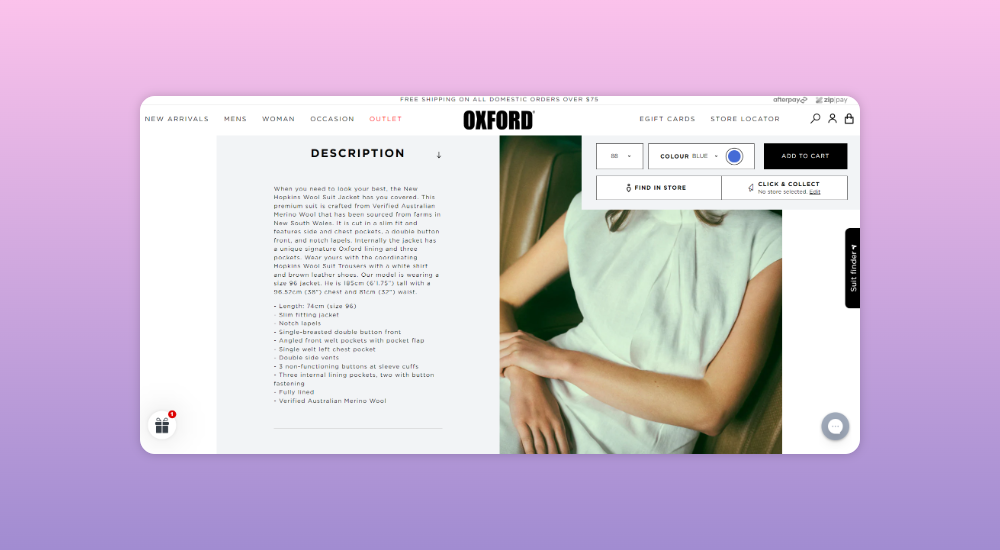
    Product Description Example

    A PD that isn’t written well, will be boring and fail to garner any attention for the product. For any fashion e-commerce website, a well-written and detailed product description have to be the first priority.

    In this age of shorter attention spans, brands are trying to make their space in the virtual as well as the real marketplace. Fashion brands rely on catchy and powerful content to command attention and mobilise their customers to make a purchase.

    Power your brand with powerful words and make your content relevant and meaningful to preset it to your customers most favourably.

    Tips To Make Your Fashion Content Writing Attractive

    A brand can make the entire world its stage if it wants. Compelling content is what does the trick and draws the audience to it. But what makes fashion content attractive and effective?

    Personalisation

    So you have managed to grab your customers’ attention with a catchy title or an attractive tagline. But is that enough? Hardly. Unless you have personalised the content in a way that it looks custom-made for them, nobody would be interested in run-of-the-mill generic information.

    For instance, you could target ‘DIY and cost-effective fashion’ or ‘fashion on a shoestring budget instead of ‘fashion trends in 2023’. You must make your content worthwhile to your audience.

    Enhancing Brand Personality

    Fashion content should create and enhance a brand’s personality. It has to realign the customers’ expectations with what the brand offers. Let the content smartly and consistently present the product in a way that reinforces the brand’s personality and sets it apart from its competitors.

    Content Optimisation

    Sub-optimal content runs the risk of getting lost in web traffic. Plan, prepare and present your content to appeal to the customer and make them engage with your brand. Keep your content fresh, updated and relevant at all times.

    SEO, advertisement, social media engagement, and images; there is a lot that can be done. Be creative, think outside the box, and never hesitate to experiment in a domain as dynamic as fashion.

    Always Deliver What You Promise

    Fashion content writing is all about presentation. But while presenting, ensure that you remain relevant and objective. Don’t go over the top and promise something you can’t deliver. Match the content to the actual product. If you promise low-cost fashion, you cannot include designer brands that cost a bomb.

    Also Read: 22+ Content Writing Examples, Useful Tools & Best Practices

    Professional Fashion Content Writing

    Fashion is ever-evolving, and so is content. Fashion presents a desirable image and lifestyle. Content convinces the customer and brings them closer to the image.

    Fashion content writing is slightly more complex than routine blogs which aim to inform. It aims at conditioning the customers to adopt a new style and may even contribute to setting a new trend.

    An eCommerce website showcases the brand and its products. It is much more than colourful images and taglines. It is a platform for the customers to engage with the brand.

    It is also an opportunity for the brand to get a new loyal customer, and an opportunity for the customer to try something new. Content does the magic of converting this opportunity to real sales for both parties.

    Professional content writing services bring to the table a special set of skills essential for the fashion industry. Thorough research, and in-depth industry knowledge, coupled with the experience of creating engaging content, make professional content agencies a perfect choice for your brand’s fashion content needs.

  • Hiring In-House Writers is Cheaper & 3 Other Content Writing Myths

    Hiring In-House Writers is Cheaper & 3 Other Content Writing Myths

    What do the words, ‘freelance content writer’ bring to mind?

    Chances are, you’re already thinking of a burnt out liberal arts /media school major sitting in front of their laptop on their couch (or worse, their bed.) You probably don’t even see freelancing as gainful employment.

    It’s funny how many content writing myths still exist, and especially so about freelancers even though work-from-home and gig /contract-based work is so common that it’s almost the norm now.

    A List of the Most Commonly Believed Content Writing Myths

    Content writing myths

    Image Source

    Dealing with In-House Content Writers is Easier

    A large part of working with these content writers involves building trust and setting certain boundaries, e.g. deadlines, payments, outlining content requirements correctly, editing and revising content, etc., all of which seems like a huge hassle.

    Understandably, you’d want to avoid this altogether and gravitate towards hiring in-house content writers rather than oursourcing content writing.

    You probably have your own reasons and arguments for doing so, but if cost-efficiency is one of them, you’re sadly mistaken. This is a very common content writing myth that hiring in-house writers is cheaper than hiring freelance content writers.

    It’s not like hiring in-house content writers is any less of a hassle than working with freelancers. You’ll need an editor, someone to manage content operations (i.e. assigning content and following up on deadlines, coming up with ideas for content, etc.)

    Another argument that’s in favour of this content writing myth is that they’ll grow their knowledge about the company while they work there and eventually write exactly the kind of content that the company is looking for.

    Granted, you might be right about that. After all, how much would a freelancer know about your company, its objectives, etc. anyway?

    What you don’t realise, however, is that after a point, writing in a particular way for the same organisation limits a writer. Writers want to write about different things. Creative stagnation and mental blocks are a real problem when you write for the same place for too long.

    Which is why a fresh perspecive might be just what your business needs. A freelancer may not know your organisation like the back of their hand, but that’s not really a bad thing.

    There are seasoned freelance writers who can can make your company, its products and its general image really shine through, if you give them the chance.

    Freelancer Content Writers Are Inexperienced and Unskilled

    The general idea about freelancers seems to be that they’re inexperienced and unskilled, but many of them actually have a lot of experience due to the different kinds of tasks they have to do and have developed their careers due to the same.

    Also, just because a writer works for your company full-time, doesn’t mean they can write about anything under the sun.

    There are limits to what every writer can do, whether they work full-time or freelance. However, the world of freelance gives you a much wider pool to choose writers based on what you need, i.e. it makes it much easier to find domain-expert content writers.

    Your in-house writer might be a tech whiz but may be at a loss for words when it comes to writing about workplace culture or marketing.

    Sure, you can hire a team where each person specialises in a different domain but you’ll be hiring for years because that team would never stop growing. There are an infinite number of topics that you may need content for at any given time and hiring a freelance content writer is just the more feasible option.

    The freelancer pool is much more versatile when you need content written on a large variety of topics.

    Hiring In-House Content Writers is Cheaper

    Now for the much awaited question – what about the money?

    We’ve discussed cost in terms of time, energy and resources, but what kind of numbers are we looking at when it comes to freelancers and in-house writers?

    Agreed, there’s a little more consistency in what you pay when you hire in-house content writers. Fixed rates do not equal lower rates, though. Hiring an in-house writer means you pay them a certain amount, no matter what. Also, other full-time employee perks would need to be taken care of.

    That’s right – hiring an in-house content writer would actually cost you more!

    Hiring a freelance content writer, on the other hand, gives you a little more flexibility and make sit easier to manage their tasks.

    Freelancers charge by word or by content piece, so the rates are a little bit more negotiable. Since they’re not full-time employees, you pay them for the work and don’t need to think about anything else.

    Moreover, since freelancers appreciate any work that comes their way, they make it a point to give you the best they can. They will revise and rewrite content as needed and you need only release payments when completely satisfied with what you have received.

    It’s a low-commitment alternative – if one writer is not giving you the content you are looking for, you can always look for another writer. You can even send out an assignment to multiple writers and see who delivers the content that captures your vision in the best possible way. Another alternative is to go through an agency that will select and manage the writers for you.

    In Conclusion

    The freelance world is not just couch-writers and burnouts. There is so much potential out there- way more than you might find within the confines of an office.

    If you still feel like the screening, onboarding and managing of freelance content writers is a daunting task, fear not. We are here to help! WittyPen brings you the best quality content from freelance writers around the world.

    Click here and get one step closer to the best quality content at your convenience.

  • How to Place Your Content Requirements Before Hiring Freelance Content Writers  to Reduce Revisions

    How to Place Your Content Requirements Before Hiring Freelance Content Writers to Reduce Revisions

    With the rise of freelance writers who advertise their services online, business owners these days are spoiled for choice. Hiring someone to write (or perform any task) has never been simpler.

    However, the convenience felt when hiring freelance content writers comes at a cost. Ordering content is easy, but how often are we really satisfied with the delivery?

    Some things get lost in translation. Writers may not understand what is expected of them and this leads to you ending up with a piece that does not meet your content requirements.

    Of course, there’s nothing like sitting someone down and explaining exactly what you need to them point-by-point. But since most freelancers work remotely, face-to-face interactions (although ideal) are not always possible.

    Working with freelancers is an entirely different ballgame than working with your regular, full-time employee.

    Don’t fret, though. This article will walk you through ways by which you can ensure that the content you receive portrays your vision to the fullest and will reduce the confusion, explanations and rewriting that comes with working with freelancers.

    This includes on boarding tips that can be applied to the process of hiring freelance content writers so that the overall process runs smoothly.

    Here are some things you can do on your part so you can get the best of freelance content writing (or at the very least, get much better first drafts).

    How to Get the Best Results When Hiring Freelance Content Writers

    1. Specify Your Content Requirements

    While hiring freelance content writers, it is important to mention whether the content is for a blog, social media platform, a company website or an e-commerce website (as a product description). This will determine the length of the article and the type of language it will contain.

    For e.g.: A company website article will tend to be lengthy, formal, and detailed. However, a social media post will be brief, informal, and contain attention-grabbing slang, buzzwords, or SEO language. Broadly classify the content you need into genres or topics, e.g. entertainment, food & beverage, lifestyle, business, software & technology, etc. Adding these domains will let writers know whether they are suited to the task or not. You will be more likely to receive candidates who have more knowledge about the subject and the genre of writing.

    Hiring freelance content writers

    As for you, by looking at writing samples and areas of specialisation and interest listed by the candidates, you will know if the person is right for the task at hand.

    2. Brand Guidelines and Other Details

    Don’t hesitate to go into great detail while describing content requirements and brand guidelines. After all, you deserve to get your money’s worth! At the same time, make sure you don’t go off on a tangent.

    Ensure that all relevant points are covered and that what you mention can be used by the writers to build on the piece.

    E.g. If the task is to write for the ‘About’ page of a company website, you would need to provide details such as the services offered by the company, names and backgrounds of founders, objectives of the organization, etc.

    Company details when hiring freelance content writers

    Remember, freelance writers don’t know your ideas the way you do. You may know your website, services, and products like the back of your hand but the writers you hire are completely new to these things. So, be sure to provide them with enough information and proper brand guidelines to work with and avoid any ambiguity. Ensure your requirements are put down in a way that will not elicit a large number of doubts and follow-up questions. They should be straightforward and not open to subjective interpretations to make the overall process of hiring freelance content writers easier.

    3. Provide Examples

    When freelancers join a particular project, it is important to give them a feel of the content that has proved to be successful in the past and set them on the right track to creating more such content. Rather than arbitrarily coming up with a framework (which is not advisable because it’s always possible that you realise that certain points should be added or deleted), a better way to do this is provide sample articles for the freelancers to go through.

    These could either be work that writers have done for you in the past that you feel are suitable prototypes or articles on other websites whose writing style you would want them to emulate and derive inspiration from. Provide them with inputs on how they can use these pieces for inspiration and suggestions about new material they could add.

    After taking all of these measures to put forth your requirements, an additional measure that can be taken is asking for a writing sample on a topic relevant to the project undertaken by you. This will tell you if the candidate is able to meet your needs and is covering the topic and its aspects in a manner that is up to your expectations and does justice to the subject.

    After reading all of this, your views on the world of freelance writers must have changed quite a bit. Who knew that something that on the surface seemed so easy, convenient, and straightforward could be so time-consuming?

    Then there’s the question of payments. Since they’re freelancers, they’re not exactly on your usual payroll. Their payments are according to specific tasks and projects and need to be kept track of separately. How much does one pay freelancers anyway?

    When you hire freelancers, it creates a whole new list of things that you suddenly need to micro-manage.

    You’re probably thinking, how’s this any less time-consuming than managing one of your full-time team members?

    And the truth is, it’s not. Unless you’ve got help, that is.

    WittyPen makes sure you can enjoy all the benefits of hiring freelancers without having to worry about the hassles of on boarding them, providing brand guidelines,and tracking progress.

    Our platform allows freelancers to register as writers and submit sample articles in domains of their choice. We select them on the basis of their writer applications and then assign them tasks and projects according to how competent we deem them to be to write about various subjects.

    Once tasks are assigned, the full information (as provided by business owners) is conveyed to the writers by the WittyPen team members. We track progress by setting deadlines and allowing writers to save drafts where we keep a record of the word count achieved for a particular task.

    We also help with SEO management and run plagiarism checks on each piece written.

    Apart from that, we strive to pay safely and in a timely manner.

    Payments are released to writers every week and are only done once the sample is approved, ensuring that you are fully satisfied with what you have received. We provide 2 revisions per content piece in case we missed something or you want any changes made. Your complete satisfaction with the content is of utmost importance to us.

    As a platform, we bring order to the chaos that is inevitable when you hire freelancers and strive to make it the best possible experience for both freelancers as well as business-owners.

    Seems too good to be true, doesn’t it?

    It’s a win-win situation. We act as the buffer between freelancers and business-owners, with both parties having a number of benefits.

    We ensure maximum benefits for both freelancers, as well as business-owners. The writers are constantly given work and it is ensured that you get the best content available for your brand from writers who are best suited to your needs.

    Ordering content has never been easier. We ensure that all deadlines are abided by and that your content reaches you within 5 business days.

    Sounds good? It functions even better.

    Sign up on WittyPen and say hello to best-quality content.