Category: Content Writing

  • Professional Content Writing Guidelines to Write Better

    Professional Content Writing Guidelines to Write Better

    As the name suggests, this is supposed to be some kind of content writing guidelines doc. To be honest, yes it is. But we won’t discuss the mechanical process here.

    Let’s start our discussion with a question:- Why do you write? Wait! Think for three such reasons. Done? Great. Does any of these three reasons involve ‘love’ or ‘passion’ for writing?

    For me, it does. The history of the word ‘passion’ reveals that the original meaning of the term is to suffer. To suffer willfully, suffer intentionally, and suffer because you know it would lead to something bigger. Passion is to suffer for a thing, most of us would find entirely senseless.

    Writing is time-consuming, writing is tiresome, and writing quality content takes a lot of your social and personal time, still, you are willing to suffer for it.

    Why? Well, I will let you fill in your own answer to this question. Since you have decided to suffer voluntarily, let’s discuss some ground rules which would make the journey of content creation pleasant and directed to the goal.

    Content Writing Guidelines at Wittypen

    Here are a few things to keep in mind, while creating content for WittyPen:-

    Research the Topic Thoroughly

    You know your writing and you know your domain well. Still, in this ever-changing and ever-growing world, it’s great to try to learn and pay attention to new things. Even if you know the topic well, you should read a lot about that.

    We have gathered some sample website content pieces at Wittypen, and I find this to be one of the best examples of website content writing. In this article, the writer has discussed the technicalities, features, and products developed with the help of blockchain in much detail. To be able to write such a detailed article, you need thorough research.

    Work on the Subheadings/Secondary Keywords as well

    Knowing about the main topic is not enough. You can break it into parts and see if you understand each of its parts well. If not, work on those as well. It will provide you with a great amount of content before you start writing.

    Take every subheading as a subject in itself and work to get the most relevant information. In an ideal website content writing template, relevant sub-headings make the most important part. Subheadings help the reader to scan through the article, and if they aren’t relevant, interesting, and catchy, the reader is going to skip them.

    For example- You have decided to write on non-banking financial institutions. Divide the subject into their scope, their definitions, their requirements, their legal stature, their benefits, and their disadvantages. Try to take each of these topics as a complete topic in itself, read about them, and then start writing.

    This approach would be helpful in the longer run. Another important thing is keyword research is another thing that you should be concerned about at this stage. While scanning through the numerous sources on the internet, try to analyze the type of questions these blog posts are trying to answer.

    This analysis will give essential information on primary and secondary keywords. Once you are done with keyword research, the question arises how many times should you use the keywords? According to the recent SEO guidelines, it should be around 1%, and more focus should be given to the quality of the content.

    Avoid Plagiarism at Any Cost

    Do not use someone else’s content in your name. Read any SEO content writing guidelines resource, plagiarism is not even fruitful for SEO purposes. The search engines index any original content only a single time, and if the same content is fetched before the search engines bot, it ignores it completely and even punishes and prevents them from ranking in their searches.
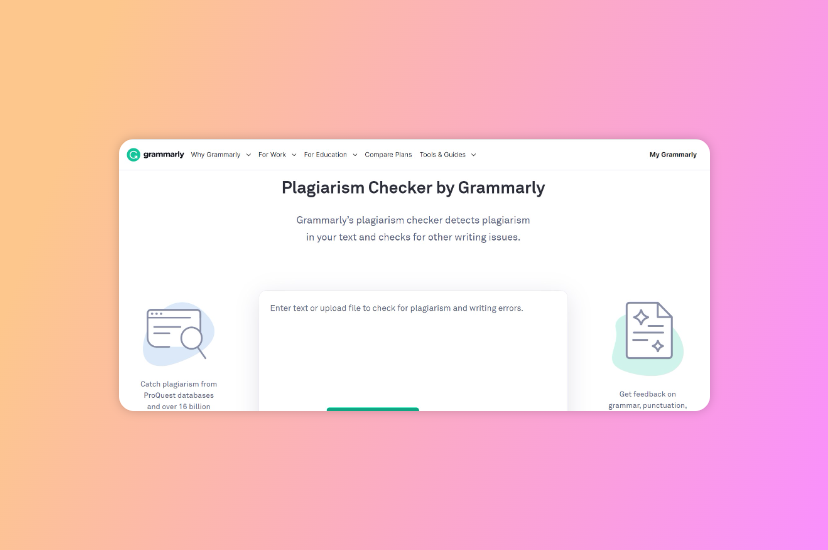
    Plagiarism Checker

    The fact doesn’t contradict your getting information from various sources. You are free and even encouraged to go through various sources of information to get the important details, crucial facts, and accurate data.

    The best way to avoid plagiarism is to read a lot about the topic, make a list around which your draft revolves, define a structure, and start writing on your own. If you plan to include data, please keep them in your first rough structure of the draft.

    Provide the Links

    If you plan to include data/images/video/stats; do not forget to provide the sources right there. If you are quoting someone, please don’t forget to mention the person or the organization. If you could please, mention the reference blogs as well, where you collected the information from, for your draft.

    Make sure You Understand the Writing Style Needed for the Draft

    Not every article follows the same style of writing. It can be ‘interactive/descriptive/narrative’ or some other writing style. And how do you do that? Well, by analyzing the target audience. Target audience is of utmost importance, and you cannot miss on that. Do not take even a single step ahead with the content without understanding the target audience.

    Mind the ‘Person’

    Before starting to write, make sure to learn if the draft needs to be written from the point of view of the first/second/third person. Most of the time, you would be writing in an interactive way by directly addressing the reader but sometimes you may be needed to write in a narrative way from the point of view of the first person. Sometimes it can be a third person.

    Avoid Clichés

    Cliches are boring, and even if it is necessary to include a fact that is already known by the entire world (which we often do); make it interesting. You are a writer; you are creative; find a way to do that every single time.

    Mind the UK/US English

    It can make a huge difference sometimes. According to the client’s needs, and the target audience you may have to improvise in your writing and spelling. It’s not something scary, just a little caution is required to be able to do that.

    Grammar

    A grammatically correct piece is always a treat to read. A word misspelled here, or a verb used in the wrong context takes the attention away from the content of the piece and keeps it centered around that little error. Make sure, you don’t make many(any).

    Opening Matters

    A point about the openings at the bottom. However, it doesn’t lessen the importance of an impactful opening. Make it introductory, make it informative, make it solid, connect with the audience at once and keep it interesting. With a great opening, you make a promise to the reader that the content is going to be worth his/her time and get the reader’s faith and attention.

    Also Read: Improve Your Writing Skills With The Ultimate Cheat Sheet

    Be Open to ‘Feedback’

    The whole description would be provided to you about the project while introducing it to you, and you are always welcome to ask. We don’t claim to be perfect, but we will try our best to provide you with the best form of information and resources for the project.

    Despite such an interactive channel, if there remains anything in your final submission to us, or by us to the client, which needs to be fixed; we would let you know about it. It is simply not a question mark on your writing abilities or the knowledge of the domain; it simply is a question of requirement.

    Summing Up

    Website content writing is an ever-evolving process and you need to adapt to the changes going on in the industry. We tried to help you with this content writing guidelines article and we’ll continue doing so in the future as well, but to be fair as a freelance content writer, you always need to observe, learn, and adapt.


  • Upwork Connects Pricing: Squeezes Opportunities For Writers

    Upwork Connects Pricing: Squeezes Opportunities For Writers

    Upwork, a free and popular freelance job searching platform has now started charging freelancers who apply for jobs on its platform. The charges are levied irrespective of whether a freelancer gets a job or not.

    The global platform, which was famous for allowing freelancers to hunt jobs with ease, now asks them to pay for connects, making the situation worse for new freelancers and those who are already struggling with finances and are in dire need of some quality work.

    Upwork

    But what is this Upwork Connects pricing all about and how does it affect freelancers? Keep reading to find all the details below.

    What Are Upwork Connects?

    Earlier, Upwork Connect allowed freelancers to apply for projects on the platform and if they were selected, they could work on these projects and get paid. Every month, freelancers would get 60 free connects and they needed a minimum of 2 connects to apply for one project.

    So, in a month, freelancers could apply for 30 jobs at the most. And at the end of the month, the connects value would reset. Even if you didn’t apply for 30 jobs in a month, your connects value would reset automatically to 60 connects in the following month.

    For freelancers who wanted more connects, they needed to invest another $10 for a Freelance Plus Subscription with which they could get 70 additional connects with the facility to carry them forward to the following months. So, even if a freelancer didn’t use up the entire 70 connects, it would automatically get added to the next month’s connects value.

    What Are the New Upwork Connects Pricing Changes?

    According to the new pricing scheme rolled out by Upwork, freelancers are no longer eligible for connects for free. They need to pay to avail of these. Connects are now available at $0.15 each, however, freelancers need to buy them in a bundle. The smallest bundle consists of 10 connects priced at $1.5. Other available bundles include 20 for $3, 40 for $6, 60 for $9, and 80 for $12.

    To apply for a job, you need to spend 2-6 connects at a go depending on the size of the project. Say, for example, small jobs of $49 or less will take 2 connects ($0.3), medium-sized jobs of $50 to $599 will take 4 connects ($0.6), and large jobs of $600 and above will take 6 connects ($0.9). Remember that these pricings are indicative and the actual amount will vary according to the type of job.

    When Will the Upwork Connects Pricing Changes Take Effect From?

    The new pricing format was rolled out on the 2nd of May, 2019.

    How Did the Pricing Changes for Upwork Connect Affect Freelance Writers Around the World?

    The new pricing changes have their own pros and cons. But considering the current situation, there are more downsides to this change. The upside of this change is that only serious writers will invest in the Upwork Connects plan and seek jobs from the platform, but on the downside, the following problems will arise:

    • Upwork Connects attracts fewer freelance writers on the platform since there is a fee involved. With fewer writing opportunities for freelance writers, their income has decreased.
    • Freelance writers are losing more money to Upwork as they buy connects to apply for writing jobs, with no guarantee of getting selected.
    • Upwork already charges 20% of the payment from freelancers as a commission. With this new change, they have started charging for applying for jobs as well. This means that freelance writers have to pay money to look for jobs and also while getting paid for their work. This gives rise to the ultimate question, how much money can freelance writers save after all the deductions on the platform?

    With all these disadvantages, new freelancers are the ones who suffer the most. First, they need to compete with others on the platform to get a job, and on top of it, the job providers will obviously choose someone with more reviews and ratings, which means that there is a high chance for the newbies to get rejected.

    Adding to the agony is the fact that while other job portals also charge job providers, Upwork has made a job posting absolutely free, which again raises the question of whether all the employers on the platform are genuine.

    There have been instances where employers post a job for bigger amounts and after the selected candidate discusses the requirement in detail, they realize that the amount of work is really less, and so is the payment. Now imagine what if a freelancer were to spend his/her Upwork Connects applying for the same kind of job. Will they get their money back?

    What’s the Possible Solution?

    A large number of freelance writers actively look for writing projects on Upwork. With the latest changes, Upwork has put the future of all those freelancers into uncertainty. We, at WittyPen, are trying to change the freelance content writing scenario in India by offering a platform where writers can get and deliver projects through a transparent process.

    WittyPen understands the hard work and effort a writer puts into his/her work to produce good content and hence, we have a policy of paying 50-70% of the payment received from the customer to all our freelance writers.

    Suggested Reading: 99+ Best Guest Posting Sites To Build Backlinks & Traffic

    We work with top clients across various verticals and expect our writers to deliver their best work. This is the reason why we ask our writers to take a small test when they apply to our platform.

    After you complete the application formalities and submit your assignment on your preferred niche, our talented team of in-house editors runs a quality check and notifies you about the acceptance or rejection of your application over an email.

    Conclusion

    Before your future of getting freelance writing jobs gets uncertain and difficult, apply for freelance writing at WittyPen and develop your freelance writing career by working on quality projects and getting standard pay.

    Wittypen

    We, at WittyPen, are constantly trying to mend the gap between freelance writers and employers by offering a transparent platform where you get detailed work requirements and receive your payment on time. Check out our website and help us grow into the country’s biggest freelance writing platform.

  • Keyword Research: What Works For SEO? Complete Guide

    Keyword Research: What Works For SEO? Complete Guide

    Keyword research is considered by most content marketers as their priority when it comes to SEO. They offer insights into what your audience is looking for on the web, along with several other details, and thus point you towards the kind of content you should ideally create if you want to generate more traffic and rank higher on search engines. 

    If you’re wondering how to go about keyword research to get the highest possible rankings, this guide is for you. We go through various aspects, such as finding the best keywords, what you should consider when choosing them, the different keyword research tools you can use, and much more. 

    How To Do Researching for Keywords To Improve SEO Rankings 

    1. Create Buyer Personas to Understand What Matters to Them

    In 2023, it’s likely that several companies have already created buyer personas as part of their content marketing strategy. For those of you who don’t know what a buyer persona is, it embodies the characteristics of your ideal customer, thus helping you look at them as people. They offer great insights into what matters to your audience, along with the kind of information they look for at different stages of the buying process.

    Additionally, it can also help guide you about how they’re searching for this information. Understanding these aspects makes creating content much easier, as they give your content marketing efforts a direction. 

    Creating a buyer persona involves factoring in various demographic details, such as age, location, income levels, subsequent relationship with your domain, the likely problems they face, etc. 

    Ideally, then, creating a buyer persona is the first step to take before you look for keywords, as they give you the added advantage of knowing which ones you could consider based on the user’s intent. Further, it can also help identify topics that are relevant to your domain.

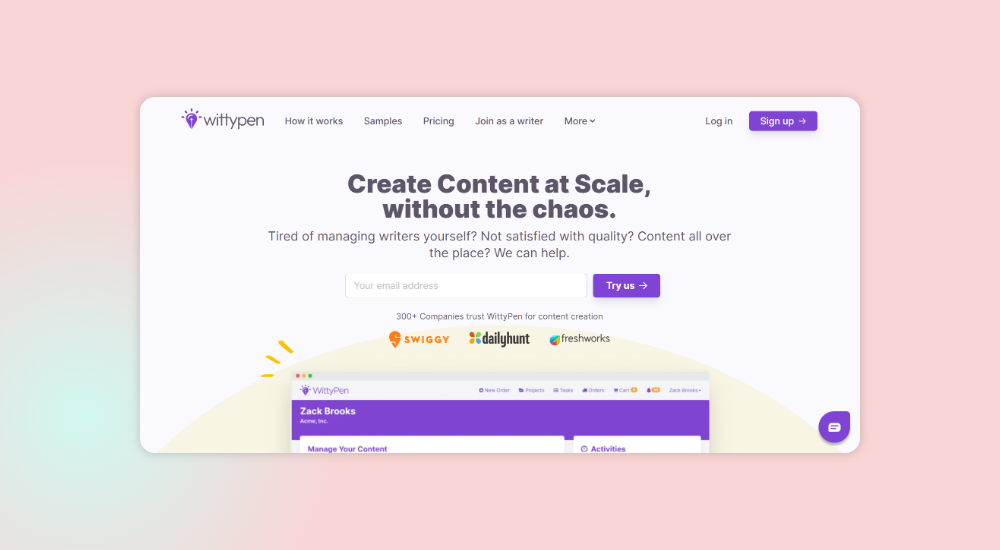
    For example, at WittyPen, this process helps us identify broader topics such as content marketing and content writing, apart from other subtopics that fall under these umbrellas, such as SEO Strategies and Growth Insights, among others. These topics then become the focal points of our blog, as you can see from the images below. 

    2. Find Keyword Ideas Through Google and Youtube Suggestions, Wikipedia, and Forums in Your Domain

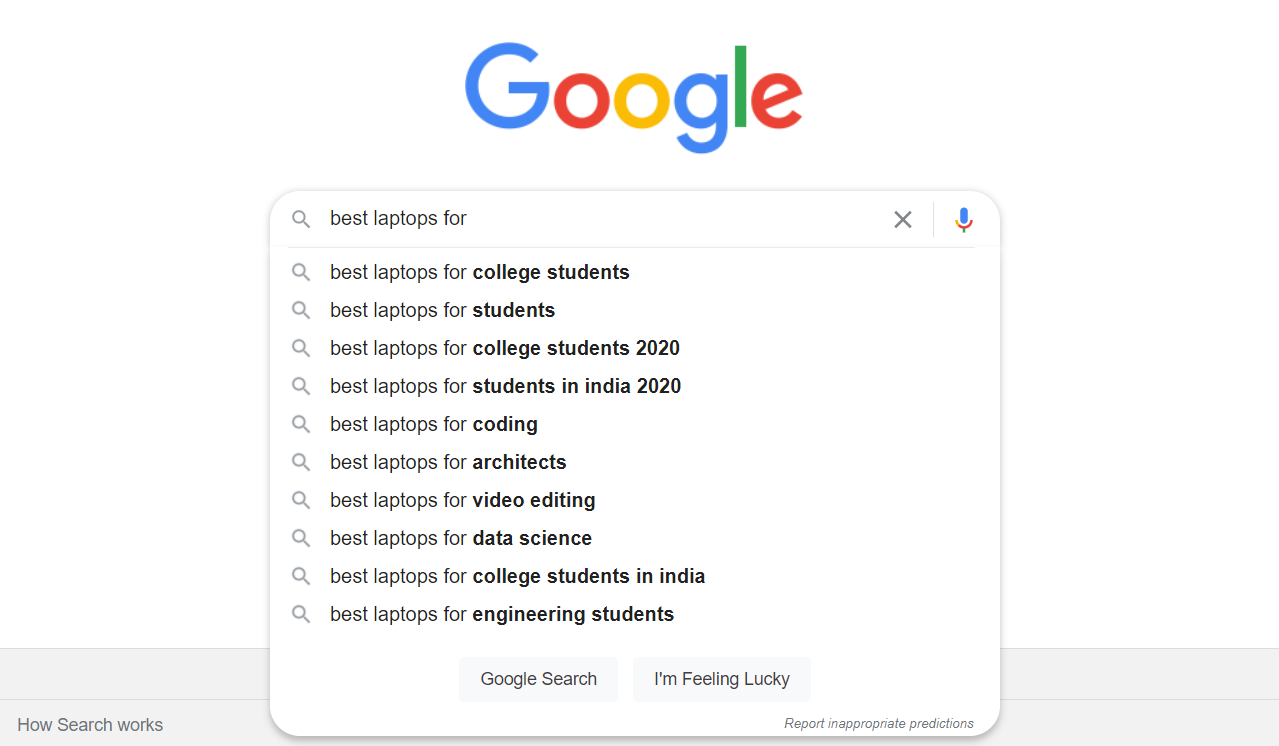
    Finding keywords isn’t as hard as you might think. In fact, the simplest way to find out what people are searching for is by using Google Suggest and YouTube Suggest. Look at the image below. Typing the words ‘Best laptops for” gives you a bunch of keyword suggestions that you can then consider while creating your content. This goes to show that people are, in fact, looking for the best laptops for college students, coding, or architects. You can do the same with YouTube, which will give you yet more options. 

    Keyword Research - Using google Suggest

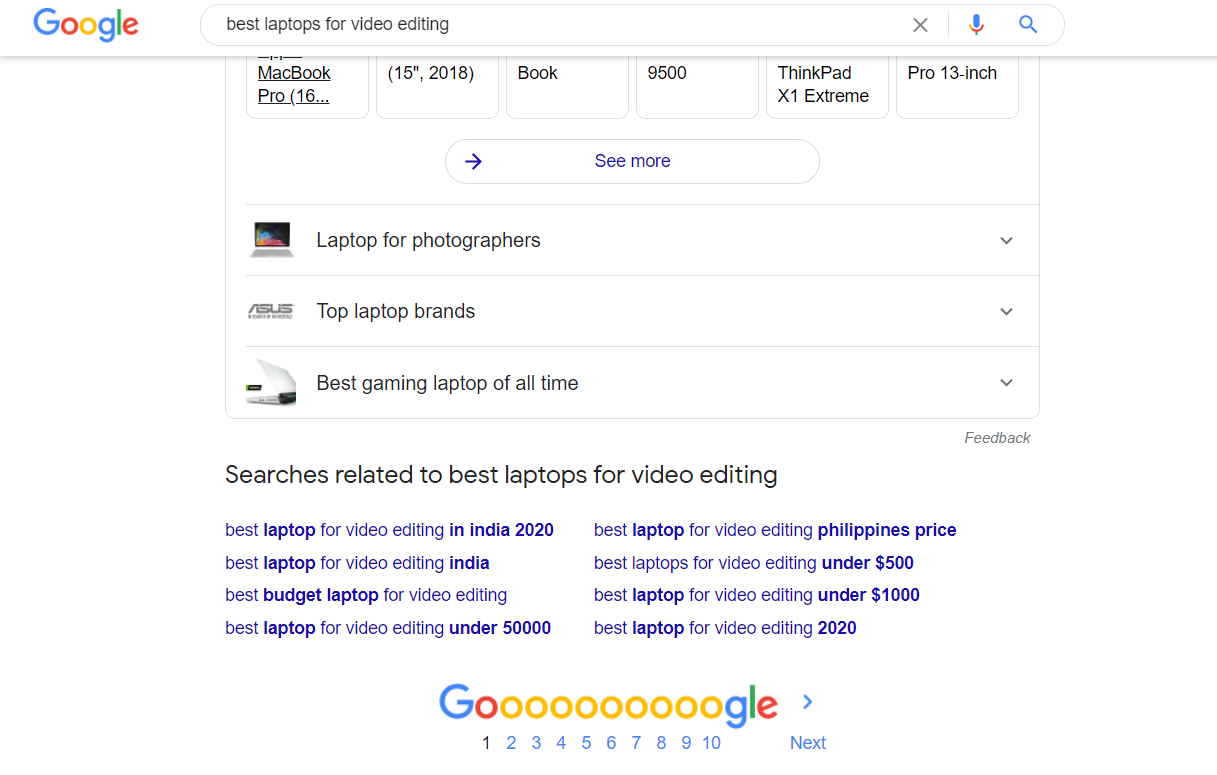
    Yet another way to find popular keywords on Google is in the ‘Searches Related To’ section at the end of a page of results. These give you more suggestions for the searches that users on Google make. 

    Keyword Research  - Searches Related to on Google also offers suggestions

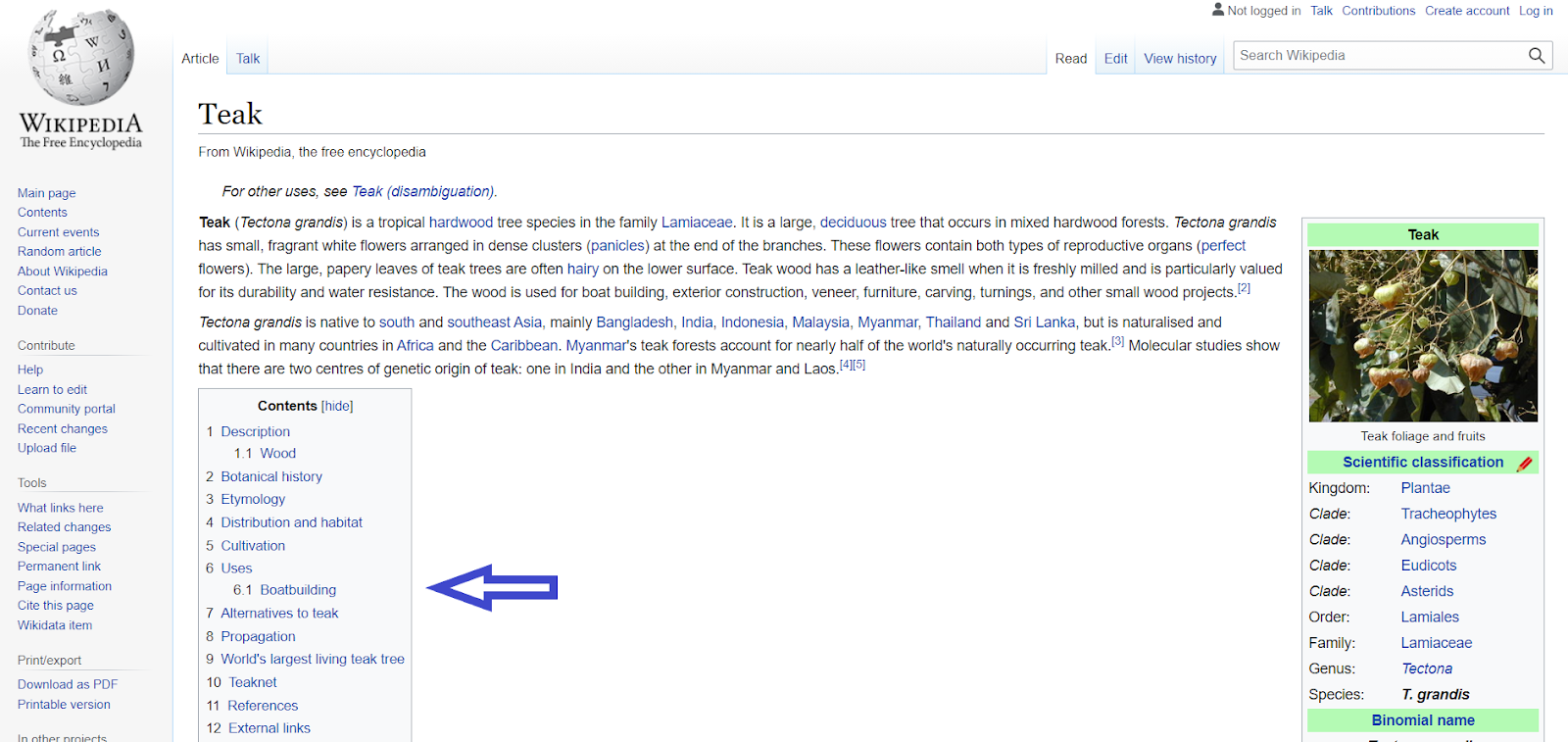
    Wikipedia is yet another avenue that can offer you a gold mine of keywords. Here’s how it works. Simply search the keyword you’re looking for on Wikipedia and open its page. The contents of the page offer a bunch of keywords that might otherwise be overlooked. In this case, searching for Teak results in a list of contents that includes its botanical history, cultivation, and propagation, each of which can make great keywords when used like this – “teak propagation.”

    Keyword Research - Wikipedia's Table of contents offers suggestions

    A third way of finding keywords is through forums in your domain. To find them, search for “keyword + forums” in your search engine, and you’ll get a whole list. Now, look for queries that people have been asking about the subject, and you’ll realize that several of these have great potential to be used as keywords. The best part is, it tells you that people are indeed looking for this information, which you can then provide. 

    3. Use Keyword Research Tools

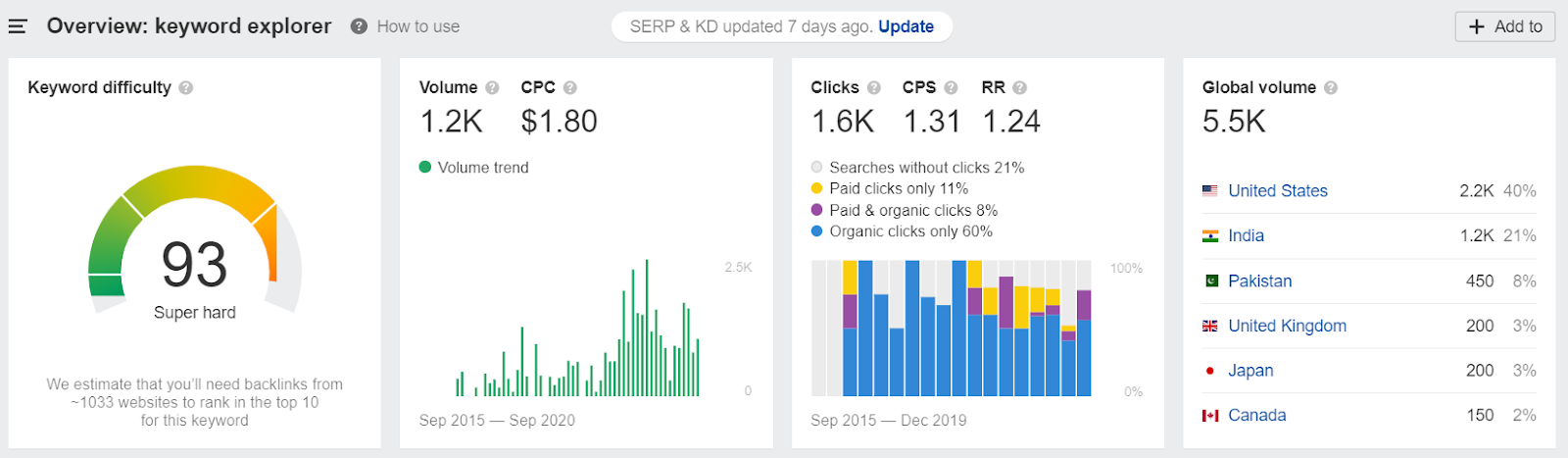
    The next step in the process and the best way of finding the right keywords to rank with is using keyword research tools. There are various options available, such as Ahref’s Keyword Explorer, and Ubersuggest. ExplodingTopics.com and SEMrush, among others. To demonstrate how these tools can help you decide on the best keywords you can rank based on various parameters, we’re going to use Ahref’s Keyword Explorer.


    Keyword Research - keyword research tools like ahref's can be used to analyse keywords.

    In the example above, the keyword entered is “keyword explorer.” What’s great about Ahref’s is that it gives you various details about the keyword, such as the difficulty, the cost per click, the percentage of organic clicks, along with the global search volume with a country-wise breakdown. 

    Every tool that we mentioned previously offers different elements that might work better for some than others. It’s up to you to make a decision based on your needs. However, each of them works brilliantly to guide you to those keywords with a higher chance of ranking. 

    Deciding which ones will have a better chance of ranking further depends on several factors. For instance, long-tail, niche keywords in your domain that have less competition, or in the case of Afref’s tool, a lesser search volume, have better chances of ranking higher, and if optimized right, sometimes even on the first page of Google’s search results. As we’ve mentioned before, this is crucial since most people don’t go past this page in search of more information. Thus, your goal must be to rank among the top results on the first page to have a higher chance of people clicking on your content. 

    4. Test Keywords Using Google Ads Campaigns

    Testing your keywords using Google Ads is an important step before using them in your content. This can be done using the “exact match” option. This is a great way for you to figure out how much traffic these keywords can generate in the real world. 

    Run the campaign for 24 hours and see how many clicks and impressions were generated. Of these, find out how many converted to being customers, and then calculate how much this generates in terms of revenue. The results can help choose between keywords that have a higher chance of conversions, as opposed to those that don’t, leaving you with clarity on which keywords to finally use in your content!

    Read More: SEO Keyword Research and Analysis – Boost Organic Traffic

    In Conclusion 

    Keyword research is a process that requires dedication and a fair amount of time. However, the benefits really pay off. Using the above ways of finding the right keywords to tank your business higher can save precious time that would otherwise be wasted in a trial-and-error approach. We hope this guide on keyword research helped you identify the best ways to optimize your content for the best results. 

    Now, it’s your turn! Dive into the rewarding process of keyword research and let us know to what extent it helped increase the number of clicks and conversions. On the contrary, if you’re on the lookout for content writing services that take the task of keyword research off your plate, WittyPen is the platform for you! Good luck! 

  • Google Algorithm Updates: 4 Best Unique Ways To Write Content

    Google Algorithm Updates: 4 Best Unique Ways To Write Content

    It’s not 2009 anymore when you could pepper in trending SEO keywords and get your page rankings up in SERPs quickly. In 2018 alone, there were 3234 new Google algorithm updates, which is quite a whopping number.

    Although they were minor updates, the major ones rolled out were Panda and Penguin, which changed how the search engine worked in significant ways. This article will guide you through how you can optimize your content for the latest Google algorithm updates and always be a step ahead of the competition.

    How Google’s Algorithmic Updates Can Work Better for Your Content Strategy

    Google is constantly looking to improve its user search experience. Most online marketers usually try to get their search engine rankings up by creating content that the bots pick up.

    But with more and more recent updates, Google’s SERP algorithm is getting smarter and no longer vets content on the basis of keywords alone.

    In short, Google wants content that is ‘future proof’ and not just stuffed with keywords. As long as your content is interesting and useful in your chosen niche, the upcoming algorithmic updates will work in your favor, rather than against you.

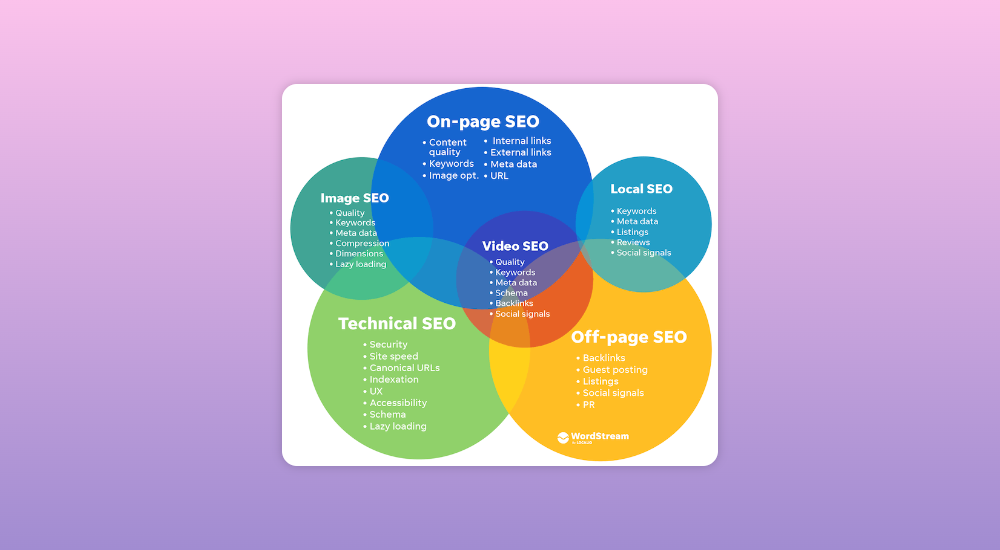
    Types of Search Engine Optimization - Google Algorithm Updates
    Source – Google

    For search engine marketers, ranking #1 in organic rankings is the holy grail for their online business. Knowing how Google is working on changing the way its search engine ranks posts and gets websites to the top of its SERPs is your best way forward.

    Taking Advantage of Google Algorithm Updates

    Google’s intention with its new algorithms is to cut down on clutter and provide unique and useful content to its audience. While your competitors may focus on White Hat SEO practices to get their page rankings up, that will work only in the short run.

    You can stay ahead of the competition and make sure your content stands the test of time by focusing on making it unique and relevant.

    Ask yourself this before creating any content – “What can I/my business offer that’s truly unique compared to our competitors?”

    Create and publish content based on these findings, and you’ll be miles ahead of your competition before you know it.

    Although that’s easier said than done, there are several ways to go about it. Here’s what we refer to as a checklist for creating content that’s future-proof for the upcoming Google algorithm updates.

    1. Write Content Based on the E-A-T Factor

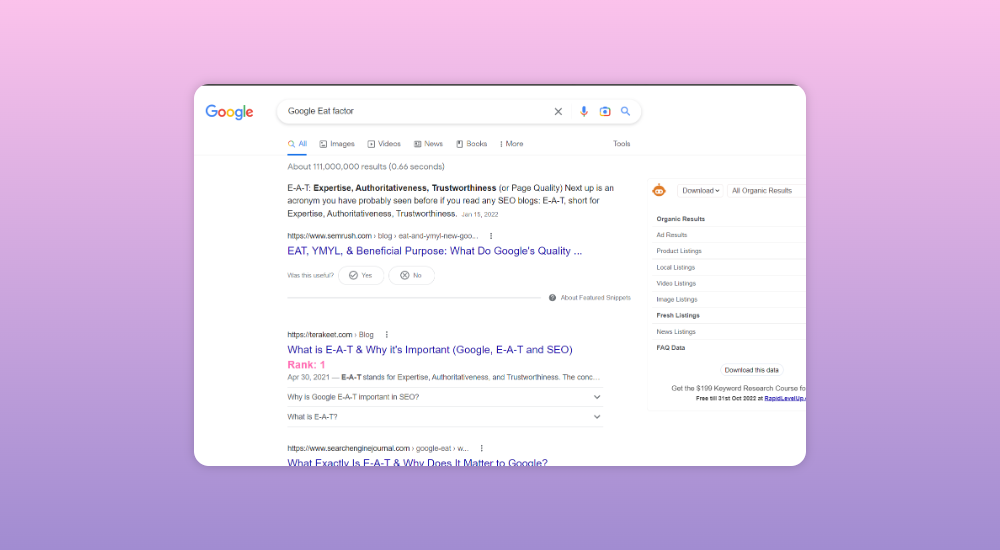
    Google EAT Factor

    The EAT factor was talked about in a Google Whitepaper that was published on Feb 16, 2019. According to the paper, Google’s guidelines for content writing and ranking high in quality revolved around three critical factors:
    • Expertise
    • Authoritativeness
    • Trustworthiness

    Expertise – This refers to how well you know your subject or niche. If you’re a doctor with many credentials when compare to a medical student with less knowledge, Google algorithm updates are surely going to give your content more prominence. But you have to get noticed, and this is where creating a striking bio and About Me pages, along with bylines will help you stand out. Experience is key.

    Authoritativeness – How well-known are you in the industry? You have to prove your website’s credibility by getting the word out and showing how it’s a key influence in your content’s overall quality. This is why creating unique and original content is so important.

    Trustworthiness – This refers to whether your website can be trusted. If you have a lot of people referencing your site and sharing links, Google will see your website as a trustworthy resource and is more likely to rank you higher on SERPs.

    YMYL or ” Your Money, Your Life” is another content rating Google follows. What this means is Google ranks your pages based on the correctness of your content. This means your content should also be factually correct and not harmful/hurtful to your audience.

    2. Be Helpful to Your Readers

    When you create content, ask yourself: “Is this useful to my readers?”
    This should be your priority when it comes to higher organic SERP rankings while creating content in your niche.

    If you have old content or anything that’s outdated, either get rid of it or update it based on its relevance. Additionally, create new and useful content that caters to your user’s pain points. Give them what they want, and you’ll be giving Google what it wants at the same time. It’s that simple.

    Suggested Reading: 22+ Content Writing Examples, Useful Tools & Best Practices

    If you’re serious about being trustworthy and useful to your readers, make use of backlinks from websites with higher domain ratings. Establish the reputation of your posts by using author descriptions on your content pieces and showcase your awards and certifications. Link your posts to other trustworthy websites and invite credible guest writers to guest post on your website.

    3. Proofread Your Content

    And by proofread, we mean, give it a run through Grammarly. You don’t want your web pages to look like they were written by amateurs.

    Make sure your content is free of plagiarism by using tools like Copyscape and vet the people who write your content. It’s okay to write authoritative content with the help of freelancers, but do make sure the people you work with know what they’re doing.

    This is also where taking the help of a reputed content writing platform or hiring professional content writing services that are well-established can make a huge difference. Their writers often have years of experience and are well-versed in creating content that aligns with Google’s updates, saving you both time and money.

    4. Make Your Webpages Visual and Mobile-Friendly

    Responsive Web design
    Source – Google

    At the end of the day, originality wins. Take professional photos instead of using stock images and put them up on your website. You also want to make sure your page load times are optimized, with or without AMP. Some tips for making your pages unique are:

    • Make sure the fonts are clear, readable, and align with your content’s overall tone.

    • Use photos and images that substantiate and add value to your website’s content.

    • Use HTTPS for your site’s security and make sure that its elements are well-structured.

    • Adhere to Google’s Search Quality Rater Guidelines and make sure you get positive (but authentic) customer reviews on platforms like Google My Business, TrustPilot, or any website that makes your pages look more credible.

    Conclusion

    And last but not least, to truly rank high in SERPs, you have to make sure your content is evergreen. That is how you future-proof it. Don’t hesitate to hire expert freelance content writers for this, as they can often be the best way for you to meet your content goals without the stress of looking over the process at all times.

  • 7 Unique Tips to Create Content That Engages Audiences

    7 Unique Tips to Create Content That Engages Audiences

    Content creation is at the heart of any effective digital marketing strategy. Apart from garnering SEO benefits, quality content writing helps in building an audience. The internet is crammed with monotonous and duplicate content, which makes it tougher for businesses to create novel and engaging content to attract more readers. It’s thus essential that you create content that engages audiences.

    Your content will be influential only when it stands out in a crowd. Therefore, content writing agencies invest heavily in audience research to craft content that resonates with them. Engaging content can make or break your sales, customer base, and even your brand-building exercises.

    Best Ways to Create Content That Engages Audiences

    Crafting quality content might sound like a task, but here are a few secrets using which you can ace online content writing.

    Unique ways to create content

    1. The Art Of Storytelling

    Content without a distinctive voice is just a boring lecture. Develop your own tone and narrate the content in the form of a story. Set up a premise, introduce aspects, and expand them like a storyteller would when developing his characters. Always have a conclusion, that either hooks the readers for the next blog or provides closure. At its core, content writing is online storytelling for businesses.

    2. Speak To Your Target Audience

    Don’t just provide information to the readers. First, identify who you are addressing. Everyone has a purpose when making an internet query. Identify this purpose and try to answer it in your content. The key is to always keep the user’s intent in mind when creating content. Additionally,  involve your target audience through feedback and examples, instead of making it one-way communication.

    3. Employ Relevance And Trends

    It is important that the audience considers your content to be fresh and updated. Quality content writing stems from incorporating trends, current events, and emerging market queries. Audience engagement increases exponentially when you address current trends and market queries, as their search queries are usually related to them.

    4. Re-purpose Older Content

    Optimize old posts

    Another key to creating relevant content is re-purposing older content. Updating older, engaging or famous content with current trends or changing its voice puts it back in the ‘trending’ column. Moreover, you reach a wider target audience than you did the first time around. Re-purposing keeps engaging content evergreen.

    5. A Seesaw Of Promotion And Engagement

    It is extremely tedious to find the perfect balance between promotion and engagement. Once, the readers feel like you are praising or promoting your service significantly, they lose interest, and you lose engagement. Creating shareable and non-branded content, which subtly highlights your service is better than outright promotional content. It piques engagement and drives conversions.

    6. Use Catchy Titles

    how to write catchy headlines

    Catchy headlines, subheadings, and highlighted quotes provide a better, glance-able structure. Readers often scroll through a blog or scan it before reading it thoroughly. These interesting headlines help you grab their attention when they are scrolling, thereby prompting them to read your content. Coming up with quirky and out-of-the-box catchphrases is a key part of content writing services.

    7. Novelty And Uniqueness

    Unique content doesn’t simply mean new and upcoming topics. It also includes new and different mediums to communicate with your audience. One of the easiest ways to present engaging content writing is to diversify your content. Using infographics, GIFs, quotes, embedded videos, etc. boosts engagement and enhances the content experience.

    Read More: SEO Keyword Research and Analysis – Boost Organic Traffic

    In Conclusion

    While inculcating all these aspects can be time-consuming and tiresome, content writing services are the best solution to create content that engages audiences. Wittypen provides a wide array of content services, and hosts qualified writers across fields. Niche writers who are adept and the nuances of content writing can provide engaging content in a jiffy that meets your business needs.