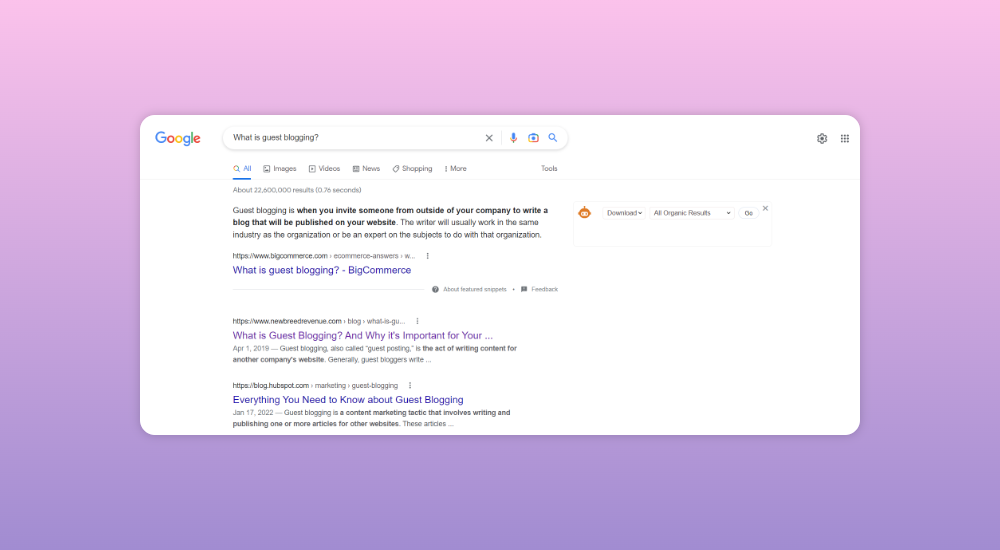
The importance of blog writing and article writing in content marketing is ever-increasing. It is impossible to craft an effective SEO strategy without blogs because of their role in drawing web traffic through relevant keywords. Guest blogging is getting a lot of attention in recent times.
Guest posts take traditional article writing a step further. Its primary objective isn’t to draw in web traffic but to build trust in your brand and its content. In simple terms, it means publishing a blog on a third-party website to draw backlinks back to your website. Guest blogging is not necessarily promotional, as it tends to educate and provide valuable insights.
It’s more effective than traditional article writing services because third-party websites have a wider audience reach, which is crucial in generating awareness about your brand.
Additionally, guest blogging done on the right portal will lead to your brand being exposed to the right audience instead of just a wide one. This niche audience connection is exactly why guest blogging is gaining momentum in successful digital marketing campaigns.
Tips For Finding The Best Websites for Guest Blogging
Finding the right platforms to publish your guest blogs on is crucial to getting the process of generating backlinks started. Here’s how you can find the right guest posting sites –
1. Establishing Direct Contact
The best way to get a third-party website to publish your blog is to pitch it directly to its editors. Popular websites are usually looking for niche content and hence provide an email address to which brands and individuals can send in their pitches.
However, editors receive numerous pitches, and to make yours stand out, your credentials, writing style, topic, and domain-specific knowledge should be highlighted. Additionally, given their lack of time, your best bet at having the editors take the time to read your pitch is by grabbing their attention through a catchy subject line.
2. SEO Search
This is an interesting way to use an SEO technique to get SEO benefits. You have to ensure that you find the right audience for your niche and that your blog’s message aligns with not only yours but the guest site’s interests as well.
The best way to choose the appropriate site is to follow the ‘relevant keyword + blog/article’ approach.
For example, if you are a kitchenware provider and want to start guest blogging, then you would search for ‘basic cookware + blog’. This will bring up a list of food and lifestyle websites, some of which could be open to accepting guest blogs.
When choosing the right platform, however, you must also ensure that the guest posting sites Domain Rating (DR) is at the very least, similar to yours. However, a higher DR is preferred, as the resulting backlinks from posting a guest post on such a website can help boost your DR too!
3. Social Media Profiles
Social media timelines tend to show you profiles that might interest you and are closer to your niche. Following these profiles and starting a conversation with them can help you build a connection that you can then leverage to pitch your idea. You can even look out for article writing services that are looking for guest bloggers.
Key Benefits Of Guest Blogging
While we have already established the importance of guest blogging, its benefits outweigh the efforts.
1. Authority & Credibility
Once a site posts your article, it basically means that they see you as a credible source. It builds your authority among your competitors and establishes you as a thought leader in your niche.
2. Building Backlinks
Guest blogging has intangible SEO benefits. Once a website links back to you, it generates backlinks or inbound links. This increases your credibility in the eyes of the search engine algorithm and organically boosts your ranking on SERPs.
3. Increases Organic Traffic
Investing in guest blogging is essential in driving web traffic. A guest post sends quality traffic to your website due to inbound marketing. Moreover, the enhanced SERP ranking draws higher organic traffic.
4. Increases Brand Awareness
Featuring a popular website provides you with wider exposure. A new audience is exposed to your brand leading to new leads and possible conversions down the line. These potential leads will drive new business and strengthen your brand equity.
5. Expands Business Network
A positive association with popular websites increases your brand value. Moreover, the industry views you as someone who is highly informative and knowledgeable. This helps in generating new contacts in the industry and opens the possibility of advancing your business venture.
While guest blogging might not seem very different from traditional blog writing, it is poised to be a crucial aspect of your content marketing efforts going forward.
Publishing guest blogs on the right platforms can do wonders for your SEO and ranking, leaving no doubt about the fact that you should implement this as soon as possible. There are several other content marketing trends that are bound to make an impact in the future too, and you can read more about them here.
First things first, how is this blog relevant to you? Content marketing is getting a lot of attention lately. Many companies are focusing on creating quality content. Gen Z should focus more on content marketing as it can help in the long run.
B2C Brands, read if:
You are targeting consumers below the age of 23yrs (born after 1996).
Your organisation hires talent from a similar age group.
B2B Brands, read if:
You provide services to B2C companies targeting Gen Z.
Your organisation hires talent between 18-23yrs of age.
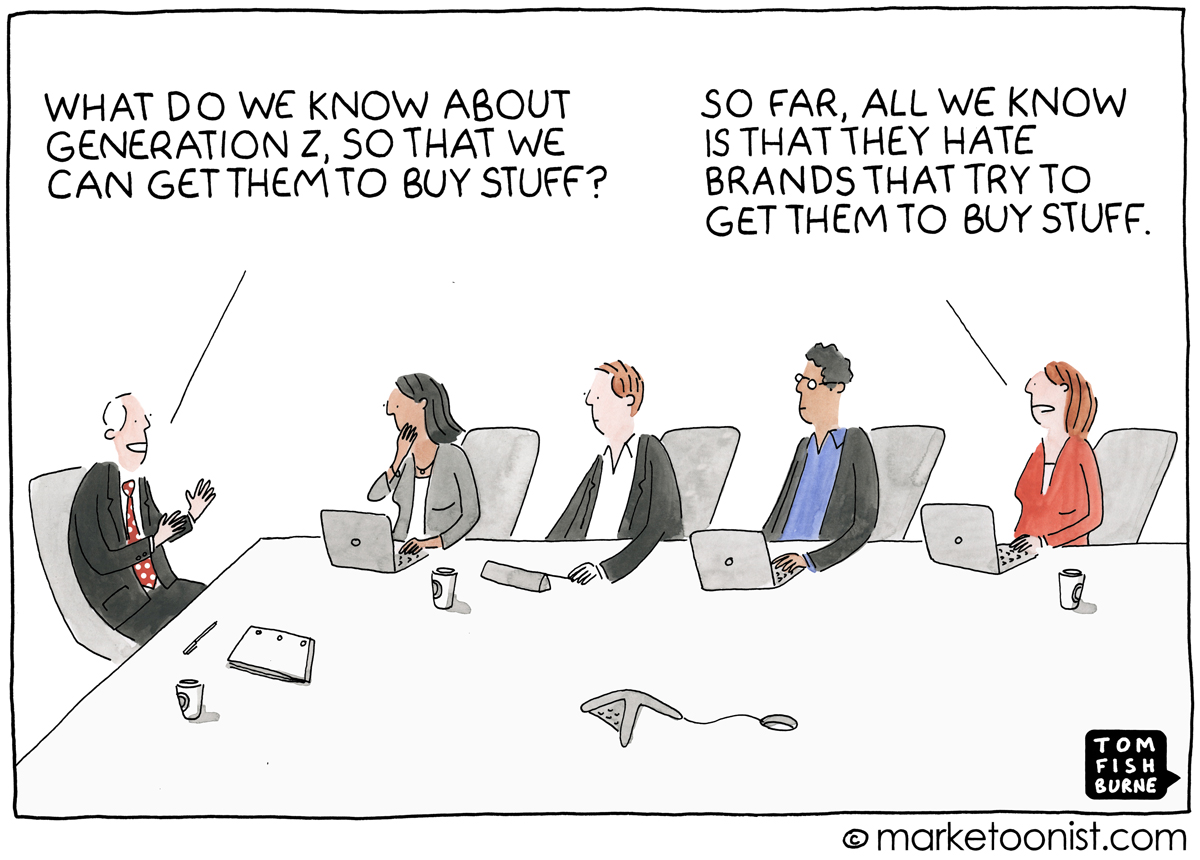
Let’s start. Gone are the days when everything could be blamed on the millennials because there’s a new generation that people just seem to love to hate – Gen Z!
They’re young, impatient, whimsical, and like every new generation, have an air of mystery around them that intrigues older generations.
Despite all these things, there’s no denying that they’re the face of the future and that from a business perspective, they’re an important target audience.
In fact, it is estimated that, Gen Z will make up about 32% of the world’s population, surpassing millennials.
In India, especially, there is an extremely high youth population. Gen Z has been estimated to rise to 472 million. Hence, it is clear that customising your content marketing for Gen Z audiences will give you a very large customer base, and it is increasingly becoming the need for marketers across the globe.
How Should Content Marketing for Gen Z Audiences Work?
They seem so far off as a generation that it appears impossible. All the things mentioned before about their restiveness are not exactly conducive to sales and it makes them difficult customers.
Targeting a Gen-Z audience is no walk in the park. It is difficult to hold their attention for long and they’re most likely not brand-loyal and would move on to the next best thing as soon as the opportunity rises. However, there’s no denying that they’re an important target audience. They’ve got strength in numbers and if you can get that on your side, you’re golden.
So, how can you keep an ever-moving generation still long enough to listen to your pitch, and what can you do on your part to get them to invest?
Here are 6 things you should keep in mind while formulating Gen Z marketing strategies:
1. Be Where Gen Z’s Are
The best way to reach this demographic is through online platforms, especially those that are primarily or entirely best accessible through mobile devices such as smartphones. It’s no secret that Gen Z makes the most use of mobile devices.
In fact, even social media sites that are equally accessible through computers, as well as cell phones, get a lot more mobile traffic, not just from the under-21s but also from the general populace. For example, YouTube gets a large amount of traffic from mobile users.
Similar apps including Whatsapp, Instagram, and Snapchat are very mobile-oriented. While marketing content online, these easy-access platforms should be prioritized.
2. Prioritise Micro influencers
Unlike big influencers who are unable to make an impact, micro influencers are the ones who are the most genuine and trustworthy source of information about a product, technology, or service. Here’s an example of an influencer with 2 million followers who couldn’t sell 36 t-shirts!
Micro influencers are more authentic and lead to higher conversions and a better rapport with their followers. And when I say influencers, they are not restricted to Instagram. Trending apps or channels like TikTok, Snapchat, Ecommerce communities, and micro-video apps are redefining the role of influencers.
2. What Content to Create?
While doing content marketing for Gen Z audiences, your marketing strategy should involve creating content that overcomes the hurdle of Gen Z’s low attention spans.
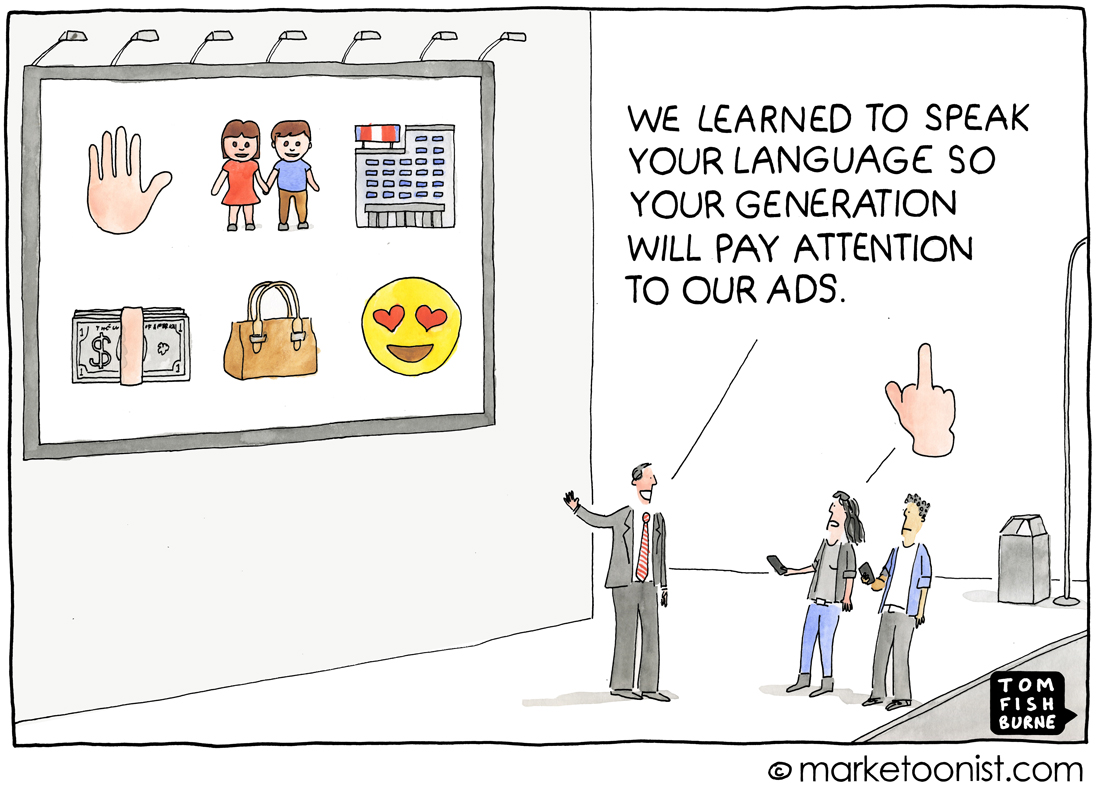
Lengthy blog posts and descriptions won’t work as they did in previous generations. This generation is all about images, videos, and colorful graphics. The same information that is usually conveyed in a paragraph is much more likely to be noticed by your target audience if it’s in the form of a picture or a flyer.
Similarly, with videos, less is more. Good graphics and animations will help, but brevity is key (it’s ironic that this is a 1500-word article about a target audience that can’t tolerate lengthy or drawn-out content, then).
3. So, Should You Stop Writing Blog Posts?
No way!
85% of Gen Z say they are aware of ads in Google and most of them prefer ad-blockers.
But at the same time, 71% say they discover new products using Google, which means they search and prefer authentic content that ranks on top.
So, here’s the thing, attracting Gen Z and taking care of SEO can be done by adding relevant visuals to your long form content and enhancing the overall experience on the platform.
Gen Z does not have purchasing power like millennials but they surely have influence and as a brand, you should tap into it.
4. Be Creative on Social Media
A good way to engage a Gen Z target audience is to post a video or photo to Instagram stories and add a call to action (CTA), usually ‘swipe up. The content of the video or the picture caption should spark the curiosity of viewers and make them want to swipe up to get more details.
One person who uses this effectively is Matthew Hussey (@thematthewhussey) who is a popular relationship and dating coach.
He adds a ‘swipe up’ CTA which leads to either his blog or his Instagram feed, where he puts up lengthier posts giving relationship advice. The captions on his Instagram stories incite curiosity.
As you can see, the story uses:
An eye-catching image.
A topic that is interesting to Gen Z (relationships and relationship myths)
Attention grabbing words like ‘it’s time to get really honest and ‘blow apart relationship myths’.
A clear call to action ‘swipe up.
Effective use of gated content, i.e., he makes sure they don’t have access to the material unless they swipe up and go to his Instagram post.
Another option could be memes, and since they are all the rage among the youth, it doesn’t hurt to tap into one’s humorous side and add memes and other jokes into the mix of Gen Z marketing strategies.
Try not to look like you’re trying too hard though, because that could drive them away rather than spark their interest.
5. Make it Friendly, Human, and Humorous
You need to be authentic and have a two-way conversation if content marketing for Gen Z audiences must work. If they relate with your persona, it is only then that they will follow you and buy from you.
Two-way communication isn’t limited to the online experience only. Extend it to your offline interactions making it a seamless brand experience. With seamlessly, comes the word consistency. As a marketer, you might have come across the word “omnichannel”, and this is what works for Gen Z.
Gen Z is more expressive emotionally than earlier generations and that makes it more important for you to make your brand more human. They trust the face more than they trust the name!
And while you are making it more human, you can’t miss humor!
Gen Z has a different and quirky form of humor and your brand needs to understand that. But how do you do that? Find an 18yr old around you and spend some time asking him to show his favorite content on YouTube, Instagram, and other platforms. You’ll be amazed to see the content they watch.
When it comes to language, the content that is marketed to Gen Z should be brief, concise, and capture the gist of your business and what it does in as few words as possible.
A common question with any target audience when they have marketed a product is, “What’s in it for us?” and Gen Z is no different. Being the most difficult of the generations to be convinced by a brand to commit to a product or service, you need to have a good reason to sway their opinions in your favor.
Customer testimonials and genuine product reviews are a good way to convince a Gen Z audience about the authenticity of what you have to offer.
If you can strike a brand deal with a celebrity, social media influencer, or YouTuber, it’s even better. Unboxing videos are very popular among youngsters and brands targeting Gen Z should take note of this.
Another thing that acts as an incentive is brand ideals and values. Gen Z is the most socially conscious generation. If brands promote and stick to ideals such as cruelty-free production and eco-friendly practices, they are more likely to be loyal and continue to use the products and services.
These ideals are what make a brand different in a market where several companies are offering the same thing, with a plethora of cheaper alternatives.
Like the millennials before them, they are very socially conscious and will not hesitate to take a stand and stop supporting organizations if they aren’t ethically sound. Recently, the American fast food chain, Chic-Fil-A faced heat for donating to anti-LGBTQ organizations. It is the younger generation that has taken note of this and boycotted this restaurant chain.
There is an overwhelming need among Gen Z to be able to relate to the brands and businesses that they choose to support. In a cutthroat economy where they are spoiled for choice, tapping into this element is what will make you stand out to this fast-paced generation.
Building a content strategy is just as important as having an online presence. As a marketer, if your strategy is right, you will be on track to achieve your traffic goals.
So, do you have an action plan in place?
Which methods and strategies do you plan to employ for a good amount of organic traffic to come your way?
Without clear answers to these, you will only be going around in circles, ultimately feeling lost. A lack of strategy creates a disparity between what is intended and what the final outcome happens to be. This may be detrimental to your brand’s credibility and leave your target audience confused!
But, here’s the deal.
There is no tailor-made formula for creating a content strategy. You need to figure out what works for your business.
Keep in mind that your content strategy must be flexible with enough room to modify it so that it suits the ever-dynamic needs.
So, fasten your seat belts as we get started on helping you chalk out your content strategy framework.
Before that, a look at the first things first to get you warmed up…
What is a Content Strategy?
A content strategy is a part of your overall marketing plan, precisely called as content marketing. It is the management of just any kind of media you own or create, whether visual, audio, written, or downloadable.
There’s quite an obvious line of difference between content strategy and content marketing strategy. The former is a component of the latter. While a content creation strategy is about identifying what, when, and how to create content, content marketing is about strategizing all of these plus distribution and analytics.
Content strategy takes a bird’s eye view of pretty much all the content your customers will come across. It needs to start with a vision of why, what, and how your content will be created, fine-tuned, managed, updated, and archived.
Envisioning an actionable content strategy is essential for guiding your future content development efforts so that the results are in tune with your business objective. We are not talking about generic content here. If content is generic, it isn’t engaging enough and will probably not even get shared on social media channels.
So much about what a content strategy is and why it is important to devise. So, how can you build a content strategy? What are the best ways of distributing your content?
You need to understand the key elements of a content strategy first.
Essential Elements of the Content Strategy Document
When you create your content strategy document, you are actually building a framework that will serve as the foundation of a fool-proof content marketing plan to get you started. Make sure you keep it short and simple but only after brainstorming all critical ingredients.
Take a look at these vital elements of a content strategy document.
Goals
Goal clarity is critical to producing content that will deliver favourable results for your business. Having a clear idea of the goals will help you understand the core issues you want your content to address.
Are you trying to boost your sales?
Do you want to enhance customer support?
Are you looking to entice new visitors or trying to move leads down the sales funnel?
Does your audience need to be educated to be able to understand your product/service better?
Goals may be one or more of these, or in some circumstances, even a combination of a few. They have a clear impact on each facet of your content production cycle. Establish tangible goals which can measure the performance of your content and ROI.
Fluff doesn’t work anymore on search engines. Period.
You write pages and pages of content, but if they don’t make sense to your target audience, they will ultimately get trashed.
The idea is to connect with your audience and write for humans, not search engines.
Identify whom you are creating the content for to be able to align it to the audience needs. The content needs to be what your target audience will love to know. Figuring out your targeted traffic is important.
When you are creating a buyer persona, delve deeper into the demographics and psychographics to understand customer behaviour.
Seek answers to questions such as:
What kind of people do you think should be reading your content?
Who are your buyers most likely to be? Men, women or kids?
What is the age bracket?
What does your customer/audience want?
What are their likes and dislikes?
Whatchannels of communication or social mediado they prefer the most?
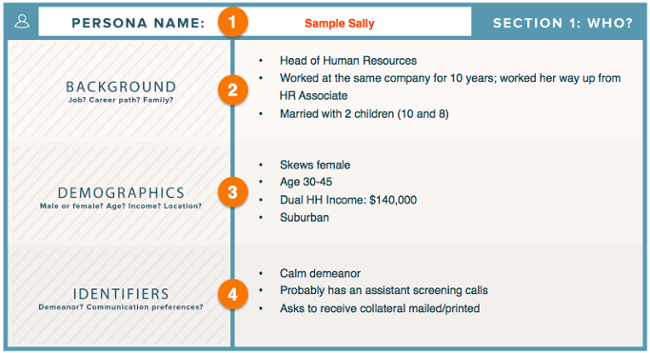
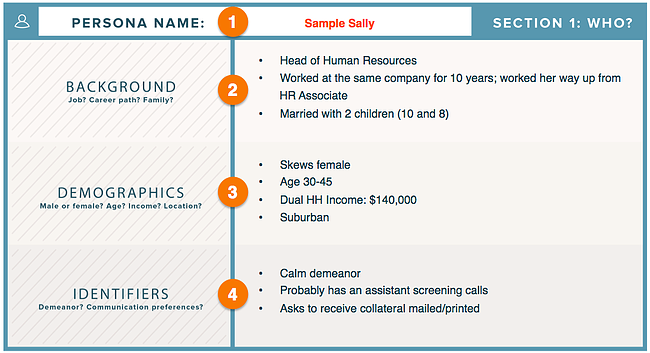
Here’s a look at a generic template you can use for creating a buyer persona.
Background (basic work details of the persona, where is he working or suitable info on hobbies or education, job title).
Remember to update the buyer personas from time to time for optimum results in the form of a boost in organic traffic to your website.
Type of Content
Different types of content serve different purposes. When your aim is to generate new traffic, your content focus should be on infographics, checklists, and top of the funnel posts. Ebooks are a great way to help the targeted audience go a step further in their journey.
Consider finding answers to the following questions to help your content team align their writing to your goals.
How technical should your content be?
What should be the preferred tone?
Should the content be educative in terms of the industry best practices to follow? (Already tried and tested approaches)
Should it be a summary of what you have been doing right and a framework of the same? (Innovative ideas that can change the game)
Frequency of Content Delivery
When your business goals are in place, you will have better clarity on the content you want to publish. Next, you need to arrive at the frequency of posts. This is important from the SEO and content visibility point of view.
It is essential to have a consistency in creating content. The frequency of content creation will depend on your business goals. If branding is the goal, a lesser frequency works, but Search Engine Optimisation necessitates a high frequency.
Also, you must use analytics to assess what kind of content is favoured by your audience and arrive at the frequency of posts. Space out the posts as per category to ensure content for one category does not overlap.
Figure Out the Topics Based on Your Offerings
When you have figured out how often you are going to post content on one category, you need to know what your writers will be writing on. Identify keywords that are the best fit for your business and put them on Google to see which topics come up in the search results.
Think out of the box and arrive at topics that will interest your target audience. Introduce them to your business so that they don’t appear to be a misfit on your website.
Identify Who Will Create the Content
Ask yourself the following questions.
Do you have writers in-house to create content with a reader-friendly tone?
Will hiring content expert freelancers work better on your budget?
After you have identified who will handle the task of creating content, it’s time to get the ball rolling.
Content Calendar
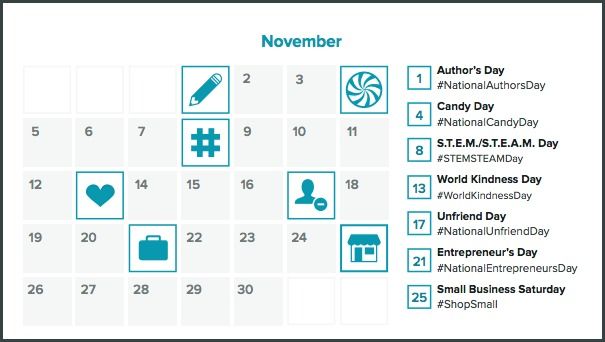
Preparing a content calendar is an integral part of any content strategy if you want to materialise your goals. This calendar will have all topics, keywords, target audience, timelines, and author names in one place.
The editorial calendar chalks out what you will publish and when, specifying the particular days of the week against each topic. You may intend to roll out multiple content pieces on the same day if each of them targets a different audience.
It’s critical to manage the publishing schedule well as promotion and the distribution of content will depend on it. Create a weekly or monthly schedule and share it with the concerned teams.
The competition to get noticed on the web is beyond comprehension. Getting your target audience to your website is the key for augmenting conversions.
In these years of experience, I have come to infer that there are three main elements that drive traffic to your website. Consider one of them based on your business and goals.
Here’s a look at these elements that aim at driving traffic to a website.
Post shareable content or resources (B2B)
B2B organisations sell to other companies and not to consumers. It may look like they do not invest time and money in inbound marketing but that is far from reality. It works for B2B businesses to create resources, case studies, and research papers as a means of increasing traffic.
Deals between one B2B business and another happens on the basis of credibility. If structured and created with valuable information for the reader, resources convey your expertise in the field. Likewise, case studies validate your experience and tell the other company that you are adept at providing the services to them.
It’s not new that when content is shared across reliable platforms, your credibility gets a boost. You need to use this to your advantage and drive traffic to your website.
If you can get your visitors to share your content regularly or in a considerably large volume, it will give you access to tons of traffic. This will also increase your chances of ranking higher in the Google searches.
Expert guides, eBooks, research papers, and white papers are excellent examples of shareable resources. Expert guides make for great sources of learning. If a business advocating your brand shares it on his network and links it to their content, it can provide indirect benefits to your brand.
A good eBook or a white paper can be excellent tools for drawing visitor attention and converting customers, typically when it comes to B2B customers.
White papers focus on a company’s products and services. They are known to generate qualified leads and are useful to visitors who are interested in your offerings and most likely to convert. EBooks concentrate on providing general industry knowledge.
Pick vital information from the white papers and eBooks to create eye-catching infographics that are designed to convey your message faster. Infographics are useful for those who do not have much time to read elaborate content.
Organic Traffic
Writing SEO focused content and blogs for B2B and B2C consumption are excellent for bringing organic traffic to your website. If your content complies with SEO and provides resolution to user queries (that they input on search engines), it is certainly a sure shot way to get traffic to your website.
Internet users today are smarter than ever before. They prefer to run a quick search before making any buying decision whether to gain more information or to find the best deal on a product/service.
They ignore advertisements and are impressed by quality content scores on all these points – readability, easy to understand, and high on content value. If your content takes care of all of these, it’s only a matter of time when you will get organic traffic with high ROI.
Getting your website to list in the first few positions of the SERPs is indicative of the success of your SEO efforts. This will depend on how optimised your website is for the search engines.
Focus on getting your website structure, keywords, and blog posts right to gain leverage on search engines.
Traffic Through Social Media
Social media marketing has had a tremendous impact on the way businesses make their presence felt to among their target audience. Created originally for communication purposes, today social networking sites are used extensively for business and marketing. Primarily, B2C companies were the first to take the plunge as this type of marketing allowed them to directly validate their performance.
Ok, here are some interesting snippets of how social media marketing impacts a business’ content strategy.
As has been the trend from the past, women (77%) are more likely to use Facebook than men (66%).
Approximately 70% of Facebook users spend time on the social platform everyday and 45% use it many times a day.
People like to scan on Facebook. Short writing draws more eyeballs and better responses.
Thursdays and Fridays are the best days to post on Facebook for maximum engagement.
MIT finds that company CEOs using Twitter extensively for business-related tweeting have more RTs, faves and more followers.
Using images on Twitter generates 5 to 9 times more retweets and 4 to 12 times more favorites.
Tweets with 120 to 130 characters and hashtags are more engaging.
An infographic on asocial media channelis 30x more likely to be read than a plain looking text post.
Content marketinggenerates 3x as many leadsas traditional marketing and costs 62% less.
60% buyers show interest in buying a product after reading content about it.
A study of 220,000 pieces of content indicate that ‘list’ and ‘why’ articles are the top two most shared types of content.
Phew! So much for the stats.
Social media is growing at an astounding pace and user behaviour has witnessed a sea change over the years. Gone are the days of click baits when users could be lured into clicking your link and building traffic.
Update your Existing Blogs
Publishing meaningful content in the form of blogs can work wonders in creating healthy brand awareness. However, we live in a fast-growing world, and it becomes equally important to revamp your content and keep it updated regularly.
Leveraging your existing content by modifying and refreshing it is one of the best strategies. This way, you do not have to go through the process of writing a new blog.
The first step would be to update information that has changed since the time it was published. Facts and statistics that held good before might not hold good with the current market scenario.
The next thing on the checklist would be to remove redundant information that does not add any value to the reader in today’s scenario. Also, this is the step where you add content that adheres to the current market trends.
Your existing blogs are a source of information too. Has your target audience liked the content that you had posted? How well has it worked? Do you have feedback to make it better? Do you have new products that are a better solution?
Answer the above questions and include them while you are updating your existing blogs. Give your audience what they need, and you will get what you need.
Continuously updating your content shows the people on the internet that you are constantly growing along with the growing market. That is a positive trait to showcase and will significantly enhance your brand awareness.
Power of Non-Textual Content
While blogs are one of the most widely distributed types of content, many other types are gaining popularity among different target sectors.
Visual Content
Visual information can be processed significantly faster than any other type of content. Visual content in the form of infographics and social media posts will help you reach a larger set of audience. Nothing is more encapsulating than a good story, and videos are the best format to tell the world a beautiful story.
Today, marketers in the B2C domain have to think out of the box all the time and keep innovating to get their website/products/services noticed. Visual content is the order of the day. Visuals leave a lasting impression on the minds of users and they retain it for much longer than any other form of communication.
Random videos do not work; they should have a strong message or a story to bring out the utility of a product or service clearly in a serious or funny way. When users on social media channels hear taglines and catchy words in videos, it stays on their mind and they can recollect it even weeks later.
Podcasts
The average number of podcast listeners are growing every day. It is a great space to offer knowledge to your target audience. A podcast is a good way to talk about your product which is related to the topic and can help make their lives better in one way or more.
Conclusion
Now that you know what are the critical elements in B2B or B2C content strategy, it’s time to spring to action and do the right things to get noticed. Having a predetermined frequency of posts, such as videos, infographics, blogs, white papers, and/or research papers works best. Make sure you have an editorial calendar in place to get you organised.
You may have the know-how of churning out the best content, but posting it in the right place and at the right time is the key. If you learn to do that right, it is only a matter of time before you start seeing results.
Having worked day and night in the content industry, I can tell you one thing for sure – Content promises to be huge as we move ahead. Today, in almost any kind of marketing, content is an essential.
I am not denying the importance of traditional marketing tools though. But let’s face it – they have to be backed with great content. A recent research from CopyPress says the same, that almost 84% of the marketing agencies believe that content is going to be the most important factor defining the success of clients’ marketing initiatives in the coming years.
I am sure you belong to that 84%, and hence, realise the importance of content and content marketing.
But What’s in It for You?
When you are leading an agency or any vertical, the most crucial aspect of your performance depends on the P&L. For content marketing to convince you and other stake holders in your agency, it should put a direct and positive impact on your P&L.
Let’s see how that happens:
1. Recurring Revenue
Content Marketing never ends. Once you start creating content to engage with your customers, it will somewhat become a routine for you to add value and get more users. Also, the effect of content marketing greatly flourishes with time, something that no business wishes to avoid.
The consistency of content marketing brings forth a recurring business to you for building an ongoing revenue stream for your content marketing agency services.
2. Opportunity to Diversify & Experiment
Blogs, Videos, Ebooks, Infographics, and more, all come under “Content”, bringing with them huge opportunities in terms of topics and themes. Since content becomes the fuel for any content marketing campaign, the opportunity to pitching multiple projects grows significantly.
This not only enables you to build better case studies, but also allows you to experiment and get the creative best out of your team.The measure of creativity and impact of your marketing campaigns will help your agency grab Awards and New Clients.
3. Impacts Your Clients Bottom Line
There isn’t a better way to retain clients than by making profits. Content marketing helps your clients get higher ROI, thereby improving their bottom line. Content marketing when done consistently adds lifetime value to your customers which improves client relationships and retention.
But how do you convince your clients of that? And, most importantly, how do you sell content marketing to your customers?
Well, why not start by telling them the benefits of it.
How Beneficial is Content Marketing for Your Customers?
Now, if you were to explain what is content marketing to your customers, how would you do it?
Content Marketing is all about driving sales in exchange for giving customers what they want while they are searching for it online.
So, the objective for the brand is to be visible on search when customers are looking for solutions in that niche. To achieve this, businesses have to get into content marketing.
Let’s look at some of the key benefits:
1. Google ? Content
The only way for Google to keep earning revenue is by helping people find what they are looking for. If you go ahead and research more about what best marketers have to say about ranking high on Google, you will find that everything boils down to content.
However, creating content is not the ultimate goal. Your brand content should be value driven and optimized for user intent rather than keywords. To be specific, 75% intent and 25% keywords; as recommended by Rand Fishkin.
2. Helps You Grow Sales ?
It is very common for Sales teams in various organisations to complain about the quality of leads shared by the Marketing department.
Let’s dig a little deeper into this. Consider you are a salon owner trying to find ways to grow your business. You come across an appointment scheduling tool, and plan to signup and explore further. Say you are still exploring, and the sales team suddenly reaches out? Will you buy? No.
A user goes through a buying journey, which includes
Awareness>Consideration>Decision
After a user is made aware of the problem along with the solution, they tend to research more about it before taking a final decision. This is where content comes in and helps your brand gain trust and credibility.
You can have a process which depends on the user’s interaction with your brand and impacts the Lead score.
Here’s the thing, if your user is aware of your offerings even before your sales team reached out to them, the chances of conversion are significantly higher.
3. Outbound is Difficult to Execute at Scale ?
Cold emailing is difficult but equally inevitable if you want to drive sales in early stages of your business. But when your customers have reached a certain scale, you can’t depend on outbound emailers to generate leads.
You need a channel that helps you get recurring leads and has a compounding effect overtime. Content Marketing does that for you.
You don’t believe me?
Inbound leads generated through content marketing have a conversion rate of 14.6%, while the ones generated through outbound campaigns have close to 1.7% conversion rate (Says HubSpot).
4. Not on the face of Customers ?
Ads are annoying. Period!
Why sell when you can educate and get better outcomes?
Adblockers are on the rise for good reasons and this makes it an opportunity for your brand to create content which is relatable and drives engagement.
Your customers are smart and they research a lot before making a decision to buy. So, if your product is more experience driven or in B2B, content is the only way to gain trust and impact on the purchasing decision.
Let’s consider it from a ROI perspective.
Say you spend $2000 a month to generate 100 leads, what happens next month? You have to spend $2000 again. Consider the scenario after 6months. Will you get any leads if you stop spending on ads?
On the contrary, take the case of Content Marketing, when you stop creating content does it mean you stop getting leads for the content that was performing well earlier?
Content Marketing has a compounding effect with ROI increasing over time provided you keep up the consistency.
Irrespective of the many benefits that a strategic content marketing plan can offer, there is still a lot of resistance from clients to try it out.
Although overcoming objections from clients might seem like a daunting task, it is definitely possible.
So what can you do about it?
What Stops Your Customers from Approaching Content?
Irrespective of the fact that content strategy can be instrumental for better business prospects, a lot of the customers are still hesitant in terms of content approach.
Among the several reasons I’ve noticed for this behaviour in the recent past, the main ones include-
a) Takes Too Much Time to Show Results
In a world of instant gratification, expecting results immediately is quite natural. However, content marketing is a slow and strategic process that requires patience for the right results.
As an agency or media consultant, you need to make the customer see the importance of giving enough time to content strategy for it to show the desired results. Similar to any sales conversion process, it is essential to consider mapping the content accurately with the customer journey and your sales process for effective results
b) Perhaps the in-house Team is Sufficient
Considering the fact that content creation & execution is a personalised process, a lot of clients prefer to keep it in-house.
The reason why you as Agencies not only survive but excel in their marketing campaigns is because of the creative talent.
Creative people prefer working for multiple brands with diversified problem scenarios and usually avoid sticking/working with a single company. You can use this credential as a means to convince your clients. The creative talent will enable them to get the required ROI and also stand out in front of the target audience.
The other set advantages come in the form of leveraging your expertise across functions such as SEO, marketing automation, creative design, etc., which can be easily de-prioritised in case it is kept in-house.
c) You probably don’t Understand my Business
This one is probably one of the most difficult ones to overcome as clients are of the opinion that an outsourced agency has no knowledge of their business whatsoever.
In such cases, you need to assert the client’s expertise and let them know that the process of content strategy is going to be a collaborative effort heeding to the client’s inputs at every stage. The client needs to be assured that they will be part of the project right from ideation till execution along with subject matter experts from the industry the client operates in.
d) You won’t be Able to Understand What We Want
A lot of clients worry about the authenticity of the content and effectiveness of the execution process with an outsourced agency. The need is to explain the process and approach to quality content and it’s strategy to the client starting with the basics. This will convince your client of your ability to bring desired & profitable results for the business.
How Can You Effectively Sell Content Marketing to Overcome These Challenges?
If you are wondering how to address these challenges, these steps can be helpful:
a) Offer the Content Marketing Expertise
Ensure that the content strategy solutions you provide as an agency are customised to individual clients’ needs. Make sure to use your expertise by building a strong content portfolio including blogs, email content, social media updates, digital press releases, newsletters, etc. in order to be able to manage the content marketing piece well for the client
b) Prioritise Reputation Management for Client Business
As a marketer representing the client, you should have the ability to bring forth better customer experience, efficiency, speed of service, creative marketing tactics for reputation management, strategic brand building, and targeted growth of the business.
Leverage your expertise in various marketing domains including targeting website traffic, SEO, etc. to deliver the desired results in terms of specific business requirements.
c) Offer the Knowledge of Integrated Marketing
Marketing today is a different ballgame altogether with a bouquet of functions. Since clients/businesses don’t have time and or expertise in the segment, you need to use your skills to bring the perfect mix of technology, design, and brand know-how to build a strong game plan for all the marketing functions including content building, market segmentation, advertising, SEO, and satisfactory customer experience.
d) Use Solid Data Analysis and Research Skills
As an agency representative, you should be able to offer strong research/analysis skills to gain a clear competitive advantage for the client’s business. You should be able to offer a detailed analysis of the current industry trends, competitors, and local markets along with the expertise of various tools and applications to effectively visualize data trends and patterns to help businesses identify the exact problems and design appropriate solutions.
How to build Content Marketing Capability in Your Agency?
If you are convinced enough about the benefits of content marketing or probably can foresee some customers adopting it in their businesses, then you should worry about the deliverables.
The leadership team in the agency will not wish to risk enough for an unexplored vertical making it difficult to role out the offering. While that definitely makes sense from a business perspective there has to be a way to execute by not risking it all.
What’s the requirement to make it possible? People.
Let’s divide them as per their roles:
Client Servicing
Strategy heads
Content Creators(Writers, Designers, Video Makers etc.)
When you start a new vertical offering within an agency, it is always good to shift a few experienced people from other verticals which have now been standardized in processes. They not only perform well, but are also capable of leading these new verticals. In this case you should consider shifting people for Role 1 and Role 2. i.e.
Client Services
Strategy heads
Doing this saves you a lot of time in hiring and training executives on client handling, core values, and processes of the agency. But what limits the execution and scale is Role 3, Content Creators. Here’s what you should do:
1. Don’t Hire Fulltime, Hire Freelancers
Hiring fulltime employees not only takes more time but it also adds complexity and limits your scale. Modern agencies use right tools and create processes to work with people across the globe!
When you hire freelancers, you can scale your expenses up or down depending on the client work, but in other cases, you start with the payroll from Day 1.
Freelancers are creative people who don’t believe in boundaries to deliver great work. Avoiding this scenario can lead you to loosing out on huge talent potential which might have been the right fit for your audience.
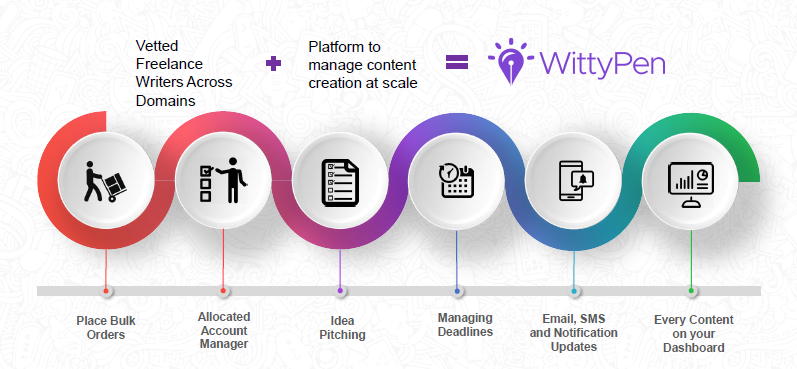
But would it lead to micromanaging teams and multiple revisions? Not really. When we work with our agency partners at WittyPen, we manage teams, content creation, editing, timeline management, and everything else.
The agency only needs to talk to a single individual from our team, that’s it.
2. Determine Goals & Needs
The best way to manage projects and client expectations is to align ourselves with the goals expected from content marketing. These goals help to not only manage the project flow, but also helps freelancers understand the objectives and align the content language, tone, design, etc. with the desired goal.
When you personalize content creation along the lines of a desired goal, the expected ROI is much higher resulting in reduced overall friction in project timelines.
3. Create Briefs
Since it is you who understands the customers, creates strategy, and manages the team of freelancers, you should create a descriptive brief. When working directly with freelancers or platforms like WittyPen, the brief becomes the starting point and if all expectations are not put down on paper, it will lead to chaos.
This is the usual scenario that happens with internal teams too, where you have to diligently create briefs. Therefore, while working with freelancers you should give this special priority.
Once you are done with hiring your team of freelancers and allocating their respective responsibilities, all you need to focus on is managing the strategy level execution and scaling it with the business requirements of the customers.
To Conclude it all
Surviving in a fiercely competitive online marketing segment with aspirations of acquiring a solid client base and retaining it successfully is quite an uphill struggle for marketing agencies. The need is to approach the process of content selling strategically, both in terms of conceptualization and execution.
If approached in a systematic way, it can be instrumental in ensuring a constant flow of revenue and robust customer base for both your agency and the client’s business.
If you make sure to understand the client’s expectations thoroughly followed by co-creating a strategic content marketing plan along with them, both success and a positive ROI will follow.
Originally a platform for individuals to share quick thoughts, Twitter (now rebranded as “X”) has evolved into a potent marketing tool that enables brands to engage with their audience effectively. With 217 million monetizable daily users, it’s clear why many companies continue to leverage Twitter for marketing purposes.
However, merely tweeting sporadically about popular topics is no longer sufficient. Brands must adopt a more deliberate approach to their social media marketing strategies on Twitter to differentiate themselves and maintain audience interest.
In this guide, we will explore a detailed, step-by-step process to craft a Twitter marketing strategy that enhances your brand’s presence and boosts engagement. Let’s dive into the essentials of creating an effective strategy on this dynamic platform.
Create a Twitter Profile
As deceptively simple as this step may sound, it is what will set the foundation for your future marketing. There are a number of things to take care of while creating a Twitter profile.
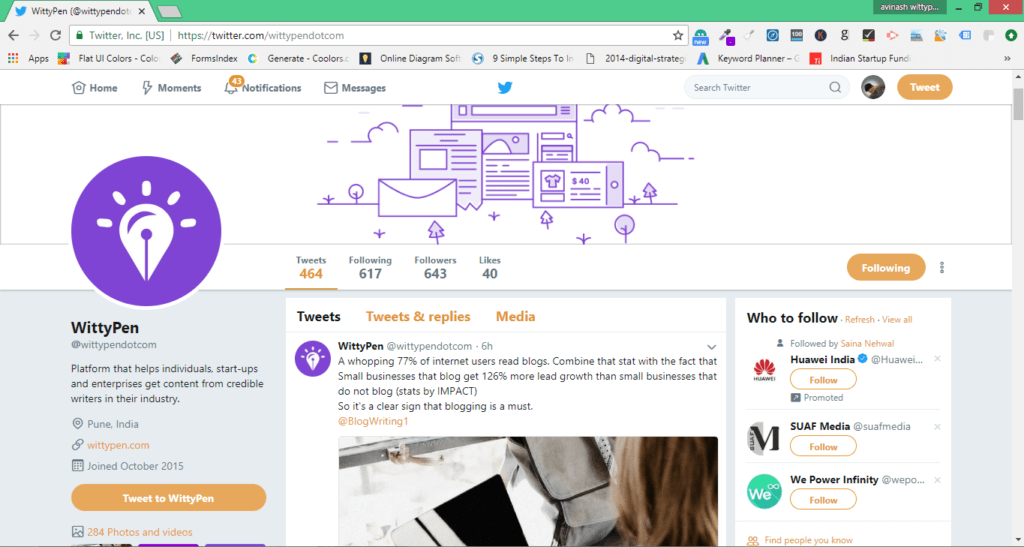
Let’s consider the Twitter profile of WittyPen as the sample layout and go through the things that you need to focus on while creating yours, step by step.
1. Username
Wittypendotcom Your username is what spans across the entire platform. It is what people will use to tag you in their tweets. So, if someone needs to mention WittyPen, they will use @Wittypendotcom to tag the profile. It is advisable to use the company/ brand name here for easy recognition. The username has a limit of 15 characters.
2. Profile Name
WittyPen If you haven’t used your real name as the Username, you can mention it here. Although not used for tagging, profile name is visible to everyone at all times.
3. Profile Image
WittyPen Logo While the profile image for an individual can be anything, the same for a brand should be something that the users can recognise. The WittyPen profile image is its logo, which makes it easy for anyone to follow it without having to read through the profile.
4. Bio
Got any content requirements? The bio has a character limit of 160. This means you can only add what is relevant and which easily grabs attention. Try to make this one line about the product or service you provide. You can also tag people or use trending hashtags in your bio to drive engagement.
5. Location
Pune, India Add your location for better search results. Adding the location to its profile allows WittyPen to be searchable for any queries related to Pune. This way, you would not miss out on prospective customers looking for the product or service you offer in a particular area.
6. Website
wittypen.com Your marketing efforts on Twitter should lead the user back to your products or services. So, add your website to allow users to get in touch with you and also look you up on other social media platforms. If the website is easily accessible, it makes things simple for both, the user, as well as you.
7. Header Image
Company achievement You can let this image remain as the solid blue colour that is part of Twitter’s iconic colour theme. However, with the restrictions of space and content on this platform, why not use all the tools available? The header image can be changed on a regular basis (unlike the profile image of your brand) and can convey industry news, your latest achievements as a brand, employee milestones, etc. It keeps your followers in the know.
The Twitter Terms To Be Aware Of
Now that your Twitter profile is ready, it’ll be good help to get familiar with the lingo of this networking site, wouldn’t it? Here’s a list of some common words that you need to be aware of to use Twitter.
1. DM
Direct Message. This is a private message that will only be visible to the profile you’re sending it to. Do note that while you can reply to DMs from anyone, you can only send a DM to a profile you are following.
2. EM
Email Me. Since some conversations require more than 140 characters, EM is used to take the chat outside of the Twitter world.
3. #FF
#FollowFriday. A Twitter tradition, people use this hashtag (generally on Fridays) to tag people/ profiles they admire and think their followers should follow too. Simply put, this is a recommendation given by your follower for others to know about you. So, if someone puts up your username with #FF, rejoice!
4. RT
Retweet. When you want to share a Tweet by someone else, you use RT. It indicates at the beginning itself that the Tweet shared is not posted by you.
6. MT/ MRT
Modified Tweet/ Modified Retweet. As the name suggests, this is basically a Retweet, but one that has been modified by you. This is useful when you might want to add a comment to someone else’s Tweet, but the character limit won’t allow it. You can simply make the changes required in the tweet and MT it so that people can know where it leads back to.
Tips and Features of Twitter
Now that you’re part of the Twitter world and have learnt the little things, let us move on to understand how to navigate through it as well, yes? Take a look at these top Twitter tips and incorporate them in your marketing strategy for outstanding results.
1. The Twitter Chat
Twitter chats are public conversations that users are able to engage in around a unique hashtag. This hashtag is pre-decided and allows Tweeple to follow and participate in the discussion. People have not yet realised the full potential of these chats. On a platform where frequent engagement is not viewed as possible in comparison with other sites like Facebook or Instagram, Twitter chats are the perfect tool to beat this misconception and give you an open forum with wide scope.
The best thing is that the users you interact with here are actually looking for active engagement. You only have to host or take part in chats that are important and relevant enough for users to follow and respond to.
How can you go about these Twitter chats?
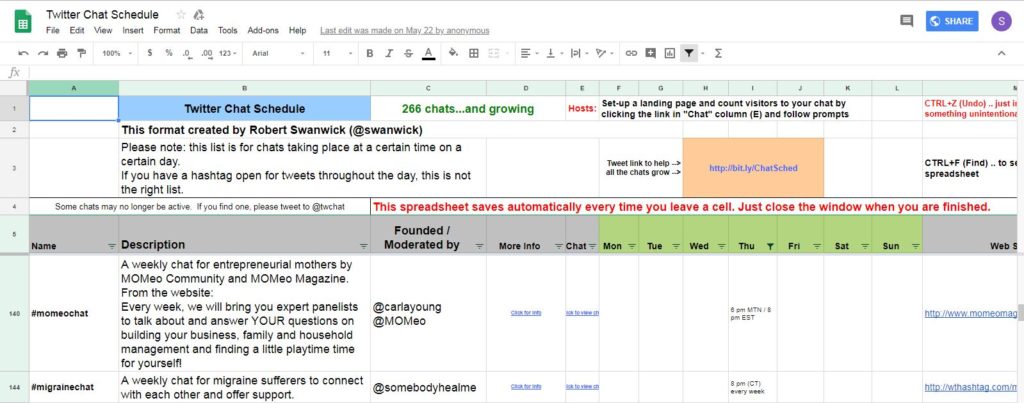
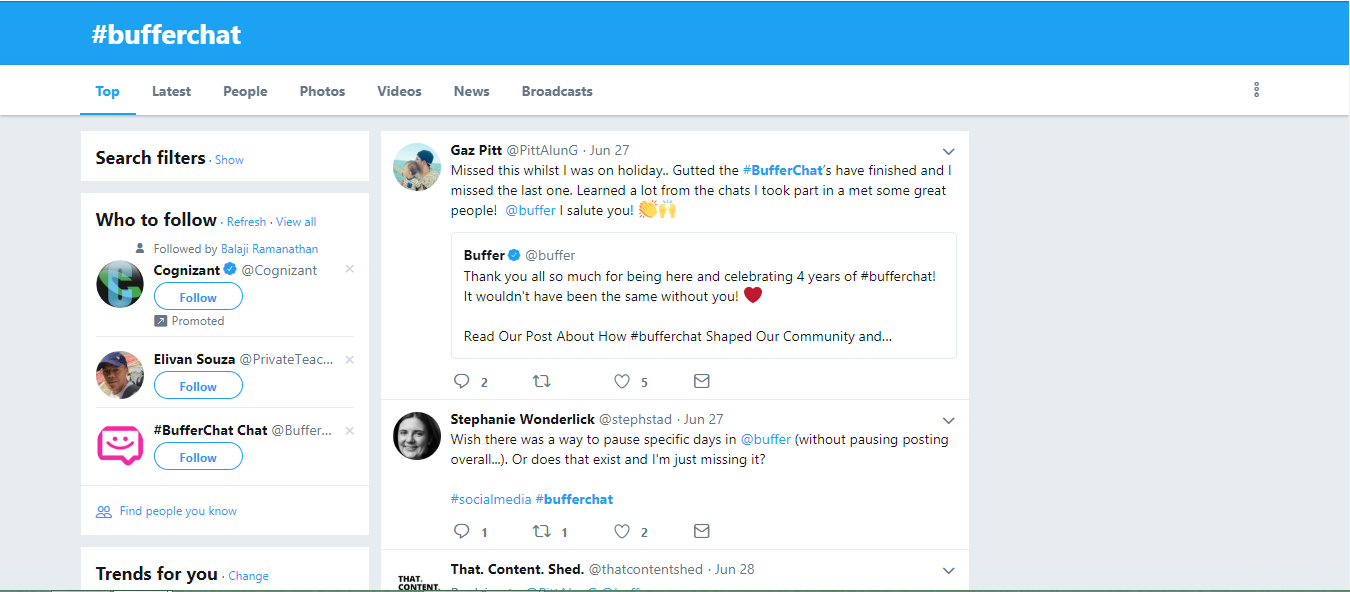
Look for chats in your industry: Search for trending hashtags and chats in your industry and actively involve yourself in them. Apart from responding, tag other people also to increase the reach of the chat.
For instance, Google Spreadsheets holds an invaluable stock of data on the various Twitter chats running with their descriptions, schedules, etc.
Host your own chat: If you can come up with something interesting and gripping, host your own chat. Many a times, the things you want to discuss as a brand may not already be up and starting your own chat can help with that. This also allows you to increase your visibility more than taking part in a chat by someone else might.
Share meaningful content: Add value to the conversation. While it’s true that you’ve only got 140 characters to worry about at a time, you should still strive to write tweets that are on brand, easy to read, and likely to resonate with your audience. To create content your audience will actually read and use, it helps to never stop learning about their interests, needs, and fears. In addition to reading their tweets and engaging directly with them, you can also use apps like Trendspottr to find and share trending content. You curate content when you sort through the massive amount of content online and share the best of it with your followers in an organised, meaningful way.
2. Use Holiday Hashtags
Plan ahead:** By late October or early November, you should already have special Tweets and content ready to go for Diwali. By the time December rolls around, you should have some new year themed Tweets ready to go. Planning ahead for holidays and special events will give you time to craft high quality content to take advantage of trending hashtags and topics.
For instance, we know hashtags like #Diwali and #festivaloflights will be trending as it gets closer to those dates. Once the special day comes up, follow any trending hashtags about the event and do some real time marketing too. You get to send out content as events happen instead of having to wait until after the momentum has died down.
3. Make Conversations
The way that a lot of brands Tweet is very one dimensional. Their Tweets are essentially just broadcasts, which is not what Twitter is about. Your Tweets shouldn’t consist of only headlines with a link, inspirational quotes, or just funny statements. They should open the door for communication and conversation.
Tweet things that encourage response: Interesting content catches attention and people like themselves to be associated with such content. Hence, in order to generate responses the content should be interesting with the goal of either entertaining or educating the audience so as to receive a desirable response.
Don’t just post a link. Add your insights: In order to utilise the complete potential of the platform, posting just a link would not do justice. Hence, adding your own insight as to why you are posting that link, what makes it important, etc., becomes integral. People would be much more interested in knowing that rather than just going through the link.The insight acts as a cover for the book (link) and like it or not, people do judge a book by its cover. Therefore, adding your own thoughts would give mileage to the post.
Reply to other people: It’s easy for marketers to get obsessed with the number of followers they collect on Twitter. But without engagement, your follower number is just that—a number. From the start, Twitter has been designed to help people connect and engage on a personal level. Use that strength to your advantage and engage daily with your audience. Your followers’ Tweets can provide a wealth of information about their interests, needs, preferences, and so on. Follow and learn from them, then cater to them.
Talk directly to your audience. Don’t let them feel they are a part of a group.
According to a social media research study, 42 percent of consumers expect a 60-minute response time on social media. Respond quickly and naturally to customers, as you would in person or over the phone. It feels good when people take a moment to Retweet, like your Tweets, or follow you on Twitter. Return the favour and keep your followers happy. When you tag followers, influencers, or other brands in a Tweet, including an @mention, it becomes a nice way to drive a little traffic their way. You can also tag people in photos when it’s appropriate.
4. Make People Want to Retweet
Use short tweets: Really short Tweets tend to get Retweeted.
Use @mention to interact with industry leaders: A great way to get noticed by the leaders of your industry is to mention them in a Tweet. They might even RT what you wrote about them!
Tweet with your real personality: Add character to your Tweets. People want to connect with people who are genuine online. Include that personal touch in your Tweets by mentioning something quirky or specific you like to do.
Use promoted tweets: When you want a particular Tweet to reach a larger audience, pay for it to get them into feeds of more people. Promote specific Tweets – it will give you more RT’s.
5. Use Videos
Twitter might not be the first platform you think of when it comes to video marketing, but it’s not something you should overlook. Twitter does give you a few options for using videos.
Live videos and Periscope: First, you can use Twitter’s native video feature. This allows you to record videos up to 140 seconds long and upload them directly on your Twitter stream.
A second option is to use Periscope, which is a live streaming app owned by Twitter. Periscope integrates into Twitter so your live streams show up in your followers’ Twitter feeds. Once the stream is over, the recording is still available for people to watch later.
Reply in videos: If you want to make your replies more personal and customised, consider recording a video instead of the standard 140 characters of text. Video responses are more engaging, they stand out, and they allow you to put a face behind your brand.
Tweeting video responses is something very few businesses actually do, so taking that extra step can give you an edge over your competitors.
Q & A sessions: This tactic piggybacks off of the previous one, but takes social customer service to the next level. If your brand has some notability and you have a decent following, there’s a good chance that people have questions to ask you.
You can host a Q & A session on Twitter, similar to a Twitter Chat, where you answer questions from the platform. These have been around for a while now, but most brands only send standard text Tweets. Integrating Twitter Video is a way to spice things up and make the experience even more personal.
Educational videos: We live in the information age. People love content that educates and shows them how to do something new. Twitter Video is a great platform to provide valuable how-to content. At first, 30 seconds may not seem like enough time to fully explain your topic, but the time constraint actually results in videos that are simplified, and therefore, easier to follow.
Teasers: Building up anticipation before you release a product or piece of content is one of the best promotional strategies you can implement. It gets people talking and creates the buzz.
Since teasers are short, a 30-second video makes perfect sense. You can use teasers for product launches, events, new content, or anything else that you want to build a hype around.
In your video, give your audience just enough of a preview to get them excited for the release.
Jump on trending topics: When you send out a Tweet, most of the people who see it will be your followers. However, when you Tweet about a trending topic or hashtag, your Tweet can show up to millions of users who scroll through the Moments section of Twitter. Make your Tweets about trending topics are more engaging by using a video instead of just text or an image.
Entertain: Aside from staying in tune with what’s happening around the world, one of the main purposes of Twitter is entertainment. Apps like Vine, Instagram, and Snapchat prove that video is one of the best ways to create entertaining content. As a result, we’re seeing a lot of major brands and influencers use Twitter Video to create non-traditional content for promotion and brand building.
With video, you don’t have to shove your products into the viewer’s face. For instance, if you look at American Idol, their videos don’t tell you to watch the show, or even what date/time it airs. It is just an enjoyable clip that keeps American Idol in your mind, but doesn’t try hard to sell itself to you.
Capture spontaneous moments: Did something so unbelievable happen that the only way anyone would believe you is if you recorded it? When those moments happen, it’s the perfect opportunity to use Twitter Video. Unplanned, interesting moments have the opportunity to go viral and attract media attention.
Behind the scenes look: Transparency is crucial if you want to build a body following around your brand. Giving users a look behind the curtains of your business is one of the best uses of video marketing. You don’t need expensive video equipment or professional lighting. Don’t be afraid, let them see what goes on behind the scenes with a raw video, and you’ll be able to start building brand loyalty.
Twitter Video makes it easier for you; all you have to do is hold down a button and record, then send out your Tweet. It could be a clip of a team meeting, how you create products, or other parts of your company that consumers normally wouldn’t get to see.
Track what works: While you’re producing all of these videos, don’t forget to keep track of what your audience responds to the most. You have a couple of options to track your stats. You can use the Tweet Activity button in Twitter. It’s right below all of your Tweets.
Once your twitter marketing game is set, you know how to take it forward.
So, now you know what works and what doesn’t on Twitter. Keep these do’s and do not’s in your mind and leverage the best out of what the platform has to offer. You are bound to have positive responses. Take the first step, start something new, when you get results, you can thank us. 😀
We hope you continue climbing up that ladder of progress. Happy Tweeting!