Category: Content Marketing

  • How Brands Use Customer Reviews to Boost Their Content Strategy?

    How Brands Use Customer Reviews to Boost Their Content Strategy?

    Last Updated: 04-02-2020

    You have seen something amazing online and want to buy it. But before you do that, you automatically click on the customer reviews for the product and start reading through them.

    This scenario must be immensely familiar to you.

    While buying something online, we often look at the product reviews. And why not? If something is used by many others and has also been recommended by them – then it’s a must use.

    Importance and Impact of Customer Reviews

    Word-of-mouth is an immensely powerful tool in the era of e-commerce and digital marketing. Customer reviews are honest feedback provided by people who have had prior purchases on the website. They offer potential buyers with the help they need in making decisions. There are chances that any question a potential customer has, it has already been questioned by someone else.

    With social media being a powerful tool of communication, customers do not hesitate in sharing their opinions. Brands thrive these on customer reviews. Reviews on their products, whether positive or negative, are the fruits of labour to the companies that make them. The direct feedback between brands and their customers is a useful tool in content marketing.

    Dealing With Customer Feedback

    People are happy when the opinions they post to a brand’s page get a response. Even a simple thank you reply on a positive review improves customer satisfaction and drives repeat sales.

    Positive reviews play an essential role in driving sales for brands. Even a few reviews on a product as compared to no reviews on a similar product are the deciding factor for customers. With multiple brands providing quite identical products for sale, customers often go with those brands that have a higher star rating and positive reviews.

    Dealing With Negative Reviews

    Negative reviews are nothing to scoff about. Studies show that any product with only positive reviews and a perfect 5-star rating is suspicious and that customers would usually pass over such products. To be convinced to buy any brand’s product, the customer would usually see the negative reviews and the response the review garnered.

    Acknowledging a negative review does not mean changing the marketing strategy. A simple agreement about the shortcomings and rectifying the same helps in improving customer views. Studies show that brands that acknowledge their negative reviews tend to have plenty of customers who become regulars.

    How brands utilize customer reviews?

    Word of mouth digitally works wonders for brands, especially in this age of social media where our buying decisions are influenced by social proof. Customers now have also become more vocal and opinionated about their choices. So it is important to shed some light on how brands today can utilize customer reviews for boosting their content strategy.

    Not only do reviews and feedbacks help customers make a choice, but they also help brands to improve themselves. Here’s are some examples of customer reviews and how brands get them. Keep in mind that these brands also make amazing use of AI in content marketing and use their content marketing resources to the fullest.

    Amazon’s example:

    I ordered a toy for my pet from Amazon. After delivery, I got an email from them asking for an honest feedback.

    Uber’s example:

    Similarly, my Uber trip with the driver was asked to be rated by the app. Customer ratings would help Uber in improving their customer experience.
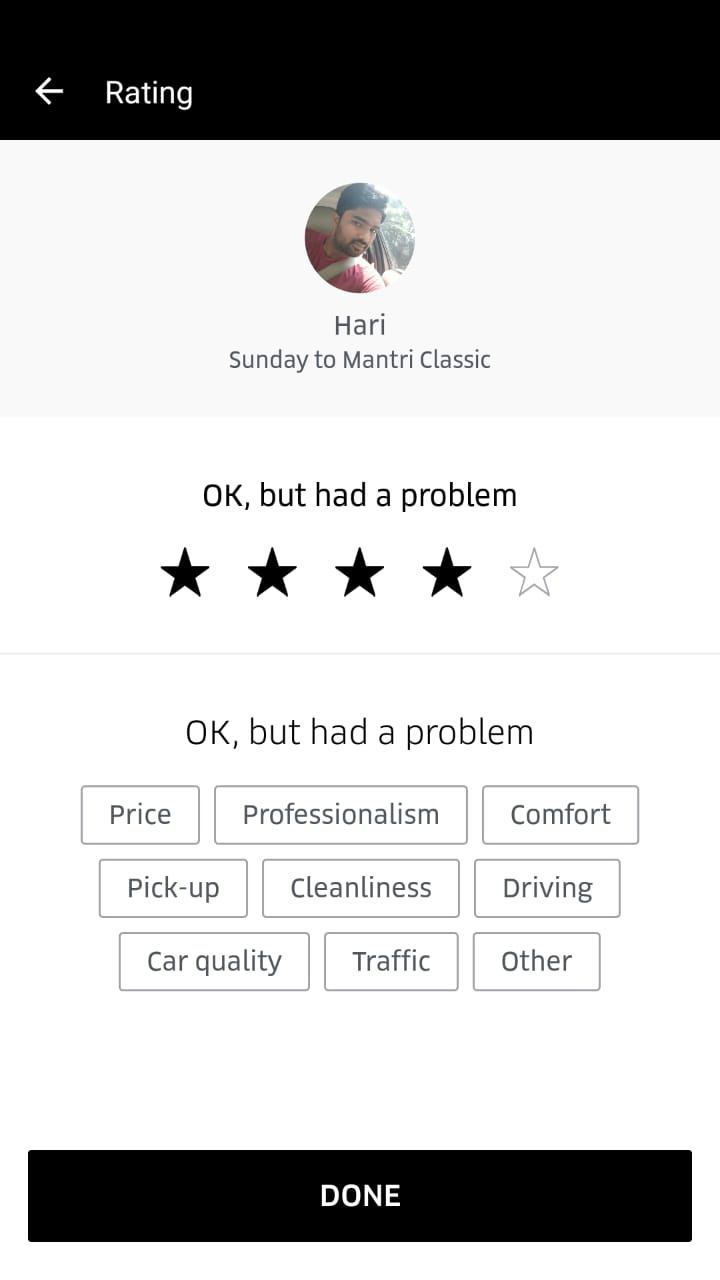
    Uber Feedback

    Let’s look at examples of customer reviews to boost content distribution strategy

    Using customer reviews in emails

    You can add customer testimonials to your emails. Your potential customers are most likely to engage with your brand after they read reviews online by others Have a look at what we have done with our email at WittyPen.
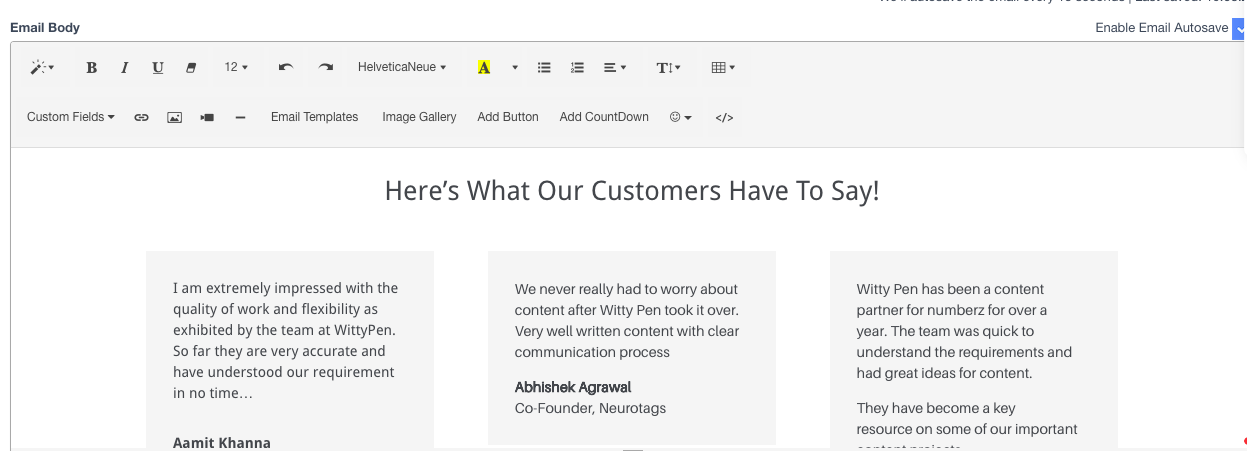
    WittyPen Send X

    Use customer reviews under the product

    A brand like Romwe employs its user-generated content to influence others. I bought a top from them after I read some rave reviews about its fit and comfort.

    Romwe’s example:
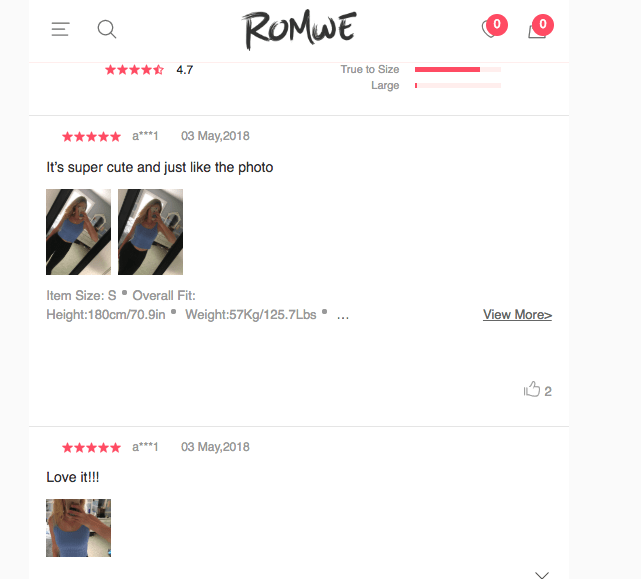
    Romwe

    Collaborate with bloggers/influencers

    Influencer marketing is on the rise, and everywhere you look, you can see brands utilizing the social media savvy salespeople to push their products and services.

    Limeroad’s example:

    Limeroad’s collaboration with an influencer (who’s also their user) is a great way to increase awareness big time!
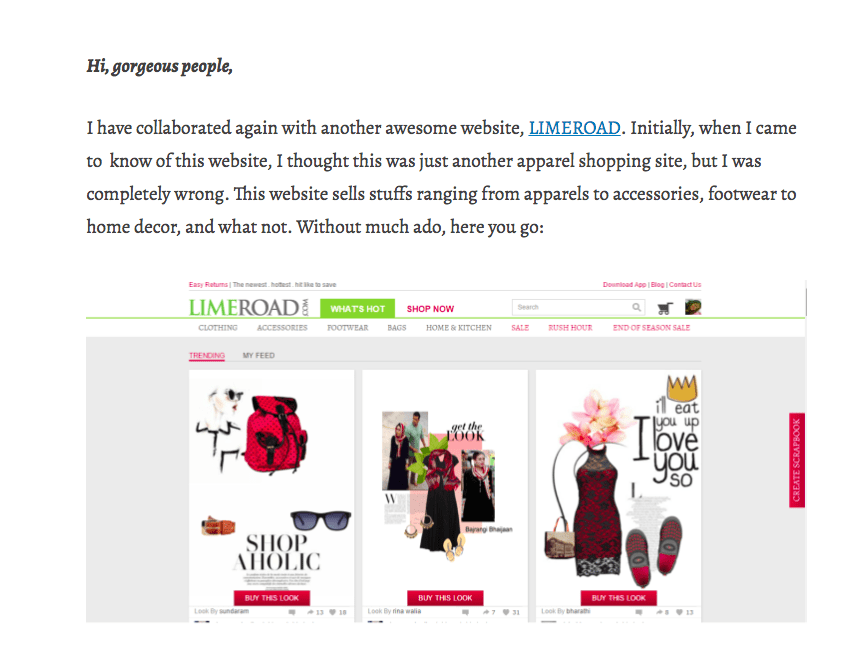
    Limeroad coustomer review marketing

    Use customer reviews on social media

    Most of your users are social media buffs, and they come across many brands while they scroll up or down their screen. It’s important to be visible to their eyes while they indulge in their scrolling behaviour. Here are some examples of customer reviews on social media

    AJIO’s example:

    While scrolling up my Facebook feed I chanced upon this ad by AJIO, and I saw that the brand has been liked by my friends. Now I have heard of Ajio before, but my friends vouching for the brand compels me to check it out.

    Customer reviews on social media

    Use the referral technique

    I recently completed a course in Udacity. They sent me a “congratulations email”  which also said the following.

    Udacity’s example:
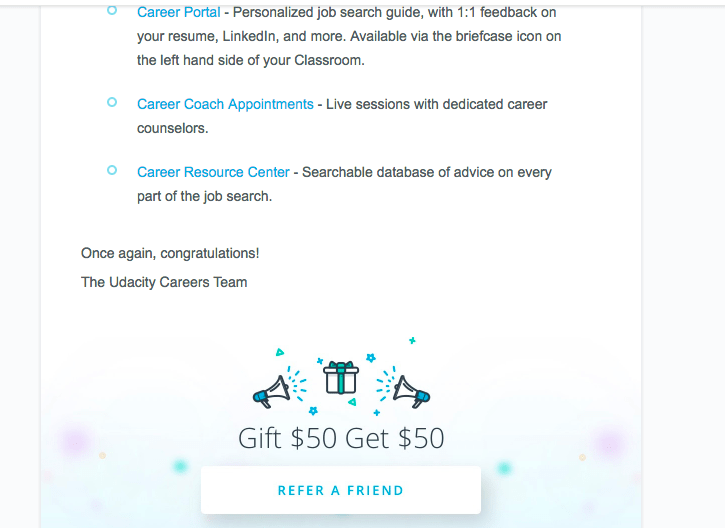
    Udacity Referral

    Now I was satisfied with the course and was also happy that they had been following up with me to give me career guidance post the course. And also complementing to that is the fact that I might get 50 dollars if I refer the course to someone.

    It’s like a reward to me. So, I won’t really mind doing my bit of referring this course to others who might be potential candidates for it. And when my friends see this, they would also not mind taking a look at this since it has come from me. Similarly, most of the apps use messenger apps like WhatsApp to share “Referral schemes”.

    MuscleBlaze app’s example:
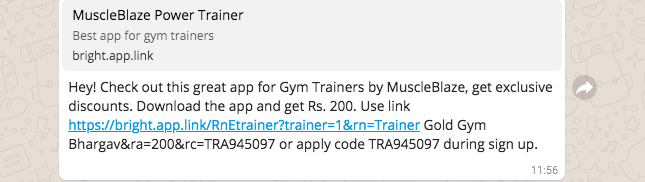
    example

    So it is extremely important to be creative about using testimonials and reviews on different platforms. We have two experts here – Zain from Digital Vidya and Anshuman from Upgrad – who will share their views on how you can use customer reviews for boosting content strategy. Zain Siddiqui
    Zain is a trainer at Digital Vidya and he loves conducting online marketing workshops for entrepreneurs and corporates under Startup Nebula. He is also the co-founder of Wicked Broz which is India’s premier graffiti agency.

    Zain’s take on using customer reviews for boosting content strategy

    Getting a customer to write a review for you means not only that your product and service rocks. Following up with them immediately after they have experienced your service is the best way to go about it.

    That’s a science in itself altogether. Here are two ways that I personally think should be used to blend customer reviews into your content strategy.

    Turn that testimonial into a storytelling tool

    Your consumer review gives you leverage. However, don’t forget that you are putting your customers in the spotlight. You are sharing part of your success with them by celebrating them on your website/marketing. Don’t just use a standard testimonial functionality. Make an effort to introduce the customer to your audiences. Design their hero journey. Don’t forget your customer is always the hero in the hero journey.

    Your product is usually the herald or if you are a consulting business, you are the mentor. When you write a blog or case study about them, think hard about how did you turn them into a hero? What does their business usually do? Write a short write up on your relationship.

    Use their logo or pictures if possible. Any moments when you thought this might not work out? What were the challenges? What happened when you finally won? How did you come to know? Read this case study on Zivame by WebEngage to get an idea of what I’m saying.

    WebEngage’s example:
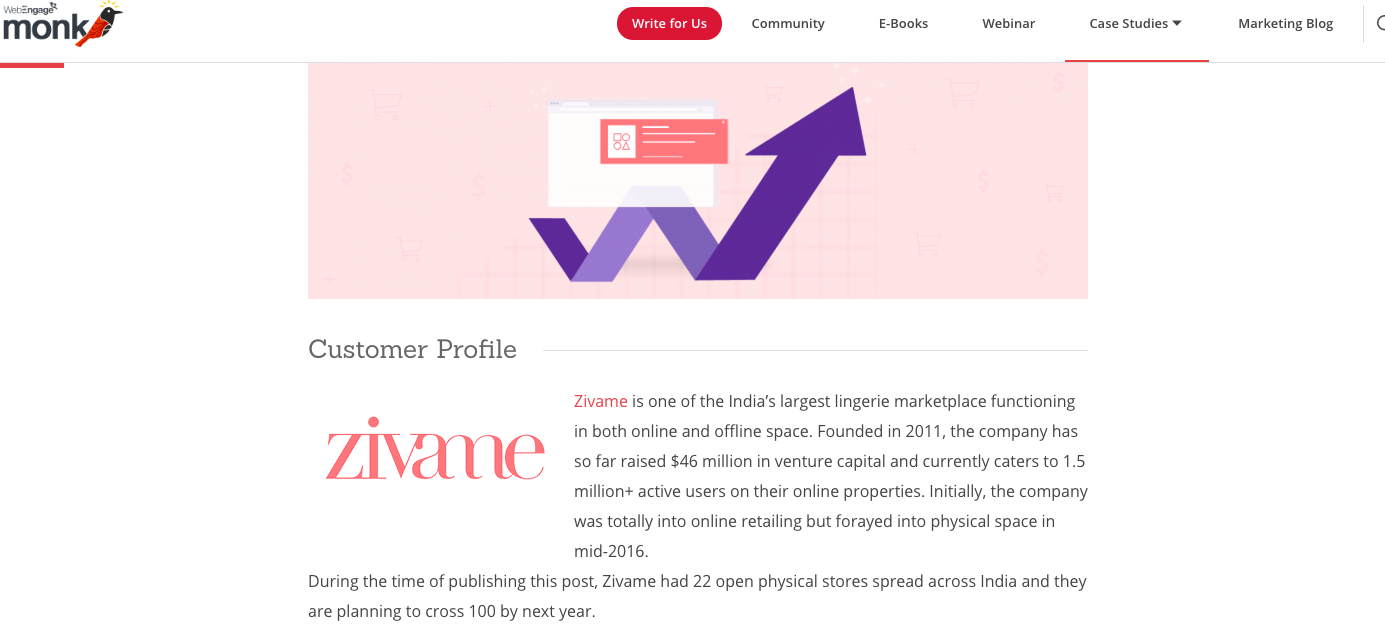
    Zivame

    Explore different facets of your story with them in different forms of content. A single customer review can be faked, multiple touch points in a story cannot. Repeat the template for other customers.

    Get your customer to talk about you in their channel

    Anshuman’s take on using customer reviews for boosting content strategy

    Make use of social validation and relatability

    Content marketing is all about giving value and helping others. Think from a human perspective. Once you have made an all-out effort to celebrate your customer’s genuine hero journey using your tool or service, they would be more than happy to share your case study on their social channels or refer you to their friends.

    It completes the cycle of trust. If your customer is a big multi-national or an emerging startup, maybe, just maybe, a teeny bit backlinking from their site would more than help your SEO.

    But even if they don’t, don’t worry. Google’s Panda update counts brand mentions as implied links and that itself should suffice. That customer review is a powerful tool.

    Don’t just look at it as a way of building trust and credibility and waste it in using it as a sticker on your Emails or at the bottom of your landing page. Whatever you do, think long-term and think creatively. Turn that trust into belief. Anshuman Agrahari

    Anshuman currently works as a Content Marketer at Upgrad. He previously co-founded and headed marketing at InternStreet a platform to connect students with mentors in the industry in various Tech, Design and Marketing courses.

    Make use of FOMO

    Fear of Missing Out (FOMO) is an anxious feeling when you think of exciting or interesting prospects happening elsewhere with others.

    Customer reviews act in the same way – If a product is being liked, talked about or recommended by many of your friends – then you are bound to find out more about it. As a content marketer, you must be able to tap into this emotion at the right time.

    Zomato’s example:

    For example, in Zomato’s ratings, Natural ice cream tops the list. People who look at it would be curious to know about the high rating of this place and would check it out.
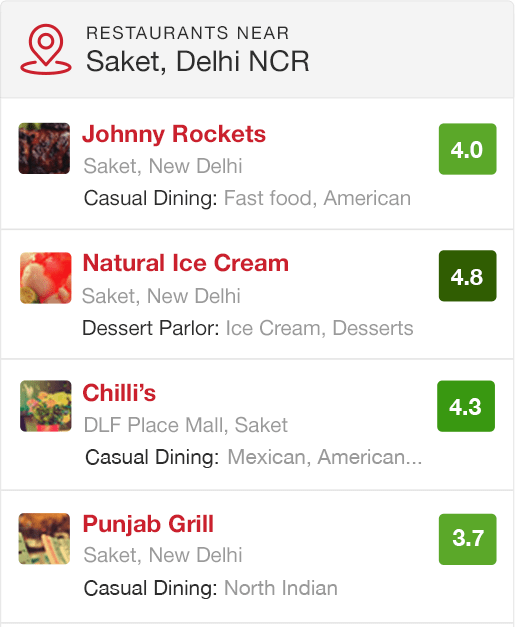
    Zomato review

    Final thoughts

    Positive reviews can play a huge role in shaping a business’s content marketing and content marketing strategy. Potential buyers place massive weight on the opinions of others before making a purchasing decision.

    Just drafting a plan is not enough. To remain ahead of the curve, a brand’s content marketing team needs to always be on the lookout for customer reviews and respond to them at the earliest – whether they are positive or negative.

    So by nurturing customer relationships and gathering positive feedback you can successfully drive sales and brand growth and help in a content marketing campaign. With this, we have come to the end of our blog on examples of customer reviews.

    We want to thank Zain and Anshuman for giving us some valuable inputs on the topic. Hope you use these insights to boost your content strategy.

  • Have a Look at the Best Omni Channel Examples for Your Content Marketing Strategy

    Have a Look at the Best Omni Channel Examples for Your Content Marketing Strategy

    An omni channel content strategy is often confused with a multi-channel content marketing strategy. They may seem similar but are different from one another. Through multi channel you are aiming to achieve various sorts of goals depending on the channel while through omni channel approach the goal set is the same and they are striving to achieve it with different channels. Instead of thinking of a desktop experience, a mobile experience, a tablet experience, and an Apple Watch experience, we’ll need to pursue one, holistic approach- an omni channel experience.

    Here are some definition given by ​Omni Channel Content Strategy _​_to understand the terms better:

    Multi channel Content Strategy:

    Provides content suited to a specific factor or channel, such as desktop, tablet, smartphone or in-store. In theory, multi-channel considers more than one channel. An effective multichannel experience:

    1. Strives to provide a collective content experience across all channels
    2. Takes advantage of a particular form factor’s strengths
    3. Cross-references experiences across all channels

    Omni Channel Content Strategy:

    Omni Channel Content Strategy

    Source: Contently

    Is an approach to multi-channel that provides content at every point in the customer journey (analog, digital, in-store). In practice, omni channel strategy is a retail strategy that considers a user and their entire cross-channel journey with a brand, from the perspective of the user.

    Omni channel content assumes the overall user engagement with a particular user journey, and serves up content to each step in the process, optimizing channel experiences.

    An omni channel experience, accounts for each platform and device a customer will use to interact with the company. That knowledge is then used to deliver them an integrated experience. Companies using this technique align their messaging, goals, objectives, and design across each channel and device.

    Omni channel content strategy extends far beyond its specific niche and medium. It ensures that every part of content reaches the ultimate user providing them with a seamless experience without any data getting lost in providing this experience. According to research by Econsultancy, 87% people believe that brands need to work harder to create a seamless customer experience.

    In the words of John Bowden, Senior VP of Customer Care at Time Warner Cable:

    “Multi channel is an operational view – how you allow the customer to complete transactions in each channel. Omni channel, however, is viewing the experience through the eyes of your customer, orchestrating the customer experience across all channels so that it is seamless, integrated, and consistent. Omni channel anticipates that customers may start in one channel and move to another as they progress to a resolution. Making these complex ‘hand-offs’ between channels must be fluid for the customer. Simply put, omni channel is multi-channel done right!”

    Importance of Omni Channel Marketing Solutions

    Omni Channel marketing Strategy

    Source: C1 Partners

    Buyers interact and connect with brands at a number of different points and in a number of places. Those are both digital and physical. (and even somewhere in between, i.e. digital screens displaying social content at live events).

    Consistency of messaging across all of these channels is essential for businesses. Especially if they are keen to make the buying journey as effective as possible. A consistent tone, style and strategy ensures messaging is clear. Also every piece of content adds to a brand’s image as a result strengthening not diluting it. Consistency means quality and keeping consumers engaged every time they connect with a brand.

    One of the most powerful tools you can utilise to survive, thrive and succeed in the omni channel era is content. In the past, you may have used content attract traffic, engage the interest of visitors and boost conversion. But the role of content in the age of omni channel is gradually evolving to do more than that.

    Some statistics from a recent study in to the traits of omni channel campaigns show how important it is:

    1. 20% of consumers have used their phone to find or redeem coupons and/or lookup product information while in a physical store.
    2. Personalized mobile promotions increase sales: the consumer is more likely to make an in-store purchase if they can access rewards or promotions via their mobile. A significant portion of consumers are interested in accessing such resources on a digital wallet.
    3. 52% of retailers are monitoring social media.36% are enhancing eCommerce sites, or are currently implementing these initiatives.
    4. Retailers are farther behind on improving inventory visibility. To these end, about one-third have identified equipping in-store employees with mobile apps to access inventory + other initiatives to provide cross-channel inventory visibility, among their top 3 omni channel priorities.

    Customers now expect to receive service from your organization on the channel of their choice, which might be voice, email, SMS/text, web, mobile or social media. Companies are beginning to provide service on all of these channels – but too often, those channels may exist in silos.

    This multi-channel service can be taken to the next level with an omni channel solution that integrates channels to provide a consistent customer experience

    Omni Channel Examples

    To understand Omni Channel content strategy one must understand the Omni Channel experience. Most of these companies have not yet integrated this in India. Some of te best multi channel marketing examples are:

    Disney

    omni channel examples

    Source: Slide Share

    Disney is one of the best omni channel examples, as it gets the omni channel experience right, using AI in content marketing, down to the smallest details. It starts with your initial experience on the entertainment giant’s beautiful, mobile-responsive website. Even its trip-planning website works well on mobile – that alone is something you don’t see happening very often. Once you’ve booked a trip, you can use the My Disney Experience tool to plan your entire trip, from where you’ll dine to securing your Fast Pass. In the park, you can use your mobile app to locate the attractions you want to see, as well as view the estimated wait time for each of them.

    The imaginative company takes it one step further, though, with the release of its Magic Band program. This tool acts as a hotel room key, photo storage device for any pictures taken of you with Disney characters, and a food ordering tool. Plus, it even has Fast Pass integration to keep your vacation moving. That’s a truly omni channel experience.

    Starbucks

    Starbucks Omni Channel marketing Examples

    Source: Feedeo Blog

    A quick look at the Starbucks rewards app will reveal why many consider it one of the top omni channel examples out there. First, you get a free rewards card that you can use whenever you make a purchase. But unlike traditional customer loyalty programs, Starbucks has made it possible to check and reload your card via phone, website, in-store, or on the app. Any change to the card or your profile gets updated across all channels, in real-time. Standing in line to get a coffee and realize you don’t have enough on your balance? Reload it and the cashier will know it’s been updated by the time you swipe your card.

    Recommendations

    Every company must develop its own unique omni channel experience infrastructure, and you’ll need to work closely with several departments in your company to develop this strong strategy. While building your own program, look to the following stakeholders.

    1. Product
    2. Marketing
    3. Sales
    4. Customer Support
    5. Customer Success
    Omni channel Content Marketing Strategy

    Source: Kevin P Nicolas

    1. Look at your Customer’s Perspective
    Regularly review the experience your customers go through in order to research, purchase, and connect with your products. Test the experience by placing orders, interacting via all available channels, submitting a support case, and more.

    Try different devices to ensure a seamless experience. If possible, these tests should be performed by external and internal testers.

    2. Segment Your Audience
    Understand your audience and segment your audience accordingly. Which data points actually help you better understand your audience?

    One can use technology to capture information and build profiles about your customers and their journey.

    This kind of rich data can be translated into customer use cases, and also used to build buyer personas. For example, male iOS users who work in the tech industry and are between the ages of 25 and 35 are more likely to buy based on technical specifications. If you discover you are marketing to that audience, you might highlight technical specs in your landing pages and nurturing strategy.

    3. Develop Content/Messaging that Addresses Use Cases and Behaviors
    Content and messaging is key. If a customer has previously engaged or purchased your product, you probably want to consider that in your marketing. If a customer has put something into a cart, but hasn’t yet purchased, use your content to reference that intent in emails like Amazon practices.

    This type of content and messaging makes consumers feel personally spoken to, and helps drive much higher engagement, loyalty, and purchases.

    4. Don’t Limit Use Cases to Marketing/Sales
    Consider how listening and responding can help your support team, product team, merchandising teams, and even your customer service efforts.

    In a recent article on Digiday.com, GM’s head of global social media strategy was quoted as saying:

    “A lot of it is about being able to provide a better service for our customers. If we can plug social into all the other CRM [Customer Relationship Management] data we have, then we have a full portfolio on the customer. If we know their VIN [Vehicle Identification Number], if we know their name, if we know their Twitter handle, and we know whether they like to go to the dealership or they don’t like to go the dealership, this helps us treat them in a way that they want to treated.”

    5. Start Today!
    There’s too much at stake in your business to delay taking that first step any longer.

    Consumers may be ahead of many marketers now, but this soon won’t be the case. Those marketers who thrive will be the ones who can deliver on the promise of a personal, omni channel experience.

    Once everyone understands the goals and objectives of your omni channel initiative, you can start planning your transition to this model. Including these departments early on will make it easier as you try to shift into an omni channel way of doing things — it’s less of a headache down the road when you get people excited in the beginning.

    Ultimately, your strategy should consist of a strategic plan to build a coherent, aligned experience across multiple platforms, which may include any or all of the channels featured in the above graphic.

    Because this is still a relatively new emerging concept, there’s still time to start small and expand in the future. And if you need some inspiration, you can find plenty of companies that have already implemented fantastic omni channel user experiences

    Conclusion

    omni channel means

    Source: The Growth Machine

    Most digital teams have access to a huge range of tools which allow them to boost their content distribution. However, what they lack are tools that aid consistency and coordination across multiple channels, both on the web and “IRL”.

    Investing in processes, reshuffles and technology which boosts these assets across mobile, TV, video, messaging, gaming, display, CRM, email, direct media and social media channels could make a huge difference to brands. It enhances their brand image and ensures consumer engagement properly every time they interact with a business.

    Take heed from the above omni channel examples and use your content marketing resources accordingly,form a content distribution strategy.

    As the lines between these mediums become ever-more blurred, brands which embrace omni channel content marketing stand to win big.

  • How to document a Content Strategy that gives you positive results?

    How to document a Content Strategy that gives you positive results?

    In order to be effective, a content strategy should have relevant information about the campaign, like the end goals, the target audience, the short-term goals and the key performance indicators (KPIs). However to be both useful and effective, it must also be documented. Not just drawn on the whiteboards of a brainstorm, or drafted on a company mail-trail or an ongoing conversation on a Slack thread. It just cannot be a rough draft.

    Instead, you should create a well-written, documented content strategy. Make it official and then circulate it amongst the required stakeholders. Though this seems simple to accomplish, according to the content marketing statistics by the Content Marketing Institute, only35% of content marketers have a documented content marketing strategy.
    Why is it important to document a content strategy?

    Documenting your content strategy will give you three major benefits –

    1. Successful campaigns resulting in better ROI: The content marketers who have a non-documented strategy, 32% of them saw that their results were positive. On the other hand, 60% of marketers who had a documented content strategy saw that their results were positive.

    2. Building a winning game plan: Officially documenting the campaign strategy forces your team to come together and think through the aim of the campaign, build the plan through which this aim will come to life, carry out the mental due diligence to make sure that the plan is effective and finally to make the plan actionable by developing it from a strategic level to an executional level.

    A well documented content strategy can serve as a map in a way that a rough draft, or mail thread or conversation cannot. It can be used as guidance during times of doubt, as a feedback or learning mechanism, as a basis for the creation of content, or even as a base in the event of starting afresh.

    3. An increased marketing budget: A well documented content strategy can be used to justify a higher budget, as ultimately, there are many more benefits to documenting content strategy as compared to not doing it. The next section deals with the aspects of content strategy that should be documented

    How to document your content strategy?

    Content Strategy

    Source: Moneygossips

    The following seven key elements should be documented as a part of your content strategy:

    1) The Mission Statement

    The cornerstone of any marketing campaign is its raison d’etre. Before getting into the process of developing content or even thinking about what content to build, the first question that needs to be answered is“What’s the real reason we’re investing in content and what aim to we seek to accomplish by developing this content?” And if the answer is anything close to “Well, we just know that we should be doing content,” stop right there and spend time thinking about why you’re actually making this critical and valuable investment in the first place.

    If you have a well-thought-out answer and this is in consensus with all relevant stakeholders, then write it down. Generally the mission statement should answer one of the following questions:

    1. Are you building content to generate leads and our attract new customers?
    2. Are you trying to build brand awareness and credibility?
    3. Are you trying to accomplish a certain goal?

    Once you have figured out your reason for investing in content, it needs to take a prominent place. That is in the form of a clear and concise mission statement which appears  at the beginning of your strategy; this overall statement will guide the rest of your document and keep you on track when it’s time to execute

    2) The Target Audience

    Many mission statements include an element about the target audience, but more often that not, that’s not the case. Understanding the target audience is equally important as the mission statement, and hence this next section is dedicated to that. Before building content or developing distribution plans, you need to know who you are aiming to reach through your content. Unless you are creating content for the general public, you’re creating it to reach a specific set or sets of individuals, by which your mission statement can be achieved. So, to build this section you need to include the following:

    1. Classification of  target audience with respect to demographics, socio-economic and cultural factors
    2. Building detailed and specific target audience personas
    3. How to reach this target audience

    3) The Content Mix

    Only once you are sure of your target audience – how to influence and reach them – then only can you determine what types of content to create for them. Different types of content can be used for this purpose and this section outlines that, and also the proportions to which they should be used.

    After building the mission and the target audience personas, this step outlines the content mix so that the right amounts of the required content is created. A good analogy for this section would be a recipe. Depending on your campaign and  what your sales/marketing funnel looks like, you will need various types of content:

    1. Content that brings awareness to target audience at the top of the funnel –
    2. Content that engages or hooks prospects at middle of the funnel and encourages them to take action
    3. Content for the bottom of the funnel that is very specific and designed to strongly influence action

    Now, each of these content types can take any number of forms, from blogs to research papers, from  sophisticated sales materials to print ads. So, this section details the amount of each type of content you need to accomplish your mission as well as the different content types that can be used in each category.

    Follow the latest content marketing trends to see which kind of content is the hottest. Finally, you can conclude this section by classifying the different content types you will need as – owned, work-in-progress or need to build or purchase.

    4) Content Creation Process

    The three steps above are all planning steps and you could follow them to the letter, and still not be able to build relevant content. That is why, this step is critical – it ensures that your execution process is well defined so that effective content can be created efficiently. Creating content and turning your company leaders into brand advocates takes time and effort.  Before building content make the following are defined:

    1. Processes, workflows and resources that are most necessary for your team
    2. Availability of content creation tools
    3. Media / Agency partners that help in building content
    4. Robust feedback mechanism – both internal and external to the company
    5. Your content marketing resources.
    6. Your use of AI in content marketing

    5) A Content Calendar

    This element is mainly about making sure you are as efficient as possible. Once you know the different types of content for the three categories of the target audience (mentioned in element 3), it is time to develop a schedule or calendar to make sure that you deliver.

    Developing a content calendar goes a long way in converting intent to action, and helps you maintain consistency in messaging. Consistency is absolutely critical in content marketing. A content marketing calendar is an opportunity to build trust with your audience, nurture them, and encourage them to become brand advocates for you as well. A content calendar focuses mainly on two things:

    1. How often do you need to publish to keep your audience engaged
    2. Mapping your development to publishing

    6) A Distribution Plan

    Distribution is making sure that your content reaches the right people at the right time. Having a detailed distribution plan makes sure that this is done in the most cost and time-effective way possible.

    Distribution channels can encompass publishing articles in publications your target audience reads or paying for featured ads on social media or even ads attached to emails. In order for your content distribution strategy to be effective, make sure you think through the following:

    1. Multiple mechanisms to reach your target audience – you want to match your most relevant content with the most effective distribution channel
    2. Best time to reach the audience to influence them – for e.g. For the working professional, a social media ad makes sense at night/in the evening – when they are more likely to access social media networks

    7) An ROI Calculator

    A plan is incomplete unless it includes details on how to measure it’s efficacy. This element maps with the mission statement, thus bringing your content strategy full circle. In order to determine whether the execution of your plan is a success or not, you need to first define how you are going to measure success. This could be in the form of qualitative milestones such as reach, engagement levels, traffic to site, leads generated, sales and opportunities created or could even be qualitative in nature.

    Once you have defined your metrics for success, the next step is then to make sure that you are able to track these metrics. This tracking capability can be built in-house or can be outsourced, for there are many robust and flexible software packages that can help you track performance. Along with this tracking, you can also map it to costs incurred in developing the content. This way you will have a real time analysis of benefit vs cost.

    Additional techniques to document content strategy

    1. Mapping content to the customer’s journey

    After building the target audience personas, it is important to understand the decision matrix or decision making process for this target audience. As mentioned earlier, the content required at the top of the funnel is very different from the content required at the bottom of the marketing funnel. The funnel you have is a generic model – however most customers will have a decision matrix that is similar yet different. Hence, it is quite helpful to build test case personas with the different decision matrices that could be used while distributing content

    2. Using Mad Libs for these target audience personas

    Another way to enhance this process is by using persona Mad Libs. They are a great way to ideate on the specific topics that you can address in your various campaigns. They promote creativity and ensure that you truly put yourself in the customer’s shoes. This forces your team to understand the customer’s perspective

    3. Miscellaneous tools  Depending on the campaign, customer, and content, your strategy could also include:

    1. Assessment of existing content and it’s returns from the customer
    2. Assessment of  competitors’ content
    3. Description of the content gap that your campaign addresses
    4. Budget
    5. Analysis of useable SEO information

    Though documenting content strategy may seem daunting at first, it is well worth the investment, as you set yourself up for success. With these seven elements and three additional tools to achive content marketing goals and detailed as a part of your document, your team will have an unrivaled start.

  • How to generate content ideas every day?

    How to generate content ideas every day?

    Consistency in your content is essential for engagement of the audience. For a business you don’t want your content to appear once in a blue moon which will eventually lead to disinterested visitors. Now, there lies a sweet spot between posting too much content of the same sort and posting very little quality content but with long gaps. A business have effective ways to generate content ideas every day. Content may seem like an exhaustible source, one would often be scared to run out of variety or topics to create content about though generating content is all about the ideas.

    Ideas for content creation could be derived from things around us and by following a routine to ensure you are able to derive the ideas for fresh content every day. The routine adds on to your process and helps you train your mind to pick up content ideas around you. Here are a few effective ways to generate content ideas:

    a) Reading a marketing blog everyday: A good way to excel in blog content pieces is to first start by reading a lot of content. A marketing blog will not only be extremely informative but will also help your improve your marketing strategies.

    b) Reading any other article: Marketing articles are informative but focusing on one type narrows down limits of your content creation. You read about marketing and write about it too which makes writing anything else harder. An audience might not always look for informative style content. Reading a good variety of content gives you different voices to try on for your own content.

    c) Analyse your Audience: Knowing your target Audience is essential in every field of work if you do not know your target audience well enough how will you generate content ideas for them? After a while you will reach an impasse because you don’t know what your audience needs, wants, likes, finds interesting or even shares. The content they like will get shared a lot and the shared content can help you with inputs for things you can do differently.

    d) Look out for viral content: As a content developer you must check out the type content that has gone viral. Keeping a track of such content not only keeps you updated about the trends and the new culture but also helps you identify factors that you can use to create compelling & viral content.Check the content marketing trends of 2018 here.

    e) Go through your old content: There is no better way to understand your audience and the changes than through going your old content. You get to know what sort of content worked in the past with your audience and which is more preferred.

    Self analysis of the content is essential as it tells you what works and what might not work. One could improve their standards of writing and it will help you show if you have made progress from the past or not.

    10 Effective ways to generate content ideas everyday!

    1) Create a content calendar:

    Editorial Content Calendar template

    Content calendars are exactly what they sound like: a mechanism used to plan, share, and most importantly organize content. The biggest benefit of using a calendar format, rather than lists, is that you can visualize how your content will be built and distributed throughout the year. This allows you to: Build and publish content around and on the important events in your industry or key dates; Have a documented content strategy built around this calendar.

    Find gaps in your content ideas, giving you plenty of time to plan ahead to generate content for these gap periods Make use of content marketing resources. Make sure you have your content ready in plenty of time to publish. Generally, the better you plan your content publishing, the better placed you are to produce a consistent flow of content. This then builds your brand’s perceived image in your chosen subject areas. Looking at the year ahead, you can foresee industry or world events that you want to plan content around and the content calendar is the mechanism to store and manage this information.

    You can have a look at our blog about how to create aEditorial content calendar here.

    2) Experiment with the variety of content:

    Sticking to a certain kind of content like blog posts limits your horizon of creativity with the content. Generating new content ideas with your usual content type can be difficult. Experimenting with content will give you endless ideas for your content.

    3) Group similar content together:

    If you have little or small content on a subject you can group similar topics or subtopics on that subject together. Cumulate fresh or previously posted content which makes it easier for the readers to find all the information in one place and they can depend on you for finding the desired information.

    4) Use a Formula:

    Creating an outline for your posts is like making a formula for your posts which would make content creation everyday much easier. A nice simple formula might look like: Headline, Image, Introduction, Video, Content, Transcription, Call-to-action, Recap, Done. You can create your own personalised content which can be easily identified by your readers with your formula. Many readers will prefer and acknowledge the consistency. You can have a look at our blog about Content writing guidelines.

    5) Be aware of the current affairs & trends:

    Keep track of what is trending and the happening in the world. This is the best way to generate quick and unplanned content. Companies like Zomato and Amul have created a huge base of content on this for their social media. Updating yourself with everyday news and the current affairs also let you know what is upcoming in your area of functioning. Current affairs and trends are a topic generating machine that never runs out of topics. There will be always something you could create content out of and would also attract a lot of readers.

    6) Work in batches:

    Working everyday is ideal but creating content in batches is extremely efficient. Similar type of content can be grouped and created together like videos. They can be shot on one day and then edited the together. Working in batches makes you be prepared for the week or month ahead. You will have a bunch of content ready to go out. It also helps you to focus only on one task in that day for example if you are writing articles, you could write 2-3 articles in one day and just edit and design them the other day.

    7) Have a purpose:

    Quality takes priority over quantity. Creating content for the sake of generating content everyday is something that one should not do. Content low on quality is as good as no content generated. Have a purpose and create content that helps you achieve your goals.

    Content calendar quality

    8) Develop Theme

    Develop a theme so you know where your content strategy is headed. A series of content can be created to generate new content. One can link similar content together to develop a theme like a way is to showcase your brand. Highlighting your customers, sharing surprising facts about your industry, profiling leaders in your space, introducing employees, providing quick how-to tips in your space, showcasing moments in the history in your industry or related to your products or services. Fresh happenings and revisiting evergreen topics creates an interesting mix for audiences following your brand. Developing a theme keeps you on track for generating a similar yet different content everyday.

    9) Research & work on long form content everyday:

    Another form of content that can be worked on everyday are long form content like white papers, E-books, and original research. Such type of content needs to be worked in chapters and then posted together after compilation. The research for long form content will actually help pass valuable information to your audience & also drive more traffic to your content.

    Generate content ideas

    10) Find Fresh Stories:

    Even after all these steps, there will be a point when you will run out of topics to create content about, this is when you need to start finding fresh stories. Stories are around you. Share stories from people you follow. Leaders that have left an impact on you and how they have successfully created powerful content. Get inspired! Look from a different point of view and take inspiration from different sources and look for a mix of opportunities to create content in advance and react to what’s happening in real time.

    By pulling inspiration from multiple sources, you’ll keep your content fresh and audiences engaged. Another way to generate fresh content is to just ask your audience what they want. This will not only increase engagement but as a brand the readers will feel more connected to it. Keep a lookout for opportunities to spot fresh stories.

    Over to you

    Generating content everyday may seem difficult, but with the techniques mentioned above, it is quite simple for even an amateur to develop relevant and exciting content, everyday.

    As the famous management thinker Jim Collins often says – “Discipline amplifies creativity, rather than stifling it.” By applying these effective ways to generate content ideas and using these content discovery tools,cultivating the right habits and adopting a long term game plan, one can amplify existing content into a winning content strategy.

  • The Best Instagram Content Marketing For Small Business

    The Best Instagram Content Marketing For Small Business

    Even with an increasing number of platforms available for content marketing, Instagram remains one of the unique ones. Like Instagram, Snapchat also boasts of its visual content and maintains its position as one of the leading rivals of the former.

    Ironically, the app’s USP of a 24-hour shelf life is what decreases its value as a content marketing platform.

    Although Instagram now provides a similar feature with its stories, the freedom for users to choose between posting content that could remain forever or something that vanishes after a day is what gives it the added advantage and an increase in statistics as compared to Snapchat.

    With over 500 million daily active users, Instagram has become a social media tool brands can’t and shouldn’t live without. It allows brands to humanize themselves and leave their corporate image behind.

    The social networking site is no longer just for personal use and is taking steps (like launching business profiles in 2016) to actively try and make the consumer-brand relationship more convenient on its platform.

    As 80% of Instagram users voluntarily connect with a brand on it, the only effort businesses have to put in is increasing their visibility and attractiveness.

    Top 12 Instagram Content Marketing For Small Business

    On seeing a brand post, 75% of Instagrammers are inspired to take action, and although Instagram has made content marketing very easy for brands, there are still many of us who try to find the newest or the best ways to succeed in this.

    What most of us forget or skip over are the basics. We’ve made it even more simple for you to ace your marketing strategy by offering 6 effective ways and 12 of the best Instagram content marketing examples.

    1. Create Valuable Content

    Your content should hold value for the users. Something that doesn’t interest them is unlikely to be clicked or shared by them. As an image based app, offering something entertaining or inspirational is the easiest way for any business to garner attention on Instagram.

    It helps them relate to the brand, and changes the brand’s image from a corporate entity out to take their money to something that has real people working in it, that are concerned about real issues.

    Instagram Content Marketing examples

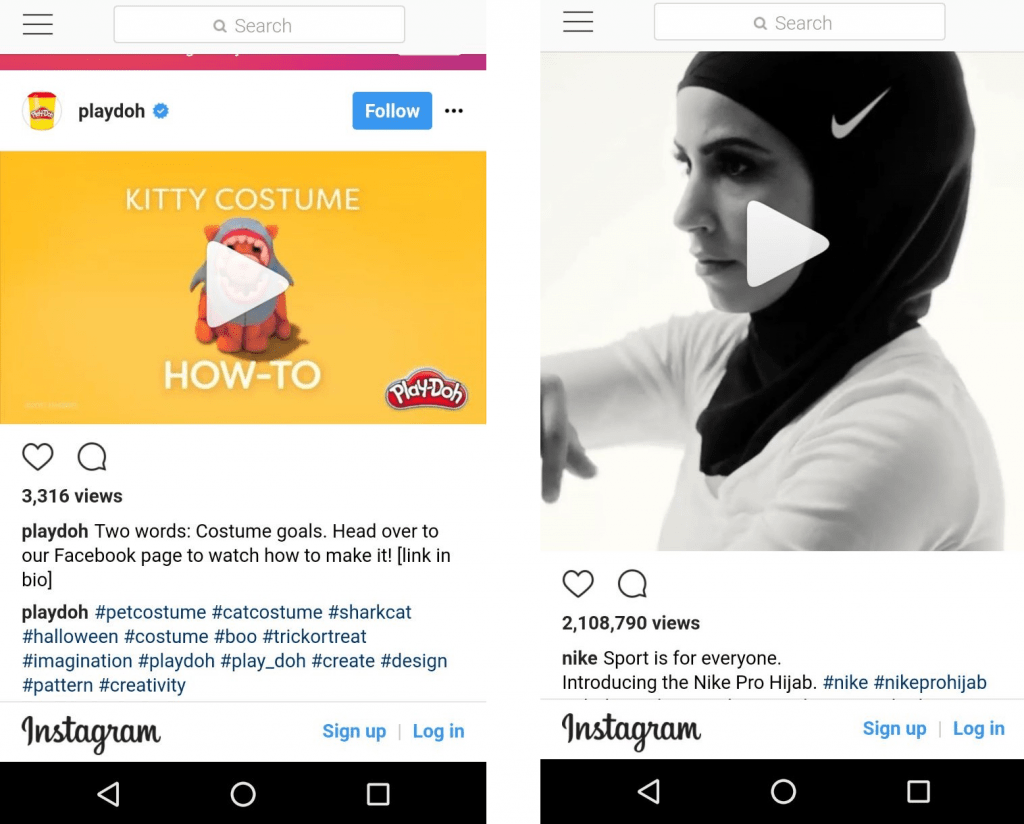
    Playdoh beautifully manages to post content that is not only pleasing to look at, but also entertaining. And the Nike posts are all about inspiration. Most of their content is about social issues that evoke emotions from their users.

    However, if you are unable to do so, then your content should, at the very least, be educational. But instead of educating your users about who you are, you should focus on presenting a solution to a problem your users are facing.

    Make sure that the images you use are not just put there because they are pretty, as users are known to ignore purely decorative images that don’t offer any real content. How-to-videos and Infographics prove to be a great tool in that regard. They not only help gain a user’s attention, but are also liked and shared 3 times more than any other type of content.

    Instagram Content Marketing examples

    Ben and Jerry’s post delicious video recipes of treats that could be made from their ice-creams. They are colourfully charged and peppy, making users actually want to see the whole video. Hubspot is an excellent example of a brand that creates impressive infographics to attract users.

    2. Ensure Interaction with Users

    Merely posting great content is not enough, a brand must also remain in constant connection with its users. Your images or videos may be liked and shared, but if you don’t interact with your users, you will be unable to leave a lasting impression and grow your presence. Many brands create contests to increase user interaction, as these get 3.5 times more likes and 64 times more comments than regular posts.

    Posting user-generated content is another way to increase engagement and make your users feel special and appreciated. Consumers who see a user-generated photo have a 4.5% higher chance of conversion, which increases to 9.6% once they interact with the photo.

    Instagram Content Marketing examples

    Starbucks is one of the brands that has used user-generated content for marketing perfectly. Their feed is full of beautiful posts from users themselves, which have garnered thousands of likes.

    One of the most popular Instagram contests was National Geographic’s ‘Untamed Americas’, where they asked users to follow their profile and post pictures from North and South America with #UntamedAmericas. The prize was set as a subscription of Nat Geo magazines and a DLSR Camera, both right up the alley of their usual followers.

    3. Flaunt Your Company Culture

    The most significant advantage of a brand using Instagram as a marketing tool is that it can change its image very easily here. Instagram helps brands show their human side to the audience.

    The content you post here can say, “Hey! We don’t just want your money. We also have regular people like you, doing regular things.” You don’t want to seem too corporate here, that’s what other social media platforms are for.

    So, show your brand’s human side. In-house company games, your employee’s personal achievements, celebrating an employee’s birthday, and some charity or trust your brand supports are some of the things that could be included here.

    Instagram Content Marketing examples

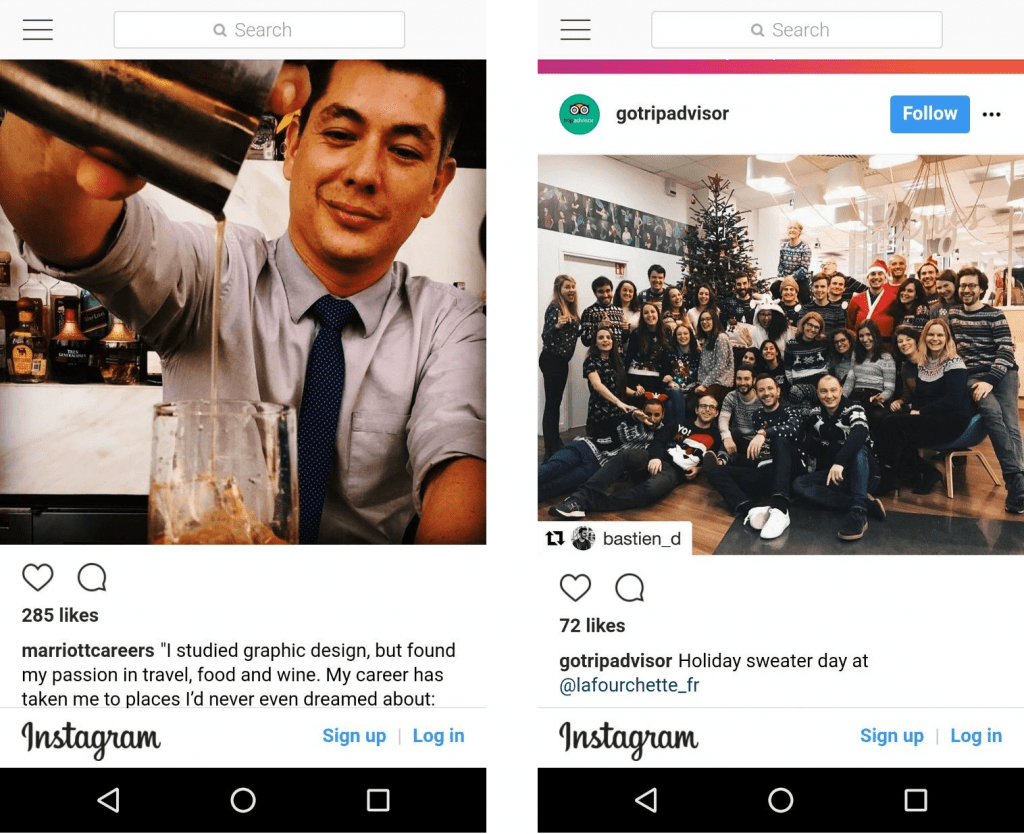
    Marriott and Tripadvisor, leading brands in their respective industries, regularly post content on their Instagram profiles that show their company culture. Their feeds are constantly updated with personal stories of their employees and their life at the office.

    4. Maintain Interconnectivity between Platforms

    Oftentimes, brands try to use the same content for different social platforms. This is a big no-no in the world of marketing.

    Your content may be worth sharing, and while replicating it is okay, you need to ensure that appropriate format changes are made before you take it from one social media tool and post it to another. For instance, textual-rich content can be a good strategy for Facebook, but the same doesn’t hold true for Instagram.

    A user can see only the first few lines of text on their feed, and the rest of your content goes to waste. As a visual app, brands need to focus marketing through images and videos alone, and offer words only to provide context.

    With that said, many brands have lengthy write-ups to complement their posts. But the photos and videos used by these brands are so overpowering with respect to the text, that the words really act only as sidekicks.

    Instagram Content Marketing examples

    Humansofny back their images with compelling stories from the subjects. These stories give a life to the image and make the users empathise with the person photographed. Buzzfeedtasty

    Post mouthwatering recipe videos, usually accompanied by lengthy captions that are only present to support the videos, not overtake the attention from them.

    This does not mean that you have to ignore your other social media tools while on Instagram. In fact, 95% of Instagram users also use Facebook, so it’s better to allow your users to reach you on your other social media platforms through your Instagram account itself. Instagram doesn’t allow clickable links as captions to the images or videos.

    And since brands need to ensure that the users are lead back to their products or services, it is essential to provide these links in your profile bio. These links can be of your Facebook pages, website, or even your contact information as long as they guide the users back to your products or services.

    5. Hashtag the Sh**t out of your Posts

    Hashtagging your posts is an essential element of Instagram. It makes your story searchable, and easily recognisable. Using at least one hashtag increases engagement by 12.6%. But and I cannot emphasise more on this point do not overdo it. You cannot simply hashtag every single word of the caption.

    That will only look like a cluttered mess. Instead, focus on the relevant keywords and hashtag them. This will allow the users to find your post if they search for the right thing. Even if the users just happen to stumble upon your post, proper hashtags will help define what your post is about and aid users to differentiate whether it is relevant to them or not.

    Take this blog post as an example. If I want to hashtag it, I could put #Instagram #Contentmarketing #Simple #WittyPen, instead of #How #to #use #Instagram #for #Content #Marketing #by #WittyPen.

    In the former, all the relevant words are tagged, and while the latter provides the same information as well, it looks more cluttered and disorganised, and also makes it harder for the users to determine what is really important.

    As for the hashtags you do use, make sure that they are not only easy to search for but are also easy to remember and read. One of the best tricks for a brand is to use branded hashtags. These hashtags are specific to your brand, and the users searching for it will know they are searching for you. These have to be memorable and can be about your brand as a whole, a product you offer, or an event you are organising.

    They also make receiving user generated content easier. Your users could be encouraged to use these hashtags when posting something about your products or services, or when they take part in one of your contests. You can then regram the best content on your own feed.

    Airbnb_Maybelline_Instagram Content Marketing examples

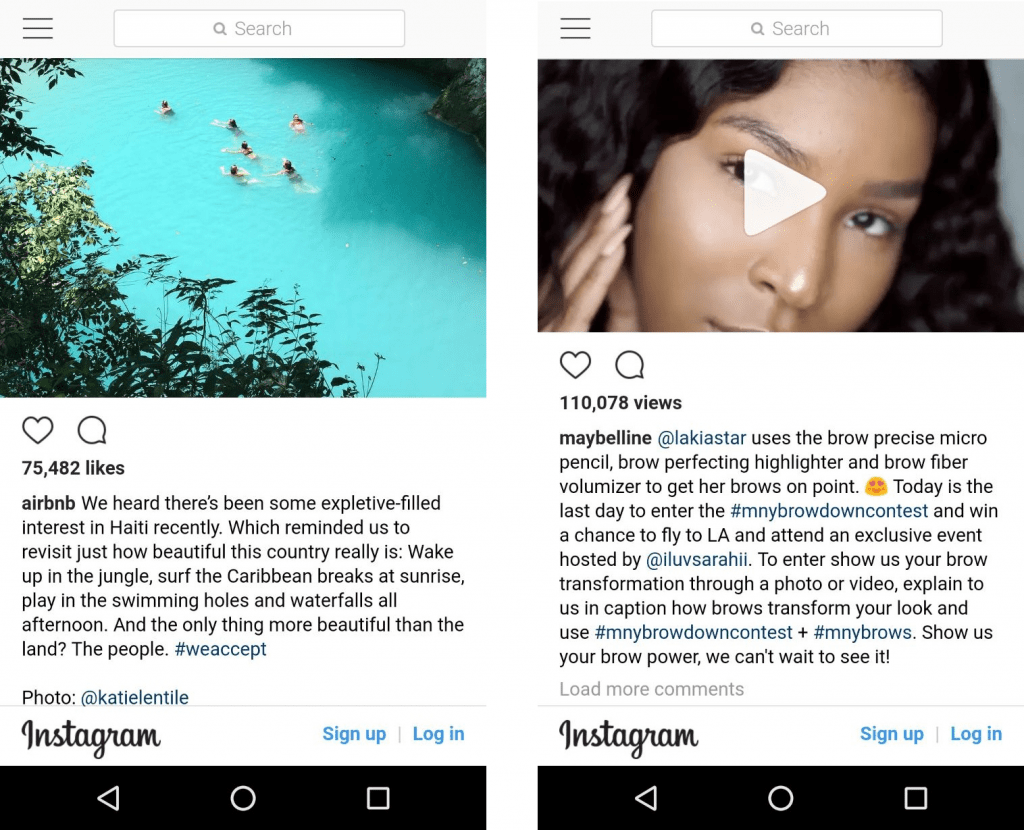
    Airbnb launched a campaign to promote uniqueness and diversity. As a brand whose entire business is based on people from different cultures sharing their space with each other, it was a brilliant idea to create this politically charged campaign.

    The message they shared was, “We believe no matter who you are, where you’re from, who you love, or who you worship, we all belong.

    The world is more beautiful the more you accept,” followed by #weaccept. Maybelline’s #mnybrowndowncontest + #mnybrowns is another great example of a brand using hashtags to allow users to create content for them.

    6. Consistency is Key

    Consistency is an obvious but often neglected component of Instagram content marketing. A brand needs to ensure that the type of content they share is consistent with the values and image it represents.

    A certain kind of content will attract a certain kind of audience, and inconsistency with the perception will confuse and distract them. That is why more than half of the top brands on Instagram use the same filter for every post.

    Steady posting time is also an essential factor. It creates loyalty towards the brands when users think that the brand they follow is going to post at such and such time every day.

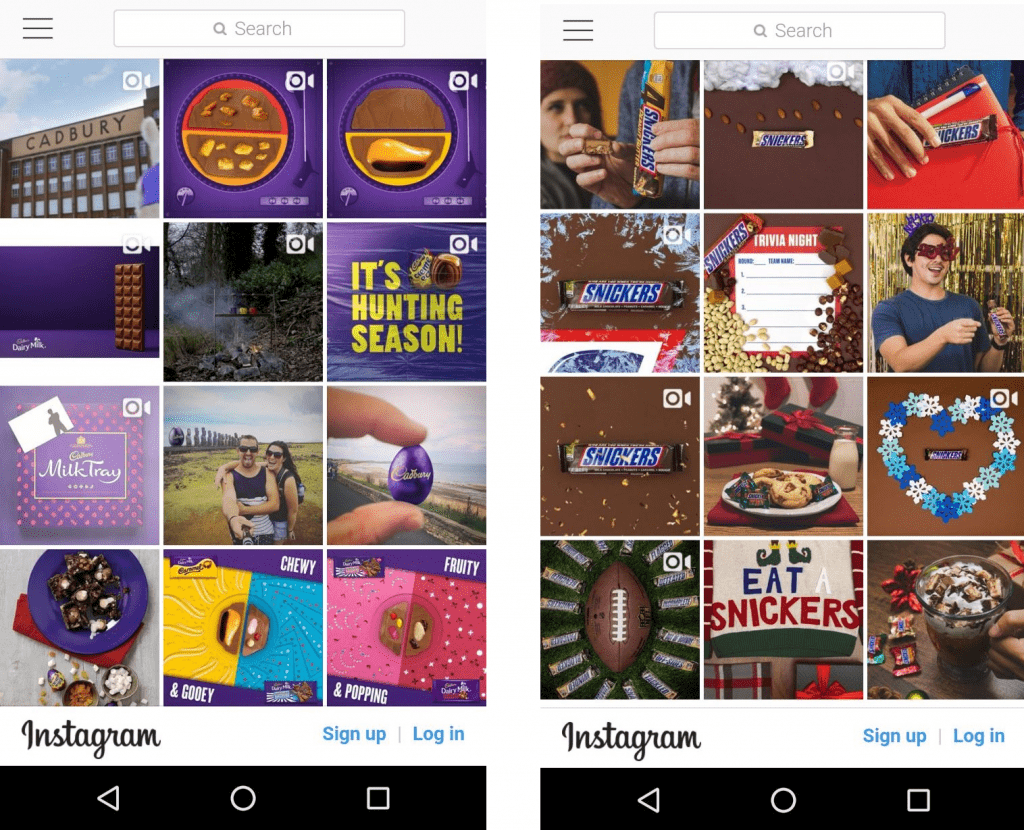
    Cadbury_Snicker Instagram Content Marketing examples

    Cadbury and Snickers both use their iconic colours in almost all of their posts. This not only makes the feed look pleasing to the eye, but also makes the brand itself look reliable.

    Conclusion

    To put it simply, these are the main points that your content marketing strategy on Instagram should cover:

    1. Create Valuable Content – Post content that is valuable to your audience and that interests them. Only posting promotional images and videos won’t garner the same amount of attention that something that is beneficial to them would.
    2. Ensure Interaction with Users – Likes, shares, and reposts are all part of your engagement with the users. Ensure that your content encourages them to interact with it, and offer appropriate responses to make it a two-way communication between you and your users. This tells your users that they are important to you, and creates a more human image of your brand.
    3. Flaunt Your Company Culture – You don’t want to seem “too corporate” to your users. Own your company culture and let them see that you’re proud of it. Let your users relate to your brand through your employees.
    4. Maintain Interconnectivity between Platforms – Don’t just copy-paste what you did on Facebook or Twitter, understand the Instagram culture and allow interconnectivity between these social media tools so that your brand is easily reachable. Make it possible for the users to find you on different social media platforms through your Instagram profile itself.
    5. Hashtag the Sht out of your Posts – However, don’t get so engrossed in following the way of Instagram that you start overdoing it. Use your hashtags smartly and appropriately to become a more discoverable brand. Let the users come to you.
    6. Consistency is Key – Maintain all this by creating a dependable image for your users and ensure their loyalty to your brand with the help of a consistent content strategy.

    So, understand these 6 basic rules with the help of the best Instagram content marketing examples and ace your content marketing game!