Category: Content Marketing

  • SaaS Marketing – Here’s What You Shouldn’t Miss!

    SaaS Marketing – Here’s What You Shouldn’t Miss!

    Let’s say you have set up a great SaaS start-up, you have got the website in place. Now, it’s time to sit back and let your online presence bring in the customers flowing to your business with a SaaS Marketing plan in place. But wait, what’s this? No traffic, nobody knows about you, nobody cares. But why? You did it all, you created a social media presence, you had a nice website, you had it all.

    Did you invest in content marketing? That’s for bigger companies you say, that’s not within my budget. Well, we just want to tell you – it should be and it works!
    content marketing b2b

    Being a SaaS startup you offer services and you could be offering something already in the market – how are you different from the other? And if you are a unique start-up – are people even aware of the pain that you are helping them alleviate? Content helps you ‘arrive’ in the market area and gives you a little platform to address concerns and make your potential customer aware of the need-gaps and the solutions that are your services!

    Content establishes a dialogue between you and your customers. It engages them, creates awareness and is a means of educating your potential customer base about not just your services, but also the benefits of opting for the same. This will also help you in directing a more targeted, intentioned and relevant audience traffic to your website.

    Still not convinced? Let’s back this up with a few stats(CMI):

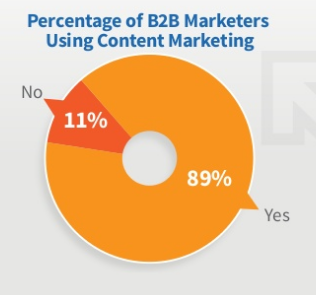
    1. 93% of B2B organizations are committed to content marketing.
    2. 85% B2B marketers believe creating quality content is the result of their success.
    3. 73% include content marketing plan as an ongoing business process and not just a campaign

    Being a startup, SaaS marketing is important for you as you have to build a user base from scratch that too with limited budgets. Content marketing for startup will be vastly different from that of a big corporate or an enterprise. So follow these guidelines on how you should be using content marketing to improve your ROI.

    1. Know your audience

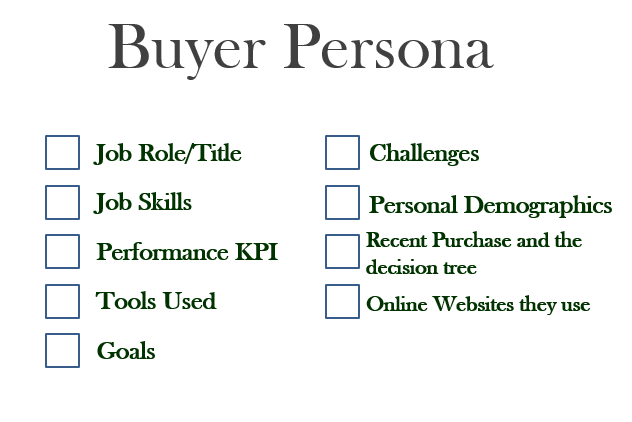
    You need to sit down with your stakeholders and define the exact kind of persona that will be a potential buying customer. Create this persona with human attributes and maybe give it a name. This exercise will help you determine the exact approach to your audience because defining the persona will define their voice. Once you have the voice in place, you know how to talk to them and thus engage them creatively. A thorough knowledge of your audience, in the beginning, will ensure a steady flow to your content strategy eventually, thereby creating a voice of your own. Below is the checklist for your Buyer Persona.
    buyer_persona

    “Content creation doesn’t just end with writing it. There’s packaging, as well as a whole lot of thought put into distribution, so it reaches who we want it to reach” Sriram Krishnan, content marketer at Freshdesk. It is an audience-centric approach, and today they are the industry leaders, whose opinion is heard and valued. Knowing your audiences is the first step towards creating a robust strategy.

    2. Know your customer’s pain

    You apparently have created a business model around a particular need identified in your target audience. But, have you reached out and asked them about their pain? This is where the importance of feedback comes into play; you cannot go to everyone physically so you create ways to ask your audience about their experience. At every point in your growth, you need to maintain a feedback-oriented relationship with your readers and customers.

    Audience feedback helps you enhance your content, your service, and your credibility. Inculcating your customers’ feedback within your content will engage new readers and please the regulars because they are being heard.

    “Once the leads are generated, we create personalised mails which focus on the customer. Even if the customer does not switch, we get brownie points for the email. When he or she becomes unhappy with the current provider, that’s when he or she will think of us.” – Girish Mathrubootham, CEO at Freshdesk.

    It is this approach which leads to a thought process that involves caring and support; it is not an obvious grab for sales or a push to convert, a simple email that tells your customer that you are there. Often in times of need, you will be remembered and contacted.

    3. Know your Keyword search

    Isolate a list of words that will be central to your start-up coming up in searches. Keywords and following questions and string searches can be the vital component to your content being ranked higher in the searches and therefore needs to be well planned. This research will help you gain insight into the mindset of your target audience and help you understand your consumers better.

    Answer the public, a platform that asks for the keywords and lists down the questions people are asking about it. You can also use Uber Suggest to do your keyword research effectively.

    answerthepublic

    4. Know your value proposition

    Once you have figured out your reading audience and the kind of questions they look to ask or solve, you need to understand now what value you will be adding to their lives.

    Content gives you a means to start a conversation with an idly curious reader and helps you hold his hand till he is convinced of your importance. This will create your value proposition in the content strategy. Once the relationship has been established, you can proceed to educate your audience with the services that you provide.

    A small example would be that an online investment start-up will not immediately talk about their tools and their benefits to the common user. Instead, they will start conversations via blogs and interesting articles and talk about the common mistakes people make while investing, the basic fears of a  working woman regarding investments and how to overcome them, etc. i.e. adding value to the user by imparting ideas and useful tricks thereby educating them about alleviating their pain. This instantly creates interest and curiosity to know more. Once readership is established, the startup’s credibility increases by leaps and bounds, which in turn translates into the conversion of idle traffic into serious customers.

    Agile CRM is one of the SaaS companies that are focussed on building better customer relationships for their clients, and they talk about opportunities to utilise local experts and therefore expand your local presence.

    Use content marketing resources,identify your influencers and create a network with them sharing your value proposition without selling it. Help them understand your vision and urge them to endorse you on their social platforms. This will, in turn, help you get the right kind of attention.

    5. Know your content

    Finally, let us talk about the most important element of your content strategy – content itself! It is often that start-ups invest in SaaS marketing and sales teams, analysts with big excel sheets and men with power suits making presentations on how to make a company grow.

    Often a content writer is written off as a frivolous expense, and unknowingly you might find yourself at the losing end of a sinking deal. We have already established that content is crucial to creating a bond with your prospective customers and have your voice heard. So, while investing in a good marketing strategy and the team is not a bad idea, you should save a part of your budget for a decent writer. Let us explain why.

    You are the subject matter expert on the services you provide, and therefore you know the business inside-out and are the best person to explain what your company does. But, we often forget that when we are experts at something, we tend to load up our vocabulary on jargon and technical definitions which might come across as Greek to someone else.

    Here, a good content writer will take your ideas, your value proposition, and your vision, and create content that is simple to understand and easy to read through. As stakeholders in the startup, you and your team will be more inclined towards a conversation with investors or prospective employees. We often end up explaining the pain areas, the solutions we provide and the efforts we put in to maintain a balanced approach in our fields; but it is the language of the consumer that we need to focus on. Here it is very important that we realise that to get through to our reader, we need to speak his language and engage him duly. This is why it is important to know your content, not regarding technicalities but rather the packaging and language of your strategy.

    • Aishwarya Hariharan of Freshdesk says that she was a software developer before trying a hand as a Marketing Intern here. She was surprised when she immediately got the job even though she was a fresher applying for it. She talks about the importance of fresh ideas and the capability of “spinning a yarn” from even the most mundane of chores/tasks. It is the potential to create something readable and interesting from a technical aspect that jazzes up the readability quotient of their content.
    • Mukul Kumar, Co-founder and senior VP at Pubmatic says that everyone in the initial days of a SaaS start-up is the sales team, “Don’t make a hard sale and talk just about your product”. He talks about understanding the pain of the customers and finding ways of adding value to their life. It is the top most priority of any SaaS start-up to create an environment of knowledge and support before sales.

    We hope that these guidelines will start you off on a well thought out SaaS marketing strategy. As a B2B start-up ourselves, we realise the importance of creating a strong connect with our current and prospective customers. Content marketing might not be an investment which yields immediate returns, but we believe that it is of essence that it should be a vital part of your marketing strategy.

  • Why Long-Form Content Can Help You Get More Traffic

    Why Long-Form Content Can Help You Get More Traffic

    The age old debate of “Do SEOs like it long or not?” is finally over. With the advent of 2016, it has become quite clear that when it comes to content, long form content is ine of the most successful blogging practices out there.

    This might seem odd, considering that the average attention span of a human in today’s world is just 8 seconds. But think about what potential customers or people really interested in a topic want- they want information that is valuable to them.

    The majority of blogs out there are 500-700 words, a blog that crosses that limit stands out from the crowd, and therefore, people gravitate towards it.

    Why Does Long Form Content Work?

    Let’s say you need to know content marketing for your startup.

    You spend a long time on the internet looking for content that will be helpful but only come across scanty material. Then you find a blog that covers the topic thoroughly, taking you through each step of content marketing – from finding the target audience to tracking the analytics.

    Which one would be more beneficial to you? The first one would be okay if you just want an overview, but if you actually want to learn the tips and tricks of the trade, then the second one would be the one that you would prefer.

    The same applies for long form content. If someone has come to your page with the intention of actually learning something, then you need to satiate their hunger for knowledge. If the information is truly valuable, they will be hooked and will want to keep reading more.

    Statistics back this, by revealing that the “short” attention span of our generation exceeds expectations when it comes to hunting for resourceful content, and the ideal length of a blog in 2016 is a 7-minute read, which translates to 1700 words.

    Long-form content

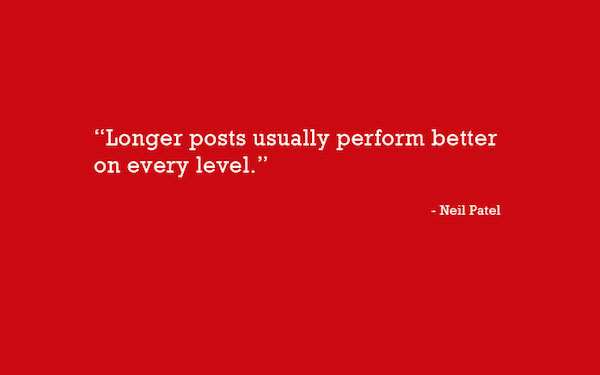
    Quote from Neil Patel

    Image Source: neilpatel.com

    If someone wants to learn how to make it as a digital marketer, and spend hours trying to be successful in their trade, they will be overjoyed to find a blog that explains the world of digital marketing and the pointers that can get them to the top. If freelance content writers stay up nights, writing article after article, but doesn’t get paid enough to sustain themselves, then a blog post that provides real insights into freelance writing will be their saving grace.

    These people would prefer a one-stop-solution to their problems, i.e. a lengthy post that covers everything they need, instead of having to get information from dozens of different sources.

    After reading these lengthy posts, when readers realise that they have gained valuable information that they can use in their crafts, they begin to trust you. This trust means that they will keep a look-out for things that you post, as they know it is worth and authentic.

    Longer Blogs are More SEO Friendly

    If more people read longer content that means more people want to find longer content through an internet search, which is why Search Engines have updated their algorithms in such a way that longer content is preferred.

    The Internet search giant, Google, keeps updating its algorithm with every phase of the moon, and we can only speculate about how it exactly ranks content. However, if you have some time on your hands, you can look at the first few pages of a Google query search result, and will realise that all of them are long-form content.

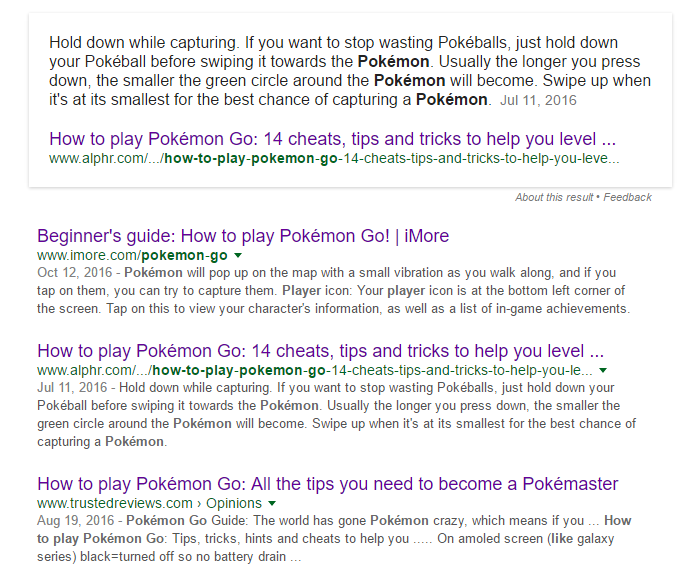
    “How to play Pokemon Go like a pro” Search result

    We performed a search, “How to play Pokemon Go like a pro” and the first few results were all lengthy guides containing all the information we could ever need to be an expert at the game, as seen in the picture above.

    A study done by serpIQ shows that this wasn’t just a coincidence. Looking at the summarised data in the image below, we can see that the top results that show up on the first page of Google have an average length of approx. 2500 words.

    Top 10-Average Length of Content

    Image Source: serpiq.com

    What is more, Pandu Nayak, one of the members of Google’s technical staff, said in a post on the Google Webmaster’s Blog, “up to 10% of users’ daily information needs involve learning about a broad topic. That’s why today we’re introducing new search results to help users find in-depth articles.”

    So long-form content can officially be added to your list of Search Engine Optimisation (SEO) Tips and Tricks, since creating “compelling in-depth content” is a recommendation given by Google itself.

    Long-Form Content is More Successful on Social Media

    Longer content can go viral on social media faster.

    Even a website like Twitter, which is all about saying more in less number of words, prefers tweets that are on the higher side of the 140 character limit, with 100 words being the sweet spot.

    l3

    Image Source: blog.hubspot.com

    We have all seen long posts on Facebook, which slowly build up, and appeal to the emotional side of people. These posts use words generously to take the readers on a journey and therefore have a huge number of likes, comments, and shares.

    Studies show that longer content gets more shares, which means if you invest time in writing your content you can drive more traffic to your website or blog and isn’t that the point of writing the content in the first place?

    Lengthier Content Helps in Inbound Marketing

    Having long evergreen content on your website will ensure that you keep getting traffic long after the content has been posted.

    In a recent report by Hubspot, it was revealed that companies save an average of $20,000 every year by investing in inbound marketing.  So the time you are going to spend on creating long-form content is going to be well worth it as it is going to give you a great Return On Investment (ROI).

    l4

    Image Source: relevance.com

    Example of some big names that use long-form content successfully are:

    • Hubspot: It offers gigantic e-books covering a broad range of marketing topics.
    • New York Times: The name speaks for itself when it comes to producing content, and it should be noted that they don’t just create excellent content, they create excellent long-form content.
    • Neil Patel: The co-founder of KISSmetrics, Hello Bar, and Crazy Egg, Neil Patel sure knows a thing or two about lengthy content. His massive blog posts garner a lot of online attention, and for good reason.

    Who Has the Time to Write Such Long Blogs?

    Now there are those of you who will be wondering about the effort that will go into writing long-form content and if it is worth it. But in the words of the famous writer Paulo Coehlo, “Forget about shortcuts. Instead, enjoy the wonders of your path.” Take pleasure in writing longer content, knowing that you are investing time for the sake of being useful to someone somewhere.

    Spending time on writing long and informative content shows that you are enthusiastic about the topic you are writing, which is why a reader tends to read it. They know that it is not just a marketing gimmick, but an actual attempt at sharing the understanding of a domain. Long-form content shows that you are a position of authority about the domain you are writing about.

    The best part is, if people are reading your lengthy blog posts, it means they are spending more time on your blog or website.

    Quality Over Quantity

    Just because you now know that long-form content works well for you does not mean that you can string a lot of words together and get attention on the web, just like throwing in a lot of keywords where they don’t fit will not get you a good ranking on a Search Engine Result’s Page (SERP). Your content has to make sense to the target audience. This means that you should only opt for long-form content when you have something substantial to say, if you want to give a message to your readers, or if you are an expert in your domain and wish to share your knowledge.

    If you care about the domain you are writing on, then you will only post content that is well-researched and eloquent. Not only will you spend time on doing keyword and factual research, but you will also make sure that it stands out from the plethora of content already present on the web.

    Tips to Write Long-Form Content:

    1. Choose a topic that falls in a domain that you have ample knowledge about. If you are well-versed in a subject, you will be able to provide personal suggestions that will make you stand out from other content on the web.
    2. Pick a topic that needs a lot of detail. A celebrity divorce may not warrant 2000 words.
    3. Make sure the topic is evergreen and is searched all around the year, and will be looked up for years to come.
    4. Choose the right format. Infographics will get you more shares, but whitepapers and e-books will get you more lead conversions.
    5. Provide a summary at the beginning
    6. Use subheading to make the post easy to navigate
    7. Use images so that the post is more attractive, and not dull. You can also add GIFs and embed videos to keep the content interactive.
    8. Don’t make your paragraphs too long. People don’t like reading big blocks of text; break them into different paragraphs.
    9. Use bullets where possible. It is easier for a reader to process the information given in bullet points.
    10. Write as if you are talking to one of your customers. Try to answer questions you think they have.
    11. Since the content is long, keep it conversational. It should be easy for a reader; avoid a lot of jargon.
    12. Besides niche-oriented blog posts, write a lot of content for Landing Pages, Product Pages, and Service Pages, that is, content that drives people to take some action (that is, opt for your service/product)
    13. Choose if you want your readers to sign up before having access to your content (gated content). Gated content is better for SEO, but a lot of readers may not be willing to fill in a form and register for reading a content piece.
    14. Do not copy paste content in order to avoid writing long content; the same content appearing at multiple places on a website can lead to it being penalized by search engines.
    15. Don’t just focus on the length of the blog and forget essential practices like keywords, the length of the title, share buttons, etc.

    So don’t just keep churning out 500-word blogs because it is easy to do so; set a target of 2000 words for your next blog. Short form content will always have a place in the content industry, but trends keep changing, and you must adapt to long-form content in order to keep up.

    If you are still in doubt about lengthy content, here is a small exercise. Ask yourself – why didn’t you leave this blog post halfway?

  • Content Marketing For your Startup

    Content Marketing For your Startup

    Content Marketing Strategies for your Startup “Content Marketing for Startups – “WittyPen” from Anshul Motwani

    “Around here, however, we don’t look backward for very long. We keep moving forward, opening up new doors and doing new things, because we’re curious…and curiosity keeps leading us down new paths.”

    With 10 countries, 40 cities, and 4200 people participating, The August Fest 2016 was Asia’s largest Startup Conference, and the founder of WittyPen, Anshul Motwani, was fortunate enough to get to speak at the event. His presentation was centered around the topic “Content Marketing for your Startup.” Content is essential if you wish to communicate your business mission with your users. The more your clients read, the more they will trust your brand. Good content tells them exactly what you do and eases their apprehension.

    Content is all about creating, publishing, and distributing useful information.

    Following are some of the tips about content creation that will help you get started:

    • Content created can work for both B2B as well as B2C. An example of how great content has helped in B2B is adpushup and an example for B2C is NYKAA.
    • You content should have an impact on the audience. For this, you must find out what is the problem your users face and then deliver content that solves the problem. The aim of creating content should be creating familiarity, likeability, and trust of the user in your brand.

    Content Marketing for your startup – Below is a checklist of the content creation strategy:

    1. Define your marketing goals. Do you need to create awareness, retain customers, generate more traffic to your website, or increase your sales?
    2. Who are you targeting? What age group does your audience belong to, what are their likes and dislikes, etc. Know your customers.
    3. Where does this audience spend its time online – on social media platforms, on checking emails, or somewhere else? Find out which content channel you need to use to reach them.
    4. What influences or moves these people to take action?
    5. What kind of an experience do you want to give them?
    6. Are you getting a good Return on Investment? Invest in the right places, like SEO and traffic analysis.

    Next, comes the Content Execution Strategy. The checklist for a content execution strategy is as follows:

    1. You need a brand statement, depending on your mission.
    2. What type of content do you want to publish – blog posts, white papers, infographics, videos, news articles?
    3. Identify the different topics related to your story on which you would like to publish content.
    4. After you have decided the content you want to publish, you need an editorial calendar, which will include details about the topic, the author, the due date, the keywords to be included, etc.
    5. Form a team structure, to know how the hierarchy of delivering content will work. Alternatively, you can hire freelancers to for writing the content and designing, and your team can focus on the strategy and converting/closing.
    6. Some tools to aid you in creating great content – Canva, WordPress, Google Analytics, Asana, Trello.

    WittyPen is a content creation platform that can help you get the right content for your business, as well as help you get started with content writing. If you wish to know more about content creation, write to us at hello@wittypen.com.

  • 5 Steps To Kickstart Content Marketing For Startups

    5 Steps To Kickstart Content Marketing For Startups

    ‘Content Marketing’ might be just a buzzword for many, an omnipresent phrase gracing numerous web pages and social media posts.  But to anyone starting their own business, it is a lot more than just meaningless jargon. It is vital when it comes to promoting your business. So what is content marketing for startups? It is a form of marketing to help boost your startup, by giving free information to your target audience online. The aim is to acquire customers and keep them engaged. Since native advertising has taken a hit for the worse these days, content is truly king.  A survey done by Fractl and Moz, covering more than 600 digital publishers and more than 30 content marketing agencies, revealed that content marketing yields a better return on investment (ROI). Content does not have to be textual in nature, though that is what usually springs to mind when one hears the word ‘content.’ It can take various forms, such as –

    • Blog Posts
    • Infographics
    • Videos
    • Case studies
    • Product Reviews,
    • Social Media Posts
    • White Papers
    • E-books
    • Viral Campaigns
    • Slideshare, etc.

    Types-of-content

    Image source: contentmarketinginstitute.com/

    There is a chance of reaching a huge audience through content marketing as there are almost 3.5 billion internet users in the world today. A potential customer can come across your posts on any social media platform, like Twitter, Facebook, Instagram, Youtube, or even on their personal emails. The power of reaching a diverse range of people is what makes content marketing so great. You can be sitting in India and gain clients in Brazil through effective content. Boundaries of countries, age, and religions do not stand in the way. To unleash the potential of this form of marketing, you need to learn the art of weaving words,creating high quality content in a way that impacts the readers. Words can move people to fund your campaigns, or it can motivate them to use the services you provide and turn into long term customers.

    words-are-containers-for-power-joyce-meyer-daily-quotes-sayings-pictures

    Image source: thedailyquotes.com

    If you are still doubtful about how whether content marketing works, read these case studies about why the tech giant Google uses it to promote its Street View, or why Disney blogs about what goes on behind-the-scenes. If these well-established names still market themselves by posting on the web, then the methodology must actually yield results. Convinced about the magic of content marketing? Wish to use this technique to make your startup grow? The following 5 steps aim to help you with startup content,so read on!

    How to Ace Content Marketing for Startups

    1. Get To Know Your Audience

    Since content marketing can be done on so many different platforms, with such a wide reach, understanding who it is you are targeting becomes crucial. According to your target audience_,_ the way in which you present information changes. Consider the case of teaching mathematics to students. If the students are 5 or 6-year-olds, the teachers employ visual means, like handing them 3 apples and taking 2 away, to teach them subtraction. For high-school students, every formula need not be broken down into visuals. In a similar manner, your content marketing strategy and the content that you create should be specific to your audience, using words and images that speak to them.

    ss

    It is important to remember that consumers are people too, with different personalities. Get to know your target audience by asking them about their likes, dislikes, expectations, which websites they frequently visit, who they follow on social media, etc. You can engage with your audience through online chats, emails, surveys, or through feedback forms. In this way, you will be able to create fictional personas of your ideal audience. When you make a marketing decision, you can think if it will make this persona happy. In this way, you can create effective content and make important marketing decisions, keeping in mind the personality of your potential customers, and how they will be affected.

    2. Create A Content Marketing Strategy

    Every startup has a reason for its creation. A good content marketing strategy is one which explains that reason to the consumers. Your audience needs to know that you solve a legitimate problem they have. Having a documented content strategy is essential if you want your business to succeed. The main reason for new ventures failing is that they don’t have a well-planned strategy.

    CMIreport2

    Image Source: business2community.com

    The main step in forming a content marketing for startups is deciding your goals. You need to sit and chart down what it is that you wish to achieve with your startup in the long-term. Then you can decide which methods to employ to reach those goals. For example, if you decide to use social media, your content marketing strategy should include your target number of followers, how frequently you will post, the nature of your posts, etc. On the other hand, if you are aiming to start a company blog, you need to define its tone and central theme. Examples include informative blogs, educational blogs, and blogs based on thought leadership. By telling the world the reason you exist, the problems you aim to solve, the audience you cater to, and charting out your vision of success and the possible risks along the way, you make your strategy far more effective.

    Every brand has a story. At WittyPen, we can make sure that you tell yours through your content. Fill out our form for a free content strategy consultation.

    3. Start Creating Content

    After you have researched about your target audience and have come up with a content marketing strategy to follow, it is time to start creating high quality content. The basic principle to remember is that your content should solve actual problems. Give information that will make your potential customer’s lives better. There is a plethora of information out there, if you do not add something useful to that information, no one is going to read what you post. The key here is research. Do not be so eager to publish your content that you end up posting something that is not informative enough, or that is factually incorrect. Ask yourself if you are giving your readers the best information you possibly can. To make sure that you catch the consumer’s eye, you must stand out, not only by posting information relevant to the client but also by unleashing your creativity. Play to your strengths. If you have a flair for words, do something creative with your blog posts or opt for trendy one-liners on Twitter. If you are gifted at visuals and photography, Instagram and Pinterest might be useful for you. For example, the Minimalist’s unique design appeals to the aesthetic sense of its consumers and keeps them engaged. Another effective way to reach your intended audience is by using the right keywords. Search Engine Optimization (SEO) isn’t just a big word thrown around by marketing moguls; it is an extremely important technique that can get you noticed. Using the right words can help you land a top spot on a search engine results page (SERP), which will ensure that you get a lot of traffic. So decide your target phrase, jot down its alternatives, and check Google’s auto-suggest to find out the most searched alternatives.

    4. Focus On Content Marketing Analytics

    After stepping into the marketing world and making your content available to the masses, it is important that you start measuring how content marketing works for your business. Determining the return on investment of your strategy can help you be cost effective and is crucial to your startup. It helps you in realizing flaws since no strategy can be perfect from the get-go. Evaluation of your content marketing strategy can be done based on the following metrics –

    • Consumption Metrics (Basic Metrics) – How many views is your blog/post getting
    • Sales Metrics – How many people who read your content turn into customers?
    • Sharing Metrics -How often do the readers of your content share it with others?
    • Lead Metrics -Is your content fetching you new customers?

    image08-800x462

    Image Source: marketingland.com

    Besides studying your own content, it can be useful to study your competitors’ as well. You can then compare how your quality measures up to theirs. Being aware of your competition helps you come up with new ideas to stay at the top.

    5. Optimize Your Future Content Marketing Strategy

    Content marketing is not a one-time plan, it must be evaluated and tweaked from time-to-time. In this rapidly changing world, trends can evolve, customer interests can fluctuate, and therefore you need to alter your strategy with it. For example, after going through the ‘key analytic figures’ of your content marketing strategy, you might realize that your consumer demographics are different than what you had initially thought. Therefore, you will now have to change your content strategy accordingly. Optimization can be done by the following ways:

    • Re-surveying your clients
    • Improving the quality of what you post
    • Changing your channel strategy
    • Doing some more in-depth keyword research
    • Ensuring the quality and uniqueness of your posts

    However, over-optimization can lead to content that sounds forced and un-natural. A balance must be struck between optimization and keeping your central message the same. You can update your strategy, but you cannot completely change the principle on which your startup was built. Make sure your mission remains consistent, define a strategy to send your message out to the masses in the most readable and interesting way possible, analyze your progress and update your strategy accordingly, and sooner than you know you will have paved a way for yourself in the content marketing world. These were some tips to kickstart content marketing for startups. Visit our website and discover how we make content creation easy for you!