Category: Content Marketing

  • How To Make Editorial Content Marketing Calendar For Your Campaign?

    How To Make Editorial Content Marketing Calendar For Your Campaign?

    Are you a content marketer who is super serious about making your brand omnipresent in the market?

    If yes, then you must be well-versed with the fact that as a content marketer, it is important for you to have content being pushed out every day It is a fact that your audiences have a short brand recall and hence for them to imbibe your brands’ persona permanently in their minds. Therefore, it is a mandate that they see your brand more frequently. Doing this becomes incredibly efficient once you have a good content marketing calendar in place.

    Having a good calendar means that you have a regular flow of content that gets pushed out to your audience This also means that you do not have to scratch your head every day to think about new content. So, a good content marketing calendar means that you as a content marketer have a focused goal with some really well-aligned strategies. This does not let you give an average content piece due to the pressure of creating something new every day. Amidst the chaotic business decisions and impulsive deadlines, a calendar is a sigh of relief for you marketers that will help you divide the sea of unmanageable content into smaller manageable chunks.

    If you’re still not sold on the benefits of using content marketing calendars, keep in mind that traditional print publications have been using editorial calendars since many, many years to help them define and visualize their plans for content. Our aim here is to help you create an editorial calendar and ensure you stick to it.

    How to Go About Creating a Good Editorial Content Marketing Calendar?

    There are certain steps that you must take to make a good editorial calendar. They are as follows:-

    1. Set up a clear objective for your calendar
    2. Deciding the content types
    3. Choosing the right tool.
    4. Understanding your abilities and limitations
    5. Automating tasks that take up a lot of your time
    6. Reviewing the calendar
    7. Storing all your content ideas
    8. Coordinating with the team to meet deadlines

    For your better understanding, I am elaborating all of these points one by one.

    1. Setting up a clear objective for your calendar

    Before you begin the process of creating a calendar, have an objective defined in your mind. You need to know what exactly are you trying to communicate to your audience. Are you trying to position yourself as an expert in your industry or are you trying to sell something to a very specific set of audiences?Some other goals could be tips that you want to give away to improve processes, solutions for problems, new updates about the product or services, case studies about your successful clients, failures or achievements. When your objective is set, you need to create a comprehensive list of ideas, content types and also map them to the days when you want to deliver them. Analytics from social media and your product website will help you in deciding the right content and the right date. Certain kinds of posts, or certain dates where your audiences show maximum engagement could help you in planning what to post and when to post.

    2. Deciding the content types

    There could be several types of content that you can use to fill up your calendar. Some of them are:-

    1. Lists – This is a classic for marketers, magazines, and sites like Buzzfeed pull together content in the form of a list . They are very effective especially when applied to blog posts. Some of the most popular content on the Convince & Convert blog is in the form of lists posts. One of the very good examples is their list called “25 ways to create shareable content”.
    2. Questions and Answers – These are very popular. You can see Google’s Matt Cutts using many formats of Question and answers. Matt reads through Google users questions and simply answers them through Google’s perspective.
    3. Case Studies – Through these, you can very easily explain how you have solved the problems of your customers in the past. This helps your current or potential customers to trust your product or services.
    4. Product Review -Do a review of your product, telling your audience how it’s helped you solve your challenges, and how you think it’ll help them out too. You can start this by asking an influencer who’s also a customer of yours to help you out by reviewing your product or service.Here is how companies use examples of customer reviews in content marketing.
    5. Testimonials –  Here a specific customer of yours tells his or her story directly from their perspective. This is the word of mouth that you can use to garner interest in your company, products, or services.

    There are many other content types that you can fit in your calendar such as company news, opinions and rants, testimonials, roundups, book reviews, personal stories, successes and achievements, facts and research, statistics, why’s and how-tos etc.

    3.Choose the right tool

    To make things easier for you, there are innumerable tools out there that can help you make and plan your editorial calendar well. However, it is very important to choose the right tool because not every tool will suit your unique requirements.

    Coschedule: This is the first one on the list, and also a very easy one. It is a collaborative tool and lets you plan and publish content at ease with its drag and drop features. Whether you are a big group of content hustlers or you are just a one man/woman army, this tool is handy in both the cases. With this super flexible helping hand you can easily pre-plan your editorial calendar, organize information on posts and save a great deal of time as well.
    Trello: This has very basic boards that allow you to drag and drop ideas for your editorial calendar into different lists and organize content effortlessly. Knowing this tool inside out is not rocket science, and whether you are a team of creative geniuses or a solo marketer, this tool helps you in various ways without any complex training. You do not have to worry about going back and forth to check your plan of action as you can seamlessly sync your editorial calendar across all your devices. So basically, Trello has your back even when you are on the go.
    Google Sheets: This comes absolutely free of cost and is accessible on all your devices through cloud storage. This might require more time for setting up as compared to other tools, however, a lot of marketers choose this because of its flexibility. You can sync due dates with your google calendar using this tool.

    Check out our blog on Top 7 Content Discovery Tools for Curation, Engagement and Sharing.

    4. Understanding your abilities and limitations

    Abilities and limitations

    To not succumb to stress, it is important to get a reality check done. Your content could be in numerous formats such as videos, audio, blogs, graphics etc. What is most important is to be certain of how much of it all is achievable for you in a specific timeframe. You should never over or under commit. If you over-commit then you would end up losing and what would win is an average content. If you under-commit, then again the purpose of the calendar remains futile. You would not be producing as much of content as you should. Make use of content marketing resources and use AI in content marketing. Even after committing just right, there might be instances where you are not able to meet your deadlines. Now, that is a factor of luck and unfavorable circumstances that you cannot possibly govern.

    Hence, such situations should not deter you from abiding by the schedule of your calendar. Working some extra hours to get back on track. You can start being more efficient by clubbing your content creation into different activities.  As you start to get a better understanding of the demands of each activity in your content creation process, you’ll be able to find ways to become more productive. Here are a few content creation activities to get you started:

    • Research
    • Drafting
    • Graphics and images
    • SEO
    • Proofing
    • Promotion

    5.Automating tasks that take up a lot of your time

    You can save a lot of your time by automating content creation and content promotion activities. For example, you can schedule your one-off tweets and Facebook updates through Hootsuite or Buffer. You can separately mark the content that you want to automate on your calendar along with setting an hour each week to schedule this content. These tools will take care of it and will allow you to be more efficient. Coschedule is very good with automating content promotion and also has inbuilt analytics that allows you to see the social media reach of all your content. New York Times bestselling author of Platform, Michael Hyatt cites the premium WordPress plugin, Coschedule as one of his major productivity breakthroughs in recent years. He uses CoSchedule to post all his blog posts on social media and given how much time it frees up, it is a bargain at $10 per month.

    6.Reviewing the calendar

    While your primary task is to create the content calendar, there are certain secondary tasks as well that you need to keep an eye on. You need to time and again look at the calendar to make sure there are no gaps left. You need to double-check on the type of content to make sure that whatever is being pushed out is not just pushed out for the sake of it. The sole purpose of content being pushed out is to meet the needs of your audiences and that should always be your first priority. You also need to ensure that the content is not over-populating or under-populating the calendar. It should be evenly distributed and it should be a mix rather than redundant content that gets onto the nerve of your audiences.

    7. Storing all your content ideas

    Keep a place where you can gather all your content ideas that occur to you. This will help you in managing your editorial calendar better.

    8. Coordinating with the team to meet deadlines

    Although it is you who has crafted this calendar, I am certain that there are tasks that are allotted to everyone to make this strategy work.So it is important that you connect with your team at regular intervals to get perspective on ideas, give updates and stay up-to-date and not miss deadlines. A successful calendar is defined by collaborative efforts and teamwork. Creating and managing content strategy is a whale of a task, but it becomes much easier when a calendar is mapped out that helps you stick to your tasks, be informed of your co-workers’ task, stay aligned to the broader goal and eventually deliver success. I hope that this article has helped you understand the importance of an editorial calendar in a content marketers journey. I am also attaching the  content marketing editorial calendar template that we use at Wittypen. You can download it by clicking here: https://goo.gl/MUJiNE I wish you all the best in creating your first editorial content marketing calendar.


  • How Top Brands Are Winning Customers through Content Marketing

    How Top Brands Are Winning Customers through Content Marketing

    “The key ingredient to a better content experience is relevance.” — Jason Miller

    The Global Marketing Leader of LinkedIn, Mr. Miller emphasizes the importance of creating relevant content over anything else. When it comes to content marketing, even the sky is not the limit anymore. The industry has transpired into another universe where contemporary distribution channels (TV, print) have been surpassed by the web, people, comedians, activism, politics, and all the rest.

    Analyzing the trends, one can fathom some common factors that separate successful content marketing practices from the rest.

    1. Narration and Storytelling

    “Humans are not ideally set up to understand logic; they are ideally set up to understand stories.” Roger C. Schank

    Remember the Vicks commercial that went viral earlier this year? Well how can we forget the story of Gauri and Gayatri? The 2017 #TouchofCare campaign left an impact much deeper than it initially intended, through a heart warming real story of a mother- Gauri. While the brand managed to create a strong case for transgender in general, Vicks successfully went viral with the content marketing campaign thanks to its compassionate story telling on the hottest issue of present day India – Section 377.

    Many other global brands like Clean & Clear, Nordstrom , Myntra , Close-Up have not been shy to capitalize on these bold trends through content marketing. Even HSBC came out in support of the LGBT community at the 2016 Pride parade across Philippines, Canada, the UK and the US, adding a feather to its cap with the campaign’s viral video. Tapping on social issues and marketing the voice of people to the people has proved to be a successful brand strategy

    2. Tapping Emotion through Content

    Many brands are selling an experience rather than a product.

    Emotional engagement by brands invokes a personal customer-client bond. As a result ,by investing into emotions through their content, companies are creating a lasting relationship with their audience. Let’s look at Airbnb’s digital marketing strategy. Ranked among the top 8 US start-ups in the $10 Billion Club by the Business Insider, Airbnb has advanced tremendously through marketing its content. The Digital marketing team distributes content through multiple channels like Facebook, Twitter, Instagram, AirbnbMag and Blog.

    The Local Lens section on Airbnb’s Blog is dedicated to individual narratives just like the Stories section on their website. Therefore, by selling a lifestyle through its Magazine, the brand has successfully put forth an experience, rather than a product. With its 2016 #Livethere campaign, Airbnb has topped the cake by becoming a people-community.

    Other content marketing campaigns that instil an instant emotion in the audience, through their content whether happiness, sadness, fear or surprise, are more likely to go viral and become ‘shareable‘ in the social circles. Apple’s Earth-Shot on I phone highlighting Climate Change, Microsoft’s #MakeWhatsNext campaign video- Change the odds, Nike’s bold ad featuring female Arab athletes and #LikeaGirl campaign by Always are some of the best content marketing examples of the past year.

    Therefore,by highlighting stereotypes, visualizing and marketing on relevant social issues and creating thought-provoking content, brands have understood the relationship between emotion and virality.

    3. Meme Marketing

    It’s a great time to be alive!

    Let’s face it! We are the Meme generation and Meme Marketing is real. Memes are synonymous with our everyday conversations and they have become one of the content marketing trends of 2018.. You may run out of emotions but not memes to demonstrate exactly how you feel.Memes often lead to viral marketing campaigns. Another interesting observation involves brands successfully marketing to millennials . And, multiple brands are jumping on this burgeoning band-wagon to keep up with the trend.

    Italian Fashion giant, Gucci couldn’t hold back on the meme magic and launched its TFWGucci campaign dropping bomb memes and amazing visuals for customers.

    Even the Bangaluru Police couldn’t resist it.

    Brands consistently generating shareable content through innovative methods are bound to gain popularity.

    4. Comedic + Episodic Brand Integration

    One of the turning points in the Indian Content Industry was stimulated by AIB (AllIndiaBakchod) and its growing like wildfire.

    AIB has 2.5 million Subscribers on YouTube ,11 million views/month on every video, 6.34 Million Followers on Twitter and 3,551,870 followers on Facebook

    Marketing intelligent content and packaging it with humor, wit, and satire, AIB has become the voice of Indian youth by targeting political and social trends. AIB’s formula for creating viral, shareable and relevant content has transformed it into an international sensation. Through each web-series, AIB has also successfully integrated top brands likes Snapdeal, Ola, Google Duo, Swiggy, Truly Madly, Hyundai, One Plus, Netflix, Hotstar, etc into its content strategy

    It’s a win-win for everyone.

    According to Arunabh Kumar, Founder & Group CEO, The Viral Fever (TVF), “Web Series” is not the future but the present of content marketing. TVF’s original web-series “Tripling”  is the perfect example of content marketing, integrating a brand into storytelling and narration. The Tata Tiago, TVF and Maxus collaboration crossed 12 million views by the end of its last (5th) episode.

    To conclude, brands have identified the soul of it’s audience and some of the most hard-hitting and thought provoking content have been the ones which tell a story, engage the audience and are relevant enough to go viral.

    Most brands also use multiple channels and are winning customers one story and one meme at a time. 

  • How Frequently Should You Create Content?

    How Frequently Should You Create Content?

    How frequently should you create content is a pain area for most of marketers including you and I.
    How often should you write a blog post?
    How often should you update website content?
    How often should you update blogs?
    These questions often nudge us while we rattle our brains around a good content strategy.

    how frequently should you create content

    The answers are usually inclined towards ambiguity rather than clarity.To make it simple, we will tell you that there is no fixed quantity of content that needs to be promoted. It solely depends on the type of the product or the service that you provide.

    For example, if you are running a news, celebrity, jokes or sports site then it would be a great idea for you to post content multiple times a day while maintaining the relevance and freshness of it. However, if you are running a blog or a website that talks about fitness, weight loss, nutrition or education where the status of things do not change on a daily basis, then probably you can be just fine with pushing out couple of updates a week The search engines including Google have an eagle eye on high-quality content that is relevant and fresh to show it to their audiences. So the goal should be to filter out content that is of the best quality. This content should add nothing but value by distributing it through the right channels.

    Balancing the distribution of content on the scale of different promotional channels is very important. You should be able to identify the amount and type of content that can be either overkill or the most beneficial of the lot. Before knowing how frequently should you create content, it is important to also assess the purpose of creating content. There could be a plethora of reasons behind it and they are as follows:

    1. Increase in Traffic

    If you are out there looking out for increasing traffic, then the content is the key to get your users right where you want them to be. Fresh content is equal to more traffic and hence more leads. So if you are new in the industry and you want your audiences to be aware of your brand, you should be pumping out content and be updating website content regularly. The more content you provide, the more would be the traffic that lands on your page Research by Hubspot showed that organizations and companies that blog 20 times a month saw the most return in traffic and leads. However, the key element to shed light on is that the “content has to be really good”. It should not be just a tool to fix the empty spaces on your website or promotional channels.

    2. To stay connected to your customers

    As a marketer, you know that maintaining a connection with your audiences is very important. But what also is known to you is that your audiences have a limited attention span. Hence you need to actively stand out so that your brand does not get wiped off from their memory. So creating content that is convincing but not too sales-ly is the key to occupy some space in their minds. So you should be creating content at least once a week to be in touch with your trial users and customers. Fresh content is a way to to get them better acquainted with your brand. Trying to get connected to your customers through other modes often seems pushy and sales-ly and customers view those communications as one-sided and valueless.

    The connection becomes easy when you map your content to the customer’s journey.

    Different stages such as awareness, consideration, and a decision will help you figure out the right amount of content that you should be pushing out at the right time. This way the content would be very specific and personal to individuals and will help them in taking the final decision.

     3. To have a steady flow of conversation between you and your audiences

    If you seek to have your brand being the talk of the town on a regular basis then you need to give something that can be talked about. A good content that is shareable gains a lot of trust through digital word of mouth on various platforms of social media.Social media marketing is one of the key content marketing trends of 2018. Another way to promote content is through curating and sharing other’s content. But you again will need to have a balance between sharing what’s yours and what’s not. Don’t get so lost in the process of sharing that you lose the essence of originality and innovation.

    Also, let us talk about some types of content that we can use

    The first type of content is quick win which includes infographics, funny videos, memes etc.  They can be created very quickly and end up garnering quick response just like their name. The other type of content is the value-added content, and this is where you as a content marketer should focus on profoundly to gain in the longer run. This includes white papers, detailed how-to articles, e-books, heavy duty researchers, long form.

    A quick win does a great job to get attention and traffic, however, it is the value added content that does a greater job by staying in the minds in of audiences for a very long time. Not only is the brand recall is higher, but there is this seamless layer of trust that the audiences coat the brand with. This content is forever helpful and relevant and in one-word evergreen.

    Now there are certain pointers to follow while you decide how frequently should you create content. They are as follows:-

    Follow a routine

    While you scratch your head for innovative ideas for content, it is also very important to have a schedule in place that is organizational and makes things easier for you. Have a publishing schedule in place and stick to it with all the discipline. This will not only help you stay systematic but will also allow you to easily meet deadlines. So, once you have a publishing schedule, you will be at ease in deciding how frequently should you create content.

    Understand the requirements of the reader base

    You need to be empathetic while creating the content and you need to put yourself in the shoes of your audiences. Would you read the content that you write? For example, comprehensive and elaborate content published on a regular basis would not be the best practice for you as people would not have the time and patience to even skim through it. But content sent out on a regular basis that is crisp and informative at the same time is worth a read and your audiences would surely not skip it.

    Analyzing and Testing the results

    If you are unsure of when and how to publish the content, then you can figure it out through trying and testing publishing content at different frequencies. Carrying this on for a couple of weeks would give you a crystal clear understanding of the likes and preferences of your audiences

    Be prepared in advance

    For those of you who have multiple projects to deal with or are immersed in a pile of workload, it is essential that you plan your content ahead of its publishing date. This will help you never miss your targets

    Be aware of the facts and statistics

    It is important to understand that eighty percent of your content that’s out will never the attention that it deserves. The reason being the vast sea of competitors that swim as fast as you do. But do not look at this as something to worry about, rather look at this as an opportunity to utilize your content marketing resources and time in a better manner. Hence if publishing daily does not get you the right result In terms of traffic, shares, and exposure, then you can think of being selective about the channel of distribution and promotion and of course the frequency of content that goes out.

    Keep an eye out for your competitors

    Being wary of what tactics and strategies your competition is employing give you a birds-eye view of how things are in the market .

    Know about the SEO benefits involved

    Should you publish daily to get a higher SEO ranking or should you stick to your scheduled calendar?   With the growth of AI in content marketing,regular publishing of content gives an incentive to search engines to index your website and crawl upon it more frequently. It also allows your readers, to pay frequent visits to your content along with giving more exposure through social media mentions, more back links, and more loyal users. But at the same time, all of this happens when the content is as per the requirements of the audiences. Audiences will see value in it when they get what they are looking for.

    Hold user-generated content dear to your heart

    Instead of you creating content, you can get your users do that for you. Creating content in the form of comments, forums, posts, reviews, contests etc can do this. This will allow you to generate more content that is not only authentic but very user oriented. To summarize our articles and shed some more light on our blog, we will share the stories of two top-notch organizations covered by Newscred that are soaring high with success through different content publishing strategies

    The first one is IBM

    Image Source: NewsCred

    IBM’s content creation and distribution activities are solely focused on delivering senior-level marketers with informative and valuable content. To produce the content, the team leverages a mix of internal writers, as well as influencers, partners, and external writers all of who have subject matter expertise. Initially, they focused on providing valuable content to their audiences for driving traffic and creating awareness. And for this, they published an average of 10 -12 content pieces per day. The content was a mix of blog posts on mobile, digital marketing, infographics, video snippets etc. However gradually their strategy evolved into a much deeper process wherein their thought process revolved around leadership content. And hence they reduced their content pieces to 6 to 7 per day. They came to this number by evaluating what was most read by their customers and what was it that evoked the highest level of interest amongst the readers. They tweaked their publishing strategy accordingly and saw better results than ever. Their content was the highest performing and has high standards of relevancy and alliance to the topics of interests of users.

    The Second one is First Round

    Image Source: FirstCred

    They first followed the two-article-per-week publishing routine at the beginning. The articles were in-depth interviews with renowned entrepreneurs and contained 3000 to 5000 words. Their goal was to provide content that is not only comprehensive but would make the user wanting for more such content. They made sure that their articles were not commoditized and were purely relevant to the interests of people. They spent hours on delivering quality rather than quantity. This ensured that the audiences don’t just skip or browse superficially. The readership increased with the pouring of such content across the table. They never compromised on the care and finish that went into articulating and creating every single article. They currently also focus a lot on the distribution of their content through email marketing.  And because of that, they have more than 120,000 subscribers. They use their social media channels to re-market their content several times throughout the week that it gets published to optimize the audience. So here we are at the end of the article, and we hope that you have a clearer idea of how you would go about creating your content publishing strategy.

    We would once again remind you that while you keep in mind the frequency of content publishing,such as how often should you write a blog post, your content should never steer away from quality. This would help you in meeting your goals of traffic, conversions and eventually revenue.

  • Create an Awesome Brand and Successfully Market to Millennials

    Create an Awesome Brand and Successfully Market to Millennials

    Millennials are the most educated, open minded and dynamic demographic that exists. They are independent and have started making their own purchasing decisions. For a marketer,if they know how to market to millennials they are the most lucrative set of audiences for marketing any product or service. However, the set of characteristics and traits they possess make them the unique people to market or sell. One can’t use the same marketing strategies to lure them into a brand or acquire, convert and retain them for long.

    Since they form a huge part of the population, the opportunity is magnanimous. A marketer can never ignore millennials and become successful in marketing a brand. Initially, you need to create an awesome brand worth reverence and then market to millennials by implementing marketing strategies which they respond to. Let’s see how you can do them right.

    Create an Awesome Brand & Market to Millennials

    Although millennials aren’t as loyal as the older generation is, but they stick to the brand they love. If they like a brand, they’ll be vocal about it and spread the word. And if they don’t, they’ll be equally expressive about it in any medium they get. Thus, branding for millennials is a tricky path to tread but by keeping a few important things in mind, you’ll be able to create a brand they find awesome.

    Be authentic to the core

    Tweet “Authenticity breeds trust and trust breeds business. Authenticity matters.” The truthful words said by top LinkedIn influencer and best-selling author, Dave Kerpen. This stands even truer for millennials who possess an innate ability to sense brands that are fooling around. They look up to brands which are highly authentic in all what they do. It is very important to create a pure bond with each of your customers as it helps to evoke a feeling of trust. Instead of trying to fabricate your brand image, focus on being your own self and gain respect for it.

    100-brands-market-to-millennials

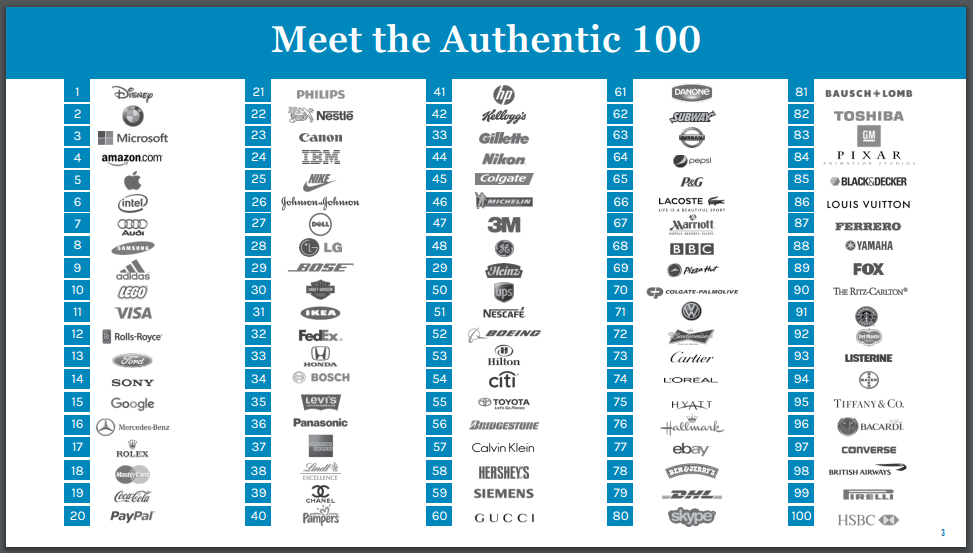
    As per a recent research by Cohne & Wolfe, who are known to conduct studies to measure the authenticity of brands, these are the top 100 authentic brands. If you notice, they truly have worked hard over the years to create an image which people, majorly millennials think as authentic.

    Position yourself to please them

    Creation of a great brand depends on its positioning in the market. There are several examples of companies failing miserably just because their position wasn’t right. To reach your target audience and ensure that they are attracted towards your brand, you need to create a desirable position for it. Millennials are highly diverse and most of them have unique choices. While building a brand, you must consider their needs and position accordingly. Good positioning also helps in highlighting the characteristics and core attributes of the brand.

    tesla-motors-wittypen

    The Tesla Motors is a great example of positioning a brand to appeal a particular section of people. Electric cars were quite uncool before Tesla came in and took the market by storm. Right from the beginning, Tesla positioned itself as a high-end electric car maker with exemplary aesthetics, all of which the other brands lacked. Rest of all, as they say, is history.

    Exude uniqueness

    Millennials believe themselves to be unique and they want their brands to resonate their personalities. No matter what products or services your brand offers, the branding needs to be unique in order to appeal the millennials. Uniqueness depends on perception but it takes a lot of efforts to stand as a purple cow in a herd full of mediocre brands. Staying relevant in an age where people have the lowest attention span needs your brand to exude uniqueness and as a marketer, it is your job to make it happen. Uber has been a fine testimony of unique branding; their service is as simple as it gets. Millennials are always on the move and Uber has become their go-to app for whenever they are out of the house. Their product as well as the brand they have created widely captures the instinctive nature of millennials.

    This TVC by Uber brilliantly empowers every common man to make their dreams come true through Uber and shows a message to #EmpowerAMillion Entrepreneurs by 2018. This is something millennials immediately connect with.

    Be admirably interesting

    Being interesting as a brand is a different ball game altogether. The Gen-Y simply can’t stand something boring because they live in a world where the most interesting thing gets all the attention and that is all that they crave. To seek positive attention – which is one of the core aims of marketing – is to become admirably interesting. [Tweet “A brand seems alive only if it is interesting enough and keeps making efforts to be so.”] Google is one of the most interesting brands in the world and it’s difficult to imagine the internet without it. Although the product seems like the simplest tool for consumers, it takes a lot of efforts to make this simple brand admirably interesting. Be it the extremely creative Google Doodles, the quirky hidden tricks or the infamous April fool pranks, they have constantly been the most interesting brand on the planet.

    Stand up for what you believe

    Millennials have strong opinions and they like to stand up for what they believe. When a brand does the same, the instantly start liking it. The reason is the resonance of personalities, when your brand believes in something and advocates it through various campaigns, people who believe in the same thing will definitely form an inclination towards your brand. Standing up for your brand’s beliefs is a sign of strength which has become necessary in the current times.

    apple-parade-festival-reuters

    Global brands which are loved by millennials have made it a point to strongly voice for the causes they believe in. AppleInc. has openly supported the LGBT community by various means and it won the hearts of many for standing by what it believes in. Although it wasn’t related to the brand or their products but the cause affected their consumers and they showed their unwavering support for it. This is all you need to build a brand for millennials, these unpredictable personalities can be the biggest source of revenue for your company. Put all your efforts and build a brand which your customers will be proud of.

    Top 6 Strategies for Marketing to the Millennials –Acquire, Convert, Retain!

    Once you have created a stellar brand, you need to implement marketing strategies specially designed for millennials. They have a blind eye towards cliched campaigns that are uncreative and don’t ring a bell naturally. Trying to impress millennials through marketing is no easy job but with the right tactics, you will be able to acquire, convert and retain them in the long haul. Let’s see some of the most useful ones.

    a) Be where the millennials are

    Marketers must have a keen eye on all the places where their customers are. This includes venturing into all the exciting platforms millennials share their daily lives on.Here some social media marketing myths of 2018. If you want to market your brand to millennials and don’t have a presence on social platforms like Instagram and Snapchat Inc., you are doing it all wrong. These platforms provide enough marketing avenues already and they will keep upgrading their platforms to offer marketers the ultimate value of their efforts. Social media marketing to millennials is key. Thus, they are huge customer acquisition mediums as far as millennials are concerned. Taco Bell is widely known for their creative and expressive social media campaigns. Recently, they came up with some unique strategies to reach out to their target audiences, the millennials. This detailed case study shows how they leveraged the power of social media to tap into the lives of millennials. Also, their Twitter handle has been very popular lately owing to a superb interactive presence on the platform.

    b) Build a relationship

    Relationship_marketing is an old technique but works like a charm for millennials. They are always up for a deep bond which needs nurturing and brands can use the exact same humane qualities for building a relationship with their customers like they would do for a person. Although it takes a ton of efforts to maintain a good relationship, it is well worth in the long haul. The core aim of relationship marketing is to allow more customer retention and satisfy them with your product or service instead of focusing on sales transactions. Building a genuine relationship with your customers or users is the best way to retain them for years. Though Coca-Cola just sells flavored sugary water, they know how to build a long-lasting relationship with their customers better than anyone else. Over the years, they have consistently tried to build a unique rapport with the customers and succeeded in it.

    The TVC shows one of the historical brand campaigns ever done. It was majorly targeted towards millennials since they had started losing market share of that age group in Australia. After the campaign, their sales saw a huge rise and it proved the prowess of a nicely executed relationship marketing campaign.

    c) Content (marketing) is still the king

    Many marketers believe that the era of content has passed and they need new techniques to reach customers. This is far from the truth and content or content marketing for that matter is still one of the most effective ways to reach, educate and convert users. Although mediums of content have evolved over the years but it is still as relevant as it was in the initial days, even more. The rise of social media along with the increased viewership of videos has led to a shift in the way content marketing happens.So invest in a content marketing plan.

    Nike is probably the best brand that gets content marketing right for millennials. It owned the top two spots of the most watched videos on YouTube in the year 2014. They have diversified their content marketing strategies into videos, manuals, fitness tips and much more. In fact, it began with content marketing right in the 1960s when it came up with a manual titled “A Jogger’s Manual” which is widely termed as the reason for the growing jogger’s culture in the US, ultimately leading to more sales for Nike.

    d) Build an awesome product/service

    The best marketing one can do for a brand is to create a superior product or service which speaks for itself, majorly through word of mouth. Although different techniques of marketing are required to ensure a widespread reach for a good product, nothing beats the authentic praise of a customer. Millennials believe their friends and family more than what any brand’s marketing campaign conveys. Thus, if you want to impress them, better build an awesome product/service and then let them spread the word. WhatsApp and Truecaller are two outstanding examples of how a good product successfully acquires, converts and retains users without much marketing efforts. Both these brands had barely marketed their apps but they both turned out to be revolutionary services which we use on a daily basis. Tweet “Word of mouth is a huge advantage any brand can have and it is only possible by creating a product which is superior to others.”

    e) Provide an amazing customer service

    Providing great customer service is a necessity in a time when customers have become knowledgeable and won’t tolerate someone treating them in a frivolous manner. Your customer service is put into test when a customer faces a bad experience and the way you handle it shows how good you are. Such responses decide how loyal the customers will be in the future. Nailing such situations is one of the core things a brand can do to retain customers. Amazon is a champion in providing an exceptional customer service. You will seldom see a customer switching from Amazon because of a delayed or bad experience, they always make sure you have a good time while shopping at their site. Non-surprisingly, their mission statement reads that they want to “become the most customer-centric company in the world”.

    This amazing TVC by Amazon depicts exactly how they are trying to position themselves when it comes to customer service. They are equating themselves with the people of India, who love helping and it strike a chord with many.

    f) Offer something in return

    Probably every brand these days uses the strategy of providing discounts, cashback or offers to acquire and convert users. Although this is not a good long-term strategy to retain users, it can work wonders to acquire new users and give them an opportunity to try your product or service. Millennials are lured by such deals and would probably give your brand a try which can then convert them into regular customers.

    diwali-sale

    Consider all the big e-commerce sites, payment wallets, ride-hailing apps or probably any popular internet service in the recent years and you will find that this is the major strategy they have leveraged to acquire users because it actually works. In fact, there are companies specially built to show the most valuable discounts and offers through many verticals of services.

    Conclusion

    Branding and marketing are two of the most challenging aspects that every business faces and now you have mastered them both. When it comes to millennials, creating a successful brand and marketing your products to them in a unique way is essential and non-negotiable. All the above mentioned popular brands which millennials love have rightly adapted to these branding and marketing strategies over the years to be successful. However, with ever-evolving consumers, you need to evolve as a brand and advance your marketing strategies consistently to stay relevant. Now that you know how to market to millennials in 2018, simply create an awesome brand and successfully market to millennials.

  • 5 excellent ideas to generate leads using content marketing

    5 excellent ideas to generate leads using content marketing

    Marketing in today’s world has shown a paradigm shift and most marketers resort to all kinds of content marketing strategies to make consumers get to select their product from among the rest. With time most marketers have discovered the usage of content marketing as a useful tool to get their point across.However managing and creating a great content marketing campaign is not as easy as it seems. It requires great skill and ample time to be able to produce valuable content which is effective as well.

    Even if you hire the best copywriters for your team and invest enough money, there is no surety that it would lead to genuine conversions. There is no hard and fast formula to know what types of content will work and produce enough results too. Apart from the lack of proper knowledge on the kind of content needed, the below-mentioned challenges continue to make things difficult

    • Increasing competition in market
    • Maintaining standard of high quality
    • More responses to paid promotion campaigns
    • Getting unrealistic expectations fulfilled
    • Sustaining the same kind content for a long time
    • Difficulty in finding the return on investment

    Even though we all know that “Content is king” the results reflect only if it’s marketed well. We are mentioning below the top 5 ideas that you should use to generate leads using content marketing.

    1. Using Website or Search Engine optimization

    A survey done amongst 500 marketers in the US revealed that according to them SEO makes the maximum impact when it comes to lead generation for B2B(57.4%) as well as B2C (41%) markets. The truth is you cannot expect any major lead conversions happening if your website has not been updated or optimized since the last three years. It is important to devote attention to the below-mentioned points while getting your website optimized.

    • Ease of navigation mentioning all required details
    • Customer oriented content targeting the right audience
    • Multiple CTA buttons requesting your leads to get to know more
    • Categorizing same product in different price ranges to make the consumer select a product or service.

    SEO is a perfect choice if you wish to generate leads through the basic searches that most consumers do every day. If your website stays up in the ranking chances are most people will be on your landing page and lead to further sales conversions for you. It is also very essential that the Meta tags you impose are not just a weird combination of many keywords. Most potential customers would like to pick up a tag which promises them of giving the benefit they really want.

    2. Conducting webinars

    For all those who have the desire to reach out to their target audience and captivate them into becoming their customers conducting a webinar becomes an easy tool. A webinar is an interactive, white paper, medium by which your potential customers can have a face to face interaction with you. It is essential that your webinar has a life cycle and a start and end time. To get maximum customers to actually participate and later convert it is required that utmost attention is given to each phase of the webinar’s lifecycle. However, there are some key points to be kept in mind when you design a webinar page.

    • Adding an attractive and compelling headline which makes the consumer stop and take notice of your product or service.
    • Mention the benefits; even if your webinar is free you need to tell the prospects and customers why they should be a part of it.
    • A highly visible call to action button. Make sure that your CTA is such that it becomes the first thing that your customer notices when he clicks on that landing page.
    • Most customers do not wish to fill a lengthy form for a simple task like this. Avoid incorporating many fields and keep it short and simple.
    Top tips & trciks for meeting on mobile

    Kindly note the prominence given to “View Now” button.

    3. Social media

    If done right, social media can be a powerful tool in order to get maximum lead conversions-such as twitter marketing- but getting this done takes a considerable amount of time and patience. Your social media posts can generate leads and turn into possibly viral marketing campaigns only if you give the readers high-quality content either from your own website or blog. There are three ways in which lead generation can be done on social media.

    • Social media – Blog or website article link
    • Social media – Gated content
    • Social media – Website article-CTA by signing up on newsletter or mailing list.

    An infographic is a popular way of converting data and presenting it to the consumer in a visually appealing manner. What makes these infographics different is that the visuals used are clearly ones which can immediately draw the attention of a consumer. Read how presenting infographics to the consumer leads to better conversions and sales.

    • Get 200% more likes on Facebook
    • 12% more traffic on the landing page
    • More click through
    • Better visibility and access
    Purchase decisions sales stats

    In the example shown above you can see how valuable,data driven content can entice the customers to click and move ahead.

    4. Email marketing

    When it comes to conversions email marketing stands up at the same level as social media. Email marketing remains one of the simplest ways to actually get your readers to convert into prospects and customers. Essentially impactful email marketing campaigns must contain the following features to be able to convince and get consumers to click further.

    • It should have a clear and strong CTA
    • The pace of the emails should be frequent enough
    • The content should be interesting and should make people want to read
    • Focus should be on changing templates and design patterns frequently

    It is also necessary that you configure your emails such that readers are able to find the button which would lead them to your landing page. Apart from that simple CTA ‘s should be avoided as no one responds to messages which show a lack of interest. You can substantiate the CTA with valid proof on what he would gain by signing up to your newsletter.

    For example, if you are a website providing web solutions to clients a simple CTA asking them to subscribe to a 4-week newsletter on a topic like “Learning content marketing the easy way” can lead the readers to subscribe. Once there if they are able to like and understand your work chances are they might take the association further and become your loyal customers.

    generate leads using content marketing

    5. Publishing an E-book

    Offering them an option to sign up for receiving a free ebook, whitepaper or report is a great way to generate leads through content marketing and acts as a lead magnet for many customers to stay and have a look.The more attractive the offer looks to them the more are the chances of them being converted.Keep the following things in mind while offering them the deal and be sure they would not want to miss it.

    • Bring it at a time when the reader is It should be able to add value to your site and should be such that most likely they may not find it anywhere else.
    • You have to give them a reason why they should download it. Since they visit countless blogs there should be something compelling in your product or service that makes them stop and have a look.
    • Instead of focusing on the content, talk about what the people are going to achieve by signing up. Instead of getting over lengthy just let them know how this offering of yours works towards achieving their goals.
    social media ebook

    Times have changed but how you generate leads through content marketing remains still the crux of making your business successful. Apart from these, there are other modes too which can be used to generate the necessary eyeballs. However, these five are by far the most effective in actually making your potential customers take notice and proceed towards enhancing their relationship with you.

    It’s purely the marketer’s choice on what would work well with his target customer. However which ever method is used it is absolutely critical that the persuasion tricks are used effectively. Most people do not bother clicking onto a website until they get something valuable in exchange. The key lies in using these tools together or a few in tandem to generate leads through content marketing and achieve the target set. One thing that you should understand is that customers clearly prefer going for something different so whatever you offer them just make sure that the benefit is a class apart.