Category: Content Marketing

  • B2B Content Marketing Strategy: Step-By-Step Guide

    B2B Content Marketing Strategy: Step-By-Step Guide

    Most B2B companies start with writing a blog, creating a few eBooks, and optimizing their service pages, but never scale up from there.

    That’s mostly because they lack a clear B2B content marketing strategy that guides them to move forward and iterate their way towards consistent growth.

    This blog will help you set a clear pathway to building a content engine that keeps compounding. We’ll talk about the importance of strategy, how you can build one, and share which key growth metrics you need to measure.

    But Why Content Marketing?

    Content marketing helps you reach your target customers when they are at the top of the funnel and shows them that your company can help solve their problems.

    When used correctly, content marketing will not only strengthen your brand but also drive more high-quality traffic to your website and convert leads into customers.

    Importance of B2B Content Marketing Strategy

    Content marketing is a vital part of your company’s growth and having a solid strategy in place will help you scale it faster.

    Here are some of the key benefits:

    1. It helps you understand what your target customers care about and how they consume content. This way, you’ll be able to create topics that drive you the most amount of search traffic.
    2. It helps you find the right keywords to target so that your content can rank higher in search results. A good strategy will make sure you don’t miss out on any high-converting keywords.
    3. A strong strategy will help you create a calendar that shows what types of content needs to be created and when it should go live. It’ll also include all the channels where you should distribute the content.
    4. You’ll be able to track the success of each piece of content and see how it impacts your overall business goals. This will help you iterate and improve your strategy over time.

    Now that we know why having a strategy is important, let’s look at how you can build one for your company.

    Building a B2B Content Marketing Strategy

    Most people think that content marketing is easy. They believe they can start writing a few blog posts and convert more visitors into customers.

    Unfortunately, this isn’t true. Creating content at scale is one of the most challenging things to do in any B2B company. And we’ll help you show a clear path that makes this entire process simpler.

    Here’s a step-by-step process to build your b2b content marketing strategy:

    Step 1: Know Who is Your Audience

    Ask your sales team.

    This is one of the most basic things that most marketers miss. Your sales team is the one who speaks with the customers consistently and they can share:

    1. Which customers are easiest to convert
    2. Which industries have the most frequent use case for product or service
    3. The demographic details about your audience, location, company size, revenue, etc.
    4. Understand who is the decision maker
    5. What are the key KPIs for the decision maker

    You can have multiple buyer personas depending on the customers you are going after. Let’s look at Gong, a revenue intelligence tool. What’s interesting is how they have clearly defined their target audience:

    1. CROs & Sales Leaders – To educate about Revenue Intelligence
    2. Sales Managers – To understand how they can get visibility into their team’s performance

    Gong receives more than 1M visits every month, while 95.18% of its traffic is organic, and more than 22% of its traffic comes from search and social media channels. (Source: Similarweb)

    Step 2: Finalize the content types you will create

    The next step is to figure out what content you want to create for each audience persona.

    Let’s go back to the Gong example, here are some of their popular content pieces:

    1. THE SALES FORECAST TEMPLATE FOR SALES MANAGERS: Sales forecasting is one of the basic KPIs for sales managers. A quick google search for a template will help sales managers by saving time, and Gong grabbed this opportunity.
    2. Landing Pages: Gong creates multiple landing pages around Sales enablement, Conversation Intelligence, Revenue Intelligence, and more which becomes a high-value BOFU(Bottom of the funnel) content.

    These are all high-quality resources that educate their target customers about revenue intelligence and how they can their sales team’s efficiency.

    Step 3: Pick Your Distribution Channels

    Now it’s time to figure out where you’ll publish your content. The channel you choose will depend on the type of content, your audience, and how easily searchable that channel is.

    For example:

    • If you want people to read your blog post or article then a distribution platform like Medium can be a good choice as it has high visibility and allows people to share your content easily.
    • If you want to target CXOs and professionals, you might want to pick LinkedIn as the most preferred social media channel for distribution.

    Step 4: Define Key Content Buckets

    Now that you know your audience and the type of content you want to create, let’s understand how to define content buckets.

    In case of Gong, the key buckets would include

    • Revenue Intelligence
    • Sales Management
    • Selling Skills
    • Customer Stories

    For Intercom, the key buckets are:

    • Customer support
    • Growth & Marketing
    • Sales
    • Product

    Step 5: Build a Keyword Universe

    Once you have your content buckets ready, you should build a list of keywords that can drive the most amount of organic traffic.

    Tools like Ahrefs & Ubersuggest can help you find SEO keywords related to your business.

    Let’s say you are building a CRM for Real Estate, here’s how you can use Ahrefs to build your Keyword Universe.

    1. Start with searching the main keyword “real estate crm”
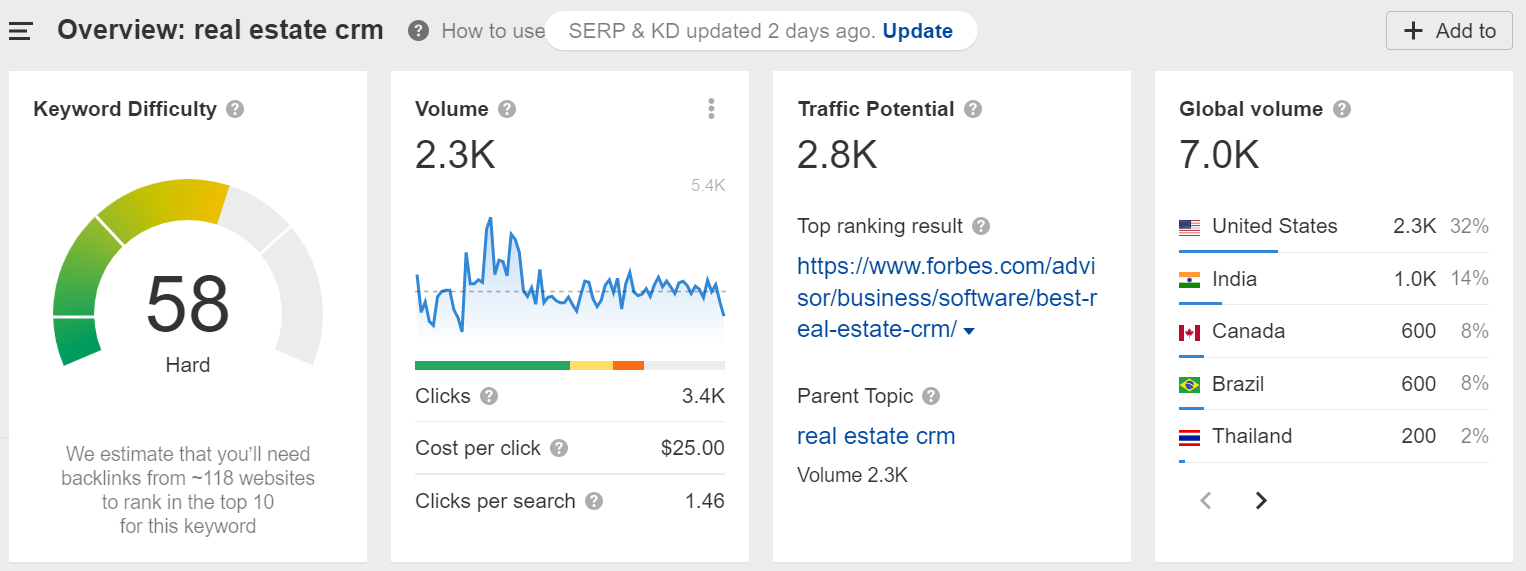
    In US alone, 2800 people search for Real Estate CRM every month and that’s a good step to start.

    2. Look for the matching and related terms and start building your keyword lists.

    You can filter these keywords as per the intent and relevance to your target audience. Once you are done, export the list of all keywords that you wish to target.

    Step 6: Create a Content Calendar

    You need to have a plan for your content. You should know when each piece of content will be published, on what channels will it be distributed, and how would it be repurposed.

    Tools like CoSchedule or Trello can help you in building your content calendar.

    Let’s define it in a few simple steps:

    – Set up a Google Sheet where you list down all the topics that are going to be published in a given month.

    – Create different tabs for each month and add the topics under them. You can also include columns like title, publish date, social media channels, and repurpose type.

    – Once you have all the topics in place, start filling in the publish date and other relevant information.

    – As you are publishing content, make sure to update the Google Sheet with the live link, social media posts, and any other required information

    Let’s try doing this from Gong’s perspective:

    Topic: 10 Coaching Tips To Guide Your Sales Team For Success

    Format: Blog post or article

    Target persona: Sales Managers

    Distribution Channel: LinkedIn

    This is a very simple way to define your content calendar and helps you stay focused on what’s important.

    Step 7: Define Roles in Your Team

    So far, we have defined all the information you need to build a b2b content marketing strategy. But before you go ahead and start executing it, there’s one more thing that needs your attention – defining roles in your team.

    Usually, different members of the marketing team are involved in creating content for the company blog or social media channels. However, you need to know who is going to do what in the team so that you can ensure proper coordination and alignment of efforts.

    Here are some of the roles that you might have in your team:

    • Content Writer
    • Content manager
    • Graphic Designer
    • Video Producer

    Each of these roles will have different responsibilities, and it’s important that you know who is doing what. You might want to also consider outsourcing content creation to continue to focus more on strategy and distribution.

    Step 8: Define key metrics to track

    Now that you have all the basics in place, it’s time to start tracking your content marketing efforts.

    There are a number of different metrics that you can track – depending on what’s important to your business. However, some of the most common ones include:

    – Website Traffic: This will help you understand how much traffic is being driven to your website from content marketing efforts.

    – Email List Growth: If you are using email marketing as a distribution channel, this metric will help you understand the growth of your email list.

    – Search Engine Traffic: This metric shows how much organic traffic is coming to your site through search engines.

    – Social Media Traffic: This metric shows the number of clicks that you are getting to your website from social media platforms.

    – Time Spent on Website: This is a great way to measure whether people are actually engaging with your content or not. If they spend more time, it means that they are consuming your content.

    – Conversion Rate: If you are using content to drive leads, then this metric is important for you because it will show how many people actually converted and became customers.

    Wrapping Up

    Think of content marketing as a marathon and having a clear guide will help you cherish the results towards the end. A content marketing strategy is an essential part of any company’s marketing plan and should be well-defined with roles, responsibilities, and key metrics to track. By following these simple steps, you can create a b2b content marketing strategy for your business that will help you achieve your desired results.


  • The Ultimate List of 5 Content Marketing Trends For The Future

    The Ultimate List of 5 Content Marketing Trends For The Future

    Content marketing is ranked highest in its contribution to B2B marketing, with an 89% success rate. If the content is impactful, the deliverables need to be technologically sound too.

    Content marketers focus on sparking conversations, creating clear messages, and personalizing communication day in and day out.

    Content Marketing Trends

    The content, coupled with technological innovations, has made many success stories possible so far. However, what has worked in the past may not be as effective in the future. Content is dynamic, and it needs fresh inputs and a new approach from time to time.

    So what should companies/brands focus on in the future when they want to reach out to their consumers and potential customers through content marketing?

    What content will grab customers’ attention in 2023 and in the years to come?

    And where can marketers put their money when it comes to achieving a winning combination of content and technology? Let’s find out!

    Content Marketing Will Witness a Lot More Innovation in Marketing

    Role of artificial intelligence in content marketing

    Role of AI in content marketing
    Source – Google

    Emerging technologies that are futuristic will no longer lead to scampering around with uncertainty. Taking AI by the horns, content marketers will be seen dwelling into engaging conversations via chatbots and making meaningful connections through the data accumulated using AI. Content marketing services will be more inclusive in technology outreach than ever before.

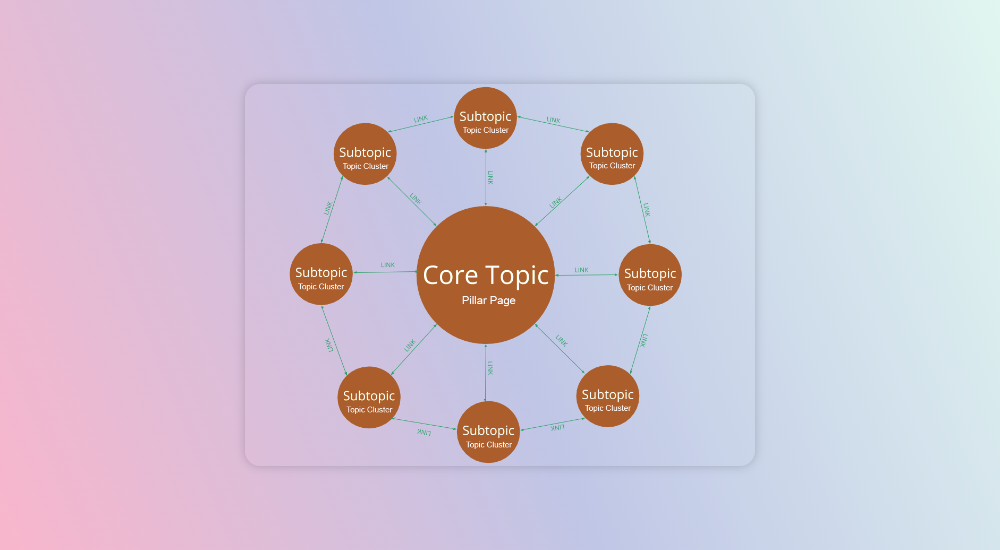
    Content Clusters

    Topic Clusters for content marketing
    Source- Google

    Within the wide range of SEO, content has always been pushed with an emphasis on keywords; this will change in the future. Content clusters for the particular content will not only be a boon for brand recognition but will also harness the B2B and B2C connections through various content marketing platforms. Content clusters are made using similar product/service features that ride a particular brand.

    Re-marketing and Re-targeting

    Quickly becoming a necessity, content marketing services now have an additional responsibility – to “call back” the previous or existing customers in various ways. One of the best ways of doing this is to grab the attention of customers who have left something in their cart without making a purchase.

    Another way is to engage previous customers into trying a new or similar product. One of the benefits of re-marketing in content marketing is the re-targeting strategy. While re-marketing focuses on recall and engagement, re-targeting focuses on enticing your customers to purchase again.

    For instance, Facebook has made it easy to re-market through advertisements based on various options. With 22 billion ad clicks per year and 3 times more engagement than regular ads, Facebook remarketing ads are going to rule the market in the future.

    Even the highly customizable Google ads combined with remarketing gives you the power to reimagine your ad strategy. Re-marketing and re-targeting will be all about using great content to reach out to those smartly selected customers. The future of content marketing can be made successful by doing this.

    AdRoll: Marketing and Advertising Platform

    Ad Roll is gaining increasing popularity as one of the best ways of engaging in marketing and targeting the right audiences. Ad Roll is an AI-Driven marketing software that gives you better ways to re-target and engage with greater ease in terms of implementing content marketing strategies.

    Since 2007, Ad Roll has been enabling businesses to grow their revenues and recall their customers. With software that makes things easier to work on, you need to focus on better campaigns, draw out good strategies, and deal with awesome content.

    ‘Focused Content’ is the Buzzword

    70% of customers prefer to learn about a product or service via well-curated content rather than just advertising. Creating focused content will require both personalization and creativity. The more creative your content, the more relevant it sounds to the customers, thereby increasing the chances of them availing of your products or services.

    A great content marketing strategy in the digital era must account for the need to make the customers feel like “owners” of that brand or product. In essence, the idea that ‘the customer is the king’ will always remain at the core of marketing.

    These points are essential for making way for your brand/company or for your product to be “seen”, “recognized”, and “appreciated”. However, while we are talking about content and marketing, there are certain facts that can boost the probability of a conversion/sale.

    “Your goal should be to own quality time in your customer’s inbox.”

    Apart from the five pointers for content marketing trends, here is a list of essential content that’s value-driven and must be used!

    Blogs – They are greater in length, but are ideal for direct and indirect brand communication, as well as to put out other relevant and engaging information. It keeps the customers informed without being a bore.

    Videos – A video format allows the customers to get a sense of clarity of your product/services and to form a better idea of your brand itself. Customers often watch videos to get a better understanding of what they intend on buying, making it a great way to keep them informed and engaged.

    E-mailers – When brands are able to engage with customers through their inboxes, it creates a personalized as well as a direct line of communication. This way, brands can use storytelling without having to compete with other companies for customer attention, which increases overall customer retention.

    Testimonials – This can be combined with reviews posted by the customer. Testimonials are known to create a sense of trust since customers almost always check the reviews before buying anything.

    Read More: 5 Reasons Why Content Marketing Is Important With Its Strategy

    Expertise Matters

    Content has multiple layers and you have to dig deeper to get to the valuable and more precious insights. And while you do that, you also have to keep track of new advancements being brought in by technology.

    All in all, you have to keep digging deeper while keeping your head above the ground to make sure you do not miss anything important. You need nothing short of a miracle here.

    But with content experts like Wittypen, you can rest assured that you won’t miss out on anything. With our pool of talented writers, managed by a team of in-house content experts and editors, all your content-related needs are taken care of in the best possible manner.

    Their expertise spans various formats and domains, such as website content, blog posts, e-mailers and newsletters, press releases, or any other form of custom content.

    Conclusion

    Content is being churned out at an alarming rate, and the concentration span of the readers is decreasing.

    Thus, we need to bring something to the table that not only grabs your customers’ attention but also retains it long enough for them to make a favorable decision about purchasing your product or service. While technology is at your disposal, opening up many avenues, you need an expert to bring out the best in these.

  • 6 Top Reasons Why Your Content Marketing Strategy Fails With Solutions

    6 Top Reasons Why Your Content Marketing Strategy Fails With Solutions

    We often get to hear about how content is king and that content marketing is key to the success of a business. Most businesses trying to strengthen their digital presence are struggling with content marketing. While the success rates are mind-boggling, it is disappointing that a lot of places don’t think they’re successful.

    Another disheartening fact is that most people are not aware of the mistakes that are preventing them from reaching their content marketing goals (if they have set any).

    With that being said, let’s have a look at the reasons why content fails –

    Why Most Brands Fail Miserably at Content Marketing

    Lack of a Proper Strategy for Content Marketing

    Promoting your content is indeed a powerful tool, but only if done right. The first step to achieving success with content marketing is devising a foolproof content marketing strategy, and this is where most businesses fail. They jump into the execution phase before outlining a comprehensive strategy.

    Reasons why content marketing strategy fails
    Source- Google

    There is an old saying, “don’t be scared of making mistakes but do not make the mistakes others have already made. Make your own instead.” Learning from others’ successes and failures is the most important guide when devising a content marketing strategy.

    While it doesn’t mean you copy someone else’s strategy, there are a lot of areas you can draw inspiration from. These include where they share their content, who else have they got to share it further, what is there in their content that stands above the rest, and so on.

    It is all about learning the best practices and eliminating the pre-identified bottlenecks to come up with a lucid plan to execute. This stage is critical because it determines the effectiveness of all the other stages.

    A content marketing platform can be your best bet if you are facing difficulty with respect to deciding on a content marketing strategy for your brand.

    Use of Wrong Content Format

    While most businesses have realized the value of content, the major mistake they still commit is recycling existing content without adding any additional value.

    Marketing the content doesn’t mean churning out blog posts, circulating them on social media, and then waiting for magic. There are a lot more content formats that are equally effective and important. You need to choose the right format based on your target audience.

    For instance, if your target base is a group of suppliers who deal in car spare parts, publishing 800-1000-word blog posts one after another is simply a waste of time and effort at your end because your prospects probably won’t be interested.

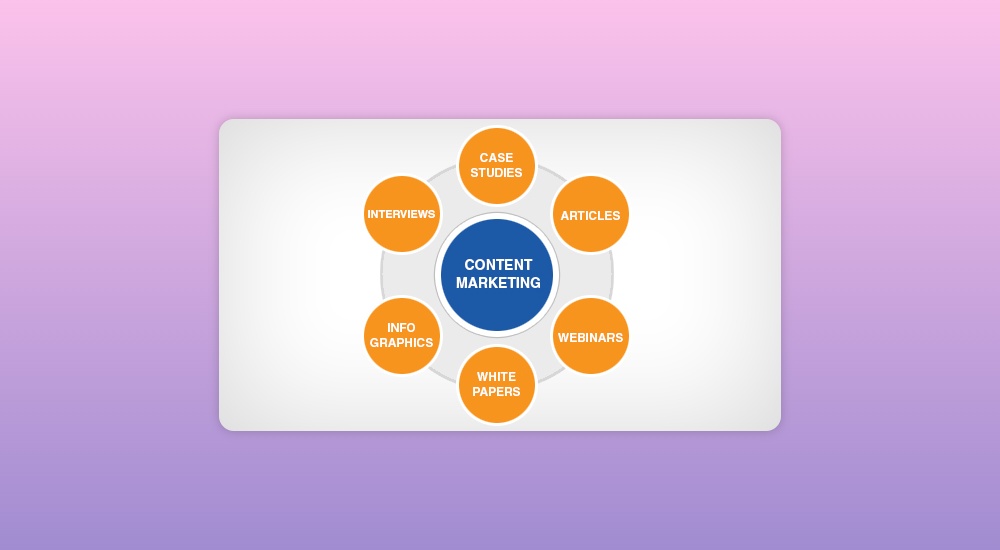
    Focus on how-to guides and instructional videos instead. Content formats include written, video, audio, and image content. You can also explore webinars, checklists, infographics, case studies, eBooks, memes, etc. However, knowing your audience is the key to success here.

    Absence of a Brand Voice

    This may seem like quite an abstract concept to understand, but it is one of the most important points to focus on. Just like a human’s voice helps you identify them without even seeing them, a brand’s voice is its identity. It distinguishes the brand from its competitors and prevents it from getting lost in the crowd.

    The content you share must carry a unique voice that creates an impression in the minds of the audience and helps them recognise your brand and remember it better. It is important to find that voice and stick to it in all your content marketing endeavors.

    If you have difficulty identifying your brand voice, then marketing your content can help you greatly.

    Failing to Track the Progress of Your Content Marketing Campaign

    We have already established how important it is to devise a strategy and establish goals. However, it is equally important to determine how successful the execution is.

    If you do not invest time in understanding the analytics, you will be unaware of what works for your campaign and what doesn’t. You need to be in touch with all the metrics related to your content marketing plan’s success.

    Do not just focus on website traffic, but also take into account SEO rankings, sales, quality of leads, etc. The choice of metrics will depend on your goals, i.e., what you want to achieve. For instance, if you are a local services brand, expecting a million followers is unrealistic.

    Rather, you can set your metric as an increase in the number of locals that opt for your services. Once your metrics are defined, you can delve into the data and analytics of each metric.

    Not Hiring a Resource for Management

    When you run a business, content marketing is not the only thing you do. Since your plate is already full of tasks, it is wise to appoint someone to take care of tasks related to content marketing solely. This will increase accountability as well as make it easier to track pitfalls.

    Investing in marketing your content is the best way to eliminate the hassle of managing everything yourself.

    Ignoring the Social Signals and Latest Trends on Social Media

    Long before the digital boom, advertisements by Amul were a great example of keeping up with the trends. Each advertisement was in sync with the latest news or trend in India. The same goes for social media also.

    It is important to reflect social media trends in your posts because the negligence of the same will render your brand something that is run-of-the-mill and not unique. Once you offer a perspective to your audience regarding something that affects them, they will relate to your brand voice and identity.

    Also Read: The Ultimate List of 5 Content Marketing Trends For The Future

    Conclusion

    Content marketing can be confusing, and content marketing companies in India can help you achieve your goals and strengthen your business. Remember, content is indeed king! And it is up to you how you use this king’s powers of persuasion.

  • Why Is Content Marketing? 8 Reasons To Use Content and Its Strategy

    Why Is Content Marketing? 8 Reasons To Use Content and Its Strategy

    Introduction

    Content marketing is vital for numerous reasons, primarily because it offers a cost-effective, enduring strategy for engaging and nurturing potential customers. This approach not only answers customer queries and builds trust but also significantly enhances lead generation, conversions, and sales.

    The essence of content marketing lies in its ability to attract ideal customers to your brand, rather than aggressively pushing products or services. It focuses on drawing in consumers with valuable, relevant content that meets their needs and interests, facilitating a more organic connection between the consumer and the brand.

    Additionally, the widespread adoption of content marketing—used by an impressive 97% of brands—underscores its importance. It aligns with modern consumer preferences for learning about and interacting with businesses in a more meaningful and informative way.

    Beyond these points, there are several other compelling reasons to incorporate content marketing into your business strategy. Let’s dive into why content marketing is an indispensable tool for modern businesses.

    Source

    Why Is Content Marketing Important?

    Content marketing is crucial because it directly addresses your audience’s questions and needs, helping build trust, foster relationships, improve conversion rates, and generate leads. In the current digital landscape, customers anticipate receiving high-quality, consistent content from their favorite brands.

    According to the State of Inbound report, content creation is prioritized by 80% of marketers. Furthermore, content marketing typically represents 26% of B2B marketing budgets. This investment reflects its significance, as consistent, engaging, and high-quality content profoundly influences audience decision-making more effectively than other marketing techniques.

    Consistency in brand messaging is vital for the growth and success of a business. Major brands excel in delivering a consistent portrayal across all customer touchpoints. This consistency in content marketing should also be evident, as your content needs to maintain a unique and recognizable voice, style, and pitch, regardless of the distribution channel. Such consistency not only establishes credibility and builds trust but also strengthens your brand’s reputation.

    Therefore, the substantial benefits of content marketing underscore its importance. Let’s explore these benefits further to understand why content marketing is an indispensable tool for business success today.

    The Foundation Of The Content Marketing Strategy!

    1. SMART Objectives: Quite often, desired goals need an action plan and that is when your SMART objectives come into the picture, as they work as a navigator tool. Specificity, measurability, attainability, relevancy, and time-bound (timeline) are the limbs of your objectives. Setting SMART objectives lets you prioritize your efforts which leads to a greater chance of achieving your goals in an allocated time window! 
      Moving forward, the S (specific) allows you to have a clear vision of business areas to focus on. The M makes it possible to measure the outcome of your goals and help you be on the right track. The A (attainability/achievability) is another important aspect as it ensures that there will be a maximum chance of success in the long term. Sure, the attainable goals make you come out of your comfort zone, however the R (relevancy/realistic) lets you have a reality check of your own capability. Last but not least, the T (time-bound/timeline) could be the backbone of your SMART objectives. Having a certain action plan schedule will ensure achieving predicted results and reduce roadblocks.
    1. The Ws: Have a clear picture of why and what you want to promote to the buyers. Ideally, the Ws may help to plant the quiddity of your business. Not to forget, your customers can be the best cheerleaders and the harshest critics of your business. 
    1. Target Audience: The group of people your content is geared towards is known as your target audience. For instance, if you were to promote an FMCG-Baby Care brand, creating content for people between the age group of 24-40 will make a huge impact as these would be your repeat buyers for several years. Nevertheless, your target audience may also vary according to parameters such as age, gender, education, income, etc. 
    1. Empathy Map: The empathy map is one of the powerful approaches to gauge your audience’s behavioral pattern, point of view, and needs. Such data could provide detailed insights that can be used to come up with an effective content strategy.
    1. Content Calendar: Consistency is the key to making your digital presence solid through content marketing. Having a specific schedule, including content type, social platforms, time of posting, etc., will allow you to adhere to your content plan. 

    What is this fuss about content marketing strategy, you may ask? Well, here are some important key points!

    Just like a potter moulds clay dough into various shapes when making earthenware, a content strategy helps you shape and shoot the content in a tactical manner. Even so, such an approach actively encourages/nurtures your readers in terms of brand awareness, engagement, and retention.

    How Can Content Marketing And Strategy Help?

    Building Trust

    Creating content allows your business to establish and nurture relationships with your audience. You provide value without immediate expectation of return by addressing their questions and engaging directly with customers. This generosity fosters trust in your recommendations and advice. 78% of customers do their background research on your company by reading articles on what you sell?

    Effectively timed and placed content that reaches the appropriate audience significantly enhances your brand’s reputation. As customers encounter more high-quality content from your company, their association with your brand becomes increasingly positive. This not only strengthens customer loyalty but also boosts your overall brand perception in the market.

    Higher Quality Leads

    Content marketing is particularly effective in generating higher-quality leads, which are individuals who are more likely to convert into customers due to their familiarity with your brand or their explicit need for solutions you offer.

    These potential customers typically fall into two categories:

    1. Brand-Aware Leads: These individuals are already familiar with your brand and your expertise. They know what you sell and are prepared to make a purchase.
    2. Solution-Seeking Leads: These leads are aware of a problem they have and understand the type of solution they need. They are actively searching for the best option available.

    Content marketing attracts these types of leads primarily through targeted SEO strategies. By incorporating search engine optimization, you enhance the visibility of your content on search engines. Using keywords that match the search intent of your target audience ensures that the people who find your content are those seeking the solutions or information you provide.

    Furthermore, by targeting different types of keywords, content marketing can engage leads at various stages of the buyer’s journey—from awareness to decision-making. This strategic approach not only increases the chances of attracting leads with a higher propensity to purchase but also supports them through their decision-making process, boosting the overall effectiveness of your marketing efforts.

    Increase Retention Rate

    Content marketing increases customer retention rates by consistently engaging users with valuable and relevant content that enhances their relationship with a brand. Here’s a detailed look at how this process works:

    1. Providing Continuous Value: Content marketing delivers ongoing value to customers even after their initial purchase. By offering useful information, insights, tips, and updates that resonate with customers’ interests and needs, businesses keep their audience engaged and connected to the brand.
    2. Building Trust and Loyalty: Consistent, high-quality content helps establish a brand as a trusted authority in its field. This trust translates into customer loyalty, as customers are more likely to stick with a brand they view as reliable and informative.
    3. Personalization: Personalized content that addresses individual customer needs and preferences can make customers feel understood and valued by a brand. This tailored approach often results in a deeper emotional connection, which is a strong factor in customer retention.
    4. Educating Customers: By educating customers about how to get the most out of purchased products or services, content marketing enhances customer satisfaction and reduces the likelihood of dissatisfaction and churn.
    5. Re-engagement Strategies: Through strategic content initiatives like newsletters, blogs, or social media posts, businesses can re-engage customers who may have decreased their interactions with the brand. Regular, engaging content reminders keep the brand top of mind.
    6. Feedback Opportunities: Content marketing provides platforms for feedback, allowing customers to express their opinions and feel heard. Responding effectively to feedback shows that a company values its customers’ input, improving retention through positive reinforcement.

    Overall, by keeping customers informed, engaged, and connected to the brand through valuable content, businesses can significantly enhance their retention rates, turning one-time buyers into long-term loyal customers.

    To Generate More SEO Traffic

    Content marketing undoubtedly helps your brand improve Search Engine Optimisation efforts. In order to get the desired results, content needs to be optimized in terms of keyword rankings, quality of the content, etc. In simple terms, ‘more content + more pages + increased content (food) for search engines = significantly better results in SEO efforts. For example, writing blogs/case studies on various relevant topics allows you the possibility of having more ranked keywords.

    Nurturing of your Loyal Customers

    Content marketing excels as a nurturing strategy, designed to build and strengthen relationships with audiences by providing them with valuable, relevant content tailored to their specific needs, interests, desires, and challenges.

    As potential customers regularly engage with content specifically crafted for them, their trust in the brand solidifies and deepens. This ongoing interaction creates a virtuous cycle: the more customers interact with the content, the more their loyalty grows. Over time, this consistent engagement doesn’t just create customers—it cultivates loyal fans who return repeatedly.

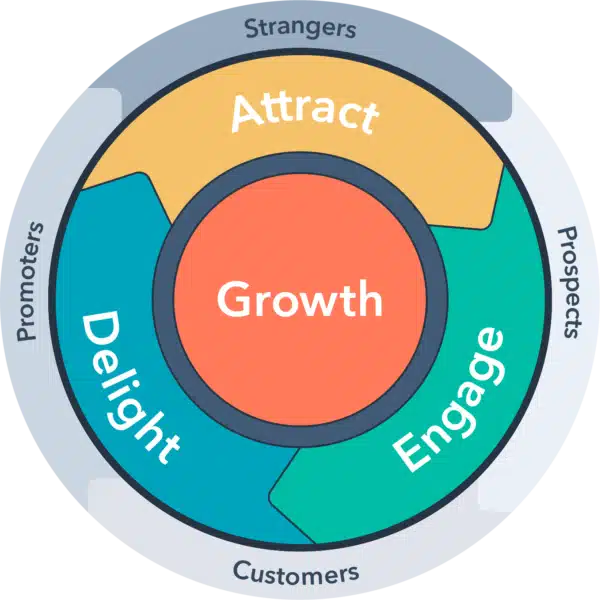
    The HubSpot flywheel effectively illustrates this concept. It shows how continuous efforts in content marketing not only attract customers but also help retain them long after their initial purchase. Essentially, content marketing plays a crucial role in keeping customers engaged and connected with the brand, making it a powerful tool for improving customer retention.

    To Strengthen Social Media Presence

    In this digital age, it is important to maintain and grow your brand’s image on social media platforms in order to make them look crispy. Over 91% of marketers have stated that social media helps increase brand visibility and improves user experience. Sharing content across your media channels could increase visitors’ curiosity; hence, they will most certainly visit your pages repeatedly. Such activities will result in increased social media engagement and traffic.

    To Have Tremendous Growth Within Budget

    Every content piece provides specific information to the readers. Likewise, the diversity of the content provides thorough knowledge of your brand and its values, as there are no extra charges, such as paid ad campaigns. Perhaps, posting the same content across various media channels enables you to cover the maximum chunk of your target audience. Hence, it can be said that through content marketing it is possible to reach out to as many people as you would like at a minimal cost. 

    Conclusion:

    Content marketing is indeed one of the booming marketing tactics you can use to position your brand in the world. Moreover, a good content marketing strategy can also increase your organization’s goodwill, customers’ trust, and most importantly, their stand in the market. 

    Read More: B2B Content Marketing Strategy: Step-By-Step Guide

    So, now you know why there has been a buzz around content marketing! We hope this article has brushed up the strategy part and helped you modulate your content marketing even more effectively. If you’re looking for the best content writing services, Wittypen is the one-stop solution for all your needs.

  • Content Targeting Tips: How Clever Content Is the Key – Wittypen

    Content Targeting Tips: How Clever Content Is the Key – Wittypen

    Content marketing is not a one-step process. In fact, it requires ample time and thorough research. The most crucial step, which should be the guiding light of your content creation process, is effectively targeting the content.

    It is imperative that your content grabs your target audience’s attention to prevent your competitors from overtaking you.

    Content targeting can be your biggest strength and is the key to marketing success. Unlike SEO, content targeting is more than just matching the keywords with a search query. Instead, it is about matching the content on your website with the search queries. It is a mix of organic SEO practices and paid inclusions to reach your market.

    Here Are a Few Important Content Targeting Tips That Will Increase Your Visibility

    1. Define Your Target Audience

    Before undertaking any form of writing, one of the most important content-targeting tips is to identify your target audience. ‘Who do you want to reach?’ is a question you have to ask yourself.

    Define your target audience
    Source – Google

    Following this, you have to bifurcate your target audience under different criteria, such as age, gender, financial status, likes, dislikes, etc. The most important question here is to ask yourself if your service or value proposition is relevant to the identified target audience.

    For example, Netflix will not target a middle-aged housewife who regularly views regional daily soaps as their content does not cater to her needs. It will look out for content targeting google ads because its target audience is active users of the search engine and surf the internet for films and web series.

    An easier way to thoroughly understand your target audience is to create customer or audience profiles. Here, you reproduce the personality and behavior of your audience.

    For example, a viewer profile for Netflix would be along the following lines – Rohan is a working professional residing in Delhi. He works at an advertising agency and enjoys traveling or taking short trips over the weekend. He earns enough to support himself regardless of the fact that his overindulgence in fine dining sets his savings back.

    You can also take a free ‘Who is my target audience quiz’ online to aid you in target marketing.

    2. Conduct Online Research

    In this era of digital marketing, it is important to know how to find your target audience online. Knowing where to find your audience is one of the best content-targeting tips you can implement.

    While there are numerous software solutions and agencies that charge a premium to identify your target audience, social media and digitization have made it possible to connect with your target audience for free.

    Facebook Analytics, LinkedIn Insights, Instagram Insights, and Google Analytics are some of the free content analysis tools you can use to get real-time insights about your target market. You can conduct online surveys using services like Google Forms or SurveyMonkey, which also tabulate the results for you.

    Apart from these, short dipstick surveys can be conducted on Instagram, Twitter, and Facebook using their poll features. Following hashtags which are relevant to your service help you with qualitative and in-depth research about your target audience.

    Moreover, these hashtags are key to formulating long-tail and short-tail keywords for your content marketing strategy. For example, if Zomato wishes to understand its target audience’s outdoor dining behavior, it will be easier to follow hashtags such as mumbaifoodies, foodlovers, weekendvibes, etc., and using a location tag along with it to gain a better understanding of people’s activities.

    3. Determine Your Voice And Tone

    Speaking with your target audience in a voice that seems familiar is one of the most important content-targeting tips for all marketers. Your audience should be able to relate to you and identify with you. Personalizing your content is always helpful as the brand doesn’t seem aloof and detached.

    However, using a friendly or formal tone depends completely on the type of product or service offered and your brand personality as a whole. People expect a serious and formal yet understandable tone when reading or watching a sensitive piece of information. But on a general basis, a light and friendly tone of communication is preferred by most.

    In short, your content targeting depends partially on your target audience’s persona and your brand personality. Regardless of your preferred tone and voice, it should be consistent throughout your content marketing campaign.

    4. How to Identify A Target Audience in Writing?

    Before asking the question, ‘how to identify a target audience in writing?’, ensure that your target audience is inclined towards reading. Today, visual and innovative content is directed toward the younger strata of the population due to its effectiveness and transparency. Your survey and analytics results will help you understand this in greater detail.

    Once you are sure that your target audience is interested in reading, you have to classify whether they prefer graphic listicles, informative white papers, technical blogs, or narrative pieces.

    In fact, one of the top SEO tips for 2023 is to write content dedicated purely to a section of your target audience, so everyone gains distinct value from your website.

    5. Brainstorm Your Content

    One of the most crucial contents targeting tips is to create novel and engaging content. Viewers actively seek new and interesting content. And therefore, imitating your competitors is a bad idea.

    Brainstorming content ideas
    Source – Google

    Brainstorming sessions are an ideal way of coming up with new content ideas. The brainstorming process should be guided by factors like the purpose of your content, media platforms, and desired response.

    Content targeting examples that can arise out of a collective brainstorming session could be coming up with an interesting quiz instead of a blog to inform the target audience about good dietary habits by a packaged food brand. Moreover, interactive content is preferred by 88% of viewers, as opposed to static content.

    6. Use Google Adwords

    Google is the most widely used search engine, and Google AdWords reaches 90% of global internet users. Content targeting AdWords is an effective way to generate leads and gain visibility for newer businesses as organic SEO builds over a period of time.

    Whenever a user enters a search query, a number of results appear on the search engine results page. At the top of the page, there are at least 2-3 websites that appear with a green box, signifying that they are ads. Users are likely to click on these owing to their higher rank.

    Google AdWords asks you to bid for certain keywords, and the highest bidders with relevant content are placed at the top. It makes content targeting easier as it allows the marketer to focus on a certain location. Apart from simple search ads, it also allows you to run specialized campaigns such as dynamic ads, mobile app promotions, video promotions, etc.

    7. Evaluation

    Measuring and monitoring the results of your content targeting campaign against the results and leads generated is an important content targeting tip.

    It helps you understand if you should invest more in paid promotions or revise your SEO strategy. You should always ask your audience for feedback and actively assess it based on the channels of communication used.

    Also Read: 25+ Content Marketing Tools – Drive Growth For Your Business

    In Conclusion

    By integrating these content targeting tips you can not only enhance the effectiveness of your content but give it a proper flow, making it easy to understand. Moreover, this makes it easier to identify the gaps in your strategy and work on them to increase business and achieve marketing success.