Category: Content Marketing

  • How to Create Viral Marketing Campaigns For Great Success

    How to Create Viral Marketing Campaigns For Great Success

    As content marketers, we strive to create content that our audience likes and shares. In other words, we would do whatever it takes for viral marketing campaigns. However, creating content that gets viral doesn’t come easily to most of us. The reason –  we often fail to create content that is worthy of being shared.

    So, How Do You Create A Viral Marketing Campaign?

    We will talk about 5 ways that can help you in viral content marketing in India.

    1. Long-form Content Works in the Longer Run

    According to a study by Buzzsumo, long-form blogs have a tendency to work better as compared to short-form blogs. Another study by Google also says that long-form blogs up to 1900 words find themselves on page 1 search. The reason is for their popularity is that the long-form articles build trust and also create an authoritative presence.

    Your audience will be more engaged with it and will share it in their circles.
    Apart from getting shares and views, the average time spent by a user on your blog post also increases, because the users find value in reading it. Blog platform Medium conducted an interesting analysis on its own platform.

    They measured the average time spent by users on their blog in relation to the post length and the amount of time it takes the average user to complete the post. Based on the analysis, they found out that – a user takes about 7 minutes to read a blog post of about 1600 words

    Analysis based on reading

    Take a moment and look at the analytics by Buzzsumo for this blog post by Rob Garner. It has got 2,400 shares and 8,400 reads. The reason for its crazily high popularity is that a) It provides valuable and in-depth information to the user and b) It solves a problem that the users might be facing.

    Facts and figures

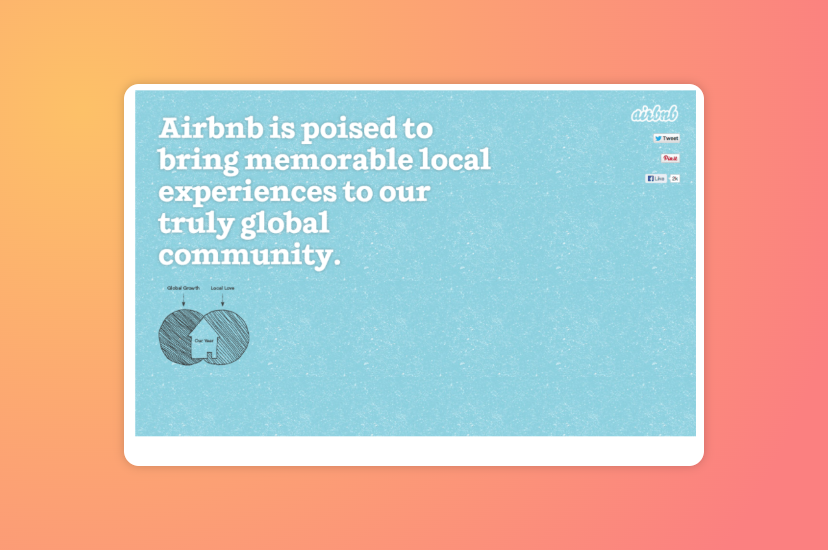
    Another example of a successful long-form content marketing strategy is Airbnb. The corporate collateral, especially the annual report is so dull that it would put the color grey to shame. However, Airbnb, made brightened up its annual report by making it very interactive.

    Because of this, in the year 2012, they grew from 1,20,000 listings to 3,00000 listings.
    Airbnb

    We at Wittypen also largely focus on long-form articles. For example, our blog post on content audit is comprehensive and well-researched.

    We did this because we want our users to feel benefitted when they make an exit from the blog-post. Our purpose is to not have a click-bait headline that does draw the user to the page but makes them leave at the same time.

    2. Connect with Your Audience on an Emotional Level

    It is simple. Human beings react to emotions. If an external stimulus strikes an emotional chord with you or influences your behavior then you are bound to react to it.

    For example, a film like Bhaag Milkha Bhaag might leave you motivated and teary-eyed at the end, or a movie like Munna Bhai MBBS will unfailingly crack you up. Psychologist Robert Plutchik is known for his wheel of emotions concept.

    The wheel highlights eight primary emotions that guide human behavior:

    1. Joy
    2. Trust
    3. Fear
    4. Surprise
    5. Sadness
    6. Anticipation
    7. Anger
    8. Disgust
    Wheel of emotions

    Here is a perfect example of a successful viral marketing campaign in India, that catered to the emotions of its audience at the right time. Amul is one of the best examples of successful viral marketing campaigns in India.

    They did a brilliant job in garnering the desired response(anger) from the audience on an already trending topic “Net Neutrality”. The quirky creative with the equally quirky content went viral because it was around a topic that evoked millions of angry reactions.
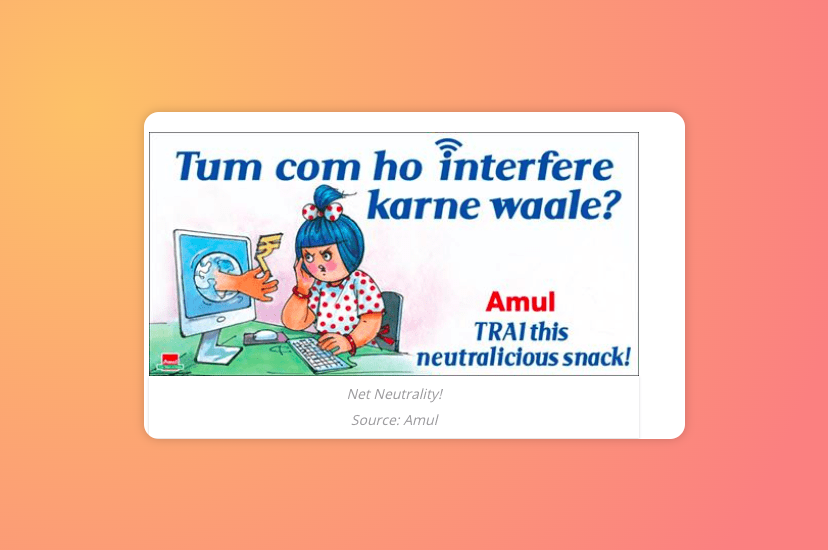
    Amul Example

    3. Create Kick-Ass Videos

    Measures for Video marketing content if crafted smartly can easily become viral marketing campaigns. Below is living proof of this. In 2016, Ixigo launched an innocent little content experiment. The experiment works really well as the case study for a successful and viral marketing example.

    This video hit 50 million views organically and sky-rocketed their app installs on both iOS and Android. The CTA to use the app on the Ixigo Facebook page drove app downloads too.

    Aashish Chopra, Ixigo’s star content marketer was responsible for this powerful strategy.
    Aashish was quoted saying”I prefer videos as it’s a more immersive experience. According to him, you should do the following if  you want to practice effective video marketing,
    1. Pick kick-ass topics
    2. Find a video from around the world, which comes close to what you want in terms of sensibility
    3. Get your video guys or film-making students (Keeps costs low. They are a passionate and skilled bunch! I love them) to shoot it.

    Youtube is also considered to be the best channel to create viral content for the brand by many content marketers.

    Vogue continues to be an industry expert in lifestyle and fashion, however, at the same time, it touches on social issues as well – such as women’s empowerment against violence.

    #VogueEmpower was one such initiative by the brand that represented women’s empowerment. The reason for its virality was on – the topic, and two – its powerful storytelling.

    4. Listicles Work Wonders

    Pick some of the successful viral content marketing campaign examples, and listicles easily make their way in all these campaigns. There are many reasons why listicles still work.

    1. The headlines are straightforward
    Headlines show the potential readers what the content is all about, thus setting the right expectations.

    2. They use beautiful images
    Images that are visually appealing to the readers. Look at the example below and you will understand what we are saying.

    Use images in content

    3. The content that they share is helpful.
    For example, a Buzzfeed listicle like the one below will be labeled as helpful by many working people who want to stay fit, but can’t because of their work schedules.
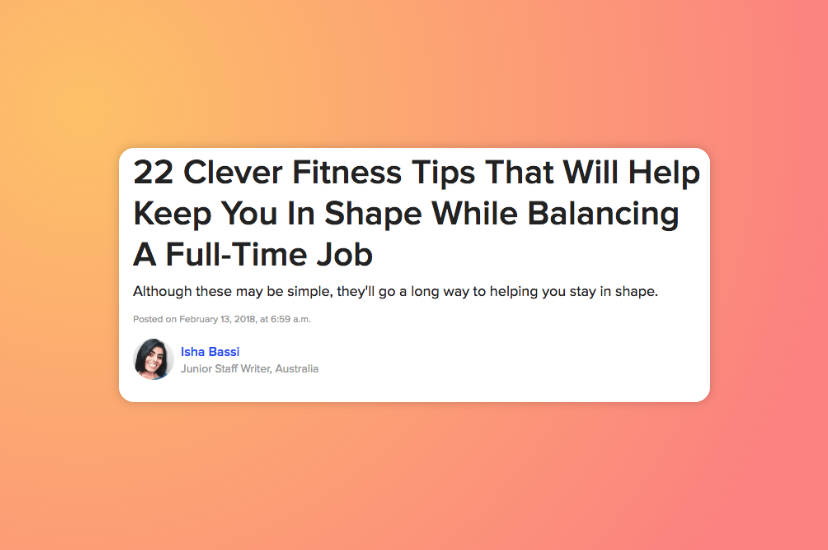
    Helpful content

    4. They appeal to human emotions like fear, amusement, joy, sadness, etc.

    For example in the post below, half the readers while just casually skimming through the post only would have felt the jitters.
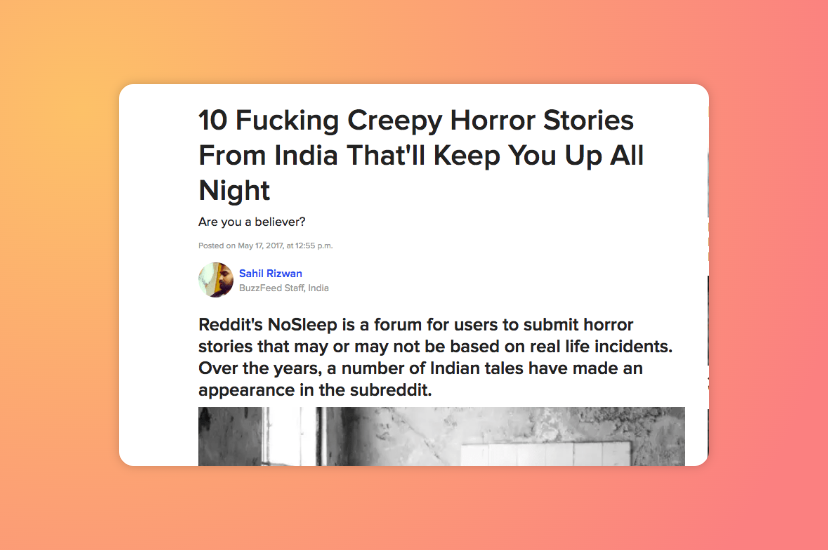
    emotional headings

    5. Focus on User-Generated Content

    User engagement is the perfect answer to –  how to create a successful viral marketing campaign.  User-generated content takes engagement beyond sharing and makes it interactive.

    An example of this is Oreo India’s #PlayWithOreo Campaign: This global social media campaign was rolled out by Cadbury Oreo in 2015 to inspire the imagination of Oreo Lovers in India with the world’s favorite cookie brand. Many interesting contests were carried out as a part of this playful social media campaign.

    Suggested Reading: 25+ Content Marketing Tools – Drive Growth For Your Business

    What’s more?

    All user-generated content was captured by a micro-site. For example, #DoodleIt was a doodle-making contest where Oreo lovers were invited to make doodle art using an Oreo sandwich cookie, click a picture of the doodle and share the image on Twitter or Facebook using the hashtag #DoodleIt.
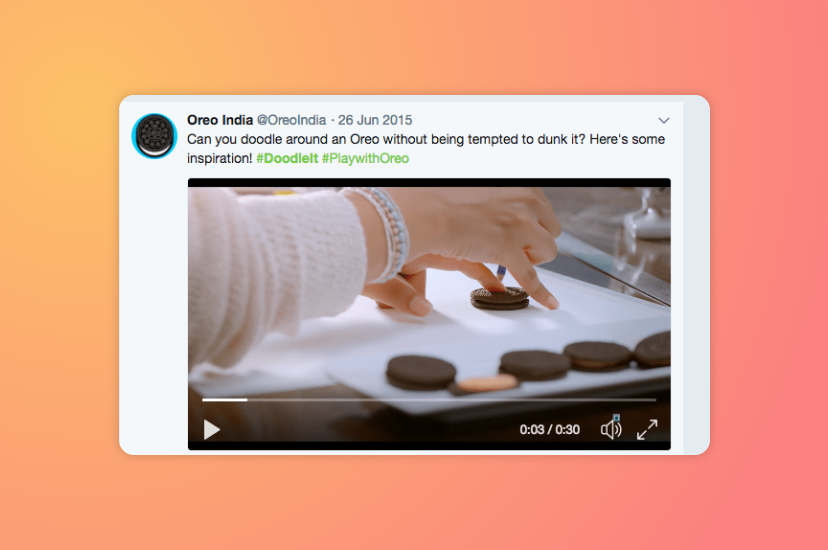
    Oreo India

    The Takeaway

    Not every piece of content that you create will immediately go viral. Viral marketing campaigns take some time to show results. It takes perpetual efforts, thorough analysis, and a good amount of patience to get to that level.

    Make proper use of content marketing resources and use AI in content marketing to have maximum impact. But, by taking note of these tips and implementing them in your content marketing strategies, you will certainly increase the chances of your content getting viral.

    We at Wittypen can help you get started with content that can go viral. Download the E-book below to get some great content delivered to your account.

  • 6 Best Content Marketing Examples For the Indian Audience

    6 Best Content Marketing Examples For the Indian Audience

    Content marketing is about crafting content that engages the readers while also generating their interest in the product or service offered by the business. A popular misconception about content marketing is that it is solely meant for B2C companies. But, it can yield astounding results for B2B companies as well.

    Any marketing strategy is incomplete without clever content marketing, which piques the viewer’s interest in the business.

    Here, we present a few successful content marketing examples of B2B companies.

    Top Successful B2B Content Marketing Examples

    1. Cleartax

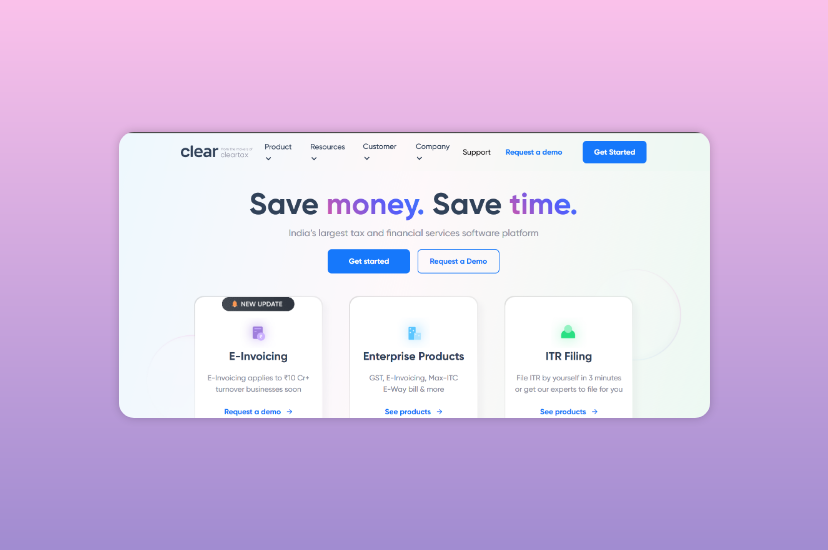
    If you are looking for successful B2B content marketing examples in the finance sector, Cleartax makes for a great case study. Instead of posting blogs that praise the services provided by them, Cleartax explains how the process of taxation works.

    Instead of simply stuffing its content with keywords, Cleartax supplements these primary keywords with secondary keywords, invariably increasing its chances to appear at the top of the search engine results page.

    ClearTax

    Cleartax runs a parallel social media campaign that alerts its followers about the deadlines and processes on Twitter by using hashtags like ‘#taxseason’ and ‘#incometax’ while also adding the link to an informative marketing blog.

    Visit Website

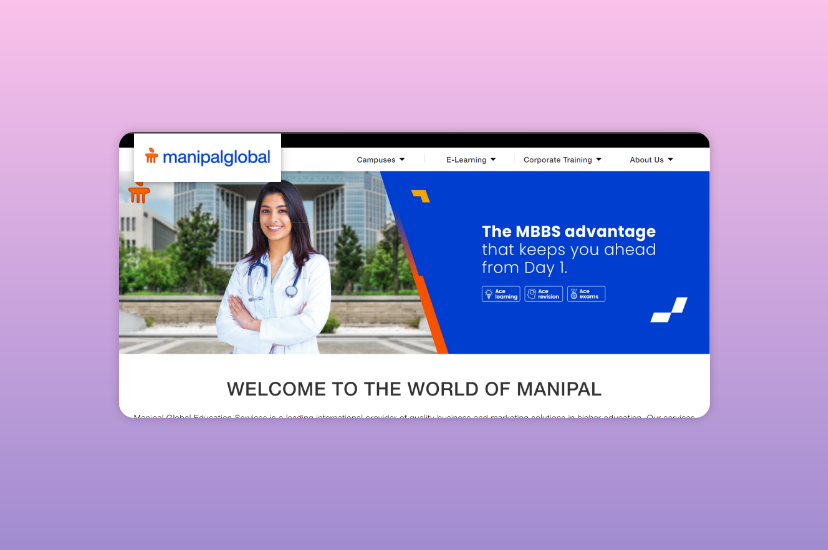
    2. Manipal Education

    Manipal Education provides a perfect example of merging the PR goals of a business with its content while generating customer engagement. They create content replete with student and faculty testimonials which boosts their public image while also attracting business.

    Manipal Global

    It is a good example of inbound marketing where one article persuades the reader to view more content generated by Manipal education. Inbound marketing also helps increase legitimacy and validity with the search engine.

    Visit Website

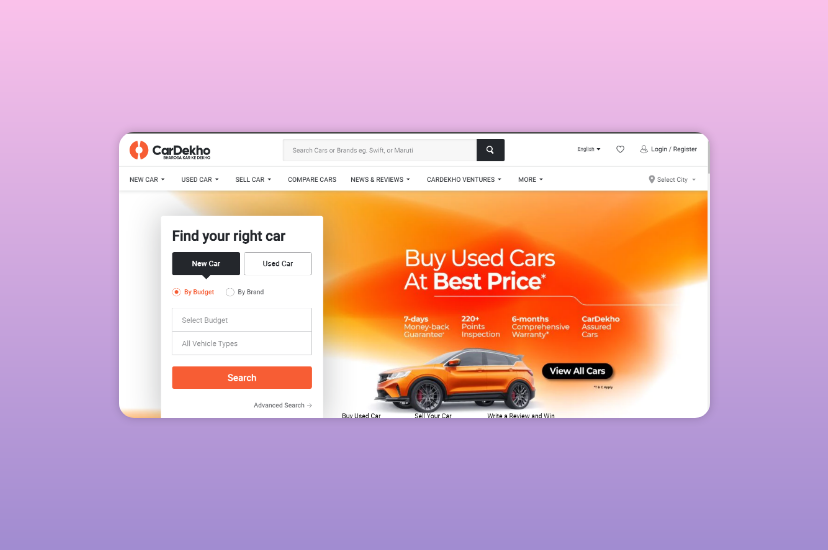
    3. CarDekho

    When it comes to a 360-degree content marketing campaign, CarDekho does it flawlessly. CarDekho supplements its marketing blogs with informative videos on its Youtube channel. While their videos don’t qualify as viral video marketing, they have a high sharing rate.

    CarDekho

    Their blog on the new Hyundai Venue presents a consolidated picture of all its relevant features and the video on their Youtube channel reinforces the information provided in the blog by offering a virtual tour thereby, successfully garnering over 1 million views in just 2 months.

    Visit Website

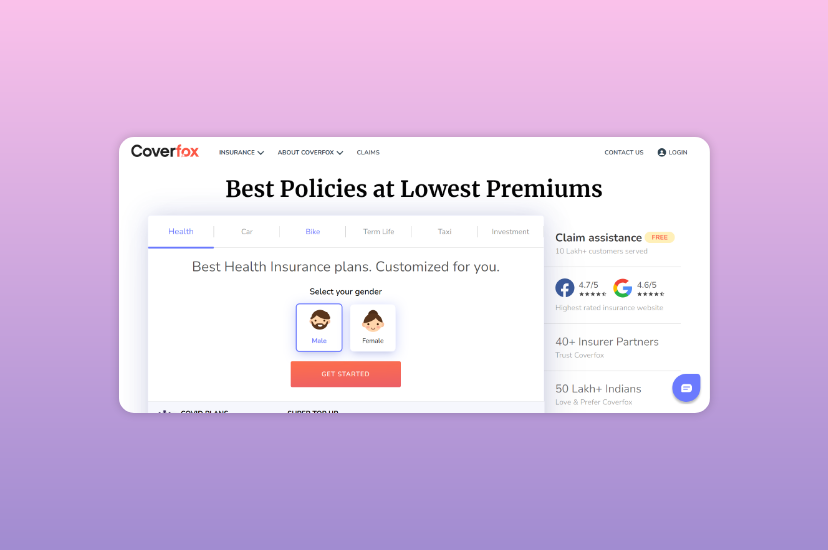
    4. Coverfox Insurance

    A key to successful B2B content marketing is choosing the appropriate platforms. No matter how engaging and persuasive your content is, all your efforts will be futile if they are not viewed by your target audience because they simply do not visit the platform where it is posted.

    CoverFox

    Coverfox Insurance uses this insight effectively by not limiting its content to its website. They are highly active on Linkedin, a platform no company with business sector clientele should ignore. They use Linkedin to not only promote their business through their organic content but also employ outbound marketing to increase their relevance,

    At the start of the monsoons, they published an article by ‘Livemint,’ which highlights the necessary insurance covers for the season. This generated results for Coverfox through lead generation and search engine queries.

    Visit Website

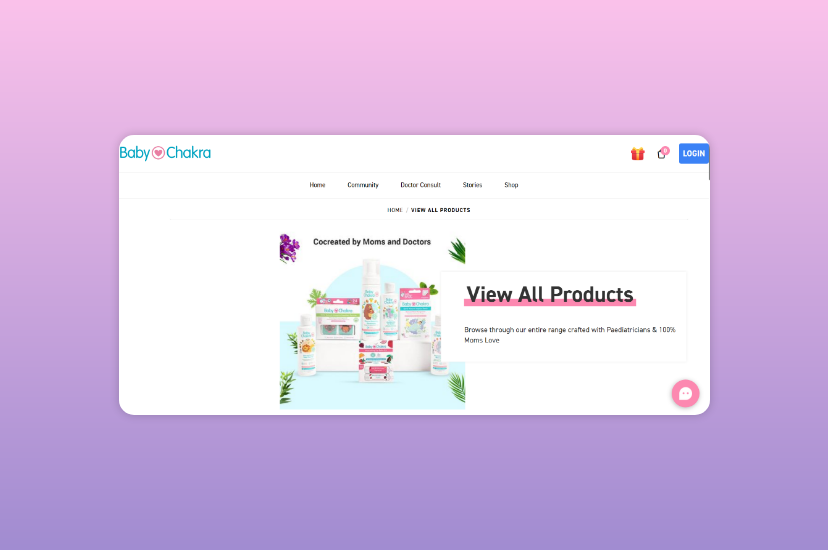
    5. Babychakra

    In an age of personalizing and micro-influencing, creating generic content is a liability to good content marketing strategies. Babychakra is a good content marketing example of providing personalized content while also posting user generated content to increase validity.

    Baby Chakra

    The website provides help and guidance to new parents on parenting. They have a wide array of content about parenting, and in order to maximize customer engagement, they ask the visitors whether they are at the pregnancy stage, baby stage, or toddler stage and accordingly serve the relevant content.

    They merge content with lead generation by asking the reader to sign-up once they are halfway through the article. Moreover, instead of a simple marketing blog format, they use the more recent and interesting listicle format to provide structure.

    Visit Website

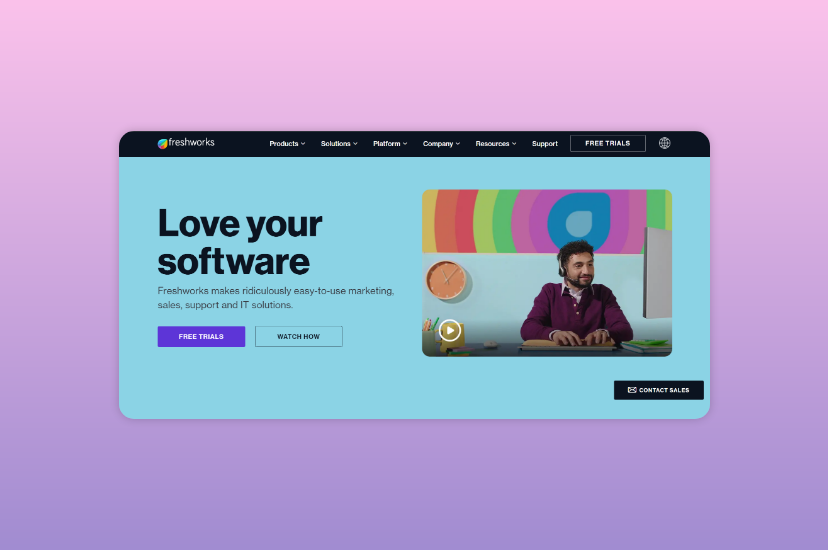
    6. Freshworks

    Freshworks uses high quality content which not only increases sales but also helps with image management. They use a mixture of organic content marketing and paid content marketing. While their articles and blogs are replete with information about their superior customer engagement cloud software solutions, they increase their reliability with a number of news articles.

    Freshworks

    News engines like Economic Times, Business World, etc. have captured the brand, which has increased their validity with not just customers but search engines too.

    When famous and well-known websites link to a fairly new website or business, the validity ranking of that business increases with search engines like Google and Bing, which increases its chances to appear at the top of the search engine results page. Freshworks actively combines its content strategy with social media marketing on Linkedin and Twitter.

    Visit Website

    Suggested Reading: 99+ Best Guest Posting Sites To Build Backlinks & Traffic

    Conclusion

    When it comes to successful content marketing, businesses have varying content needs depending on their specialization and often lack the required expertise. WittyPen brings businesses and writers together depending on the former’s content requirements and the latter’s competence at reasonable rates.

    It connects aspiring writers with businesses that seek their skills.

  • Must Know Content Marketing Stats For Marketers – WittyPen

    Must Know Content Marketing Stats For Marketers – WittyPen

    As harbingers of content marketing, we’ve brought to light the ever-increasing demand for it in our blog, ‘The Demand For Content Marketing in India‘. In this blog, we take the final journey to prove the same with some hard, meaningful, and unforgettable content marketing stats.

    Content marketing stats for every marketer
    Source – Google

    Stats to Show Content Marketing Rules the Roost

    1. 78% of consumers prefer to know about a brand through blogs and articles than ads.
    2. 70% of consumers are interested in building a relationship with brands that own custom content.
    3. Online users spend 20% of their time consuming content.68% of online users spend time reading up on brands they adore or find interesting.
    4. Here’s another! 57% of online users read content marketing pieces at least once a month.
    5. 80% of business-people are convinced that email marketing increases customer retention.
    6. Facebook users leave an imprint of 5 billion comments on Facebook each month.
    7. Facebook Live is a rapidly progressing tool, with 50% increased broadcasts compared to last year.
    8. 85% of consumers consider online reviews on par with personal recommendations.
    9. Positive reviews influence 73% of the consumers positively.
    10. Reviews are the second most powerful ranking parameter for Google.
    11. Jumping from a 3-star to a 5-star rating delivers businesses 25% more clicks.
    12. Blogging helps generate 13x more positive ROI.
    13. 50% of potential business is lost when consumers can’t find the information they are searching for.
    14. Although content marketing costs 62% lesser than conventional marketing approaches, it accounts for three times more leads.
    15. More than 81% of marketers discovered increased traffic by investing 6 hours per week in their social media content marketing.
    16. A recent study shows that for medium and large-sized businesses, content marketing costs 41% lesser per lead than paid advertising.

    These facts not only suggest consumers love content, but they also prove how brands are sitting on goldmines when it comes to content marketing.

    Here are some thought-provoking content marketing stats for 2019 that will forever change the way you look at content and its marketing implications:

    Social Media Content User Stats

    1. The global digital population is 4 billion, of which 3.7 billion are active mobile internet users and 3 billion, social media users.
    2. The latest research suggests that 91% of B2B businesses leverage content marketing to reach their customers.
    3. Added to this, 86% of marketers consider content marketing their core strategy.

    Content ROI Stats

    1. 72% of marketers think content marketing not only increases the engagement number, but it also generates more leads!
    2. Latest Twitter reports are a testament to the efficacy of content marketing on social media platforms.
    3. According to Twitter, 66% of businesses have found new leads.
    4. 69% of consumers have made actual purchases because of a tweet.
    5. 94% of consumers plan to make future purchases.

    Email Marketing Stats

    1. There exist 8 billion email accounts in the world.
    2. Research suggests email marketing has the best ROI compared to all other forms of communication.
    3. 74 trillion emails are sent every year in the world.
    4. While social media accounts for a 1.9% conversion rate, email marketing brags a whopping 6.05%.
    5. While 3.8 billion people use email, only 3.4 billion use social media.
    6. Email campaigns result in an ROI of 4400%.
    7. 60% of consumers subscribe to a brand’s email list for promotional messages compared to 20% of consumers who follow a brand on social media for the same reason.
    8. 44% of consumers depend on their email for a deal from a brand they know, whereas only 4% go to Facebook.
    9. 60% of consumers confirm that they have made a purchase as the result of emails against 12.5% on social media.

    Those who think email marketing is dead – well, think again!

    Video Marketing Stats

    1. 48% of marketers are prioritising YouTube video marketing.
    2. 46% are considering Facebook videos.
    3. 40% of active internet users trust videos more than other content types.
    4. CMI’s content marketing statistics reveal 72% of B2B businesses and 76% of B2C businesses prefer videos for their marketing pursuits.
    5. Another research suggests video marketing fetches 66% more leads per year.
    6. Cisco predicts that videos will account for 82% of the entire internet traffic

    Mobile Content Marketing Stats

    1. By the end this year, 52.2% of internet searches were forecasted to be via mobile.
    2. Mobile email open rates have increased by 30% compared to last year. And the number is growing!
    3. 79% of social media engagement happens on mobile.
    4. Mobile email open rates have grown 30% from last year.
    5. Mobile devices are used for nearly 40% of online transactions.
    6. 91% of users claim mobile content is very important to them.
    7. 39% of companies create a mobile responsive email version.
    8. 57% of users confess they won’t recommend a business with a poor mobile site.
    9. 48% of buyers say that they start product search from their phones.
    10. Digital marketing software industry touched more than $32B in 2018.
    11. Marketers invest 51% of their budget into mobile content ads.

    Content Marketing Stats in India

    1. Social media has dipped a good 30% compared to the previous years, thereby foraying a new generation of marketing that will heavily rely on content.
    2. Over 30% of 150 brand marketers hailing from myriad sectors such as FMCG, real estate, pharmaceuticals, retail, and automobile have confirmed content marketing to be their key strategy in days ahead.
    3. According to experts, 65% of marketers find it a challenge to produce quality content. This has translated into an uncountable number of content marketing companies in India mushroom.
    4. India is the second-largest online market, with 462 million users.
    5. In the future, digital media spends will be 24% of the total industry ad spends.
    6. Indian marketers are contemplating a 97% team expansion.
    7. Indian marketers are making for a 74% budget increase.

    Social Media Platforms and What Their Numbers Say

    If you’re still wondering which social media platform to use to drive your marketing campaigns, take a look at platform-wise stats and what they say about each platform to make better business decisions.

    Facebook Report

    1. Millennials and GenX users are most likely to share content on Facebook.
    2. 75% of Facebook users spend more than 20 minutes a day on Facebook.
    3. Desktop Facebook users spend an average of 2.5 seconds on each content piece.
    4. Facebook generates 8 billion daily video content views.
    5. 91.3% of users follow their favourite brands on Facebook.
    6. 48% of B2B customers make purchase decisions based on Facebook.
    7. Desktop Facebook users spend on an average of 2.5 seconds on each content piece.
    8. 43% of B2B businesses have found an actual client through Facebook.
    9. 100 million video hours are consumed per day on Facebook.
    10. Facebook videos have over ten times more reach than YouTube videos.

    Instagram Report

    1. Instagram boasts 500 million daily active users.
    2. 68% of Instagram users engage with their favorite brands on a regularly.
    3. 75% of Instagram users take actions based on Instagram posts.
    4. Brand engagement on Instagram is ten times higher than on Facebook and 84 times higher than Twitter.
    5. Instagram users upload 95 million photos every day.
    6. On average, every Instagram post gets 1261 likes.
    7. Video posts have the biggest overall engagement rate (38% higher than image posts).
    8. 90% of the top 100 brands in the world have an Instagram account.
    9. 58% of brands have created an Instagram story.

    Twitter Report

    1. 53% of users report purchases of products they discovered on Twitter.
    2. 81% of consumers confess that Twitter impacts their purchase decisions more than TV.
    3. 34% of marketers generate successful business leads because of Twitter.
    4. 92% of businesses tweet more than once a day.
    5. Tweets with videos are six times more likely to be retweeted than tweets with only photos.
    6. Companies using Twitter witness a 19% lift in customer satisfaction.
    7. Advertising cost-per-engagement per year for Twitter has decreased by 14%.
    8. Promoted tweets can spike offline sales by up to 29%.
    9. 41% of Twitter users made purchases after being exposed to an ad in the last 30 days.

    LinkedIn Report

    1. LinkedIn boasts 106 million active users every month.
    2. Users choose to spend 17 minutes every day.
    3. Posts on LinkedIn that include a link garner 200% increase in engagement.
    4. LinkedIn feed content receives about 9 billion impressions per week.
    5. LinkedIn drives more than 50% of social traffic to B2B business sites and is thought to be the most credible content source.
    6. LinkedIn posts with photos increase the comment rate by 98%.

    Suggested Reading: 25+ Content Marketing Tools – Drive Growth For Your Business

    B2B Content Marketing Statistics You Should Know

    1. 89% of B2B businesses employ content marketing.
    2. Content marketing helps generate three times more leads than paid search.
    3. 92% of marketers consider content as a business asset.
    4. Only 37% of marketers have an actual content marketing strategy.

    Conclusion

    After years of experimenting with every known marketing tool, the buck has stopped with content marketing. So much so, content marketing is proving to be the last resort for brands that want to be heard. Today, brands can’t move a step without employing content marketing in their run of the mill.

    When GE, the world’s alleged superpower of every imaginable electronics, noticed a drop in their locomotive businesses, they didn’t turn to management gurus or market experts. Surprisingly, they looked to content marketing to breathe life back into their businesses.

    This bravado led to a delightful Instagram campaign that offered Instagram influencers the chance to tour GE’s manufacturing facilities and take pictures. The campaign brought the brand 8 million views, 3 million reach, and 3000 new followers.

    Source:

    socialpilot.co/blog/social-media-statistics

    lyfemarketing.com/blog/why-is-content-marketing-important/

    getgist.com/content-marketing-statistics/

    optinmonster.com/content-marketing-statistics/

    optinmonster.com/email-marketing-vs-social-media-performance-2016-2019-statistics/

    99firms.com/blog/mobile-marketing-statistics/

    scatter.co.in/content-marketing-statistics-2018/

  • Content Marketing In India – Is It Worth The Hype?

    Content Marketing In India – Is It Worth The Hype?

    “According to more than 57% of marketers, content marketing has taken over social media marketing as India’s most popular strategy.”

    Isn’t it a fascinating fact?

    With every passing year, marketers and businesses around the world are witnessing a significant shift in focus towards content marketing because it plays a crucial role in attracting prospective customers to any business.

    Content marketing in India has exploded, and every brand is trying to come up with a better tactic to outdo its competition. 

    Why Is Content Marketing Crucial?

    Content marketing is a very effective way to promote any business by curating engaging material and stimulating the interest of the public in favor of a particular product, service, or brand.

    The strategic planning of valuable content to target relevant customers is very helpful in gaining huge profits and multiplying the business growth manifold.

    Content marketing helps brands build better connections with their customers. It is primarily done to provide useful information to the target audience to eventually capture their interest and earn profits.

    Businesses have applied exclusively amazing content marketing tactics to build their reputation and form trust amongst the people.

    Rise of Content Marketing in India

    Over the years, the demand for content marketing in India has increased significantly. Today, even small-scale start-ups are making it a priority for more lead conversions.

    In India, the fanatical era of content marketing started around the year 2017. Earlier, Indian brands would target their audience through product or service marketing. However, with the increasing scope of content marketing, these businesses began sharing informational content with the audience to help them realize the need for that particular product or service.

    Consequently, the public soon started to feel a void in their lives, and the approach to selling the products became easier for Indian brands.

    Content marketing helped brands generate high revenues. Since then, Indian brands never looked back, and there was an insane demand for content marketing strategies in India.

    Today, the demand for content marketing is increasing manifold amongst start-ups because it is cheaper than traditional marketing and provides higher ROI.

    71% of the marketers have agreed that traffic from influencer marketing (one of the kinds of content marketing) is of higher quality as compared to other marketing sources.

    How Are Start-Ups Coming with Phenomenal Content Marketing Plans?

    Content marketing is a creative art, and if used effectively, it can help in building life-long relationships with clients, in spite of having tons of competitors and challenges.

    Start-ups in India are using fabulous content based marketing strategies to achieve their goals quickly, within a short period.

    Here are some of the best content marketing strategies prevailing in India:

    Educating People

    Start-ups are hunting for trending issues or hot topics and coming up with compelling ideas to educate people about those issues and make them feel the need for that product or service.

    For instance, Indian skincare brands have benefited from the current pollution statistics, and have continuously been educating their audience about the harmful effects of pollutants on the skin.

    This, in turn, is helping industries like charcoal and sandalwood industry to earn as people have started feeling the need for these miraculous ingredients in their lives.

    When people started ignoring the ever famous “Fair & Lovely,” the brand launched its Charcoal Face Wash and Pollution Clean Up Face Wash.

    It educated the audience about the power of activated charcoal and its benefits in pulling out the harmful pollutants deep inside the skin and scripted a huge comeback story.

    Consistent Pushing

    Start-ups have started building their authenticity as a brand by producing quality content consistently on their blogs.

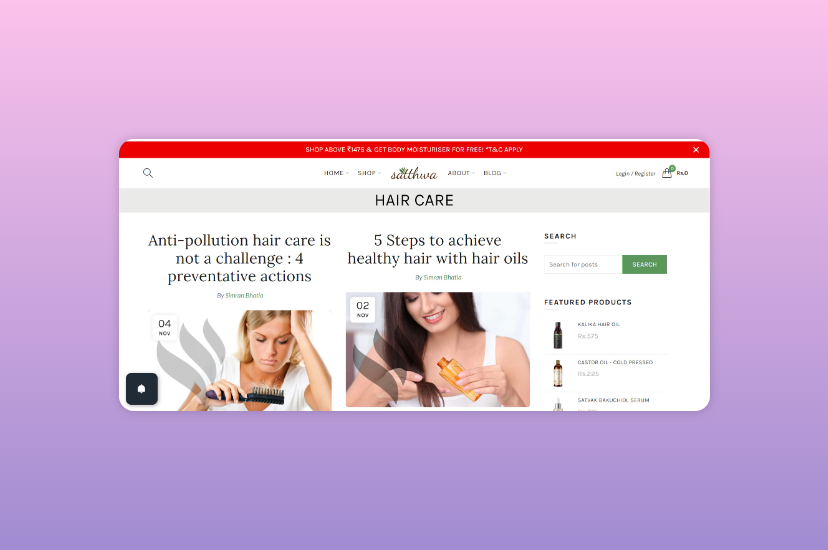
    For example, an Indian Hair Care brand called Satthwa published many informative blogs to educate the Indian audience about various hair problems and their solutions. The information helped people decide what they need to look for in their hair oils, masks, serums, etc.

    SatthwaWhen Satthwa launched its Good Night’s Blend Oil, it regularly posted content related to the impact of sound sleep on the personal as well as professional life of an individual. This, in turn, helped it to get several customers who felt the need for its product.

    Involvement of Influencers

    Many companies involve social media influencers to spread the word about them by either reviewing their product or by curating engaging content which tells the customers about them. Also, many of them do guest posting on other websites to target a similar audience.

    Several furniture start-ups spread the word about themselves amongst the audience, which likes to see DIYs or content related to home furnishing. Hence, Indian influencers are another critical content marketing tool for start-ups.

    As an example, KFC developed its reputation as one of the best global restaurant chain brands in India by targeting the young audience through Instagram influencers. Many bloggers and vloggers included KFC’s latest menu options and offer in their posts and vlogs. As a result, their Facebook page’s popularity grew from 6.2% to 93.8% and their sales substantially increased as well.

    Content Marketing Example

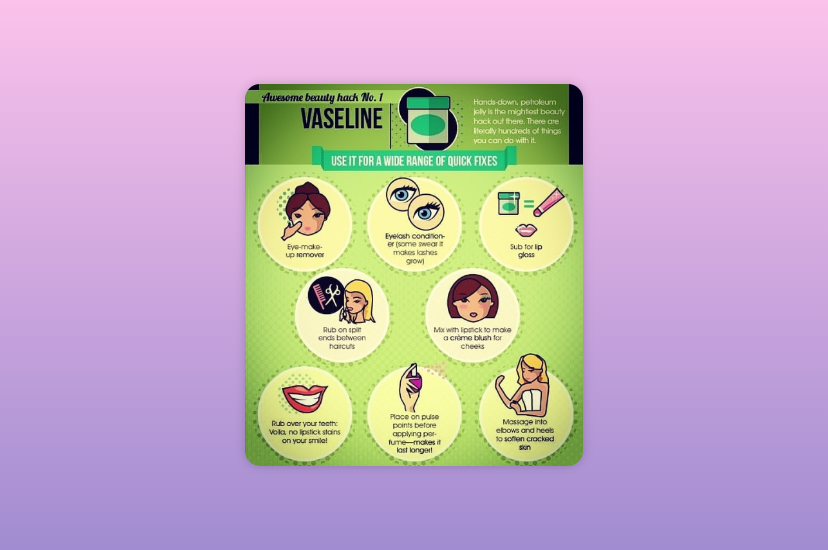
    Similarly, Vaseline increased awareness about the uses of their product and its needs by creating a “hacks” campaign on Instagram. During the campaign, influencers focused on sharing three to five Vaseline hacks they included in their daily routine. This created a perceptible engagement amongst their followers, and the sales increased visibly.

    What Does the Future of Content Marketing Look Like?

    As content marketing in India is growing remarkably, and the return on investment is totally worth it, there is no doubt that the future will be even better. Nowadays, businesses are growing rapidly by curating high-quality content in the form of blogs, case studies, website content, social media posts, newsletter, infographics, etc.

    However, the future has a lot more to witness. Let us have a look at the number of trends that are likely to dominate the upcoming content marketing era.

    Repurposing of long form text into different other forms

    The attention span of people has reduced drastically in the last few years. Also, people are more interested in looking at photos and videos rather than reading long blog posts and articles.

    Hence, the long form content, once published, can be easily re-purposed into various formats such as gifs, memes, videos, presentations, data visualization, and graphics.

    It’ll not only counter the decreasing attention span but also be helpful in marketing the long form of content across different channels.

    It is a matter of fact that people like video content better than text. Moreover, visual content helps convey the motive of the content way better. It quickly grabs the visitor’s attention, is easier and faster to process, and leads to better engagement.

    Hence, visual content will be a compelling content marketing strategy in the upcoming years. As a result, the audience will increase as people who don’t want to read will also engage with the content.

    Emerging Voice Assistants

    A paradigm shift has been noticed in Google search results and usage of the internet ever since various voice assistants like “Google,” “Siri,” “Cortana,” and “Alexa” emerged. Instead of typing their queries, people are asking Google to find a solution by giving voice instructions.

    As a result, the marketers will have to use keywords that are prominently spoken in natural language.

    For example, if you would want to know how to clean a stain from your favorite t-shirt instantly, you would type “cleaning t-shirt instantly.” On the other hand, with voice assistants, you would say, “how can I instantly remove a stain on my t-shirt?”.

    Therefore, with emerging voice assistants, the landscape of content marketing is likely to change a lot.

    Suggested Reading: 25+ Best WordPress SEO Checklist for 10x Traffic: Full Guidance

    Personalised storytelling

    Content addressing the general public gets much less engagement as compared to when it addresses “you” directly. People love reading content, which is written specifically for them.

    To bridge the gap between visitors and readers, it is crucial to give a personalized touch to the content.

    Also, people love to read stories. Hence, content marketers will have to inculcate storytelling into their pieces to grab the attention quickly. The attention span of the audience is reduced. Thus, visual stories will have a more significant impact.

    The Road Ahead

    Content marketing is regularly evolving and is yet to develop more to offer a better experience, generate more revenue, and build lifelong relationships.

    As content marketing is going to transform itself in the upcoming years, it will be a more significant challenge for marketers to make changes and take their start-ups forward, but it will be more opportunistic as well.

    Do numbers fascinate you? Will content marketing be as compelling in the future as it is now? If you have answered in affirmative to both these questions, do watch out for our next article in this series ‘101 Useful Content Marketing Stats’ which I’ll give you several numbers to ponder upon.

    One of the best ways to achieve your content marketing goals is also to outsource your content requirements to professional content writing services. They can save you a great deal of time and money while helping you achieve the best results. 

  • 7 Tips for Effective Fintech Content Marketing – Wittypen

    7 Tips for Effective Fintech Content Marketing – Wittypen

    The importance of content marketing has been well established as we transition into the coming years. While it primarily serves to engage with your audience across social channels, it also helps educate them, thus generating leads and resulting in better conversions. While content marketing is now the norm regardless of your domain, each demands its unique approach. 

    Financial Technology, or Fintech as it’s commonly referred to, is one such domain. Its content marketing needs are unique, simply because of the nature of the domain itself. Fintechs rely heavily on their audience’s trust, and they can only achieve this by educating them about their products and their benefits with the utmost transparency. If you’re a fintech or are planning on starting one, this article will give you eight key tips for successful fintech content marketing. 

    7 Best Fintech Content Marketing Tips That Drive Results

    1. Content Marketing Must Be Backed by a Content Strategy

    Every content marketing initiative must follow a content strategy. If you’re wondering how the two are different, here’s a quick roundup – content marketing includes blogs, guest posts, white papers, and reports, while a content strategy gives you a framework that sets goals and helps measure the efficacy of these marketing practices. Without a content strategy, content marketing would simply involve creating and publishing content, and hoping it brings in desirable results. 

    fintech content strategy

    On the other hand, a content strategy helps lay down a set of objectives and metrics that form the foundation of your content marketing efforts. Let’s take a look at Google Pay, a UPI-based payment app launched in India in September 2017.

    For instance, in its second year, the app saw a 3x growth to 67 million monthly active users. Let’s say for instance, that their target as per their marketing strategy was to reach about 50 million monthly active users in the same period. This objective would then form part of their strategy, thus laying down an objective for their content marketing efforts.

    The same works for every fintech – a content strategy is a must for fintech content marketing to be successful.

    2. Your Content Must Focus on Educating Your Audience

    Focus on educating your audience - Effective fintech content marketing

    Fintech can be a rather complicated domain for the average consumer to understand. The same goes for specific fintech offerings. The overarching goal of fintech content marketing must thus be to educate your audience about the benefits of your product or service and highlight the problems it solves. You must remember that the average consumer probably won’t understand the technology powering your product. On the contrary, their primary concern is knowing how it can make their financial operations easier while being safe. 

    Let’s take the example of Google Pay again. When the government at the centre banned the 500 and 1000 denominations, people found it rather difficult to always have cash in their wallets (as banks and ATMs were unable to meet the demand for money) This demonetisation is what formed the bedrock for the rise of cashless payments in India. 

    However, suppose Google Pay was advertised initially on the back of the technology behind UPI. In that case, the chances are that it wouldn’t have achieved the kind of initial success that it did. This is because the UPI system had already been launched a year earlier.

    Instead, their approach was to simply tell their audiences how their product would make it easier for them to safely make payments using their smartphones, and thus eliminate the need to carry cash. This, to put it in specific terms, was their value proposition. Add to this an enticing rewards program, and you have yourself a product that continues to grow steadily even three years later.

    The unsaid factor here is trust. Every fintech must get their consumers to trust them, and understandably so, especially since their usage relies on our money being safe. 

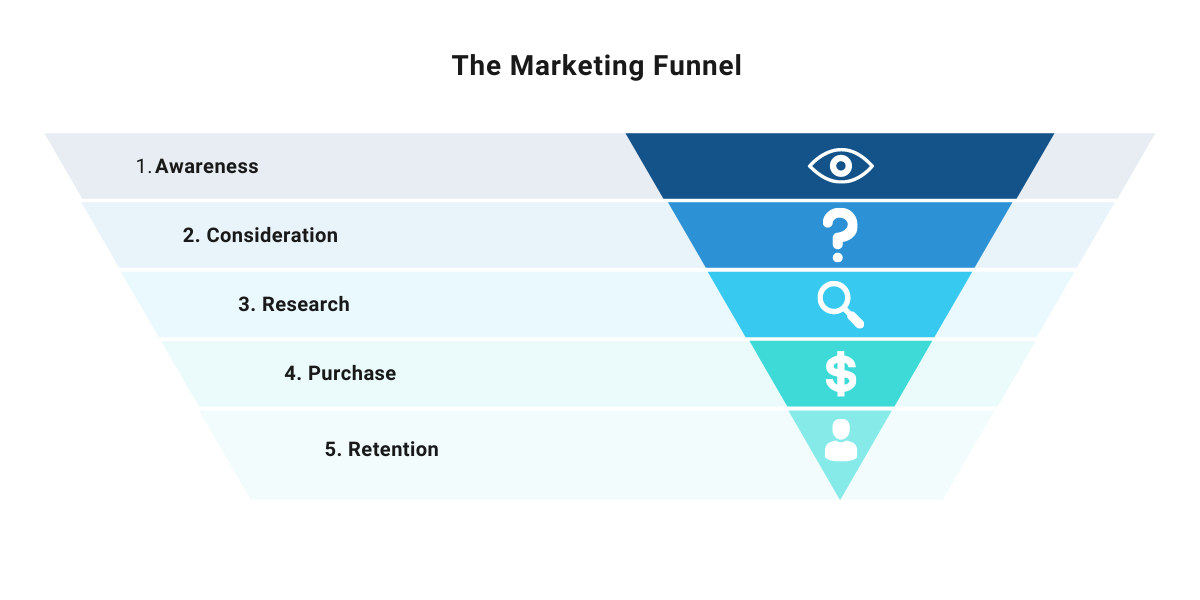
    3. Your Content Should Cater to Every Stage of the Marketing Funnel

    Given the nature of the domain and the technicalities that come with it, the buying cycle is longer than most others. In fact, it can take an average of three months to even a year to convert a lead into a customer, regardless of whether you’re business or customer-facing. 

    marketing funnel

    Additionally, given that success as a fintech relies heavily on gaining your audience’s trust, it’s pertinent that your approach to fintech content marketing is consistent while continuing to educate. This can only be achieved through consistently marketing your offering across all social channels, while also addressing any possible concerns your audiences may have.

    A simple example could be the safety of their money itself. As a content marketer, it’s your job to convince your audiences that their money will indeed be safe and that your product has a lot to offer them. 

    Going further down the funnel as well, your content marketing must be tailored to your buyer personas. Doing this can include highlighting your product’s benefits in light of its competition, to further convince potential leads. The same goes for the final stage of the funnel as well. 

    However, this isn’t the end of it. Customer retention will further rely on how well you continue to support existing users of your product. Addressing their pain points, highlighting how the product can be used to make transactions easier, and assuring them of consistent improvements to your software will play a huge role. 

    4. Engage Audiences Across All Social Channels

    Every social media platform presents its own potential leads. If you are to successfully establish yourself as a product that’s worth considering, you must consistently interact with audiences across all social channels as part of your fintech’s content marketing. Additionally, sharing all your content on your social media handles is essential as it broadens your footprint. 

    All throughout 2020, and even going ahead, video is poised to be one of the most effective content marketing tools. And this holds even truer for the fintech sector. You must utilize high-quality video content that explains your products and services to your audiences, more importantly, because the video is a lot more attractive than text-rich blogs.

    To make the process of handling your social media easier, you should look into a social media management tool to organize and schedule all your social content based on your content calendar. This will ensure consistency, which is key to building your authority on these platforms. 

    5. Hire Expert Content Writers to Create Your Content for You

    Every single day can be challenging when handling and growing your fintech. And now that content has been established as your best bet, you must ensure that the content you put out is authoritative, well-written, and comprehensive, to build yourself as a thought leader in your domain. 

    Sometimes, however, this is easier said than done. Smaller teams can often find it hard to handle the tech, logistics, and content all at the same time. This is where it’s wise to hire expert content writers who can create content for your fintech with your vision in mind. It takes a huge chunk of work off your plate and gives you more time to focus on improving your product. 

    6. Building Backlinks Will Greatly Help Build Your Authority

    Going ahead, generating backlinks is bound to be one of the best ways for you to build your authority online. Backlinks are absolutely crucial, as they lend credibility to your content. Remember, Google won’t see your content as credible unless people link to it and rely on it as part of theirs. These backlinks will also help increase your domain authority or rating over time, which goes a long way in getting your content onto that first page. 

    The first thing to do is to identify what kind of backlinks you’d like to achieve. These could be from authoritative websites in your domain or those that include your keyword in their anchor text. These are the websites your backlinking strategy should be aimed at. 

    Further, you must also create content that’s more likely to be linked. These could be original research, diagrams, infographics, and even list posts. When your content consists of these elements, it’s more likely to be linked, thus boosting your domain’s authority over time. 

    Additionally, email marketing is also a brilliant way to gain backlinks. If you want to find out how you can effectively use backlinks as a part of your content marketing strategy, check out our in-depth guide to building backlinks. 

    7. Create High-Quality Content That Ranks Higher on Search Engines

    Last but not least, creating high-quality content should always be your top priority. The best way to achieve this is by assuming a content gap in whichever topic you’re creating content on. By doing this, you automatically aim to be as comprehensive as possible. It also leads you to maintain a sense of consistency across all your content, thus reflecting your brand’s tone. 

    With Google’s algorithms constantly being updated and improved, the need for high-quality content is essential if you want it to be present on that lucrative first page of Google’s results. 

    Read More: 25+ Content Marketing Tools – Drive Growth For Your Business

    In Conclusion

    Fintechs find themselves in a unique position owing to the length of the buying cycle. The need to establish the truth is paramount, and even more so when you’re business-facing. The best way for you to establish this trust is through effective and consistent content marketing. We hope this guide helped you figure out what you should include in your fintech content marketing strategy. 

    At WittyPen, we strive to create high-quality content that helps scale your business. If you’re in the market for expert content writers in your domain that you can trust, check out our services here.  

    Until then, good luck with growing your fintech!