Category: Content Marketing

  • 20+ Foolproof eCommerce SEO Tips (With Expert Insights)

    20+ Foolproof eCommerce SEO Tips (With Expert Insights)

    At this age, without an online presence, it is significantly more challenging for brands to scale their growth. Online shopping is everyone’s new favorite pastime, and if your website is lacking in the SEO spectrum, many competitor websites have the chance to take away your sales numbers.

    Having a foolproof eCommerce SEO strategy is crucial for your website to rank higher in the SERPs and to help drive your sales through the roof. 

    To help you with your strategy, we’ve curated some of the best eCommerce SEO tips from skilled experts. In this blog, find 20+ eCommerce SEO tips to improve your website. 

    eCommerce SEO Tips From The Experts To Help You Rank Higher

    Learn how to spearhead your growth by implementing these eCommerce SEO tips into your websites.  

    1. Write Unique Product and Category Page Descriptions:

    Well-written descriptions make a good impression on your buyer. While drafting a product or category page description, make sure that you understand your target audience. Write in the language they respond most to. Also, use multiple adjectives, incorporate storytelling into your writing, and use bullet points to highlight features in your content to make it better.

    Here’s what Dan Gray, CEO of Vendry has to say: “Consider including details about the product manufacturing process, unique features, materials used, and other interesting information that will help your consumers make a buying decision.” 

    2. Perform On-Page SEO: 

    Practicing On-Page SEO is important to help the search engine understand your website content. Incorporate techniques like keeping your meta titles at a maximum of 60 characters and meta descriptions at a maximum of 160 characters. Also, include Header tags (H1, H2, H3, etc.) in the correct order wherever necessary. 

    Shivbhadrasinh Gohil, Co-founder & CMO at Meetanshi says: “The on-page optimization starts with keyword research. Choose the keywords with the right search intent based on the type of page. For example, cover transactional keywords on the product page, whereas considering the informational queries for the blog posts.”

    Building backlinks has never been an effortless task. One of the eCommerce SEO tips to build backlinks is using HARO (Help a Reporter Out) websites. Simply reverting to writer requests for expert quotes increases the chances of them using your quotes in their blog, and providing your website with a backlink. Another great tip for getting backlinks is by using guest posting websites.

    Apart from this, try sponsorships and PR methods. Also, monitor your brand mentions on different websites that aren’t linking back to your website. It’s a good idea to reach out to them and ask for a backlink. Shivbhadrasinh Gohil says: “In SEO, the quality and relevancy of backlinks are more important than the number.”

    4. Create More Categories:

    Creating multiple categories and subcategories is one of the most useful eCommerce SEO tips as they help with optimizing your website structure and also make it more user-friendly. The categories and subcategories should be divided after performing in-depth keyword research and the headings should be named in accordance with the long-tail keywords found.

    Peter Cole, SEO Manager at You The Creative says: “By performing in-depth keyword research and dividing categories into subcategories, I ranked the website within 6 months with the help of some basic backlinks that helped in boosting. Now the website is getting 10K+ Organic Traffic, according to Ahrefs.”

    5. Use Videos:

    Making videos is one of the most important eCommerce SEO tips. A video explaining how your product or service works is easier to understand and time-saving for the prospects. Videos also help in reaching out to audiences that prefer visual learning over reading. Adding videos to your website increases the chance of it being featured in a video-type Google Snippet.

    Rebecca Hey, Founder and CEO of Strategically says: “One of our biggest success stories is when we helped a fitness eCommerce client to hit 11,000 organic video views with zero spend on ads or promotion, taking them from no revenue to more than £1 million within a single year.”

    6. Ask For Customer Reviews: 

    Customer reviews help in building trust in your brand. Customer reviews are especially important for eCommerce websites as 98% of users believe that reviews are an essential factor to consider before making a buying decision. Reviews also increase the amount of content on your website which helps in providing Google with more information regarding what your website is about.

    Padmaja Santhanam, Partner & Growth Manager at FirstPrinciples Growth Advisory says: “By encouraging customers to leave reviews and displaying them prominently on your website, you can improve user engagement and boost your website’s credibility. Also, you can use reviews as a source of keyword-rich content that can help improve the website’s search engine rankings.”

    7. Create Static Pages For Filters: 

    Maria Harutyunyan, Co-Founder & Head of SEO at Loopex Digital says: “By crafting short, compelling category descriptions and gradually building out content, you can climb the ranks and get your business noticed. 

    For instance, Write short, 50-word category descriptions for all categories, let them grow for three months, then return and begin to develop the content for the pages that slowly gain impressions. You can go further by distributing links in a specific ratio: 70% to home pages, 25% to category pages, and 5% to product pages.”

    Additional eCommerce SEO Tips To Keep In Mind:

    8. Build A Proper Site Structure: 

    The clarity of your website architecture determines how easily Google can crawl through it. It is important to strategically structure your website using internal and external links as Googlebot uses them to navigate through your website for indexing. A proper site structure also provides a better user experience, which keeps bringing back prospects to your website.

    A well-structured site increases your overall website domain authority and helps rank your page higher. Optimizing sections of your website to get featured in Rich Snippets is another crucial aspect to consider. The picture below is how Rich Snippets appear on a Google SERP.

    An example of a Google rich snippet for the search "black dress"

    9. Practice Content Mapping: 

    Content mapping is simply the process of creating content with a specific purpose in mind. It is done to help navigate the users down the marketing funnel to convert them into buyers.

    A marketing funnel contains three stages of the buyer’s journey, namely:

    • Top of the Funnel (TOFU), or the awareness stage
    • Middle of the Funnel (MOFU), or the consideration stage
    • Bottom of the Funnel (BOFU), or the conversion stage

    In TOFU, you attract audiences to your page. In MOFU, you subtly convey how your brand can help them with their pain points. In BOFU, you tell them why your brand is the ideal solution for them. Including content for every stage of the buyer’s journey is necessary to convert leads into customers and is one of the essential eCommerce SEO tips.

    10. Make Your Website Mobile-Friendly: 

    Today, mobile-optimized websites are key. Most of your website users are using their phones to navigate through your website. Hence if your site isn’t mobile-friendly, you increase your chances of losing potential customers.

    Mobile-friendly UX is also an important factor for ranking. If you search for mobile-optimized websites in the Google search bar, the first result is a test to check if your website is mobile-optimized or not. 

    11. Focus on E-E-A-T: 

    Google’s E-E-A-T stands for Experience, Expertise, Authoritativeness, and Trustworthiness. It is a part of Google’s algorithm used to measure the quality of websites. E-E-A-T used to be just E-A-T till December 2022. The new ‘E’ for Experience was added to better assess results.

    This is what E-E-A-T basically means:

    • Experience: The author of the content should have experience in the niche they’re writing about. 
    • Expertise: Google values the effort, originality, talent, and accuracy of the content creator. 
    • Authoritativeness: It depends on the website’s credibility in the industry. 
    • Trust: It is developed by Google if your website fulfills all three criteria of Experience, Expertise, and Authoritativeness. 

    12. Keep Track Of Site Performance: 

    Keeping track of your site’s performance is one of the most important eCommerce SEO tips. It is the process of analyzing site statistics to identify issues and rectify them for a smoother user experience. A site audit can be done by using tools such as SEMRush, Ahrefs, and Moz Tools.

    A website audit includes checking your conversion rate, removing unavailable product links from indexing, analyzing On-Page and Technical SEO practices, checking for broken links, and improving website UX wherever necessary.

    13. Optimize Your Images For SEO: 

    eCommerce websites contain multiple images. Optimizing your images for search engines is important to reduce your page load speed and help Googlebot crawl your pages better.

    Use only relevant images on your website and write descriptive ALT texts with long-tail keywords to improve your website’s accessibility. Also, keep your image file name in relation to the image. Try using smaller images or reducing your image file size to improve your website’s load speed.

    14. Setup an Internal Linking Structure: 

    Internal linking is an important part of any eCommerce SEO strategy. Internal linking in eCommerce websites helps improve the site structure for the customers and Googlebot alike, as it facilitates easy navigation. 

    Internal linking in eCommerce websites helps attract customers to conversion landing pages or product pages which improve sales numbers. Internal linking is also beneficial for improving site visibility and credibility.

    15. Add an FAQ Section: 

    Creating FAQ pages to answer basic customer queries is a great way to enhance user experience. FAQs are also great for SEO as they are proven to accomplish one goal of helping the user – which is something Google’s algorithm appreciates. 

    FAQ sections should include questions that are relevant to the user. Make sure to answer the questions concisely in simple language, avoid jargon, and format the questions correctly to provide a smoother user experience. 

    16. Optimize For Voice Search: 

    Voice searches are incredibly common in today’s date. To optimize your website for voice searches, incorporate long-tail keywords in your content. Other than that, optimize your content for Google’s featured snippets as most of the voice search responses are taken straight from the featured snippets.

    Some ways to optimize your content for voice search are crafting your content in 40-50 words, using schema markup, avoiding fluff, and providing accurate information. The picture below shows what a featured snippet on Google looks like.

    An example of a Google featured snippet for the search "who won the SuperBowl 2023"

    17. Focus on Local SEO: 

    Focusing on Local SEO for your website is important to increase your local traffic. Optimizing increases the chances of your website showing up high on the SERP whenever someone makes a search including the terms “near me” or “in (city)”. 

    In order to improve your Local SEO, make sure all your information available online is up-to-date and accurate. Also, encourage local customer reviews and incorporate locally used keywords into your content.

    18. Improve Your Load Speed:

    Your site load speed is a factor both Google and users pay attention to. Having a higher load speed increases the chances of users abandoning your website for another one, which leads to an increase in your bounce rate. 

    To reduce your load time, compress your images, choose a good web host, and limit the clutter on your website. Page speed is a proven ranking factor, which makes it a crucial factor to focus on.

    19. Beware Of Duplicate Content: 

    Duplicate content is content that is present online in multiple places. Duplicate content results in a ranking war with between two important web pages, as Google gets confused about which page is more important to rank higher. 

    In order to eliminate duplicate content, make sure not to copy-paste any product descriptions, and instead write unique copy for all your products. 

     20. Optimize Your URL:

    A concise and easily readable URL is a good experience for both the user and the search engine. Adding keywords to your URL is a great practice to rank higher in the SERPs. Also, make sure that it is formatted correctly.

    For example, if you’re selling a television, instead of keeping the URL company.com/television-name-number/37as67sn87, keep the URL as company.com/electronics/television/name-number. It becomes much easier to read this way.

    Including broken links creates a negative experience for the user as they can’t find the content they were looking for. Broken links also create a negative experience for Googlebot as it uses links to navigate through your website. Hence, fixing broken links is a priority task to improve your SEO.

    You can find and fix these 404 errors by using tools such as Google Search Console and Sitechecker.

    22. Focus on UX:

    Let’s be honest. If your website design isn’t appealing enough to the user, they will not enjoy going through it. Providing a bad user experience is another reason why your site’s bounce rate increases, which lowers its credibility. 

    If the user is easily able to navigate through your website and find the products they want, it increases their engagement time with your website, which Google notices and rewards.

    23. Craft Unique Content:

    By craft unique content, we mean write content that is exclusive to your brand. Adding an ‘About Us’ section to your page educates users about the history of your company, and helps instill a sense of trust. 

    Also, writing blogs about the new updates in your company, new additions to your website, or new developments in your niche is a great way to engage audiences.

    24. Make Sure Your Website Is An HTTPS Website:

    In an eCommerce website, customers input their private information including their personal details and financial information to your website for making a purchase.

    Having an HTTPS website builds trust with the buyer as it ensures them that their data will be safe. Being an HTTPS website is also a ranking factor for Google. 

    25. Write For The Shoppers:

    Practicing SEO is important for your website to rank. However, at the end of the day, the website is used to sell products and services to human beings. Hence, it’s necessary to avoid bad SEO practices like keyword stuffing in your product descriptions. 

    Also, avoid writing fluff or using too unnatural language. Write your content in a way that directly connects with your target audience.

    26. Outsource For Your Content Needs:

    Content writing is a crucial part of any eCommerce website. Whether it be long-form content or short-form product descriptions, good-quality content is needed everywhere. It is difficult to equip your company with a content team, and that’s when you can choose to outsource your content needs with Wittypen.

    We provide top-notch eCommerce content writing services so that you can focus your energy on the bigger picture. Our vetted pool of writers is well-equipped with SEO knowledge and knows how to write for eCommerce brands to directly scale growth.
    FAQs

    1. What are some SEO strategies for a new eCommerce website?

    Some SEO strategies for a new eCommerce website include:

    • Implementing a proper site structure
    • Performing thorough keyword research
    • Building Backlinks 
    • Optimizing images and adding ALT text

    2. What are the top 5 SEO strategies?

    The Top 5 SEO strategies include:

    • Keyword research for using correct keywords
    • On-Page SEO optimization
    • Link Building in your website
    • Optimize for featured snippets
    • Properly structure your website

    3. How to do SEO for eCommerce products?

    SEO for eCommerce is performed by implementing strategies such as:

    • Writing unique product descriptions
    • Adding helpful FAQs
    • Creating pages with structured data
    • Reducing the page load speed

    4. How do I find keywords for eCommerce?

    Keywords for eCommerce websites can be found by using easily available and free keyword research tools such as SEMRush, Ubersuggest, and Wordstream. Keywords are gravely important for your eCommerce SEO strategy development.

    5. How to increase eCommerce sales with SEO?

    You can increase your eCommerce sales with SEO by implementing the following strategies:

    • Making your website Mobile-friendly
    • Practicing internal linking and building backlinks
    • Optimizing website architecture
    • Conducting thorough keyword research
  • 16+ Content Marketing Mistakes Holding Back Your Revenue

    16+ Content Marketing Mistakes Holding Back Your Revenue

    Perfectionism is a myth. Even the most successful content marketers make mistakes sometimes. 

    Some marketers make the mistake of being too focused on SEO, and some don’t focus on it enough. Other marketers fail to include Call-To-Actions in their content, and many aren’t aware of how to use content creation to convert leads into customers.

    If you’re new to content marketing or are simply struggling to perform well at it, you will probably find solace in this blog. There’s no judgment here. Making mistakes and learning from them is a part of growing and achieving in this highly competitive field. 

    16+ Common Content Marketing Mistakes You’re Probably Making

    We’re sure some of these points haven’t even crossed your mind. Read along to find 16+ common content marketing mistakes marketers make, and learn how to rectify them to scale your growth.

    1. Dependence On Artificial Intelligence

    AI writing tools are mainstream for a reason, and honestly not using them in today’s date is a content marketing mistake. They produce good quality, fast, and cost-friendly content. However, they’re not up to the mark for every aspect of content marketing.

    AI writing tools are great for performing daily tasks like creating copy and captions for social media or generating blog briefs. Yet, long-form AI written content often comes out as mechanical and is not the most enjoyable content to read. This is where a human mind is necessary.

    Humans have the ability to come up with fresh ideas that result in a brand standing out of the crowd. Overly depending on AI writing tools limit your creativity as a marketer, as AI only writes on the information already available on the internet. To be unique in your field, you need to utilize human brain power.

    2. Not Writing For Your Target Audience

    Not writing content in the language of your target audience is among one of the biggest content marketing mistakes. It is important for your audience to feel understood by your brand. If your content isn’t relatable or helpful enough for them, they will not think twice before bidding adieu to your website. 

    Writing for the wrong audience sidetracks your brand in two ways:

    1. Your sales numbers go down.
    2. Your site’s bounce rate increases and its credibility goes downhill.

    The first step towards writing for your target audience is understanding them. If theoretical knowledge isn’t working out for you, reach out to some members of your target audience and ask them to help you understand their pain points. Learn more about how to write for your target audience and how to make buyer personas here.

    3. Figuring Out Distribution On D-Day

    Thinking that your work is done after publishing your content is a content marketing mistake. Distribution and promotion are the key factors that help your content reach your target audience. Start practicing methods like 80/20: Spend 20% of your time writing your content, and spend the other 80% promoting it.

    Other than that, use your social media accounts, tag multiple people and brands, reach out to other marketers, and use guest posting websites to build your outreach program. Promotion of your content is right there at the top with producing good quality content.

    4. Failing To Measure Content Marketing ROI

    Not measuring your content marketing ROI is a grave content marketing mistake. The value of ROI is simply the percentage of the revenue you gained in comparison to the investment you made toward your content marketing. The formula to calculate it is (return-investment / investment) * 100.

    For example, if you invest $10,000 in your content marketing and are getting $12,000 in return, your content marketing ROI is (12,000-10,000 / 10,000) * 100 = 20%. Along with this, there are a few metrics that you shouldn’t fail to consider.

    SEO Metrics like Organic Click-Through Rate, Backlinks, Keyword Rankings, and Domain Authority are measured using multiple SEO tools available in the market. PPC Metrics like Conversion Rate and Impression Rate are important to consider as they are direct indicators of how many users are converting to customers and are actually seeing your ads.

    5. Not Scaling The Engine At The Right Time

    We understand that content marketing is not a cup of tea. With the hassle of looking for expert minds and the cost of retaining them, it’s difficult to hire writers in-house. The moment a team has the basics figured out, find a content partner like Wittypen to scale your content engine.

    We help you focus on the larger picture by taking care of your content writing needs. We have achieved this time and again with the likes of Freshworks, MoEngage, InVideo, and Meesho among many others. Because we’re well-equipped with highly-skilled SEO content writers and have over 1000 freelance writers working with us, we can execute at scale.

    If content writing is one of your pain points, and you’re looking for an easy solution for your content needs, we’re the choice to go with.

    6. Not Refreshing Your Older Content

    Old is gold. Don’t make a simple content marketing mistake by consistently pouring all your energy into creating new content. Instead, choose to refresh. Content refresh is simply a method of updating existing content on your website to keep it fresh and relevant with time, while also aiming to drastically improve its quality. 

    During the content refresh process, add better keywords, and format the article properly to improve its SEO. Also, fill up the article with more information to educate the readers better and make the content more useful for them. Here’s a case study on content refresh you shouldn’t miss out on.

    Identifying content refresh opportunities through a thorough content audit is an easy way to find old articles on your website that require just a touch of salt. 

    7. Limiting Yourself To One Content Type

    Researching for a content piece takes up a lot of time, energy, and effort for the content writing team. It would be a big content marketing mistake to let all that hard work get utilized just for a blog post. It’s a smart idea to repurpose the already researched content and organize the data into several content formats like social media posts, podcasts, guides, videos, infographics, webinars, and newsletters.

    Repurposing helps you diversify your content types over several platforms and increase your online presence. Due to its timeless nature, creating more evergreen content makes repurposing even easier.

    8. Lacking A Foolproof Content Marketing Strategy

    A content marketing strategy with plot holes results in multiple content marketing mistakes.

    A foolproof strategy that beats the game includes everything from establishing your intent to content auditing and monitoring. All the steps in a strategy are connected with each other through a great amount of well-thought-out planning – which is the most crucial element to get right. 

    Compromising on research is not an option, and neither is doubt about your marketing goals. If you’re from a B2B domain, learn how to build a foolproof content marketing strategy here. If you’re from other domains, read here.

    9. Only Being Friends With Search Engines

    It is a content marketing mistake to think SEO is all content marketing is about. 

    Yes, SEO practices are an extremely important part of content marketing as they help your website rank on SERPs. However, SEO isn’t the only factor to consider anymore. Google has developed its algorithm and introduced E-E-A-T. 

    Google’s E-E-A-T stands for Experience, Expertise, Authoritativeness, and Trustworthiness. Along with paying attention to key SEO practices like strategic use of keywords and internal linking, Google also pays attention to your experience on the subject, expertise on the topic, the authority in your voice, and the trustworthiness of your information.

    10. Neglecting The Content Marketing Funnel

    Model Of A Content Marketing Funnel Wittypen

    The content marketing funnel is a model created by marketers to represent the three stages of a buyer’s journey with your brand. The three stages namely are:

    1. Top of the Funnel (TOFU), or the awareness stage
    2. Middle of the Funnel (MOFU), or the consideration stage
    3. Bottom of the Funnel (BOFU), or the conversion stage

    Content types at each stage of the funnel differ and are created while keeping only one goal in mind – converting leads into customers. Neglecting such an important concept is a content marketing mistake.

    If you produce too much TOFU content, the leads will remain leads and will not travel down the funnel enough to convert into customers. If you produce too much BOFU content, you might get a few customers but will fail to attract a large audience to your website. 

    This is why a balance between content distribution according to the stages of the content marketing funnel is necessary.

    11. Being Too Salesy

    Choosing to hard sell is a content marketing mistake.

    Users visit your website and read your blog to educate themselves about a problem they’re facing. If during a time of distress, you lean towards practicing in-the-face self-promotion, readers will not find your article amusing enough and leave your website in a second.

    The key is to let them know how you can help them, subtly. Focus on making your content helpful instead of selling your product. Trust the process. If the reader is impressed with your article, they will keep you in mind.

    12. Avoiding The Risk-Factor

    Playing safe is the ideal choice. However, it’s a content marketing mistake to always play it safe. It doesn’t let you innovate or be unique and keeps you in the pool of mediocrity with the rest of your competitors. Content marketing is a highly competitive field, and it’s important to bring something different to the table in order to get ahead of the competition.

    It’s smart to take calculated risks time and again to scale quicker. The methods that work for other companies are not necessarily the best choice for your brand. Some of the best content marketing tactics are discovered after implementing unthinkable strategies. Pave your own way in the industry with a game of trial and error. 

    And remember, don’t keep asking yourself what if it doesn’t work. Ask yourself, what if it does?

    13. Not Taking Any Action On Call-To-Actions (CTAs)

    Call-To-Actions are designs created by marketers that urge the target audience to take an action. They’re usually presented as links that directly lead to sales web pages. CTAs are known to improve your conversion rates, and not incorporating them in your strategy is a big content marketing mistake.

    Strategically positioning 2-3 CTAs in your blog posts will direct readers to your conversion landing pages and educate them about the products and services of your brand. Using catchy words and bright colors in your design are some of the ways in which you can make your CTA more attractive.

    Some examples of CTAs are simply linking sales links to words like “Buy Now”, “Download”, or “Subscribe Today” after a relevant paragraph. Have a look at our own CTA down below, and click on it if you’re looking for impeccable content writing services.

    14. Compromising On Content Quality

    Choosing quantity over quality is a content marketing mistake. Quality content is what drives sales and scales growth.

    Writing helpful content that addresses the target audience’s pain points and educates users about how to solve their problems is the core of content marketing. Make sure to use an authoritative tone, create catchy headlines, and write engagingly. Don’t write solely for SEO. Readers can identify easily when the content is written only for the purpose of ranking. 

    It’s also important to not create content just for the sake of creating content. Give efforts in selecting your topics and writing quality content. It is okay to produce less than the target content in a month if it ensures that the published content is well-written and educates the users.

    15. Scrolling Past Social Media

    Social Media is a raging phenomenon in today’s world. Every brand is focused on creating TikTok videos and Instagram Reels as a part of its content strategy. However, what most people don’t understand is, 30 seconds videos are not a part of content marketing.

    Actual content marketing on social media platforms like LinkedIn, Facebook, and Instagram is writing long-form content about educating users about their brand’s niche. Text posts, research posts, and carousel posts are some content types that receive high interactions on social media platforms. Plan a different content strategy altogether for your social media.

    Staying active on social media is a great way to grow your brand and reach a wider audience. It also allows your brand to directly reach out to customers about any issues or queries they may have.

    16. Ignoring Technical SEO

    Technical SEO is a major part of content marketing. It’s also a difficult part to get right. The purpose of practicing Technical SEO is to make your website crawlable and indexable by Google bot. Doing it correctly ensures that your website’s credibility remains high.

    Here are a few Technical SEO practices you should incorporate into your strategy:

    • Make sure your website URL exists in only one format for the users and Google bot to read. Also, use https instead of http.
    • Improve your page load speed.
    • Prioritize making your website mobile-friendly.
    • Use structured data in the form of tables to help the chances of getting featured in a google snippet.
    • Conduct frequent SEO audits and fix issues.

    17. Ample Words But No Media

    Use pictures! Everybody loves a visual component. 

    While adding pictures, make sure to add an alt text to every picture to stay in accordance with SEO. Also, avoid using high-resolution images as they are known to increase your website’s load time.

    However, visual content doesn’t just mean adding pictures to your blog post. Make how-to videos on YouTube, create product demos, and host webinars. Creating visual content also helps in attracting visual learners towards your brand, instead of just in-depth content readers.

    18. Not Utilizing The Power Of Storytelling

    Ever since we were children, one thing that has connected us to the outside world – whether real or fictional, is storytelling. Incorporating storytelling into your content is a great way to make readers feel at home on your website.

    Storytelling in content marketing is useful for building a connection with your audience, breaking down complex topics into simpler fragments for easier understanding, and helping shape thoughts and ideas. 

    Storytelling is not a natural talent, but a skill you need to master. Well-written content will always sell. Storytelling is a beneficial addition to your content strategy, and not incorporating it is a big content marketing mistake.

    FAQs

    1. What not to do in content marketing?

    Here are some content marketing mistakes you should avoid practicing: 

    • Not knowing your target audience or writing for them
    • Not knowing your long-term goals and intent
    • Choosing quantity over quality of content
    • Not practicing content distribution

    2. What are the common social media content marketing mistakes?

    Some common social media content marketing mistakes include

    • Not knowing your target audience or creating content specifically for them
    • Not tagging enough accounts
    • Not taking risks with your content
    • Not following trends.

    3. What are some common beginner content marketing mistakes?

    Some common beginner content marketing mistakes are: 

    • Not building a foolproof content marketing strategy
    • Not defining your target audience or creating content specifically for them
    • Not accounting for SEO
    • Not performing proper keyword research.

    4. What is the biggest challenge in content marketing?

    Some biggest challenges in content marketing include:

    • Generating good quality content consistently
    • Understanding your target audience
    • Creating a foolproof content marketing strategy
    • Choosing the right channel for the distribution of your content
  • 5 Best Digital Marketing Examples To Get Inspiration

    5 Best Digital Marketing Examples To Get Inspiration

    Every brand, at some point, must discover innovative strategies to engage with its audience, and utilizing marketing campaigns is an effective approach. To enhance the efficiency of your campaigns, it’s beneficial to draw inspiration from successful digital marketing examples.

    The landscape of marketing campaigns has transformed significantly in the digital era. Mere advertisements or email blasts are no longer sufficient in the age of internet and social media.

    Furthermore, the global market for digital advertising and online marketing is projected to reach $786 billion by 2026, indicating a highly competitive environment both among brands and for capturing audience attention.

    To compete with the best, it’s crucial to employ strategic measures and use the most effective tools available to make a significant impact on your messaging.

    What are Digital Marketing Campaigns?

    Digital marketing campaigns consist of a coordinated set of online marketing activities—such as advertisements, blogs, emails, or social media posts—targeted towards achieving a specific objective.

    Depending on your goals, these campaigns can incorporate multiple promotional tactics to expand your brand’s presence, whether it’s to increase website traffic, enhance conversion rates, or generate leads.

    Digital campaigns often offer cost advantages over traditional marketing, allowing for the use of low-cost or free platforms like social media. As demonstrated by various online marketing examples, these campaigns also enable a more personalized customer experience, allow for real-time feedback, and provide opportunities to refine strategies dynamically.

    Effective campaign management requires a well-structured plan.

    Top 5 Digital Marketing Examples to Inspire Your Next

    Your digital marketing campaign needs to be dynamic to captivate customers, generate brand awareness, and create a lasting impression. Rifling for inspiration? Here are our top digital marketing examples campaigns and brands that did all that and more: 

    1. Spotify Wrapped

    We obviously had to start with one of the best digital marketing examples of recent times. 

    spotify

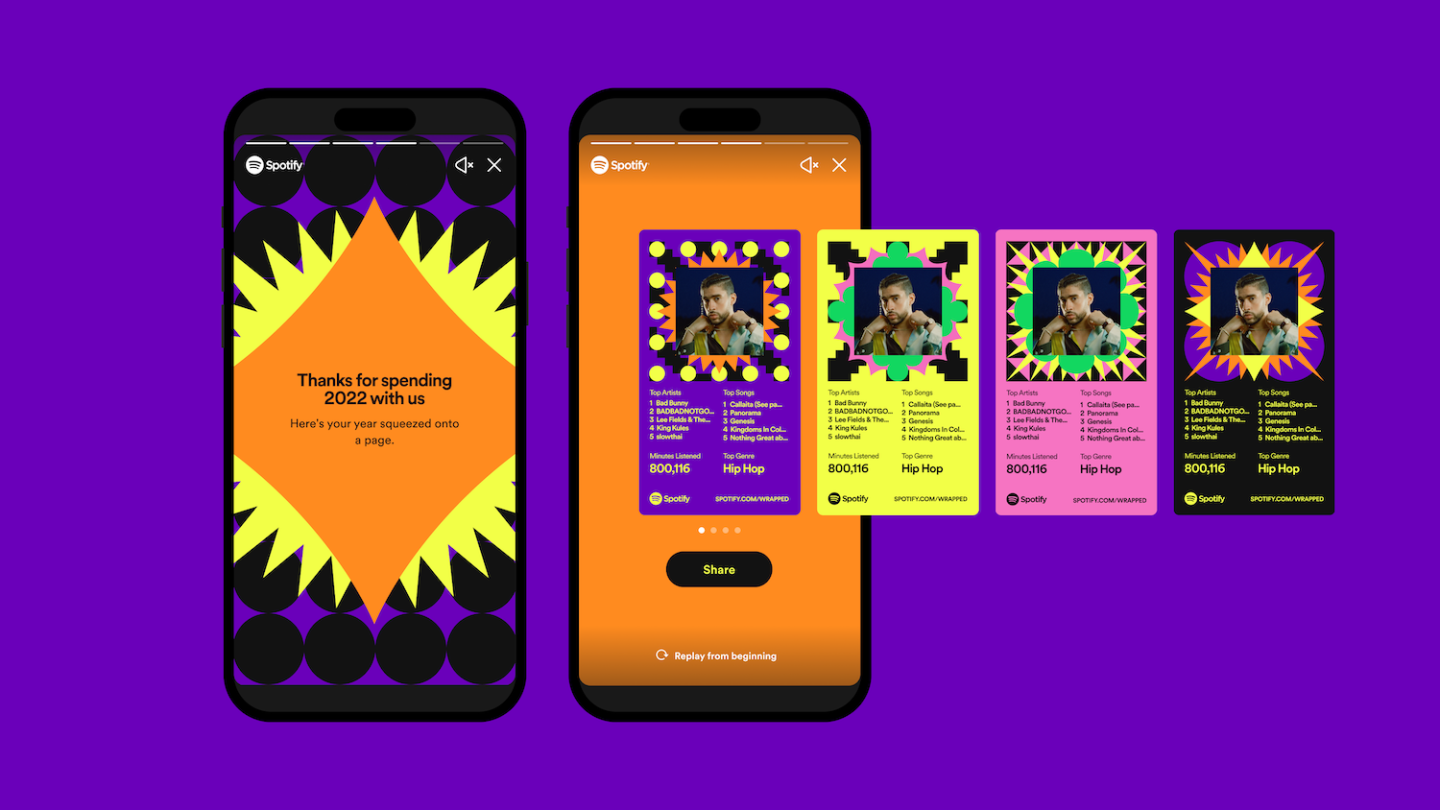
    Incepted in 2016, Spotify analyzes data at the end of the year to determine who played which songs and what artists, genres, and podcasts were most popular with its users.

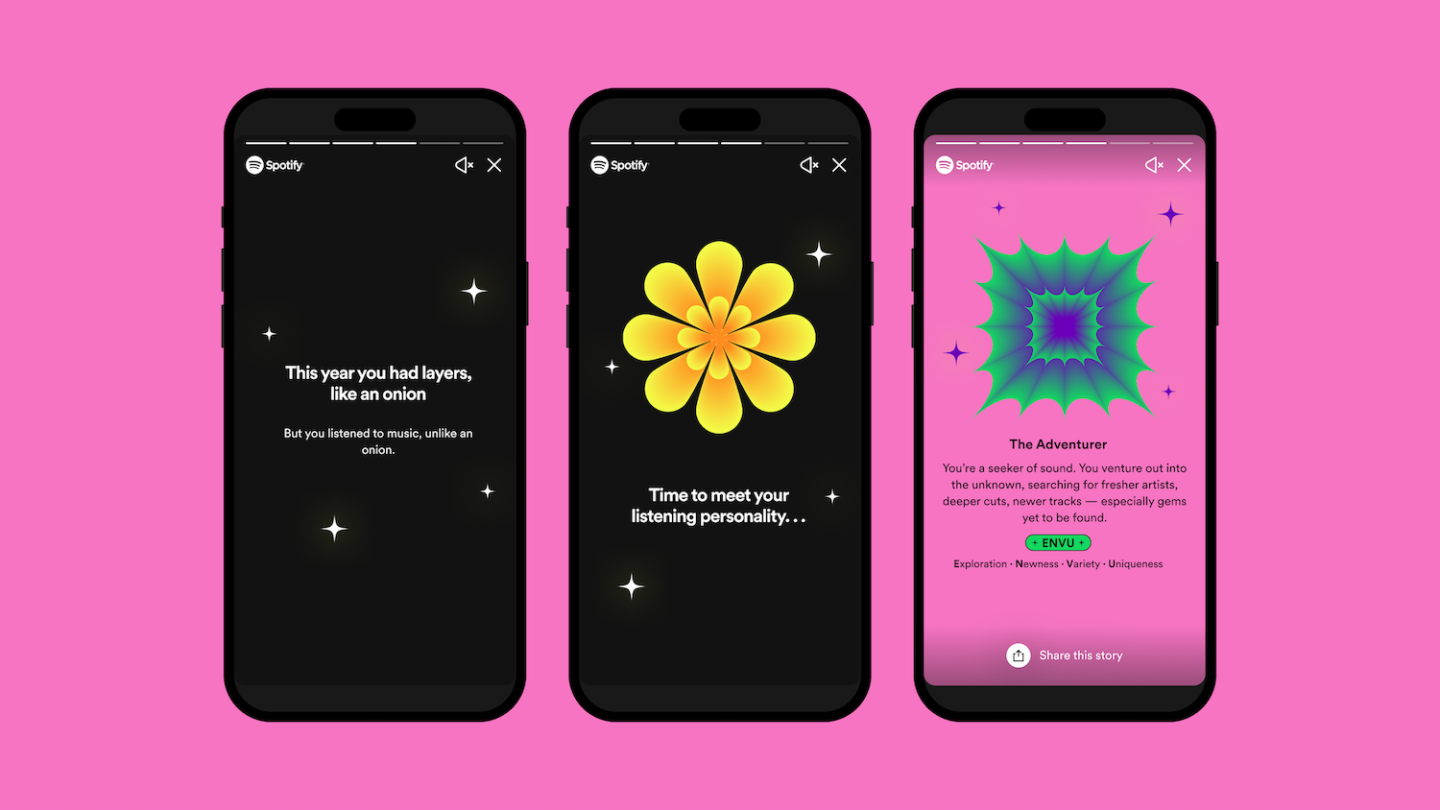
    It then displays this data through aesthetically pleasing Spotify Wrapped sharecards, which you’ll find reposted all over Instagram, Twitter, and other social platforms. Over the years, new elements have been added to Wrapped, such as ‘audio auras,’ ‘lesser-known genres,’ ‘listening personalities,’ etc. 

    spotify

    What Spotify Wrapped Does Well 

    • Spotify uses the data it already has for generating FOMO, or the fear of missing out. Since Wrapped is all about one’s personal listening preferences, music choices, and year in review, users are bound to compare (and even feel competitive about) who listened to the most tracks, had the best music taste, etc. Spotify is essentially harnessing this to increase the time users spend on the platform. 
    • The number of users accessing Wrapped has increased 4x over the years, thanks to the immersive, detailed stats, paired with visually appealing graphics, which can be reposted anywhere instantly through the ‘Share this Story’ CTA. Let’s not forget the memes—a true reflection of the virality of the campaign across the internet. 
    • Everyone knows Spotify Wrapped will be out in December. Annual campaigns, especially year-end ones like these, stir users’ expectations, creating a sense of ritual and generating tons of hype around the theme. Although the format stays the same, the excitement around Wrapped only grows year by year. Plus, Spotify jacks up campaign excitement by adding more features/content yearly and increasing options to share them, like ‘Wrapped Blend,’ which lets users compare their data. 
    • Spotify took note of TikTok’s growing popularity and incorporated phrases used by and on the Gen-Z-preferred platform into its share cards. Notable examples include “You always understood the assignment,” “In a year like 2021, even your music gets a vibe check,” “You deserve a playlist as long as your skincare routine,” etc. 

    An analysis of the Spotify Wrapped 2022 edition through Sprout’s social listening tool found the below stats:

    Need we say more?

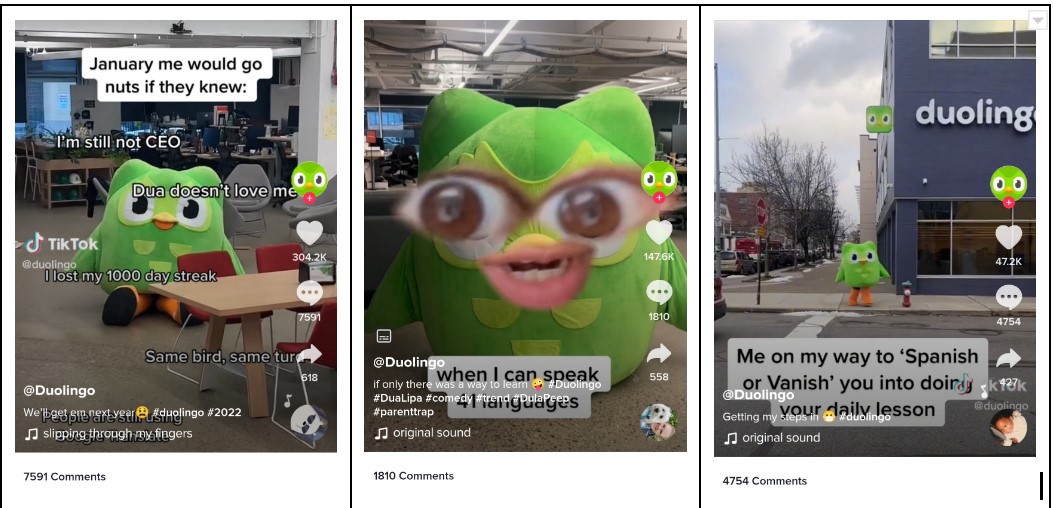
    2. Duolingo’s TikTok Campaign with Duo the Owl

    duolingo

    Duolingo, the language learning app, became massively popular online after TikToks featuring their mascot Duo the owl started going viral in September 2021. The TikTok campaign is an extension of meme trends poking fun at the antics of ‘unhinged,’ passive-aggressive Duo going about its day and creating chaos. One of the top digital marketing examples to learn from.

    Why Duo the Owl’s TikToks Are Such a Huge Success

    duolingo
    • Duolingo doesn’t use TikTok (and Duo) to promote their app; instead, they leverage the platform to generate buzz and interest, especially among Gen-Z and millennial users. Over time, Duolingo has understood that Duo’s downright absurd, outside-the-box humor and shenanigans are seen as refreshing on TikTok, so they focus solely on being authentic and entertaining. They also interact with others in a similar vein, like responding, “can you do my brows for the next video” to a comment by a cosmetics brand. 
    • The Duolingo team jumps on topical trends, memes, and songs, incorporating them into their content. A great example is their Squid Game-themed ‘Red Light Green Light’ TikTok, where Duo chases down a group of people who choose to use Google Translate over learning a new language through Duolingo. Plus, they pay close attention to comments, actively experimenting and using ideas for future TikToks. 
    • Duolingo didn’t get to where they were right away; their willingness to be patient, open to creative experimentation, and pivot accordingly helped them gain traction. They honed in on how audiences resonated with their Duo TikToks, so they created more, ditching content that wasn’t getting them similar number of views and likes. Their iterative trial-and-error process helped cultivate an entertaining voice, tone, and image as a hook. Now when people think of learning a language, they think of Duo’s chaotic antics and Duolingo—that’s some great brand recall.

    To conclude, Duo’s TikTok presence has led to a phenomenal spike in metrics across the board. The Duolingo TikTok account went from having around 50,000 followers in October 2021 to double that in a few months; today, it’s at 5 million followers and counting

    This has helped Duolingo gain more visibility and see a record number of rise in bookings, monthly and daily active users, downloads, and subscription revenue, also propelling it to the number one spot on the App Store’s list of education apps.

    seo content writing

    3. Ikea and Pinterest’s ‘Renocations’

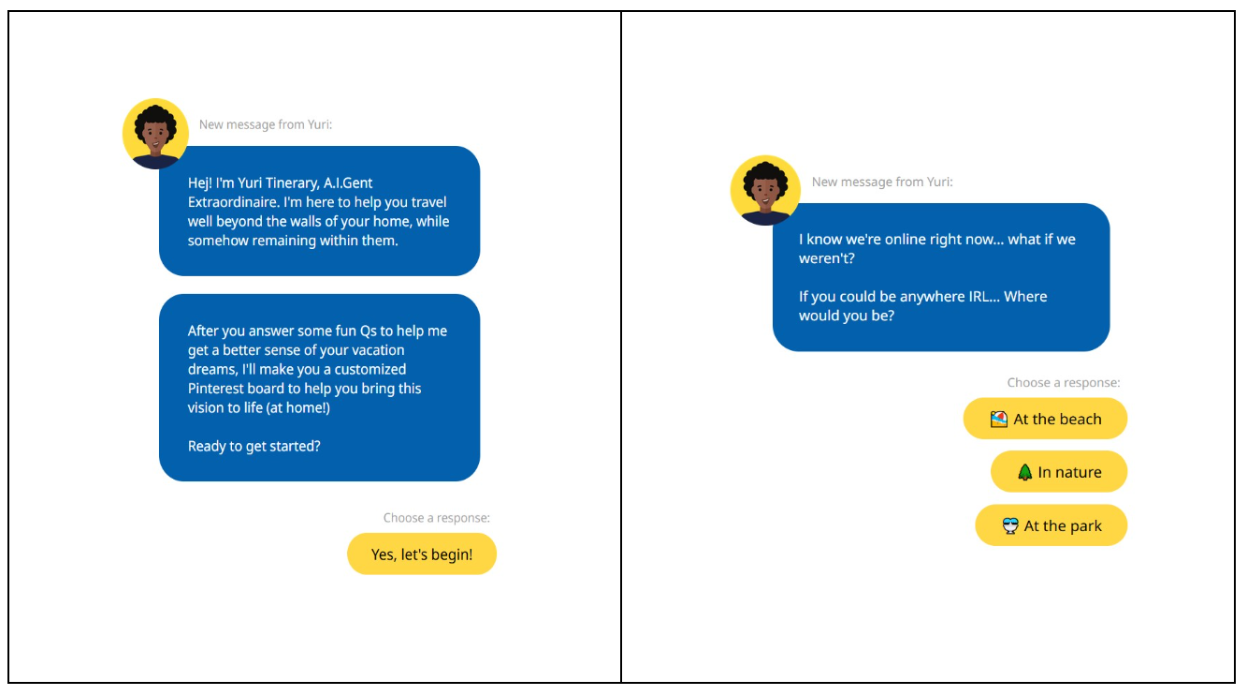
    Capitalizing on the boredom and wanderlust, many felt while being cooped up indoors during the pandemic, Pinterest and Ikea launched a ‘Renocations’ (renovations + vacations) campaign in 2021. 

    Pinterest found that searches for renovations went up on their platform by nearly 65% over the pandemic as people sought to freshen up their spaces. 

    Other rising trends included ‘maximalism,’ ‘grand millennial decor,’ ‘eclectic home,’ ‘sage green aesthetic,’ etc. So, combining their repository of endless decor-inspiring media with Ikea’s DIY furniture and innovative accessories, they created a fun, custom experience for users. 

    Ikea's DIY furniture guide

    By interacting with a chatbot and answering three questions regarding their favorite getaway destination, activities, and home spaces, users could create their dream ‘renocation,’ generating a personalized Pinterest board and exclusive product recommendations from Ikea. 

    ikea content marketing

    Why Renocations Was a Win-Win For Both Pinterest and Ikea

    • The first-of-its-kind chatbot-to-board format helped Pinterest become a desirable partner for a brand like Ikea looking to link its products/sites through shoppable links. 
    • Pinterest is hailed as a product discovery platform, and it’s been integrating more and more social commerce features, like ‘Shop from Pins’ and ‘Shop from Search’. Tapping into Pinterest’s vast user base that already uses the platform for decor inspiration, Ikea was able to streamline the decor buying process while also reducing friction by suggesting products tailored to users’ preferences. 
    • The campaign was a success, with a 58% board generation rate and the creation of almost 5k boards and 93.4k Pins. 

    4. McDonalds’ BTS Meal

    BTS Meal

    Regardless of whether you’re a fan of the K-Pop group BTS or not, you’ve probably heard of the McDonald’s BTS Meal.

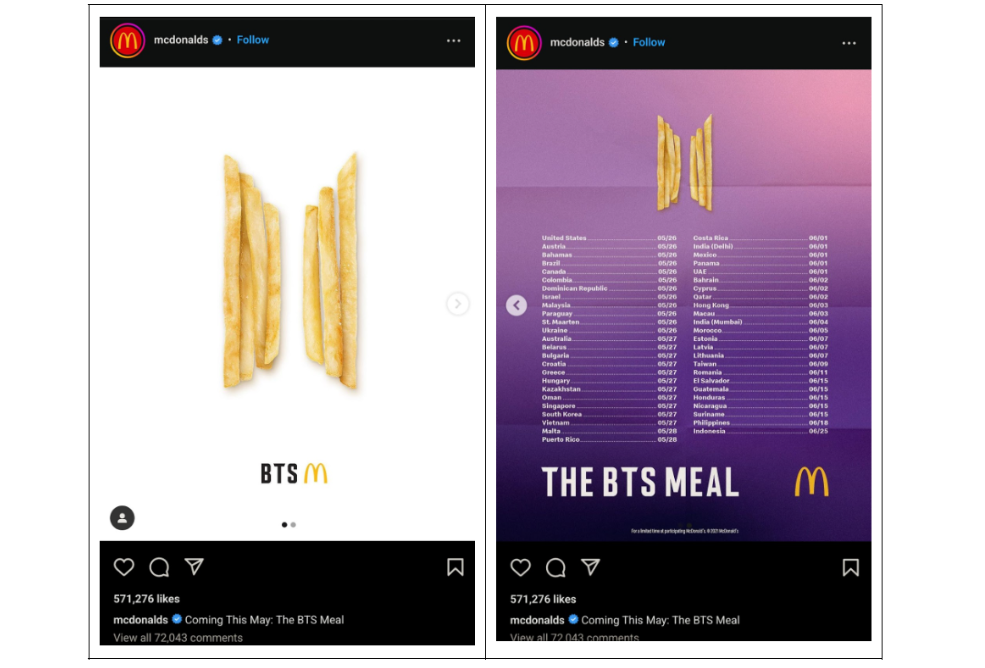
    The BTS Meal campaign was inspired by the idea that no matter how big or famous someone is, everyone has a go-to McDonald’s order. Running with the idea, McDonald’s created a ‘celebrity meal,’ turning it into a cultural event by launching the campaign across 49 countries in May-June 2021. The meal included 9-10 chicken McNuggets, fries, 2 special sauces (sweet chili and Cajun), and a Coke. 

    Why the BTS Meal Was a Hit

    mcdonalds content marketing
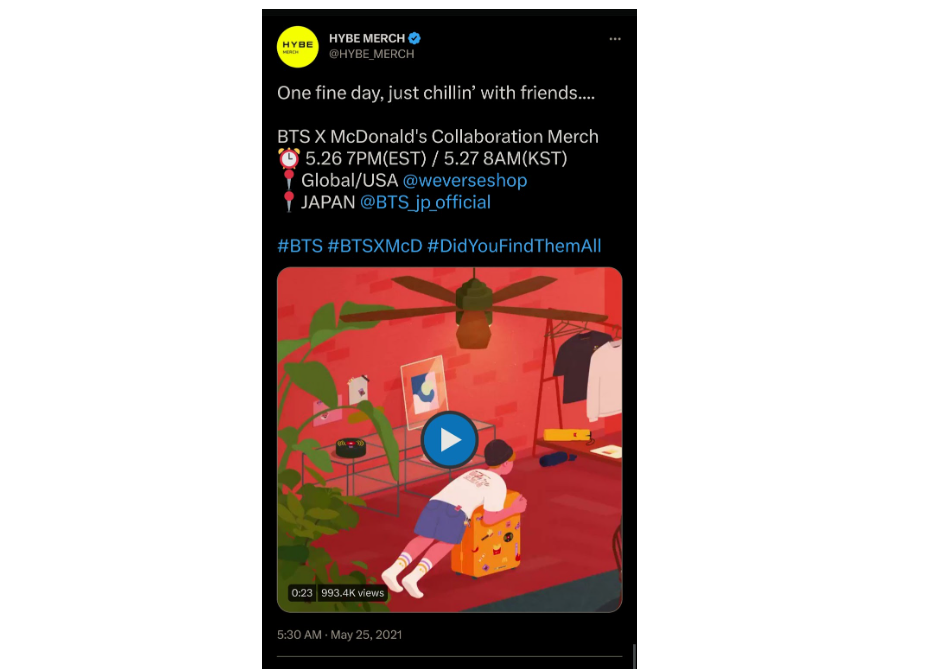
    • McDonald’s spoke the ARMY’s (the BTS fandom) language. They used tailored social media tactics by creating teasers and tour-themed posts, announcing the release date for the meal in each country on their’s and BTS’ Instagrams. It was very similar to how K-Pop groups promote album releases and build anticipation, with ‘tour dates,’ concept photos, behind-the-scenes bloopers, and merch drops. 
    Hype merch
    • Rather than creating something that would be appealing solely to the ARMY, McDonald’s added value to already existing aspects—the menu items, packaging, and mobile app. The ARMY found the in-app BTS content and exclusive signature purple packaging attractive, while non-ARMYs were curious about elements like the limited edition sauces. Essentially, McDonald’s was able to engage fans and non-fans while promoting their menu items, striking a balance between not being too exclusive and not ignoring the rest of their customer base.
    josiahchua social media content
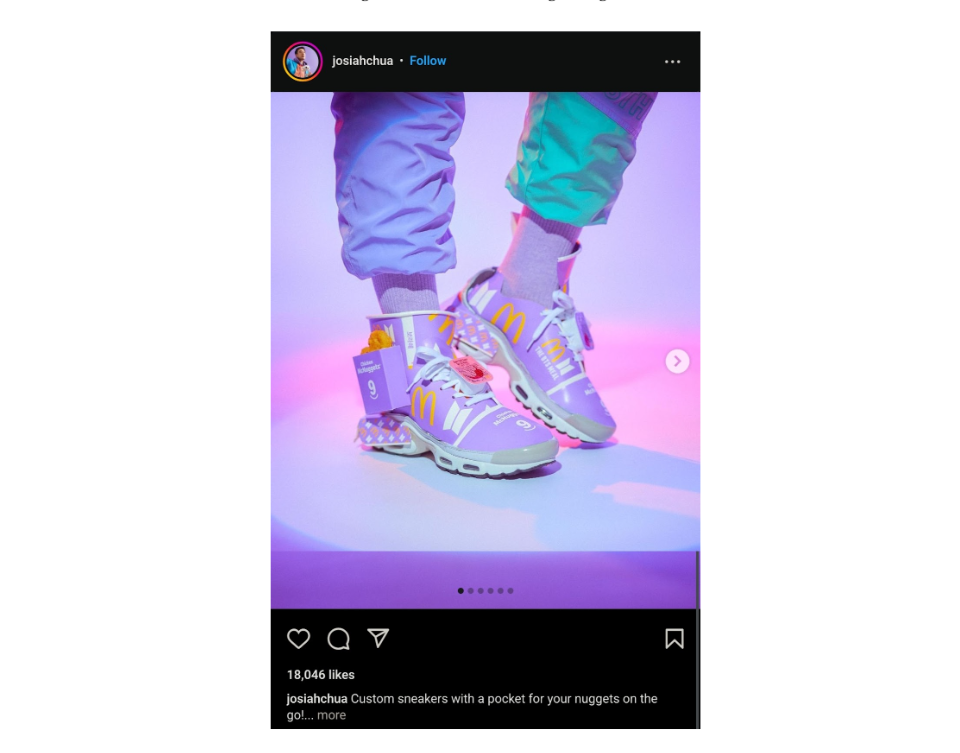
    • The campaign led to the creation of tons of user-generated content (UGC). Many ARMYs preserved the packaging, going on to sell it on eBay. Others repurposed it into merch like keychains, necklaces, coasters, and even shoes, posting about it on TikTok and Instagram. All this content helped promote the meal among those who weren’t aware of BTS (or their collaboration with McDonald’s), generating hype far and wide. 
    • This campaign is a great example of the power of influencer marketing. McDonald’s tapped into BTS’ vast and global following, created a sense of authenticity with something as ordinary as a McDonald’s meal being associated with a huge K-pop group, making them feel more connected to both BTS and the brand. Plus, the campaign launch content became McDonald’s most-liked Instagram post, most retweeted Tweet, and the no. 1 Twitter trend in the US at the time. Google searches for BTS were at an all-time high, and the meal was also featured in Google’s ‘Year in Review’ list. 

    A glance at stats shared by McDonald’s illustrates just how impactful the campaign was:

    • 74.6 billion— Potential reach
    • 11.5 million—Social mentions
    • 41% increase in global sales 
    • $98MM in incremental sales
    • 2,316 earned media placements

    5. #MyIndia by MakeMyTrip

    MakeMyTrip

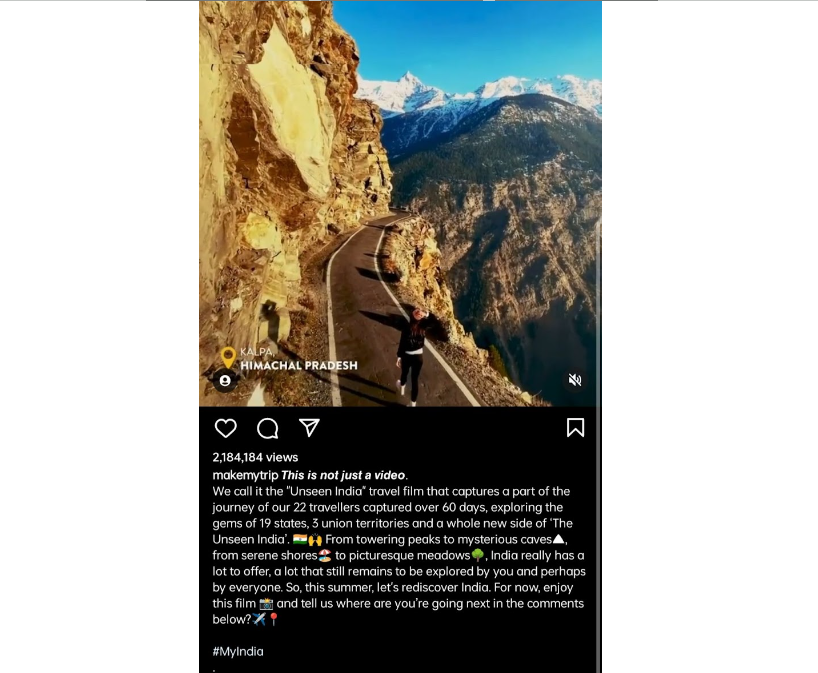
    While most international borders were still closed due to the COVID-19 pandemic, MakeMyTrip drew on Indians’ urge to travel and explore destinations by highlighting the ‘hidden gems’ within India itself with its #MyIndia campaign. 

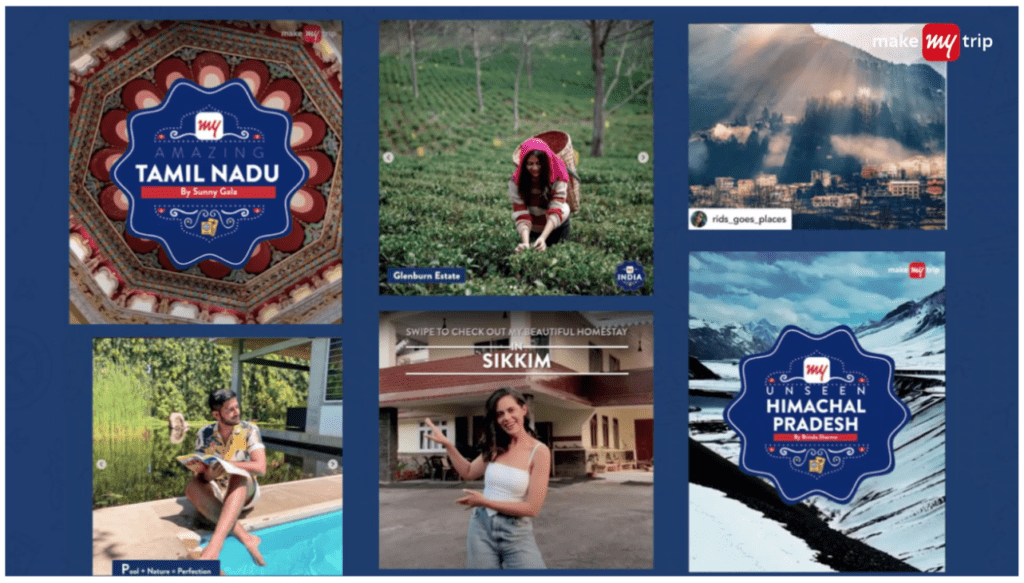
    Kickstarting on Republic Day 2021, MMT collaborated with 60+ influencers, celebrities, and content creators who took audiences on virtual tours through lesser-known destinations across the country via images, videos, Reels, and more. This was accompanied by detailed descriptions and itineraries on MMT’s app as well as a contest inviting participants to share their favorite ‘hidden gems.’ Winners of the contest went on to represent the North, South, East, and West zones of the country as travel ambassadors. 

    Why #MyIndia Struck a Chord

    makemytrip social media content
    • MMT emphasizing that their collaboration with influencers had more to do with making them ‘local travel ambassadors’ than using their followers made them seem more authentic. Plus, passing on the ambassadorship not just to influencers but the audience at large made this a community-first campaign, with the benefit of higher involvement and engagement. 
    • MMT saw a month-on-month rise in domestic travel bookings, especially during the festive season and winter. Destinations like the Andamans, Shillong, Alleppey, Kutch, Hampi, etc. found more travelers on and through the MMT platform. 

    MMT shared the impact of the campaign as well:

    • 8.6 million+ impressions 
    • 9 million+ views
    • 11.53% MoM growth in followers on Instagram 
    • 18.82% Instagram engagement rate compared to the goal of 10%
    • 5% growth in direct orders

    What Makes a Successful Digital Campaign?

    Crafting a standout digital campaign involves considerable research, meticulous planning, and patience. Here’s a basic framework to guide your campaign development:

    1. Define Your Goals and Objectives: Clearly articulate your campaign’s objectives, be it driving more traffic, increasing sales, or enhancing brand awareness.
    2. Identify Your Target Audience: Understand who your audience is, their needs, and where they are most active online.
    3. Develop a Content Strategy: Produce high-quality content that engages your audience and aligns with your campaign goals. Ensure each piece of content has a clear call to action.
    4. Choose the Right Channels: Consider your budget and select digital channels that effectively reach your audience, such as social media, email, or online advertisements.
    5. Execute, Analyze, and Optimize: Launch your campaign, monitor its performance using analytics, identify areas for improvement, and adjust your strategies accordingly.
    6. Continuously Improve: Leverage insights from your analytics to enhance your campaign’s effectiveness over time.

    Here are some bonus tips:

    1. Use a mix of paid, earned, owned, and borrowed media, if possible.

    2. Aim to create a seamless, end-to-end brand experience. Say you created an Instagram ad; be sure to link it to a relevant page connecting the two that helps users effortlessly complete the desired action.

    3. This also brings us to—an oft-overlooked component of successful campaigns—set up dedicated landing pages. These present all the required information in a neat package and help fulfill your campaign goals.

    Key Takeaways to Glean from These Digital Marketing Examples

    As you scrolled through these digital marketing examples, you might’ve noticed a few common threads running through most.

    Being authentic, understanding who your audience is and what makes them tick, experimenting with innovative ideas, testing out strategies, and constantly improving on what could be better—all of these can go a long way in ensuring your campaign has the makings of a recipe for success.

    We hope you found tons of fodder for inspiration and go on to create amazing campaigns of your own—all the very best!

    content writing services

    Each campaign type might have a unique approach or tactics based on the target audience. Occasionally, they might overlap or be run in unison.

  • How To Divide Content As Per The Content Marketing Funnel?

    How To Divide Content As Per The Content Marketing Funnel?

    Ask yourself a question. What is the main motive for practicing SEO strategies? The easy answer: getting people to buy your product. Whether you’ve noticed it or not, all content is created keeping the buyer’s journey in mind. And what’s the way to keep track of the buyer’s journey with your brand? By using a content marketing funnel.

    The key to generating leads is creating content while keeping the content marketing funnel in mind. Don’t worry, this is way simpler than it sounds. The marketing funnel is simply a model created for marketers to track buyer journeys on websites. The funnel helps turn leads into loyal customers, and achieve remarkable sales.

    In this article, you will learn what the content marketing funnel is, what its stages are, and how to create content for targeting users in each stage of the funnel to transform them into full-time buyers. So what are you waiting for? Read along!

    What is a Content Marketing Funnel?

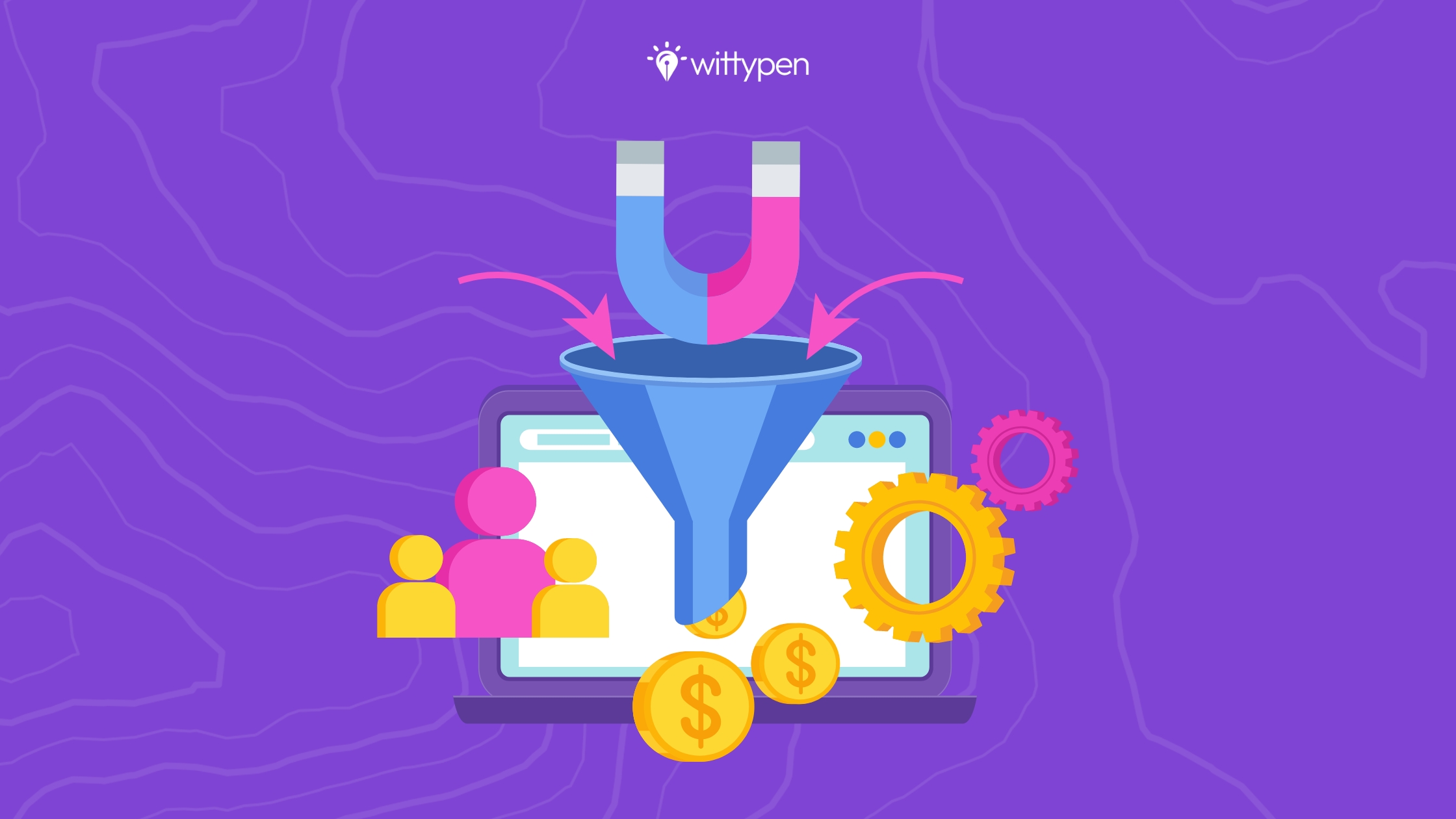
    The Content Marketing Funnel is a model that helps marketers visualize how content creation influences the path a potential customer might take from the moment they find out about your brand, till the moment they decide to purchase your product. A Content Marketing Funnel typically has 3 stages.

    The 3 Stages of an Effective Content Marketing Funnel

    Take a good look at this image of a content marketing funnel and analyze its shape. As you can see, the funnel keeps getting narrower as you go down. 

    The design conveys the following message: the audience interacting with your brand is at its highest at the top and keeps reducing as you reach the bottom. The ones at the top are the farthest, and the ones at the bottom are the closest to buying your product.

    What we’ll learn in this article is how through content creation, you can maximize the number of leads making it to the bottom of the funnel, and eventually increase your overall sales.

    The Content Marketing Funnel typically contains three stages –

    • Top of the Funnel (TOFU)
    • Middle of the Funnel (MOFU)
    • Bottom of the Funnel (BOFU)

    Let’s have a closer look at each stage of the funnel, and synonymously, each stage of the buyer’s journey:

    1. Top of the Funnel (TOFU):

    The Top of the Funnel (TOFU) stage is also known as the awareness stage. It’s theoretically the beginning of the funnel and the beginning of your buyer’s journey with your brand. 

    The leads are at their highest in this stage, and they are most probably looking for answers to their various questions. Your job as a marketer would be to create content that educates your target audience about any query they have. 

    TOFU content doesn’t focus on promoting your product or brand directly, but it is still important to gently make the users aware of their benefits. Progress can be tracked by paying attention to site traffic, engagement in social media, and the number of subscriptions you’re getting.

    Top of the Funnel content marketing is done by creating informative content in the form of blogs, social media posts, and ebooks among others.

    2. Middle of the Funnel (MOFU):

    The Middle of the Funnel (MOFU) stage is also known as the consideration stage. As you go down the funnel, it gets narrower, and so do the users paying attention to your brand. 

    The people who weren’t interested in purchasing your product have now removed themselves from consideration. Therefore, you need to focus on being considerate towards the ones who have stayed and are willing to learn more.

    To get this done, you need to provide in-depth information regarding your brand and product. Be direct in conveying why your brand is a good choice to buy from. Progress can be tracked by analyzing conversion rates and tracking the leads.

    Middle of the Funnel content marketing is mainly concerned with creating detailed content about providing solutions for your target audience’s pain points. The motive is to gain the trust of potential customers in your brand.

    3. Bottom of the Funnel (BOFU):

    The Bottom of the Funnel (BOFU) stage is also known as the decision stage. At this point, the number of people staying with your brand is at its lowest and they’re on the brink of making the decision of being a customer for your brand.

    This is the stage where your buyer’s journey is nearing an end and you’re close to making a sale. Therefore, you need to write product-specific content that conveys clearly what your product is and how it works. You also need to give good reasons why your product is better than your competitors and why the buyer should choose it over others. 

    Bottom of the Funnel content marketing is mainly concerned with product specifications, details, and key features of the brand rather than providing education and in-depth information around the products and pain points.

    Content Ideas for Each Stage of the Marketing Funnel

    Before going into the content types, it is important to decide what the goal of your company is. B2B companies require far more convincing than B2C customers to reach the decision stage. Furthermore, having a clear understanding of your buyer persona will be way more profitable for your brand in the long run as you’ll be able to customize your content in an appealing way for them.

    After working on these strategies, jump right into learning what content to create at what stage to attract customers:

    Wittypen SEO content writing services

    In the Awareness Stage:

    There’s no assurance that the audience in the awareness stage will buy from your company, but if they find your content useful enough, there are chances that they’ll travel down to the Middle of the Funnel. Therefore, it is important to create informative and helpful content to answer every query your future customers could have.

    Here are some content formats you can try for creating Top of The Funnel content:

    1. Blog Posts:

    Blogs are the most common and profitable way to create content for the Top of the Funnel. They’re perfect to give solutions and target your customer’s pain points in a detailed manner. If you write and format your blog well enough for Google to read, you will also be able to rank it on the SERP.

    2. Social Media Posts:

    Using Social Media platforms like LinkedIn, Instagram, Twitter, and YouTube for content creation will open the door for a new audience. With new user-targeted algorithms, it is also possible for your content to reach interested buyers. However, unlike blog posts, you’ll need to present content in a shorter space.

    3. Infographics and Checklists:

    Well-made infographics are appealing to the eyes of the reader and have way more shareable value than blog posts. More shares will result in a growing audience base, and a better chance to find buyers for your product.

    On some occasions, people only want to know exactly what they need to do to solve their problem instead of going into details about the topic. This is where a checklist will come in handy.

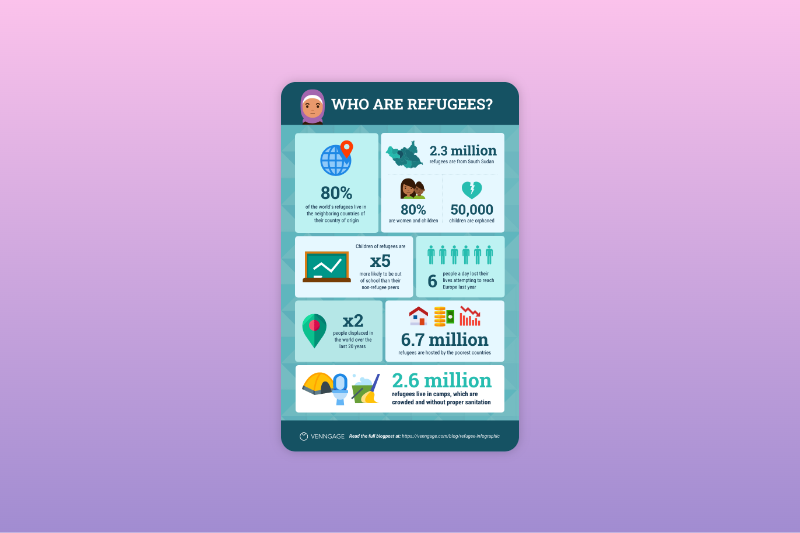
    Example: An infographic providing information about refugees.

    information about refugees

    4. Ebooks and Whitepapers:

    Ebooks are useful to dive deeper into the complexities of a topic. They are also perfect for targeting your customer’s pain points.

    Whitepapers like Ebooks, are good for diving into the in-depth analysis of a topic. They are informative and downloadable documents issued by a company to highlight solutions.

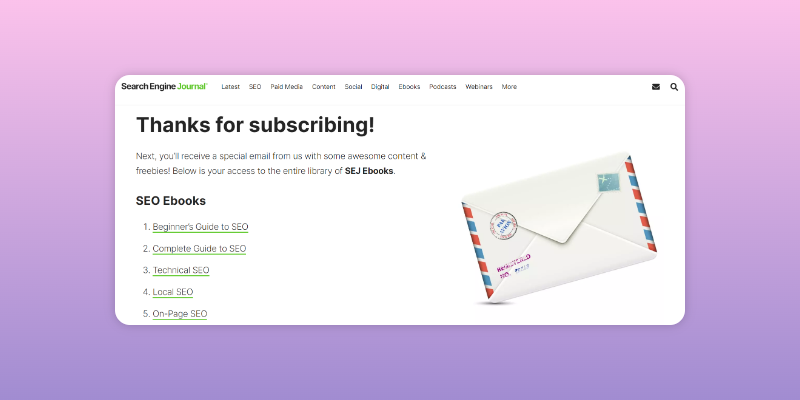
    Example: Ebooks offered by Search Engine Journal after subscribing to their newsletter.

    Ebooks example from SearchEngine Journal

    5. How-To Videos:

    Creating informational videos with a “How-To” in their title is one of the best and most popular ways to educate potential buyers. To make the video creation process even more accessible, you can use a free online video editor tool to edit your videos. This way, you can enhance your content, add special effects, and fine-tune your message without expensive software or professional editing skills.

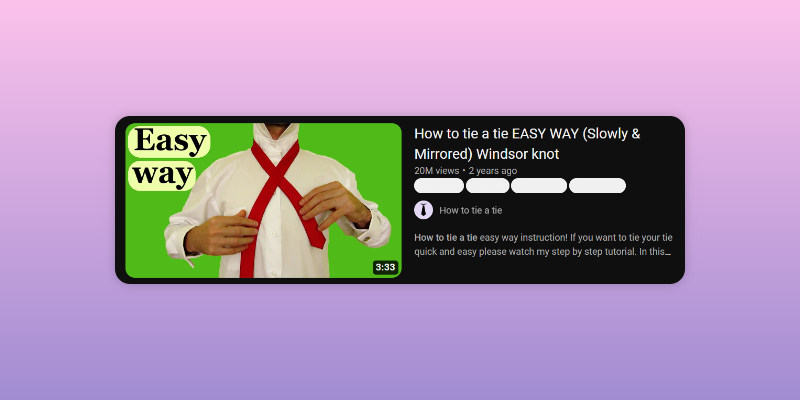
    Example: A “How-To” video on YouTube teaching How to Tie a Tie.

    Video on How-To Guide

    6. Podcasts:

    Podcasts are audio formats of content creation that have become extremely popular today. Podcasts are usually released in installments which makes it easier for your company to gain subscribers for exclusive content.

    7. Quizzes:

    The best way to engage your audience with your website is to make fun and interactive quizzes. The key to making exceptional quiz content is releasing them regularly and making them catchy enough for potential buyers to keep returning to your website to play more.

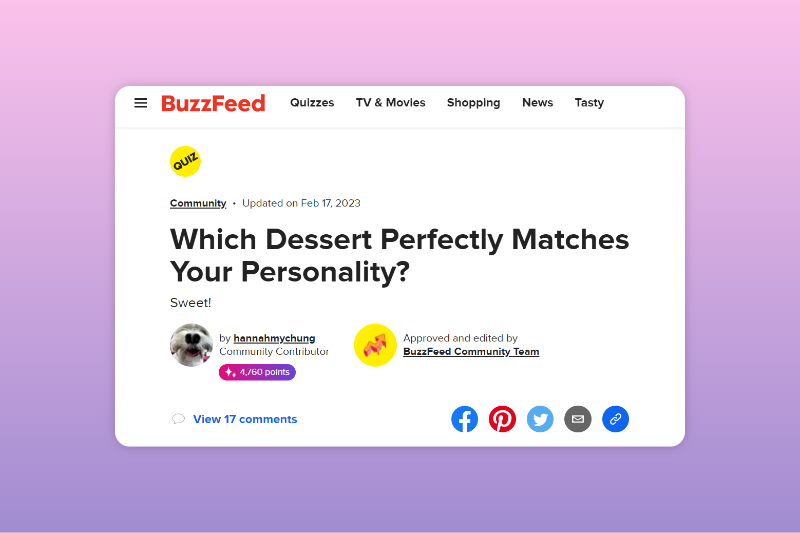
    Example: A Buzzfeed quiz titled “Which Dessert Perfectly Matches Your Personality?”.

    Buzzfeed quiz title

    8. Comprehensive Guides:

    A comprehensive guide is a content format that includes the A-Z of a topic. The title usually starts with “A Guide To _____” and it’s a very common method of content creation for the Top of the Funnel. Guides are great for addressing the pain points of your target audience.

    9. Tools and Kits:

    Using tools and kits like templates and calculation tools provides the user with quick help and also accommodates a hassle-free experience. Adding tools and kits to your website adds a personalized touch, which is impressive and attractive for the potential buyer. 

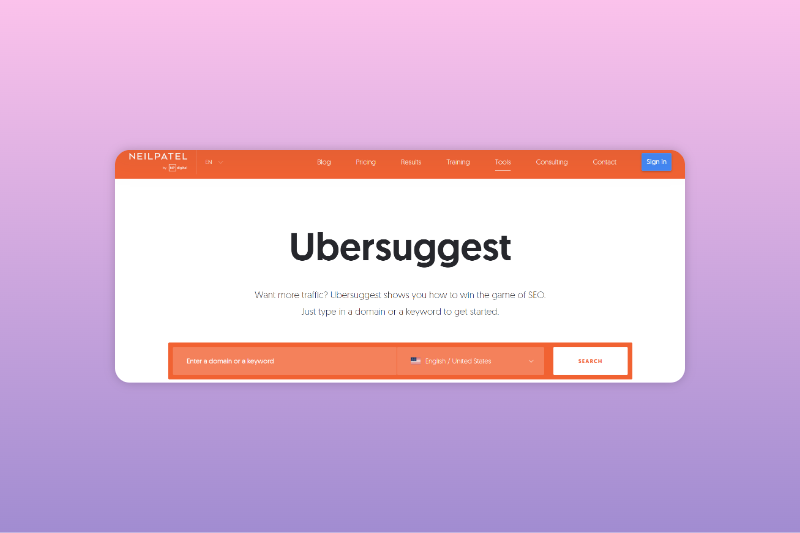
    Example: A keyword research tool called “Ubersuggest” on Neil Patel’s website.
    Keyword Research Tool

    In the Consideration Stage:

    The content released in the consideration stage should focus on building a relationship with future customers and gaining their trust towards the brand. If people have traveled down to the middle of the funnel, it means that on some level, they are already impressed with your brand and product. The buyer’s journey will now focus on performing research to negotiate whether they should give your product a chance or not.
    Help in nudging your future customers to the bottom of the funnel by creating the following types of content:

    1. How-To Guides:

    “How-To” guides gain immense popularity because of their informational content and simple-to-read structure. They’re widely used by every content marketer to create attractive articles and drive traffic.

    Example: A guide titled “How to Write an Essay“.

    How to Write an Essay

    2. Product Overviews:

    If the potential buyers have reached the Middle of the Funnel, chances are that they are impressed by your brand. Make sure to provide a clear, concise, and useful description of your product. Avoid making it over the top while highlighting the key features and benefits in a gentle way. Product overviews can be used for both MOFU and BOFU content. 

    3. Case Studies:

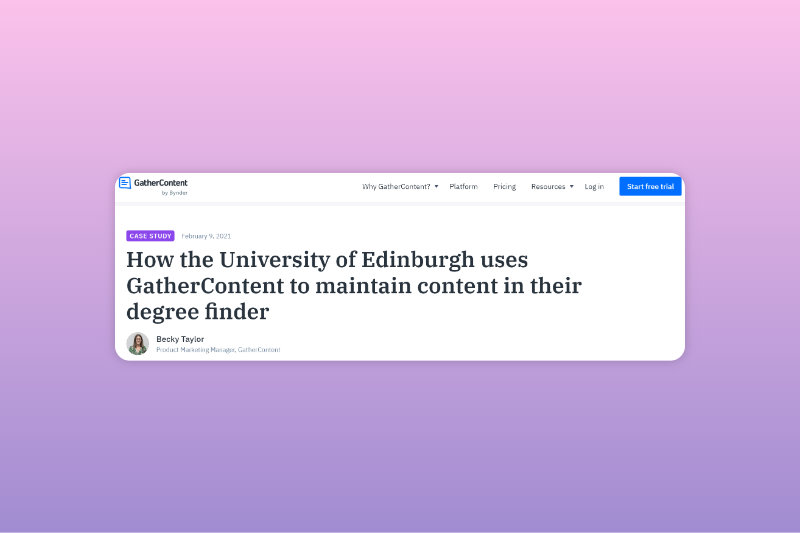
    A case study works great in educating future customers about how your product has worked for existing customers in wonderful ways. They also convey “real-world examples” that exceedingly help in adding a “relatable” value to your content. Case studies help in building brand confidence and can be used for both MOFU and BOFU stages.

    Example: A case study by GatherContent titled “How the University of Edinburgh uses GatherContent to maintain content in their degree finder”.

    Case Study Example

    4. Landing Pages:

    A landing page is a standalone web page of a website where a user “lands” after clicking on a link that showcases your website. Landing pages are usually designed with a single goal in mind and are a “Call to Action” for a company’s marketing campaign. Creating one will be helpful for your company to get people from the top or middle of the funnel to the bottom fairly quickly.

    5. Webinars:

    Attending webinars held by companies provide users with all the information on how to solve an issue. Hosting webinars also creates space for an on-the-spot FAQ round to clear any doubts users may have regarding the discussion topic. Webinars are a great and cost-effective video marketing tool.

    6. Comparison Guides:

    Drafting comparison guides between your product and your competitor’s product will make research for the user easier and also instill a feeling of confidence and trust regarding your brand and product. Comparison guides are a valid content type for both the MOFU and BOFU stages of the funnel.
    7. Email Marketing:

    Email Marketing in the form of newsletters is another great way to create Middle of the Funnel content. A newsletter will periodically remind potential customers about the existence and goodness of your product, and keep compelling them to make a purchase. You can get them to sign up for newsletters by creating landing pages.

    Wittypen's Content Writing Services

    In the Conversion Stage:

    If you’ve managed to make a potential buyer travel down to the Bottom of the Funnel, BRAVO! You’re doing very well. All you have to do now is give the last push to turn them into a customer. The buyer’s journey is now nearing the end, so work on giving them definite reasons that your product is good enough for their needs. 

    Drive the users to say ‘yes’ to your product by creating the following Bottom of the Funnel content:

    1. Customer Reviews:

    One thing we all do before making a purchase online is read the reviews. 92% of B2B buyers are more inclined towards making a purchase after reading a positive customer review. It is important to highlight the 5-star reviews. If you’ve gotten any negative reviews, highlight how you worked towards making the user experience better.

    2. Success Stories:

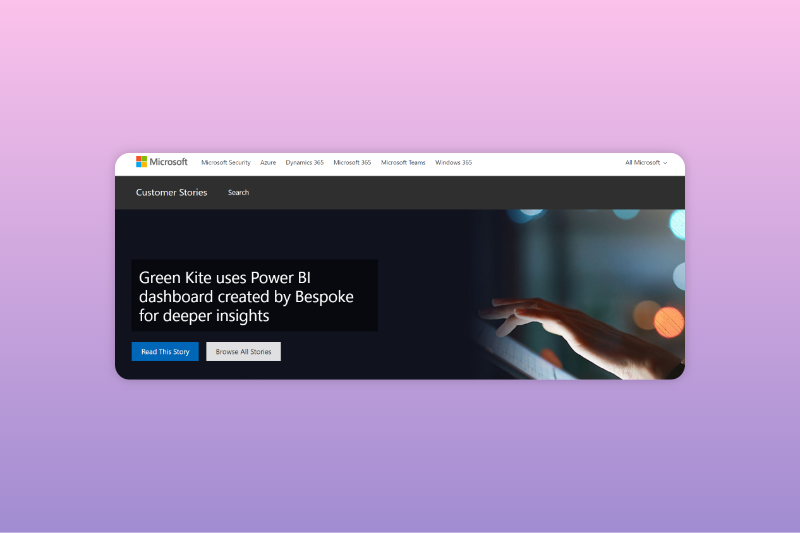
    9 out of 10 people say that they’ll buy a product only after reading through customer stories. That’s quite a high number, and hence it’s important to give users access to hundreds of customer success stories in order to influence their decision-making.

    Example: A web page dedicated to customer stories by Microsoft.

    Web Page For Customers Stories

    3. Freemium:

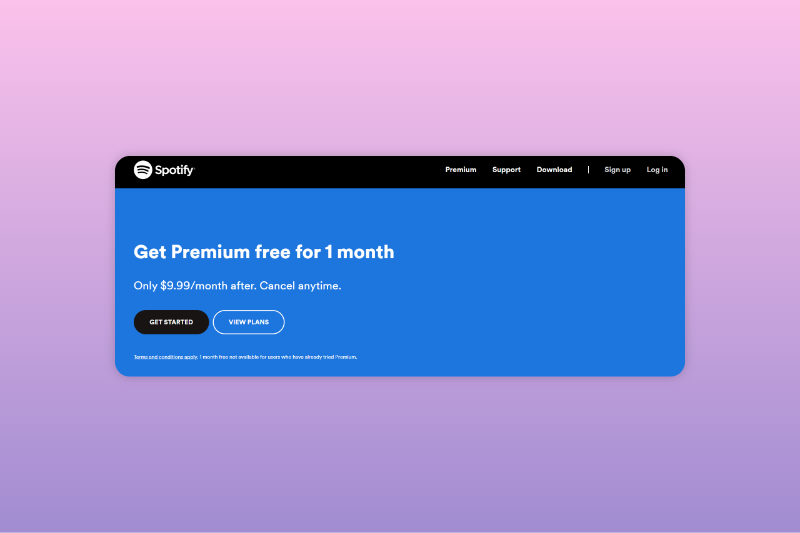
    Having to sit through ads on music streaming platforms after you’ve had a taste of that sweet-sweet ad-free premium is something none of us can go back to. Offering a free trial of your premium product to users gives them a better experience and also a good reason to stay. 

    Example: Spotify offers a free Premium for 1 month before charging $9.99/month.

    Spotify offers 1 month premium plan

    4. Live Demos:

    Live Demos of the working of your product give the potential buyers a clear idea of the uses and benefits of your product, while also eliminating any doubts they might have about it. Live Demos are also cost-effective for your company, making them a great choice to interact with the audience.

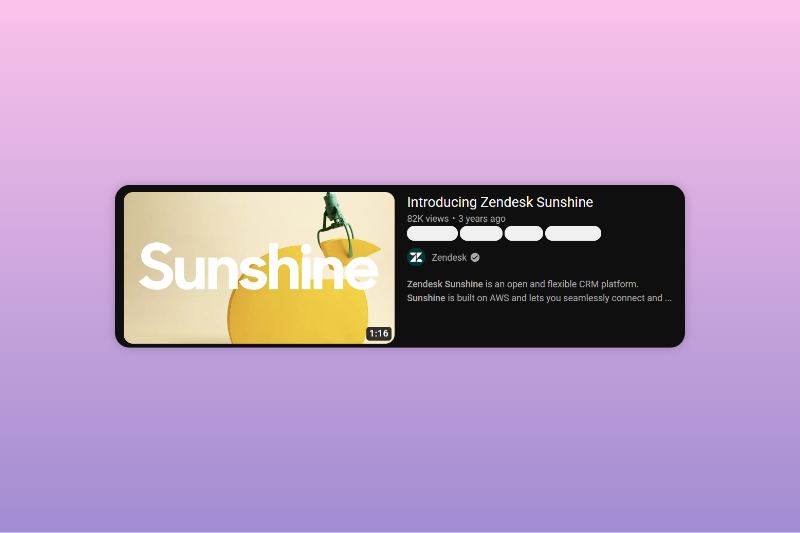
    Example: Zendesk offers a Live Demo for their platform Zendesk Sunshine on YouTube.

    Zendesk Sunshine live demo

    5. Events:

    Organizing or participating in events gives your company a chance to directly interact with customers and have a live to-and-fro about the benefits of your product. Getting a stall in a big event (like Flea Markets or TechCrunch) gives you easy access to a large interested customer base.

    6. Pricing Pages:

    Don’t shy away from openly communicating your pricing or ask people to contact you if they want to know the price of your product. Pricing pages help the user make a quick decision about whether your product is within their budget. 

    7. Consultation Offers:

    Offering a quick consultation provides a significant push for a lower cost. Make the consultation experience of the future buyer one to remember. Focus on highlighting the goodness of your brand and product, while also helping them with the minor doubts they have.

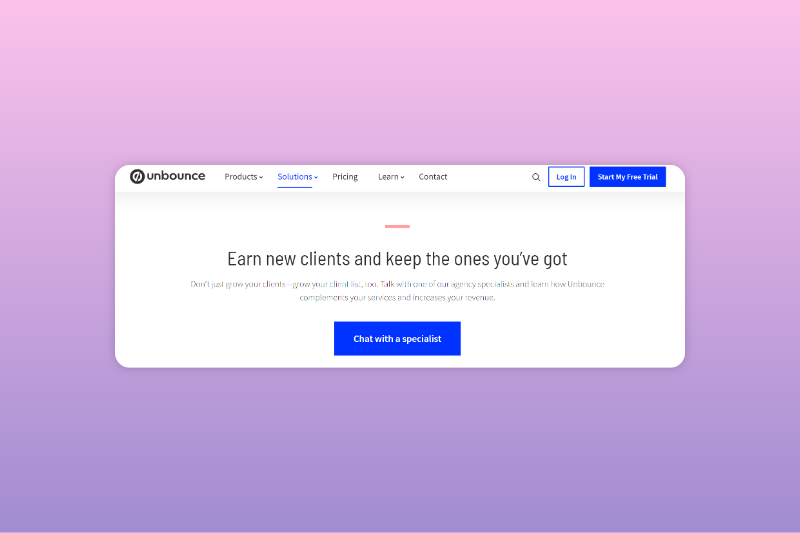
    Example: Unbounce offers a free consultation with a specialist to educate users about their services.

    Free Consultation Example

    8. Coupons:

    I personally get a dopamine surge whenever I hear the word “coupons”. Coupons attract customers with the idea of saving money by making a purchase. Offering coupons like “Get 10% off on your first purchase!” or “Get 15% off by referring our brand to your friend!” are appealing to act on, and have a high distributable value.

    Before you leave, the Key to Success is → Tracking Your Progress

    The strategy for using a content marketing funnel is pretty simple- bring the leads from the Top of the Funnel to the Bottom of the Funnel. Here’s how you can track your progress as a marketer:

    1. Try Different Formats:

    If you’re confused about what kind of content you need to create at a specific stage in your business, try creating the same content in different formats. 

    Choose a topic → Create a blog, host a webinar, and hold a live demo on it → Analyze your results → Form a respective strategy.

    2. Work On Retaining Your Customers:

    Retaining customers is just as important as bagging them. Make sure that the experience you provide is good enough for them to not look for other options. Email marketing is a good way to go to for communicating with existing customers about any new product updates or company announcements.

    3. Understand Your Audience:

    Put yourself in your customers’ shoes. In order to create relatable content for your audience, you need to understand them first. Analyze your buyer persona and create content that targets their pain points. Compare the before and after of your sales after applying this strategy.

    4. Keep Refreshing Your Content:

    Keep a close check on your existing content and its performance, while also looking for ways to refresh and improve your old content. In this fast growing time of content marketing and SEO, staying ahead of the curve is important.

    5. Constant Communication:

    Having conversations consistently with your existing customers is the key to figuring out what’s working about your product and what’s not. Ask for reviews and suggestions to improve the quality of your product. Also, talk to your sales and marketing teams to gain knowledge about the issues they’re facing and to find out more about the pain points of your customer base.

    Final Thoughts

    Using the content marketing funnel for content creation would be a great way for you to track your content’s performance. Once again, the main strategy to follow is: bring the leads from the Top of the Funnel to the Bottom of the Funnel. Once you’ve got the users at the top, charm them with the variety of content you’re providing and try to bring them to the bottom to make them a customer.

    If you’re struggling with any form of content creation, try working with companies like Wittypen that offer content writing services for good prices, and make sure to provide every customer with a good experience.

    Website Content Writing Services

    FAQs

    1. What is a Content Marketing Funnel?

    The Content Marketing Funnel is a model that helps marketers visualize how content creation influences the path a potential customer might take from the moment they find out about your brand, till the moment they decide to purchase your product. 

    2. What are the stages of a Content Marketing Funnel?

    A Content Marketing Funnel typically has three stages. They are:

    • The Top of the Funnel (TOFU), also known as the awareness stage.
    • The Middle of the Funnel (MOFU), also known as the consideration stage.
    • The Bottom of the Funnel (BOFU), also known as the decision stage.

    3. What are the Content Types in Each Stage of the Marketing Funnel? 

    The content type in each stage of the content marketing funnel varies according to the strategy needed to attract buyers at that particular stage. Some examples of content types during each stage of the marketing funnel are

    1. Top of the Funnel stage (TOFU): 
    • Blog and Social Media posts
    • Infographics and Checklists
    • Ebooks and Whitepapers
    • Podcasts
    1. Middle of the Funnel stage (MOFU):
    • How-To guides
    • Case studies
    • Product overviews
    • Email marketing
    1. Bottom of the Funnel Stage (BOFU):
    • Customer reviews
    • Free trials
    • Pricing pages
    • Consultation offers

    4. What is the relationship between content creation and the marketing funnel?

    The relationship between content creation and marketing funnel is based on the idea that different forms of content attract audiences towards your brand in different ways. For example, a blog post addressing a pain point might help the user’s problem but not really compel them to buy from you. On the other hand, providing a free trial might convince a user to buy your product.

    5. How can market research experts effectively use content to drive customer acquisition and retention?
    Market research experts can use content creation in the form of informational blogs, webinars, and consultation offers to attract users to their products and brand value. When marketers have bagged new customers, they can retain them by offering exclusive content, giving an in-depth analysis for every query, and insider content.
    6. What is the key element of a successful content marketing strategy for the marketing funnel?

    The key element of a successful content marketing strategy for creating content according to the marketing funnel is looking for ways to bring the leads at the top of the funnel to the bottom of the funnel. Some ways to do that are:

    • Creating awareness-based content for the Top of the Funnel stage.
    • Content creation that makes people consider your product in the middle of the funnel stage.
    • Making product-based content at the bottom of the funnel stage.
    • Email marketing for retaining existing customers.

    7. How can market research experts stay ahead of the curve in terms of content creation & marketing funnel trends?

    Market research experts can stay ahead of the curve by creating a marketing strategy using the content marketing funnel. Tracking the content marketing funnel will help experts with targeting specific customers on their website, turning them from researchers to loyal customers of their product, and seeing remarkable sales.

  • How To Improve Brand Awareness With Unique Content?

    How To Improve Brand Awareness With Unique Content?

    Creating brand awareness is an integral part of success for any business, but how do you ensure that your brand stands out and is accessible to the right audience?

    If you do a preliminary search for methods to improve brand awareness, it is very likely that you will find many articles that tell you to utilize content writing. There are numerous techniques and methods for improving brand awareness. But you will find that content marketing is a common theme.

    There are some good reasons for this. Content has the ability to catch a reader’s attention, and from there it can provide SEO benefits, as well as build trust. This is great for improving brand awareness. But these benefits can only be gotten if the content is unique and of decent quality.

    With unique and high-quality content, you can maximize your efforts toward creating successful campaigns that result in increased brand recognition. In this blog post, we’ll learn five easy ways to create dynamic content and generate more visits, leads, and conversions for your business!

    In this article, we’ll list some easy steps to create brand awareness with unique content. But, before we start listing, you must know:

    Why creating unique content is important?

    Creating unique content is one of the most important aspects of improving brand awareness. Unique content helps brands stand out from their competitors and captures the attention of potential customers.

    We mentioned that content writing is beneficial for SEO. It can boost SERP (Search Engine Search Result) rankings as well as increase brand recognition and visibility. A better ranking helps generate more visits, leads, and conversions for your brand.

    Overall, creating unique content is essential in order to differentiate yourself from other companies in your industry and capture the attention of potential customers. By using different types of media – such as video, infographics, visuals, or podcasts, you can create engaging content that resonates with your target audience and helps you reach your marketing goals.

    5 Easy Steps To Improve Brand Awareness With Unique Content

    1. Identify your target audience

    Before start building brand awareness, you must know which specific audience you are going to target.

    According to the Marketo’s Engagement report, 56% of consumers believe businesses must have the complete knowledge of their needs.

    Simply ask these types of questions to understand the consumer’s needs:

    •  Who is your target audience?
    •  What type of tone will they understand?
    • Where are they located?
    • Which content do they interact with?

    Thus, knowing your audience makes it easy for you to fulfill their needs easily and effectively. Personalized unique content performs better and engage audience for maximum time. When you have better understanding of your audience, it will become easy for you to craft personalized unique content that can appeal to them.

    2.  Come up with an effective content strategy

    When it comes to creating unique content, there is no “one size fits all”. What will work well with the one section of your audience might not work well with the other.

    Therefore, when creating unique content strategy, you must know:

    What is the story of your company?

    Letting the audience know your story through content is one of the finest ways to increase brand awareness. Try to show your audience that you can easily connect with them on a personal level and beyond your products.

    For example, Apptopia has never included any business bubble when presenting their story to the audience. They just narrate the story that feels personal to the audience.

    Consumers appreciate straight talking and this brand gives them just that through their effective communication skills.

    Thus, always present your story in a very personalized manner as it helps to create brand awareness in an easy way.

    Choose the right medium

    The next and very important step in creating brand awareness through unique content is to choose the medium that works well for you.

    You can work with any of the below media to share your story:

    Company About Us pages: Normally, when a person wants to know about a brand, he/she will go straight to the about us page. An about us page plays an important role in presenting the actual story behind your company.

    So, talk about how it all starts, your ethics and work culture. The one thing you need to keep in mind is to write the About Us page in a unique and plagiarism-free way. It should not contain words or phrases taken from the ‘About Us’ pages of other brands. If you do it accidentally, it will consider as an act of plagiarism and can damage your brand’s reputation.

    Blog Posts: Publishing blogs can easily grab a lot of valuable users for your brand’s website. Try to become a voice that your customers can rely on without any hesitation. You can share your thoughts and expertise in the blogs through unique content.

    The one thing you must remember before publishing blog on your website is to ensure its originality.

    It should be unique and shouldn’t include any traces of plagiarism in it. To do so, you must check it through an online plagiarism checker. This will make it easy for you to publish only original and useful content on your website without any hassle. We have checked and filtered some free and paid plagiarism checker tools:

    Add Quality Videos: Video has a great impact on the audience. Try to make quality videos with relevant content for your brand.

    According to Renderforest, 78% of the businesses increase agree that video increase the traffic of a website. Therefore, publish short and explainer videos to grab the attention of audience.

    Make a Schedule

     A good schedule will help you execute your strategy in an easy way. Simply decide the frequency of publishing articles or video on the channel where you will post it. Then, make a schedule and stick to it.

    Note: The best way to organize your time is to create a schedule instead of regretting not having done so.

    3.   Add Visuals to Make Content Appealing

    When you hear some information, you may remember it for max two-three days. However, if you add a visual (infographic), you may tend to remember it for almost 30 days.

    According to Movableink, your brain only takes 13 milliseconds to process an image. While skimming your blog, reader check images first. A well-known content marketer Neil Patel has created multiple visually appealing content, which makes it easy for readers to easily gather the relevant information.

    If your ultimate goal is to create brand awareness with unique content, try to add relevant, unique, and informational infographics in it.

    4.   Promote your content through social media and other channels

    Reaching out to potential customers through different channels is essential for generating more leads and conversions. 

    Take help from different social media platforms, such as Facebook, Instagram, and Twitter, to promote your content. Additionally, use tools like Google Ads and Yelp to target audiences that are likely interested in your content.

    5.   Analyze the results and make necessary adjustments to improve results

    Finally, track your content’s performance and gather feedback from customers to evaluate its success. By analyzing the results of each campaign, you can make necessary adjustments in order to improve future campaigns. 

    This will help you generate more visits, leads, and conversions for your business and maximize your efforts toward creating successful content marketing campaigns. 

    Creating unique content is a great way to build brand awareness and reach potential customers. With a few simple steps and some creativity, you can successfully create dynamic content that resonates with your target audience and helps you reach your goals. 

    Conclusion 

    In order to create brand awareness, you need to have unique content that speaks to your target audience. 

    You also need to make sure that your content is shareable and available on multiple channels. By following these five easy steps, you can create brand awareness for your business and reach a wider audience.