Category: SEO Strategies

  • SEO in the Last Decade: Important takeaways for Organic Traffic

    SEO in the Last Decade: Important takeaways for Organic Traffic

    Search Engine Optimisation (SEO) has gone through a sea of changes over the past decade. SEO has always been a crucial part of a brand’s content marketing efforts, but these changes have meant that the ecosystem is constantly in flux and that brands need to keep on top of these changes to succeed. 

    As we came to the end of the last decade, we saw a core algorithm update from Google, which shook a lot of websites and was talked about in the SEO circle. After analyzing the recent update, our belief in the suggestions listed in this article has become stronger than ever! 

    Now that we’re firmly in the next decade, consider this article a trip down the SEO memory lane, as we review the key SEO takeaways from the last decade. 

    SEO Takeaways From the Last Decade – What Have We Learnt? 

    Align Your Content With User And Search Intent

    When planning your content, it’s important to focus more on solving your user’s problems, and less on your products, services, and offerings. Google tends to prioritize content that makes it easier for users to find the right answers to their search queries.  

    With the recent update, it was also observed that content that was structured well with a high focus on headings, saw a significant increase in the SERPs. 

    Another SEO trend that has contributed to the shift in user intent is the increasing use of voice search. Since people tend to ‘speak’ to Google as they would naturally speak to one another, the algorithm now demands that content marketers, in turn, create content that reflects this change. 

    Additionally, by curating your content to best answer what users are looking for, you stand a better chance of being ranked higher, which will result in more traffic and leads. 

    Long-Form Quality Content Over Mere Quantity, Any Day

    This is one of the most debated topics among SEO pros and marketers. While the fact that users have a shorter attention span than ever holds significant weight, one needs to understand the factors that help your content reach its intended audience. 

    Content above 2000 words has been shown to rank much better and outperform blogs with 1000 words or less. The reason why long-form content ranks faster is pretty simple –  to write a high-value, long-form article, you need to put in a ton of research, which is bound to provide immense value to the end user. And any content adding value to the users is given importance on SERP.

    To validate the point on short attention spans, a user need not spend a significant time reading the entire content, but only a little to read specific information as per the core intent. This solves the user’s problem and benefits your website, all at once.  

    The ideal approach, in fact, is to go as far as assuming the presence of a content gap in your domain or the subject of your content, and aim to fill it. This means curating content on the assumption that yours is the only piece of information on the subject. This makes you come across as more authoritative, and is also great for SEO!

    This ensures that readers find all the information they need by reading your content, reinforcing your value in their minds. Additionally, when readers are left satisfied, they’re also more likely to sign up for your services.

    Double Down Your Focus On UI/UX

    Websites have long since been the digital version of a storefront. The more attractive it is, the more likely it is that people will spend their time going through it to see what’s on offer. Over the years, however, the technicalities involved in optimizing websites to changing algorithms and user behavior have increased. 

    Today, with search engines rewarding crisp, high-quality content, along with reducing time and attention spans on the part of the users, website content has had to shorten, while remaining equally, if not more informative. Here at WittyPen, we’ve revamped our website to reflect these changes and keep up with the times. Our website is now crisp, yet gives you all the information you’ll ever need about our services in a neat, easy-to-understand layout. 
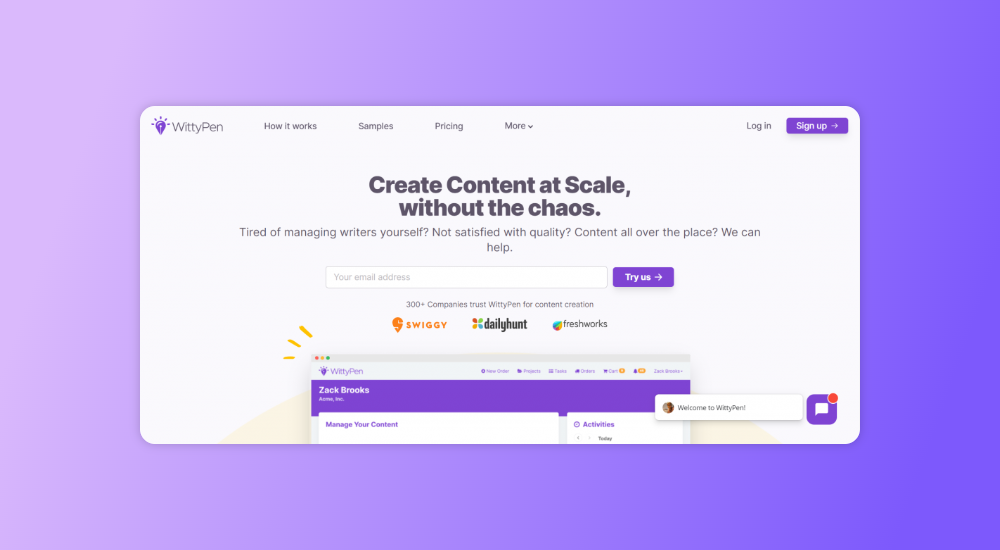
    As you can see, the website is easy to read and navigate, with the chatbot always being at the tip of your fingerprint should you need detailed information. 

    Additionally, ensuring that websites load quickly and making them mobile-friendly has now become the norm. With people across the world relying primarily on their mobiles to consume content, brands have had to ensure that their websites are optimized to deliver the best results through this medium. At WittyPen too, we have had to optimize our website for mobiles to make it easy to access and readable at the same time. 
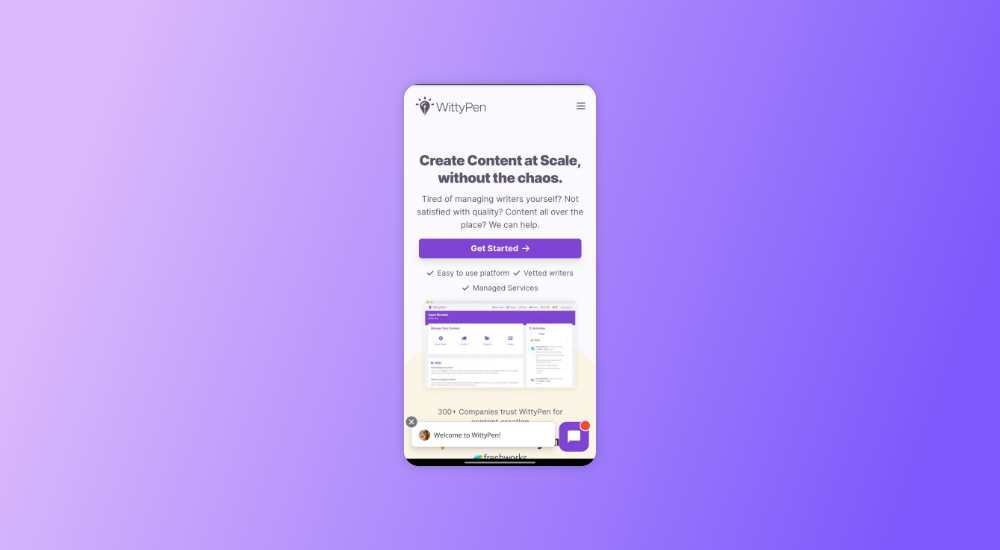
    In the image above, you can see that the website is very readable, the menu is easy to access, and so is the chatbot. 

    SEO Now Requires a Great Deal of Planning

    As mentioned earlier, SEO is no longer about simply stuffing a set of random keywords in a piece of content and expecting it to yield results. Today, achieving desirable results requires a comprehensive SEO plan. This includes, but is not limited to in-depth keyword research, identifying keywords, including long-tail keywords, creating content based on these relevant keywords, uniform social media marketing across platforms, backlinking, and building content communities. 

    Combining these elements in a carefully detailed plan that’s executed by a team of experts is what is now needed to build your website’s authority online. One can see a brilliant example of how consistent planning had led to achieving better results with Neil Patel’s website. As he outlined in his blog while planning his content marketing strategy in terms of using keywords, for example, using the right ones led to a significant increase in the number of clicks and impressions on his website. 
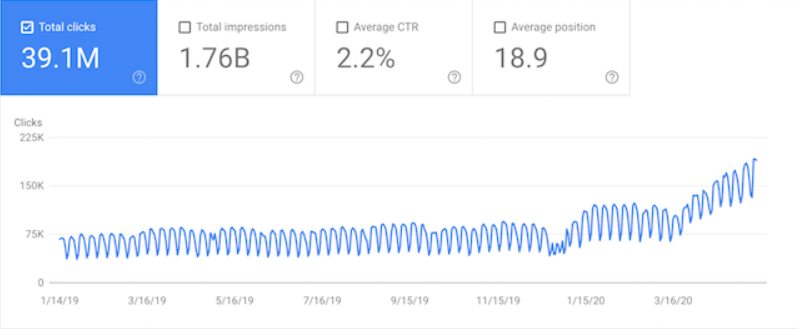
    Graphical representation of an improvement in Neil Patel's website's SEO.

    Source 

    Backlinking Has Become Tremendously Valuable 

    Guest blogging has become the most common mode of generating backlinks in recent years. At its very foundation, it serves as a give-and-take between the host and the individual providing the guest post. However, its benefits for your website’s SEO as we’ve come to experience them include – 

    • Building your brand’s visibility beyond the confines of your own website. 
    • Building its authority in your community or domain.
    • Generating more backlinks. 

    However, the backlinks themselves aren’t enough – the aim is to capture and convert them into subscribers. Going ahead, guest blogging is poised to continue to be a viable and rewarding strategy. It will also play a huge role in building content communities, which in themselves are likely to be among the most impactful content marketing trends, as we have highlighted in our previous blog post.

    Also Read: 25+ Content Marketing Tools – Drive Growth For Your Business

    In Conclusion

    SEO today has evolved significantly from the nascent stage it was at ten years ago. Change after change has meant that content marketing is no longer a one-person job, but one that demands a comprehensive plan and an entire team of determined marketers. However, they’ve also paved the way for newer ideas that can significantly drive traffic and result in valuable leads.

     We hope this article has helped you recall the freshen-up memories, understand the key SEO takeaways from the last decade, and inform you of what’s in store, such as long-form content, capitalizing on content communities, and so on.  

  • 8 Unique Ways to Improve Search Engine Optimisation (SEO)

    8 Unique Ways to Improve Search Engine Optimisation (SEO)

    Search engine optimisation, commonly called SEO is simply a technique by way of which websites increase their chances to appear in search engine results pages. It includes practices through which businesses ensure that their digital presence is noticed by viewers when they enter a related search query.

    Basically, search engine optimisation is the pole that strengthens a website’s ranking and visibility on the internet.

    Why Is Search Engine Optimisation Important?

    In order to use and learn SEO techniques, it is important to understand their relevance and the context in which it is used. SEO is not just a part of marketing, but it is also crucial for the survival of a business.

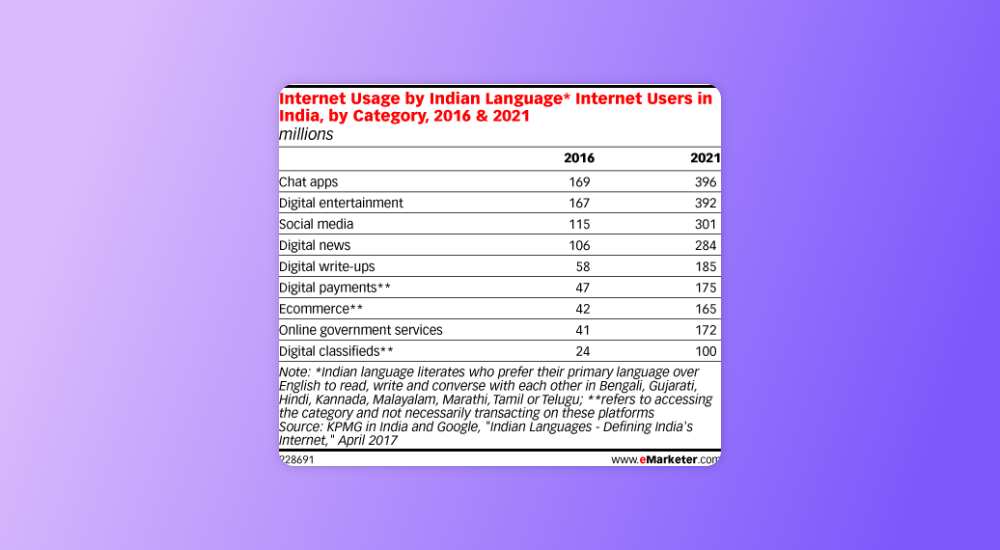
    In today’s digital-driven world, 88% of consumers research a product or service online before making a purchase. In fact, internet usage in India has increased tremendously, which is evident from the image below.

    internet users in India
    Source – Google

    The digital revolution has provided consumers with the power to find answers to their queries with only a few taps on their mobile phones or other digital devices. In this context, companies not only lose business but also validity when they fail to appear on the results page after a user enters a query related to that particular brand.

    To this end, search engine optimization provides a way to make your content and website attractive, relevant, and likable enough for Google or any search engine to show on the results page.

    Once consumers are aware of the brand’s digital presence and can access its information and content effortlessly, their trust and interest automatically increase. Not to forget, it is directly proportional to increased sales and lead generation. Without SEO, visitors won’t be able to find your site and all your efforts will be futile.

    8 Important Elements to Improve Your SEO Rankings

    1. On-Page SEO and Off-Page SEO

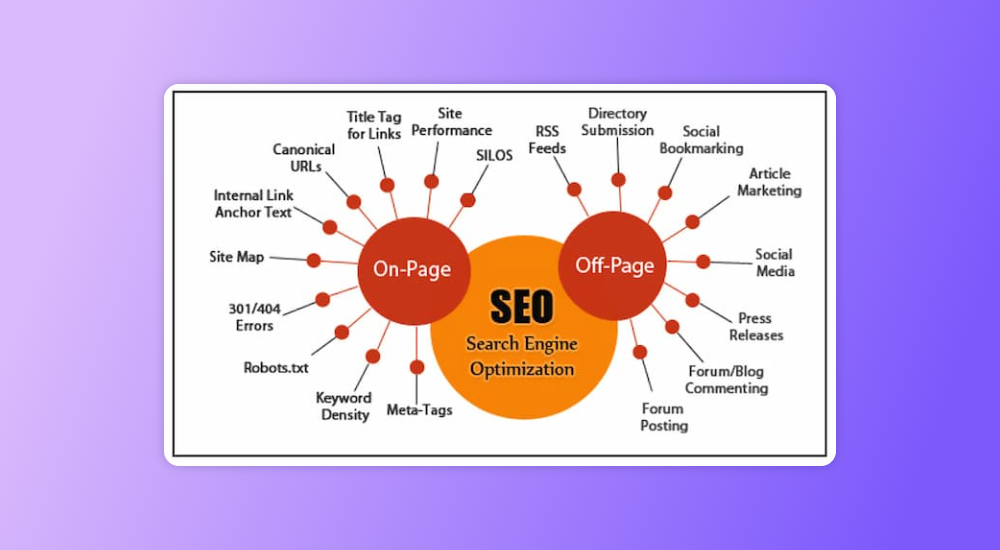
    On-page SEO predominantly refers to your online content which you can control and are in charge of, like blogs, product descriptions, website content, articles, videos, etc. The search engines skim through this content to determine your ranking on the results page based on various ranking factors.

    These can vary for different search engines, but most on-page factors include your website’s technical setup, visual content, text content, HTML code, and user-friendliness. The goal of on-page SEO is to drive organic traffic to your website.

    On the other hand, off-page SEO is concerned with link building where the business aims to get more and more links to their website from well known and trustworthy sources in order to increase its legitimacy in the eyes of the search engine. These factors include social media presence, mentions on other websites, local listings, etc.

    Type of SEO techniques
    Source – Google

    These two form the backbone of SEO. In a nutshell, on-page SEO refers to the activities one can perform ‘on’ their website and off-page SEO refers to the activities one performs ‘off’ their website to increase the number of visitors and a website’s ranking. Off-page SEO involves a number of processes and elements which are explained in detail in the blog.

    2. Content and Keywords

    Keywords lie at the heart of an efficient SEO strategy. They are the words that are used most commonly to describe your content and are most likely to match the visitor’s search query. For example, if you own an Italian restaurant in Mumbai, then the content on your website should include keywords like ‘best pastas in Mumbai’ or ‘best pizzas in Mumbai,’ as users are most likely to enter their query in this form.

    This makes it easier for search engines like Google to match your website with the search query as it shows the presence of relevant information, thereby boosting your rank on the results page.

    Keywords are mainly of two types, primary and secondary. While primary keywords are the most common words or phrases used by searchers and they capture the essence of your content, secondary keywords play a supporting role by clearly defining the context of your content.

    Consider the above example, the phrase ‘Italian restaurant in Mumbai’ plays the role of a primary keyword while words like ‘fresh mozzarella,’ ‘hand tossed pizza,’ and ‘homemade ravioli’ fall under secondary keywords.

    Know more about Keyword Research and Analysis 2019 – The What, Why, and How for search engine optimisation purposes.

    3. Technical Setup

    The way we see a web page is very different than the way a search engine views it. While for us it is a mixture of text, graphics, and visual patterns, it is simply text or code for search engines.

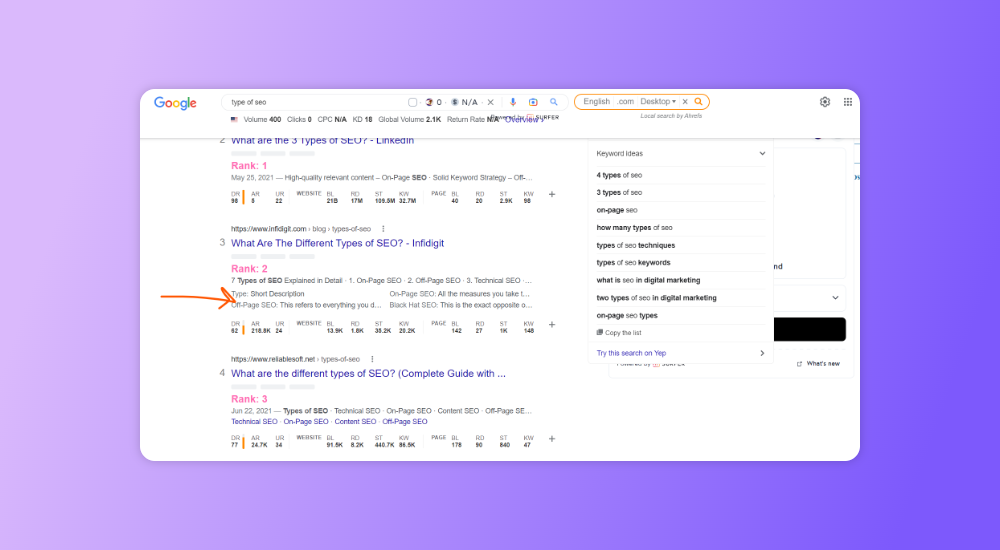
    Therefore, for a search engine to index or mark your website under the relevant search query, its HTML code and text should be properly arranged so that it is readable by the search engine. Meta tags and meta descriptions are used by search engines to display their listings and offer a short explanation of the website’s content to the visitor.

    Meta description

    These elements include a simple URL structure with a dependable domain name. Search engines detest long and complex URLs. For example, a website titled www.furniturespecialists.com has a higher chance of being listed at the top of the SERP as opposed to www.furniturespecialists123.net

    The navigation flow is crucial for a smooth and seamless technical setup which is a key to successful search engine optimisation.

    4. Media and Page Speed

    One of the major ranking factors for search engines is the loading time for web pages. The quicker a page loads, the higher will its rank be. Therefore, the rich media on web pages, such as videos and images should be compressed to reduce the loading time. Moreover, they should be appropriately labeled for easy readability by the search engine.

    Search engines recognize the importance of visuals and embedded graphics in increasing the visitor’s interest and enhancing the web page’s appeal. Therefore, enhancing SEO through the use of embedded videos & images helps increase a website’s ranking.

    5. User Experience

    The path of navigation through a website, popularly known as user experience, is an essential determinant of search engine ranking. The use of dead links or broken redirects hinders the SEO process as it leads the visitors to non-existent pages and successfully prevents the search engine from indexing your content. Website structure is an essential determinant of enhancing user experience and can skyrocket your SEO Results.

    Users are at the core of any business, therefore, providing them with an intuitive and engaging user experience is imperative for search engine optimisation.

    6. Plagiarism

    Plagiarized content or duplicate content leads to confusion among search engines, as they are unable to decide between the content that should be displayed. Moreover, they penalize plagiarized content and do not display that particular website on the results page.

    7. External and Internal links

    Links are important to determine the popularity of a website. Google visits all the links that lead from and back to the website to understand its popularity and authority.

    While internal links lead to content that is on the same website, external links are links on other websites which lead back to your website. Links that refer to your website are also called backlinks. A higher number of backlinks to your website are a plus for SEO strategies.

    Suggested Reading: 99+ Best Guest Posting Sites To Build Backlinks & Traffic

    8. Link Building

    Link building is the process of acquiring backlinks by prompting more websites to refer back to your content. The popularity and topic relevance of the linking site is important. Organic links can be obtained by producing creative and novel content, images, diagrams, and statistics. Outreach is another link-building method where you contact popular websites and persuade them to reference your web content.

    In order to gain further insights on devising a successful SEO campaign, click here.

    Takeaway

    Understanding SEO in its entirety and executing an effective SEO strategy is a long-term process that requires a detailed and comprehensive study of all necessary elements. It is always helpful to gain rational and helpful insights from professionals. WittyPen is a platform that connects niche writers with businesses seeking specific and quality content across categories.

  • Creating a Successful Website Structure For SEO – a 5-Point Handbook

    Creating a Successful Website Structure For SEO – a 5-Point Handbook

    #BackToBasics

    Consider a website – when you open it, you see welcoming fonts, cool colours, and exciting pictorial depictions. Remove these elements, and underneath it all lies the framework on which your website stands. Unless this framework is strong and logical, it will neither retain visitor attention nor make the search engine spiders hang on to it for longer durations.

    You cannot afford to have a high bounce rate as it defeats your purpose for a virtual presence. Hence, the need to create an effective website structure for SEO!

    Why should you have a proper website structure?
    1. It helps Google in crawling your website and index links.
    2. Reduces Bounce rate.
    3. Sends link authority from high ranking pages to other relevant pages on the website.
    4. Better UX for user retention.

    If your website is disorganised, trust us, you are losing out on some serious SEO leverage.

    When you are creating your website structure for SEO, you must have a proper strategy in place so that your website is successfully crawled and indexed by the metacrawlers and appreciated by users for its easy navigation.

    Without proper navigation around it, your site visitors will end up feeling lost and ultimately be prompted to move on to another website.

    What Should Your Website Structure for SEO Look Like?

    Okay, so let’s get down to business right away.

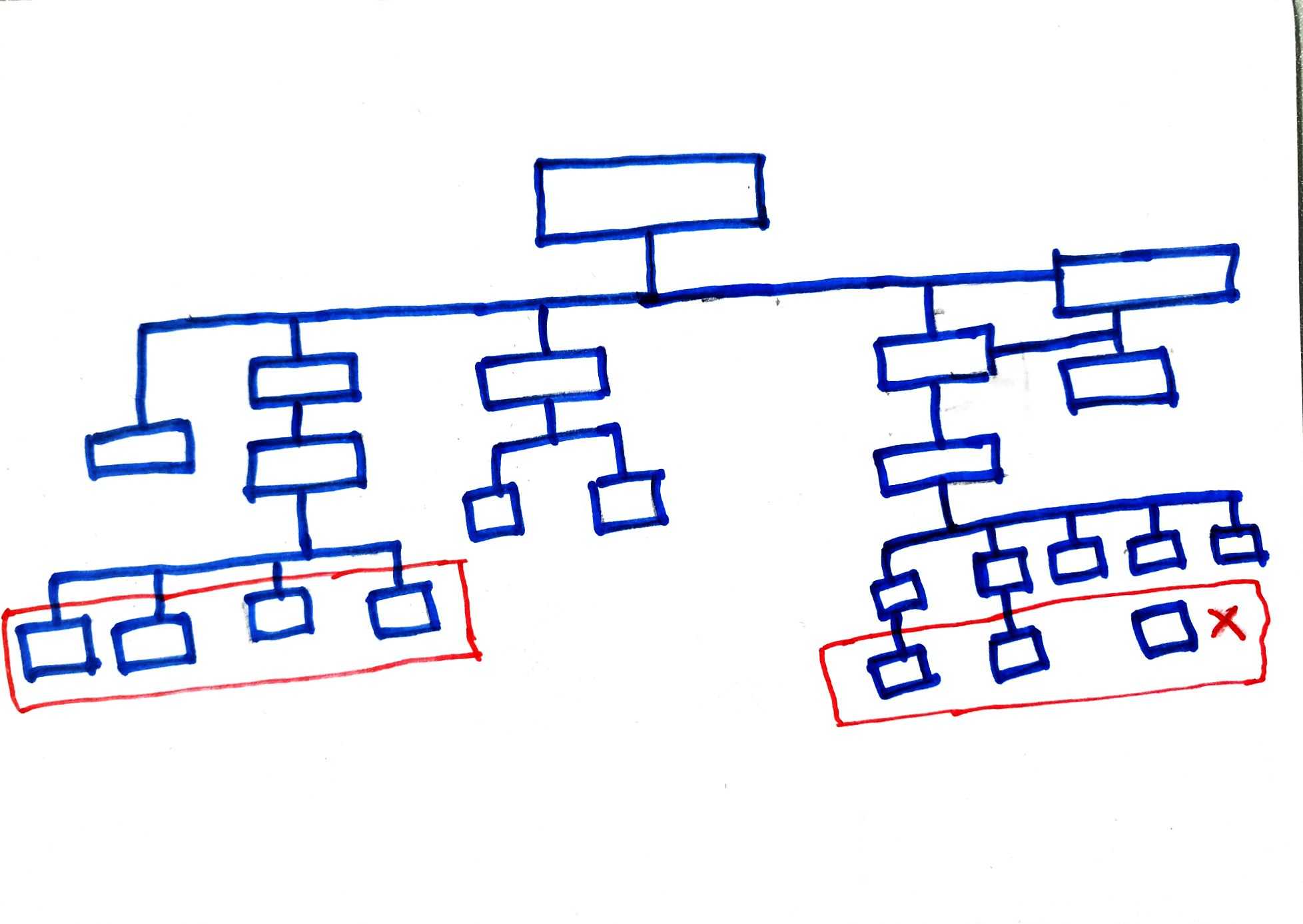
    Here’s how you should NOT create a website structure –

    Website structure

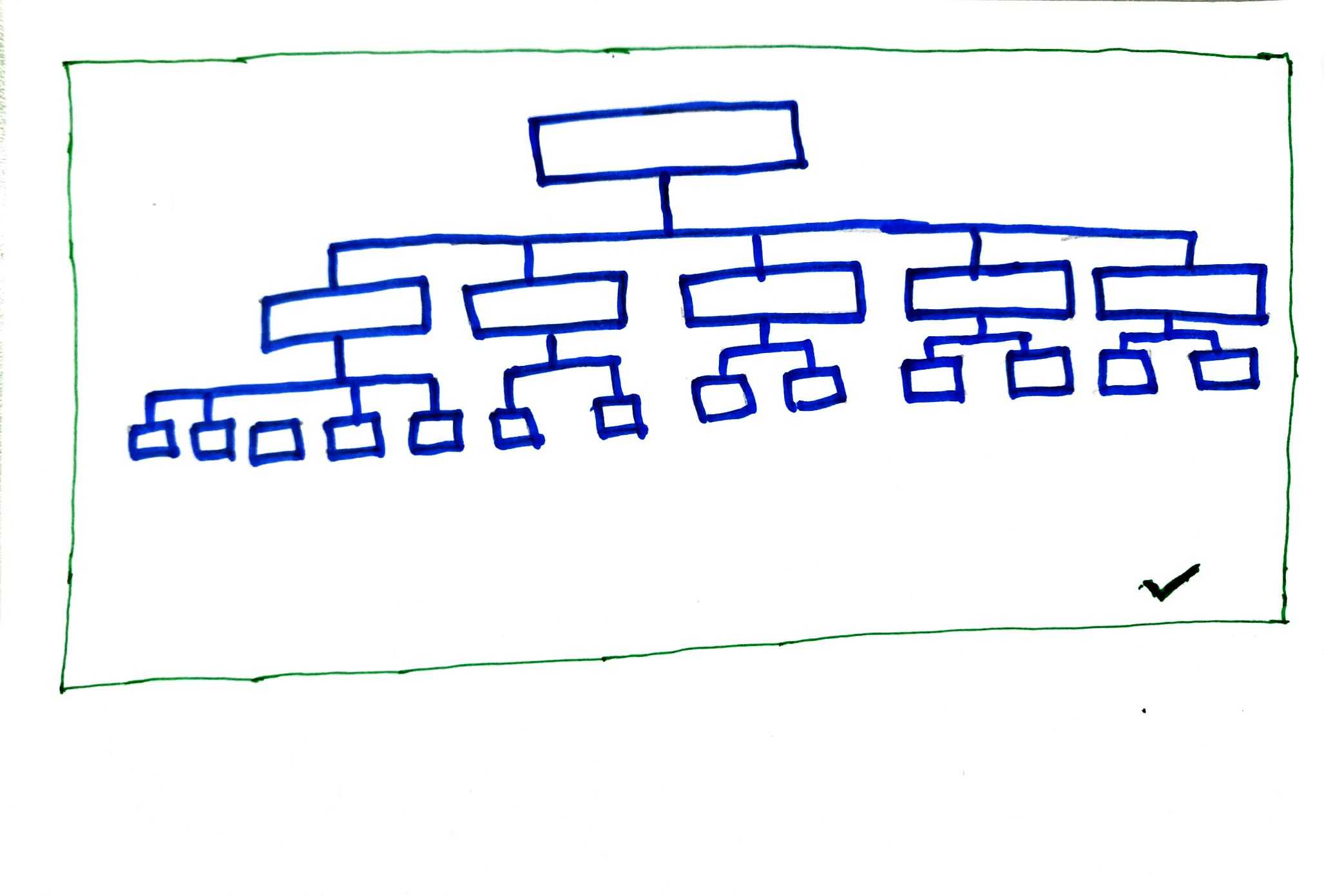
    On the contrary, this is what it should look like –

    Ideal website structure for SEO

    What are the Best Practices for Creating a Website Structure?

    1. Building from Scratch? Chalk Out a Site Hierarchy

    It makes sense to plan your website structure for SEO on paper or a spreadsheet and assign a relevant hierarchy to the pages. This will also decide the site navigation and URL structure. Make sure you make a logical assessment of the categories you will include, keeping the main categories from 2 to 7 in number and a few sub-categories under each one.

    Unless yours is an e-commerce portal like Flipkart, Myntra, or Amazon, you don’t need to have too many categories. Try to keep the subcategories more or less even across the webpage, but don’t worry if they’re not all of the same number. A slight variation is acceptable.

    Extra Note: Going hand in hand with evolving a site hierarchy is the need to deploy an effective SEO strategy for landing pages. This should be the next step after you are done with the website structure.

    2. Carve Out a Crawl-Friendly URL Structure

    After you have settled on a navigational hierarchy for your website, creating a URL structure is going to be a breeze. Your URL system should have the right keywords in place and be in tune with the navigational hierarchy.

    Let’s say, yours is a website design and development company with the main category pages on your website listed as Design, Website Development, App Development, Digital Marketing, About Us, Our Work Portfolio, and Contact. Consider the category ‘Design’ and its sub-categories Website Design, Mobile Site Design, Logo Design, and Custom Layout Design.

    The URL structure for two of the sub-category web pages under ‘Design’ will look like:

    www.xyzdesign.com/design/website-design
    www.xyzdesign.com/design/mobile-site-design

    It doesn’t have to be the exact same, but try to follow a similar approach across your website.

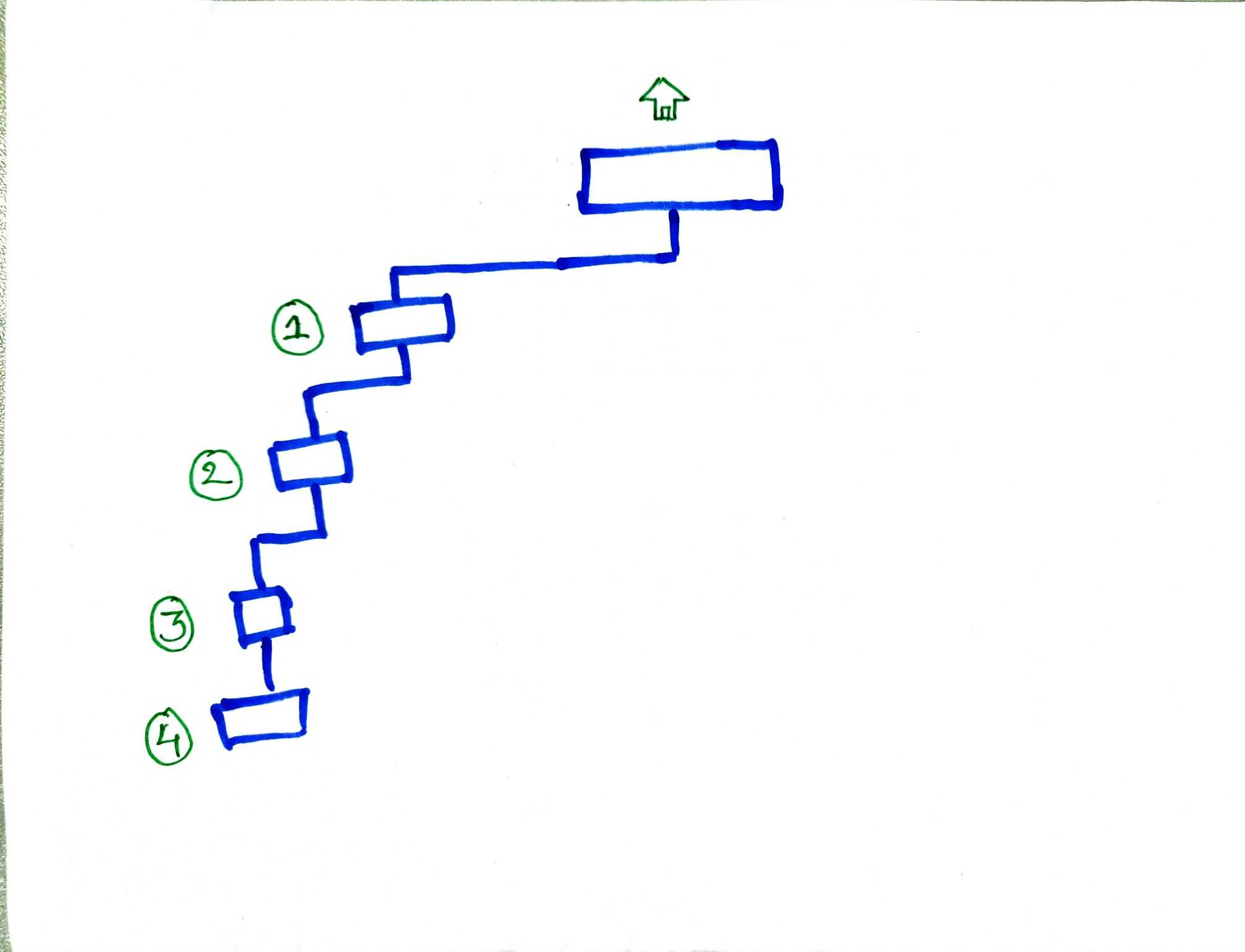
    3. Less than 4-Clicks is the key

    In one line, users should reach any page on your website in less than 4 clicks!

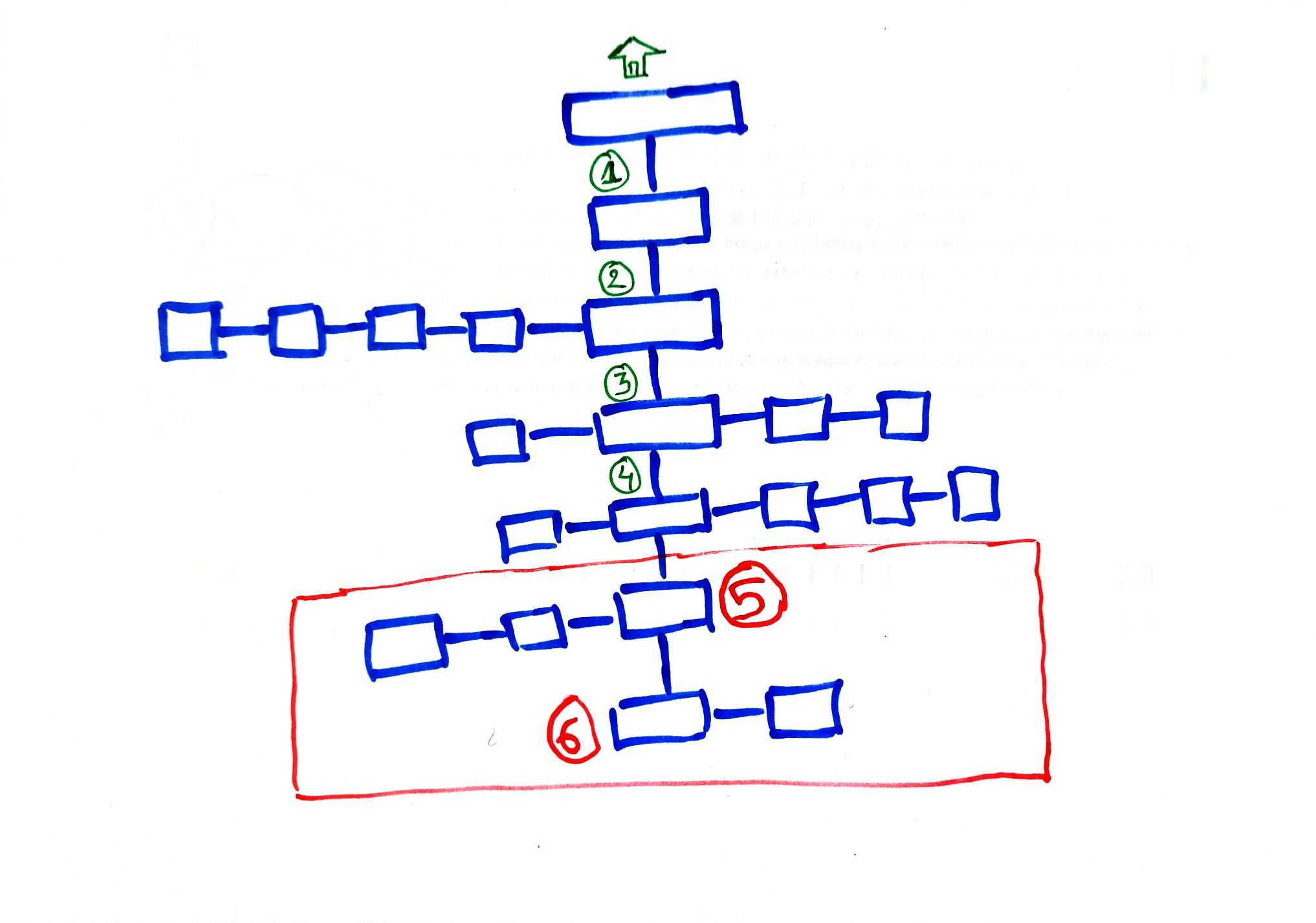
    When you want to facilitate effective user navigation through website structure improvement, refrain from burying your important pages deep within the website. This prevents them from being accessed easily by visitors and crawlers.

    The idea is to keep the navigation shallow and get all the pages on your website indexed by search engines so that they show up in the SERPs for relevant search queries. Here’s a quick visual interpretation for you –

    website structure best practices

    Below is how a “Deep” website looks like –

    website structure analysis

    4. List Your Main Navigation on the Header and Footer

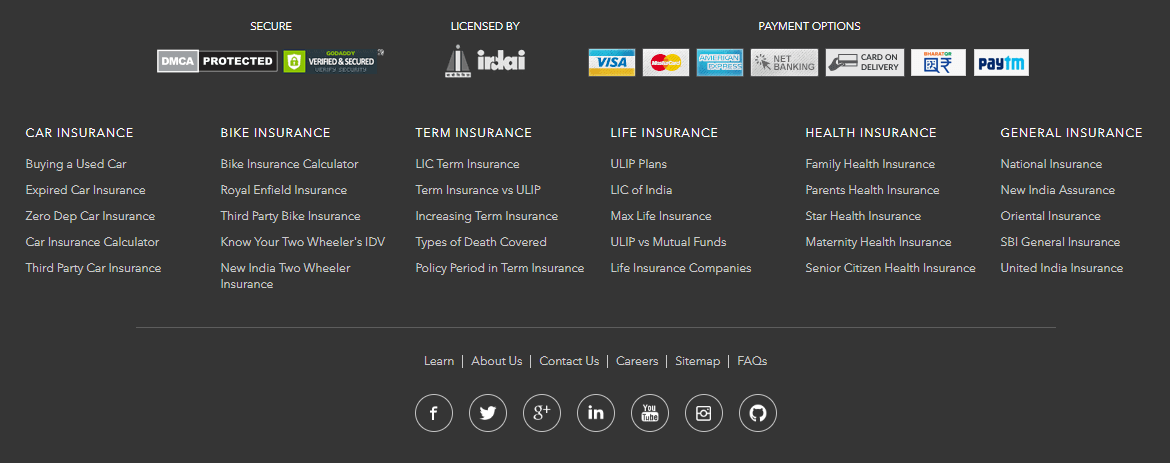
    Keep your header simple with just a few categories listed there and with a limited number of subcategories under each in the form of drop-down menus. The footer can have the sitemap which makes it easier to crawl and keywords as anchor text for better optimisation.

    5. Think Up a Workable Strategy for Internal Linking

    Internal linking lends credibility to your website’s navigational hierarchy. Do not complicate the links.

    The last pages in your site hierarchy must specifically have internal links so that the visitor knows this ain’t the end of the road for him and he can go to another relevant page on your site for more inputs.

    Internal links convey to the search engine which pages are important on your website and help them feature higher on the SERPs.

    Why is it crucial?

    It helps in sharing the link juice across the website, thus helping improve the ranking of pages deeper in the website structure.

    Quick Tip: Prefer HTML links instead of Js, it’s more crawlable.

    Creating a great website structure that works in your favour is no rocket science.

    You just need to stick to the basics and give high priority to user-experience.

    Rework the design and organisational aspects if you already have a website or build a strategy from scratch if the launching of your website soon is on your mind.

    Has something apart from these worked in your favour and shot up the SEO results of your website quite drastically? Share your ideas in the commen ts below.

    Reference : https://backlinko.com/hub/seo/architecture

  • Requisites for an Awesome SEO Strategy for Landing Pages in 2019

    Requisites for an Awesome SEO Strategy for Landing Pages in 2019

    A first impression is the last impression, indeed.

    After all the hard work that has gone into creating your web presence, the next important thing to do is convert your visitors into valuable leads.
    This is where an SEO strategy for landing pages come into the picture.

    Now, let’s take a quick look at this statistical information shared by Hubspot –

    The second edition of MarketingSherpa’s Landing Page Handbook mentions that 44% of clicks for B2B companies are directed to a business’ homepage and not a specially designed landing page.

    Just 62% of the companies using landing pages have six or fewer of these in total for their business.

    The handbook also mentions that the reason why businesses don’t use them is that their marketing department doesn’t know to get them up and running, or they have many other things on their agenda.

    Before we delve deeper into the SEO strategy for landing pages, let’s take a look at how a landing page works.

    Hey, wait!
    If you think this one’s a no-brainer for you, scroll to the end of the blog where I have added some of the best strategies for conversion optimisation. Don’t miss out on them!

    How Does a Landing Page Work?

    We know that a landing page is just like a web page that helps capture a visitor’s information through a conversion form.
    A good landing page targets your audience, provides them something of value and converts a chunk of your page’s visitors to leads. Your landing page should prompt the visitor to do one of the following:

    • click
    • buy
    • allow a follow-up by email or call
    • tell a friend,
    • give you feedback.

    Being a content-based strategy, content should be the primary focus here. Landing pages improve user experience and convert visitors into leads. They also support your SEO strategy when you are trying to rank better on search engines for your important keywords. Additionally, the content they present has every chance of inviting inbound links.
    Want to know the best part?

    A landing page creates a win-win situation between the site and the visitor. A visitor wishes to access valuable content from you. So, he feels he should fill the form on the landing page with his details.

    On the other hand, marketers willingly provide invaluable inputs with the desire that the visitor provides his personal information to push their marketing efforts in the future.

    Guidelines for Creating a Winning SEO Strategy For Landing Pages

    1. Publish it Linked to Your Own Site

    When creating a landing page for your website, keep in mind to maintain your search engine visibility and authority by publishing them to your own domain.

    Why lose out on the slight, if not much, leverage of a ranking boost when people look for your services using the keywords you have added?

    2. Figure Your Most Important Keywords

    Look for words that you want search engines to rank your page. Long tail keywords are easier to rank for on search engines.

    Start with making a list of the terms or search queries that are relevant to your page.
    Derive combinations of long tail keywords research from them by inferring what your prospect may type into Google to find what you offer.

    Here’s a quick example.
    You are a four-wheeler repair service provider in Pune and you are creating a landing page that aims to draw the attention of clients who own a car. Don’t try to rank for broad terms such as “car repair” or “four-wheeler repair company”. Instead, you can be specific and use keywords like “car repair company in Pune”. You may also be more specific and say “car repair company in Hinjewadi”.

    3. Add Keywords Strategically on Your Page

    Merely using keywords doesn’t help unless you use them in the right places. Here’s how.

    Title Tag – This is displayed at the top of your page in your browser tab and is the big blue link you see in the SERPs. Make it compelling and have the right keywords to encourage the reader to click.

    Meta Description – This is the short description that features below the page title in the SERPs. Use it well and have the right keywords in it to inform the reader what he is likely to find when he clicks the link.

    Header Tags – Prioritise your content by using HTML header tags starting with H1 as the main headline of your page. H1 tag informs Google what the most important words on your page are. Accordingly use H2, H3 and so on for the internal headings.
    Image File Names – Use descriptive file names for your images since Google crawlers read them. If the image alt text contains the target keywords, it will help in improving your ranking.

    But here’s the deal.

    Sprinkle keywords judiciously through your copy. Don’t indulge in “keyword stuffing” if you want to avoid being penalised by Google.

    4. Page Length Does not Decide Search Engine Rankings

    If you thought the length of a landing page is a yardstick for how it fares on search engines, you need to rethink your SEO strategy! Brevity is important and not all long-form content ranks high on Google.

    This may contradict common belief of marketers that search engines favour long content but the better ranking may also be if a page is well-researched and valuable to the reader.

    If a page attracts readers and makes them stay longer, the battle is won.

    At the same time, do not shy away from mentioning all the important points even if it means providing useful information to your target audience.

    5. Creating Content That Invites Backlinks

    Quality backlinks can help your rankings get a boost in the SERPs. If someone likes your page and is linking to you, it tells Google that you have something of value to offer to your visitors.

    A combination of great, well-researched content and targeted outreach can help in building good links.

    Be creative and keep these pointers in mind when you conceptualize your landing pages or the SEO strategy for them. Figure out what can attract your target audience to avail your services.

    Sit back with a cup of coffee (or tea, if you like) and think with a free mind how best you can formulate your landing page strategy.

    Step into the shoes of a customer and jot down ideas as they come to you. Zero-in on the best
    ones and create optimised landing pages.

    Examples of Few Best SEO Focused Landing Pages

    Whether you are a landing page creator or a service seeker looking to get a few of these done for your website, this will get you rolling.

    Here are some of the examples to help you build compelling landing pages.

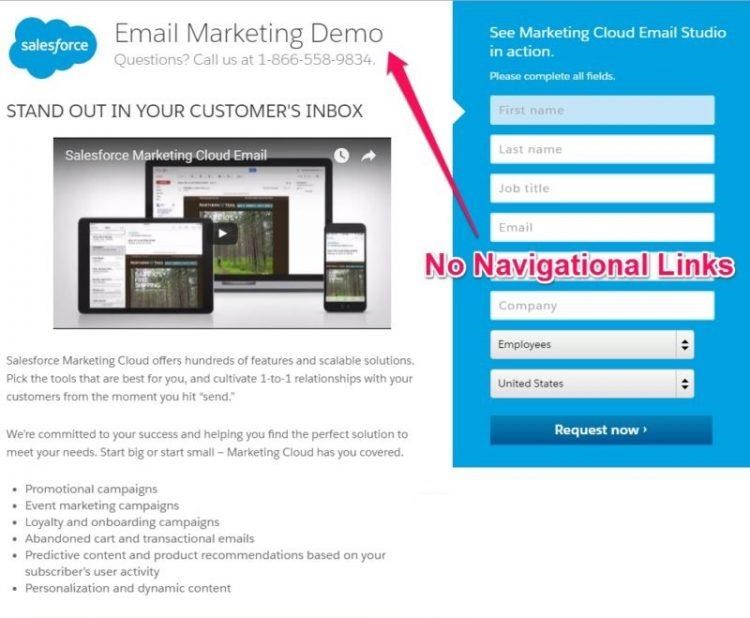
    1. Doing away with navigational links

    This landing page focuses on having just one call to action (CTA) in the form of a clickable link. Bye, bye distracting footers and navigation bars!

    Landing Page Examples

    2. A short, crisp video explaining the landing page goal

    Quick communication is the key and this is deployed well in the example you see below. Tell your story effectively in a video, talking about the benefits of your product/service in a crisp yet engaging manner.

    Landing Page Examples

    3. Benefit focused headline and sub headline

    The illustration below shows that the headline mentions the benefit of availing 86% discount upon signing up for the magazine. The brief snippets tell the reader what they can find in the magazine. With a contrast colour call to action button that invites the visitor for a yearly subscription, this landing page has everything going for it.

    Landing Page Examples

    4. Content driven and provides social proof

    The page provides crisp content on how the company’s marketing tool can benefit marketers across the world. The headline and sub headline reiterate the benefits and provide a proof of how the tool has been helping thousands of businesses.

    You notice the call to action in contrast colour instantly and are prompted to fill in your personal details to watch the demo.

    The logos of prominent companies, indicating their clientele, further serves to cement their reputation on the visitors’ minds. This is among the best landing page practices as far was SEO benefit is concerned.

    Landing Page Examples

    Should PPC and SEO campaigns have different landing pages?

    The answer is a yes.

    SEO and PPC campaigns are optimised in different ways. SEO campaigns are run with a lot of content that must be relevant to visitor needs and should be like SEO storytelling. They aim at winning organic search traffic.
    So, an SEO-driven landing page will be keyword-optimised and show a lot of relevance to the searcher’s intent. I have already shared inputs on what makes a winning SEO landing page in an earlier section.

    PPC campaigns focus on conversion optimisation. Hence, PPC landing pages should be compatible with the ads and need to be created such that they allow the target audience to perform the required action.

    Landing pages for PPC do not have to be content-loaded. The little content they have must aim
    at getting conversions and providing sound user experience.

    A PPC landing page can contain one or more of images or video, testimonials, consistent branding, CTAs, simple conversion form, trust symbols and a strong headline.

    Visitors should be able to understand the offer easily and prompted to click the call to action button.

    Heck Ya! I Want to Know the Top Strategies for Conversion Optimization!

    Here’s the deal:

    Landing pages present several opportunities for conversion optimisation. Period.
    Take a look at these SEO strategies for landing pages.

    Social Proof and FOMO to Persuade Users and Influence Their Decisions

    FOMO means “fear of missing out” and this has been prompting several actions online today by marketers and website owners. This strategy is a pretty powerful one and is known to work successfully on landing pages. It tells users they will be missing something if they do not act within a specified period of time.

    Apply it in your landing page copy, stating the specific date till when the offer lasts or a CTA like “Only 15 left in stock. Hurry!”.

    Social proof also works to push users to help you attain your conversion goals. If you have a celebrity testimonial or the brand logos of popular companies benefiting from your products/services, it makes you more credible to your visitors.

    Keeping Bounce and Exit Rates Low

    A high bounce and exit rate means your page is not engaging enough or your offerings do not excite prospects. You need to figure out why.

    Make an analysis to know where you are going wrong. Come up with questions like “is your website navigation-friendly?”, or “are the services or products I am offering of good value to prospective users?”

    Bounce rates also tend to be on the higher side if your landing page is not optimised to provide a pleasing mobile experience. Ensure you create mobile-friendly designs that amplify user experience even on a smaller screen.

    Employ Lead Capture Forms

    Lead capture forms present a huge potential for generating leads and boosting the conversion rate of your website. Online tools such as ‘Leadformly’ makes it easier for owners to create these forms with high-converting capabilities.

    Audio-video Medium Create a Lasting Impression

    Videos communicate your brand’s story in the best way possible and help in cementing relationships with prospects and clients. This taps a user’s tendency to be more inclined toward watching videos, knowing that his attention span may not be more than a few seconds. If you can create a big impact in those few seconds, the battle if half won. Getting them to convert is winning the rest of it. Know how to embedded video can improve your SEO Landing Page Strategy

    Wrapping It Up

    By now, we understand that having a landing page is a great idea for increasing conversions. Making a profit out of a landing page is not always the idea. Your job is almost done even if your landing pages manage to bring traffic to your website or build your email list.

    While it is very important for you to follow the best practices for building your landing pages, you must also know that every rule may not be applicable all the time. You need to work around what is the best fit in a given situation.

    Best practices are definitely stepping stones but you may sometimes need to work around them to suit your business.

    So, are you willing to do what it takes to build that great first impression?

  • Cluster SEO Strategy – The Future of Content Marketing  [Updated]

    Cluster SEO Strategy – The Future of Content Marketing [Updated]

    Change is the only constant in this world and even the virtual world couldn’t have eluded its effects. One thing that actually remains unchanged is the competition that every website has to face and the owners are willing to go any length to outdo their competitors in the race to the top of the search engines.

    So, what is the deal about search engine rankings?

    There is immense competition to get noticed in the search engine results and subsequently ranked there. This has forced websites to perpetually reconfigure their strategies for web pages and this is where the idea of

    SEO strategy comes into the picture here.

    Consider this, you have a question plaguing your mind concerning the product you are looking to purchase or a service that you want to avail.

    Your first instinct is to ask the search engine, and voila, you get several result pages of which you choose to visit any one that seems most relevant to your query.

    This piece of content answers your query, but while you sit reading the article, it brings some more questions to your mind.

    What do you do next?
    Go back to the search engine and input another query? Absolutely not!

    Instead, wouldn’t it be wonderful if the original article you stumbled upon provided you with a route to find answers to the new questions that you have without having to find your way back to Google?

    This is precisely what a Cluster SEO strategy can do for you.

    Hey, if you are an experienced marketer already familiar with how topic clusters benefit your SEO, move to the part of the blog where I have mentioned a step-by-step method you can follow to create topic clusters on your website.

    What is the Cluster SEO Strategy?

    We know that search engines are intelligent. With their algorithms evolving constantly, your queries are handled with even more precision today than earlier.

    How often do you find yourself looking for something as specific as the “best Chinese restaurant on XYZ road of ABC city” or “where can I buy a smartphone near my home”?, and you get precise results with names of service providers, their physical addresses, and contact information in seconds!

    Amazing, eh?

    With changing user behaviour, search trends have changed and queries have become more specific than before. Further, people turn to search engines every time they have a query, be it about a company, product or service. They need precise answers to specific questions and they need them fast.

    Also, with the option of voice search available to them, specific questions with long tail keywords are pretty common today. Smartphones and tablets have made voice search more popular with users who are constantly on the move. They find it time-saving and much more convenient to “Search by Voice”, (like Google calls it), than typing the query into the ‘Search’ field.

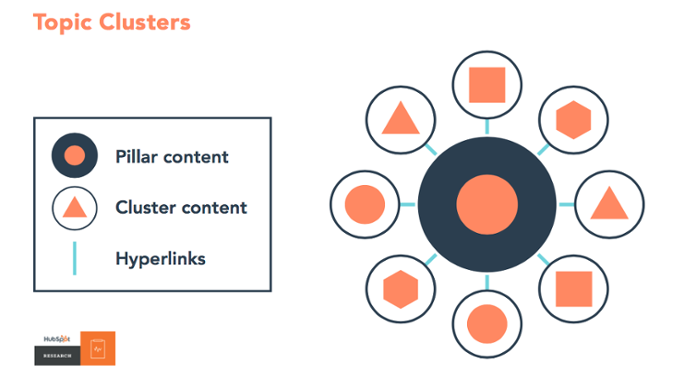
    SEO has also evolved over the years and the focus has slowly shifted to the topic cluster model where the “pillar page” is the primary hub of content and multiple content pages related to this topic link back to the pillar page and also to each other.

    In short, they form a content cluster or a topic cluster.

    Cluster SEO strategy diagram

    Image Source:hubspot.com

    Such linking hints to the search engines about the authority of the pillar content on the topic which in turn helps it gain popularity and climb higher on the Search Engine Results Pages (SERPs) with time.

    The topic cluster approach to SEO is quite a drastic shift from the keyword based model you are acquainted with. It involves rearranging the architecture of your website by linking content clusters with the central topic page.

    Cluster SEO Strategy Illustrated

    Let’s take a look at an example to understand topic clusters and pillar pages better.

    Fitness and health are a rage today and yoga has been drawing attention not just from people in India but from around the world. People often search for specifics related to this topic such as below:

    • Yoga postures.
    • Yoga for fitness.
    • Yoga poses for kids.
    • Yoga poses for a flat stomach.
    • Yoga for beginners.
    • Yoga for senior citizens.
    • Yoga for knee pain.
    • Yoga apps for learning.

    The focus is on the core topic ‘Yoga’ which evidently becomes the pillar page. The specifics that people search for become the cluster content, each of which is linked to the pillar page and rely on it for showing up in the SERPs every time a user inputs a query relevant to them.

    How Have Search Engines Compelled Marketers to Rethink About the Content Marketing SEO Strategy?

    The emergence of cluster SEO strategy can be attributed to changing user behaviour on search engines which has forced SEO specialists and marketers to completely revamp their site structure.

    Gone are the days when users posted fragmented keyword queries on search engines. The trend has now changed to more complex and specific queries with focus on precise long tail keywords.

    Users are more tech-savvy today and know how to use technology to their advantage. There is an increasing tendency among them to run specific, need-based searches. The conversion rate of such queries are usually higher. If you want your website to rank higher on these searches, you must use long tail keywords in your cluster SEO strategy.

    Google’s search algorithm is smart enough to decipher the topical context and intent behind searches. It knows how to relate them to similar query searches by the same user in the past and suggest web pages that befittingly answer the query.

    Google’s Hummingbird update in 2013 spearheaded this shift in focus as the search algorithm began parsing out phrases instead of focusing on keywords only. Google’s Rankbrain update in 2015 strengthened the reliance on topics and further helped the search engine understand the context behind searches.

    Updates on the search algorithm of Google have been happening even as you read this. It looks like pillar content marketing is here to stay for a long time and your SEO efforts would revolve around it.

    Quick Step-by-Step Guide to Creating Topic Clusters

    Here’s a look at how you can model your Cluster SEO strategy.

    1. Identify the Gaps in Your Content

    Figure out the keywords/topics your competitors rank for but you don’t. These are the problem areas you need to address if you want to gain authority on a topic.

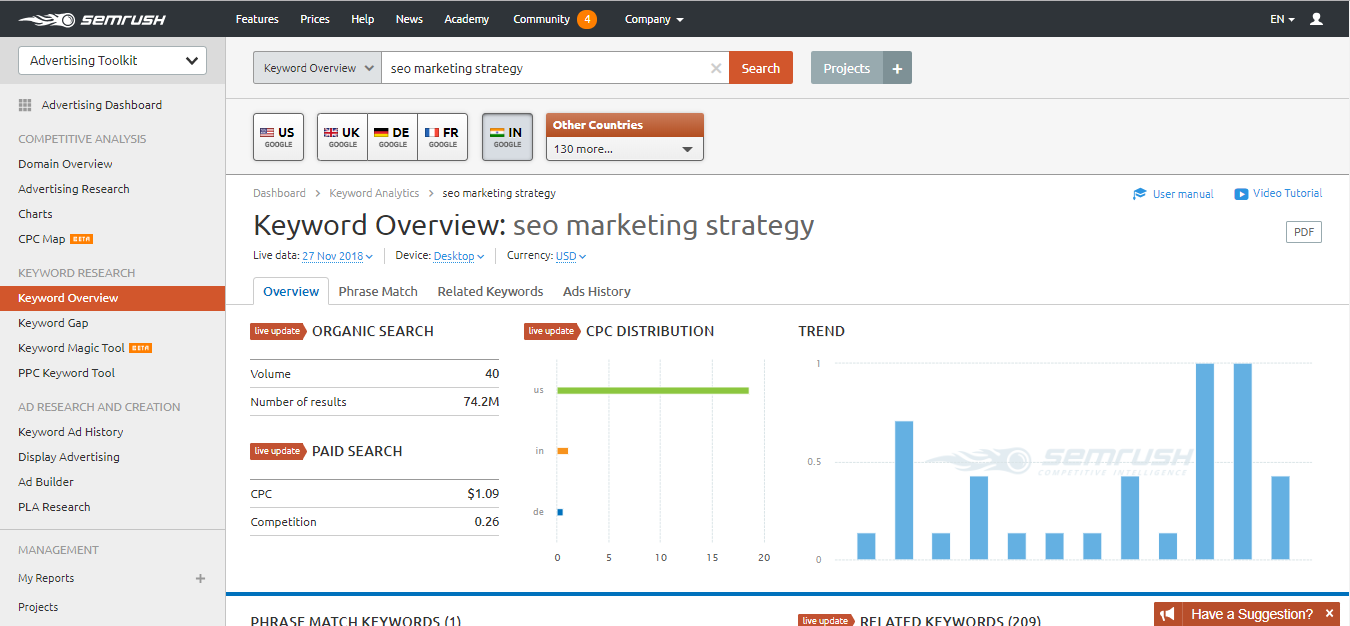
    There are tools online you can effortlessly use to identify the content gaps among which SEMrush is a trusted one. Use it to get a clear, in-depth analysis of your website. Incorporating the results in your online content marketing seo strategy have been known to show significant results on your website’s performance. Get started by providing your domain URL in the search box and selecting your country.

    SEMRush keyword overview tool screen shot

    Image Source:semrush.com

    2. Figure Out the Most Common Questions Thrown by Your Target Audience

    Spend some time researching on the kind of queries your target audience are most likely to ask on the search engines and formulate your content strategy around it.

    For example, if you are an electrical repair company in the Kandivali region of Mumbai and cater to demands in and around this suburb, it is logical for your website to show up in the SERPs every time anyone queries “electrical repair company in Kandivali”. Likewise, you need to optimise your page for specific queries such as “fan repair Malad west” or “refrigerator repair Goregaon” (provided you offer your services in these areas).

    Use the Google Adwords Keyword Planner Tool and input broad keywords to check what kind of queries the search engine has been receiving for those terms. Identify the search volume to know the keyword variations that make sense to your business. Import few relevant ones to an Excel sheet and these will form the focus for your cluster SEO strategy.

    3. Review Target Keywords to Arrive at Your Pillar Content

    Give some thought to the keywords to arrive at the pillar content you want to add to your website and create pages for each. These become your pillar pages and are those to which you intend to drive targeted traffic and convert users.

    Pillar pages should have substantial content and they should be able to resolve visitor queries. Every keyword you identified in the previous step becomes a pillar and provides primary support to a large cluster of long tail keywords which will form the cluster content mentioned in next point.

    4. Create and Group Cluster Content Around Pillar Pages

    Create and group the sub-topics according to the pillar content and you will have multiple sets of topic clusters and pillar pages ready. Each cluster comprises a pillar page and a set of content pages linking to the pillar page.

    Use sub-topics to arrive at blog posts or web page ideas that throw light on a specific concept within the scope of the pillar content. Together, all the sub-topics form a cluster. Ideally, you may have five to 10 sub-topics in a cluster to create a topic cluster. How you can arrive at keywords for your cluster content is elucidated in the following step.

    5.Conduct Keyword Research to Identify Long Tail Keywords for Every Sub-Topic

    Long tail keywords often end up being specific and indicate that users turn to search engines for precise information on a subject. This is where you will be optimising your pages for specific keywords. Use the keyword tool again to figure specific keywords for each pillar. These keywords delve deeper into the main keyword, which is also the idea behind cluster pages. Make sure that the content is relevant to the keywords so that your visitors get what they are looking for and should not bounce back immediately.

    6. Hyperlink All Content in Every Set to Build a Topic Cluster

    Hyperlinking is the key when you want to keep your audience engaged on your website for a longer duration. Use the right anchor text and ensure that the pillar page your content links to has substantial information to make your visitors happy.

    What happens when you already have a set of informative articles/blogs up on your website or ready on your dashboard? You cannot afford to let the valuable content go waste. Follow the reverse approach in such a scenario.

    Review the live or ready ones and arrive at the main topic each of them focuses on. These topics become the foundation for your pillar content and they must capture relevant long tail keywords to gain leverage on search engines.
    Going forward, the ideal approach would be to conceptualise the pillar content and tailor your cluster content around it.

    How to Establish Your Authority Using The Topic Cluster SEO Strategy?

    Today, the question that plagues the minds of marketers is “how to improve a website’s SEO ranking on Google”? Creating topic based content is the answer.
    Merely creating content does not work without the backing of a strong SEO strategy.

    If you are posting informative content on your website, it has to be found in the SERPs by your target audience. Only then will it meet the goals of your business.

    Here are a few things to note:

    • Linking content together on your website indicates your authority on a topic to the search engine. If users stay on your page for some time and move across the content pages, it can help boost your ranking on Google.
    • To bolster your cluster SEO strategy, you need to rank for an entire topic and just targeting a few keywords will not help. Your pillar pages and the content clusters around each of them will form the topics you want to derive SEO leverage from.
    • When the cluster content and pillar pages are relevantly linked, you convey the message to Google that you have a strong command over everything related to the topic. You will gain authority on the content over time with Google giving your pillar content and its sub-topics a good leverage in the SERPs. This boost in search engine rankings is the reward you get for your site restructuring and making your web pages logically linked and easy to crawl.
    • Remember that there’s a caveat here. Your pillar pages must have substantial content because your sub-topic pages will be linking to it. So, if a site visitor decides to click the pillar page link, you should derive something concrete out of it or it should answer his query. Only then will the visitor be prompted to convert to a lead.
    • You aren’t writing content for search engines . Instead, you must produce informative content that will be a value-addition for your audience and help customers find you.

    Chisel your Cluster SEO Strategy Today and Boost Your SEO Rankings.

    Yes, the verdict is out.

    Search engines like Google favour topic clusters and this strategy is mainstream already.

    By giving you greater search visibility for a topic, interlinking cluster and pillar content, and funnelling your site visitors from cluster content to pillar pages you can get visitors hooked to your site and push your ranking up by a few notches on the search engines.