Category: SEO Strategies

  • 5 Signs You Should Invest in off-Page SEO Optimization

    5 Signs You Should Invest in off-Page SEO Optimization

    Search Engine Optimization has two parts – On-Page and Off-Page optimization. On-Page optimization is figuring out the right meta tags, page titles, page speed, and interlinking for your website. Off-Page optimization is about building your brand’s authority by using quality links, social media, and good relationships with influencers and customers.

    While brands continuously work on optimizing their website, they often do not take enough care of Off-Page SEO optimization. There are various reasons that support Off-Page SEO optimization. Have a look at them below.

    – It helps in achieving positive audience interactions for your brand.
    – You can get brand mentions, positive reviews, and links through Off-Page SEO optimization.
    – It can help in increasing the traffic and conversions for your website
    – It also helps in getting higher search rankings on Google and other search engines.

    Therefore, in this blog, we will talk about 5 Off-Page SEO techniques that can help you achieve the above.

    1. Have a Kick-Ass Customer Service

    Your customers are of utmost importance to you.
    So, you must provide excellent customer service, and make sure that all the grievances and complaints of your customers are resolved.
    This way every customer will feel special while he or she interacts with your brand.

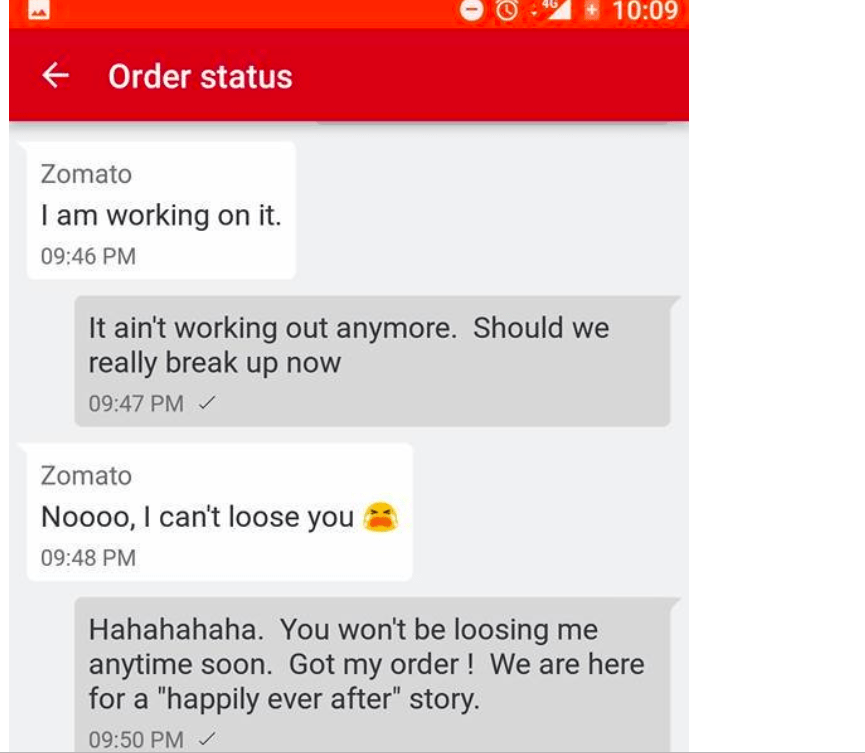
    Some brands that have been exceptionally good with customer service include Zomato. Check out this amazing experience with Zomato that a customer shared himself.

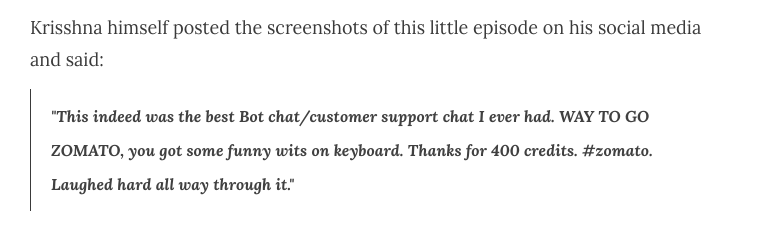
    Zomato Customer Care

    Here is the link to the full article.

    A brand like Zomato, which provides a great customer experience can easily get plenty of user-generated content and rave reviews.

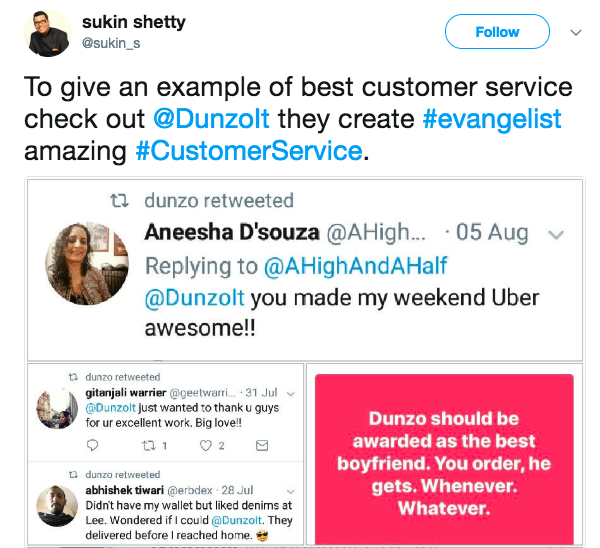
    Another example is Dunzo, a hyperlocal, concierge services startup from Bengaluru. Dunzo’s customer care does a great job of garnering positive customer reviews. Here check it out yourself.
    Zomato Customer Care

    Dunzo Customer Care

    We understand the importance of a good customer experience. Therefore we at WittyPen ensure that all our customers needs are met and their experience is hassle-free.
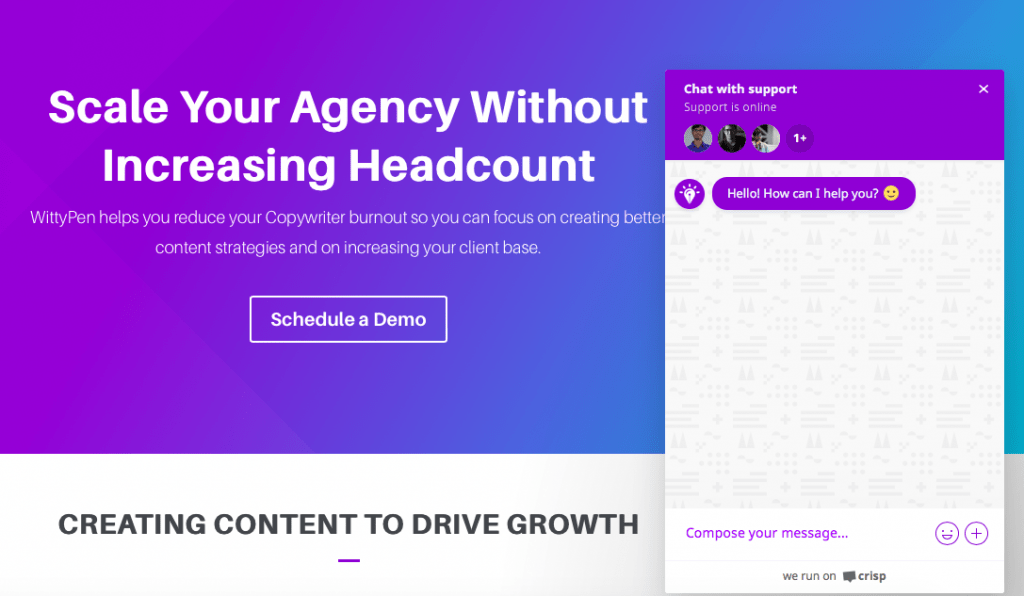
    WittyPen customer experience

    2. Do Well With Guest-Posts

    Focus on building long-term relationships with influencers and brands rather than just wanting short-term gains – backlinks. Backlinks would eventually come through influencer marketing.

    But it won’t come anytime soon if you just focus on having transactional relationships. So it seems to be the right time to bid goodbye to “give and take” behavior.

    Instead, you must engage with the social media platforms and websites of your potential publishers, editors, influencers, and brands online.

    Also, you should read, review and comment on their work. It takes time to build a long-lasting relationship. But once built, it stays forever and can help your brand build authority in the longer run.
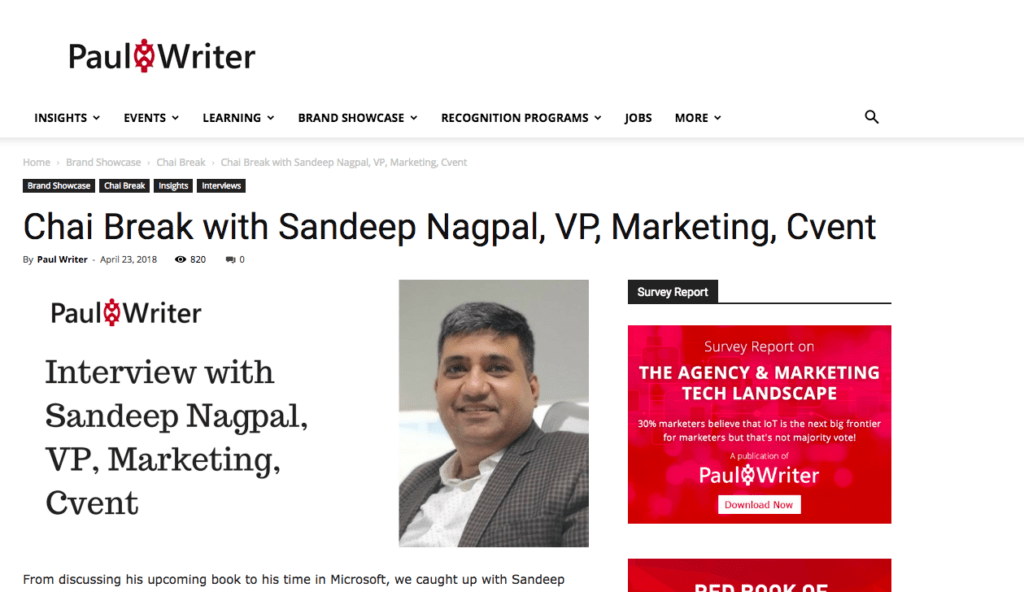
    Paul Writer does an amazing job with guest posts.
    Guest Post

    Guestposts help businesses garner a lot of domain authority. And we at WittyPen understand that.

    So we too invite industry experts to share their views on various aspects of content marketing. You can check out some of these articles right here. (These include interviews with Canva, FactorDaily, WebEngage, CRY , DHFL and more)

    Interview with CRY

    These posts have helped us get a lot of visibility and brand awareness – because the industry experts who were interviewed shared them on their personal social media handles.

    Social Sharing of Our Content by Industry Experts on Their Personal Handles.

    You can check the one by WebEngage here, and the one by FactorDaily here.
    Another example is our guest post with Mondovo. We approached Mondovo for a guest post in the month of February, and a few days later we also made an infographic on their blog, and guess what! We got a backlink from them.

    Guest Post By Mondovo
    Mondovo interview

    Our infographic on Mondovo’s Blog.

    Infographic

    Mondovo’s backlink to WittyPen

    Mondovo's backlink to Wittypen

    So guest-posting brings in results, but with time. But those results are totally worth the time and effort.

    3. Experiment with different types of content

    Apart from writing your regular text blogs, you must experiment with different types of content.
    Because the audience today consumes all types of content, especially videos and images.

    Therefore you must invest in these content formats- you can create them easily in-house with so many free tools.
    Always do SEO checks before you post. Here is a 7 SEO checklist to help you out.

    For their new product, Cornetto Oreo, the brand has done a brilliant job with online video marketing. The advertisement is short and to the point. It showcases the product – delicious Oreo crumbs with a mix of vanilla cream, wrapped in a first-ever chocolate cone. It’s definitely a mix made in heaven and nothing less than a #PerfectMatch

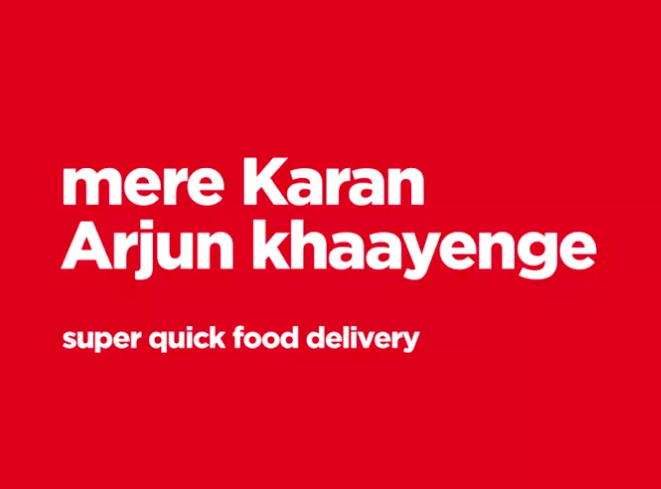
    Zomato again does a brilliant job with plain yet hilarious creatives.
    Zomato Ads

    Zomato Ads

    4. Evaluate your user’s search intent

    It is very important to be visible to your audience. Most of the time, despite having a stellar product, our audience doesn’t choose us.
    The reason is – we aren’t matching our offering to the needs of our prospective audiences.

    So, we would be able to present a solution – our product/services to their problems at the right time if we know their intent.
    There are many ways to do this – You can also use Google Keyword Planner, Moz Keyword Explorer, Google Autosuggest, forums like Quora and Inbound.org as explained in this blog to know the kinds of questions asked around a particular keyword.

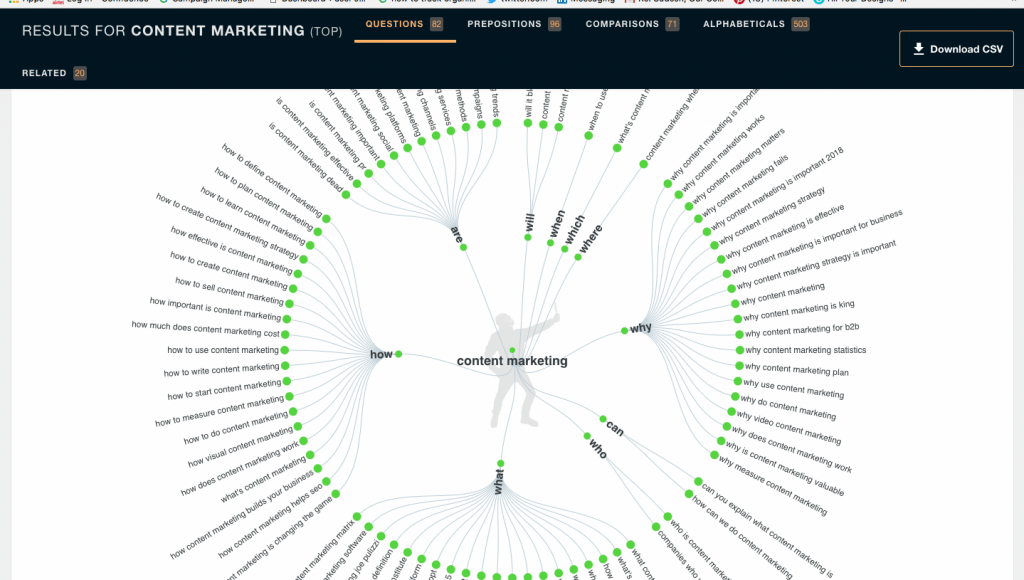
    You can also use tools like Answer the public to know the questions that are frequently asked around a certain keyword.
    Answer the public

    5. Be active on social media

    Social media is the place that your audience will go to once they discover your brand. The reason – is they want to read comments, and reviews about what you do – and also interact with you. Most importantly, ask questions.

    So it is very important to have a presence on social media to not only answer the questions of new users but also to engage old users.
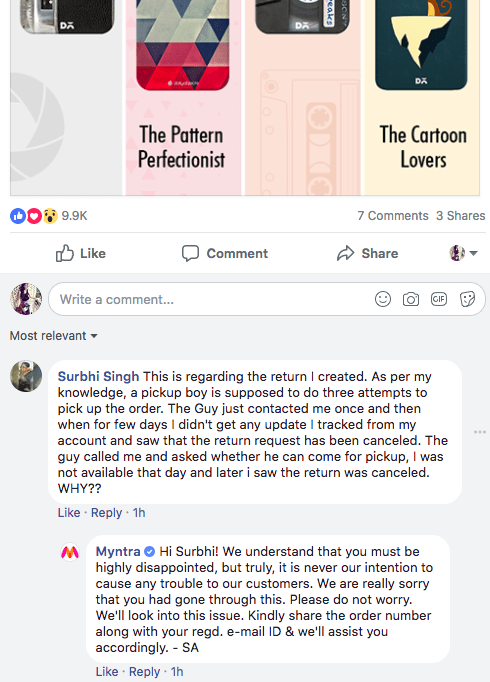
    A brand like Myntra that’s super popular and is very active on social media. It responds to customer queries and complaints almost immediately.

    In the below example, a customer has expressed her dissatisfaction, and Myntra has responded instantly- thus making way for a good customer experience.
    A personalized and timely approach by a brand makes the user feel important and trusts the brand even if it makes a mistake.
    Myntra Query

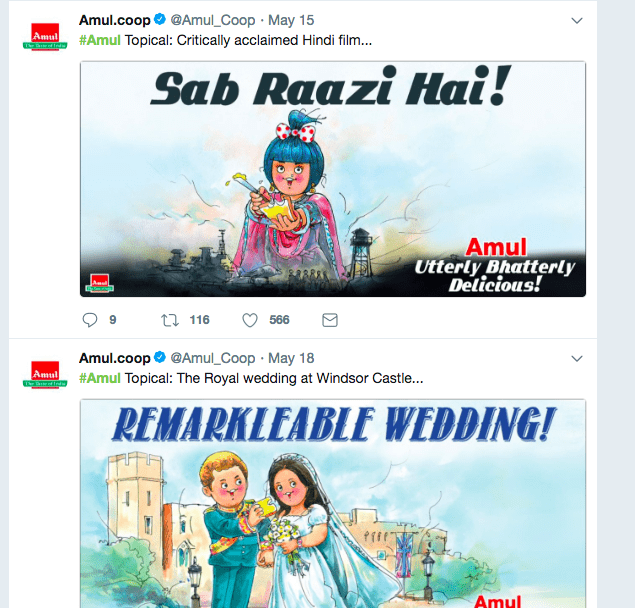
    Amul comes up with the most engaging posts on Twitter. It makes sure to sync its posts with what’s trending, and hence gets lots of engagement.
    Amul Twitter

    We at WittyPen also make sure that we respond to all the queries and complaints on time.
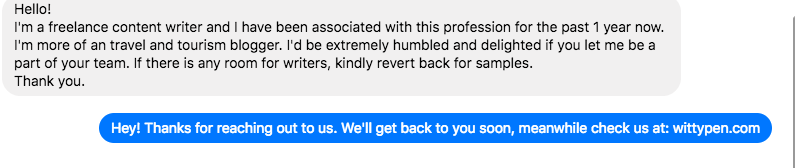
    WittyPen Chat

    Unsatisfied customers can be very vocal on social media, and any communication, especially negative spreads like wildfire. So, that’s another reason that you must attend to all your customer queries and solve their problem at the earliest.

    Conclusion

    This brings us to the end of our Off-Page SEO techniques. We hope that these were helpful to you.Here are some more SEO blog tips. If you are looking out to build great content for your website, then download the e-book right now!

  • 8 Ways to Do Google My Business Optimization [Infographic]

    8 Ways to Do Google My Business Optimization [Infographic]

    If you have a business or a service that you want to advertise online, then it is essential to have your product /service locally listed.  Promoting your business locally helps in the brand development and in creating awareness. Through this, your product/service will be exposed to a larger audience and more people will eventually utilise your services or buy your product.

    A recent survey by Bright Local reveals that local searches generate around 21-23% traffic for small business websites. That is more than the combined searches made through paid AdWords and social media. Hence, local listing should never be ignored.

    A great way to start with listing in Google my Business Optimization.  Adding the right information, visual content(pictures, videos etc), and making your profile look professional will improve your ranking on Google searches. This will also expand your visibility and increase customer engagement with your brand.

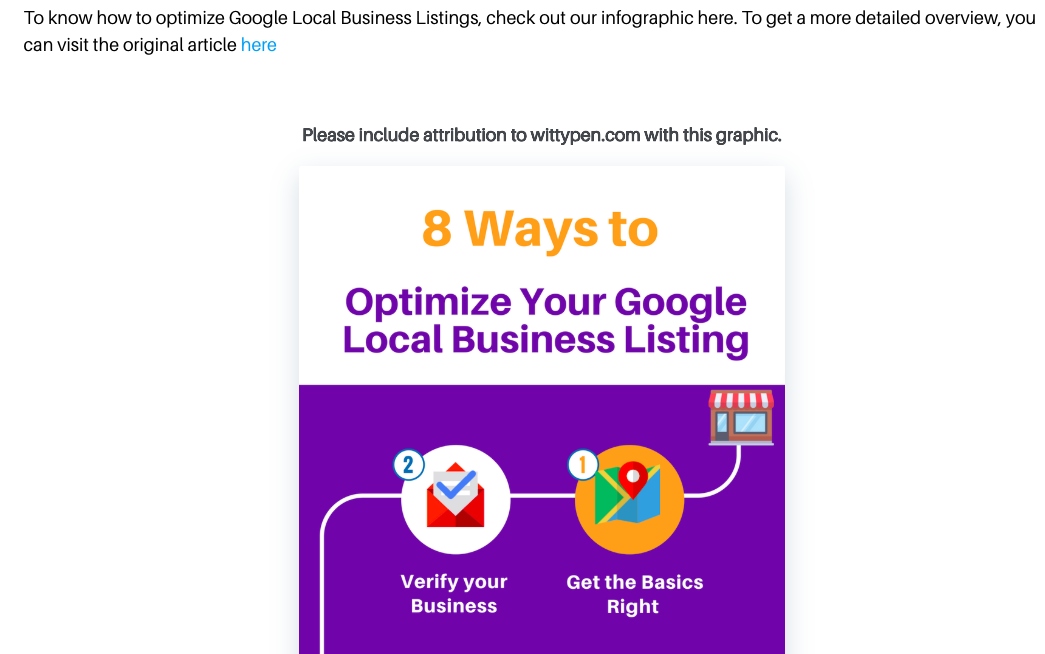
    To know how to optimize Google Local Business Listings, check out our infographic here. To get a more detailed overview, you can visit the original article here

    Please include attribution to wittypen.com with this graphic.

    8 Ways to Optimize Your Local Google Business Listing

    This was all about Google my business optimization. Here is some information about off page SEO Use it well!

  • What Are LSI Keywords and How Can They Impact Your Blog?

    What Are LSI Keywords and How Can They Impact Your Blog?

    Google and other search engines are constantly trying new algorithms to enhance the user experience while you search for something. The way they work is pretty simple. They want to eliminate all content that’s low-quality and present high-quality long-form content to their users. They use crawl bots for this purpose.

    The bots index, categorize and crawl through the content on your website to understand its relevance with respect to the user’s intent of the search.

    While most of us are aware of how critical primary keywords are, we often forget the importance of LSI keywords. Don’t know what exactly are LSI keywords?

    What are LSI keywords?

    LSI stands for Latent Semantic Indexing. These keywords allow search engines to decode websites/web pages better and hence provide better and more relevant results to a search made. LSI keywords also avoid keyword spamming and keyword stuffing.

    The idea behind using LSI keywords is great and beneficial. Whenever a blog is written, we do not tend to “naturally use” keywords redundantly. We structure them and, many times, stuff them.

    We “naturally” use a lot of synonyms and keywords related to the topic.

    And, LSI takes those synonyms and relevant keywords into account. Search engines use this process by linking related words together and by analyzing how certain keywords appear on web pages in combination with other related keywords or synonyms, or similar concepts.

    Because of LSI, smart engines are able to tell that Sania Mirza plays Tennis and Narendra Modi is related to politics and India.

    Satish Sen, an SEO expert at Rubique, adds to this by saying, ” Rather than using the same keyword phrase again and again in your content, make content more unnatural and spammy. Adding LSI keywords in content provides more information that makes sense and means more possible searches in the long run”.

    Gaurav Sahota, Senior associate of digital Marketing at OnMobile Global Limited, also believes that LSI Keywords determine the thematic relationship between the concept of the web page & content. He says that”Undoubtedly, LSI keywords are key ingredients in the era of semantic SEO.

    With recent algorithmic updates like Rankbrain, Google is moving towards Machine Learning & Artificial Intelligence term frequency (TF) & Inverse document frequency (IDF) is no more a game of keyword repetition”.

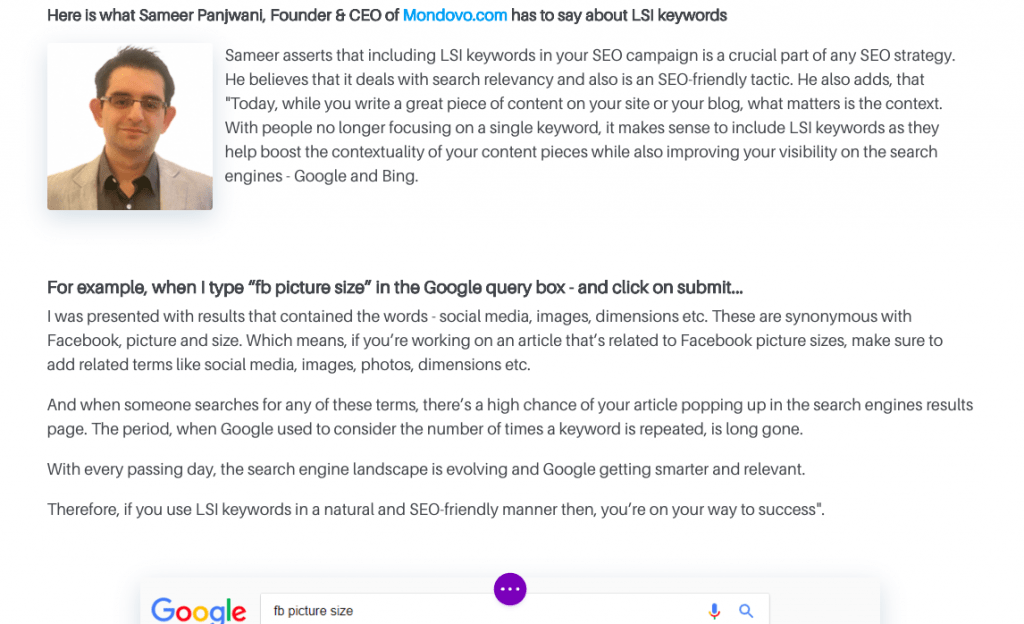
    Here is what Sameer Panjwani, Founder & CEO of Mondovo.com, has to say about LSI keywords

    Sameer asserts that including LSI keywords in your SEO campaign is a crucial part of any SEO strategy. He believes that it deals with search relevancy and also is an SEO-friendly tactic. He also adds, that “Today, while you write a great piece of content on your site or your blog, what matters is the context.

    With people no longer focusing on a single keyword, it makes sense to include LSI keywords as they help boost the contextuality of your content pieces while also improving your visibility on the search engines – Google and Bing.

    For example, when I type “fb picture size” in the Google query box – and click on submit.

    I was presented with results that contained the words – social media, images, dimensions etc. These are synonymous with Facebook, picture and size. This means if you’re working on an article that’s related to Facebook picture sizes, make sure to add related terms like social media, images, photos, dimensions etc.

    And when someone searches for any of these terms, there’s a high chance of your article popping up on the search engine results page. The period when Google used to consider the number of times a keyword is repeated is long gone.

    With every passing day, the search engine landscape is evolving, and Google getting smarter and more relevant.

    Therefore, if you use LSI keywords in a natural and SEO-friendly manner, then you’re on your way to success”.

    Examples of LSI Keywords

    (Follow Mondovo on Facebook, Twitter, Linkedin, Google Plus & Youtube)

    Types of LSI keywords?

    LSI keywords can be clubbed into two categories; Synonymous LSI(sLSI) Keywords and Related LSI(rLSI).

    We will explain both with examples to give you better clarity.

    1. rLSI keywords

    Relating keywords help Google identify what the content is all about. For example, if you write an article about the keyword Apple, rLSI will help you determine whether you are writing about a fruit or a brand.

    If related keywords such as iPhone and Mac OS are found, then Google will semantically index it with the brand Apple and rank it accordingly. However, if keywords such as Pie, Recipes, or Juice are found, Google will know it’s referring to the fruit. There are two services such as InboundWriter and lsikeywords.com, with fantastic algorithms that will return a high-quality list.

    Another method to identify these keywords is to do a search on Google. At the bottom of your search page, you can easily see suggested searches. These searches would be related to your keyword.

    For example, the phrase “best face scrub” gets a variety of new terms associated with it, such as dry skin, blackheads, acne, etc.

    Types of LSI Keywords

    rLSI keywords are helpful as they can diversify your content and broaden its information.

    2. sLSI keywords

    Google presents the most synonymous word to the search term in order to give the best experience to the user. Here, the search results are impacted on a micro-level, that is, at the keyword level. These keywords are easier to identify and are usually boldened in Google’s search results. For example, top, face, and scrub have been replaced by best, facial, and exfoliate.

    Another way to look at sLSI keywords is to use Google Keyword Planner. You can enter your keyword and switch to negative keywords. Doing this would give you synonymous keywords to your primary keyword.

    So, here we have used the keyword cloth and have put a negative keyword filter on. Therefore, we get results such as dresses, diapers, etc, that are synonymous with a cloth.

    Are long tail keywords the same as LSI keywords?

    There might be similarities between Long tail keywords and LSI keywords, but they are not the same. For any primary keyword, LSI keywords are a mix of long-tail keywords, synonyms, and acronyms.

    For example, if our primary keyword is the bag, then your LSI keyword could be “best bag in India” or “best suitcase in Europe”.

    So, here the first keyword is a long tail keyword of our primary keyword, bag. However, the second one replaces bag with its synonym, suitcase, and forms a completely different keyword. So, it is safe to say that for a given keyword, its long tail keyword is its LSI keyword, but the reverse does not hold true.

    How to use LSI keywords in SEO?

    Now there are different ways in which LSI keywords can be incorporated in enhancing SEO. We have listed them all 🙂

    Use LSI Keywords in the  Meta-Description
    The usage of LSI keywords in meta-description is always helpful. Apart from using your main keyword in the meta description, using the LSI keyword should be used, too, as this ensures Google gives you more priority.

    This will help you in getting a higher rank. Here is an example that will give you better clarity on this. So, here the keyword is motivational, and its synonym “inspirational” is used in the meta-description.

    Examples of LSI keywords

    Use the main keyword and two semantic keywords in your Content

    LSI Keywords complement the primary keywords, and adding two LSI keywords along with one primary keyword can help you avoid keyword stuffing and, eventually, the Google penalty.

    I have an example here from Legal Morning which makes the use case quite clear. Here, the primary keyword used by the author is professional Wikipedia editing, and LSI keywords such as “professional Wikipedia editor” and “get paid to edit Wikipedia.” were incorporated into the content.

    Use LSI keywords in SEM

    You can insert LSI keywords in your Pay-Per-Click Campaigns. By choosing LSI keywords along with variations of the main keyword in your ad campaign, your ads will show up more frequently and rank higher. Here is an example of using LSI keywords in an ad.

    Some other ways of using LSI

    You can bring your dead content back. Read below to learn how!
    You can use LSI keywords to your main keyword phrase, and through this, you can make your old content alive and make it rank again.

    The added LSI keywords will make Google spot and rediscover your content. You should have your old and original keyword phrase in place and add one LSI keyword to it. This will definitely increase the traffic to your website. You can see results sooner than you expect

    Another way to use LSI

    Optimize your image with LSI Keywords. So, if you have an old image or an image that has been used many times, you can make it live by using the LSI keyword to rename the image each time you use it. This will optimize the image for each piece of content it’s used for.

    Word of caution

    Make sure that you don’t over-optimize your page with one particular LSI keyword. Overusing an LSI keyword will again put you in the zone of keyword stuffing and might attract a not-so-pleasant Google penalty. So, use one particular LSI keyword once in a page.

    How will you find out the LSI keywords:
    Here is a LINK to some tools that you can use to find LSI keywords.

    Wrapping Up

    Success in SEO is a difficult task for content marketers, as the competition is very tough, and new content gets produced every single minute. Using LSI keywords will not only add variety to your content but also greatly improve its ranking and search results.

    Along with pumping life into outdated content, LSI keywords make sure that your content is not spammy and it stays far away from Google’s penalty radar. It can improve your blog’s authority and increases the average time spent by users on your website by making the flow smooth.

    So, we hope that with this article, you learned what are LSI keywords and can structure a better content strategy by knowing how to use LSI keywords, along with the best white paper practices.

    P.S. – “How to use LSI Keywords” is actually an LSI Keyword for my Primary keyword phrase, “What are LSI keywords?” 🙂

  • Enhancing SEO Through the Use of Embedded Videos & Images

    Enhancing SEO Through the Use of Embedded Videos & Images

    How Embed Video & Images Will Help to Enhance SEO

    Search engine optimization (SEO) is an area of website development that seeks to improve the way webpages are ranked by search engines in organic search results. Multiple approaches are taken to achieve that goal, including making sure the web-page architecture makes it easy for visitors to find content, mobile friendly and quick loading pages and of course, the content itself.

    Including videos and images as a part of your content enhances ranking like nothing else. It is like adding color to a black and white canvas. Websites and blog posts that use a combination of media, especially including embedded video and images are ranked much higher on google search than those with just plain text.

    Power of Videos and Images

    According to Cisco’s 2014 Visual Networking Index, video already makes up 64 percent of all internet traffic, and this is forecasted to grow to 80 percent of all traffic by 2019 The reason for such rapid growth in video, is its effectiveness. If a picture is worth a thousand words, a video is worth much more. Forrester estimates that one minute of video equates to 1.8 million words of text in the message communicated.

    Also, there is the matter of convenience – most users are more likely to watch a video than read text, as watching a video takes lesser effort than even skimming through written content. With video – the decision is binary – either consumers watch the video or they do not.

    According to Nielson – Norman’s research, eye-tracking studies show internet readers pay close attention to information-carrying images. In fact, when the images are relevant, readers spend more time looking at the images than they do reading text on the page Infographics are “liked” and shared on social media three times more than other any other type of content

    Why is it important to include videos & images to enhance your SEO?

    1. They give you a better SEO ranking:

    Embedded video has a better chance of getting highly ranked in Google search results, according to Toby Balsiger, CEO of website design and SEO consultant firm Website Tigers. “This means the video needs to be relevant to the keywords you’re going after, as well as helpful to your audience,” he says. Also, a site that featured video was fifty times more likely to rank on the first page of Google, as compared to a site without video.

    2. Increase the number of visitors coming to your site:

    Over time, high-quality content attracts links naturally. So there is a direct relationship between embedding videos & images and the number of views. This increase in organic traffic also improves ranking.

    Embedding images onto your webpage

    After building or selecting the most relevant image to complement your content, the next step is to prepare that image to be put on your web page in a way best suited for Search Engine Crawlers. The following steps can be taken to ensure this objective is achieved:

    1. Selecting the right film name:

    SEO begins with selecting an apt file name. Even if the search engine is unable to process the image, you want for it to be able to know what the image is about. So for example, if your webpage was about the lovely city of San Francisco and your image is of the San Francisco skyline, then you should name is as San-Francisco-skyline.jpg, as compared to DSC3345.jpg. So, the search engine will catch these keywords and boost you up the ranking charts.

    2. Adding a relevant caption:

    In 2012, KissMetric stated that “Captions under images are read on average 300% more than the body copy itself, so not using them, or not using them correctly, means missing out on an opportunity to engage a huge number of potential readers.”

    So, just like the file-name is important for the SEO algorithms to understand what the picture could be about – having a caption to go with the image is important for the potential readers of the article, which in turn makes it important for SEO algorithms. Captions are valued more than the body of the text for this very reason.

    3. Scaling the image:

    Another important factor in SEO is how fast a web page loads. If your file size is very large, it will invariably result in slow loading and slow indexing. A common mistake that is made is uploading a full size image, even, though the display size is much smaller. For example, loading an HD image in 1920×1080 pixel size when the display is only 400×300 pixels size will result in the entire picture being loaded. So, the solution to this is to scale your image to display size and then loading it.

    4. Using mobile friendly and responsive images:

    Of late, this factor has become extremely important. These days the number of views of a website on mobile is generally more than that on a laptop. So, it is vital to ensure that your content is both mobile friendly, i.e. easy to read on a mobile, and responsive, i.e. the content and the web page architecture adapts to mobile screen size. A good mobile experience improves ranking and this factor will only keep on increasing in importance. There are many tools and plug-ins that make this easy to do.

    5. Optimizing the file size:

    The final step in optimizing images for SEO is to make sure the file size is as low as possible, of course, without compromising on quality. As a general rule however, it is best to make sure that the scaled image is exported in the smallest size possible. Another way to reduce file size is to remove the EXIF data. The tools to do this are available online such as ImageOptim or websites like Kraken.io

    Additional Tips on making the most of embedded images

    1. The alt text ranking factor:

    Alternative text or alt text, (also known as ‘alt attributes’ or ‘alt descriptions’) is used to describe the appearance and function of an image on a page. Alt text uses: Adding alternative text to images is primarily and most importantly, a principle of web accessibility. Alt tags are displayed in place of an image if the image file does not load Alt tags also play an important role in providing descriptions or context to search engine algorithms. This helps in indexing an image properly.

    2. Creating an Image Sitemap:

    Building and uploading an image sitemap to capture all of your images in one location gives search engine algorithms the ability to discover and peruse through all the images on your site. This increases the probability of your images being selected as top search results.

    3. The possibility of linkbait:

    Link-baiting is the practice of intentionally creating content which is designed to get other content creators to link to it. The aim is to increase the number of links that direct to your content and therefore improve ranking as per search engine results. Adding value adding, relevant and compelling content is the most important aspect of link-baiting. This could be through infographics, images that stand out, humorous or compelling content, news or any other content of relevance. Such content always leads to sharing and virality.

    Embedding Videos onto your Webpage:

    Uploading a video to YouTube and embedding it on your site is one of the easiest ways leverage video seo. If you don’t have a video to upload, try simply embedding one that’s relevant to your business and industry. Most videos on YouTube allow for embedding, and just because it’s not yours doesn’t necessarily mean you can’t use it. Be sure to choose video content that compliments your business and brand, while not distracting or taking away from what you’re trying to accomplish with your visitor

    Tips on using video effectively for SEO

    Use the following tips to make SEO work in your favour:

    1. Video integration:

    The most important criterion in SEO ranking is the content, of which video is the king. So by integrating video onto your web page, you are sending the a message to Search engine algorithms that your content is not only relevant, but also premium. As the popularity and importance of video increases, this factor will become increasingly important in improving page rank.

    2. Keyword labels:

    Just as labeling pictures and infographics improves search engine ranking, adding a crisp label to your embedded video makes it much easier for search engines to understand your content. This simple but effective practice can go a long way in improving your ranking. This could be in the form of a title, or tags, names, descriptions or even the file name.

    3. Video transcript:

    Similar to keyword labels, adding a transcript of the audio that you have embedded helps the search engine even further and builds up your score, especially in terms of relevance.

    4. Video sitemap:

    While a video sitemap might seem like an unnecessary addition, it is in fact a separate factor as per search engine algorithms. In a video sitemap one can include information that the label, transcript or even the video may not contain such as – rating, PG ratings (age appropriateness), number of views, Metadata, duration and any other information that you might deem fit. Create a video sitemap, it is just an extension to the website’s native sitemap

    5. Hosting the video on YouTube:

    This is a very important practice that has many positive implications. Firstly, after Google, YouTube is the second largest search engine in the world (on basis of number of queries). Also, YouTube is owned by Google. So hosting your video on YouTube works in your favour.

    Secondly, whilst many developers disagree with this practice and suggest hosting the video on your own website, it should be noted that YouTube takes the load off your website for hosting, which in turn improves the speed at which your page loads – which is also an important criterion for ranking. So, this advantage is dual

    6. Optimizing videos for load time:

    As mentioned above, page performance is an important factor for search engine algorithms. According to Radware, 57 percent of mobile users abandon a slow loading site after just 3 seconds of waiting. So it is crucial that your page loading is smooth and quick.

    7. Backlink from your YouTube video:

    This is a little complicated, but it’s a neat trick that improves your ranking. A link to your YouTube video does not count as a link to your web page. So, the aim is to create a back link from YouTube itself. To do this, first create a channel on YouTube and insert your web page into the channel’s profile. Finally, in the video description, insert the link to your website.

    8. Traction and Social Media:

    Search Engine Algorithms improve ranking based on how popular content is, or in other words how much traction it has received. Thus, social sharing or getting people to like/share your video will improve the relevance score of your content, which in turn will improve your page ranking.

    Conclusion:

    Implement an affordable content strategy that makes use of embedded video and images Many times content creators are reluctant to include high quality images or videos on their web pages because they believe it is either too difficult or too costly. However, with the deluge of new video and image tools that have flooded the Internet space, it is not at all difficult – even if you are a beginner. These tools are easy to use, free and give an output that is clean and professional. Today, it is possible to build quality content at a very affordable cost. By embedding this rich media onto your webpage, you go a long way in improving user experience and your ranking by search engines.

    Here is a 7 SEO checklist for you to follow before you post your next blog.

  • SEO Storytelling: For Users and Not for Search Engine Bots

    SEO Storytelling: For Users and Not for Search Engine Bots

    Content strategists often have to go through the dilemma whether to design the content targeting on the spot in top search engine results or to actually target your audience? Well, the decision is an easy one. If your content is not helpful to the readers, even ranking at the top is not going to be helpful for your product.

    On the other hand, search engines are improving to make sure that the most user-friendly and helpful content remains at the top.

    Image Source: contentmarketinginstitute.com

    Going with the above logic, it’s great to write content that is user-friendly and solves the problems for your readers. Writing, targeting the search engine bots, is not helpful neither in short nor in long run, but creating content for your users is.

    But, how to do that?

    Well, I say- you tell stories.

    Why Storytelling?

    The Early Humans chased animals, hunted them down, and sat down to share their stories during the nights around the warm fire with their clan. Stories of bravery, fear, joy, and struggle became the basis for the structure of the clans and trade.

    People believe what they see, but the vision of an individual is limited. You have to rely on others’ experiences as well. That’s where stories are crucial.

    Roman Kings were the sons of God, Chinese rulers were the interpreters of the almighty, and ancient Indian emperors were representatives of the divine power on the earth. Stories told us, and we believed.

    The human mind is not evolved to make sense of numbers and stats, but it understands stories nicely.

    What Do You Tell in a SEO Story?

    Don’t tell only about what you do. That is what everyone does. Talk about why you are different. Because usual life details are not stories. Something that is different, evokes a human emotion with a conclusion; is a story.

    The greatest and the most successful market persons, while introducing their products, don’t talk about the cliché details of their products, or how a particular technology improves a particular way of doing something. Rather they connect with you on an emotional level.

    These individuals take you on the journey of highs and lows of your life and make you believe that you are not a mere part of a sales pitch for a product. Instead, they believe in taking a certain page from your life, convert it into a dream; and present them in the form of a product.

    Tell the truth, but make it fascinating.
    – David Ogilvy

    Their conversations are about desires, hopes, liberty and a feeling to go beyond the regular limited world where personal shackles and social boundaries are not broken.

    Who is the Protagonist?

    This is the most important question- who is the protagonist of the tale? Many would assume, since it is our product,  either the product or us, are the probable protagonists. However, this is a wrong assumption and there can be a no bigger mistake than that.

    When you are talking only about yourself, what you essentially do is just convert your buyers in numbers and certain categories. And from there starts the series of baseless assumptions.

    You assume that a particular trait of your product would be helpful to a group of people and you pitch it to them without even realizing their real concerns. At that point, the buyer is already fed up with hundreds of attempts of buying their attention without even realizing the real problem.

    People don’t like to be sold, but they love to buy.
    -Jeffrey Gitomer

    Understand your buyers, try and feel the problems that they have to face on a daily basis and address the problems. Add value to their lives.

    While writing about your product and your values, always put the buyer in the middle of your narration because they are the heroes of your story.

    What are the Elements of Your Story?

    As Aristotle said, any story- long or short and irrespective of the genre has three basic elements:-

    Start (setup) – Here you create a common ground to connect with the readers. Keep things simple, easy and smooth here, so that the reader is connected with you.

    Make the readers curious. Help them look through their own lives and let it reflect in the introduction of your story. Because it takes a lot of effort in soaking the new information for readers, make sure that it is not thrown straight away.

    Start with their problems and their lives, and prepare them for the rest of your message.

    Middle(content) – This is where, you actually address the problem. Conflict is the most crucial aspect here. If there is no conflict, and your writing is plain, that’s not going to get into the reader’s’ hearts.

    Touch different issues of the buyer’s life- the problems and the solutions, different emotions – pity, fear, joy, excitement _and anxiety;_ and different values – sympathy, honor, and ideal.

    Create an entire world around the buyer’s persona, center their lives around your content. Help them clearly see through the problems, that they are not able to see by themselves.

    That the exact point where you establish a connection with them, and you become an integral part of their lives. If you are not able to do that in this part of your content, you are not going to get a second chance.

    End(resolution) – Now is the time to sum up your story, and this is not going to be an easy one as well. This is as tough as the other two parts.

    While concluding, you take the reader’s journey from the ocean of different emotions to a better-looking world. You create a dream, where there is a possibility of getting rid of their real-life problems.

    Creating a dream is easy, making them realize that it is tangible and attainable is the toughest job but is your responsibility as a storyteller.

    How to Tell a Better Story?

    Know your company better- The first step towards telling a better brand story is to understand yourself.

    People don’t buy what you do, they buy why you do it.
    – Simon Sinek

    What are your values? What do you stand for? What is it that you do better than all of the others? What is your struggle story? What were your highs and lows? Your short-term failures and achievements, and your vision for the future; know and remember everything.

    Your readers are keen on knowing all of it, and it is the time that you realize it too.

    Know you buyers – I have laid emphasis on the fact that your buyer is the hero. It is the buyer around who the story revolves. Know the buyer almost as well as you know yourself.

    It is when, you understand your buyers completely, you are able to design products for them and talk to them clearly.

    In his book  A Whole New Mind,  Danil H Pink differentiates the time in four ages:-

    1. Agricultural Age
    2. Industrial Age
    3. Information Age
    4. Conceptual Age

    We have entered in the conceptual age now. It is not sufficient to make better products now, neither is putting information among buyers.So improve your writing skills, and follow the best white paper practices, not for bots but for your buyers.

    The above post gave you an overview of SEO storytelling. It is the time, that you connect with them on a human and emotional level and present yourself different from others.

    Have empathy for your readers and know their pain points. Tell better stories and create symphonies!