Great content is the key to successful digital marketing. And every content marketer aspires to get his or her content viral and shared extensively on social media.
But with the sheer volume of content out there on the internet, even those with the best writing skills can see their content lagging behind. Simply writing something, no matter the type or domain of content, isn’t enough to make it to the top of a Google search.
The reason?
Well, a huge part of it has to do with competition.
While statistics can vary, the number of blogs out there stands at around 350 million. Out of these, around 2 million put out blog posts every day. There are also around 200 million active websites, and the daunting task of a writer is to create successful content that stands out from among all these.
This is where an often underrated aspect of content writing comes to the fore. Here are the content writing tips to rank every content on Google search:
Research
Good research skills help you deliver exactly the content your audience wants and can mean the difference between the top and bottom of a search result.
Why Is Research Important for Content Creation?
1. To Improve Quality
Done right, in-depth research can lead to excellent insights into the behaviour of your potential customers and also into your competitors.
Learn how people spend, why they choose to spend, and why they might end up choosing a competitor over you. This will help you determine consumer needs and wants and identify problems in your own content.
Research reduces the time your brand takes to reach consumers and also helps you analyze the effectiveness of the impact of your content on your target audience, leading to improved quality.
2. Making Them Stay
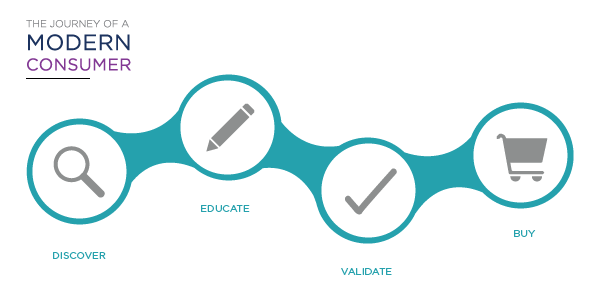
The path taken by your potential customer that starts from simply giving your content a cursory reading to turning into an actual buyer is a long one.
The modern consumer is thorough when it comes to researching the products he/she buys, and it is, in turn, expected that content creators deliver quality every single time.
You have to make sure they stay long enough to become advocates of your brand by constantly putting in research about their changing desires.
3. The Right Message for the Right People
If you’re thorough enough, your research will help you deliver a focused, clear message right across to your target audience.
In 2019, audiences have been identified to have much shorter attention spans and prefer brands that avoid going on and on about their products.
Don’t brag and drag! A short message, delivered powerfully, will ensure your content is remembered long after everyone else.
4. Who Are You Creating For?
When you know your target audience well enough, you will know exactly what kind of content they want to see from you.
Is a particular post getting significantly more attention than others?
Are views consistently low for a certain piece of content?
Keep tabs on consumer reactions, and hone your content accordingly.
How to Conduct Thorough Research?
Now that we’ve gotten an idea about why research is important, let’s take a look at how to actually go about it, shall we?
1. Engage
Consistent engagement with your audience is crucial to successful content. Interact with them, solve their queries. Become a part of their communities and forums and see how their attitudes fluctuate.
This will give you an idea about whether you and your brand are headed in the right direction.
2. Know Your Competition
Know what others are doing right, what they provide that you don’t.
How long have they been doing this?
How many of your potential consumers are they taking?
How does your content compare?
All these questions are extremely important, and you should take them into account while researching for a content.
3. Track Trends
Use social media – Facebook, Twitter and other forums such as Reddit and Quora, to find out what people are actually talking about.
Ask yourself questions related to these trends.
Why is a certain blog post trending?
Can I create content that feeds into this trend?
Is it possible to make something entirely new out of this?
Questions like these will keep your content unique and fresh for your audience, and keep them coming back for more.
4. Brainstorming
Exchange ideas and information; tackle issues with your sales and customer success teams, as they generally know what goes on in the field.
Get together; find out what works and what doesn’t, what your audience wants and what might turn them away from your content.
5. Survey Your Audience
Audience surveys are extremely important, so always remember to conduct them regularly.
Surveys are tools to directly collect feedback from your target audience, and help you understand their expectations and requirements. They help you measure consumer awareness and satisfaction.
By this point, you have an idea of what research can do for your content, and how you should do it.
But there are some other things to keep in mind as well.
*What are they?
Well..
Always credit your research and content!
With so many articles, blogs, websites, and forums around us, nothing is 100% our own.
You might come across a snippet of information you find interesting. Or an article that you draw inspiration from. It’s okay to read something and learn from it.
When you use something for own research, remember to cite your sources. Even if your source is something as common as Wikipedia, give credit where it is due.
With everyone having access to the internet, people know quickly where the content has been drawn from and can lose faith in your own.
So What Now?
You know how to research now, so finding a topic for your content will become much easier.
But remember to add a catchy headline.
People are drawn to a content by a headline more than anything else, so even the best content might go unread without one. Keep that in mind!
To get you started, here are some tools for headline generation:
SE Ranking, a tool that helps you find synonyms for your headlines.
These are just some of the tools you can use to help yourself become one of the best content writers in your domain. Also, you would do well to remember that there is no one-size-fits-all approach, figure out what works best for you and your writing!
Putting in extra effort might seem like a daunting task at first, but giving time and energy to your consumers will pay off in the long run.
Follow the research tips mentioned above and you will see your content flourish and rise towards the top of search engines.
Change is the only constant in this world and even the virtual world couldn’t have eluded its effects. One thing that actually remains unchanged is the competition that every website has to face and the owners are willing to go any length to outdo their competitors in the race to the top of the search engines.
So, what is the deal about search engine rankings?
There is immense competition to get noticed in the search engine results and subsequently ranked there. This has forced websites to perpetually reconfigure their strategies for web pages and this is where the idea of
SEO strategy comes into the picture here.
Consider this, you have a question plaguing your mind concerning the product you are looking to purchase or a service that you want to avail.
Your first instinct is to ask the search engine, and voila, you get several result pages of which you choose to visit any one that seems most relevant to your query.
This piece of content answers your query, but while you sit reading the article, it brings some more questions to your mind.
What do you do next?
Go back to the search engine and input another query? Absolutely not!
Instead, wouldn’t it be wonderful if the original article you stumbled upon provided you with a route to find answers to the new questions that you have without having to find your way back to Google?
This is precisely what a Cluster SEO strategy can do for you.
Hey, if you are an experienced marketer already familiar with how topic clusters benefit your SEO, move to the part of the blog where I have mentioned a step-by-step method you can follow to create topic clusters on your website.
What is the Cluster SEO Strategy?
We know that search engines are intelligent. With their algorithms evolving constantly, your queries are handled with even more precision today than earlier.
How often do you find yourself looking for something as specific as the “best Chinese restaurant on XYZ road of ABC city” or “where can I buy a smartphone near my home”?, and you get precise results with names of service providers, their physical addresses, and contact information in seconds!
Amazing, eh?
With changing user behaviour, search trends have changed and queries have become more specific than before. Further, people turn to search engines every time they have a query, be it about a company, product or service. They need precise answers to specific questions and they need them fast.
Also, with the option of voice search available to them, specific questions with long tail keywords are pretty common today. Smartphones and tablets have made voice search more popular with users who are constantly on the move. They find it time-saving and much more convenient to “Search by Voice”, (like Google calls it), than typing the query into the ‘Search’ field.
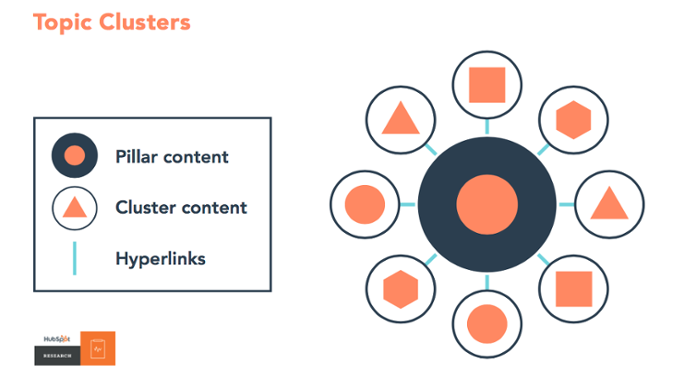
SEO has also evolved over the years and the focus has slowly shifted to the topic cluster model where the “pillar page” is the primary hub of content and multiple content pages related to this topic link back to the pillar page and also to each other.
In short, they form a content cluster or a topic cluster.
Image Source:hubspot.com
Such linking hints to the search engines about the authority of the pillar content on the topic which in turn helps it gain popularity and climb higher on the Search Engine Results Pages (SERPs) with time.
The topic cluster approach to SEO is quite a drastic shift from the keyword based model you are acquainted with. It involves rearranging the architecture of your website by linking content clusters with the central topic page.
Cluster SEO Strategy Illustrated
Let’s take a look at an example to understand topic clusters and pillar pages better.
Fitness and health are a rage today and yoga has been drawing attention not just from people in India but from around the world. People often search for specifics related to this topic such as below:
Yoga postures.
Yoga for fitness.
Yoga poses for kids.
Yoga poses for a flat stomach.
Yoga for beginners.
Yoga for senior citizens.
Yoga for knee pain.
Yoga apps for learning.
The focus is on the core topic ‘Yoga’ which evidently becomes the pillar page. The specifics that people search for become the cluster content, each of which is linked to the pillar page and rely on it for showing up in the SERPs every time a user inputs a query relevant to them.
How Have Search Engines Compelled Marketers to Rethink About the Content Marketing SEO Strategy?
The emergence of cluster SEO strategy can be attributed to changing user behaviour on search engines which has forced SEO specialists and marketers to completely revamp their site structure.
Gone are the days when users posted fragmented keyword queries on search engines. The trend has now changed to more complex and specific queries with focus on precise long tail keywords.
Users are more tech-savvy today and know how to use technology to their advantage. There is an increasing tendency among them to run specific, need-based searches. The conversion rate of such queries are usually higher. If you want your website to rank higher on these searches, you must use long tail keywords in your cluster SEO strategy.
Google’s search algorithm is smart enough to decipher the topical context and intent behind searches. It knows how to relate them to similar query searches by the same user in the past and suggest web pages that befittingly answer the query.
Google’s Hummingbird update in 2013 spearheaded this shift in focus as the search algorithm began parsing out phrases instead of focusing on keywords only. Google’s Rankbrain update in 2015 strengthened the reliance on topics and further helped the search engine understand the context behind searches.
Updates on the search algorithm of Google have been happening even as you read this. It looks like pillar content marketing is here to stay for a long time and your SEO efforts would revolve around it.
Quick Step-by-Step Guide to Creating Topic Clusters
Here’s a look at how you can model your Cluster SEO strategy.
1. Identify the Gaps in Your Content
Figure out the keywords/topics your competitors rank for but you don’t. These are the problem areas you need to address if you want to gain authority on a topic.
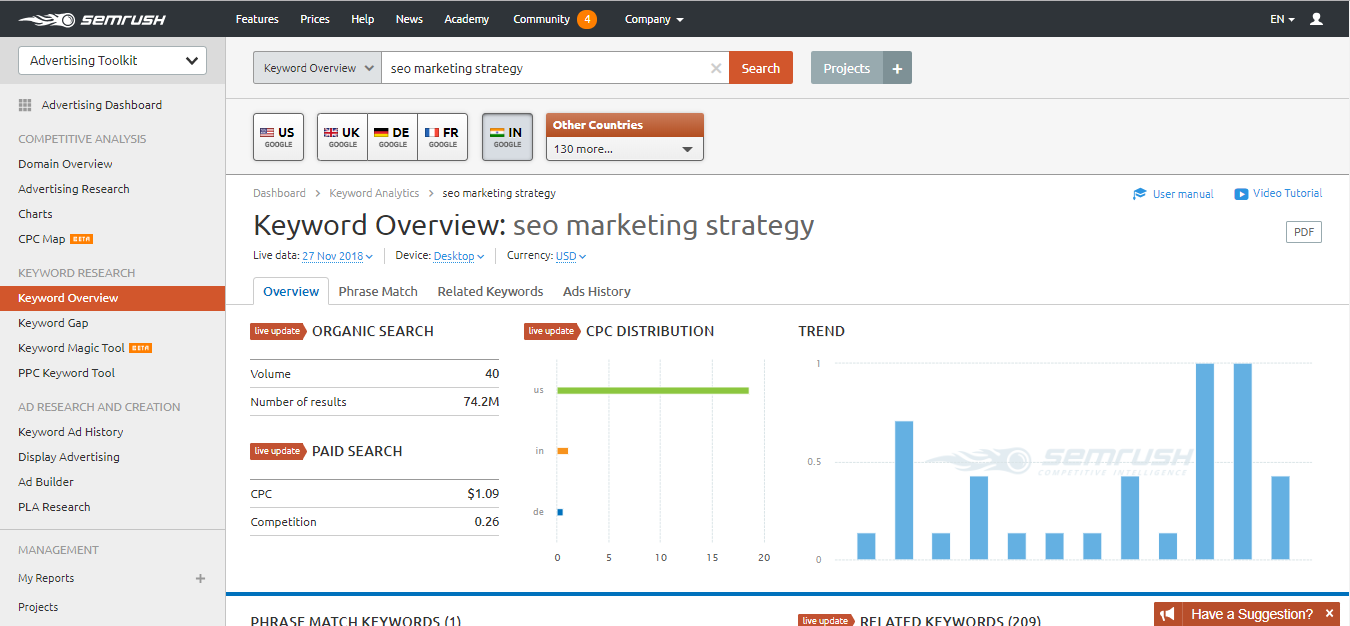
There are tools online you can effortlessly use to identify the content gaps among which SEMrush is a trusted one. Use it to get a clear, in-depth analysis of your website. Incorporating the results in your online content marketing seo strategy have been known to show significant results on your website’s performance. Get started by providing your domain URL in the search box and selecting your country.
Image Source:semrush.com
2. Figure Out the Most Common Questions Thrown by Your Target Audience
Spend some time researching on the kind of queries your target audience are most likely to ask on the search engines and formulate your content strategy around it.
For example, if you are an electrical repair company in the Kandivali region of Mumbai and cater to demands in and around this suburb, it is logical for your website to show up in the SERPs every time anyone queries “electrical repair company in Kandivali”. Likewise, you need to optimise your page for specific queries such as “fan repair Malad west” or “refrigerator repair Goregaon” (provided you offer your services in these areas).
Use the Google Adwords Keyword Planner Tool and input broad keywords to check what kind of queries the search engine has been receiving for those terms. Identify the search volume to know the keyword variations that make sense to your business. Import few relevant ones to an Excel sheet and these will form the focus for your cluster SEO strategy.
3. Review Target Keywords to Arrive at Your Pillar Content
Give some thought to the keywords to arrive at the pillar content you want to add to your website and create pages for each. These become your pillar pages and are those to which you intend to drive targeted traffic and convert users.
Pillar pages should have substantial content and they should be able to resolve visitor queries. Every keyword you identified in the previous step becomes a pillar and provides primary support to a large cluster of long tail keywords which will form the cluster content mentioned in next point.
4. Create and Group Cluster Content Around Pillar Pages
Create and group the sub-topics according to the pillar content and you will have multiple sets of topic clusters and pillar pages ready. Each cluster comprises a pillar page and a set of content pages linking to the pillar page.
Use sub-topics to arrive at blog posts or web page ideas that throw light on a specific concept within the scope of the pillar content. Together, all the sub-topics form a cluster. Ideally, you may have five to 10 sub-topics in a cluster to create a topic cluster. How you can arrive at keywords for your cluster content is elucidated in the following step.
5.Conduct Keyword Research to Identify Long Tail Keywords for Every Sub-Topic
Long tail keywords often end up being specific and indicate that users turn to search engines for precise information on a subject. This is where you will be optimising your pages for specific keywords. Use the keyword tool again to figure specific keywords for each pillar. These keywords delve deeper into the main keyword, which is also the idea behind cluster pages. Make sure that the content is relevant to the keywords so that your visitors get what they are looking for and should not bounce back immediately.
6. Hyperlink All Content in Every Set to Build a Topic Cluster
Hyperlinking is the key when you want to keep your audience engaged on your website for a longer duration. Use the right anchor text and ensure that the pillar page your content links to has substantial information to make your visitors happy.
What happens when you already have a set of informative articles/blogs up on your website or ready on your dashboard? You cannot afford to let the valuable content go waste. Follow the reverse approach in such a scenario.
Review the live or ready ones and arrive at the main topic each of them focuses on. These topics become the foundation for your pillar content and they must capture relevant long tail keywords to gain leverage on search engines.
Going forward, the ideal approach would be to conceptualise the pillar content and tailor your cluster content around it.
How to Establish Your Authority Using The Topic Cluster SEO Strategy?
Today, the question that plagues the minds of marketers is “how to improve a website’s SEO ranking on Google”? Creating topic based content is the answer.
Merely creating content does not work without the backing of a strong SEO strategy.
If you are posting informative content on your website, it has to be found in the SERPs by your target audience. Only then will it meet the goals of your business.
Here are a few things to note:
Linking content together on your website indicates your authority on a topic to the search engine. If users stay on your page for some time and move across the content pages, it can help boost your ranking on Google.
To bolster your cluster SEO strategy, you need to rank for an entire topic and just targeting a few keywords will not help. Your pillar pages and the content clusters around each of them will form the topics you want to derive SEO leverage from.
When the cluster content and pillar pages are relevantly linked, you convey the message to Google that you have a strong command over everything related to the topic. You will gain authority on the content over time with Google giving your pillar content and its sub-topics a good leverage in the SERPs. This boost in search engine rankings is the reward you get for your site restructuring and making your web pages logically linked and easy to crawl.
Remember that there’s a caveat here. Your pillar pages must have substantial content because your sub-topic pages will be linking to it. So, if a site visitor decides to click the pillar page link, you should derive something concrete out of it or it should answer his query. Only then will the visitor be prompted to convert to a lead.
You aren’t writing content for search engines . Instead, you must produce informative content that will be a value-addition for your audience and help customers find you.
Chisel your Cluster SEO Strategy Today and Boost Your SEO Rankings.
Yes, the verdict is out.
Search engines like Google favour topic clusters and this strategy is mainstream already.
By giving you greater search visibility for a topic, interlinking cluster and pillar content, and funnelling your site visitors from cluster content to pillar pages you can get visitors hooked to your site and push your ranking up by a few notches on the search engines.
There exist multiple online content writing platforms with a global presence, who are helping businesses grow through their dedicated content marketing efforts. According to Statista’s Forecast for 2019, global content marketing revenue is projected to increase to more than 313.4 billion US dollars. With such enormous amounts of investments in content marketing, stakes are high.
Today, brands focus a lot on generating relevant content for multiple reasons. Some of these include:
Building original content to drive sales.
Generating leads through content marketing.
Brand Awareness.
Information/Knowledge exchange
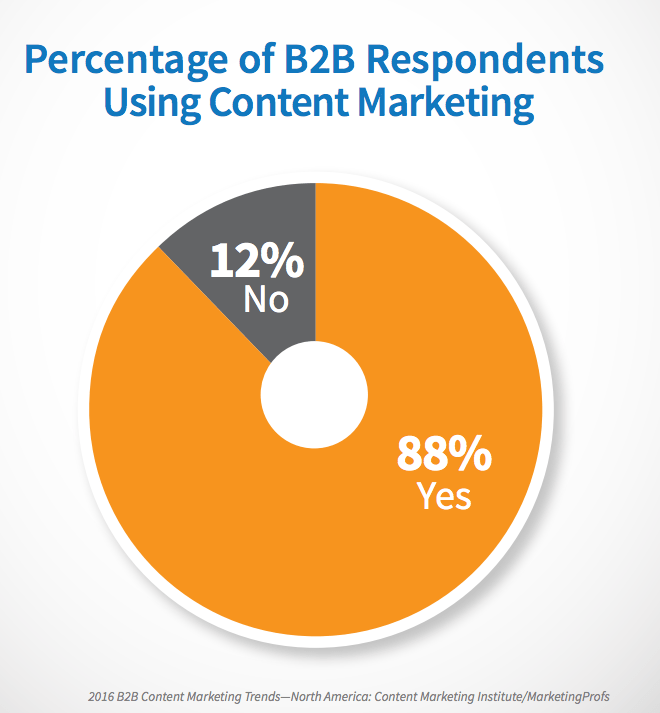
According to a B2B Content Marketing Survey by LinkedIn Technologies, lead generation is the top goal of content marketing, followed closely by thought leadership and market education. In fact, a majority of prominent organizations use content marketing as a business tactic.
Some have proved themselves as pioneers in this regard. Take Amul for example. Amul has time and again proved to be the “Taste of India”. As a brand, it has become synonymous with creating witty content around the Indian political and entertainment developments. Consider the picture below for one such reference.
What started as White Revolution back in 1948 has evolved into one of the finest brands, which understands its audience well and continue to create great content. It is clear that big brands are winning customers through content marketing.
Content Writing Platforms Power your Content Distribution Strategy
Continuing with the Indian Market, the primary objective of content marketing is thought leadership, with 59% of companies emphasizing on its relevance. It is foremost to understand what type of content marketing works for your business. If your content marketing strategy does not generate leads and bring desired results, all your efforts become negligible.
Recent data shows that for 61% of B2B marketers, lack of resources such as staff, time, and funding remain some of the biggest obstacles to successful lead generation. According to the LinkedIn Technology Marketing Community, 51% of the brands find the lack of bandwidth to create content as the biggest challenge with their content marketing. Moreover, when it comes to 60% of B2B content marketing most find it extremely challenging to produce engaging content, According to the Content Marketing Institute.
Why Outsourcing Content Makes Sense?
Fredrick Nael says, “It takes two sides to build a bridge”
In this sense, let’s say you, being the business, constitute one side and your content marketing platform forms the other. Both of you together build the brand.
It is this brand that generates leads, gets revenue, and makes your business grow further. In real-time, businesses need to understand the credibility of their resources. It is not always feasible to afford in-house writers. As a result, some brands may not possess the bandwidth to create original content.
According to Curata, only forty-two percent of companies have an executive in their organization directly responsible for an overall content marketing strategy. Moreover, some businesses prefer handling their content marketing strategy with a need-based approach. 62% of companies outsource their content marketing with an aim to generate quality content. Content writing platform services can reduce such gaps and supply high-quality content which meets your business targets and ideology.
Online Content Platform: They Create, You Curate
Brands using content platforms can focus on marketing strategies and distribution while content creation can be outsourced. Having a dedicated team of professional writers/editors and copywriters can fuel your content marketing strategy. Online platforms provide brands with the skills, resources, and most importantly, the roadmap to power their marketing efforts.
Associating with an online content platform will also dissolve your doubts of how to find freelance content writers for outsourcing. Online content writing platforms have a plethora of professional writers and industry experts to match your content needs. From social media posts, blogs, thought leadership articles to E-Books and Whitepapers, online content writing platforms have writers under every industry domain and vertical.
By outsourcing your content to experts, you can:
Get professionally written content which is optimized for search engines instead of micro-managing.
Sustain proper time management with your resources. Outsourcing to online content platforms leaves you more time to invest in other business verticals.
Track your content marketing efforts by measuring ROIs on the outsourced content.
Furthermore, content outsourcing also helps your blogs rank higher on search engines:
Online content writing platforms optimize content for search engines by:
Frequently creating content to continue building brand awareness and generate traffic.
Focusing on meta-description and URL optimization.
Using other technology tools to power content.
Convinced to Try Content Writing Services?
Such online platforms possess the expertise and resources to drive results. They possess sophisticated technology systems and applications to effectively generate content and strategize your marketing efforts. Moreover, the pricing and cost of writing services depend solely on your requirements and needs. This makes a lot of sense for brands, especially the ones who wish to see better ROI on their content marketing efforts.
So, remember, whatever you do, an online content writing platform can help you do it better. That too with better infrastructure, tools, and a great team of dedicated writers and experts.
“If you don’t have time to read, you don’t have the time (or the tools) to write. Simple as that.” -Stephen King
Simple, isn’t it?
Well, not really.
No doubt, a great content writer must read a lot.He or she must have content writing skills.
But, what really separates effective content writing from the mediocre ones? Let’s take a look at how the best content writers differ from the rest.
A Great Content Writer Is a Thorough Researcher
The difference between great, effective content writing and mediocre writing lies in the power of information, making the researching abilities of the writers the biggest differentiator.
A great content writer must be a thorough researcher. The best content writers are well informed about what works.
The best examples of good content writers are also expected to stay up to date with market trends and targeted content strategies that work for a specific business.
Another important aspect of being a great content writer includes how well you understand and can connect with your target audience through your writing.
Ask yourself this
Whois reading the content?
Whyis the content being written? Or Why should they read the content?
Whatis the goal of the content?
These 3 W’s can transform mediocre writing into effective content writing. More than researching, a great writer must be a great reader.
Follow User-Friendly Writing Style
The best examples of good content writers appreciate the reading preferences of their audience and the best content writing practices demand that the writing style is as per audience preferences. Ensure that the language, tone, and information used in the post are in line with the audiences’ understanding.
Understand:
Whatdo they like?
Whatdon’t they like?
Willthey understand what I’m trying to write?
Whether casual, conversational, or informative, always ensure to follow a similar algorithm for your writing style to maintain the connection.
Structure their Content Well
Any blog post or content piece must follow a definite structure. SEO storytelling is like art, which also makes it an insightful and actionable read. A great content writer follows the best content writing practices.
If your writing is not pleasing to the reader, your content becomes irrelevant. If not always, try following the inverted pyramid approach to writing by providing a proper introduction, body, and conclusion to your content whenever possible.
To make sure that the readers are not skimming through the content, make it interesting by adding visuals and graphics.
Also, including examples of good content writers to make the topic more relatable and easy for the reader is advisable. A well-structured post with visual references makes the content more engaging and impactful.
Easy to Understand and Relevant Information is Key
For a lot of educational or informative blogs, the language should be simple. Using great vocabulary does not always show great writing skills.
It is not always advisable to throw fancy words at your readers or use Shashi-Tharoorian English in an attempt to sound smart.
Moreover, effective content writing is always backed up with facts. Add examples to make the topic more relatable and easy for the reader. Provide relevant and recent statistics to validate your writing.
Also, make sure the sources of your reference are credible. Adding non-credible sources or facts should be avoided at all costs.
Great Writers Generate Marketable Content
Identifying the brand’s history and persona is critical in SEO storytelling. There is no doubt that a great content writer will be well informed about their target audience. Not only that, understanding the buyer’s persona is just as important.
It is imperative that you Identify the business’ needs and generate original and targeted content. Research about the best content marketing resources. Generating Marketable content also means optimizing it for search engines.
These were tips on how to become best content writers.
A few more quick tips great writers follow to stay ahead of mediocre ones:
And, most importantly, when ghostwriting for thought leaders, take accountability and talk directly to the audience. Conversational language is the key here. Make sure you write directly for the user with zero passive voice.
When writing from an authoritative or thought leadership position, make sure the writing sounds confident and well informed.
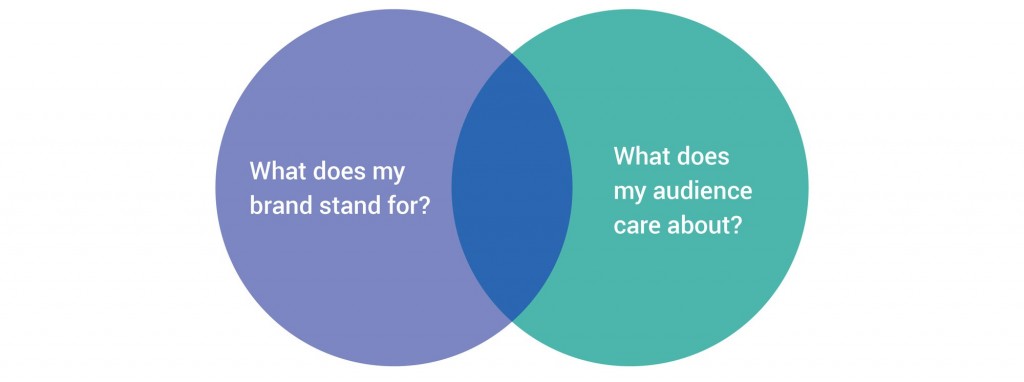
Every brand is different from the other so we cannot use the same types of content for every brand. Finding the right content for your brand is like finding a right key that unlocks the door to your brand. Your readers must be able to connect the content to your brand. To successfully match the ideal types of content to your content marketing strategy and your brand we must be clear of the base of what a brand and what are the various types of brands.
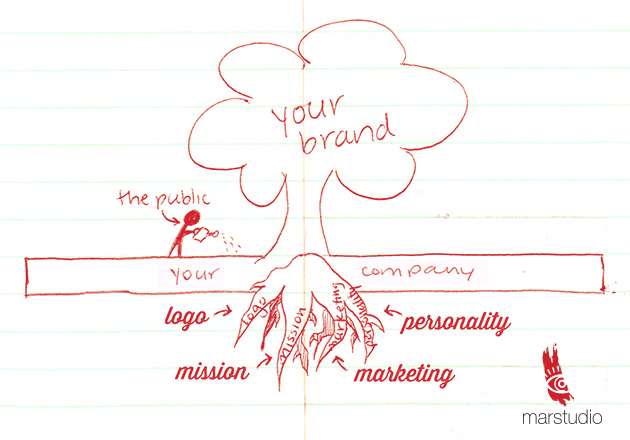
What is a brand? A brand is a name, concept, service, term, design or other features that together distinguishes an organisation or a product from its competitors for a customer. It helps the company or the product stand out. According to advertising copywriter and ad agency founder David Ogilvy’s definition of a brand is “The intangible sum of a product’s attributes: its name, packaging, and price, its history, its reputation, and the way it’s advertised.”
Source: Marstudio
Now Lets Identify your Brand
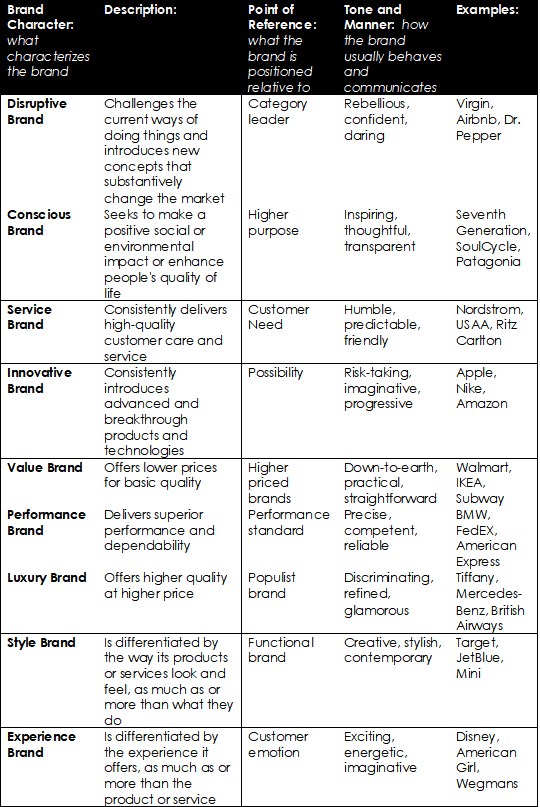
There are different types of brands, it is necessary to identify your type of brand so you can jumpstart the development of your brand strategy by identifying the one that’s right for you. By selecting one type for your brand, you’re more likely to end up with a powerful brand strategy. Denise Lee Yohn, a brand leadership expert has classified brands in nine major categories, labelled by what characterizes or differentiates them the most from the others. They are as follows:
1. Disruptive Brand: A Disruptive brand challenges the current ways of doing things and introduces new concepts that substantively change the market.
2. Conscious Brand: A Conscious brand is on a mission to make a positive social or environmental impact or enhance people’s quality of life.
3. Service Brand: A Service brand consistently delivers high-quality customer care and service.
4. Innovative Brand: An Innovative brand consistently introduces advanced and breakthrough products and technologies.
5. Value Brand: A value brand offers lower prices for basic quality.
6. Performance Brand: A Performance brand offers products that deliver superior performance and dependability.
7. Luxury Brand: A Luxury brand offers higher quality at higher price.
8. Style Brand: A Style brand is differentiated through the way its products or services look and feel, as much as or more than what they do.
9. Experience Brand: An Experience brand is differentiated through the experience it provides, as much as or more than the product or service. Here’s an image that will help you identify your brand better.
Source: deniseleeyohn.com
There are 5 guidelines to be followed to classify your brand in one of these nine categories:
There are some characteristics that need to be and should be followed by all types of brands i.e. All brands should offer good service to their customers even brands not in the Service Brand. Service brand’s strategies, operations, and ultimately customer value propositions are all centered around service first. This puts added pressure on the Service Brands to deliver high quality customer care and service consistently.
Identify your primary brand type, even though there maybe two or three brand types that might seem relevant to your brand type. A Primary brand type should be the one that aligns best with your brand’s goal resonates most with your organization, and gives you the most impact with your customers.
Pick a brand type which is seems most evergreen or sustainable as your brand type has chances of evolving over the years with change in trends, culture, competitors and growth of customers.
You might want to evolve your brand over the years to another brand type but the plans about such should be realistic as a value brand is likely to become a luxury brand.
The difference between the purpose, scope, target customer and personality between different performance brands must be considered. Brand should establish an unique brand identity and a precise brand position for your brand.
Identifying the type of your brand will not only help find the ideal content of it but will also determine the audience or customers your brand caters to which makes it easier to create content. A Luxury Brand and a Value Brand will have a different set of customers therefore their content strategy will be different too.
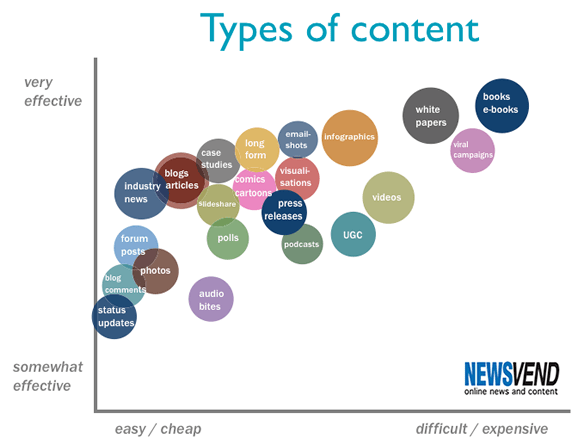
What Types of Content are there?
Source: NewsVend
Content Marketing goes beyond just traditional business blogs and social media marketing. Yes, they are an essential part of it but there is way more to it than just that. It is essential to know the various types of content so you can match the ideal one with your brand type. Here are nine different types of content:
1) Blogging: Apart from being a traditional content type it is also the most effective content which makes it the most used content type therefore the first on this list. Blogs makes the central marketing strategy for many brands. They aren’t much time consuming and are relatively low cost. They attract a lot of audience and form a base of loyal readership by building a relationship with your readers. Maintaining a consistent blog with frequent, high quality posts can drive significant amount of traffic to your website. One must avoid these common mistakes while blogging:
Not posting regularly
Not optimizing your blog for leads or sales
Not linking to your own content
Ignoring keywords
2) White papers: White papers are content type filled with information that contains data and solutions about a specific subject. White Papers focus on details and help build respect among their readers. Being it a filled it information a white paper takes a longer time to write and is a bit more expensive than a typical blog. White Papers are meant to focus on a very specific problem and then offer a solution to the problem. A white paper comes a long way to create your brand and sell your product.
3) Case Studies: A content marketing case study explains what your product or service is and how it helped a client. They are in-depth examinations covering a specific scenario or an example, which should provide both knowledge and actionable information. A case study basically says, “Here is what we do, how we do it, and the results we get.” Case studies are highly sharable and unique as it comprises data of your brand. Your case study should be written in such a way that it doesn’t come off as pure marketing.
Treat your case study like a blog post and use storytelling elements, focusing on the “why” and “how” parts of the equation. A good case study can really be an inspiring “success story.”
4) Long form Content or Guides: Long-form content or Guides is available for free online for the readers. It helps readers build trust as they can depend on your brand for guidance hence increasing the subscribers. Ultimate Guides are one of the best types of long-form content that you can create. Many businesses have them separated from the regular blog. This content won’t just be 1,000 words; it might be 5,000-15,000 words.
There will be several chapters, each on their own URL page. Because of this, they offer immense value. Users don’t have to go anywhere else for information on a subject, because you have literally covered it all. These guides are also free and available online, making them accessible. Remember to break guides down into comprehensible sections, and promote them heavily. You want users to know that they’re there.
5) E-Books: An E-book is a long content compiled together in a PDF usually. E-books are often a downloadable product, available for free in exchange for joining a mailing list. They do take more time and money to make; you can outsource the process to a freelance writer who has experience with writing them. They can be five pages long or thirty pages long, but they must offer value and must offer real solutions. A good design of the E-book is essential. E-books without colours, graphics, and great formatting are considered not worth reading.
6) Info graphics: Info + Graphic, as the name suggests Info graphics present information or data visually. They put a ton of information in one image making it visually interesting and easily digestible. Info graphics are perfect for communicating almost any idea or concept.
Data, research, statistics, and findings work especially well. Info graphics are shared, viewed and loved more. They are a viral potential. As the back link to your info graphic is embedded within it, anyone who shares it properly will give you the valuable back links we all need for our content marketing.
7) Templates & Downloadable Content: Templates and Downloadable content attract a wide range of visitors. They are a great resource for users to utilize again and again. They are not time consuming or require a lot of money to create. Templates and Downloadable content should have a clean organization along with a lot of white spaces, have a concise copy, and include your branding somewhere on it. They can be offered to the readers in an email subscription sign-up and can be promoted at the end of your blogs and videos.
8) Listicles and How-to Content: Most articles you read these days on the internet do have lists. List appeals to masses. Even if a visitor doesn’t want to read the whole article, they can scroll through it and still get information. They are the most convenient content to read. One cannot go wrong with this content type. The more detailed your list is, the better.
How-To Content is also extremely popular. It drives the curiosity and the want to learn something in the readers. One must identify a problem and then come up with a solution for it. You can never run out of How-To content and this type of explained content could be put up daily with diagrams, videos and pictures to enhance it.
9) Videos: Most users prefer watching a video than reading a long post. They are engaging a nd ever changing. This is particularly true for both tutorials and product content; 4x more users would rather watch a video about a product than read about it. Done well, a video can be extraordinarily persuasive.
These types of content can be used for social media marketing. The easiest way to use them in your content marketing is to upload them to YouTube, coordinate them with blog posts, and embed them in the relevant posts you write. You could also add a link at the end of the video to send them to your site. Videos aren’t supposed to be long. A good length could be two to three minutes.
Putting videos on sharing sites like YouTube and Vimeo are great ways to improve your search results. Audience Before finding the right content for your brand, an organisation must study their audience. They must be aware of the type of content their audience consumes or will consume.
Younger audience seems to prefer more of Listicles and Videos over white paper and e-books while professionals working would prefer that type of content. This makes it essential for a brand to study and know their audience. Most people prefer to buy from a brand they are familiar with, making it essential for the brand to know their audience’s preferences as familiarity for a brand comes from knowing that they will provide the audience with what they need. Variety of content helps reach out to different types of people. Video content is for social media marketing.
Source: Think with Google
Matching your Brand with the Ideal Content
To find the types of content for your brand, you must be clear about your brand type, audience and the variety of content that is available to you. Let’s say you are a Value Brand or a Conscious Brand which is just starting up. You have specific set of target audience you cater to with not much finances at your disposable for content.
The ideal type of content for you would be Blogs, Listicles and How-Tos related to your product. While for a Luxury Brand, Performance Brand or an Experience Brand, the audience wants to see the product rather read about it therefore Videos are the way to go for them For Innovative Brands like Apple, Amazon etc. they should opt. for long form content, whitepapers and case studies. Disruptive Brands like Zomato, Zostel etc. should consider content such as Info graphics and Blogging. Service Brands can provide their users with E-books and Guides along with Downloadable content whereas Style Brands like Vogue, Koovs etc. resort to Blogging, Listicles and How-Tos as their ideal content.
As a brand you should also be aware of the type of content that meets your goal. The right type of content will have an direct impact on your Brand’s growth. Here are some examples of appropriate content for different situations:
1. Brand awareness: You need to grab your target customer’s attention. Create relevant blog posts, exciting social media content, simple yet informative how-to videos, interesting Info graphics, and Slide Share presentations. Many brands are even creating memes to hook people with humour.
2. Website traffic: You need to drive people to your website and keep them there. Consider long-form content, how-to guides, whitepapers, eBooks, case studies, info graphics, and videos. Offering original information, research, and data will mark you as an expert in your field and keep the visitors rolling in.
3. Lead generation: You need to motivate your customers to fill out a contact form with their personal information. The best types of content for this task include contest submissions, eBook downloads, product demos, and podcasts.
4. Customer retention: You need to keep buyers coming back for more. Get personal with your content, using data to tailor your content and make it relevant for your existing customers. Update your blog regularly, send email updates, and offer coupons for existing customers.
Source: QuantamBooks
Conclusion
A brand will not have only one set of audience. There will be variations in the type of users. Therefore one ideal content type for a brand is not possible in this dynamic world. A brand must mix and match types of content with their brand identity and the need of their audience. People learn differently. Some people are visual learners, while others are more hands-on.
Similarly, certain types of content will appeal more to different people. If you have more than one target audience, mix up your content to meet the needs of different consumers. Consider rotating the content on your blog or creating different landing pages for certain people. They must also realise that there is a lot of “Content” out there but most brands aren’t providing their audience with the right content type.
Creating content takes effort and the effort should be put in consistently. Social Media is not the only channel to put your content and content is not created just to talk about the brand and their product. Just remember the 3 things before selecting your content: 1. The type of your brand. 2. Your goal. 3. Your target audience.

![Cluster SEO Strategy – The Future of Content Marketing [Updated]](https://blog-api.wittypen.com/wp-content/uploads/2018/10/Cluster-SEO-Strategy-1.jpg)




.png)