Author: Anshul Motwani

  • SEO Writing: 10 Best Practices to Improve Search Engine Rankings

    SEO Writing: 10 Best Practices to Improve Search Engine Rankings

    As a marketer, you aim to write content that ranks high on Google and increase organic traffic. And the way to get there lies in three magic words: Search Engine Optimization (SEO).

    But what is SEO content writing exactly?

    Simply put, it’s the process of writing content to make it visible on the first page of major search engines like Google. High SEO rankings increase your chances of getting free, recurring, and highly relevant traffic to your website. The result is more money in your bank.

    So how do you write content for SEO and get on the coveted first page of Google? Read on to find out!

    The Impact of SEO Writing on Search Engine Rankings

    1. How SEO Writing Improves Search Engine Rankings

    To realize the significance of SEO, you must first understand how Google rankings work. When Google ranks your website, it usually looks for three major things: authority, relevancy, and usefulness to end users.

    This is where SEO content writing assumes importance. It helps improve Google’s opinion of your page by focusing on the following aspects:

    • Researching for target keywords
    • Creating quality content that matches the user’s intent
    • Optimizing headers for easy page crawling

    However, SEO in content writing goes beyond just covering all possible keyword combinations and search terms. It also focuses on creating engaging content that provides valuable information to readers and helps them make the right decision.

    2. The Role of Backlinks in SEO

    Backlinks refer to links from someone else’s site to your website. They’re recommendations from another website to view your content and learn more about a specific topic. Since backlinking happens outside your website, it’s also known as off-page SEO.

    Backlinks improve your rankings because search engines view endorsements from other websites as a sign of authoritativeness and relevancy. The more authoritative your website content, the more Google will favor you.

    Additionally, backlinks enhance your website’s visibility and help you gain more visitors through referral traffic.

    3. Measuring the Success of SEO Writing

    It’s crucial for marketers to continually measure the efficacy of their SEO efforts and make timely adjustments as necessary. After all, it isn’t easy to improve what you can’t measure.

    An SEO writer should track everything, from visibility and rankings to crawl efficiency and backlinks. Defining and tracking your success will help push you to improve and pivot your priorities.

    While you can measure as many KPIs as you like, here are a few you should not miss out on:

    • Revenue, ROI, and conversions
    • Website traffic
    • Rankings on search engines
    • Website health and visibility
    • Crawl efficiency and backlinks

    4. Common Mistakes to Avoid in SEO Writing

    While incorporating the best practices to improve SEO, you cannot overlook common SEO content writing mistakes. Here are some errors SEO professionals make that can hurt their SEO ranking:

    • Writing for search engines instead of readers
    • Writing content without proper research
    • Publishing non-original content
    • Stuffing keywords rather than implementing them naturally in the content
    • Using generic or ineffective anchor texts (instead, opt for a variety of anchor texts)
    • Skipping title tags and meta descriptions
    • Failing to satisfy search intent
    • Not optimizing for mobile

    10 Best Practices for SEO Writing

    Here are some best practices and SEO tips for content writing to rank high on Google in 2023.

    1. Use Keywords Strategically

    Choosing the right keywords can make all the difference in outranking your competitors and rising to the top spot on search engines.

    While search volume is a good metric for deciding the popular keywords, you must ensure they’re highly relevant to your business and industry. Also, it’s not just about what keywords you use but how you use them. The best practice would be to include them organically in the content and refrain from over-stuffing.

    2. Write for Humans and Search Engines

    Focusing entirely on writing content for SEO can make your content too robotic.  Remember, your content won’t appeal to search engines unless it appeals to your audience. So, always keep your user’s interests and motivation in mind and address their challenges and pain points in your writing.

    Good SEO content should resonate with the audience and thoroughly answer their search intent.

    3. Use Header Tags

    Header tags are HTML tags used to introduce the content below them. Think of them as chapter titles in printed books. These tags are good for SEO because they structure your content and make it readable and accessible for users.

    As for search engines, headers provide them with a hierarchy and give a better context of what your content covers.

    4. Optimize Images

    Images with high resolution and larger dimensions considerably impact your page loading speed. For fast page loading and better SEO, compress your images to optimum size using good quality online image compressors.

    Also, consider adding alt texts to images. They provide search engine crawlers with better image context and are a key contributing factor to better rankings.

    5. Create High-Quality Backlinks

    We’ve already discussed the role of backlinks in SEO. However, remember that it’s not the quantity but the quality of backlinks that impress Google.

    Publishing informative content and original research, creating infographics, and guest blogging are some effective ways to build high-quality backlinks organically.

    6. Use Meta Tags

    Every content piece must have a title and meta description. Unique and attractive meta tags entice users to open your page. They also tell search engines what your content is about so they can appropriately display your website on search results.

    The ideal length for a meta title is 70 characters, and for a meta description is 160.

    7. Use Internal Linking

    Linking to related pages or posts on your website helps the audience discover more of your content and trust you to be a credible source of information on your niche.

    From the SEO viewpoint, internal links help pass authority (or PageRank) to important pages on your site. So, include internal links that tie naturally to your content for better SEO.

    8. Use External Linking

    If you add quotes, data, research, or statistics in your post, link them to their source. It suggests that you’ve done your research and can be trusted, thereby increasing your credibility with both the audience and search engines.

    You can also link to reputable and helpful pages (that aren’t your competitors) to offer readers additional information you haven’t covered on your website.

    9 Use Structured Data

    Structured data is a standardized format for providing information and classifying the contents of a page. Adding structured data to your content enables the creation of ‘rich’ search results or snippets that are more engaging to users.

    You can find structured data markup for almost any type of content on Schema.org and use them to enhance your visibility and SEO.

    10. Monitor Your Progress

    Monitoring and tracking your progress is an essential part of SEO-based content writing. It allows you to verify the progress you’re making in your SEO efforts.

    It’s even more important to track when trying a new technique. You can quickly understand what’s working in your favor and what’s not and can take corrective actions for better results.

    CTA

    Top Performing Examples of SEO Content Writing

    A great way of learning how to write an SEO article is by looking at top-performing SEO content and analyzing its success. Here are some excellent examples of SEO writing to learn from.

    1. Easy Readability

    While searching for information on the internet, you often come across web pages that overwhelm you with a sheer volume of information packed in one paragraph. Such web pages are hard to read and often turn visitors away, even when they could satisfy the user queries.

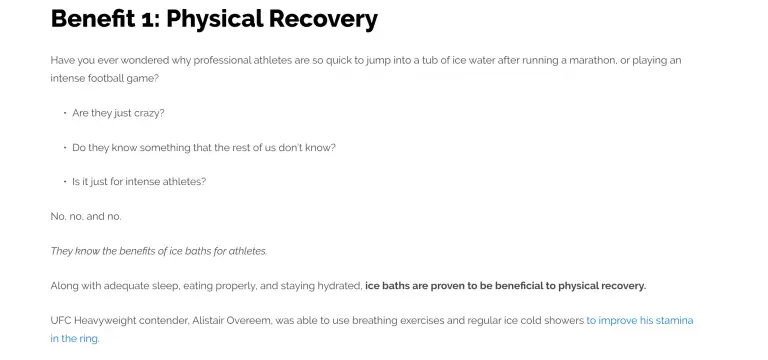
    To attract and retain visitors, you need to present information in a way that is easy to read and digest. A great example of this is Clarity Council’s blog.

    Below is an excerpt below from one of their blogs. Not only is the messaging clear and concise, but also formatted in a way that’s easy to skim. Also, the author has highlighted the focus part, so readers looking for quick answers can easily spot it.
    easy readability

    2. The Right Tone

    Finding the right tone of voice can make all the difference in connecting with your audience. It’ll make your audience feel understood and encourage them to try your product or solution.

    Your tone can be conversational, humorous, friendly, or formal, depending on your audience. However, when dealing with sensitive issues, you must make the extra effort to sound compassionate and empathetic.

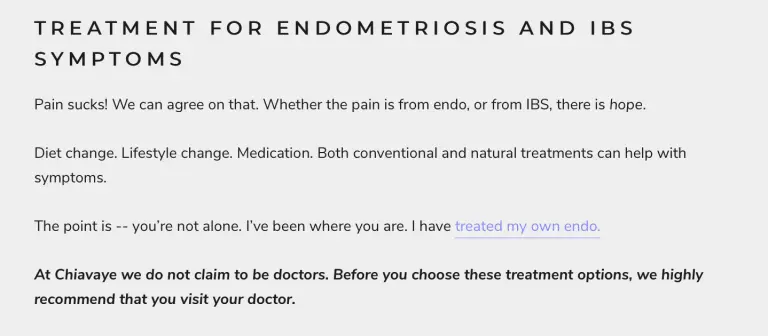
    Here’s a writing sample from Chiavaye, a lubricant created for women with endometriosis. You’ll see that while the writing is conversational and direct, the writer also empathizes with the readers and makes them feel comfortable by stating that they’re not alone.
    Right tone

    3. Catchy Headlines

    The headline gives the first impression of your content to the audience. It should be intriguing enough that the audience would want to click it and read the entire post.

    One effective headline technique is to use numbers in the headlines. A study by Conductor found that headlines with numbers were the most preferred headline types, with 36% preference. They are also likely to generate more social shares and attention.

    If you open the BuzzFeed homepage, you’ll see that most of its headlines are listicles with specific numbers. Now you know one reason why the site gets so many clicks, views, and visitors.

    4. Early Demonstration of Relevancy

    Writing lengthy introductions might work for scoring on your term papers, but they hardly work for SEO purposes. Remember, your goal is to write relevant content so that Google puts you at the top of search results. An effective way to prove relevancy is to target the main keywords early on in the content.

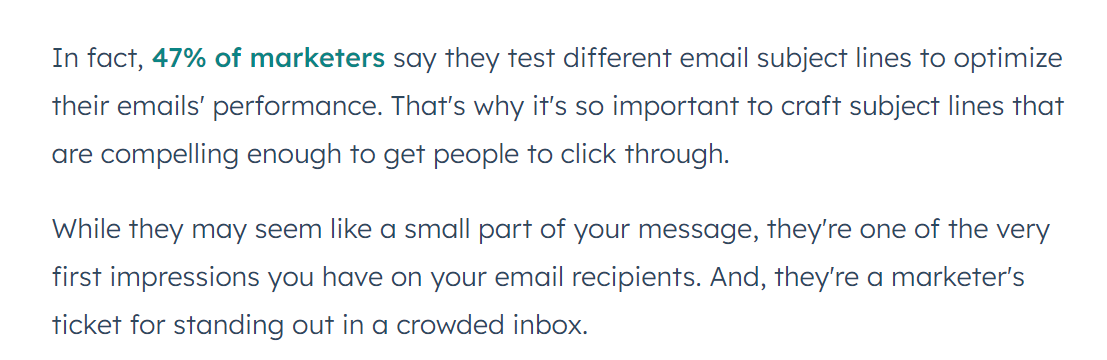
    Here’s a HubSpot article that demonstrates the point. The piece talks about writing email lines, and within the first 50 words, the writer has already targeted the main keyword three times.

    Take the lesson from HubSpot and try increasing the keyword density at the beginning of your next blog to see how it fares for you.
    demonstration of Relevancy

    5. Crisp and Professional

    Writing SEO articles on technical content can often be jargon-heavy, making them difficult to comprehend. Flexbase, an automated payment platform for contractors based in San Francisco, tackles the problems quite diligently.

    Here’s a screenshot from their page talking about Lien Wavers in Texas. Flexbase has presented the supposedly boring content in a way that is easy to read and digest.

    Though the style is formal and the content does contain construction-related jargon, readers will have no problem understanding what Flexbase offers, that too very quickly!

    crisp and professional

    How to Implement SEO Writing for Your Business?

    Now that you’re equipped with all the essential tips about SEO-based content writing, let’s look at how to implement SEO writing for your business.

    1. Creating an SEO Writing Strategy

    Creating a solid SEO strategy is the first step toward winning the SEO game. It helps you organize the content to gain maximum organic traffic from search engines. This way, search engine bots will identify your area of authority and better rank your site.

    Having an SEO strategy is essential to stay on track while creating content. With a strategy in place, you can write SEO articles users search for instead of random articles. Creating a solid SEO strategy should entail the following steps:

    • Making a list of topics
    • Researching keywords based on the topic
    • Building pages for each topic
    • Creating a consistent blogging schedule
    • Creating a link-building plan
    • Staying up-to-date on new SEO practices
    • Monitoring your success

    2. Hiring an SEO Writer or Agency

    The next step is hiring an expert SEO content writer or agency to help you meet your SEO goals.

    Outsourcing is a popular option in SEO blog writing since it helps businesses leverage the expertise of professional writers. But before you start hiring, you need to decide whether you want an in-house writer, a freelancer, or an agency. All options have pros and cons, which you need to gauge before deciding.

    Alternatively, you can choose Wittypen as your content partner. We have a pool of over 1400 talented SEO writers specializing in various domains. Plus, our platform provides management, quality, flexibility, and the ability to scale, to help your brand reach new heights. Sign up today to see how we work!

    CTA

    3. Tips for Working with an SEO Writer

    To make your partnership with the SEO content writer successful and generate awesome content that drives results, follow the tips below:

    • Be clear about the scope of the project. This includes payment terms, deadlines, number of revisions, etc.
    • Provide the writer with essential project information such as the target audience, business information, brand voice, content length, links you want to add, etc.
    • Communicate the specific content creation tasks they are responsible for. Will they do the keyword research, or will you do that from your end? Do they need to supply images as well?
    • Determine the communication process. They could be video-friendly platforms like Google Workspace or instant chat platforms like Slack.
    • Choose collaborative writing platforms like Google Docs for easy edits.
    • Provide feedback.

    Get Started With SEO Writing!

    In the end, SEO content writing boils down to satisfying the searcher’s intent with the best possible answer and presenting it in a manner that’s easily skimmable and digestible.

    Follow the ten best practices mentioned above and climb your way to the top of the SEO ladder! Also, note that search engines’ ranking algorithms change from time to time. Make sure to stay abreast of the latest updates and guidelines.

    FAQs

    1. What is SEO writing, and how does it work?

    SEO writing is following SEO best practices while creating and optimizing content to rank on search engines like Google. While writing articles for SEO, you should not only answer user queries but also present the answer in an attractive and digestible manner.

    2. How do I optimize my website for SEO?

    You can optimize your website for SEO by following these SEO content writing practices:  

    • Use keywords strategically
    • Write for humans and search engines
    • Use header tags
    • Optimize images
    • Create high-quality backlinks
    • Use meta tags
    • Use internal linking
    • Use external linking
    • Use structured data
    • Monitor your progress

    3. How can I improve my website’s search engine ranking?

    You can improve your website’s search engine ranking by creating high-quality content that answers user queries and optimizing them for SEO. If you aren’t an expert in writing SEO articles, you can hire a professional SEO web content writer to do the job.

    4. What are the best practices for SEO writing?

    The best practices for SEO writing include:

    • Structuring the content
    • Using relevant keywords
    • Using header tags and meta tags
    • Backlinking
    • Adding internal and external links
    • Optimizing images

    5. How important is keyword research for SEO ranking?

    Keyword research is an essential part of writing articles for SEO. It helps you find out what users are searching on search engines. You can then create quality content using the keywords to outrank your competitors.

    6. How do I create SEO-friendly content?

    Article writing for SEO is mainly about following the SEO guidelines and best practices. At the same time, you must ensure that you don’t write specifically for search engines but more so for your readers.

    7. How can I track my website’s SEO performance?

    You can track your website’s SEO performance by monitoring key KPIs such as revenue, conversions, website traffic, rankings on search engines, website health, visibility, crawl efficiency, and backlinks.


  • 5 Top SEO Content Writing Best Practices for Higher Rankings 

    5 Top SEO Content Writing Best Practices for Higher Rankings 

    Have you been considering setting up a new website for your business and creating content for it? Chances are, you’re feeling a little flummoxed about how to go about optimizing your content.

    While it might seem a little overwhelming at the very outset, SEO is all about understanding the basics of Google’s algorithm and your user’s needs.

    After all, SEO content writing is the process of creating content in a manner that aims to answer users’ search queries while ranking on the first page of Google’s results page. To that end, this guide will dive into five crucial SEO content writing best practices that you must keep in mind for the best results. 

    Mastering SEO Content Writing Best Practices: 5 Proven Tips (Tired & Tested)

    These five tips can be pivotal to your content ranking higher on Google and increasing your website’s traffic

    1. Understanding Search Engine Algorithms

    Google’s algorithm is always changing and being updated; understanding these changes is key to ranking your content on the first page. It ensures you get maximum visibility, which in turn leads to higher traffic and conversions. 

    If you look back to 2022, Google introduced several updates to its algorithm, all with the intent of ensuring that brands make their content increasingly human-readable and that websites that rank do so on the basis of their ability to meet the user’s search intent.

    Apart from ensuring you cater to the requirements of Google updates, making use of the right keywords is another crucial aspect to think about when considering how to write SEO content writing. 

    The landscape has changed quite a bit recently, with Google recognizing and penalizing content spammed with keywords. Having said that, businesses must use the most lucrative keywords within their niche to stand the highest chances of ranking. 

    For instance, if your website sells auto spare parts, trying to spam your content with keywords about second-hand cars won’t help as Google now heavily emphasizes topical relevance and expertise.

    There are several other factors that Google also considers when ranking your website:

    • The website’s mobile-friendliness. 
    • The use of external links to authoritative websites 
    • Your website’s internal linking structure 
    • On-page optimization—let’s look at this next. 

    2. Optimizing On-Page Elements 

    Optimizing on-page elements is crucial to ensuring your content stands the highest chance of ranking on Google’s first results page. These on-page elements include title tags, meta descriptions, and header tags, among others. 

    The meta title and the meta description are the first elements users see when they’re presented with the results page. When they on your link, your header is the first element users see as the webpage opens up.

    So, these need to be given a great deal of attention as they can mean the difference between a user who clicks on your link and one who chooses to ignore yours for that of a competitor. 

    Ideally, your meta title and description should have an emotive quality or a hook that compels a user to click on your website’s link. Here’s an example of two meta descriptions for the query “What is SEO?” You’ll clearly see which one’s more likely to draw the user’s attention to itself:

    “What is SEO? How can SEO help your website rank higher on Google’s results page? Find the answer to these questions in our detailed guide.”

    “The various updates to Google’s algorithm in 2022 show how the SEO landscape is changing. It’s become ever so important that brands and businesses…”

    As you can see, the first bio answers the user’s query, while the second is vague and most likely automatically chosen by Google due to the lack of a dedicated meta description provided by the business. 

    So, here are a few tips to help you create compelling meta descriptions:

    • Always use active voice
    • Make the tone actionable
    • Include a call to action. For example, “Master the art of writing well-optimized content on your website with these tips…”
    • Make sure to use the primary keyword. 

    3. Creating Quality Content 

    To no one’s surprise, another aspect that businesses must place at the top of their priority list in 2023 when creating SEO content for the web is quality

    The word ‘quality’ in itself can be vague, but it takes into consideration several aspects:

    • Writers must ensure they’re creating content for human beings and not search engines. One way of doing this is by not engaging in keyword stuffing. 
    • Your content must offer a depth of knowledge and not be shallow.

    Google is bound to pay serious attention to websites that offer more value to their users and will rank them higher than those that don’t provide comprehensive answers to users’ queries.

    An effective way of knowing what information to include is to analyze your competitors to see if they’ve missed out on something. 

    Content must be written by experienced writers, as you’re expected to see an increased emphasis on the author’s and website’s authority. A good author bio and links to their social media accounts can also go a long way in building your website’s authority.

    At Wittypen, we ensure the content we deliver to our clients offers the depth readers look for, helping build your brand’s authority further. We capitalize on our large pool of highly experienced writers and match your brand with the most experienced writers in the industry so you receive content that’s well-written, well-optimized and offers immense value. 

    SEO content writing services

    Here’s a glance at how our content creation process works:

    • We get our clients’ content and SEO requirements. 
    • We perform keyword research if needed for SEO content writing and content briefs for our writers. 
    • We outsource your content to the best writers with experience in your niche. 
    • Once the content is drafted, we edit it for language, grammar, and flow and ensure it’s been appropriately optimized before delivering it to our clients. 

    4. Adding Visual Content 

    Visual content in the form of high-quality images and videos will be crucial elements for your website in 2023. However, that’s just the tip of the iceberg.

    Ensure that these visual elements are optimized to not affect your page loading speed while contributing to your page’s ranking.

    Plus, with platforms like TikTok and Instagram being immensely popular, the importance of visual search is on a steady rise as Google works to keep up with these platforms. So, you’ll have to ensure you incorporate high-quality images and video into your content while maintaining its relevance. 

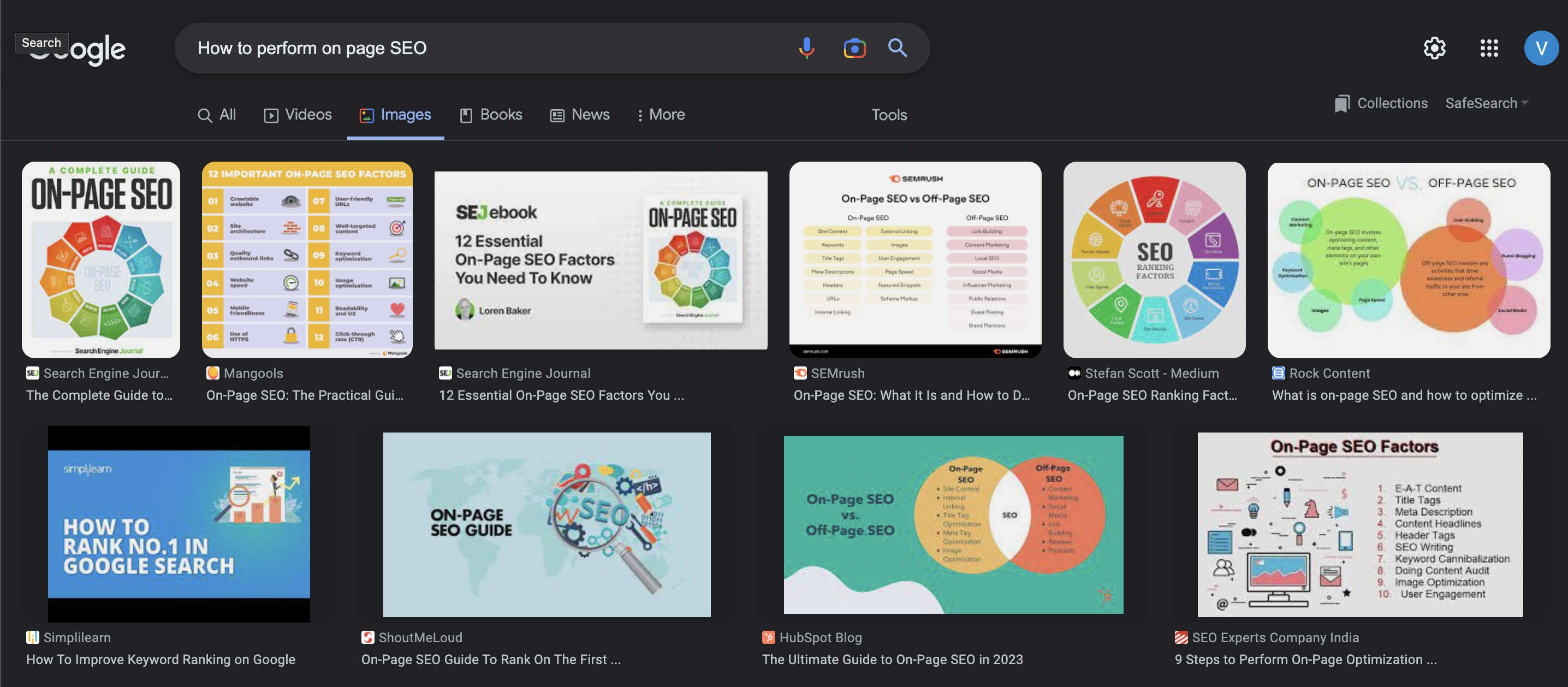
    A good example of how important image SEO is can be seen from this results page:

    All the results here are from websites that have made good use of images while optimizing them to ensure the images themselves rank well. 

    Additionally, using the right descriptive alt tags is crucial to ensure your website’s visual elements are tailored to be accessible to users with disabilities. 

    All these elements make your website more appealing and easier to crawl, significantly helping your search engine rankings. 

    5. Tailoring Your Content for Google’s Featured Snippets 

    Optimizing your content for Google’s Featured Snippets or answer box is among the best ways of ensuring your content ranks right at the top when writing web content for SEO. 

    The simplest way to do this is to draft your content to answer question-like keywords, i.e., how to, what is, etc. Doing so can help Google’s crawlers identify your content as the most valuable solution for the user’s search intent and highlight it in the answer box. 

    While there are several ways to optimize your content for the answer box, here are some key details to keep in mind:

    • Ensure you directly answer the user query with no fluff whatsoever. 
    • Ensure your page has a strong backlink profile. 
    • Make the content readable and easy to understand. 

    Featured snippets can be optimized in different formats, such as lists, tables, paragraphs, and videos. Here are a few examples of the same: 

    featured snippets in listicle format
    google featured snippets
    What is on page SEO

    Taking care of these aspects can go a long way in increasing the traffic on your website, as yours will be the first result a user sees when they search for that specific keyword. 

    On-Page SEO Checklist You Must Consider For SEO Content Writing

    To ensure your content ranks on the first page and give it the best chance of benefitting from increased traffic, here’s a handy on-page SEO checklist you can run through:

    • Keyword Research – Knowing which set of keywords you’re targeting in your content is key to creating the structure of your content in the first place—this includes LSI keywords. You can figure out which keywords to incorporate using a keyword research tool like Ahrefs.
    • Site Speed –Ensure faster loading times by compressing images, deleting unused plugins, and reducing the number of redirects, among other methods. 
    • Update Outdated Content – Consistently creating new content can be challenging. An easy way to make big SEO wins is to freshen up the existing and outdated content on your website.
    • Fixing Title Tags – Since title tags tell Google what your page is about, ensuring that they aren’t missing, duplicate, or longer than 60 characters can go a long way in helping your content rank better. 
    • External Links – Remember to use at least 5-8 external links pointing to authoritative sources. When linking internally, however, use keywords in your anchors. 

    Wrapping Up

    SEO content writing doesn’t have to be rocket science; you just need to take care of several aspects that contribute to your page’s ranking in their own ways.

    The overarching goal must be to tick as many boxes as possible, giving your content a fighting chance of ranking on the first page. Take the process step-by-step—this can help you understand the importance of each element better. 

    No matter what you’re creating—website content, a blog, pillar pages, or thought leadership posts—each of the tips mentioned above can go a long way in improving the quality of your content and improving its rankings. Always remember to aim for quality, and the rest will fall into place. 

    content writing services

    FAQs

    What Is SEO Content Writing and How Does It Differ From Regular Writing?

    The key difference between SEO content writing and regular writing is that the former is written for both the search engine and users by optimizing it for various ranking factors. 

    How Do I Optimize My Content For Search Engines?

    You can optimize your content for search engines by conducting thorough keyword research and using the right ones strategically, making your content deep and authoritative, using high-quality, relevant images, and more. 

    What Are The Most Important On-Page SEO Factors To Consider When Writing?

    The most important on-page tips for SEO content writing are the use of the right keywords, their placement in the content, the overall content quality, titles and title tags, and the use of relevant images. 

    How Can I Make Sure My Content Is Unique And Valuable To Readers?

    Creating unique content for your users depends on lots of planning, competitor analysis, keyword research, and the various aspects of on-page SEO, like optimizing images, meta and title tags, and improving your website’s speed. Most of all, you must ensure your content offers depth and value. 

    How Often Should I Be Updating My Website’s Content For SEO Purposes?

    While several factors influence how often you can update your website, such as the workforce available to do so, you should ideally update your website as often as needed. This could be to improve it, create fresh content, or tailor it to updates in Google’s algorithm. 

    What Are Some Best Practices For Incorporating Keywords Into My Content?

    When using keywords to write SEO-friendly content, you must:

    • Answer long-tail “how to” or “what is” keywords for Featured Snippets
    • Use the right keywords based on search intent
    • Place the keywords in all the right places (title tags, alt tags, headings)
    • Avoid overstuffing keywords in the body. 
  • Content marketing ROI: How to Identify Key Metrics You Should Track

    Content marketing ROI: How to Identify Key Metrics You Should Track

    Navigating the world of content marketing ROI can be complicated for many marketers. They might often find themselves questioning the effectiveness of their content marketing efforts and wonder if they are truly paying dividends.

    According to the Content Marketing Institute, about 20% of B2B marketers can still not assess the success of their content marketing efforts, and about 60% lack a documented content strategy. This knowledge gap is lamentable. Marketers should be able to effectively assess the success of their content marketing strategy.

    This post delves into the world of Content Marketing ROI, offering insights into what constitutes it, how to quantify it, and the critical content metrics to contemplate.

    Content Marketing ROI Basics

    Let’s start with understanding the basics of Content Marketing ROI to gain a comprehensive understanding.

    What is Content Marketing ROI?

    In any business, return on investment or ROI usually measures how successful a particular effort has been since revenue has a direct bearing on it.

    Content Marketing ROI is a percentage that indicates how much revenue the company has obtained from content marketing when compared to how much they had spent on creating and distributing the content. If the organization produces and promotes great quality content regularly, the ROI on content marketing will indeed be good.

    Content marketing ROI aims at three things:

    • To boost traffic to the website.
    • To convert such traffic into good-quality leads.
    • To convert and close the leads into sales.

    Conversions are integral to the content marketing ROI model and are a metric for determining the success of any content marketing strategy. The company can then quantify the conversions in terms of sales potential to predict the content marketing ROI.

    Let’s take a detailed look at how one can measure content marketing ROI.

    Why Should One Calculate the ROI of Content Marketing?

    Calculating ROI on content marketing allows a marketer to make smarter investments, fine-tune strategy for better results, and showcase their value to stakeholders. They can allocate company resources wisely by identifying where the content marketing efforts are paying off the most.

    When dealing with stakeholders, showing marketing’s impact on the revenue ensures continued investment in content marketing.

    If you are a marketing agency, linking content to revenue is the best way to win over potential clients, especially in the B2B sector, where the focus is on tangible business outcomes rather than just website traffic metrics.

    How to Calculate Content Marketing ROI?

    The content marketing formula to calculate the ROI is simple. The idea is to calculate the cost of content against the revenue earned. Here’s how it is derived.

    STEP 1 – Determine how much was spent to create your content

    Whether the content is produced in-house or sourced externally, there is always a cost incurred. Creating it in-house means a content specialist was employed to do the job against a monthly salary. The same is the case when a freelance content writer is hired.

    The cost of producing content also includes expenditure on creating content assets like video, graphics, audio, and presentation, whether done in-house or not.

    STEP 2 – Estimate the cost of distributing the content

    Distributing the content to communicate them to the right channels will also involve in-house and external costs. This will include paid promotions like social advertising and PPC advertising and also promotion through other media channels. Add to this the cost of any special tools or software necessary for content creation or distribution.

    Adding up all the expenses in Steps 1 and 2 will give the actual cost of producing the content.

    STEP 3 – Calculate the amount of revenue the company got in return

    There is a direct correlation between content and revenue. When someone reads the content, clicks the call-to-action button, and avails of the products or services, the content generates revenue. Well-created and suitably distributed content creates leads and often results in sales if everything goes well. Some less obvious content metrics will be covered in the later part of this blog.

    Add up all the sales that are a result of the content to arrive at the figure of the total revenue.

    STEP 4 – Calculating content marketing ROI

    A simple formula works here.

    Content Marketing ROI (%) = [(Return-Investment)/Investment] x 100

    Return divided by Investment and expressed as a percentage will give the ROI.

    If expenditure on a piece of content outsourced from a content marketing campaign is INR 10,000 and the sales resulting from that amounts to INR 30,000, then the return on investment or ROI is INR 20,000 or a gain of 200%!

    Content Marketing ROI (%) = [(30,000-10,000)/10,000] x 100 = 200%

    Revenue should not be considered the only direct indicator of how successful the content marketing strategy is; for some brands, the ROI comes from some indirect factors like brand awareness, customer loyalty, brand advocacy, etc.

    So, what is a good content marketing ROI measurement approach, and which metrics are responsible for it?

    Metrics Generally Used for Measuring Content Marketing Success

    One should consider these important content metrics for measuring the success of content marketing strategies. However, it may not be possible for everyone to track all of them. Choose only a few based on pre-determined goals!

    1. Web Traffic

    Think about it. There cannot be any revenue without traffic.

    The content marketing efforts can be successful only if there’s traffic.

    Use Google Analytics to understand how much traffic has been directed to the website because of a content piece. In the main menu, follow the options Behaviour > Site Content > Landing Pages. This report shows the pages that are visited by the website visitors first.

    2. Lead Quality

    Good content draws the target audience to the website naturally. It’s these visitors who generate leads, which in turn makes content marketing absolutely important for lead generation.

    The posts are drawing qualified leads if:

    1. People read the blog posts and consider availing of the services offered.

      b. Visitors read related resources.

      c. When visitors get in touch with the sales team with queries.

    Such actions show that the visitors are interested in what the website has to say and the content is generating quality leads.

    Set goals in Google Analytics to see if the site visitors are also checking out important pages such as your pricing page.

    If the traffic on the website is good, but the bounce rate is high, and conversions are low, it shows that the leads are of low quality, and the visitors aren’t really interested in what the website has to offer (considering content and offering is relevant).

    3. Sales

    If anyone wants their leads to convert to sales, the key is to provide valuable content to the visitor the instant they come looking for it. If the qualified leads are nurtured with quality content, at least some of them will be prompted to buy something.

    Enable e-commerce in Google Analytics if you want to get the exact numbers of conversions in the form of sales. Navigate to Behaviour > Site Content > All Pages and the Page Value column will show the average value for one page a user visited before landing on the targeted page or availing a product or service.

    This figure will give a general idea of the pages on the website that contribute significantly more to revenue than the others.

    4. Customer Feedback

    Customer reviews have a direct bearing on content marketing success.

    Yes, you got that right!

    If a product or service is reviewed positively, it means the offering is a high revenue earner, and the target audience has accepted it well.

    The content provided for the offerings should be in tune with what a buyer will actually get. Refrain from making tall claims in content and promise only what’s fair.

    5. Time Spent Onsite

    Merely getting the target audience to the webpage is not good enough if they are not hooked to stay there.

    This means the pages should ideally have a low bounce rate, and people should come back the next time they need something. It is only then that the content is working and helping in generating leads.

    If people are reading the content till the end or are subscribing to your weekly newsletter, it means they like the posts and look forward to reading about you the next time.

    6. SEO Rank

    The SEO success of the pages depends on how they perform in the search results during a search. People usually do not go lower down on the SERPs and mostly click the results that they see on top.

    The pages are well optimised for search engines if one’s getting good inbound links, have high domain authority, and the content ranks well for the target keywords, and the text appears in search boxes for relevant items.

    7. Social Media ROI

    Any guesses for the online platforms one will find most of your target audience frequenting? Social media sites are where they virtually hang out!

    If the business is prominent on Facebook, Instagram, Snapchat, and Twitter, it means that they have good offsite engagement. This is important for assessing content marketing ROI. If the fans or followers like the posts, they will want to link them or share them with others on social media.

    Keeping track of social media engagement helps. Recommendations and shares from friends often have an impact on purchase decisions on social media.

    Google Analytics can help the marketer get the stats on how much traffic is coming in through individual social media sites. To check this, they can follow the path Acquisition > Social > Network Referrals.

    To know the revenue they are earning through traffic on social media, go to Acquisition > Social > Overview.

    8. Exposure and Authority

    When a brand manages to establish its authority online over any content, it means people will want to be linked to it and share what they post. This improves the visibility and reach and contributes to generating leads and closing sales.

    While this authority cannot be quantified per se, searching for a topic keyword will tell the marketer if their site appears in the top results.

    Offline authority and exposure can be judged by the coverage a company gets from media channels, including TV and radio, and if they are being invited to take part in industry events and expert discussions.

    Being an essential parameter of defining content marketing success, these factors also ascertain how well the brand is recognized. High exposure and authority aid in directing interested people to the website.

    What Kind of Content Marketing ROI to Expect?

    Content marketing ROI can be influenced by several factors, which include:

    1. Quality of the content
    2. Where was the content distributed?
    3. SEO rankings
    4. Conversion rate
    5. Old marketing campaigns
    6. Marketing channels used
    7. Original and repurposed content
    8. Competition
    9. Content relevance

    And the list goes on. What is essential to understand is that no campaign will yield the same results. Content marketing ROI statistics will vary based on a lot of different factors.

    Hence, when setting expectations, always keep in mind that the key to achieving a favourable ROI in content marketing is adaptability. It’s essential to adjust the campaign and goals over time.

    Best Practices for Analysing Content Marketing ROI

    Let’s delve into the best practices for analysing content marketing ROI to optimize strategies and make the most out of it.

    1. Invest in high-quality content that resonates with your audience. Engaging and informative content leads to better returns.
    2. Continuously analyze your audience’s behavior and tailor your content to address their needs effectively.
    3. Look for the distribution channels that are working for you and leverage those.
    4. Focus on optimizing your content for conversions. Include clear and compelling calls to action and see which ones work better in guiding visitors toward desired actions.
    5. Maximize ROI by repurposing existing content into different formats, such as videos, infographics, or podcasts, to reach a wider audience.

    Content Marketing Campaigns That Stood Out in 2022

    Let’s dissect some of the most effective content marketing campaigns of 2022 that set the bar for success in the industry.

    Spotify Wrapped

    Spotify Wrapped, one of the most memorable content marketing campaigns by Spotify, employed a multi-channel approach to engage its users:

    Image Source

    1. In-app experience: They delivered the Wrapped experience directly to users. The users were greeted with personalized insights whenever they opened the Spotify app.
    2. Email marketing: Users were notified by email about the availability of their Wrapped summaries.
    3. Collabs: Spotify collaborated with influencers and celebrities to increase the campaign’s reach.
    4. Sharing on social media: Users were encouraged to share their Wrapped playlists on Facebook, Instagram, and Twitter, creating curiosity for people who were not using Spotify.

    Apple’s ‘Shot On an iPhone’

    This campaign is another remarkable content marketing initiative that focuses on the photography and videography capabilities of iPhones. This was a global campaign where users submitted their own visually captivating photos and videos and were then featured in Apple’s marketing materials.

    Source

    This was a campaign that was put to success using the following channels:

    1. TV ads: Apple used the most beautiful visuals in its TV commercials to reach a broad audience.
    2. Print ads: ‘Shot On an iPhone’ photos were featured in magazines, newspapers, and on billboards.
    3. Social media: Instagram, Twitter, and Facebook were used to share user-generated content and paid social media advertising to expand the campaign’s reach.

    Unlock the Power of Content Marketing

    As marketers, understanding how the content is received, who the audience is, and how they engage with the content is crucial. These metrics not only provide valuable insights but also guide in refining our content strategy to ultimately enhance our overall content marketing ROI.

    At Wittypen, you can find expert content writers who work to further the content marketing strategy. They are skilled at understanding business requirements and aligning the content to unlock the full potential of your content marketing efforts.

    FAQs

    1. How can I measure the ROI of my content marketing efforts effectively?

    You can measure the ROI of content marketing by setting clear goals, tracking relevant metrics, assigning monetary values to conversions, calculating costs, and using the ROI formula. Also, you should regularly review performance and adjust strategies to keep your content marketing strategy up-to-date.

    1. What are the key metrics to track when measuring content marketing ROI?

    The key metrics are:

    • Web traffic
    • Lead quality
    • Sales
    • Customer feedback
    • Time spent on-site
    • SEO rank
    • Social media ROI
    • Exposure and Authority
    1. What tools and techniques can I use to measure content marketing ROI?

    Tools that marketers widely use include Hubspot, Google Analytics, Databox, CallRail, Improvely, and Pretty Links, alongside other CRM systems and social media conversion tracking software. Calculating the ROI formula is one of the chief methods against all.

    1. What are the common challenges in measuring content marketing ROI, and how can they be overcome?

    Here’s a list of some common challenges and how to overcome them:

    1. Have specific, measurable goals for each content piece. Without this, it is hard to track the impact of the campaign.
    2. Compare ROI with industry benchmarks for context.
    3. Use advanced analytics tools to track performance accurately.
    4. Can you provide some case studies showcasing successful measurement of content marketing ROI?

    Spotify Wrapped and Apple’s ‘Shot on an iPhone’ are the best examples from recent years. Other campaigns include Canva’s Design Contest, HubSpot’s Academy, and H&M Magazine.

  • 30 Best SEO Rank Tracking Tools For Better Search Results

    30 Best SEO Rank Tracking Tools For Better Search Results

    Google’s recent algorithm update has notably shifted the dynamics of website ranking by prioritizing mobile-friendly websites in its top search results. This change underscores the increasing importance of mobile optimization in SEO strategies.

    As the competition for top search engine positions intensifies, it becomes crucial for businesses to monitor their website rankings and identify the most effective keywords. In response, many are turning to SEO rank tracker tools, which provide essential insights into search performance and visibility.

    In this context, we will review the 30 best rank-tracking tools of 2023, analyzing their features and capabilities. This comparison will help businesses choose the right tool to track their SEO progress effectively and adjust their strategies in alignment with Google’s evolving algorithms.

    What Is A Rank Tracker?

    A rank tracker is an essential SEO tool designed to monitor the position of a website or specific webpage in search engine results pages (SERPs) for targeted keywords. These tools provide critical insights into how well your site is performing in search rankings, offering features such as query search data, competitor analysis, reporting, SERP monitoring, and keyword performance tracking.

    While SEO tools often overlap in functionality, rank trackers have distinct features that set them apart. Unlike keyword research tools, which focus on search metrics for queries without considering a website’s ranking, rank trackers specifically show how a site ranks for those queries. On the other hand, all-in-one SEO tools may include rank tracking but also offer additional features such as social media insights, content publishing capabilities, and on-page SEO recommendations, providing a more comprehensive approach to SEO management.

    In summary, rank trackers are crucial for businesses aiming to enhance their SEO strategy by providing detailed visibility into keyword performance and search rankings.

    Key Features to Look for in SEO Rank Tracking Tools

    Even though professionals follow SEO best practices and do everything by the book, the best rank-checking tools have some crucial features that enable them to optimize their strategies further.

    Data Accuracy is Key

    When it comes to ranking analysis, data accuracy for search volume and visibility plays a crucial role in helping businesses target the right keywords and strategize for the top position.

    Metrics

    The website ranking tool must have metric tracking features for the key numbers, such as bounce rate, organic traffic, keyword rankings, page speed, organic search visibility percentage, etc.

    Non-Negotiable Features

    Based on the specific needs of a business, there will be several features that are non-negotiable when selecting a tool (for example, simple UI). This is a good criterion to filter out the tools that don’t make the cut.

    Mobile Support

    One of the key features to look for is support for mobile-based browsing. The tool should be able to provide collated and comparable data that highlights search rankings across all types of devices.

    Support

    There is always a learning curve involved with software. As long as there is a robust support system, it shouldn’t be a problem.

    The Top 30 SEO Rank Tracking Tools

    There is no shortage of SEO rank-tracking tools online, which is what makes it challenging to select one. Listed below are the 30 best rank tracker software that is the cream of the crop.

    1. SE Ranking

    SE Ranking has dedicated suites for SEO agencies to manage multiple clients and a unified dashboard for in-house teams to make the best of their SEO efforts.

    Key Features

    • Grouping and tagging for keyword lists.
    • Automated report generation.
    • Competitor lists and highlighting.

    Pricing

    Starting at $55/month for the Essential package.

    2. Serpstat

    SERPStat is an industry-leading SEO suite with a dedicated tool for tracking ranks. This is one of the best rank tracker tools trusted by brands like Deloitte and Rakuten.

    Key Features

    • Google SERP tracker to track separate pages.
    • Competitor insight and keyword ranking potential.
    • Contextual ad analysis.

    Pricing

    Starting at $50/month for Individual packs.

    3. Seobility

    Seobility is the best rank-checking tool that provides recommendations on SEO optimization potential for better results.

    Key Features

    • Daily updates for top 100 rankings.
    • Search volume, competition per keyword data.
    • Weekly ranking reports.
    • Automatic review of rankings on mobile and desktop.

    Pricing

    The Basic plan is free. Starting at $50/month for Premium.

    4. SERPWatch

    SERPWatch is one of the only rank tracker tools on the market that provides accurate and verifiable data for rankings.

    Key Features

    • Global and local ranking performance.
    • Support for multiple languages and locations.
    • Analysis of an entire marketing campaign for ranking.

    Pricing

    Starting at $49 per month for the Starter package.

    5. Nightwatch

    Nightwatch is the go-to tool for tracking the local ranking of keywords and websites.

    Key Features

    • Highly reliable local SERP tracking.
    • Map pack for enhanced insight for local SERP.
    • Automated local SERP reporting.
    • Support for multiple search engines.
    • Site auditor.

    Pricing

    14-day free trial available. Starting at $39 per month for 250 keywords.

    6. AccuRanker

    Accuranker is the best rank tracker software if companies want a tool that is lightning-fast and accurate at the same time.

    Key Features

    • Multiple options for filtering and API filters.
    • Competitor analysis.
    • Data filtering.
    • Historical insights.
    • Dynamic tagging for keywords, titles, and URLs.

    Pricing

    Starting at $129 per month for 1,000 keywords.

    7. Ahrefs

    Ahrefs is a popular SEO suite with a rank tracker tool that can chart chronological performance and compare it with competitors.

    Key Features

    • Rank tracking across 190 countries.
    • Data visualization.
    • Historical picture of SOV, average position and distribution.
    • Rank analysis across features like tweets, top ads, videos, etc.

    Pricing

    Starting at $99/month for the Lite pack.

    8. Advanced Web Ranking

    Advanced Web Ranking is an easy-to-use tool trusted by global biggies like Microsoft, Amazon, and Digitas.

    Key Features

    • Reliable SERP for over 4,000 search engines.
    • Keyword opportunity discovery.
    • Keyword pixel position.
    • Above/Below the Fold search listings.
    • Search visibility in pixels.
    • Google data integration.

    Pricing

    Starting at $99 per month for the Pro pack.

    9. Moz

    Moz is the best rank checker tool if a company aims to measure keyword ranking performance over time.

    Key Features

    • Comparison between mobile and desktop visibility.
    • Competitor movement tracking.
    • Period-specific keyword ranking reports.
    • Ranking data in over 200 countries.
    • Key metrics tracking.

    Pricing

    Starting at $99 per month for the Standard pack.

    10. WooRank

    Woorank is a complete SEO bundle with a keyword rank tracker tool that provides actionable rank tracking data.

    Key Features

    • Analyse keyword ranking positions over time.
    • Keyword discovery for Google Featured results.
    • Downloadable keyword data.
    • Campaign organization tools using tags.

    Pricing

    Starting at $89.99 per month for the Pro pack for 50 keywords.

    11. Authority Labs

    Authority Labs is the best rank checking tool for organizations who wish to monitor SEO performance with respect to keywords.

    Key Features

    • Automation for local and mobile rank tracking.
    • Daily reporting.
    • Global tracking is available.
    • Competitor tracking.
    • Unlimited users.

    Pricing

    Free trial available with all plans. Starting at $49 per month for a Plus pack.

    12. SEOptimer

    SEOptimer is a simplified tool to help professionals focus on the right keywords that should be tracked for optimal SEO performance.

    Key Features

    • Keyword discovery for high-ranking keywords.
    • Specific ranking for each webpage
    • Traffic estimation
    • Chronological rank mapping
    • Rank changes report.

    Pricing

    14-day free trial available. Starting at $19 per month for a DIY SEO pack.

    13. Sitechecker

    For companies looking for specialized insights like indexation progress and visibility rate, Sitechecker is the best rank-tracking tool.

    Key Features

    • Website rank tracking across multiple browsers and geographies.
    • Daily and weekly reports via email.
    • Multiple filters for keywords.
    • Keyword sorting by Amplitude of rank change.

    Pricing

    Starting at $49 per month for the Basic pack.

    14. RankMath

    RankMath is a beginner tool available as a plugin for WordPress. It helps professionals apply SEO best practices to their websites.

    Key Features

    • Highly integrable with other platforms like Google, LinkedIn, Pinterest, etc.
    • Simple UI
    • Google Index status
    • Keyword performance for ranking

    Pricing

    Starting at $5.75 per month for the Pro package.

    15. Narrato

    Narrato is basically a content AI platform with strong capabilities for SEO optimization as well as keyword ranking.

    Key Features

    • Content optimization for keyword ranking.
    • Keyword recommendations for generating SEO-friendly copy.
    • Plagiarism checks to rank content higher.

    Pricing

    Free trial available. Starting at $52 per month for the Pro pack.

    16. Google Search Console

    Google Search Console is perhaps the most well-known SEO optimization tool on the market for overall performance.

    Key Features

    • Manage search traffic and performance
    • Search analytics to measure clicks, position, and impressions on search results.
    • Index coverage review.
    • Site issue alerts and fixing recommendations.

    Pricing

    This is a free service offered by Google.

    17. SEMrush

    SEMRush provides a kit of tracking tools to help professionals get a holistic picture of website performance on Google.

    Key Features

    • Position tracking for campaign progress
    • Tracking sensor to provide change alerts.
    • Domain discovery with respect to paid keywords, paid traffic and more.

    Pricing

    Starting at $129.95 per month for the Pro pack.

    18. Ubersuggest

    Ubersuggest is a complete SEO tool by Neil Patel. It has an efficient rank tracking system with a dedicated dashboard.

    Key Features

    • Rank tracking and improvement suggestions.
    • Daily status updates on performance.
    • SEO health monitoring.
    • Critical issue alerts.
    • Organization of SEO research.

    Pricing

    Starting at $19 per month for the Individual pack. A free trial is also available.

    19. KWFinder

    For professionals who have more use for long-tail keywords and low difficulty, KWFinder is the most comprehensive rank-tracking tool for them.

    Key Features

    • Keyword finder tool for higher ranks.
    • Research competitors for high-ranking keywords.
    • Historical data for search volume.
    • Local keyword research and SERP.

    Pricing

    Starting at $29 per month for the Entry pack.

    20. Dopinger

    Dopinger is a tool that businesses can leverage to quickly check the ranking of their website.

    Key Features

    • Rank checking across a variety of browsers.
    • See position for valuable pages.
    • Keyword competition and difficulty level.
    • Search volume information
    • Real-time organic positions
    • Indexation checking for keywords

    Pricing

    Starting at $299 per month for the Starter pack.

    21. Spyfu

    Spyfu is an excellent rank-tracking tool that provides the next steps after discovering ranking keywords.

    Key Features

    • Exportable and customized keyword organization.
    • Weekly updates for tracking.
    • Ranking and position insights for every keyword.
    • Repeatable actions for successful strategies.

    Pricing

    Starting at $39 per month for the basic plan and 6-month historical data.

    22. RankRanger

    For professionals who seek to boost website ranking through organic performance boost, Rank Ranger is the right tracking tool.

    Key Features

    • Custom rank tracking
    • Mobile rank monitoring
    • Advanced tracking for local ranking
    • Competitor rank tracking with strategy isolation for paid and organic search

    Pricing

    Starting at $79 per month for the Lite package.

    23. All in One SEO (AIOSEO)

    All in One SEO, or AIOSEO, is a WordPress plugin that helps publishers optimize their WordPress site with best practices.

    Key Features

    • TruSE score for actionable SEO checklist to improve organic ranking.
    • Smart XML sitemaps to improve SEO markup for better ranking.

    Pricing

    There is a free version of this tool available for download. $99.60 for the Plus package.

    24. MonsterInsights

    MonsterInsights is a Google Analytics plugin for WordPress that professionals find extremely handy for SEO ranking reports.

    Key Features

    • Real-time stats for website visitors.
    • Behaviour reports
    • Search query analysis
    • Search result clicking data
    • Website audience reports
    • Google Analytics for website

    Pricing

    Starting at $99.50 for the Plus pack.

    25. Ranktracker (Editor’s Choice)

    Ranktracker – the Editors’ Choice rank tracking tool – is also used by leading brands from across the world, like Red Bull, Adidas, and Apple.

    Key Features

    • Updates for global, local, and national tracking.
    • Easy switching between mobile and desktop views.
    • Tracking for Google My Business.
    • Language support for Google, Yandex, Bing, and Yahoo for any location.

    Pricing

    Starting at $24 per month for the Starter pack.

    26. Pro Rank Tracker

    Pro Rank Tracker is an excellent tool to employ for highly specialized rank-tracking operations. Anyone can use it – individuals, agencies, or businesses.

    Key Features

    • Accuracy of 100% in rank tracking.
    • Online views, charts, and data visualization tools for friendly analysis.
    • Automated report generation that is customizable.
    • Saveable historical ranking data

    Pricing

    Free trial for 30 days. Starting at $13.5 per month for the Starter pack.

    27. Zutrix

    Zutrix is a Google-focused SERP checker tool. It is a dedicated tool that focuses deeply on ranking insight for Google.

    Key Features

    • Real-time notifications
    • AI-based SERP ranking analysis for Google
    • Local SERP analysis

    Pricing

    Starting at $9 a month for 250 keywords in the Starter pack.

    28. Nozzle.io

    Nozzle is an excellent choice for enterprises that have the need for in-depth SERP analysis and their business depends on ranking higher.

    Key Features

    • Rank monitor for the entire brand, which includes social media.
    • Unlimited domain matches.
    • Result tracking by pixels from the top, above the fold %, and SERP %.

    Pricing

    Starting at $59 per month for a Basic pack.

    29. Wincher

    Wincher is a specialist tool that professionals can use to track website rank performance on Google.

    Key Features

    • Keyword tracking and discovery
    • Ranking reports that are automated and customized
    • Quick ranking overview for a bird’s eye perspective
    • Rank change alerts for competitors
    • Ranking history

    Pricing

    Starting at $39 per month for 500 keywords in the Starter pack.

    30. SEO Powersuite

    Rank Tracker is an excellent tool for those who wish to track rank frequently without worrying about quotas.

    Key Features

    • Unlimited tracking for mobile and desktop position
    • Local rankings for more than 500 search engines
    • Tracking for competitors
    • SERP history
    • Keyword research

    Pricing

    Free version available. Starting at $596 per year for the Professional version.

    Tips for Effective SEO Rank Tracking

    While rank checking software is definitely useful to help professionals measure their position, there are a few more things they can do to make the process more effective. Let’s take a look at some tips for effective SEO rank tracking.

    • If there is already a rank tracking software in use, it might be more effective to try adjusting the position tracking settings to suit the goals.
    • Reassess whether there is really a need to track ranking for multiple search engines; the world knows Google has 91% of the market share (August 2023).
    • It might help if the professionals considered tracking languages separately. It helps to reduce disorganization in the tracking operation.
    • Set aside three critical metrics, like search engine ranking, website traffic from search engines, and conversions, and then leverage the tool to zero in on the strategy.
    • Ensure that the software is configured to track both – mobile and desktop – rankings. With Google’s recent algorithm update, only websites with mobile phone compatibility are preferred for top positions.
    • Always monitor competitor rankings. It helps to know the source of competitor traffic if they are performing better.

    As a bonus, pay attention to regional and local keywords and strategize to rank higher for them to get more intent-driven conversions.

    Rank Better by Choosing SEO Tools

    Considering that moving higher by only one position improves CTR by about 2.8% on average, SEO rank tracking tools can provide a good reality check.

    One excellent way to achieve a boost in rankings is to go for a content refresh on your website. Updating the information on your website to stay in step with the latest news and trends keeps you relevant and in the game. 

    It keeps your content engaging and improves your website authority, improving your ranking. If you are ready to overhaul and re-optimize your website content, you can explore our content refresh services.

    It is crucial for businesses to consider the ranking of their website, especially on Google. So, leverage this list of 30 site ranking tools and the power of SEO content to rank higher and better!

  • Which ChatGPT Alternatives Are Worth Your Time and Why (Top 50 picks)

    Which ChatGPT Alternatives Are Worth Your Time and Why (Top 50 picks)

    Ever found yourself in a jam because ChatGPT was down just when you needed it most? Sure, ChatGPT’s impressive capabilities have made it a favourite, but those occasional hiccups? Not so much.

    This might have left you wondering: Are there other options out there? Well, as the AI world evolves, so should your choices.

    If you’re leaning towards open-source or free tools or just want to see what else the tech world has up its sleeve, there’s a whole universe of ChatGPT alternatives waiting for you.

    Why settle when you can explore? Let’s dive into the world of possibilities together!

    50 Best ChatGPT Alternatives to Lookout For in 2023

    1. Wittypen

    Wittypen’s philosophy is simple: While AI can’t replace content marketers and writers, it can significantly streamline their operations.

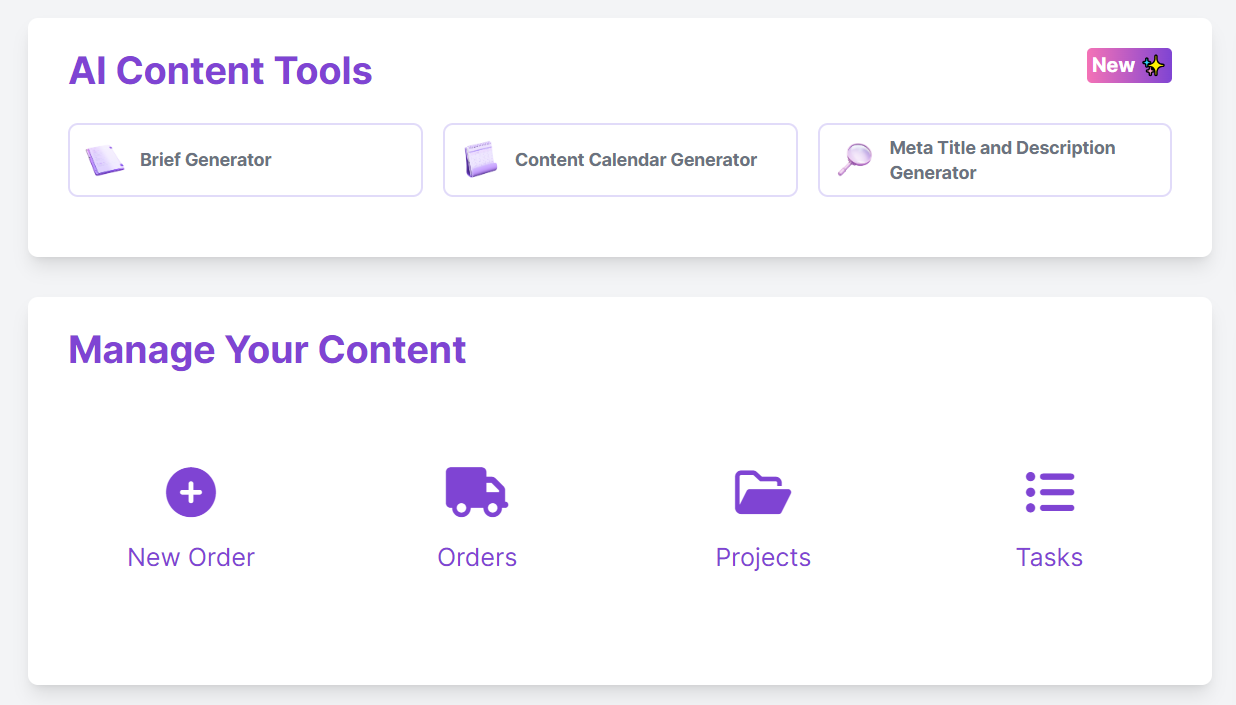
    Wittypen AI tools are built on the same philosophy, and they revolutionise content marketing by simplifying three everyday content tasks: creating content briefs, meta descriptions, and managing content calendars.

    Enhance precision and save time and effort with these three AI tools:

    • Content Brief Generator: Transform the tedious task of making content briefs into a swift, efficient process. Offer clarity and set expectations for writers.
    • Content Calendar: Automate building and updating your content schedules, excluding both the metal and manual labour of creating one from scratch. 
    • Meta Description Generator: Leave the tedious, important, but redundant task of writing meta descriptions to Wittypen’s efficient and fast AI tool.

    No extensive training or onboarding is required. Just sign up, and accelerate your marketing game!

    Pricing: Sign up with a company account to receive 10 free credits. Early adopters get additional credits to experience Wittypen AI’s potential.

    Website

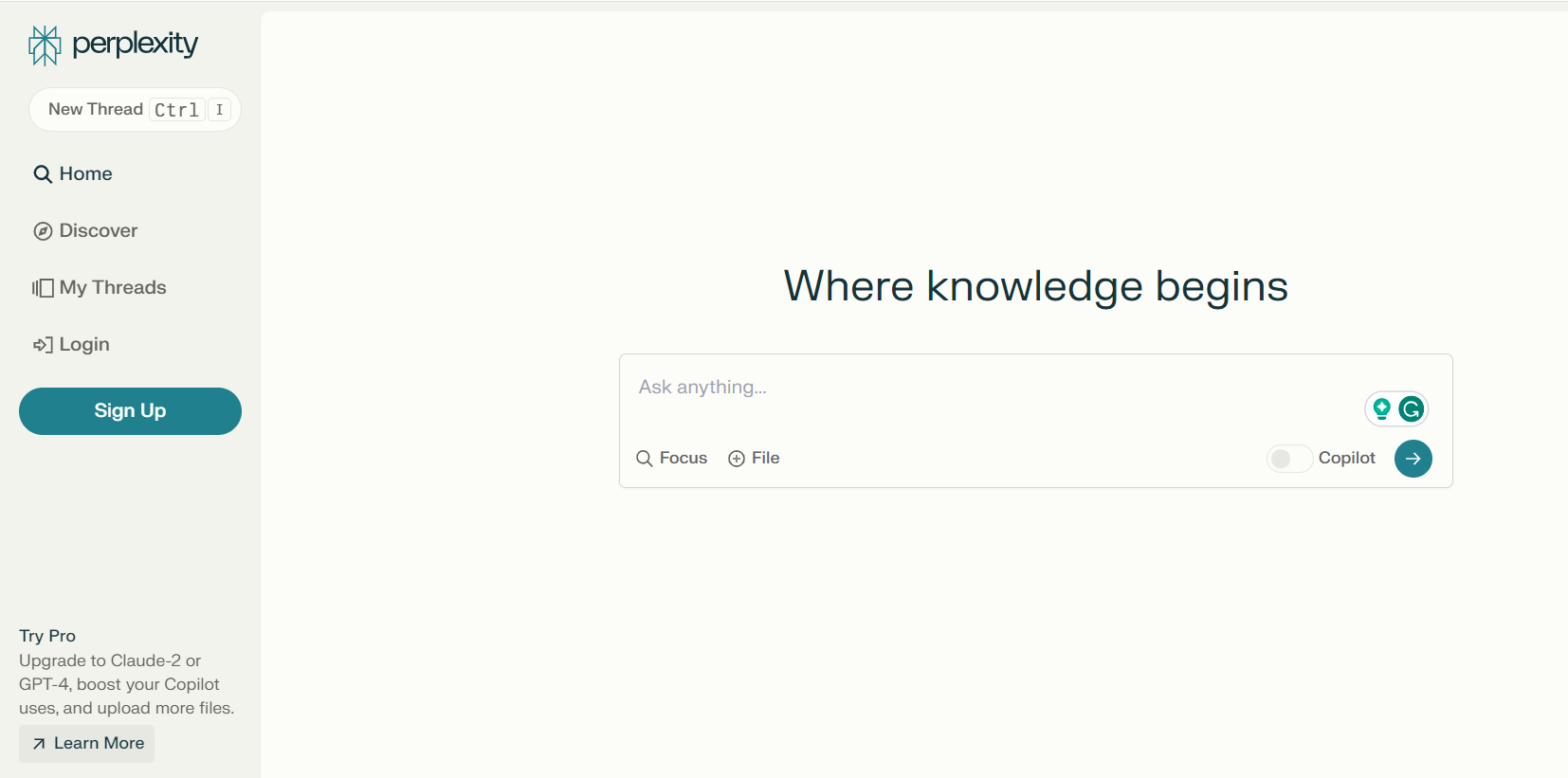
    2. Perplexity AI

    Perplexity AI strives for enhanced clarity in web browsing, ensuring you’re always in the know.

    Key Features:

    • Offers a familiar user experience similar to ChatGPT.
    • Ensures clear, transparent dialogue with users.
    • Provides sources and prompts with follow-up questions for thorough understanding.

    Rating: 4.8/5

    Website

    3. Vitalentum

    Ever felt the urge to chat with an AI in more than just one language? Vitalentum’s got a free version of ChatGPT that lets you dive into dynamic conversations in multiple languages (read English, Spanish, etc.).

    Key Features:

    • It understands and generates text in multiple tongues, catering to global users.
    • It fine-tunes advanced ChatGPT versions for tailored tasks, fitting diverse specialised needs.

    Rating: 4.5/5

    Website

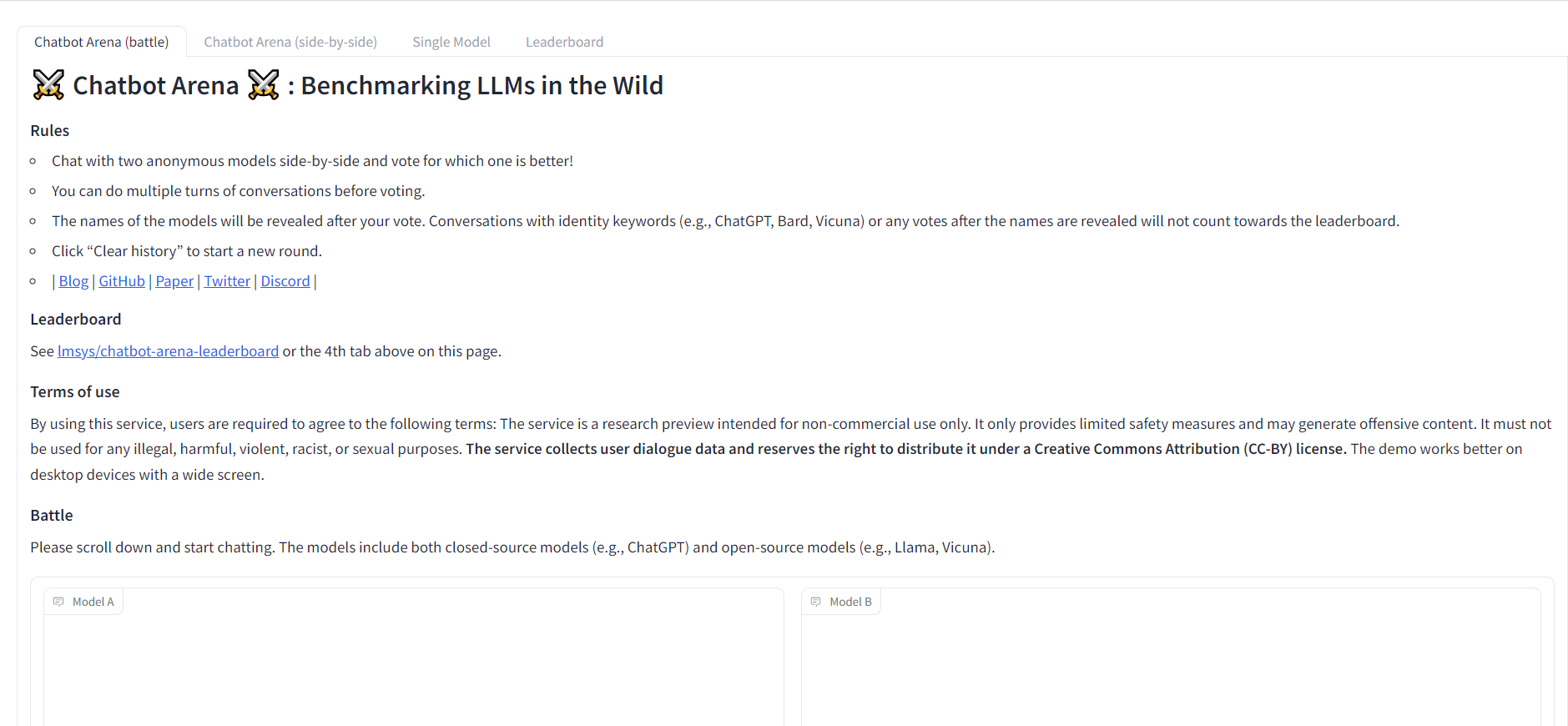
    4. Vicuna

    It is an open-source chatbot, trained on user-shared conversations from ShareGPT, designed to run locally on your machine using CPU or GPU.

    Features:

    • Run Vicuna locally on your machine, using either CPU or GPU.
    • Achieves over 90% quality, often outperforming competitors like LLaMA and Stanford Alpaca.

    Rating: 4.0/5

    Website

    5. GPTGO

    This is one of the best ChatGPT alternatives that blends the power of a traditional search engine with the intelligence of ChatGPT.

    Key Features:

    • Unified ChatGPT queries with regular search results
    • No need for a ChatGPT account or sign-up
    • Available across multiple devices, prioritising user privacy and security

    Rating: 4.2/5

    Website

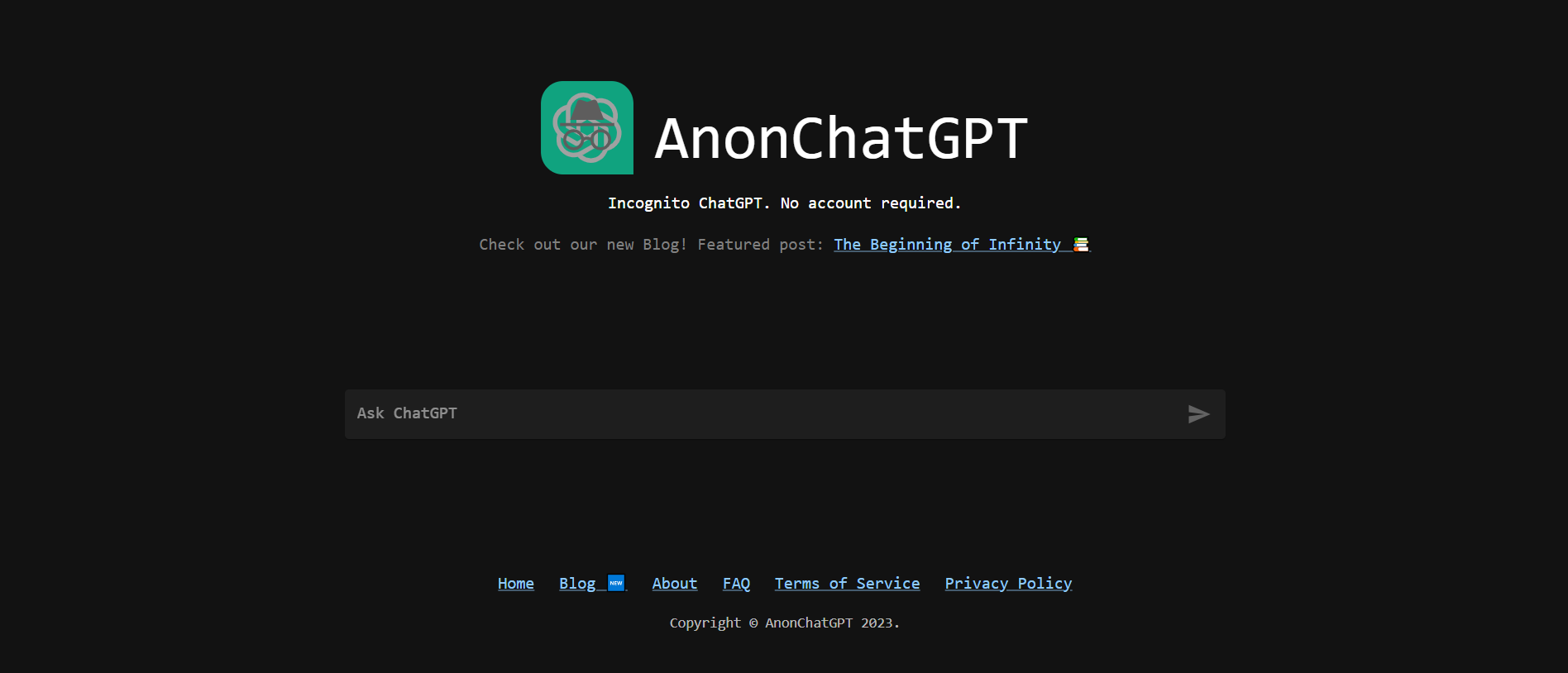
    6. AnonChatGPT

    AnonChatGPT provides a private avenue to interact with ChatGPT, eliminating the need for personal accounts or information sharing.

    Key Features:

    • Anonymous access to ChatGPT
    • Privacy-centric: No account creation
    • Human verification via captcha challenges to ensure responsible usage

    Rating: 5/5

    Website

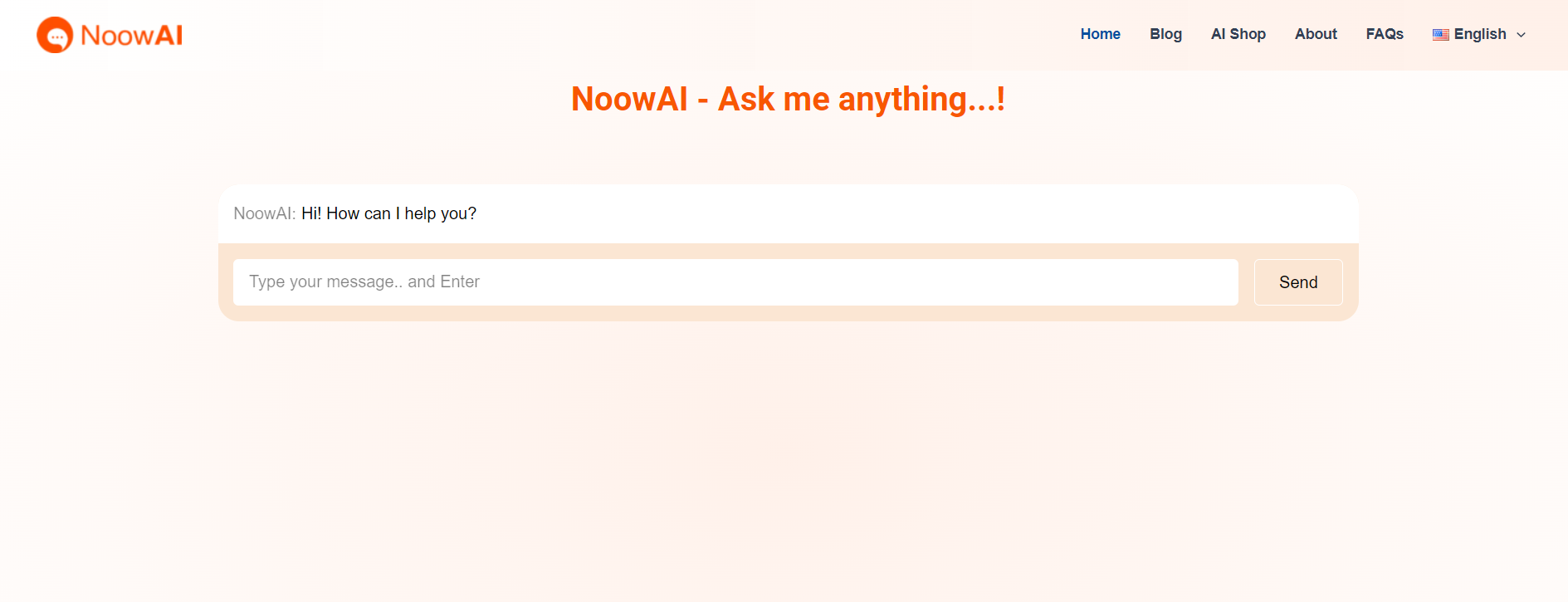
    7. NoowAI

    NoowAI is an initiative by enthusiastic AI developers, offering user-friendly AI-powered resources and services directly from its main page without sign-up requirements.

    Key Features:

    • Direct access to AI functionalities
    • No login or account creation is necessary
    • Continuous advancements in AI tools

    Rating: 5/5

    Website

    8. Character AI

    Among the captivating ChatGPT alternatives, Character AI stands out, offering a unique twist by letting you chat with AI versions of iconic figures from Socrates to Tony Stark.

    Key Features:

    • Mimics talking styles of famous personalities
    • Voice input and avatar image generation

    Rating: 4.5/5

    Website

    9. TheB.AI

    Embodying the prowess of Iron Man’s Jarvis, this AI chatbot offers versatile interactions and services tailored for individuals to industries.

    Key Features:

    • Personalised learning assistance
    • Real-time language translation and practice
    • Intuitive AI-driven code generation

    Website

    10. iAsk AI

    iAsk AI: Dive into the realm of intelligent assistance with iAsk AI, your next-gen companion powered by ChatGpt and OpenAI, designed to elevate your digital experiences.

    Key Features:

    • Seamless information access & content creation
    • Powerful image generation
    • SEO-optimized keyword discovery

    Rating: 4.2 reviews

    Website

    11. Phind AI

    A vision turned reality, Phind acts as your AI-driven engineering assistant, striving to transform ideas into functional apps with ease.

    Key Features:

    • Swift, accurate answers for programmers
    • Proactive questioning for clarity
    • VS Code extension for in-editor assistance

    Rating: 4.8/5

    Website

    12. GPT4All

    Dive into the world of open-source with GPT4All, developed by Nomic AI, enabling seamless integration of large language models into their ecosystem.

    Key Features:

    • Supported by Microsoft & Peking University
    • Offers instruction-based, detailed responses
    • Facilitates high-quality data curation via Atlas

    Website

    13. DeepAI Chat

    Deep AI is an artificial intelligence platform that provides cutting-edge AI models and solutions to help businesses and organisations streamline their operations.

    Key Features:

    • Automate complex tasks and extract valuable insights from data.
    • Machine Learning (ML) algorithms for data modelling and analysis.

    Website

    14. Teach Anything

    An innovative tool promising to impart knowledge in mere seconds through the power of AI.

    Key Features:

    • Instantaneous learning leveraging AI
    • User-friendly interface for easy interaction

    Rating: 5/5

    Website

    15. Poe AI

    Ever wanted an AI buddy right in your pocket? Meet Poe, an app designed to chat, answer questions, and converse with you anytime, anywhere.

    Key Features:

    • Interactive AI-based conversations
    • Instant response to queries
    • Versatile interface catering to various user demands
    • Multiple bot options for diversified user experience

    Rating: 4.7 stars

    Website

    16. Bard 

    Dipping Google’s toes into the realm of ChatGPT alternatives, Bard emerges as a conversational AI. Fueled by Google’s latest PaLM 2 LLM, it offers a fresh take on dynamic interactions.

    Key Features:

    • Upload images for enhanced interactions
    • Retain chat history for reference
    • Export chat logs to Docs, Colab

    Rating: 45 reviews

    Website

    17. Easy-Peasy AI

    Easy-Peasy.AI helps produce amazing content 10X faster, from compelling blog posts, polished resumes, and captivating emails to engaging social media content. With its arsenal of 90+ templates, this AI content tool not only saves time but also refines your writing prowess.

    Key Features:

    • Over 90 templates for versatile content creation
    • AI-driven image generation
    • Efficient audio transcription
    • Marky: Your personal AI chat buddy

    Rating: 5/5

    Website

    18. Forefront AI

    Forefront is a revolutionary AI assistant designed to seamlessly integrate into your professional world. Empower your daily tasks, extract insights from your data, and navigate the web, all within a conversational interface.

    Key Features:

    • Chat with various file types
    • Real-time web browsing
    • Customise assistant behaviors
    • Secure team chats

    Rating: 3.5/5

    Website

    19. OraChat

    Ora offers a revolutionary experience in crafting chatbots, blending both entertainment and productivity. With the largest community-generated chatbot library, you can converse with familiar faces or create your own persona.

    Key Features:

    • Vast library of popular personas
    • One-click chatbot creation
    • Integration without coding

    Rating: 4.7/5

    Website

    20. HuggingChat

    A prime open-source alternative to ChatGPT, HuggingChat by HuggingFace offers a robust chat experience powered by the Meta AI (LLaMA) language model.

    Key Features:

    • Supports web access for enriched context
    • Efficient coding capability
    • Fueled by Meta’s open-source models

    Rating: 4.7/5

    Website

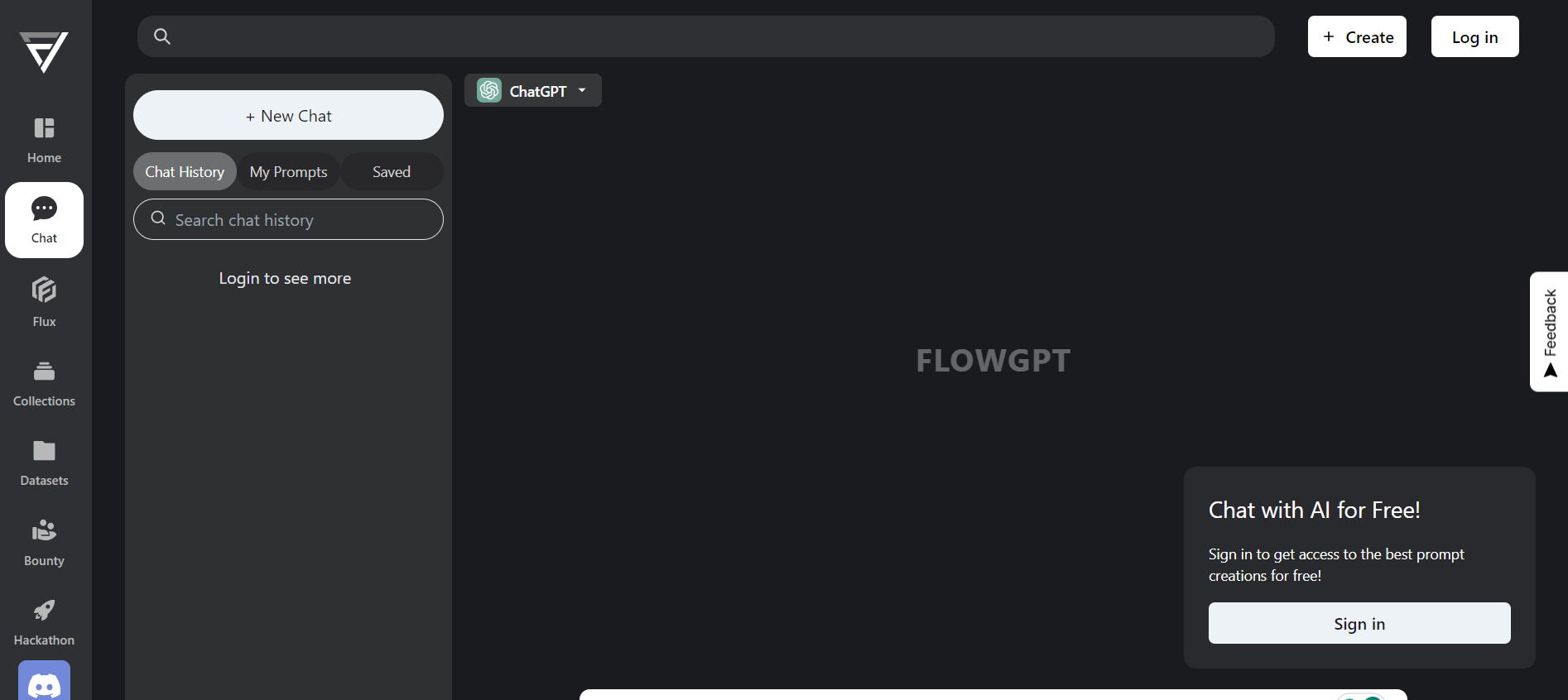
    21. FlowGPT

    FlowGPT is a dedicated community platform designed for sharing and discovering AI prompts, enabling individuals to leverage the full capabilities of models like ChatGPT.

    Key Features:

    • Engage with top prompt creators
    • Save, manage, and sync chats
    • Collaborative AI community platform

    Rating: 4.8/5

    Website

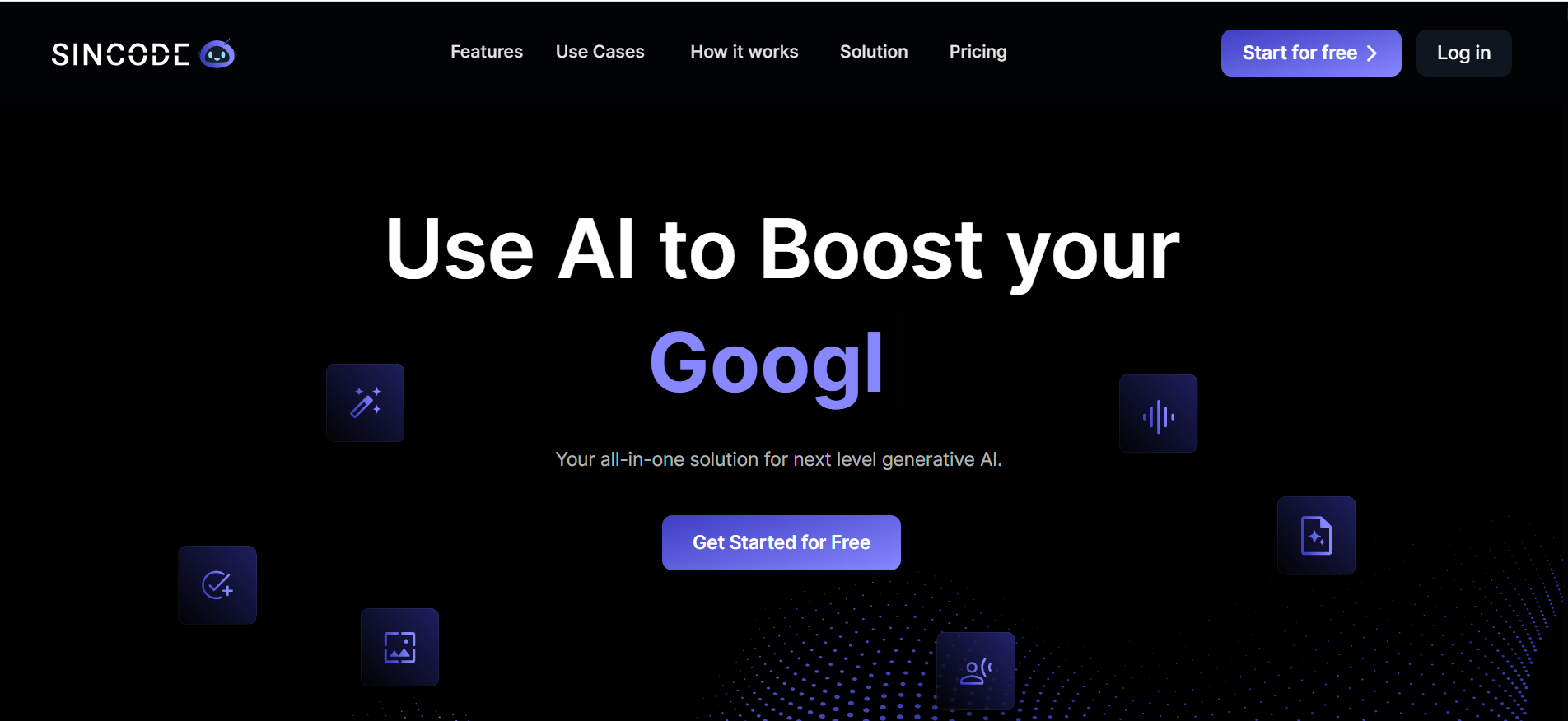
    22. Sincode AI

    SinCode AI is a premier AI copywriter and content generator. It focuses on delivering SEO-optimized, plagiarism-free content at accelerated rates, enabling businesses to enhance their Google Ads performance and establish a solid online presence.

    Key Features:

    • Uses Natural Language Processing (NLP) and Machine Learning (ML) for precision content.
    • Offers a seamless integration with existing systems.
    • Compatibility across all devices and operating systems.
    • Produces varied content: blog posts, product descriptions, website copy, etc.
    • Houses over 50 AI content tools, including an AI Prompts Library and AI Brand Voice.

    Rating: 4.4/5

    Website

    23. AI.LS

    AI.LS is an innovative chatbot tool harnessing the ChatGPT API. Designed for swift and effortless interactions, AI.LS redefines the chatbot experience with a mix of information retrieval, conversation facilitation, and AI-driven image creation capabilities.

    Key Features:

    • Significantly quicker interactions than the conventional ChatGPT platform.
    • Engage in fluid dialogues with the AI.LS bot.
    • Beyond mere chat, AI.LS offers AI-based image creation.

    Website

    24. LetsView Chat

    LetsView Chat is a sophisticated AI chatbot platform tailored for providing enhanced assistance to user prompts. By comprehending natural language and ensuring robust data security, it revolutionises interaction in numerous scenarios.

    Key Features:

    • Interacts authentically, promoting better questioning techniques for users.
    • Its database updates consistently, offering the latest, relevant information.
    • Adheres to the HTTPS encryption protocol, guaranteeing total data protection.

    Rating: 4.1/5

    Website

    25.CapeChat

    CapeChat is a privacy-centric platform integrating the ChatGPT API, ensuring the safety of your data by automatically encrypting documents and redacting sensitive information.

    Key Features:

    • Automatic encryption of user documents
    • Redaction of sensitive data from content
    • Integrated with ChatGPT for high-quality language processing

    Rating: 4.7/5

    Website

    26. Open-Assistant

    Open Assistant, powered by LAION, pioneers the future of conversational AI with an open-source approach, aspiring to revolutionise communication akin to how Stable Diffusion transformed art and imagery.

    Key Features:

    • Open-source platform promoting collaborative development.
    • Integration of RLHF with large language models.
    • Comprehensive FAQ section for transparency and guidance.

    Ratings: 5/5

    Website

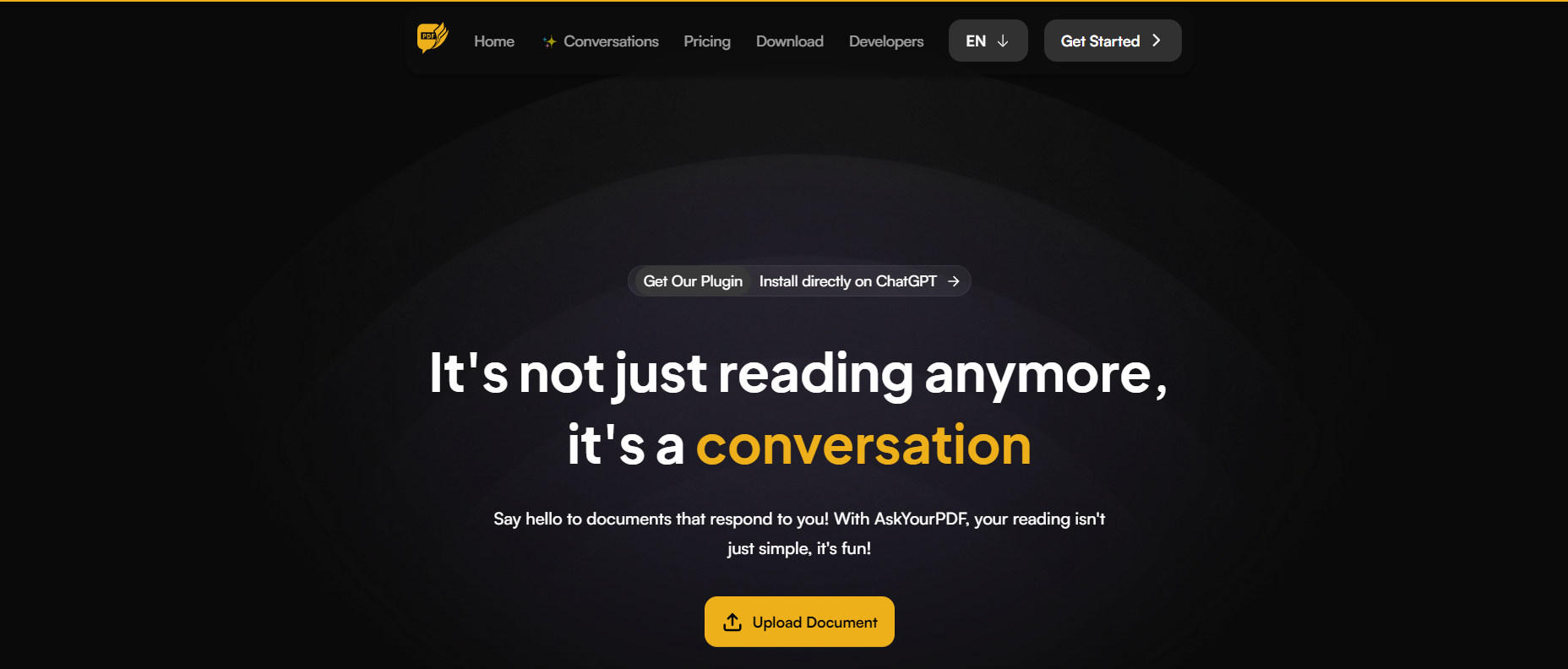
    27. Ask Your PDF 

    AskYourPDF is a groundbreaking platform that transforms passive documents into responsive chat partners, leveraging the power of ChatGPT. Turn your PDFs and other formats into interactive, engaging, and conversational entities, revolutionising how you interact with content.

    Key Features:

    • Wide variety of supported formats, including PDF, PPT, EPUB, and more.
    • Chrome extension for seamless chat interactions with documents.
    • AI-powered chat system that enhances learning and document understanding.

    Rating: 4.6/5

    Website 

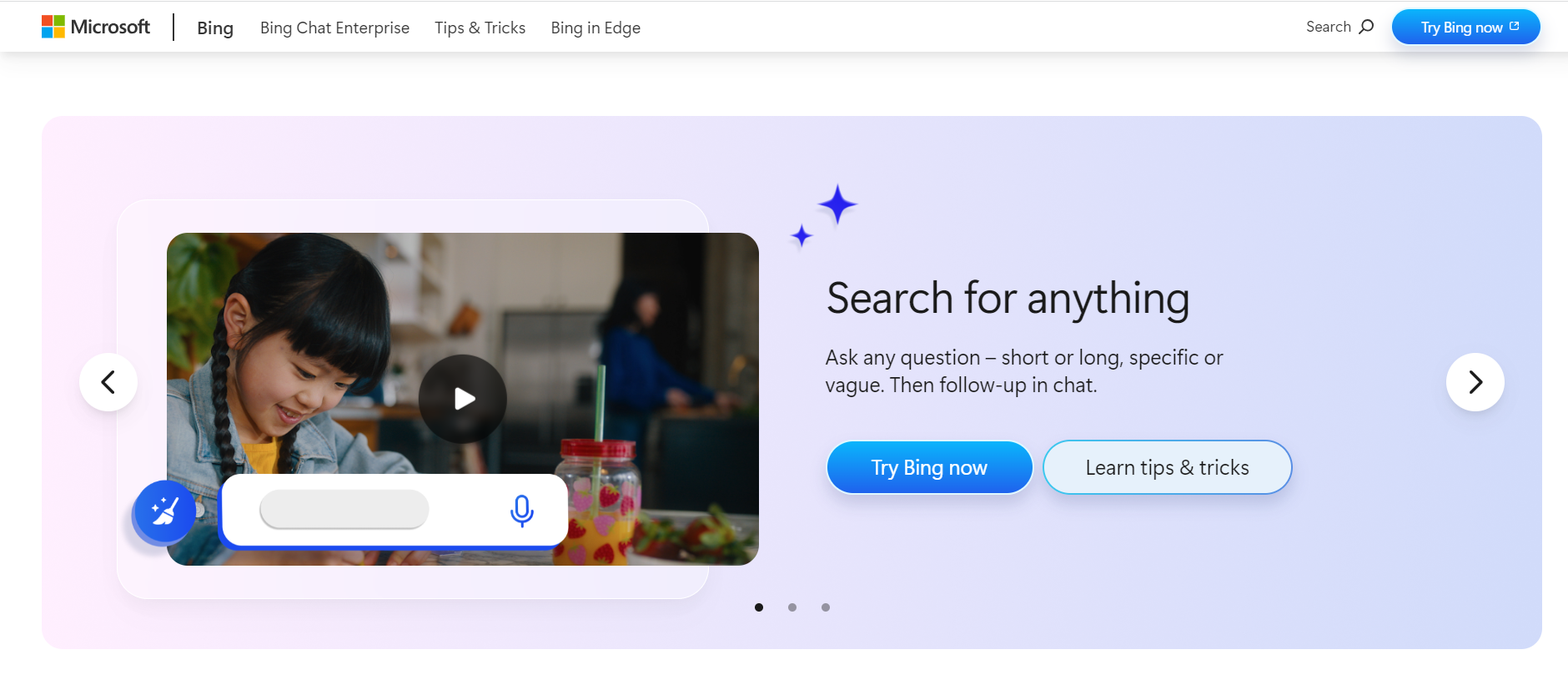
    28. Bing Chat

    As a compelling alternative to ChatGPT, Microsoft has rejuvenated Bing with integrated AI prowess. This evolution isn’t just an upgrade but a transformative step for Bing, catering to Microsoft users with a distinct conversational experience.

    Key Features:

    • Harnesses the might of GPT-4
    • Adaptable chat modes: Creative, Balanced, Precision
    • Offers pinpointed references for reliability

    Rating: 4.5/5

    Website

    29. JimmyGPT

    JimmyGPT serves as a versatile AI assistant, adept in content creation, learning, and entertainment.

    Key Features:

    • Content drafting from cover letters to professional emails
    • Educational insights on various topics
    • Fun interactions, including jokes and personalised music recommendations

    Rating: 5/5

    Website

    30. Codeium

    Codeium offers a transformative coding toolkit, enabling developers to code efficiently with AI-powered capabilities.

    Key Features:

    • AI-Powered Autocomplete: Speed up coding with intuitive suggestions.
    • Intelligent Search: Easily find files and code segments.
    • AI-Chat Assistance: Get guidance, refactoring, documentation, and more.

    Ratings: 4.7/5

    Website

    31. YouChat

    YouChat is an AI-driven search tool adept at real-time conversations, seamlessly merging search accuracy with interactive communication.

    Key Features:

    • Writes codes, offers advice, and summarises content
    • Supports voice, video calls, group chats, and file sharing

    Rating: 4.8/5

    Website

    32. OpenAI Playground

    It offers an interactive web-based environment for tech aficionados.

    Key Features:

    • Advanced language model selection
    • Customisable options: randomness, token count, stop sequences
    • Upload audio that boasts impressive accuracy

    Rating: 4.7/5

    Website  

    33. AnySummary

    AnySummary is a sophisticated AI-driven tool designed to condense extensive interview recordings, be it audio or video, into concise summaries tailored to your preference.

    Key Features:

    • Summarises various media types: images, audio, video, text, and CSV.
    • Offers user-selectable summary styles: bullet points, direct quotes, or in-depth abstracts.
    • Capability to handle both direct files and URL-based content.

    Rating: 3/5

    Website

    34. Sharly AI

    Sharly transforms how you engage with content, offering a cutting-edge AI chat interface ideal for comprehensive content analysis. It’s touted as the market’s most accurate and secure AI chat, revolutionising document interactions for professionals.

    Key Features:

    • Over 50 different content types are supported, including XML and CSV.
    • Automatic OCR, cross-document scrutiny, and integrated Google Drive support.
    • Built for teamwork, Sharly facilitates sharing with team members or clients and seamlessly fits into existing workflows.

    Website

    35. Documind

    Documind is an innovative solution that integrates ChatGPT with your documents. Bypass the tedium of sifting through pages by letting Documind fetch the information instantly.

    Key Features:

    • Bulk document upload for immediate AI processing.
    • Direct chat with your documents for quick info retrieval.
    • Natural language query responses with source citations.

    Website

    36. ChatDOC

    ChatDOC provides an innovative ChatGPT-based assistant designed to extract, summarise, and locate information from an array of document types, offering instant answers with cited sources.

    Key Features:

    • Efficient Q&A system for immediate knowledge retrieval.
    • Text and table analysis using AI.
    • Cross-document queries for comprehensive research.

    Rating: 4.7/5

    Website

    37. Humata AI

    Humata.AI empowers users to interact with files dynamically, making research, learning, reporting, and analysis exponentially faster and more efficient.

    Key Features:

    • Instant summaries for complex papers
    • Instant Q&A for file-related queries
    • Accelerated writing based on document insights

    Rating: 5/5

    Website

    38. ChatPDF

    Experience ChatPDF is the game-changer for interpreting PDFs. Decode complex research effortlessly through AI-driven insights.

    Key Features:

    • Quick PDF summaries
    • Interactive Q&A with documents
    • Multilingual support with cited sources

    Rating: 4.4/5 

    Website

    39. FileGPT

    FileGPT utilises advanced GPT-AI to let users chat with various file types. Whether it’s PDF, audio, or YouTube content, get immediate, accurate responses without the hassle of manual searching.

    Key Features:

    • Multi-format interaction
    • Large file support
    • Smart content extraction

    Rating: 3.2/5

    Website

    40. ResearchAide

    ResearchAIde, your AI-powered assistant, simplifies research paper analysis for students, researchers, and professionals.

    Key Features:

    • Swift Analysis: Bypass full reads and pinpoint crucial details.
    • Unified File Chat: Efficiently manage multiple research files.
    • Data Insight: Rapidly derive valuable insights from papers.

    Rating: 4.7/5

    Website

    41. Pensieve AI

    Pensieve animates documents, letting users engage with content ranging from legal agreements to reports. Easily extract information, summaries, and more from various formats.

    Key Features:

    • Chat with PDFs, texts, and CSVs.
    • Utilises ChatGPT for accurate responses.
    • Offers free trials, affordable subscriptions, and team features.

    Rating: 5/5

    Website

    42. Docalysis

    Streamline document comprehension with Docalysis, an AI that rapidly answers queries about your PDFs, eliminating manual reading.

    Key Features:

    • AI Assistance: Immediate answers from your documents.
    • Time Efficiency: Drastically reduces manual reading time.
    • Robust Security: Assured file security with deletion option.

    Rating: 5/5

    Website

    43. Pi, your personal AI

    A fresh take on ChatGPT alternatives, Pi offers dialogue-based AI interactions, more personal and supportive than mere chatbots.

    Key Features:

    • Voice-based talking with four human-like voice options
    • Dialogue-focused, not just chat
    • Tailored for mental health and real-world conversations

    Rating: 4.8/5

    Website

    44. Kuki AI

    Kuki is an AI with a multifaceted presence designed for conversations across diverse platforms. Unlike traditional voice assistants, it offers an interactive experience, extending from messaging to immersive 3D worlds and even hosting TV segments.

    Key Features:

    • Multifaceted: Model, TV host, hologram
    • Guinness World Record holder & Media Darling

    Website

    45. Replika

    Among other ChatGPT alternatives, Replika emerges distinctively as an AI companion, meticulously designed for deep relational engagements using the GPT-3 language model.

    Key Features:

    • Create and personalise a Replika avatar
    • Real-time conversation updates, note-making, and in-app games
    • Engage in video calls

    Rating: 2.4/5

    Website

    46. YourHana AI

    Meet Hana, an always-available AI companion tailored for conversation, advice, and emotional connection. Experience genuine companionship, ensuring you’re never truly alone.

    Key Features:

    • 24/7 availability
    • Encrypted, customisable chats
    • Memory retention & interactive conversations

    Rating: 5/5

    Website

    47. Sage

    Scalefusion’s Sage AI revolutionises endpoint management using OpenAI’s GPT language model, making device management intuitive for IT teams.

    Key Features:

    • Instant script generation
    • Script validation
    • Recommendations for device issues
    • In-depth analytics

    Website

    48. Claude 2

    A formidable ChatGPT rival, Claude 2 by Anthropic, boasts Google’s backing and shifts from traditional LLMs to unique AI techniques for more natural conversations.

    Key Features:

    • Complex content and code writing
    • File attachment for text extraction
    • Riddles, jokes, and general chats

    Rating: 5/5

    Website

    49. Dragonfly

    Dragonfly AI offers data-informed solutions to enhance creative decisions, ensuring attention-winning content across multiple channels.

    Key Features:

    • Predict attention in real-world contexts
    • Establish a clear visual hierarchy
    • Achieve creative quality at scale

    Rating: 5/5

    Website

    50. NeevaAI

    It is a unique search engine that merges the power of ChatGPT with diverse language models to deliver precise results.

    Key Features:

    • Accurate responses with real-time updates
    • No trackers or ads
    • Customisation with summarised results and references

    Rating: 4.9/5

    Website

    AI’s Impact on Content Marketing 

    The evolution of AI tools in the content marketing landscape has fundamentally reshaped how professionals approach their tasks. No longer are they bogged down by the monotonous aspects of their roles, thanks to AI stepping in to streamline processes.

    In this context, Wittypen’s introduction of their AI tool emerges as a significant milestone. Positioned as one of the best ChatGPT alternatives, Wittypen AI tools ensure that you get quality without compromising quantity and precision. 

    With AI innovations to empower our human efforts, the future of content marketing appears bright and exciting!

    FAQs

    1. What are the best alternatives to ChatGPT?

    There are numerous noteworthy alternatives, including WittyPen, Perplexity AI, Vitalentum, Bard, and Character AI. Each offers distinct features tailored to different user needs.

    2. Are there any free ChatGPT alternatives?

    Yes, there are numerous AI tools, like WittyPen, Perplexity AI, Character AI, etc., that provide free access to users. However, functionalities may vary, and some may have limited features in the free version.

    3. Can these alternatives handle complex conversations like ChatGPT?

    Many ChatGPT alternatives, such as Bard with its PaLM 2 model, are designed to manage complex conversations. However, the depth and clarity can differ across platforms.

    4. Which alternative AI chatbot would you recommend for specific use cases?

    It depends on the use case. For personality-based chats, Character AI is compelling. For advanced web browsing, WittyPen or Perplexity AI might be more suitable. Always consider specific requirements before choosing.