Author: Anshul Motwani

  • Google Algorithm Updates: 4 Best Unique Ways To Write Content

    Google Algorithm Updates: 4 Best Unique Ways To Write Content

    It’s not 2009 anymore when you could pepper in trending SEO keywords and get your page rankings up in SERPs quickly. In 2018 alone, there were 3234 new Google algorithm updates, which is quite a whopping number.

    Although they were minor updates, the major ones rolled out were Panda and Penguin, which changed how the search engine worked in significant ways. This article will guide you through how you can optimize your content for the latest Google algorithm updates and always be a step ahead of the competition.

    How Google’s Algorithmic Updates Can Work Better for Your Content Strategy

    Google is constantly looking to improve its user search experience. Most online marketers usually try to get their search engine rankings up by creating content that the bots pick up.

    But with more and more recent updates, Google’s SERP algorithm is getting smarter and no longer vets content on the basis of keywords alone.

    In short, Google wants content that is ‘future proof’ and not just stuffed with keywords. As long as your content is interesting and useful in your chosen niche, the upcoming algorithmic updates will work in your favor, rather than against you.
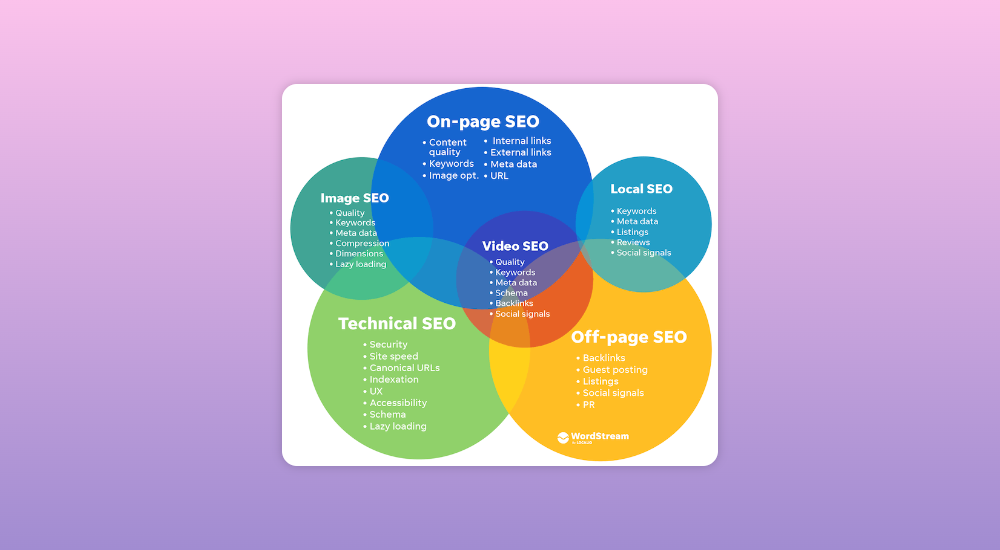
    Types of Search Engine Optimization - Google Algorithm Updates
    Source – Google

    For search engine marketers, ranking #1 in organic rankings is the holy grail for their online business. Knowing how Google is working on changing the way its search engine ranks posts and gets websites to the top of its SERPs is your best way forward.

    Taking Advantage of Google Algorithm Updates

    Google’s intention with its new algorithms is to cut down on clutter and provide unique and useful content to its audience. While your competitors may focus on White Hat SEO practices to get their page rankings up, that will work only in the short run.

    You can stay ahead of the competition and make sure your content stands the test of time by focusing on making it unique and relevant.

    Ask yourself this before creating any content – “What can I/my business offer that’s truly unique compared to our competitors?”

    Create and publish content based on these findings, and you’ll be miles ahead of your competition before you know it.

    Although that’s easier said than done, there are several ways to go about it. Here’s what we refer to as a checklist for creating content that’s future-proof for the upcoming Google algorithm updates.

    1. Write Content Based on the E-A-T Factor
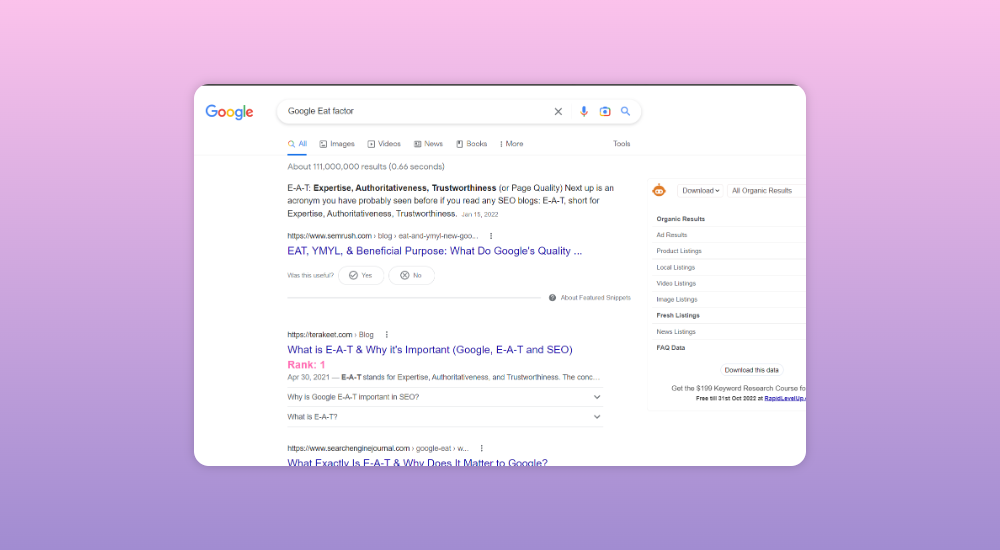
    Google EAT Factor

    The EAT factor was talked about in a Google Whitepaper that was published on Feb 16, 2019. According to the paper, Google’s guidelines for content writing and ranking high in quality revolved around three critical factors:
    • Expertise
    • Authoritativeness
    • Trustworthiness

    Expertise – This refers to how well you know your subject or niche. If you’re a doctor with many credentials when compare to a medical student with less knowledge, Google algorithm updates are surely going to give your content more prominence. But you have to get noticed, and this is where creating a striking bio and About Me pages, along with bylines will help you stand out. Experience is key.

    Authoritativeness – How well-known are you in the industry? You have to prove your website’s credibility by getting the word out and showing how it’s a key influence in your content’s overall quality. This is why creating unique and original content is so important.

    Trustworthiness – This refers to whether your website can be trusted. If you have a lot of people referencing your site and sharing links, Google will see your website as a trustworthy resource and is more likely to rank you higher on SERPs.

    YMYL or ” Your Money, Your Life” is another content rating Google follows. What this means is Google ranks your pages based on the correctness of your content. This means your content should also be factually correct and not harmful/hurtful to your audience.

    2. Be Helpful to Your Readers

    When you create content, ask yourself: “Is this useful to my readers?”
    This should be your priority when it comes to higher organic SERP rankings while creating content in your niche.

    If you have old content or anything that’s outdated, either get rid of it or update it based on its relevance. Additionally, create new and useful content that caters to your user’s pain points. Give them what they want, and you’ll be giving Google what it wants at the same time. It’s that simple.

    Suggested Reading: 22+ Content Writing Examples, Useful Tools & Best Practices

    If you’re serious about being trustworthy and useful to your readers, make use of backlinks from websites with higher domain ratings. Establish the reputation of your posts by using author descriptions on your content pieces and showcase your awards and certifications. Link your posts to other trustworthy websites and invite credible guest writers to guest post on your website.

    3. Proofread Your Content

    And by proofread, we mean, give it a run through Grammarly. You don’t want your web pages to look like they were written by amateurs.

    Make sure your content is free of plagiarism by using tools like Copyscape and vet the people who write your content. It’s okay to write authoritative content with the help of freelancers, but do make sure the people you work with know what they’re doing.

    This is also where taking the help of a reputed content writing platform or hiring professional content writing services that are well-established can make a huge difference. Their writers often have years of experience and are well-versed in creating content that aligns with Google’s updates, saving you both time and money.

    4. Make Your Webpages Visual and Mobile-Friendly

    Responsive Web design
    Source – Google

    At the end of the day, originality wins. Take professional photos instead of using stock images and put them up on your website. You also want to make sure your page load times are optimized, with or without AMP. Some tips for making your pages unique are:

    • Make sure the fonts are clear, readable, and align with your content’s overall tone.

    • Use photos and images that substantiate and add value to your website’s content.

    • Use HTTPS for your site’s security and make sure that its elements are well-structured.

    • Adhere to Google’s Search Quality Rater Guidelines and make sure you get positive (but authentic) customer reviews on platforms like Google My Business, TrustPilot, or any website that makes your pages look more credible.

    Conclusion

    And last but not least, to truly rank high in SERPs, you have to make sure your content is evergreen. That is how you future-proof it. Don’t hesitate to hire expert freelance content writers for this, as they can often be the best way for you to meet your content goals without the stress of looking over the process at all times.


  • 7 Unique Tips to Create Content That Engages Audiences

    7 Unique Tips to Create Content That Engages Audiences

    Content creation is at the heart of any effective digital marketing strategy. Apart from garnering SEO benefits, quality content writing helps in building an audience. The internet is crammed with monotonous and duplicate content, which makes it tougher for businesses to create novel and engaging content to attract more readers. It’s thus essential that you create content that engages audiences.

    Your content will be influential only when it stands out in a crowd. Therefore, content writing agencies invest heavily in audience research to craft content that resonates with them. Engaging content can make or break your sales, customer base, and even your brand-building exercises.

    Best Ways to Create Content That Engages Audiences

    Crafting quality content might sound like a task, but here are a few secrets using which you can ace online content writing.

    Unique ways to create content

    1. The Art Of Storytelling

    Content without a distinctive voice is just a boring lecture. Develop your own tone and narrate the content in the form of a story. Set up a premise, introduce aspects, and expand them like a storyteller would when developing his characters. Always have a conclusion, that either hooks the readers for the next blog or provides closure. At its core, content writing is online storytelling for businesses.

    2. Speak To Your Target Audience

    Don’t just provide information to the readers. First, identify who you are addressing. Everyone has a purpose when making an internet query. Identify this purpose and try to answer it in your content. The key is to always keep the user’s intent in mind when creating content. Additionally,  involve your target audience through feedback and examples, instead of making it one-way communication.

    3. Employ Relevance And Trends

    It is important that the audience considers your content to be fresh and updated. Quality content writing stems from incorporating trends, current events, and emerging market queries. Audience engagement increases exponentially when you address current trends and market queries, as their search queries are usually related to them.

    4. Re-purpose Older Content

    Optimize old posts

    Another key to creating relevant content is re-purposing older content. Updating older, engaging or famous content with current trends or changing its voice puts it back in the ‘trending’ column. Moreover, you reach a wider target audience than you did the first time around. Re-purposing keeps engaging content evergreen.

    5. A Seesaw Of Promotion And Engagement

    It is extremely tedious to find the perfect balance between promotion and engagement. Once, the readers feel like you are praising or promoting your service significantly, they lose interest, and you lose engagement. Creating shareable and non-branded content, which subtly highlights your service is better than outright promotional content. It piques engagement and drives conversions.

    6. Use Catchy Titles

    how to write catchy headlines

    Catchy headlines, subheadings, and highlighted quotes provide a better, glance-able structure. Readers often scroll through a blog or scan it before reading it thoroughly. These interesting headlines help you grab their attention when they are scrolling, thereby prompting them to read your content. Coming up with quirky and out-of-the-box catchphrases is a key part of content writing services.

    7. Novelty And Uniqueness

    Unique content doesn’t simply mean new and upcoming topics. It also includes new and different mediums to communicate with your audience. One of the easiest ways to present engaging content writing is to diversify your content. Using infographics, GIFs, quotes, embedded videos, etc. boosts engagement and enhances the content experience.

    Read More: SEO Keyword Research and Analysis – Boost Organic Traffic

    In Conclusion

    While inculcating all these aspects can be time-consuming and tiresome, content writing services are the best solution to create content that engages audiences. Wittypen provides a wide array of content services, and hosts qualified writers across fields. Niche writers who are adept and the nuances of content writing can provide engaging content in a jiffy that meets your business needs.

  • The Ultimate Guide To  Content Creation During COVID-19

    The Ultimate Guide To Content Creation During COVID-19

    Content is, and always has been, a driving force that powers marketing campaigns. And looking at the recent events, it is all the more important to drive feelings of empathy, trust, and transparency for your brand through your content creation during COVID-19. 

    The validation of this started midway through March, when the leadership across companies, like Freshworks, Zoho, Amazon, Adobe, etc., demonstrated first-hand the key aspects of empathy, trust, and transparency across their communications channels.

    Here’s how it helped. As soon as the news of the pandemic came out and a nationwide lockdown was imposed, the leaders came forward and assured their customers about their Business Continuity Plans. That helped them build trust and avoid customer churn.

    That’s not a one-time activity, however. You need to keep your customers and other stakeholders updated on how your business is trying to help them, what steps you are taking to resume operations post-COVID-19, and how you can help your customers during these uncertain times.

    This is key to customer relationships, and thinking long-term is the path most organizations are following. Also, a key part of this is your content engine, which must keep running.

    The current scenario brings to light some interesting possibilities. We will touch upon a few of them as we go along. You may be concerned about the relevance of your content, or there may be sensitivity issues. Yet, you want your content to be up-to-date. How do you achieve all this?

    As someone responsible for creating content, it’s crucial to adapt your content management strategies to the current situation. Below are key insights which should help you better manage your content creation during COVID-19.

    Let’s take a look at what you can do to create captivating content:

    Solutions to Power Your Content Creation During COVID-19

    1. SEO Pays You Back

    Business heads are searching for solutions to enable remote work, HRs are searching to digitalize their HR systems, and SMEs are looking out for digital solutions to keep their businesses running. Where do they search? Does your solution exist where people are looking for it?

    A key channel is Google, and SEO is the one thing you might have always kept at a lower priority, considering “it takes time.”

    But bombarding your users with Ads won’t work now. You need a solution that helps you attract users who have the intent to buy.

    But again, you say, the world is under lockdown and I am not selling, so why marketing?

    While most businesses have been thinking of surviving, those who have been successful in the past are now working towards thriving in the post-Covid-19 world. So, when everything goes back to normal, your business should be available online when customers start buying again. And since we know SEO takes time, now could be the right time to start.

    Here’s how to proceed:

    1. Do a content audit for your website
    2. Find 3-5 key searches which your users would search for, so your website has a higher chance of ranking
    3. Create a content calendar, add topics aligned with each keyword in the last step, and also add 4-5 more topics that revolve around each of these keywords
    4. Start creating long-form and engaging content around these topics

    The aforementioned process is called the Pillar-Cluster process. It was first strategized by Hubspot.

    This is also a perfect time for experimentation, and your SEO team should adopt a few new and robust SEO strategies. You don’t even have to wait until the market opens up again.

    2. Retaining Your Existing Customers

    A major part of content marketing is about targeting old customers rather than acquiring new ones. While your existing customers can bring you new ones through referrals, you need to retain your existing ones first. You can reiterate your relationship with existing customers and put some strategies in place for following up with leads when the economy opens up again.

    Take a step back and review your customer base. Put the data through various tools to analyze your customer following. There are various tools apart from your CRMs that you can use, like YouTube Analytics, Google’s Audience Retention Tool, Facebook Audience Insights, and Google Trends. Invest your time gainfully in exploring these tools and feeding your data into them. You will be amazed at the new insights you can get from this exercise.

    Remember, now’s also the time to take another look at various customer reviews on your company’s products and services. Take special note of the negative reviews. Are you missing something? How can you go the extra mile for your customers? What do your customers really want? Use this information while creating more relevant content and you will be sure to improve your customer engagement.

    3. Plan Content Marketing Campaigns

    Under normal circumstances, it’s difficult to get your content noticed. With the current COVID-19 scenario, this has become even more of a challenge. One of the key reasons for this increased difficulty is the flood of content in the digital space as a result of the market coming to a standstill. People are using their ingenuity to create captivating content revolving around COVID-19. Why should you not join the bandwagon?

    This is an excellent time to analyze marketing campaigns and restructure them in line with the current scenario. You can do this with a thorough post-mortem of your past strategies and plan an overhaul.

    Get your marketing team online and do a bit of brainstorming. A new idea can sometimes become a legend. For example, take the case of the “30-minute guarantee” campaign launched by Domino’s Pizza in 1973. This single idea turned Domino’s Pizza into a hugely popular brand, overnight.

    But that was the seventies. You need to create content to ride the wave of the current era and use the capabilities of being digital to reach mass audiences.

    4. Create Content Relevant to the Current Scenario

    Content creation during COVID-19 involves a thorough overhaul of your existing content. Relevance is the keyword here.

    You need to put out content that your audience can relate to. Your viewers need content that will add some value to what they do on a daily basis. For example, you can touch upon how time, which used to be such a precious commodity, has become more available today, and then go into the details of what people can do with the extra time they have on their hands.

    This is also a time when you need to ensure that you don’t create irrelevant content, as this can turn out to be counterproductive. For example, if you are posting content on social media, you need to realize that different social networks address different demographics.

    Furthermore, in today’s “copy-paste” culture, there is a lot of duplicates or similar content floating around. And this is something you want to avoid. Simply repeating what others are saying can do more damage than good.

    You can recreate your existing content and add new material that aligns itself with what is happening in the country and around the world. If you have an e-commerce company (for non, then it’s likely that your sales have plummeted or come to a standstill), rewrite your content and align it with the current scenario. Empathize with and relate to the circumstances that people find themselves in today. It is also important to avoid bombarding your customers with Ads since it can be considered insensitive.

    5. Engagement Through Competitions

    [For B2C Organizations]

    Everyone loves to participate in a competition and probably relishes the lure of winning a prize! Competing with others is also a great engagement activity.  So, this is a good time to launch new campaigns and competitions with rewards linked to your products and services.

    In a time when people seek new things to keep themselves occupied while being stuck at home, motivate them with some stimulating activities. Create competitions and interactive games that provide informative content through participation.

    However, do not lose sight of the fact that you are organizing these competitions to promote your brand. Hence, while planning these competitions, make them interesting and attractive, but avoid a hard sell.

    You can offer prizes in the form of free coupons for your products or services to be redeemed later. These will keep people engaged while reading your content or watching your videos and podcasts to learn more about your company.

    6. Intensify Monitoring

    Above all, you need to monitor the way your content is performing. Creating content, publishing it, and then forgetting about it can lead to disastrous results. At the very least, you need to monitor the feedback you get from your audience. Negative feedback can damage your brand image. If you don’t monitor your content, you won’t be aware of any negative feedback your content might be generating.

    Utilize monitoring tools that will give you an accurate picture of the way your content is being received. You can get a clearer picture of your customer’s preferences and behavior. Digital monitoring can also help you assess the bounce rates to see how much time customers spend on your website.

    Other than Google Analytics, there are many content monitoring tools, free and paid, which you can use – SerpStat, Netpeak Spider, Headline Analyzer, Cyfe, and Salesmate, just to name a few. Use these tools to monitor your published content on a weekly or monthly basis to tweak it and make necessary adjustments to your fresh content.

    Read More: 5 Reasons Why Content Marketing Is Important With Its Strategy

    Summing it Up

    In these challenging times, carrying out even the simplest tasks becomes complicated. Creating engaging content is not easy, and the difficulty level increased, given the present COVID-19 crisis.

    However, as we observed here, there has been an exponential increase in the internet audience, as India and several other countries have either been through several phases of lockdowns or are still under one. It is this increase in internet activity that you can use to your advantage to build up your audience with captivating content.

    So, how are you going to revamp your content creation during COVID-19? We have mentioned a few ways of doing it, but that doesn’t mean that you can’t come up with a few good ideas of your own.

    Don’t be left behind, and use your time during this crisis to create something meaningful that will reward you in the times ahead.

  • 6 Reasons To Start Content Marketing During Uncertain Times

    6 Reasons To Start Content Marketing During Uncertain Times

    As the world recoils in response to the COVID-19 pandemic, one can sense doubt and uncertainties cropping up in all sectors. With fears of impending economic recession looming ahead, companies are tightening their purse strings.

    With the digital competition heating up, everything appears to be expendable.

    Except for content and content marketing!

    So what makes marketing in content such a viable investment option even in times as tough as these?

    Let’s explore.

    Reasons to Invest in Content Marketing

    The need for marketing was born when internet users were tired of Ad overload. Content marketing emerged as a more subtle form of establishing your brand over these aggressive in-your-face campaigns.

    Investing in Content marketing during uncertain times

    Here are a few reasons why marketing your content is important now:

    1. Compounding Returns of Content Marketing

    As Venture Capitalist Tomasz Tunguz stated in a recent interview: “Content is one of the few forms of marketing that has a compounding return.

    To prove this point, he wrote an excellent post on the Compounding Returns of Content Marketing detailing how high-quality content will generate the required results, not only in the present but also in the long run. Evergreen content forms the backbone of your website, and even though the number of views decays, it does so at a modest rate.

    Content marketers must execute the skill of combining and marketing evergreen content, temporal blogs, and highly dynamic posts to extract maximum value from content.

    2. Demand for High-Quality, Helpful Content

    With the current state of despair and paranoia, everyone is looking towards the internet to feel good and safe.

    Users may not necessarily seek information that is directly related to the pandemic but could be finding ways to adapt, or simply pass their time. Ultimately, the demand for high-quality and helpful content has touched an all-time high.

    Right from working remotely to dealing with isolation – Content is forming the lifeline that helps audiences perform chores they once took for granted. As companies, you need to empathize with the fact that the world has flipped for most individuals.

    And it is content that forms the common thread that is weaving the world together into a global community.

    3. Content Marketing Budgets will get a Boost

    Given the unprecedented nature of the outbreak, most companies have put marketing and paid media events on hold. As a result, the budget allocated to these activities remains unutilized.

    Reallocating these funds towards content creation and content marketing can help companies realize their long-term goals even in suspended animation.

    Naturally, it goes without saying that taking such a step would be a smart move. Once normalcy picks up, you will have a repository of information you can bank on during good times and bad. It will help develop trust among your clientele as you are ready to get back into action.

    4. Content is the Soul of Virtual Events

    With the cancellation of in-person events, conclaves, and symposiums, brands have transitioned to virtual conferences.

    Shifting to the digital arena puts more stress on content to engage with the visitors and perform value-addition tasks for the attendees. With all guests fixated on their screens, and with minimum distractions in their surroundings, it is up to the content to come through. Content emerges as the determining factor that can make or break this event!

    5. Puts the Client’s Needs First

    Gone are the days when you could post Ads mindlessly, as though putting up fliers on a wall.

    Content marketing is all about listening to your clients and giving them what they want. Following a customer-centric approach is the best way to establish your brand as reliable and trustworthy. However, in order to do so, businesses have to listen to their clients. Given the highly dynamic nature of the markets right now, it is an excellent time to put the processes on hold and listen to your clients.

    Based on the inputs collected, brands must work towards instilling confidence among their customers. Further, they should focus on helping them cope with the situation and go beyond their regular call of duty. Such measures will help lay the foundation of a loyal user base.

    Read More: 5 Reasons Why Content Marketing Is Important With Its Strategy

    6. It is the Most Effective SEO Technique

    With the sudden influx of internet users and online businesses, it is easy to drown out in the din. Investing in creating and marketing your content is the best way to differentiate your brand and stand out in the crowd.

    Content creation around the topics relevant to your client requirements and optimizing it can leverage search engines to grant your brand visibility.

    Something as simple as narrating a story about how the virus has affected your business along with the measures you have taken to overcome these obstacles can help instill positivity, humanize your business, and make a home in your customer’s mind.

    Continuing to invest in your content marketing efforts through COVID-19 can give your business a leg-up over your competitors. Even if the efforts are at best minimal, they will still offer a better ROI than not doing anything at all!

    Key Takeaway

    The crucial part of marketing your content during such times is to not get dragged into general panic or fear. Exploiting such an opportunity is not only opportunistic but also inhumane. Now is the time to rise to the occasion and let the feeling of oneness flourish.

    Whether you post your content as a story or as a helpful guide – it is up to the marketers to present it at its peak uplifting form.

    At the end of the day, everyone seeks comfort in knowing that we’re all in this together, and content, preferably good, informative, and relevant content, is the way to go about it. A future-proof approach to content marketing and SEO, part of which is shaped by the pandemic will require both big and small changes, but they’re bound to produce rewarding results.

  • Freelance Content Writing: Make Your Career In Content Writing

    Freelance Content Writing: Make Your Career In Content Writing

    It’s no secret that a lot of businesses today, enter the limelight either because one of their creatives went viral or that their webpage was ranked high on search engines.

    What makes one webpage better than the other? Is it the services offered? Not entirely. There is an abundance of web pages that offer equally good services. What makes one brand stand out amongst its competitors is the written content they communicate to its audiences.

    Content writing has now become one of those jobs that will always be in demand. More and more businesses are cropping up every year, and each of those businesses would do well to hire a freelance content writer to boost their visibility.

    As a writer, the moment you decide to tap into the market to build your freelance content writing career, the whole world is at your stage. Freelance gigs have become a lucrative stream of revenue. No matter where you reside, how many ever hours a day you wish to work, or even at what time of the day you want to work, there’s no dearth of projects on freelancing sites.

    Almost every business worth its salt has its own webpage, and that means more content-writing prospects for you!

    What’s more, is that you don’t need to limit yourself to working with clients in your country. A freelance content writer in India could be making big bucks by dedicating themselves to the profession and establishing a steady practice of inviting global clients to hire their services.

    If you are a writer, looking to make the most of the digital space and don’t know where to start, keep reading for a foolproof guide to kickstarting your freelancing content writing career in India. For those who are ready to hustle, success is but a stone’s throw away.

    Build a Freelance Content Writing Career – Step By Step Guidance

    How to start freelance content writingNo matter who you ask, every freelance content writer will direct you through the same mundane steps to get your foot in the door. It may be trite, but it works.

    1. Know What You’re Getting Into

    Before you let the excitement of embarking on a new venture overwhelm you, read up about the freelance content writing scenario today. Don’t skimp on the research. You do not want your freelance content writing career to plummet before it’s even taken off.

    2. Choose Your Niche

    Being the “Jack of all Trades” may help you in some circumstances, but here, it is important to hone your skills in specific domains. One of the first steps you should focus on is understanding what kind of niche content you want to focus on.

    There are a lot of categories to choose from; some of the most popular ones are healthcare, online marketing, technology, education, and banking.

    3. Take up Online Courses

    Now that you’ve decided what content you are going to specialize in, it is time to learn as much as you can about it. You no longer have to invest a lot of time and money into rigid college programs.

    Online courses are all the rage today because they are a lot more affordable, tailor-made to your interests and qualifications, insightful, and easily accessible. Take up a course or two. It’ll definitely enhance your pitch to a client.

    4. Understand How to Write for Online Audiences

    Even if you have become well-versed in your domain, your content writing services hold little value if you do not know how to target online audiences.

    It is not the same as writing for offline media. Luckily for you, Hubspot has a Content Marketing course that will prep you on how to have online audiences clinging to every work you write. Trust us, this skill is a must-have for a successful freelance content writing career.

    5. Keep up the Pace

    Once you’ve got the basics down, all you need to do is put yourself on the market. Make your services discoverable and reach out to clients.

    Start small with short-term projects and build your portfolio over time. The more projects you take up, the sooner you’ll build a network of long-term clients who trust you and would prefer to hire you for their recurring content-writing requirements.

    Different Forms of Content You Should Master

    There’s more to the preparatory stage than just deciding your fields of interest. Keep in mind that every project could be different.

    In your freelance content writing career, you may have the opportunity to write different forms of content such as whitepapers, web copies, blogs, etc. Not only do they vary in terms of the style of writing, but they are targeted toward different segments of the audience.

    1. Targeted Blogs

    Targeted blogs help push a certain product or service in a more casual and reader-friendly manner. They can be long-form and contain multi-media content which aids the reader in grasping the overall message.

    When you get down to writing such a blog post, you should keep two pointers in mind – firstly, make sure it doesn’t sound general and vague, especially since they are meant to cater to a very specific group of people. Secondly, draft a content strategy that will make the blog successful in generating leads for the business.

    2. Newsletters & Emailers

    A newsletter is integral to a business because it lets a brand keep its customers up to date. If you want to maintain a loyal customer base, send out drip emails regularly and keep the customers in the loop.

    It often contains reports regarding business activities and some behind-the-scenes information. It is important to ensure that newsletters are written in a brief but insightful and engaging manner.

    Whitepapers/Ebooks

    The first time you heard the term ‘whitepaper’, you may have gotten a little flabbergasted. But once you understand the gist of it, it’s not really complicated to write whitepapers that bring value to the readers. They are informative guides that address a concern and also provide a solution to it. The writing style used in a whitepaper is crisp, formal, and factual.

    Case Studies

    A freelance content writer, prepared to work on a case study, must be ready to carry out extensive research. Case studies are written as part of a research process to understand the relationship between some variables. They are analytical texts that investigate an event, a group, or an individual. It takes some practice before you can become an expert in writing case studies.

    Suggested Reading: How to Become a Freelance Content Writer in India

    Website Copy & Landing Pages

    Lastly, web copy. A copy is a piece of content that is used for marketing purposes and to boost sales. Copywriters are creative thinkers and can use words to their advantage.

    Web copies should be concise and eye-catchy, and it always pays to think out of the box. That said, clients prefer a freelance content writer who can stick to the given brief. So, keep that in mind.

    How To Get Clients As a Freelance Content Writer?

    A freelance content writer in India may find it a tad bit difficult to first begin signing with clients. That is because many renowned organizations are less likely to work with individual contractors due to credibility reasons.

    And even if you manage to strike those first few deals, the chances are that you’d be neck-deep trying to understand all the nitty-gritty of the procedure, the legalities, and constantly having to follow up on payment releases.

    That can be a lot for a person who is handling everything on their own. As a freelance content writer, you could benefit a great deal by joining WittyPen and starting to work on high-quality projects to build your freelance content writing career.

    We not only bring the best clients to you but also ensure that there’s regular work available for those who are willing. With WittyPen, your only focus is to write as frequently as you desire.

    All other compliance requirements are hashed out on our end, between the client and us. We even work with agencies to collate the necessary information; thereby, saving you a great deal of time.

    Our team is equipped with talented in-house editors who perform quality checks so that your work is above par. Moreover, all the sales and marketing processes are taken care of by us. So, you can forget the tedious cold calls and cold emails to clients. We bridge the gap between the talent and the talent-seekers.

    Conclusion

    Building a freelance content writing career is equally difficult and rewarding, and you should start by strengthening your skills and then working with platforms like WittyPen, Upwork, or even LinkedIn to get content projects.