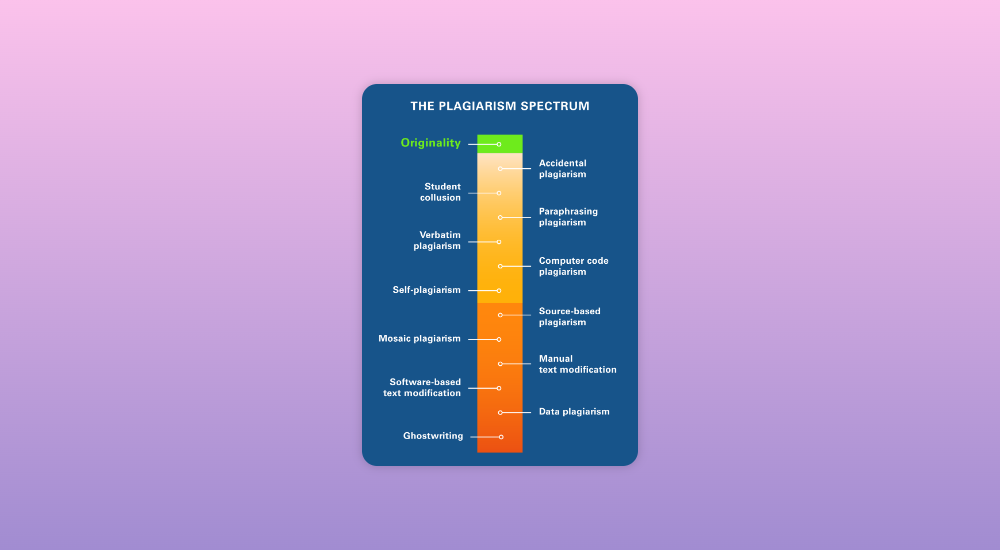
Plagiarism is the easiest way to have your content dismissed. It’s when you take others’ words or ideas and pass them off as your own. When you plagiarise an article, you take full credit for its originality rather than crediting its author. However, to know how to avoid plagiarism, you should be aware of the different types of plagiarism.
In essence, it is a type of intellectual theft, and be it academic writing or website content, it is also considered an offense that is punishable by law.
Duplicate content is thus something that must be avoided at any cost while creating content. Read on to find out more.
Types of Plagiarism
There are different types of plagiarism that occur these days like:
1. Complete Plagiarism
This is when you simply copy-paste an article word-by-word. It’s basically stealing someone’s work in its entirety and putting it under your own name without editing it, and without any change to its language, the flow of the statements, or any other part of the article.
2. Partial Plagiarism
Partial plagiarism is when you copy sections of information or data from different sources and combine them to make up your own unique article. It’s taking ideas from various sources instead of a single one, unlike complete plagiarism.
It involves changing up the flow of the content, but without any change to the sentence structure, all in an attempt to make your content seem ‘different enough.’
3. Lazy Plagiarism
Lazy plagiarism is sloppy plagiarism. An excellent example of this is when someone takes notes directly from a lecture and doesn’t put the footnotes in quotations or cite the sources.
5 Reasons Why Writers Opt For Plagiarism
When we’re talking about article writing, it is easy to fall into the trap of plagiarism for several reasons. The most common reason is a lack of confidence, which translates into a lack of originality.
This is how writers fall into the trap of using the ‘skyscraper technique’ where they use the original content as the baseline for their research and try to improve it.
Some of the other reasons why writers fall into the plagiarism trap are-
• Lack of time management skills – They simply don’t know how to manage their time and rush through deadlines.
• Laziness – Some writers are lazy and unwilling to put in the work required to curate an original content piece. This is where hiring content writing services can help.
• Pressure to Succeed – If the article is written meant for the purpose of a grade or meeting a milestone, the pressure to write can become too daunting. This is why some academic writers don’t thrive under pressure and end up plagiarising content.
• Too many resources – The internet is filled with many websites and resources from where writers can gather info. Sometimes this can become too much, and writers end up not knowing what to pick or ignore.
• They just didn’t know– If the writer is new to academic writing or citing sources, they may plagiarise information without even knowing that they’re doing it and that it’s an unacceptable practice.
Know How to Avoid Plagiarism For Getting Better Results
If you’re not blatantly paraphrasing someone’s work or stealing ideas but using their material for research purposes, you’re doing okay. What this means is you write in your own words, without copying other’s ideas line-by-line, nor taking apart their flow.
If your new article looks completely different from the piece you’re relying on for your research, then that won’t count as duplicate content.
We get into more about how to write unique content without plagiarism below. Here are some tips and tactics.
1. Understand What You Write About
Understand the topic you’re writing about. Don’t simply copy-paste ideas or rip them off. Make sure you cite your sources if you’re taking out any quotes or passages from your research papers.
2. Use Content Writing Services
You can consider freelance content writing services as a great of providing you with content while saving you a great deal of time and stress. While it will cost you, you can be assured of the quality of the content you receive – it will be edited, checked for plagiarism, and thus absolutely original.
3. Use A Plagiarism Checker
Using tools like Copyscape and Grammarly is a great way to ensure what you write is truly original and not plagiarised.
4. Mention Your References
If you end up taking someone’s ideas, it’s an accepted practice to cite them in your list of references. By doing this, you ensure that you’re crediting the author of the content you’re relying on for their work.
Content writing in India is a growing niche, and there are many talented content writers who are well-versed in plagiarism laws these days. Hiring content writing services can make researching your papers a lot easier and save you money too. Because at the end of the day, blatant copying can end up getting you sued and your content dismissed.
Did you know that a 1.5kmph running (indoor workouts) could burn approximately 550 calories per hour? It boosts your immunity, enhances lung function and lowers the risk of developing blood clots.
“Did you know that a 1.5kmph running could burn approximately 550 calories per hour?
Researchers also point that daily running can help women combat the risk of developing blood cancer. Doctors advise running and jogging for patients suffering from high blood pressure, diabetes, obesity, depression, high level of stress and low morale.
It is thus a universally agreed fact that running is by far the most effective forms of workout and is good for all age groups. However, there will be days when running is not a feasible option. Imagine a rainy day, cold climate or a difficult terrain.
Running or any form of outdoor exercise in such cases is just an impossible thought. Let us explore the benefits of some alternatives for staying fit even when you can’t run.
6 Best Types of Indoor Exercises With Their Benefits
There are many indoor workouts you can try when running is out of the question, and you need to maintain your physical health.
However, let us look at the top ones, which will enable you to burn calories at the comfort of your home without getting bored.
1. Skipping
I bet that was the first workout that would come when looking at alternatives for running. Imagine the possibility of burning more than 200 calories in a 10-minute workout session.
Skipping makes that possible. Not only that, this form of indoor workouts enhances sprinting speed of athletes, increases their endurance and helps improve your cadence.
Skipping is one of the most effective forms of cardio workout.
You have so many variations to try that you would never get tired of it. Some of the common variations you can try out are:
Forward skip
Backward skip
Cross-over skip
Lateral skip
Cyclical and cyclical A-skip
2. Squats
It is worth noting that a half an hour squats workout burns around 112 calories. This exercise works out your buttocks, hamstrings, thighs, and lower-back making it an ideal indoor workouts for running enthusiasts who want to strengthen and loosen their leg muscles.
It enhances your endurance and helps in improving agility and speed. Try jump squats or couple it with an overhead press to get better results and to burn more calories.
3. Cycling and rowing
The stationary cycle and rowing machines found in gyms are your ideal partners for working out indoors. While it gives your body a break from the high impact of running, it specifically targets the quadriceps and shin muscles making you more agile and flexible.
It also strengthens the hip, knee and ankle joints to make it more resistant to injuries. Similarly, indoor rowing machines also provide strength and endurance to your upper body along with your hips, knees, and ankles making it more flexible and toned.
4. Elliptical Trainer
Surprised, aren’t you? An elliptical trainer is an incredible cardio workout and is an ideal substitute for outdoor running.
A half an hour session can do wonders for your lungs and heart, help you tone and develop your core and leg muscles. This being a low impact workout, it does less harm on your joints and can be done alongside other indoor workouts.
Interestingly, using one with arm levers, which involves pushing and pulling movements, enables you to develop stronger and agiler arm swing, which is an absolute necessity for athletes. The next time you are looking an alternative for outdoor running, don’t let all those weights on the elliptical trainer intimidate you!
5. Push ups and Pull ups
These two are the ultimate bodyweight exercise for running enthusiasts. They are known for targeting the large muscle groups and improving your speed, agility, and endurance.
It enhances your overall performance and burns calories quickly. Just like running, these exercises also tone your muscles and boost your strength to a great extent.
If you feel that you can do more than 20 at a stretch try more complex and difficult forms of to get better results while keeping you interested and engaged.
6. Treadmills
I know you’ve got your eyes rolling on this! But believe me when I say that treadmills are not as overrated as you think and it can be worth the time spent if done the right way.
While many running enthusiasts don’t believe in treadmills and prefer the alternate forms of workouts mentioned before, this has its perks as well.
Try different speeds, add hills or add intervals to make your treadmill sessions more challenging and interesting. Unlike normal running, you can’t alter your speed unless you slow down the treadmill while running on it.
You can improve your stride length, ground contact time and work on your agility and endurance level all at once with the help of treadmills. Just give it a chance.
Running is an excellent workout, but believe me, there are a plethora of options and work out variations available for the running enthusiasts who want to stay fit and in shape. You just need to figure out what works for your body and workout accordingly.
Running is a complete body activity and strengthens your glutes, core, back, arms and legs. Try brisk walking on stairs or do some lunges.
It all depends on your physique, your ability, and endurance level. Indoor body strengthening workouts can definitely save a lot of your time in the gym and give you exactly the same result as your daily quota of running.
Google’s search engine algorithm has undergone a sea change and today, Google is smarter than ever before. It is able to perform intuitive searches and most of the time you get the answers instantly in the SERPs itself.
With the emphasis on content marketing increasing every day, winning keyword research and analysis for your brand in 2020 will eventually define your success in getting organic traffic.
Whether you are looking for the phone number of a restaurant you want to dine in tonight or the latest conversion rate of dollar to rupee, you get them all immediately in the search result pages itself.
Well, how does this happen?
Google is now equipped with the Latent Semantic Indexing (LSI) ability that makes it able to correlate semantically related search terms that are latent in a chunk of text.
But here’s the thing, how these algorithm changes will impact your keyword research and analysis?
Well, that’s precisely the answer you will get during the course of this blog.
The fundamentals remain the same.
The idea behind SEO continues to be what it has always been. It is imperative to figure out what keywords you must use when you optimize your website and its content.
Not all key phrases are competitive. The shorter the keyword, the better is chance of a mind-boggling number of indexed pages showing up on Google, and hence it is more difficult to rank on these keywords.
The idea is to look for better niche terms!
Medium-tail phrases of two or three words help in narrowing down the competition but their search volumes tend to be on the higher side.
Long tail keywords bring down the competition even further but their search volumes tend to be low.
The situation with keyword/keyphrase length may not be the same always. There may be times when a single-word keyword ranks high and the long-tail one faces immense competition.
To deal with such diverse situations, keyword research continues to be important. There is no formula behind it and a trial-and-error approach is usually best to follow before you arrive at a workable strategy.
What is Keyword Research and Analysis for SEO and Why is it Important?
In this section, I will be taking you through the what’s and the why’s of keyword research while the hows will follow in the later part of the blog. If you are already familiar with these fundamentals (your SEO marketing experience talks!), feel free to move to how you can perform SEO-focused keyword research for your website.
Keyword research is integral to the SEO strategy of any website. Today, as we are in 2023, keyword research and analysis are about finding the user’s intent.
In simple terms, keyword research is about finding words or phrases that have high value and low competition when it comes to acquiring a higher rank in the SERPs.
It’s not always as simple as it looks at the surface level. You need to delve deeper into the psyche of your users to understand what they might be thinking when they search online.
Even when you end up arriving at high-value and low-competition keywords, there’s a need to figure out if you will be able to rank for them.
Keyword analysis is important because you need to know the words or phrases for which your website must rank on Google or other search engines. Unless you know these important keywords or key phrases, your pages cannot really be optimized well enough to get the desired results.
When your keywords are wrong or irrelevant, your pages will not hold user interest and the bounce rate will be high. Right keywords can drive targeted traffic to your business and boost the chances of converting visitors into buyers.
New Trends in Keyword Research
The fundamentals remain the same. Keywords continue to be pivotal to optimizing a website and improving its visibility.
Let’s take a look at what’s trending currently in keyword research.
Long tail keywords or phrases have gained visibility owing to long query searches by users.
Google has made display changes to its SERPs in tune with the long-tail queries.
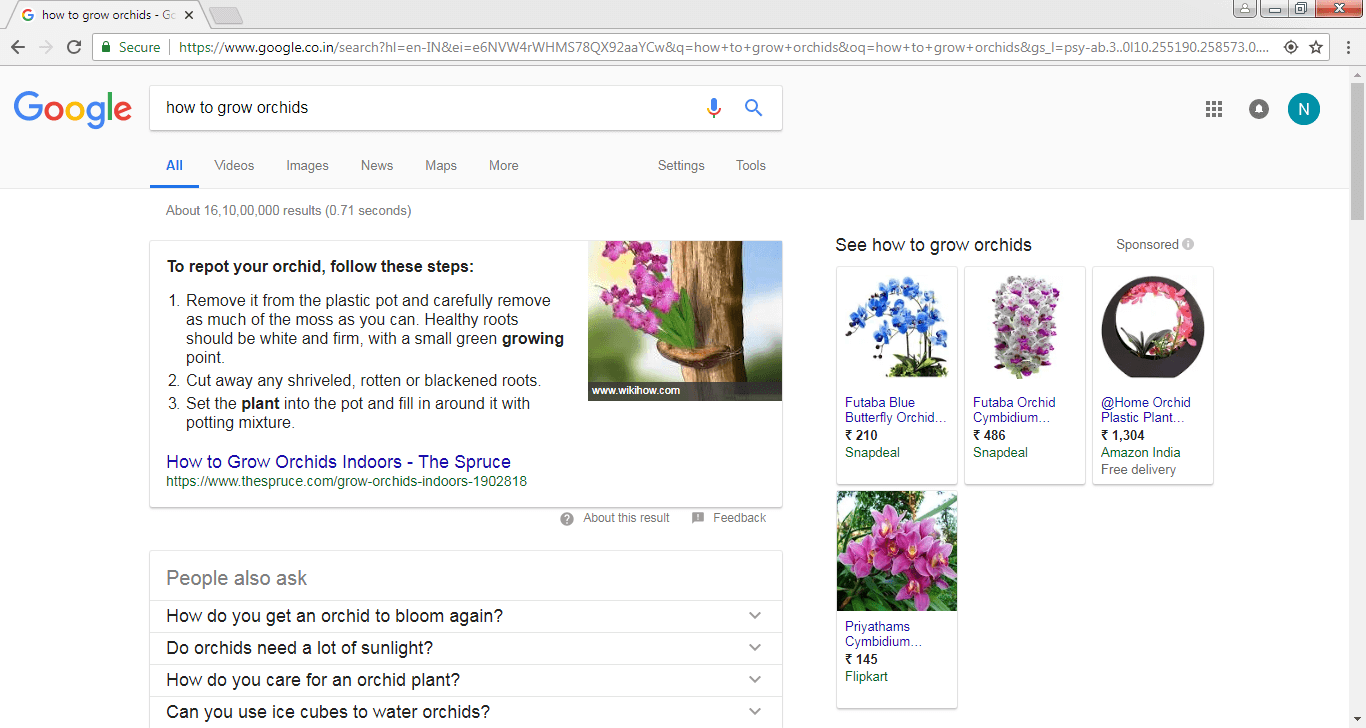
Google is now able to intuitively display question-related search results and trending news for even one-word queries, an instance of which you will see in a series of screenshots below. The keyword I have chosen is ‘insurance’ and all the screenshots are of the same search page.
Screenshot 1 – Results pertain to what insurance means
Screenshot 2 – Top News Stories on Insurance
Screenshot 3 – People also ask and details of local service providers
There is increasing use of search engines on mobile devices and more instances of location-related queries. More and more people search on the move for queries like “dentist in my area”, “Chinese restaurant near me” or “ayurvedic medicine stores near the railway station”. Ensure your keyword research is tuned to local and hyperlocal phrases.
Screenshot 4 – Running a Locality-based Search
Fragmenting SERPs tend to be more intuitive than ever before. Google now uses images in the search results and information boxes to answer queries in the SERPs itself. Using the right keywords can improve your visibility even if it means your optimized images showing up in searches.
Screenshot 5 – Optimised Images are an essential component of SERPs
The Concept of the Keyword Cluster Model
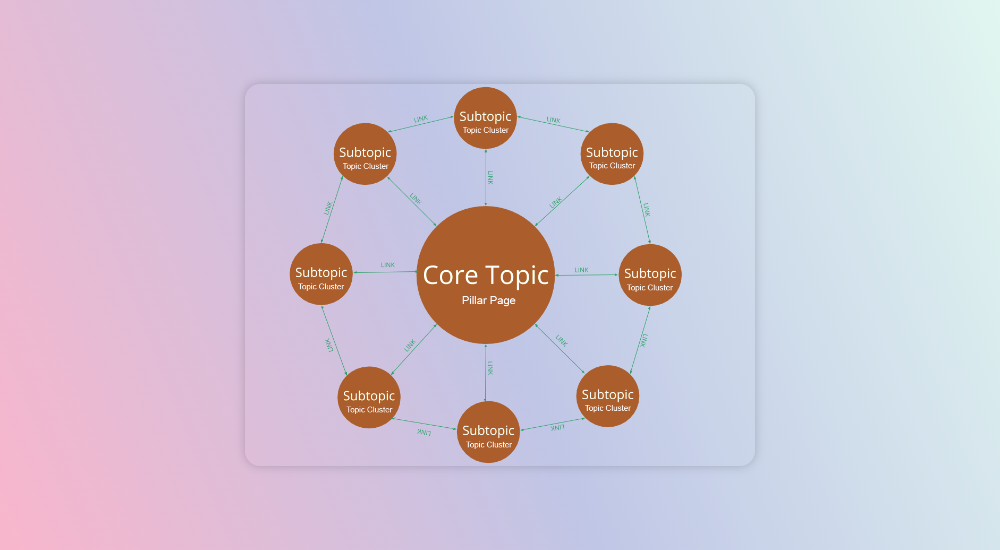
The keyword cluster model is essentially an algorithm that connects the user’s past searches with related topics and phrases to help them find the best search results. It is an excellent SEO tool that allows you to group keywords, and gain traction in search engines to get the desired number of visitors to your website.
The model allows you to target multiple keywords per page, creating additional opportunities for your content to be found online effortlessly.
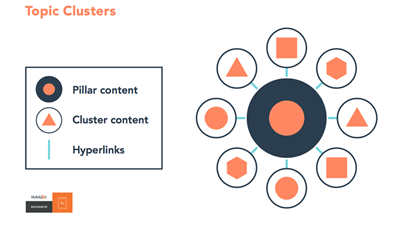
The two main components of the Keyword Cluster Model include the following- Pillar Content
Pillar content is the core of the cluster since this is based on the broader topic. It is usually best for people who are not familiar with a certain topic but want to see a comprehensive overview of it. The pillar content is extensive, covering various aspects of a specific topic.
Cluster Content
Unlike the pillar content that deals with a broad topic, the cluster content usually focuses on a specific keyword that is related to the broad keyword and discusses the same in a more thorough and comprehensive manner. It also contains a link that brings users back to the pillar content.
In simple terms, pillar content is usually focused on a broad keyword with a high search volume, whereas cluster content is focused on more specific keywords with smaller and attainable search volumes.
The SEO objective of the keyword cluster model is simply to gain search engine traffic for highly focused keywords and phrases with smaller search volumes. In an ideal scenario – the better ranking a website can get for cluster content, the more credibility it builds up with Google for its pillar content.
Methods to Identify the Keywords for the Cluster Model
Here is how you can put keyword clustering into practice- • Collect keywords
One of the methods of using this SEO technique is classic keyword research based on your audience, website, and industry.
• Do thorough competitor analysis and market research
Start with a wide set of keywords from which you can quickly eliminate irrelevant entries to start from a limited data set.
• Use free or paid keyword grouping tools
There are a number of free as well as paid keyword grouping tools that make it easy to identify keyword clusters. Google Search Console is one such free service from Google that lets you understand different types of information about your website, and its visitors.
You can the search Console data to find out different aspects of the website to successfully cluster keywords for better website performance. Along with this information is – how many people are visiting your site, which pages of the website are the most popular, and what percentage of people are visiting the website on desktop or mobile devices.
To Sum It Up
The keyword cluster model is an excellent way to organize the website content that helps both users and search engines to navigate the website content easily.
To gain the most out of this SEO strategy, it is important to choose a strong topic and create pillar and cluster pages methodically, along with the addition of internal links to connect each page.
How to do SEO-focused Keyword Research and Analysis?
We have already discussed what keyword analysis is and we know that sound keyword research can be the most impactful traffic-driving action. Here’s how we can conduct advanced keyword research and analysis.
The above depiction throws light on the basic process of keyword research and competitor analysis. Each of the three steps involves figuring out answers to some essential questions in a chronological manner.
What is the idea behind your content?
What words do you think people would use to look for your content?
Which of the several keyword choices you have would be the best one to target?
Figure out the answers to these questions with the methodology given below.
1. Arriving at Your Core Topic
First and foremost, you need to know the content you are looking to optimize with the right keywords. Engage in research or a brainstorming session with your team to arrive at content that is relevant to your domain. Steer clear of irrelevant posts on your website if you don’t want to shove away visitors by giving them something that’s a total cross from what they thought of your nature of business.
2. Choosing a Keyword for Your Content
Now, that you are all set with the topic you will be adding a post on, it’s time to get started with keyword research. There are many tools out there to aid you. Some of these smart ones will give you deeper insights to tell you how popular it is across searchers worldwide.
Here’s a look at the parameters you must consider when evaluating keywords:
a. Search Volume “How many people are looking for this keyword on a monthly average?”
High-volume keywords could well be an obvious choice of targeting with your content. However, keep in mind that you must not force keywords into your keyword strategy only with the intention of ranking for a high-volume search.
The content on your page should be consistent with the search intent of the search engine user. Only then will you be able to rank for a particular keyword or drive targeted traffic to your website.
During the course of your keyword research, you may find some keywords that are consistent with the subject matter of your content. Before you are prompted to select the ones with the highest search volume, you need to also check other factors to understand if that particular keyword works well for your content.
b. Competition “How competitive is this keyword that seems totally apt for my content?”
“Will it help my page rank high or will it be competing against several big websites or paid advertisements in the search engine result pages?”
If a keyword faces very high competition, it may actually be out of bounds for you. Test it out yourself by typing that keyword on the search engine to know what the results look like. This will give you a fair idea if your content has any chance of ranking for this keyword even at a later time. A close look at the SERP is great for gaining insights into how your page might fare with the high-competing, target keyword.
Your page will not just be competing with others in your genre but also with other aspects of the SERPs to get to the top of the rankings. If a lot of paid ads show up for a keyword you search or if there are websites with immense authority for the same content, trust me, you will be facing a lot of competition.
Further, even if your page manages to break through to the first page of the search results, the SERP may have shopping results, paid ads, answer boxes, and People also ask sections before the searcher can see your listing. This means the searcher has to scroll down quite a lot before he can get a peek at your page.
c. Search Intent “What is a search engine user looking for when he types a keyword into Google?”
“Is the content on my page in tune with the searcher’s intent? Does my page have valuable information to retain his interest?”
Here’s the deal:
If you are using a keyword on your page, you have to pay heed to the searcher’s intent and serve him what he expects. Tons of people may be looking for the same information if they are putting a keyword in the search bar. You can’t have them bounce off your page by making them think you are merely targeting a keyword for SEO leverage without providing anything of value to them.
So, what are you waiting for?
Put your detective hat on and get started with your study. Take a close look at the search results to know what kind of content shows up for a keyword and what is making them rank high.
Are these pages loaded with user-friendly information? Are they how-to articles or instructional pieces of content? There’s so much to decipher from the SERPs.
Another good idea is to get creative with keyword research. Come up with a list of keywords with lesser search volume and less competition. Figure keywords your competition isn’t ranking for but you have a good chance of targeting with your content.
Do not arrive at your important keywords in haste if you want to climb up the rankings on Google. A little procrastination could well work in your favor sometimes!
3. Letting Buyer’s Journey Aid Your Keyword Evaluation
Certain specific kinds of keyword structures indicate where a user/searcher is in the buyer’s journey. If a keyword begins with “how to”, it is an indication that the searcher is at an early stage and is only looking for more information on your product or service. He may not be ready to make a purchase just yet.
If a searcher queries something like “best air conditioner with inverter technology”, he is in the mid-phase of the buyer’s journey when he is weighing the options he has of a product before buying.
Consider the stage a buyer is in and if your content aligns with the same. Keep this in mind when choosing your keywords. If you are writing informative content to educate the visitor, it’s a good idea to use early-stage keywords.
Best Keyword Research Tools for SEO
Take a look at these keyword research tools that are immensely popular with SEO experts.
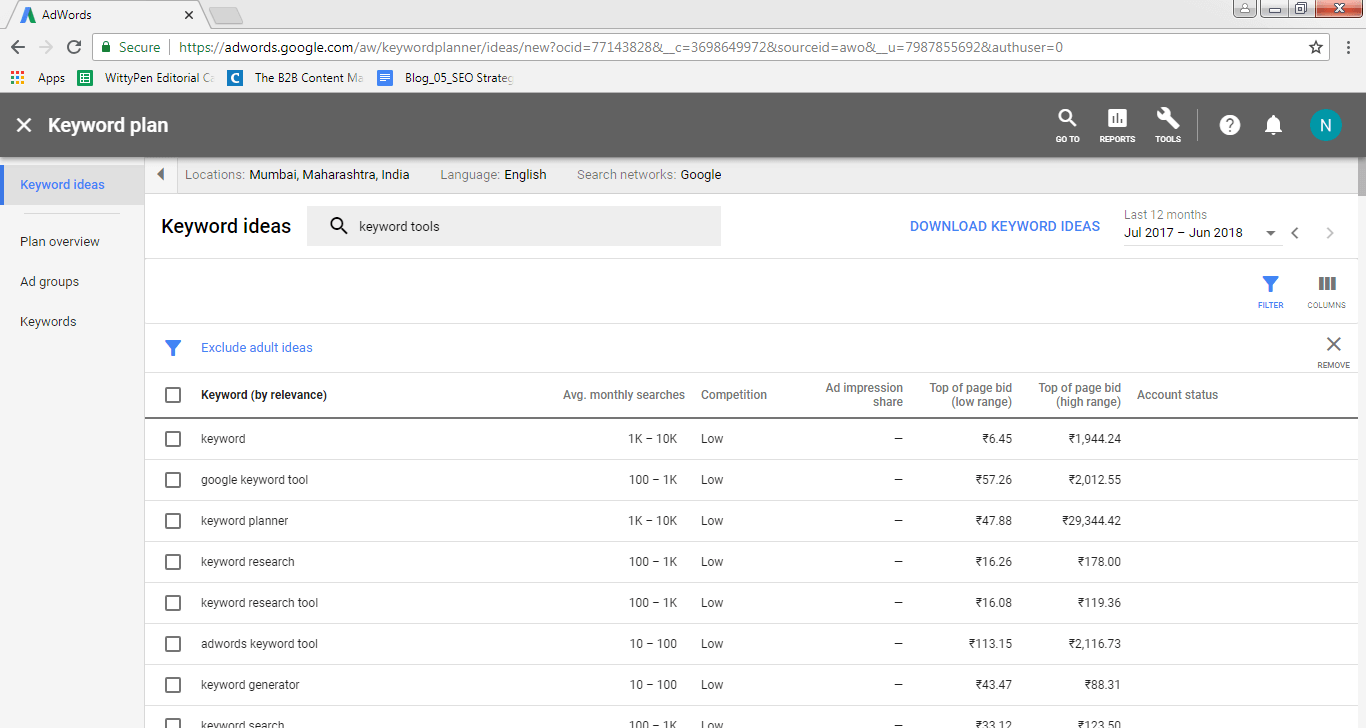
Yes, this is among the most popular keyword research tools and the best part is that it’s available free of charge to you. Keyword Planner is integrated to Google AdWords and provides deep insights on how a keyword fares on the most popular search engine, Google. Use it as a basic tool for analyzing your keywords.
Ahrefs is one tool that provides you with a detailed keyword analysis. It uses clickstream data to show how many clicks you will receive from the search engine.
This happens to be useful since there are countless keywords that have heavy traffic but do not get clicks from the search engine, like in cases when a user gets the answers in the SERP itself without having to click the pages.
Ahrefs offers a 7-day trial for $7.
Probably one of the easiest-to-use keyword research tools, SEMRush allows you to do much more than just research your keywords. Add your URL or your competitor’s URL to arrive at all keywords targeted for that page. This way you can figure out your short and long-tail keywords.
Further, you can also get inputs on traffic stats, search engine reports, and other details for running your SEO campaign. You can buy a subscription for $99 to get started with using the tool.
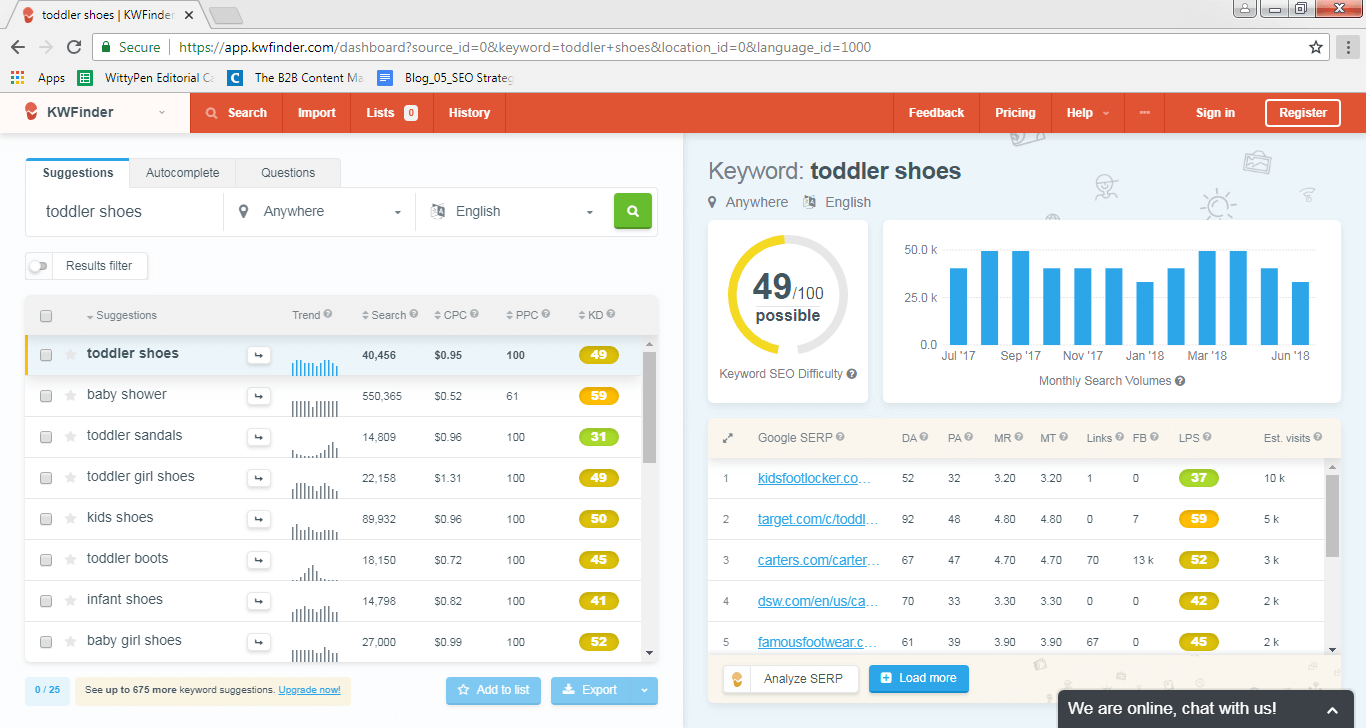
KWFinder has gained popularity in recent times and is a relatively new tool that’s totally about researching keywords.
Turn to this tool when you are on the quest for keywords that have the potential of driving targeted traffic to your website. This tool offers both free and paid plans.
Use the free version to get a feel of its usefulness.
This is a paid, cloud-based tool for keyword research. It can help you arrive at a fantastic set of keyword suggestions for your niche or micro-niche sites.
Use their competition checker feature to simplify your job of picking the right keyword.
Moz is among the leading SEO tools online and it helps in simplifying the data. The tool demonstrates how tough the competition is for a chosen keyword.
Ubersuggest 2.0 is the latest version of Neil Patel’s keyword research and analysis tool. Divided into three sections, Ubersuggest is an easy-to-use tool to make your content more readable and SEO friendly.
Apart from offering a complete overview of the search volume of a keyword for a particular time, it also provides keyword suggestions compiled using Google suggest and Adwords. The third section, SERP analysis, brings up the 100 top-ranking websites for a particular keyword.
Keep in mind that keyword research is a vital part of any SEO strategy and needs to be addressed in a proper way. Focusing on keywords with lower competition is a good idea.
For your SEO strategy to get sailing, keywords work like a compass and lend direction to your SEO campaign. They indicate whether you are going the right way and if you are making fair progress.
Marketers, it’s time to get started with turning your niche topics into keywords by learning to use your favored keyword research tool effectively.
If all goes well, it’s just a matter of time and perseverance before you see success.
Most B2B companies start with writing a blog, creating a few eBooks, and optimizing their service pages, but never scale up from there.
That’s mostly because they lack a clear B2B content marketing strategy that guides them to move forward and iterate their way towards consistent growth.
This blog will help you set a clear pathway to building a content engine that keeps compounding. We’ll talk about the importance of strategy, how you can build one, and share which key growth metrics you need to measure.
But Why Content Marketing?
Content marketing helps you reach your target customers when they are at the top of the funnel and shows them that your company can help solve their problems.
When used correctly, content marketing will not only strengthen your brand but also drive more high-quality traffic to your website and convert leads into customers.
Importance of B2B Content Marketing Strategy
Content marketing is a vital part of your company’s growth and having a solid strategy in place will help you scale it faster.
Here are some of the key benefits:
It helps you understand what your target customers care about and how they consume content. This way, you’ll be able to create topics that drive you the most amount of search traffic.
It helps you find the right keywords to target so that your content can rank higher in search results. A good strategy will make sure you don’t miss out on any high-converting keywords.
A strong strategy will help you create a calendar that shows what types of content needs to be created and when it should go live. It’ll also include all the channels where you should distribute the content.
You’ll be able to track the success of each piece of content and see how it impacts your overall business goals. This will help you iterate and improve your strategy over time.
Now that we know why having a strategy is important, let’s look at how you can build one for your company.
Building a B2B Content Marketing Strategy
Most people think that content marketing is easy. They believe they can start writing a few blog posts and convert more visitors into customers.
Unfortunately, this isn’t true. Creating content at scale is one of the most challenging things to do in any B2B company. And we’ll help you show a clear path that makes this entire process simpler.
Here’s a step-by-step process to build your b2b content marketing strategy:
Step 1: Know Who is Your Audience
Ask your sales team.
This is one of the most basic things that most marketers miss. Your sales team is the one who speaks with the customers consistently and they can share:
Which customers are easiest to convert
Which industries have the most frequent use case for product or service
The demographic details about your audience, location, company size, revenue, etc.
Understand who is the decision maker
What are the key KPIs for the decision maker
You can have multiple buyer personas depending on the customers you are going after. Let’s look at Gong, a revenue intelligence tool. What’s interesting is how they have clearly defined their target audience:
CROs & Sales Leaders – To educate about Revenue Intelligence
Sales Managers – To understand how they can get visibility into their team’s performance
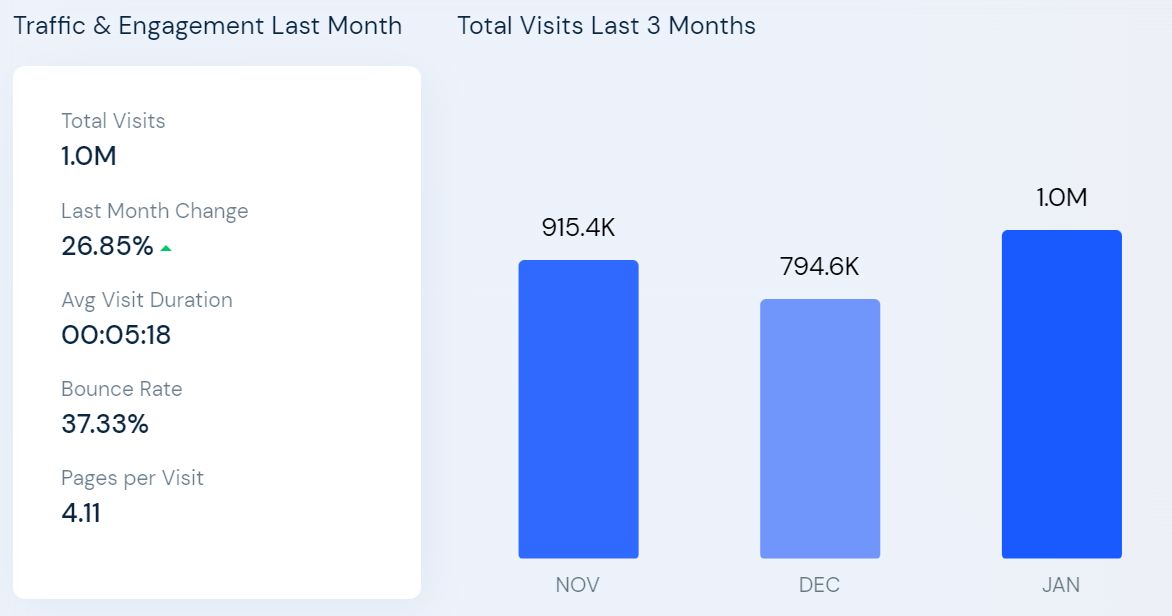
Gong receives more than 1M visits every month, while 95.18% of its traffic is organic, and more than 22% of its traffic comes from search and social media channels. (Source: Similarweb)
Step 2: Finalize the content types you will create
The next step is to figure out what content you want to create for each audience persona.
Let’s go back to the Gong example, here are some of their popular content pieces:
THE SALES FORECAST TEMPLATE FOR SALES MANAGERS: Sales forecasting is one of the basic KPIs for sales managers. A quick google search for a template will help sales managers by saving time, and Gong grabbed this opportunity.
Landing Pages: Gong creates multiple landing pages around Sales enablement, Conversation Intelligence, Revenue Intelligence, and more which becomes a high-value BOFU(Bottom of the funnel) content.
These are all high-quality resources that educate their target customers about revenue intelligence and how they can their sales team’s efficiency.
Step 3: Pick Your Distribution Channels
Now it’s time to figure out where you’ll publish your content. The channel you choose will depend on the type of content, your audience, and how easily searchable that channel is.
For example:
If you want people to read your blog post or article then a distribution platform like Medium can be a good choice as it has high visibility and allows people to share your content easily.
If you want to target CXOs and professionals, you might want to pick LinkedIn as the most preferred social media channel for distribution.
Step 4: Define Key Content Buckets
Now that you know your audience and the type of content you want to create, let’s understand how to define content buckets.
In case of Gong, the key buckets would include
Revenue Intelligence
Sales Management
Selling Skills
Customer Stories
For Intercom, the key buckets are:
Customer support
Growth & Marketing
Sales
Product
Step 5: Build a Keyword Universe
Once you have your content buckets ready, you should build a list of keywords that can drive the most amount of organic traffic.
Tools like Ahrefs& Ubersuggest can help you find SEO keywords related to your business.
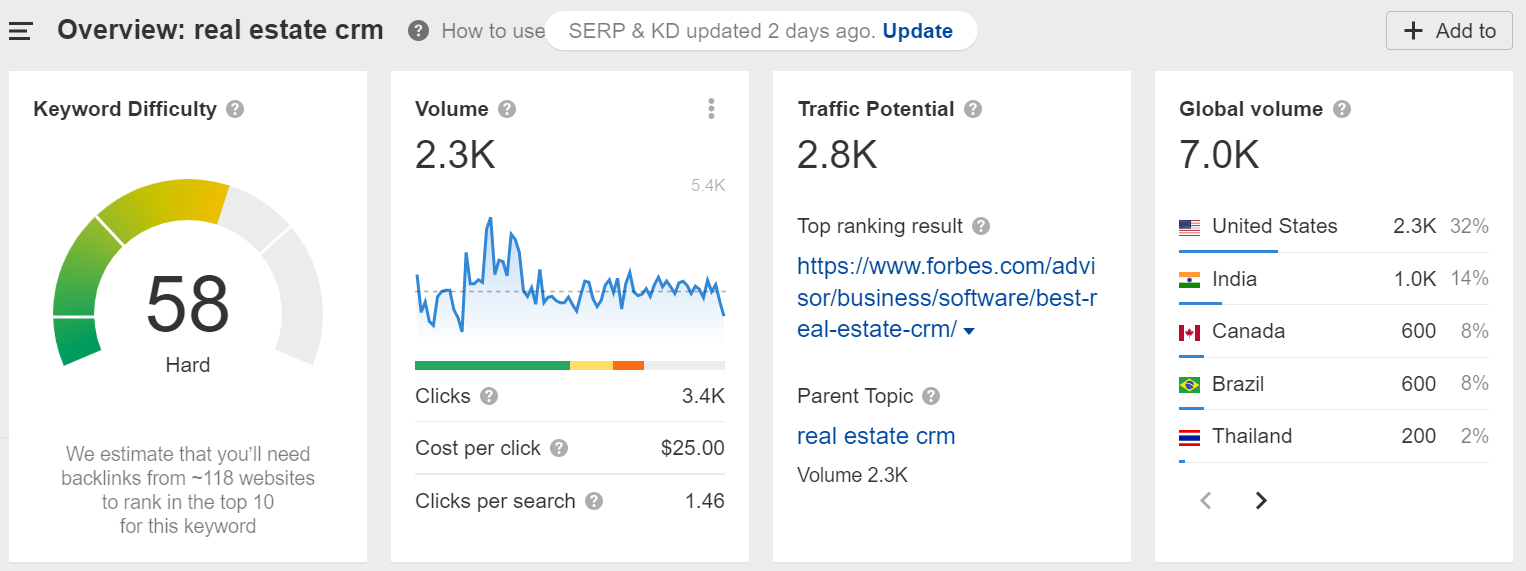
Let’s say you are building a CRM for Real Estate, here’s how you can use Ahrefs to build your Keyword Universe.
Start with searching the main keyword “real estate crm”
In US alone, 2800 people search for Real Estate CRM every month and that’s a good step to start.
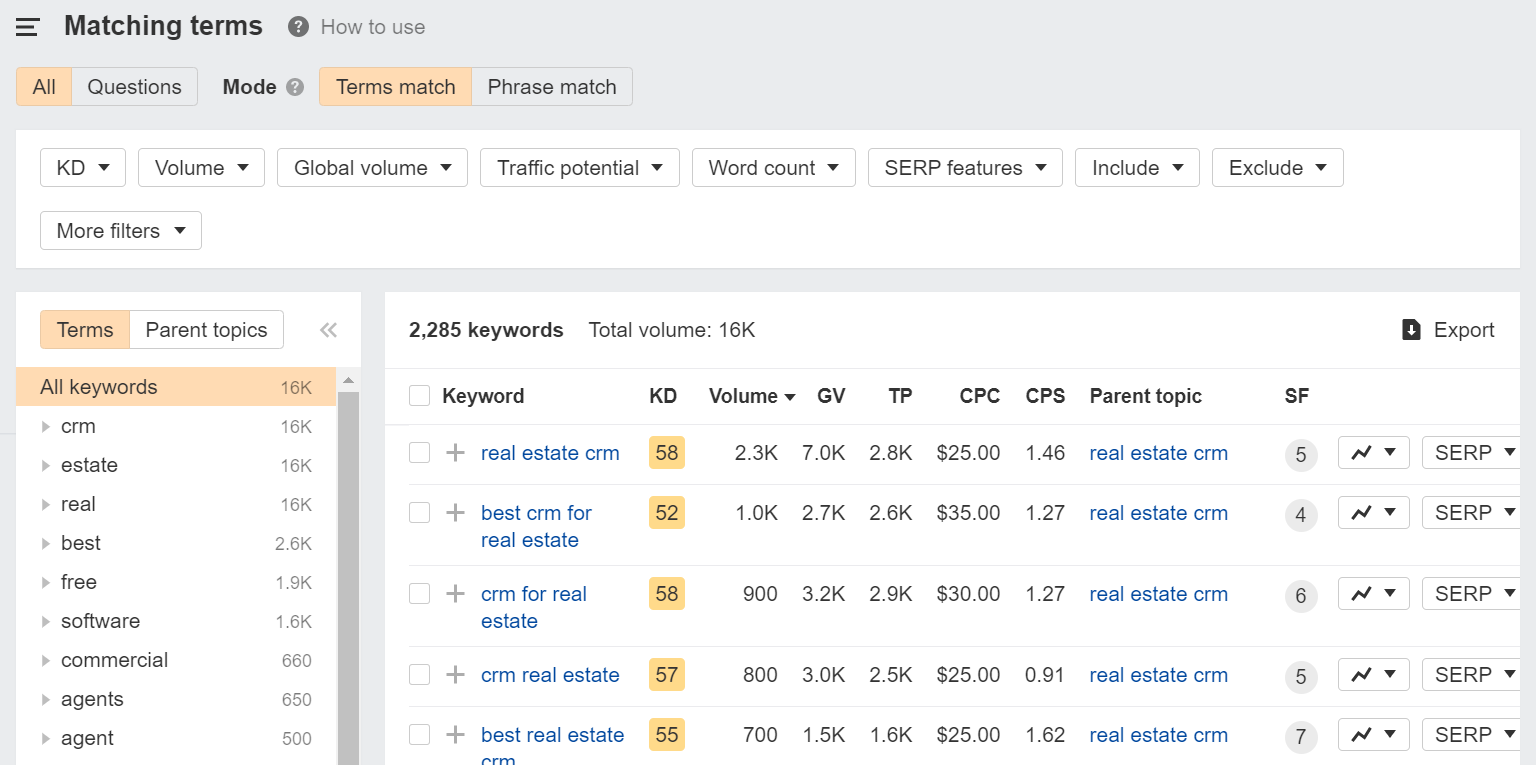
2. Look for the matching and related terms and start building your keyword lists.
You can filter these keywords as per the intent and relevance to your target audience. Once you are done, export the list of all keywords that you wish to target.
Step 6: Create a Content Calendar
You need to have a plan for your content. You should know when each piece of content will be published, on what channels will it be distributed, and how would it be repurposed.
Tools like CoSchedule or Trello can help you in building your content calendar.
Let’s define it in a few simple steps:
– Set up a Google Sheet where you list down all the topics that are going to be published in a given month.
– Create different tabs for each month and add the topics under them. You can also include columns like title, publish date, social media channels, and repurpose type.
– Once you have all the topics in place, start filling in the publish date and other relevant information.
– As you are publishing content, make sure to update the Google Sheet with the live link, social media posts, and any other required information
Let’s try doing this from Gong’s perspective:
– Topic: 10 Coaching Tips To Guide Your Sales Team For Success
– Format: Blog post or article
– Target persona: Sales Managers
– Distribution Channel: LinkedIn
This is a very simple way to define your content calendar and helps you stay focused on what’s important.
Step 7: Define Roles in Your Team
So far, we have defined all the information you need to build a b2b content marketing strategy. But before you go ahead and start executing it, there’s one more thing that needs your attention – defining roles in your team.
Usually, different members of the marketing team are involved in creating content for the company blog or social media channels. However, you need to know who is going to do what in the team so that you can ensure proper coordination and alignment of efforts.
Here are some of the roles that you might have in your team:
Content Writer
Content manager
Graphic Designer
Video Producer
Each of these roles will have different responsibilities, and it’s important that you know who is doing what. You might want to also consider outsourcing content creation to continue to focus more on strategy and distribution.
Step 8: Define key metrics to track
Now that you have all the basics in place, it’s time to start tracking your content marketing efforts.
There are a number of different metrics that you can track – depending on what’s important to your business. However, some of the most common ones include:
– Website Traffic: This will help you understand how much traffic is being driven to your website from content marketing efforts.
– Email List Growth: If you are using email marketing as a distribution channel, this metric will help you understand the growth of your email list.
– Search Engine Traffic: This metric shows how much organic traffic is coming to your site through search engines.
– Social Media Traffic: This metric shows the number of clicks that you are getting to your website from social media platforms.
– Time Spent on Website: This is a great way to measure whether people are actually engaging with your content or not. If they spend more time, it means that they are consuming your content.
– Conversion Rate: If you are using content to drive leads, then this metric is important for you because it will show how many people actually converted and became customers.
Wrapping Up
Think of content marketing as a marathon and having a clear guide will help you cherish the results towards the end. A content marketing strategy is an essential part of any company’s marketing plan and should be well-defined with roles, responsibilities, and key metrics to track. By following these simple steps, you can create a b2b content marketing strategy for your business that will help you achieve your desired results.
Content marketing is ranked highest in its contribution to B2B marketing, with an 89% success rate. If the content is impactful, the deliverables need to be technologically sound too.
Content marketers focus on sparking conversations, creating clear messages, and personalizing communication day in and day out.
The content, coupled with technological innovations, has made many success stories possible so far. However, what has worked in the past may not be as effective in the future. Content is dynamic, and it needs fresh inputs and a new approach from time to time.
So what should companies/brands focus on in the future when they want to reach out to their consumers and potential customers through content marketing?
What content will grab customers’ attention in 2023 and in the years to come?
And where can marketers put their money when it comes to achieving a winning combination of content and technology? Let’s find out!
Content Marketing Will Witness a Lot More Innovation in Marketing
Role of artificial intelligence in content marketing
Source – Google
Emerging technologies that are futuristic will no longer lead to scampering around with uncertainty. Taking AI by the horns, content marketers will be seen dwelling into engaging conversations via chatbots and making meaningful connections through the data accumulated using AI. Content marketing services will be more inclusive in technology outreach than ever before.
Content Clusters
Source- Google
Within the wide range of SEO, content has always been pushed with an emphasis on keywords; this will change in the future. Content clusters for the particular content will not only be a boon for brand recognition but will also harness the B2B and B2C connections through various content marketing platforms. Content clusters are made using similar product/service features that ride a particular brand.
Re-marketing and Re-targeting
Quickly becoming a necessity, content marketing services now have an additional responsibility – to “call back” the previous or existing customers in various ways. One of the best ways of doing this is to grab the attention of customers who have left something in their cart without making a purchase.
Another way is to engage previous customers into trying a new or similar product. One of the benefits of re-marketing in content marketing is the re-targeting strategy. While re-marketing focuses on recall and engagement, re-targeting focuses on enticing your customers to purchase again.
For instance, Facebook has made it easy to re-market through advertisements based on various options. With 22 billion ad clicks per year and 3 times more engagement than regular ads, Facebook remarketing ads are going to rule the market in the future.
Even the highly customizable Google ads combined with remarketing gives you the power to reimagine your ad strategy. Re-marketing and re-targeting will be all about using great content to reach out to those smartly selected customers. The future of content marketing can be made successful by doing this.
AdRoll: Marketing and Advertising Platform
Ad Roll is gaining increasing popularity as one of the best ways of engaging in marketing and targeting the right audiences. Ad Roll is an AI-Driven marketing software that gives you better ways to re-target and engage with greater ease in terms of implementing content marketing strategies.
Since 2007, Ad Roll has been enabling businesses to grow their revenues and recall their customers. With software that makes things easier to work on, you need to focus on better campaigns, draw out good strategies, and deal with awesome content.
‘Focused Content’ is the Buzzword
70% of customers prefer to learn about a product or service via well-curated content rather than just advertising. Creating focused content will require both personalization and creativity. The more creative your content, the more relevant it sounds to the customers, thereby increasing the chances of them availing of your products or services.
A great content marketing strategy in the digital era must account for the need to make the customers feel like “owners” of that brand or product. In essence, the idea that ‘the customer is the king’ will always remain at the core of marketing.
These points are essential for making way for your brand/company or for your product to be “seen”, “recognized”, and “appreciated”. However, while we are talking about content and marketing, there are certain facts that can boost the probability of a conversion/sale.
“Your goal should be to own quality time in your customer’s inbox.”
Apart from the five pointers for content marketing trends, here is a list of essential content that’s value-driven and must be used!
Blogs – They are greater in length, but are ideal for direct and indirect brand communication, as well as to put out other relevant and engaging information. It keeps the customers informed without being a bore.
Videos – A video format allows the customers to get a sense of clarity of your product/services and to form a better idea of your brand itself. Customers often watch videos to get a better understanding of what they intend on buying, making it a great way to keep them informed and engaged.
E-mailers – When brands are able to engage with customers through their inboxes, it creates a personalized as well as a direct line of communication. This way, brands can use storytelling without having to compete with other companies for customer attention, which increases overall customer retention.
Testimonials – This can be combined with reviews posted by the customer. Testimonials are known to create a sense of trust since customers almost always check the reviews before buying anything.
Content has multiple layers and you have to dig deeper to get to the valuable and more precious insights. And while you do that, you also have to keep track of new advancements being brought in by technology.
All in all, you have to keep digging deeper while keeping your head above the ground to make sure you do not miss anything important. You need nothing short of a miracle here.
But with content experts like Wittypen, you can rest assured that you won’t miss out on anything. With our pool of talented writers, managed by a team of in-house content experts and editors, all your content-related needs are taken care of in the best possible manner.
Their expertise spans various formats and domains, such as website content, blog posts, e-mailers and newsletters, press releases, or any other form of custom content.
Conclusion
Content is being churned out at an alarming rate, and the concentration span of the readers is decreasing.
Thus, we need to bring something to the table that not only grabs your customers’ attention but also retains it long enough for them to make a favorable decision about purchasing your product or service. While technology is at your disposal, opening up many avenues, you need an expert to bring out the best in these.