If you’ve chosen WordPress for your website’s CMS (Content Management System), part of the reason would be its SEO-friendly, out-of-the-box features, right?
After all, search engine optimization in WordPress is a breeze, especially for individuals or those new to the digital marketing space. But merely using WordPress isn’t a replacement for a good SEO strategy, and there’s some effort you need to take to rank your website on Google and other search engines. This is where an SEO basics checklist adds tremendous value.
SEO is a continuous process that website owners need to follow and work on to help retain and increase their website’s ranking, using “natural,” “organic,” or “earned” results.
In this in-depth guide on WordPress SEO, we touch upon all the major steps you can take to improve SEO on WordPress and create a long-term WordPress SEO strategy.
The Ultimate WordPress SEO Checklist to Boost Traffic
If you have a WordPress website or are planning to create one, here’s an SEO basics checklist that will tell you how to implement SEO for WordPress and master WordPress SEO fairly quickly.
Think of this as a first step for improving SEO on WordPress, and use it as the base for your amazing website. Some of our essential WordPress SEO tips include:
1. Setting Up Google Analytics and Google Search Console
Google Search Console and Google Analytics are the very basics that you need to improve SEO on WordPress. Search Console is a tool to understand Google search results and keyword analytics. It needs to be connected to your Google Analytics account and WordPress website.
To do this, follow the steps below:
To start, go to Google Search Console and log in with your Google Analytics account. You will be taken to this Welcome screen once you have input your Google Analytics login details.
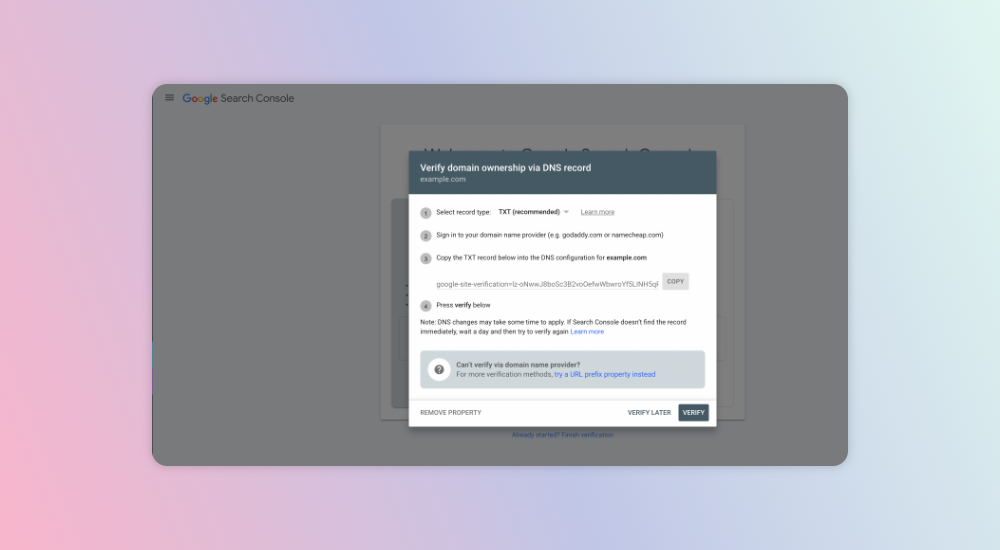
Once you’re on this page, you need to verify ownership using the Domain method or URL prefix method. We recommend using the Domain method, where once you input your domain or subdomain, you’ll be taken to the verification via DNS records.
Here, copy the TXT record and paste it into your DNS. Once this is done, you can easily go back to Search Console and click Verify—you’ll get a success message. For more assistance, visit Search Console Help.
And that’s it! Your website is connected to Google Search Console. Now, you’ll need to connect Google Search Console and Google Analytics.
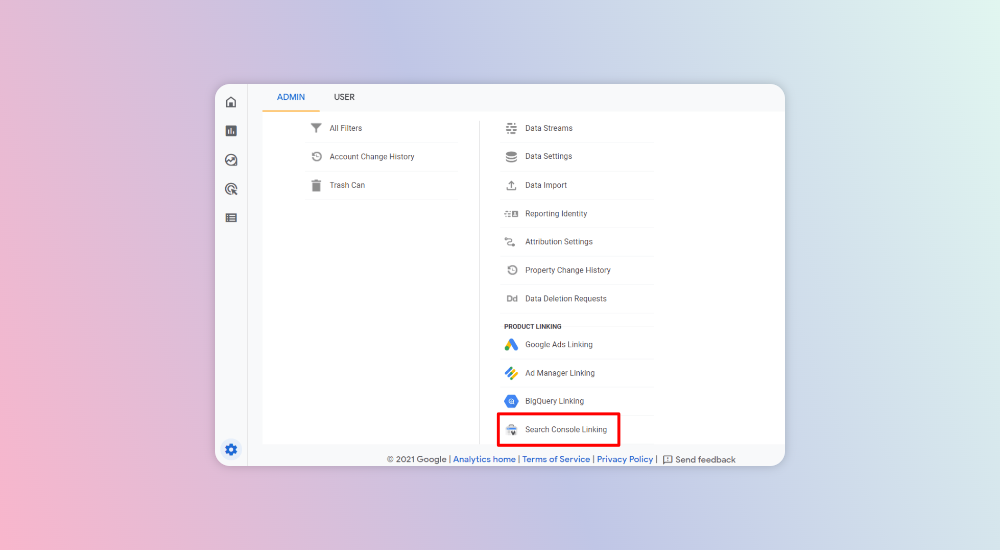
Next, log in to Google Analytics and click on the ‘Admin’ tab on the left-side panel.
Here, click on ‘Search Console Linking’ under the Property column.
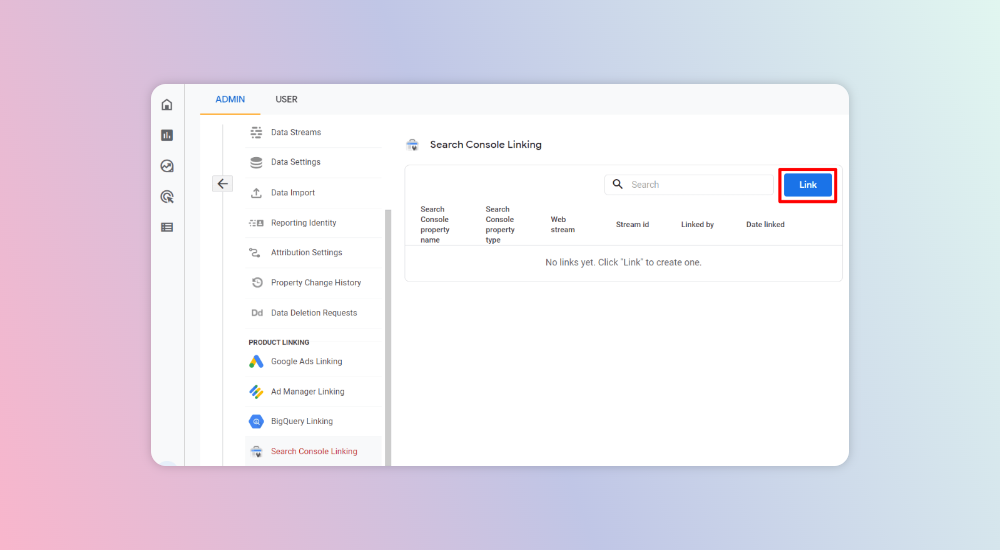
Next, go to the ‘Link’ button.
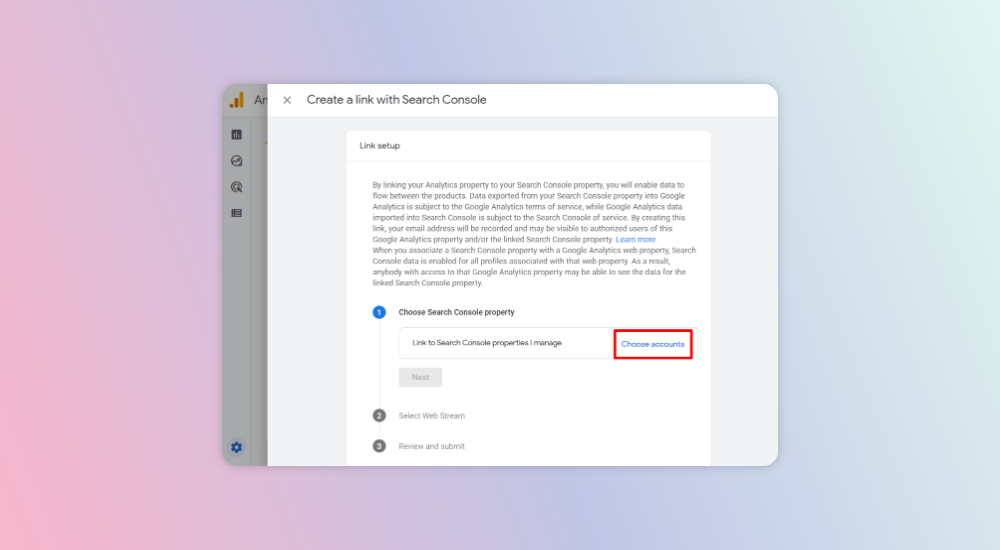
Click ‘Choose Accounts.’
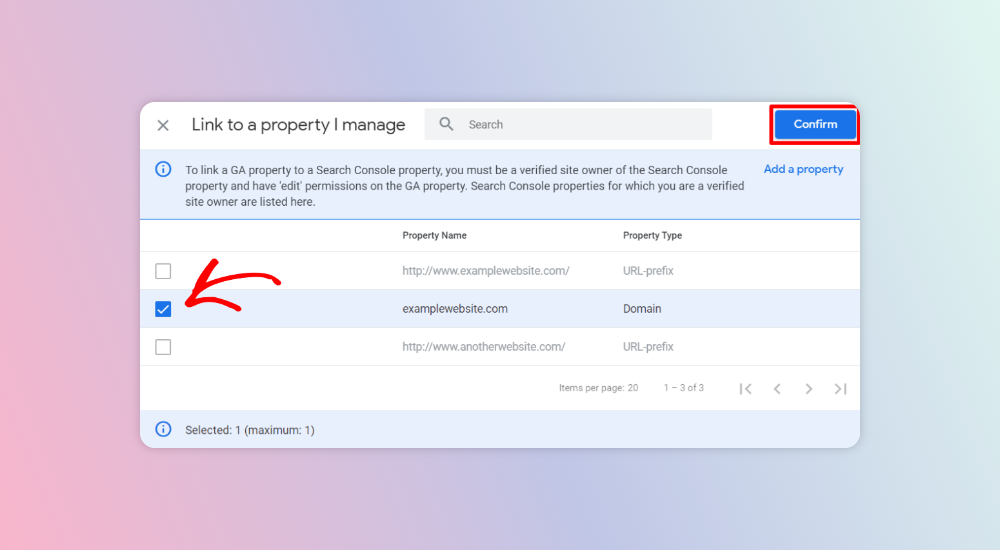
Click ‘Checkbox’ next to your domain and click ‘Confirm.’
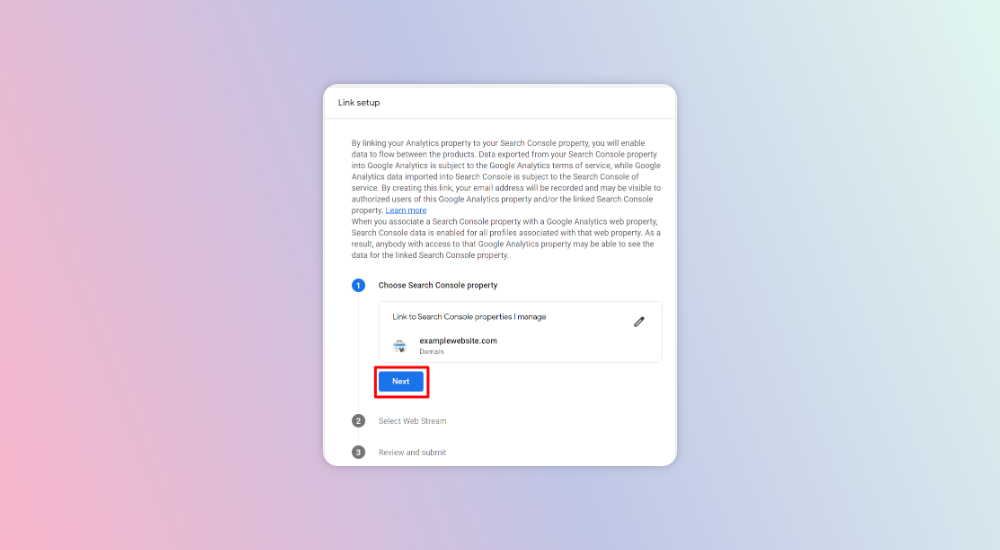
Click ‘Next.’
Select ‘Web Streams’ by clicking on ‘Choose.’
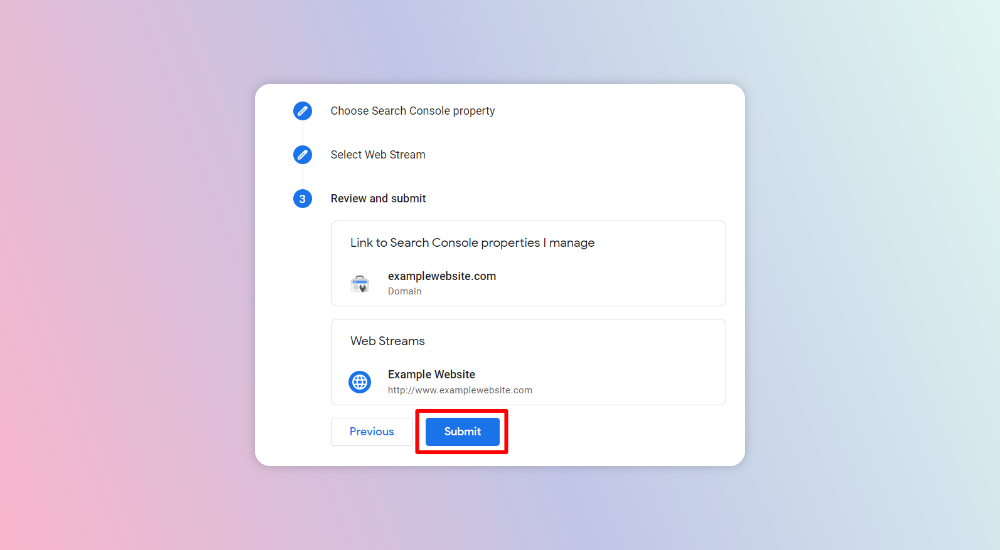
Check that everything is correct and hit ‘Submit.’
And you’re done!
2. Set 301 Redirects to Old Pages
If your WordPress website has a huge content repository, especially migrated from another older website, you’ll notice many broken links that need fixing.
Broken links on a website are bad not just for your SEO but also for your visitors since they give a wrong impression. The easiest way to fix this issue is by:
Deleting old links if the content is not relevant
Applying 301 redirects for internal links
Updating old content and refreshing the link
Correcting any links in case they have changed/have typos
To identify these broken links, you can use the Google Search Console—it has a crawling feature to find such anomalies and add a 301 redirect from the broken link URL to its correct URL.
3. Install SEO-friendly Plugins
WordPress SEO out-of-the-box is pretty good, but it’ll only get you to do stuff everyone else is doing. WordPress SEO plugins are a great way to take complete control over optimizing your website and take your SEO optimization for WordPress up a notch!
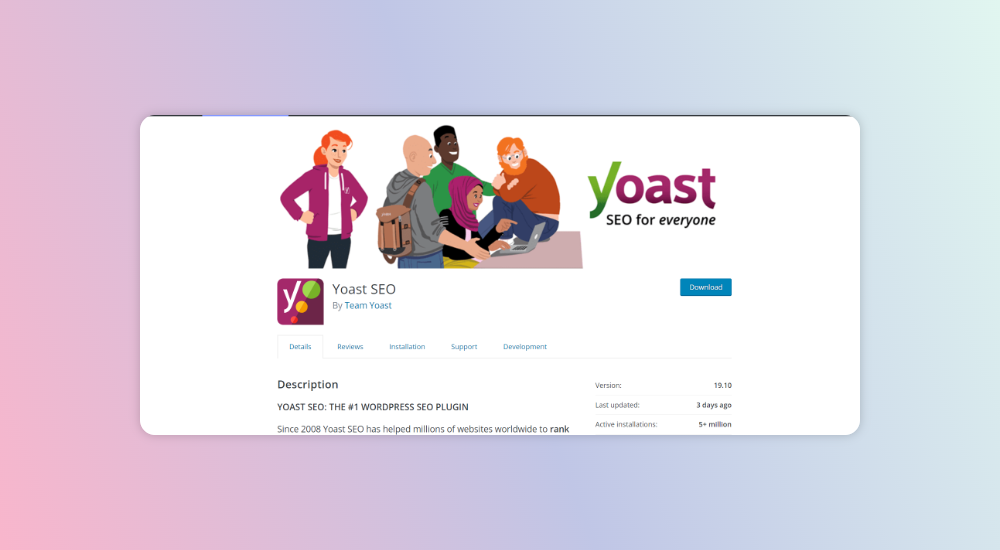
While there are multiple tools and free plugins that you can consider, we highly recommend starting with Yoast SEO. It has over 5+ million installations, can be downloaded free from the WordPress repository, and is extremely easy to use.
To install Yoast SEO or any other WordPress SEO plugin, you need to follow these simple steps:
Visit the Plugins page within your WordPress dashboard and select the ‘Add New’ option.
Search for the plugin you want. In this example, search for ‘Yoast SEO.’
Activate the plugin from your Plugins Page.
Now, you will see it in your ‘Plugins’ menu on WordPress, where you can go through its configuration and set up the plugin for your site.
Done! You can start using the plugin and explore more features.
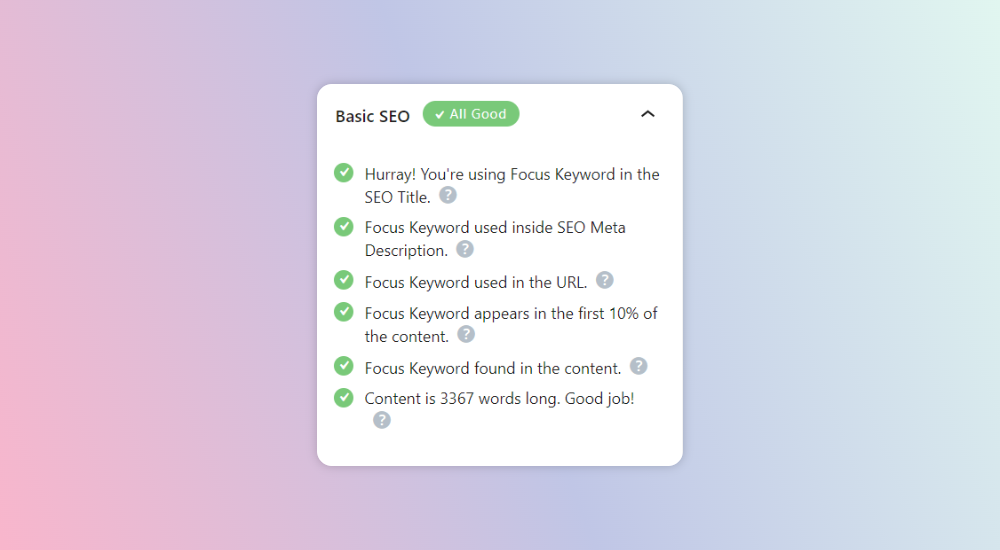
4. Appropriately Place Keywords, Titles, and Descriptions
Keywords form the crux of your content and WordPress SEO, but stuffing keywords randomly will no longer help. In fact, it’ll put off your reader and may not get you the results you expect with search engines. Instead, use your keywords strategically, and leverage a combination of the right keywords at the right place.
This includes using short-tail and long-tail keywords and placing them appropriately by:
Including the primary keyword in the titles
Including the primary keyword in the H1 tags and descriptions
Including the primary keyword in the website URL
Finding and using question-based keywords and answers to help rank higher
5. Start Creating Quality Content
Creating high-quality content is not just a great way to optimize your WordPress SEO; it’ll help you get the right kind of readers and interest. The more attention your pages get, the higher the engagement and time spent on them, and the better they rank in SERPs.
Gone are the days when simple usage of the right keyword and its variations helped you rank your content on SERPs. Today, it takes a lot more to get search engines to understand your content and get into their good books. Creating high-quality, value-driven, and relevant content is the simplest and most powerful way to do this.
6. Keep an Eye on Keyword Density
Keywords still matter, but it’s not just about how frequently or how much they are used; it’s more about how well your SEO best practices are followed when using keywords. A simple rule of thumb for any content you create is to create content for humans, not search engines.
When using keywords, make sure you’re using them in the right way, and focus on keyword density to get it right. The Yoast SEO plugin for WordPress is a great tool for analyzing keyword density and other analytics, helping you create a highly-optimized page that is ideal for both search engines and your readers.
7. Proper Image Optimization
Using images for your website doesn’t just add a visual element and help you optimize your design; it’s also essential for your website’s SERPs. Photos with the right alt-txt and name tags can improve your chances of getting noticed.
Some steps you need to undertake for your image optimization include the following:
Naming your image files wisely
Adding alt-txt for your images to help search engines know what it is about
Using high-quality but optimized images
Making sure your images are using CDN
8. Add Videos to Increase Dwell Time
Since 2020, a wide range of users prefers to consume content that is in multimedia format, i.e., videos, images, GIFs, or interactive content instead of plain and simple text. Adding videos or audio support to your content will help widen your reach and ensure your audience spends more time on your page.
Plus, multimedia content allows you to inject keywords as alt-tags, which will be displayed when a user searches for that content.
9. Nail Your Headline
One of the first things your reader notices on your website is the headline. If the headline’s not appealing enough to convince the reader to delve deeper into the topic, they may switch to the next search result, resulting in you losing a potential lead.
Your headline should have elements that:
Encourages readers to click on it
Contains keywords that help search engines identify the topic
Satisfies user intent
Is short enough to rank but long enough to be self-explanatory
A great source to find and explore headline options is the Hubspot Idea Generator, where you can add your keyword and get ideas or themes for your blogs or website titles.
10. Build Internal Links Strategically
Similar to external links, internal links also play a crucial role in your SEO strategy. They help search engines understand the relationship between your website structure and its pages while enabling users to find and discover similar content on your website. For using internal links strategically:
Create a highly simplified yet easy-to-navigate website sitemap
Determine the most important pages and make sure these are easy to find
Prioritize linking these pages to other high-value pages
11. Don’t Forget Tags and Categories
Tags and categories are often overlooked, even when working on on-page aspects of your website. However, they offer a way to help your website group similar content and make it easy for your users to find and discover it. These tags or categories don’t just help readers navigate to similar topics; they also help crawlers and search engines find similar pages, helping you rank higher in SERPs.
12. Page URLs Should Be Structured
Your website or page URL is not just an address that helps users navigate to your page; it also has great value in SEO. On WordPress, the URLs of your new pages or blogs can be customized, allowing you to provide the right name to the link.
A good practice when structuring your website URLs is to include the primary keyword and use it to give a clear context. Make sure it follows a set pattern, as it helps boost your SEO and clickthrough rates.
13. Use HTML Tags to Improve On-page SEO
Search engine crawlers will use HTML header tags to understand the relevance of your site’s content, and it’s a good practice to have the H1 tag as the most crucial header, supplementing H2 and H3 tags to add more value. The more interlinked these tags are, the better it’ll be for your SEO.
For example, if your H1 uses a crucial focus keyword, the additional headers can include your short-tail or long-tail keywords or variations, giving a strong boost to your WordPress site and helping it rank better.
14. Set up XML Sitemap for Better Insights
For those who love plans or blueprints, the XML sitemap is the blueprint for your website and is loved by search engines. It helps them understand your WordPress website’s navigation and includes information on any changes the search engines need to understand your website’s structure.
The most significant advantage of the XML sitemap for your WordPress SEO is that it makes navigating easier for your users and is like an index to your website. This helps search engines and users navigate to orphan pages and ensure these get ranked if a relevant search is performed.
15. Boost Your Site Speed
If a website takes longer than 3-5 seconds to load, it’s bound to lose a potential visitor—this is true even for WordPress sites. WordPress websites are preferred as they load faster and usually fare well in this department.
However, it’s always a good practice to check page speeds and eliminate factors hindering pages from loading faster. This includes optimizing images, graphics, code, or other intensive activities that may affect your page speed.
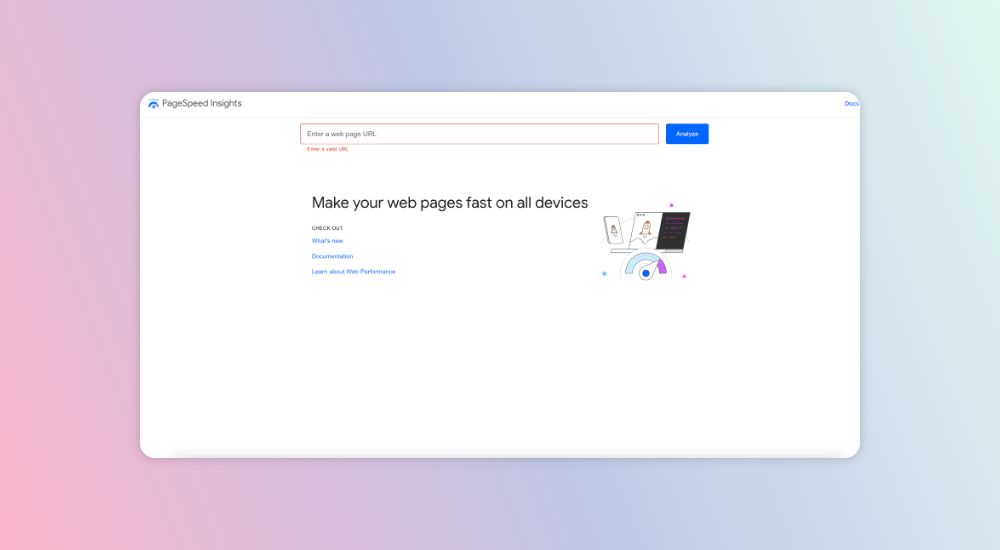
Google’s PageSpeed Insights is the easiest and most efficient way to find your page’s performance and identify gaps that can help optimize it. Faster load times even help with your rankings since the search engine is more likely to suggest it to users with slower internet bandwidth.
16. Focus on User Intent
When users feed in a search term, the context and intent of the searchers play a huge role in defining the kind of results they’ll get. Search intent is defined in four categories:
Informational: Where the searchers are looking for specific questions or general information Example: How to write a blog
Navigational: Where searchers intend to find a specific website or page Example: Blogging websites/blogging platforms
Commercial: Where searchers want to research something, be it brands, products, or services, before they buy something or take an action Example: Best blogging service providers
Transactional: Where searchers are intending to complete the buy action Example: Hire blog writers online
If you use SEMrush for your SEO, you can see search intent being highlighted as well—this can go a long way in ensuring you rank for the right search results.
17. Evaluate Your Backlink Profile
Backlinks are vital for WordPress SEO, as they are used in Google’s recent E-A-T principles to determine your relevance and expertise.
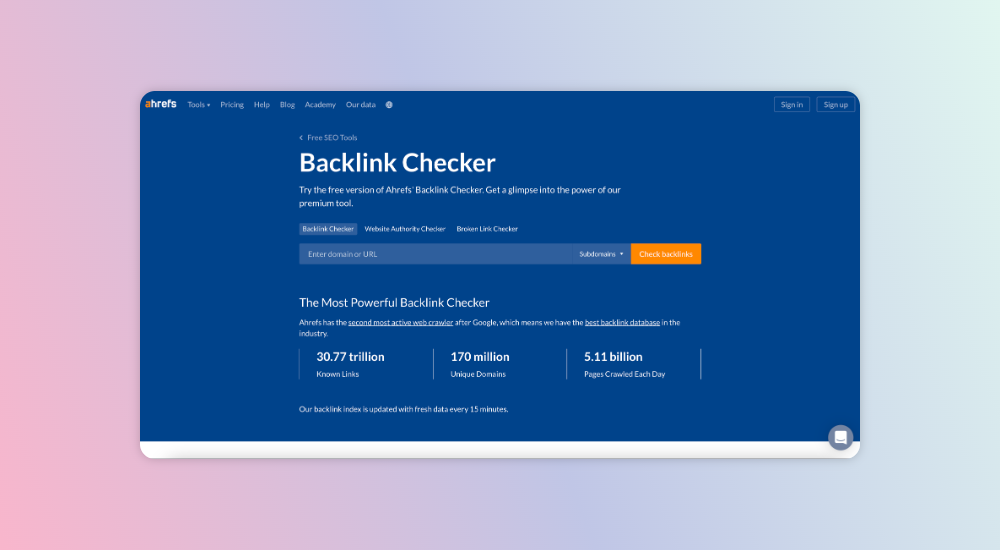
To understand how well your WordPress site fares in terms of getting the right backlinks, you can use ahrefs’ Backlink Checker to get the right tips and recommendations, as well as other details about your website.
18. Use PR to Boost SEO
Public Relations (PR) helps build awareness and a positive image of your brand, while SEO helps improve your company’s website ranking on search engine results pages.
Since the objective of both SEO and PR is the same, they’re often used hand in hand, given the diverse channels they need to focus on. A simple way to integrate PR and SEO activities is by:
Focusing on gaining high-authority links from top publications and portals with high brand/domain authority. This improves your website’s SERP rankings since it gives your website more credibility, authenticity, and expertise.
Requesting links when your brand, product, service, event, or other entity is mentioned on a third-party website. If your PR team knows which pages (especially landing pages or specific product pages) they can promote for backlinks, you can focus your SEO on these pages and create a win-win combination.
Crawling is the process where a search engine will move from the pages of your website and discover the elements that your website is using.
Sometimes, if there are broken links or improper linking, the crawling process can get hindered and lead to your website pages not showing up on SERPs despite having the relevant keywords.
To identify crawl errors, go to the ‘Coverage’ report in Google Search Console and fix any issues that may be listed there.
20. Ensure Your Website is Responsive
Your website is no longer accessed primarily from computers or laptops—devices like smartphones and tablets are also being used to search and find your page.
Although WordPress websites inherently use responsive design, if it’s not responsive enough, it’ll lead to your content getting cropped, taking time to load on mobile, or other issues, eventually leading to a negative SERP for your page.
21. Inspect Your Website for Redirect Chains and Loops
A redirect is when you forward one URL to another. For example, if you have two pages, with titles ‘Data Analytics’ and ‘Big Data Analytics,’ having very similar content structures, it’s best to merge or use the most relevant page when users search for any of these terms.
Redirect chains help the search engine know when to redirect the user from the requested URL to the destination URL and assist in:
Ranking new content
Making it easier for your website to crawl
Improving page load speed
22. Fix Any Duplicate Content Issues
Although this may sound silly to a new website creator, duplicate pages are one of the most common reasons why your website or a particular page might not rank.
Search engines can’t determine which page to rank if you have two identical pieces of content or similar titles for your page, so de-indexing or redirecting these pages is the only way to ensure that this situation is avoided.
23. Create/Optimize Your Robots.txt File
Robot.txt is an instruction that’ll tell your search engine which page it can crawl to and which ones it should avoid. This ensures that search engine crawlers can focus on the right pages and prevents server overload or crawl wastage if you have many on your website.
To create the robot.txt files on your pages, you can download the ‘All in one SEO’ plugin and follow these instructions:
24. Conduct a Content Gap Analysis
Content is king, but if it doesn’t have a strategic approach, you’ll discover that multiple opportunities are not getting converted.
A content gap analysis involves assessing your website’s content to identify missing pieces to help create a strategic approach for your target customer. It enables you to ensure you create targeted content that’s aligned with your buyer journey so that it:
Gets higher engagement
Meets user expectations
Generates more traffic
Search engines love top-notch content and are focused on buyer intent, so conducting a content gap analysis on a timely basis is always recommended.
25. Implement Schema Markup
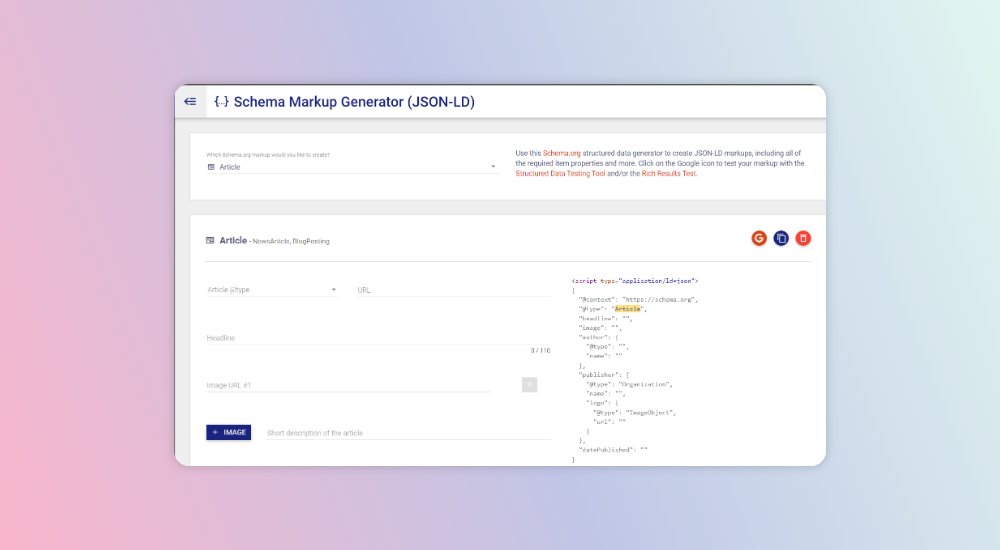
Schema markup is a kind of code that enables search engines to understand and describe your page’s content. Implementing it in your website helps create more descriptive and visually appealing snippets on SERPs, which makes it easy for search engines to know what it is and where it can be displayed.
A great way to implement schema markup is by using technicalseo, which enables you to do this in a few easy steps without knowing any coding.
26. Publish Content Regularly
Many WordPress websites have fantastic content, but the site is not updated regularly or has content published months ago. This isn’t good for anyone visiting your page or search engines. It’s crucial to publish regularly and even update your existing content or repurpose it to meet the needs of today’s users.
Make sure you post frequently and have a content calendar to dish out valuable content regularly. Recently updated and high-value content consistently gets the topmost rankings on any search engine.
Conclusion
Wow! That was exhaustive!
With these WordPress SEO tips, we’re sure you’ll have a well-rounded understanding of how to do SEO for WordPress. As with any other subject or topic, the deeper you dig in, you’ll uncover a new world waiting to be explored.
Since improving SEO on WordPress is a long game, we suggest keeping this SEO basics checklist handy and discovering more ways to optimize SEO for WordPress websites.
We’re at the end of this blog but undoubtedly not the end of your SEO journey—there’s a lot you can keep doing to help your website rank high and ensure it stays there for the long run.
Keep learning, and don’t forget to focus on quality content. While content is the ruler of the digital realm, it’s SEO that will ensure that the ruler stays on its throne for longer.
FAQs
1. What is SEO?
Search engine optimization (SEO) is the process of increasing the visibility of a website or webpage in search engine results pages (SERPs).
2. How is SEO important for writing blogs on WordPress?
Your WordPress blog/website content contains highly valuable insights and information that can create a vital channel for generating leads and optimizing your brand’s reach. Following a blog SEO checklist helps you optimize your blog content and keep it structured for easy readability.
3. Does the SEO checklist help in ranking on search engines?
An SEO checklist helps you create authoritative, relevant, and highly compelling content—the primary driver for search engine rankings and conversions. Content quality is crucial for improving SEO; readers are more likely to interact with your page and stay longer if the content matches their primary requirements when searching a particular keyword.
4. What are the best SEO plugins on WordPress?
Some of the best plugins for SEO optimization for WordPress include:
Did you know? Over 8.7 billion queries ricochet through Google’s neural networks daily.
By 2024, content marketing could swell up to an astonishing $600 billion industry.
This shows us the importance of a solid ecommerce content marketing strategy for your brand in this digital-first world. Having said that, we know that it might feel like trying to scale Everest.
But hey! With a tried-and-true blueprint, it’s a feasible climb.
It’s not just about survival but also about giving your audience an invigorating, dynamic digital experience—think refreshing content, trend-forward aesthetics, and unwavering consistency.
Ecommerce content marketing could be your secret weapon to outshine the competition by building brand loyalty and pushing the needle on sales.
Now, let’s delve into 16 game-changing strategies to transform your content marketing for ecommerce.
What is Ecommerce Content Marketing?
Ecommerce content marketing is a part of the inbound digital marketing strategy that centres on attracting your prospective customers.
This is achieved by presenting them with top-quality content, whether they’re scouring search engines, scrolling through social media, or browsing product review sites for answers.
A good e-commerce content marketing strategy increases customer loyalty and organic traffic and enhances conversions and retention rates. After all, there’s a reason why 82% of marketers swear by it today!
16 Content Marketing Strategies For Ecommerce That Convert
1. Optimise For Search Engines
Did you know that nearly 51% of shoppers turn to Google when researching a potential purchase? It’s because they’re hunting for the best, and your ecommerce site needs to show up at the right place and time.
Now, many brands chase unrealistic ranking dreams, like gunning for the “best [product]” keywords, without integrating them naturally.
But here’s a smarter play – the trick lies in pinpointing relevant keywords and including them seamlessly into your product titles, descriptions, and meta tags.
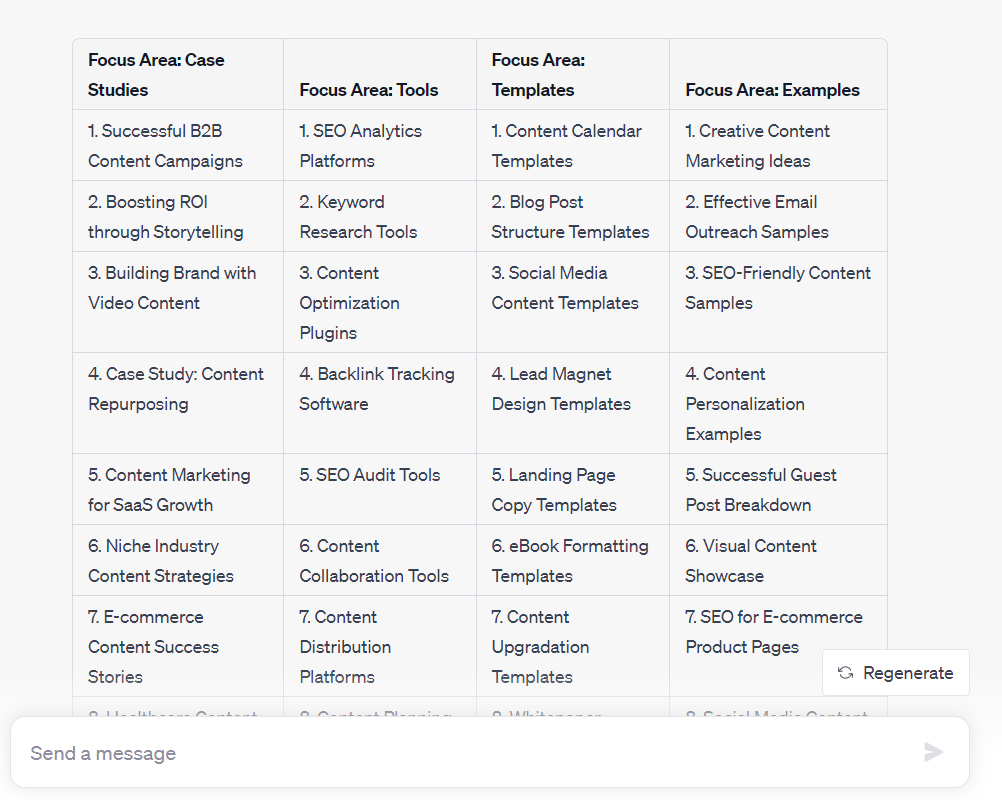
And don’t forget, AI-powered tools like ChatGPT can supercharge your visibility, helping you pick and position keywords that get clicks. For starters, you can ask ChatGPT to give you a list of keywords related to your business or the target audience. Like this:
Objective: keyword research
Prompt: “create list of keywords for articles where we focus on writing about content marketing, content writing, and SEO. The keywords should focus on listicle format articles around case studies, tools, templates, and examples. Cluster these keywords as per the focus areas and pitch 10 keywords in each Focus areas. Also, the target audience here is senior marketers, CMOs, SEO Heads, in the US and we plan to focus on Middle of the funnel content. Put this in tabular format.”
2. Focus on User-Generated Content
It’s no secret that there’s no better promotion than your customers serving as your marketing squad. But how do you make this happen?
Enter User-Generated Content (UGC); your eCommerce brand’s secret to authenticity.
Here’s a question. Do you check the reviews before clicking on the ‘Add to Cart’ button? If yes, you are among the 70% of online buyers who read anywhere between 1-6 customer reviews before considering a purchase. Clearly, the power of word-of-mouth marketing is potent.
Similarly, social media posts, where customers are reviewing your products, can act as great sources of trust and credibility. From customer reviews to social media posts, UGC is the gateway to building a vibrant community around your brand.
Take a cue from MVMT watches. Their journey from the bottom to $90 million in only half a decade is a testament to the magic of UGC.
They now boast 1.5 million loyalists and 5 million social media followers. If this doesn’t display the power of people promoting your brand, we don’t know what will.
3. Elevate Your Website’s Look and Feel (UI/UX)
Think of your ecommerce site as a digital storefront. Now, would you rather walk into a jumbled, confusing shop or one that’s sleek, organised, and welcoming? The latter, of course. That’s why nailing your site’s UI/UX is crucial.
With Google’s page experience update, it’s not just about aesthetics but also functionality—easy navigation, swift load times, attractive layouts, and comprehensive product details.
A well-optimised site curbs frustration, sparks curiosity and reinforces your brand image. Plus, with help from tools like ChatGPT, you can generate alluring copies and offer personalised product suggestions to your users. Check this out:
Objective: Landing page copywriting
Prompt: “Imagine yourself as an experienced copywriter as we are building a landing page that will explain the content writing process at Wittypen. Generate 5 copies for the landing page hero section, which consists of 4-5 words of page title and hero description around 60-80 characters. The tone should be professional and witty.”
However, keep in mind that while AI is a game-changer, the human touch is irreplaceable. For a piece of content to remain authentic and resonate with your audience, use AI tools judiciously.
4. Don’t Miss Out on the Moment: Make it Mobile-Friendly
Let’s drop some numbers—did you know in the past six months, a whopping 79% of smartphone users made a purchase online via their mobile devices?
That’s why ensuring your site is mobile-friendly is necessary. If your customer is not able to navigate your website easily, they will leave; it is as simple as that. So, adopt a responsive design that smoothly adjusts to various screen sizes, is easy to navigate, and has a speedy checkout process.
It’s all about enhancing user experience, which in turn fuels conversion rates and customer satisfaction.
You can also use AI tools up to a certain extent. While it can’t directly impact the technical aspects of mobile-friendliness (like the responsive design or load times), it can contribute significantly to the overall user experience on mobile devices.
The possibilities are endless, but here are two ways to help you get started:
ChatGPT can generate concise and mobile-optimized content and keep the visual length in check.
You can integrate GPT into chatbots for real-time customer interaction, answering queries, offering product recommendations, and providing personalised assistance.
5. Retargeting Ads: Second Chance to Make a First Impression
Recapture the attention of users who’ve interacted with your ecommerce store before. Think of these ads as friendly nudges, subtly reminding potential customers about your brand and piquing their interest to click ‘buy now’.
You can distribute and customise ads across various platforms ads. It’s not just about keeping your brand in sight but also to leave a strong impression.
6. Create Narratives that Connect: Adapt Storytelling
Storytelling is a potent tool to involve the audience in your brand’s journey, sparking an emotional bond. Sharing your business’s mission, values, or behind the scenes of your operations through interesting narratives helps your audience see the heart behind the brand, making it more human and more relatable.
Storytelling in the business world looks a bit different. Each content piece, like a blog or a social media post, is a chance to tell your brand story. But often, you know the story but don’t know how to convey it to your audience.
Let’s say you want a blog that gives a closer insight into your eco-friendly manufacturing process. But you don’t know what structure to follow, what keywords to use, or what points to cover.
7. Influencer Partnerships: Harness the Power of Popularity
Whether they’re doling out style advice or giving your products the ‘real-life’ test, influencers can magnify your brand’s visibility, increasing conversions. When your audience sees real people using your product or service, it makes your brand more authentic and alluring. Naturally, your e-commerce business witnesses a higher sales rate as a result.
A great example of a brand using this strategy effectively is ASOS. The online fashion retailer launched an influencer marketing campaign where it dubbed its influencers ‘ASOS Insiders.’
These Insiders didn’t just promote the products; they provided value to the audience by offering fashion tips and style advice in context with ASOS products.
Having a creative block for campaign ideas? ChatGPT can be your instant rescuer!
Have a look at this:
Objective: Generating campaign ideas
Prompt: “Act as a marketing lead who has years of experience in creating campaign ideas for the product launch. We are launching two tools content brief generator and a content calendar generator, these tools are created to make the content creation process smooth; they work because
1. These AI tools give you on-brand responses which understand the context.
2. You can edit and add your insights to make it unique
3. Download as a document and share it with your execution team
Give me campaign ideas for promoting my tools with a proper execution plan that can convince users to use our tools.”
8. DIY Your Way to Engagement
Offer your audience step-by-step DIYs (Do It Yourself) coupled with visually striking examples to empower them to explore and channel their creative flair. This way, you can not only attract your audience but also beautifully showcase the versatility of your products.
Take Starbucks’ #SketchTheBlend campaign during Diwali’20, for example. This DIY campaign encouraged participants to get creative and offered complimentary beverages for outstanding entries.
The campaign was highly successful and resulted in increased customer engagement with the brand and sales.
9. Empower with Knowledge: Education as a Marketing Strategy
Cement your brand as a reliable authority by drafting knowledgeable materials that help customers make informed purchases. At the same time, this also displays your commitment to providing value for your customers’ money.
The best example for this would be creating educational blogs that provide deeper insights about your product or service and related topics. Have a look at Shopify’s blog page for inspiration.
However, thinking of topics for content pieces can be a task at times. It requires a lot of market research and knowledge of SEO and demands a considerable amount of creativity. Having to do this on a regular basis is taxing and takes away time from other business matters that cannot be done without your attention.
We present to you our Content Calendar Generator, which utilises the power of AI and gives you a plan of action for your content strategy.
Just sign up, and you’re one click away from your personalised content calendar.
10. Fascinate Your Audience with Fun Campaigns and Contests
Keep your audience interested in your brand with contests and in-game rewards from time to time. From frequent sales and exclusive discounts to joint ventures with other companies offering rewards, many fun and interactive initiatives can create excitement among your customers.
Excitement grabs the attention, creates engagement, and, thus, drives sales.
Take a cue from Canva’s #CanvaDesignChallenge, a weekly contest that invites users to exhibit their most unique, original designs, with winners reaping enticing rewards such as a year’s paid membership to Canva.
Source : Google
11. Amplify Your Brand Through PR and Events
PR and events can accelerate your ecommerce content marketing’s visibility and reputation. Strategic PR tactics, such as generating positive buzz, building media relationships, and partnering up with influencers for promotion, can augment your brand’s presence.
You can pair this with attention-grabbing events, live or virtual, to develop connections with your audience.
Take a leaf out of Adobe’s book, which in 2023 brilliantly collaborated with the Sundance Film Festival. They showcased their video editing solutions through an appealing series of interviews and behind-the-scenes content starring actors, filmmakers, and festival attendees.
You can also use ChatGPT to draft press releases, create striking event invitations, and capture your audience in real time, ensuring that your brand continues to shine in the limelight.
12. Share Tips for Maintaining the Product
Giving your customers valuable tips on product maintenance not only boosts their user experience but also manifests your expertise. When you deliver smart tips and insights, it promotes customer trust and enriches their buying journey.
Giving customers the knowledge and tools they require to maximise a product’s benefits enhances your standing as a trustworthy ecommerce provider.
13. Connecting Products to Real-world Solutions
Whether you’re creating content or demo videos, highlight your product’s versatility and value in diverse contexts. It’s all about helping customers visualise your solutions in action and understanding the real benefits.
This ecommerce content marketing approach unveils an in-depth comprehension of your value proposition and empowers customers to make informed buying decisions.
14. Stir Curiosity and Interest with Interactive Quizzes
Quizzes not only create curiosity among your audience but also act as informative treasure chests. You can gain valuable insights into your audience’s preferences and demands. You can also give them a more personalised experience.
And guess what? If you’re crunched for time, ChatGPT can be your personalised gateway to quiz ideas that hit the mark every time. Here’s an example:
Objective: Quiz ideas
Prompt: “Suggest some quiz ideas to promote our upcoming webinar, which is on the topic “Deep dive into genAI for marketers” The aim of posting quizzes is to build more engagement for the webinar. All the quiz suggestions should help us in promoting the webinar.”
15. Utilise the Power of Email Marketing
Customising your emails to resonate with each recipient makes your brand’s message more impactful. If you’re not using the power of email marketing, then you are missing out because email is the channel for generating the highest ROI.
Pro-tip: You can use AI tools like ChatGPT to generate quick and well-written email copies.
Here’s a simple prompt for the same:
Objective: generate emails
Prompt: “Write an email to reach out to the marketing leads to try our content tools which are content brief generator and content calendar generator. These tools are unique from the rest of the tools in the market because they give you on-brand responses, and the results are easily downloadable. The email should start with a question to build curiosity for the readers and then appeal to them to check out our tools with a CTA. The email should be short and deliver to the point message. Write the email in about 80-100 words.”
16. Product Guides To Enlighten Your Customers
You wouldn’t give someone a puzzle without the picture on the box, right? That’s why it is essential to create detailed product guides for your customers. This sheds light on every feature, benefit, and use-case scenario of your products.
Each product guide is also an opportunity to affirm your role as a subject matter expert and a reliable source of information.
Remember, with AI tools like ChatGPT, creating an outline for these comprehensive guides becomes a breeze.
Here’s an example of the same:
Objective: generate outlines
Prompt: “I’m writing a blog on the topic “The Impact of AI on the Marketers” Create a detailed outline consisting of some interesting subheadings which will help a reader to understand the role of AI in marketing. With this blog, I’m targeting all marketers, SEO experts, and anyone who wants to learn about the implementation of AI in marketing. The outline should not exceed the word count of 2000 words. Also, mention the focused keyword and suggested keywords in the beginning of the outline that should be included in the blog for it to rank on search engine result pages.”
Begin Your Journey to Effective Ecommerce Content Marketing
A good ecommerce content marketing strategy is the backbone of your online presence and a powerful tool for building a loyal audience base.
Remember that success in ecommerce content marketing strategy always boils down to connecting with people. And as you embark on this journey, you’re not alone. AI tools like ChatGPT are available at your convenience – a good command away from making your content creation more powerful.
So, ready to ride the wave of effective ecommerce content marketing? The journey to the top starts now!
FAQs
1. Which content marketing strategies are most effective for commerce?
The best ecommerce content marketing strategies are those that resonate with your audience. A mix of search engine optimization, utilizing user-generated content, enhancing mobile-friendliness, retargeting ads, storytelling, influencer collaborations, and inspiring DIY projects tend to hit the mark. However, the ‘best’ is subjective and depends on your brand, target audience, and industry.
2. How can I produce interesting material for my ecommerce website?
To amp up your content game, start by providing genuine value. Whether it’s through enlightening blogs, problem-solving guides, AI-powered content using tools like ChatGPT, high-resolution images, immersive videos, or personalized experiences, it’s all about meeting your audience where they are.
3. What are some examples of successful ecommerce content marketing campaigns?
Ecommerce content marketing hits are everywhere. Take ASOS’s ‘ASOS Insiders’ influencer campaign, gaming companies showering players with rewards, or education-led content campaigns that enlighten and engage. Each offers a unique blend of ingenuity, strategy, and user focus.
4. What are the key elements of a successful ecommerce content marketing strategy?
A rock-solid ecommerce content marketing strategy isn’t a puzzle. It’s about knowing your audience, nailing keyword research, producing top-tier content, experimenting with formats, promoting across platforms, and continually tweaking your strategy based on data.
5. What role does SEO play in ecommerce content marketing?
SEO is your secret sauce in ecommerce content marketing. It gets your website on the radar, pulls in organic traffic, and broadens your reach. By aligning your content with relevant keywords, enticing meta descriptions, and trusty backlinks, you make it easy for your ecommerce site to be found, loved, and shopped from.
The adage goes, “Out of sight, out of mind,” – but brands can’t afford that if they’re to be deemed successful.
Guest posting is one of the most important online marketing tactics that are still widely used to build up reputation and word of mouth (WOM) for a brand that’s trying to establish itself as a key player in its category.
It’s one of the simplest yet most high-value tactics that work by writing and publishing articles of value on other related sites.
The Idea Behind Guest Posting
The idea behind this technique is for your website to attract some of the traffic that comes to authoritative sites to promote lead generation and sales. It helps boost your rankings on major search engines, as having high-quality backlinks pointing back to your website enhances its reputation.
Plus, ranking at the top of search results has become difficult lately. One of the key factors in the process involves gauging how high your domain authority (DA) is and how many websites refer to your content and consider it authoritative. You can improve these metrics by contributing guest posts and driving backlinks, which helps rank your content and website higher faster.
You must thus target the best guest post websites with a high DA if you want your rankings and position to improve. The higher the DA, the better would be the quality of the linkbacks.
Benefits of a Great Guest Blogging Strategy
For the uninitiated or people who are still exploring this powerful strategy for brand building, let’s look at what you can expect by giving your websites those much-loved backlinks from websites of repute:
Accessing New Audiences: There are a couple of ways through which this can be done; however, submitting blogs on related websites is still one of the most effective techniques out there. In doing so, you will attract qualified traffic that is interested in what you have to offer rather than shooting in the dark, allowing you access to a whole new audience.
Builds Brand Value and Trust: Ever since social media and blogging went big, traditional marketing tactics have been rendered not so effective. It’s important to first build brand value and trust, which is more likely to pull more people your way.
Lead Generation: Once you have access to that pool of new audiences and have created a strong online presence for your brand, you can expect a decrease in false positives and more qualified leads interested in what you have to offer.
However, as a marketer/brand, it’s important to understand that guest blogging is a dual-edged sword that can either make or break your brand, depending on the quality of backlinks pointing back to your website.
Top 199+ Guest Posting Sites for Backlinks
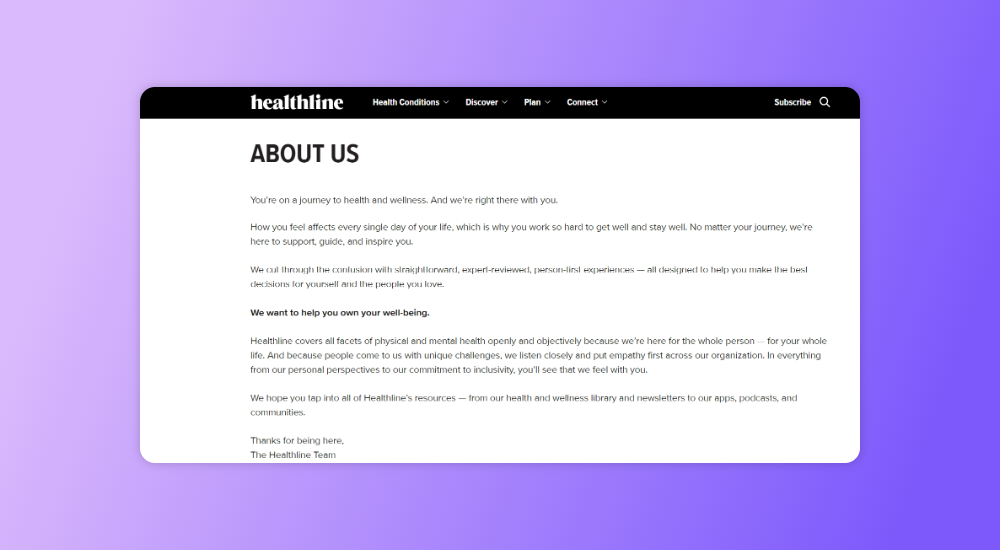
1. Healthline
DA – 92
Niche – Health and Fitness
If you own a business in the health and fitness category, Healthline is a great place to start your guest posting journey.
Creately should be your platform of choice if you intend to submit a blog about visual collaboration, visual project management, data visualization, etc.
As the name suggests, you can publish guest posts related to startup stories, business news content, and lifestyle-related posts. It’s a great option for new startups looking to establish a voice.
Webflow’s blog specializes in news stories and articles, enabling designers, marketers, and creatives to discover the latest in design, the modern web, and the no-code movement.
Outbrain is a content marketing platform used by almost every brand under the sun and provides tremendous potential in getting the word out about your brand.
HubSpot publishes posts that are data-driven, comprehensive, and insightful. They are one of the most reputed names online and work with some of the most renowned online brands.
A premium online zine for everything technology, Mashable has a strong reputation in the tech domain, so keep them in mind if you own or run a tech company.
InkWell Editorial’s blog is dedicated to publishing topics on SEO, case studies, content marketing, blogging/affiliate marketing, etc. If you are an independent blogger, you can also get paid up to $50 per post.
Click here to visit the website.
13. Innovation Management
DA – 71
Niche – Thought Leadership
Innovation Management accepts free guest posts on thought leadership, researched articles, etc., for publication.
MarketingProfs’ blog focuses on enterprise, B2B, thought leadership, and opinion pieces. It’s one of the most well-known blogs frequented by content marketers.
Cloudways accepts posts on the latest in technology and the connected world. If you’re looking for a reputed site in this niche with a formidable DA, then this is a great place to start.
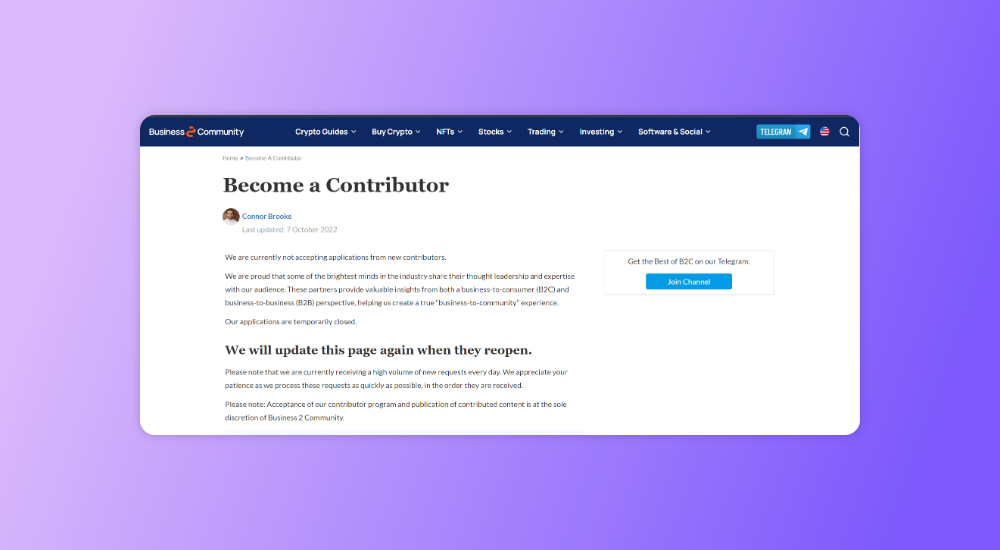
Business2Community accepts valuable insights from both B2B and B2C perspectives, making it a great platform for publishing guest posts, ebooks, articles, etc., in these domains.
GoDaddy is one of the biggest names in the industry. It’s the perfect platform for small businesses to start publishing and get access to qualified traffic.
Business Insider publishes thoughtful analysis, research-based articles, expert advice, and scoops from the business domain. It can prove to be a great starting point for guest blog opportunities.
Strategic advice, branding, messaging, relationship-building – if you write about any of these topics, then MarketingTech is one of the top guest blogging sites for you.
Jeff Bullas’ platform accepts blogs on social media, digital marketing, marketing, digital technology for business, entrepreneurship, startups, growth marketing, content marketing, etc.
John Chow is one of the leading internet coaches out there. If you have newsworthy and insightful pieces to share, definitely look into publishing your work on his platform.
Webnus publishes posts on a variety of topics, except those related to gambling, advertising, beauty salons, and ‘adult’ content. Anything else is fair game with this platform.
Articles featuring business tips, web hosting pieces, how-to tutorials, etc., are some topics ResellerClub accepts from writers, brands, or any individuals wanting to publish informative and engaging guest posts.
Exabytes is well-known for publishing articles on cloud services, online business, eCommerce, WordPress, domain registration, hosting, technology, etc.
If you have original and informative pieces to help businesses and agencies make the best of digital space, you can try publishing on Agorapulse for quality linkbacks.
If you’re adept at marketing and sales strategies, social media, SEO, and other forms of online marketing, then you can start by submitting blogs to Benchmark Email.
Inspirationfeed covers multiple kinds of topics in design, business, entrepreneurship, freelancing, applications, themes, SEO, WordPress, and social media domains.
The Pragmatic Bookshelf’s diverse range of topics covers almost every aspect of technology, coding, and development and is a great starting point for tech companies.
Manning magazine features coding and development-related posts and can prove to be an excellent platform for technology companies looking to build a voice of their own.
If you’re in the tech domain, you can publish unique, engaging, and entertaining industry insights, Op-Eds, etc., from your field of research on this platform.
Perfect for companies operating in the hospitality or travel industry, guest posting on this platform can enable you to reach out to a brand-new audience that’s interested in your products.
Brands in the financial sector take note. Scotsman Guide is a great stepping stone for getting access to new audiences and building trust among people looking for financial services.
Elephant Journal is an independent media platform with almost 2 million monthly readers. Anyone in this niche looking to include guest posting as part of their content strategy should have them at the top of their list.
As the name suggests, covers content related to law. If you have informative and well-research pieces to publish, this platform has much to offer in terms of getting noticed.
MindMajix publishes some of the best thought leadership and technology articles on the block. Anyone looking to build trust and brand value can leverage their platform to share their voice.
Edureka accepts informative guest posts on DevOps, AWS, SysOps, Big Data and Hadoop, Blockchain, Apache Spark, Scala, Tableau, Robotics Process Automation, Python, and more.
TopUniversities is great for students wanting to share their university experiences with other students around the globe. Additionally, if you’re in the e-learning business, then publishing on this website can give you good results.
Psychology Today is a medical magazine read by professional therapists, doctors, and students and publishes insightful information on the inner workings of the human brain.
PickTheBrain publishes stories by common people about life-changing events to share their learnings with others around the globe to bring about positive change.
If you can write about website design, SEO, driving traffic, content creation, entrepreneurship, or making money online, submit your guest posts on IncomeDiary for quality backlinks.
Matthew Woodward’s site is targeted towards freelancers and is one of the go-to resources if you are looking to break into the freelance writing market.
If you excel in writing on freelancing, blogging, publishing, the craft of writing, and marketing, then The Write Life is most likely to accept your pitch for a guest blog.
If you can create in-depth media-rich content with a conversational tone, then you are in luck. StartupBros’ blog can prove to be a great place to create a voice for your brand or yourself.
Business owners, webmasters, web developers, and entrepreneurs are welcome to post listicles, how-to articles, explainer posts, and opinion pieces at Cookieyes.
Make A Living Writing is a platform for writers to learn and discover about gigs that pay better, how to pitch more effectively, increase their writing skills, and establish themselves as an author.
You can pitch your ideas related to startup tips, SEO, social media, web design, mobile application development, online reputation management, business growth strategy, etc., on Vocso to get high-value backlinks.
If you have interesting content related to the BPM niche that you believe people would love reading about, then Checkify is a great platform to pitch your ideas.
If you have new and innovative online marketing strategies that could benefit the online community, you can pitch your ideas on Long Tail Pro to build your brand’s reputation.
The Global Grasshopper is one of the best travel blogs out there, with lots of useful information. You can pitch your ideas in the form of listicles to get featured.
If you’re an investor, you can pitch your ideas to BiggerPockets and help people make the best of their money and investments. It’s one of the better-known names in real estate investing.
Edutopia accepts guest posts related to integrated learning and technology integration. If you operate within the e-learning domain, be sure to include them in your guest posting strategy.
The Healthcare Blog is looking for guest authors to submit articles on topics related to healthcare, such as technology, policy, and innovation. Submissions must be thoroughly researched, educational, and interesting.
On a variety of health-related subjects, the website “Plus100Years” welcomes guest posts. On this platform, writers can share their expertise and experience in the areas of fitness, nutrition, wellness, and lifestyle.
Impact Ethics is a platform that publishes articles about bioethics and health law. They encourage writers to submit works that are no longer than 1,000 words, and they accept submissions on a continuous schedule.
Voices of Youth is a platform that publishes articles related to various youth issues, including health. They accept submissions from young people between the ages of 14 and 24 and encourage authors to submit pieces that are between 300 and 1,200 words.
Mark Streshinsky’s website is dedicated to helping entrepreneurs and small business owners improve their marketing strategies. They accept guest posts related to marketing, social media, branding, and entrepreneurship.
Cult Vogue is a fashion and lifestyle website that accepts guest posts related to fashion, beauty, lifestyle, and travel. They prefer articles that are at least 800 words long and offer a unique perspective or insight into the topics they cover.
Style Fashion Guru is a fashion website that accepts guest posts related to fashion, beauty, and lifestyle. They prefer articles that are at least 500 words long and offer a unique perspective or insight into the topics they cover.
Bazaar Daily is a fashion and lifestyle website that accepts guest posts related to fashion, beauty, and lifestyle. They prefer articles that are at least 500 words long and offer a unique perspective or insight into the topics they cover.
Pro Finance Blog is a platform that publishes articles related to finance and business. They accept guest posts related to personal finance, investing, and entrepreneurship.
Personal Finance Blogs is a platform that publishes articles related to personal finance and investing. They accept guest posts related to budgeting, saving, investing, and retirement planning.
Red Branch Media is a digital marketing agency that accepts guest posts related to marketing, social media, and HR. They prefer articles that are at least 800 words long and offer a unique perspective or insight into the topics they cover.
Lawctopus is a platform that publishes articles related to law, policy, and governance. They accept guest posts related to legal issues, policy analysis, and law school experiences.
Tend to Read is a platform that publishes articles related to various topics, including technology, health, and lifestyle. They accept guest posts related to these topics and prefer articles that are at least 500 words long.
Awaysome Article is a platform that publishes articles related to various topics, including health, technology, and lifestyle. They accept guest posts related to these topics and prefer articles that are at least 500 words long.
The Market Activity is a platform that publishes articles related to various topics, including business, finance, and technology. They accept guest posts related to these topics and prefer articles that are at least 500 words long.
The website accepts guest posts related to town news, events, and meetings and encourages submissions from community members. All posts are reviewed before being published on the website.
The website invites guest posts related to fashion, beauty, lifestyle, and wellness and expects the submissions to be original, informative, and well-written. The website provides a platform for new writers to showcase their talent and reach a wider audience.
The website welcomes guest posts related to fashion, beauty, and lifestyle and encourages submissions from bloggers, writers, and industry experts. The website provides an opportunity to showcase one’s expertise and build a portfolio.
The website accepts guest posts related to beauty and fashion and expects the submissions to be original, well-written, and informative. The website provides guidelines and policies for guest posting to ensure the quality and relevance of the content.
The website accepts guest posts related to wedding planning, real weddings, and relationships and expects the submissions to be unique, personal, and relatable. The website provides an opportunity for writers to share their stories and insights with a wider audience.
The website accepts guest posts related to plus-size fashion, body positivity, and inclusivity and encourages submissions from bloggers, influencers, and fashion enthusiasts. The website provides a platform to promote diversity and representation in the fashion industry.
The website accepts guest posts related to lifestyle, health, travel, and technology and expects the submissions to be well-researched, informative, and engaging. The website provides an opportunity to share one’s expertise and reach a wider audience.
The website accepts guest posts related to various categories, including business, finance, health, and education, and encourages submissions from writers, bloggers, and journalists. The website provides a platform to share one’s knowledge and insights with a diverse audience.
The website accepts guest posts related to blogging, social media, and online marketing and expects the submissions to be original, informative, and well-written. The website provides an opportunity for bloggers and digital marketers to share their expertise and connect with a wider community.
The website accepts guest posts related to gaming, technology, and entertainment, and encourages submissions from gamers, tech enthusiasts, and content creators. The website provides a platform to share one’s knowledge and insights with a passionate community of gamers and techies.
It is a leading online publication covering the latest trends in technology, entertainment, and lifestyle, providing a platform to contribute informative content in these areas.
Tech Patio offers a platform for guest authors to contribute high-quality articles on technology-related topics, sharing their insights and expertise with the tech community.
This website provides an opportunity for guest writers to submit fashion-related guest posts, sharing their unique perspectives, style tips, and industry insights.
Blog Engage offers a guest blogging platform for bloggers to share their expertise, ideas, and experiences with a wide audience, enhancing their online presence.
Tech Strange accepts guest posts on a range of technology-related topics, allowing contributors to showcase their knowledge and insights to a tech-savvy readership.
This website invites guest writers to contribute informative and engaging articles on various subjects, providing an opportunity to reach a broader audience.
End provides a platform for guest authors to submit well-written guest posts on different subjects, sharing valuable information and perspectives with their readers.
Click here to visit the website.
137. SEO Techy World
DA – 26
Niche – Marketing
SEO Techy World offers a platform to contribute informative articles and insights related to search engine optimization (SEO) and digital marketing.
Technically Easy welcomes guest posts on technology-related topics, allowing contributors to share their knowledge and expertise with a tech-savvy audience.
This platform accepts guest posts on a range of technology and digital marketing topics, providing an opportunity to contribute valuable content to their audience.
This platform invites guest authors to submit fashion-related articles, sharing their fashion expertise, style advice, and industry insights with their readers.
Live Enhanced welcomes guest contributors to share their expertise and insights through informative articles on a wide range of topics, reaching a diverse readership.
Glamour Maxx accepts guest posts on fashion, beauty, and lifestyle, providing a platform for fashion enthusiasts to share their expertise, tips, and trends.
This website invites guest writers to contribute articles on a variety of topics, allowing them to share their perspectives and knowledge with a global readership.
Invites guest contributors to share their fashion and style expertise, offering a platform to showcase unique perspectives and fashion-related content.
Accepts guest posts focused on beauty, providing an opportunity for contributors to share their knowledge, tips, and recommendations related to beauty and skincare.
Accepts contributions from scholars and researchers in the field of fashion studies, providing an avenue to share academic research and critical perspectives.
Invites guest contributors to write about technology, digital marketing, and related topics, providing a platform to share industry insights and trends.
Tech Sightings invites guest authors to contribute engaging and informative articles related to technology, offering a platform to showcase their writing skills.
ScienceSoft Blog seeks guest contributors to share valuable insights and expertise in the field of technology, software development, and IT consulting.
My Tech Ranker invites guest authors to share their tech-related articles, offering a platform to showcase their knowledge and gain exposure to a tech-savvy audience.
The Next Tech welcomes guest writers to contribute articles on various topics, including technology, business, AI, and entrepreneurship, providing a platform for exposure and recognition.
TechWyse offers an opportunity for guest authors to contribute articles on digital marketing, SEO, social media, and technology, helping them reach a wider audience.
This website accepts guest posts on a range of topics, including SEO, technology, web applications, and gadgets, providing a platform for contributors to share their expertise.
Complete Connection invites guest authors to contribute articles on topics such as technology, digital marketing, SEO, and social media, allowing them to share their knowledge with the readership.
ExportHub provides a platform for guest authors to submit articles related to various industries, including technology, business, manufacturing, and trading, allowing them to showcase their expertise.
DurgTech welcomes guest writers to contribute articles on technology, gadgets, software, and other related topics, offering a platform to share their insights and ideas.
Seeromega invites guest authors to contribute articles on technology, web development, WordPress, SEO, and digital marketing, providing an opportunity to share their expertise.
Ckab offers guest authors a platform to contribute articles on technology, software, gadgets, and business, allowing them to showcase their knowledge and reach a wider audience.
TechMediaToday seeks guest contributors to share articles on technology, digital marketing, social media, and business, providing exposure and recognition to the authors.
Chetu welcomes guest authors to contribute articles on software development, technology, and related topics, offering a platform to showcase their expertise and gain recognition.
OpenXcell’s blog welcomes guest posts related to technology, mobile app development, and digital transformation. The guidelines provide details on content requirements, formatting, and submission process.
IT WatchIT offers an opportunity for guest contributors to share their expertise in cybersecurity, technology, and business. The website provides a platform to publish articles, news, and analysis related to IT security and privacy.
ThemeGrill’s blog invites guest writers to contribute articles on WordPress, web design, and development. The website encourages informative and engaging content that educates readers and provides valuable insights into the industry.
CodePen is a collaborative coding platform that allows developers to showcase and share their front-end web development projects. It offers a sign-up page for users to create an account and start contributing their code snippets and demos.
DZone provides a platform for developers to share their expertise, insights, and technical knowledge with the community. The website allows contributors to submit articles, tutorials, and code samples related to various programming languages, tools, and frameworks.
ThemeIsle’s blog welcomes guest posts on topics related to WordPress, web design, and online business. The website encourages writers to provide practical tips, tutorials, and industry insights to help readers enhance their website development and online presence.
Hongkiat’s blog invites guest authors to contribute articles on design, technology, development, and inspiration. The website seeks informative and creative content that provides valuable resources and ideas for designers and developers.
RS Web Solutions accepts guest posts on topics such as web design, development, digital marketing, and SEO. The website provides an opportunity for writers to share their expertise and contribute to the community’s knowledge base.
Speckyboy is a design magazine that allows guest contributors to submit articles on topics like web design, graphic design, UX/UI, and freelancing. The website seeks original and informative content that inspires and educates designers and creatives.
This website’s blog invites guest writers to contribute articles on web design, development, graphics, and typography. The website seeks high-quality and informative content that covers trends, techniques, and best practices in the design industry.
This website welcomes guest posts from designers, developers, and creatives on topics like web design, development, and graphic design. The website encourages insightful and engaging content that caters to a design-savvy audience.
It is a leading resource for user experience professionals and invites guest authors to contribute articles on UX design, research, strategy, and usability. The website follows specific guidelines for content submission and encourages practical and thought-provoking insights.
This platform provides a platform for UX professionals to share their expertise and insights through guest articles. The website seeks content that covers various aspects of user experience, including design, research, strategy, and usability testing.
It welcomes guest authors to contribute articles on technology, gadgets, social media, blogging, and SEO. The website encourages informative and well-researched content that offers practical tips and insights for tech enthusiasts and bloggers.
This website invites guest contributors to share their expertise in areas like project management, Agile, DevOps, data science, and cybersecurity. The website seeks informative and insightful articles that provide value to professionals in these fields
Developer Gang welcomes guest posts related to programming, web development, software engineering, and technology trends, providing a platform for developers to share their knowledge and insights.
DigiTechnoPost offers a comprehensive list of free guest posting sites, providing a valuable resource for individuals seeking opportunities to contribute guest posts across various niches and industries.
The Latest Tech News invites guest posts covering the latest trends and news in technology, including topics such as gadgets, software, artificial intelligence, and cybersecurity.
Simple Programmer offers guest post opportunities for developers and programmers to share their knowledge and experiences in software development, career growth, and personal development.
SocialPilot accepts guest posts related to social media marketing, content marketing, digital strategies, and productivity, providing a platform for marketers and entrepreneurs to share their expertise.
Tech Magazines invites guest bloggers to contribute articles and insights on technology, gadgets, reviews, mobile apps, and emerging trends in the tech industry.
Useful Tech Tips offers guest post opportunities for writers passionate about technology, blogging, social media, and digital marketing, allowing them to share their knowledge and tips with a broader audience.
The Proche is a platform that accepts guest posts covering various topics, including technology, lifestyle, business, health, and entertainment, providing a diverse range of content opportunities.
TechLipz offers guest post opportunities for individuals interested in writing about technology, gadgets, software, social media, digital marketing, and related topics, allowing them to contribute their expertise and insights.
Tactics Marketing accepts guest posts focused on HubSpot, MSP marketing, and IT marketing. If you have actionable insights, strategies, or expertise in these areas, this is the right platform to share your knowledge with professionals looking to grow their businesses.
Finding the Right Topics for Your Guest Blogging Efforts
Now that you have your list of sites covered, you need to pitch your ideas to get your voice out there. Finding the right topics is crucial. Here’s a 3-step process to ensuring the success of your guest blogging strategy!
Setting Achievable Goals: Before you start your journey as a guest blogger or implement a guest blogging strategy for your brand, you will need to set goals that are achievable as part of a long-term content strategy to build your brand’s image and reputation.
Choose Topics That Benefit Your Business Goals: Research and ideate guest post topics that are beneficial for your brand and razor-targeted toward your audience. Learning from the competition as to what kind of guest posts they are posting across websites is a great way to begin, as it will make it much easier to narrow down topics that people within your TG find informative and engaging.
Track the Posts’ Rankings Over Time: Once your blog/content has been posted, it’s important to keep an eye on the metrics to gauge how much traction your guest posts have gained since they were first published. If some have been doing better than others, you may want to write around those topics to further gain more traction.
Pitching Your Ideas and Getting Approved
The idea is to pitch and not get disheartened. Many times you will find your ideas being rejected, but it should be treated as learning.
The best way to get approved faster is to spend some time on the website you’re pitching (before you pitch) to understand the topics they cover, their tone of voice, and what their audience finds interesting – you can check out a few of their trending posts to get an idea.
Once you have this figured out, you’re more likely to come up with pitches that make more sense to the website and get approved. The idea here is to be persistent in your efforts for them to pay off!
Key Takeaway
Guest blogging is a powerful approach for fostering a brand’s/individual’s voice online. Therefore, including it in your content strategy is very important if you want your online marketing efforts to pay off in the long run. It lets you create better brand recall and stand out among your targeted audience.
In a nutshell, it’s a long-term strategy that pays off big time once you have fully unleashed its potential and established yourself as a voice that others trust and respect. Good luck, and happy guest posting!
FAQs
How to start guest blogging?
Before you start guest blogging, have a clear goal in mind and identify the websites to guest blog on. This will help you come up with the best plan of action, depending on whether you are trying to build up a reputation for your brand, pitching a product or service, or generating qualified leads.
How to find which guest post sites are best for your niche?
Here are a few things you should look out for:
The target audience of the website/blog
Frequency of posts on the website/blog
Sites that don’t tag your guest post as sponsored
Sites that offer do-follow links as they have more weightage in rankings
Sites that don’t have too many ads or don’t look spammy
Does guest posting still work?
Absolutely! Guest posting is still one of the most viable methods of getting valuable backlinks that helps enhance your website’s domain authority over time.
Are all the guest posting websites free or paid?
Google can now identify paid backlinks. If you want to grow organically, it’s recommended to target websites with high DAs that allow free guest posting.
Is guest posting part of the SEO strategy?
Yes, guest posting quality articles that provide value to the users is a part of the SEO strategy.
What is the importance of guest articles?
Guest articles help you gain valuable backlinks pointing back to your site. These links increase the domain authority of your website over time which in turn results in more qualified leads coming your way.
Have you been staring at the computer screen searching for the best topics to write an article on? What you actually need is the right approach for deciding on a blog topic. Confused about where to start? This guide will help you navigate more than 25 article ideas for creating engaging blogs your audience will love to read and search engines will love to rank.
Best Article Ideas and Topics to Make a Splash
The secret of a successful content writer’s magic lies in their research. The better your research, the more meaningful and informative your content will be—which is what your readers come to the web for.
Let’s take a look at some trending topics to write about across various industries.
How-To Guides
How-to guides have become the most sought-after blog form writers love to write and readers love to read. These blogs focus on delivering step-by-step instructions to the audience, guiding them on “how to” do things.
For example, some trending topics to write about in how-to guides would be:
Topic: A step-by-step guide to investing in ABC
Topic: How to update XYZ software
Such guides are information-focused and often targeted to help the reader achieve a certain goal. Unless your how-to guide does that, there’s no point in writing it.
By nature, how-to guides are best suited for the SaaS and finance industries. Why? With technology and finance, there’s always scope for doing better and gaining more. People want to know how they can maximize their returns from technology and investments.
Finance
People have become more financially responsible after the shock of the pandemic and are seeking ways to grow a corpus to support them during the rainy days. This forms the backbone of most personal finance blogs today. The blog topic below hit the mark:
Topic: “A step-by-step guide to build a personal financial plan” by Principal
SaaS
The digital revolution has brought forth a huge wave in the adoption of cloud technology. SaaS has become ingrained in the network of work and business.
How-to guides that help professionals make the most of their SaaS products have thus gained popularity today. This How-to-Geek blog is a good example:
Topic: “The Beginner’s Guide to Google Docs” by How-to-Geek
Interview-Based Blogs
Consider this: what would you rather believe—your relative’s adventures with his investments or a finance professional’s own words regarding how to handle your money?
In situations where credibility is important, you should turn to interviewing industry professionals and writing blogs (with their permission, of course) with insight. This is the kind of knowledge that the audience seeks.
Words coming straight from an experienced expert’s mouth are more likely to be followed, shared, and believed rather than your own take on the capabilities of complex technology or on which stocks to invest in.
Needless to say, sensitive, ripple-creating industries like finance do best with interview-based blogs.
Some of the most trending topics to write a blog in the interview-based form would be:
Topic: What’s trending in crypto? In interview with XYZ
Topic: Fixed deposits: What to expect?
Finance and Crypto
Companies like Forbes and Forrester do a lot of interviews to corroborate the information and insight they deliver through their content. This is one of the major reasons their blogs are highly regarded, referenced, quoted, and cited by many other bloggers.
In the example below, Forbes broadly covers the same topics and quotes insights from an interview:
“Forbes’ First Crypto Exchange Rankings | Exclusive Interview With Our Data Director” by Forbes
Listicles
Listicles: blogs that are written in the form of a list. This blog form is suitable for when you wish to tell your readers about a lot of things, but you know that the audience is impatient. How do you deliver loads of information in a precise manner without losing out on the engagement midway? You make a list.
Lists allow you to quickly let your readers scan what you would be talking about. It throws the ball in their court—you’ve made a list; now they can choose what they’d like to read about.
Listicles are best suited for eCommerce and SaaS industries where there are more products than stars in the sky. You can cover a lot of bases by picking one kind of product and creating ideas for content writing through listicles.
Here are a few best topics to write an article in listicle format:
Topic: “Top 10 best [product] in India 2022”
Topic: “The Ultimate List of [SaaS technology products/services] for [Month/Year]”
eCommerce
The Economic Times really capitalizes on eCommerce listicles:
“Best 15 Litres Geysers in India” by The Economic Times
And so does the eCommerce brand, Purplle:
Topic: “Top 10 Shampoo Brands In India 2022” by Purplle
SaaS
With more and more competing SaaS tools in the industry today, the audience needs to be given a bird’s eye view of their options. The SaaS listicles shown below really help drive the point home:
Topic: “The 14 Best Free Note Taking Apps to Use in 2022” by ClickUp
Topic: “13 Best AI Photo Editor Software in 2022 (Compared & Reviewed!)” by Expert Photography
User/Customer Story Blogs
Relatability drives empathy. Empathy is a great way of connecting with the audience. The best way to do that is through content writing ideas that center on telling a real-life story.
If you’re a business and seek to connect with your target audience, you can request one of your happy customers to tell their story of transformation while using your products.
Because of the nature of customer story blogs, they’re best suited for healthcare and EdTech industries—both are extremely user-centric and directly impact their lives and futures. This weighs heavily on the readers’ minds and urges them to try the product or service being talked about.
A few great examples of easy articles to write about in customer story blogs are:
How [product/service] is transforming the lives of [community]
What our customers are saying about [service/product]
The important thing to note about these blogs is that you should have actual results to show for the blog you’re writing—numbers, statistics, and a measurable impact, preferably. You can also include the methodology adopted, solutions used, and technologies involved to drive more awareness.
Healthcare
In healthcare, people want to know that patients get better. CTOAM does this beautifully:
Topic: “Patient Presentation: Squamous Cell Parotid Gland” by CTOAM
Remember: healthcare is also about technologies, not just treatment. A B2B blog can also be successfully written in that vein:
Topic: “Southern Cross Healthcare Migrates Critical Patient Records to AWS” by ORION HEALTH
EdTech
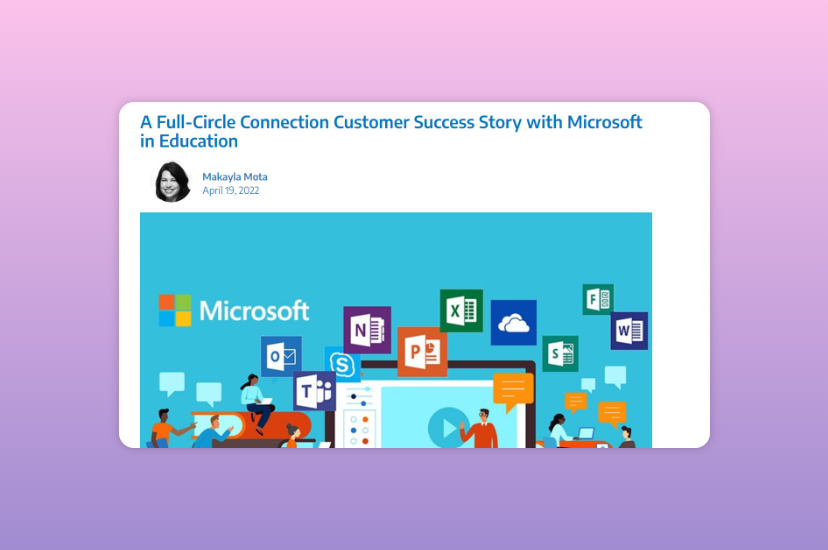
Since eLearning, remote schooling, upskilling, and reskilling became big after the pandemic, brands like Cisco capitalized on customer success stories:
Topic: “Customer Spotlight: How One Montessori School Delivers Engaging and Inclusive Learning Experiences with Webex Rooms” by Cisco
EdTech runs on technologies, which is showcased beautifully by the blog shown below: a combination of customer story and interview blogs:
Topic: “A Full-Circle Connection Customer Success Story with Microsoft in Education” by Connected
Product Comparison/Alternative-to Blogs
With high purchasing power, people want to know what they’re investing their money in. Detailing how various products and services stack up against each other gets consumer attention very quickly.
Some catchy titles for articles in the comparative niche could be:
Topic : [Product 1] v/s [product 2]: which is best for you?
Topic: Features to consider when choosing the best [product/service]
When you think about it, such blogs are the best-suited formats for the SaaS and eCommerce industries. You can also write comparative blogs for OTC products in the healthcare industry.
SaaS
Countless cloud-based apps hound the internet today, and users are left confused about which ones they should use. Zapier expertly capitalizes on this conundrum:
Topic: “Evernote vs. OneNote: Which note-taking powerhouse is right for you? [2022]” by Zapier
Every tech industry has its own take on various SaaS apps and technologies:
Topic: “Should You Use SharePoint or Google Drive?” by Dock
eCommerce
Writing alternative-to blogs is a great way to insert desired products in the list as a second option for your customers. Shopify proves it with this blog:
Topic: “Conquering Our Caffeine Addiction: 8 Surprising Substitutes for Coffee” by Shopify
There are also plenty of content writing ideas for educating customers about products that your eStore offers:
Topic: GLYCOLIC ACID VS. SALICYLIC ACID: WHAT ARE THE DIFFERENCES? by Kate Somerville
Product Update Blogs
Product update blogs can be a bit tricky to write—they must be timed correctly to generate the kind of audience traffic you need.
You need to be engaged in following a product and related news like a hawk in order to quickly put together a blog whenever something new is announced. This seems daunting but is actually easy when you’re an avid follower of a technology or product.
These blogs, needless to say, work best for SaaS and Healthcare. eCommerce is a contender industry in the list, but with the wide range of content already available in the niche, your update blog may get lost in the noise.
Some good examples of content writing topics in the niche are:
Search Engine Journal demonstrates how product update blogs are written best:
Topic: Yoast SEO 19.10 Update – Know This Before Updating by SearchEngineJournal
You can also cover update history timelines for SaaS marketers, like SemRush:
Topic: These Are the Most Important Google Algorithm Updates (That Still Matter Today) by Semrush
Healthcare
Blogs that focus on medical innovations are a great topic for update-oriented articles:
Topic: “GlucoRx showcases “world’s first” multi-sensor non-invasive CGM at MEDICA” by MED-TECH Innovation
Company Culture Update Blogs
Company culture blogs are all about letting the outside world know about how a company is responding to trends or keeping its employees happy.
The topics can also focus on social and community issues, new launches, major overhauls, and a lot more—that’s what makes these blogs interesting. Think about Tesla: aren’t you always curious to know what happens behind the scenes?
Such blogs can have topics like:
Topic: How [Company name] is responding to XYZ crisis
Topic: How XYZ initiative helps employees boost productivity
Topic: Coming Soon: [Company news]
Even better if you write about your own company after running the blog through the content administrators. These blogs do best in healthcare and finance.
Healthcare
Look at how CHG creates healthcare blogs about how to improve company culture:
Topic: “5 key strategies for strengthening your company culture after the pandemic” by CHG Healthcare
Finance
And finally, Great Place to Work shows how to write company culture blogs for finance:
Topic: “Great Companies Show Finance Can Be Fun: by Great Place To Work
Tips to Generate Content for Topics Faster
Getting to the market first is everything today. With this much competition, how do you get content writing ideas and bring them to fruition faster?
Follow the steps below to streamline and accelerate your content creation process:
Develop a Content Strategy: You need to figure out why you’re creating content. You also need to know the kind of readers you have to align the content better.
Make a Schedule: There’s no greater motivator than a deadline. When all your topic ideas are in place, put them on a calendar.
Prepare Extra Headlines: Headlines are subtle CTAs. Unless they are catchy, the content won’t get read. Have a few extra headlines for each content handy.
Speed up Content Generation: Gather interviews, request users to create their own content for you to share, and compile something like “insider stories”—it helps fill the content gaps and is highly relevant.
Be Channel Agnostic: Ensure all your posts are responsive and can be inter-shared between platforms.
Know When You Work Best: Clock your productive times. This is when you should be writing to create content the fastest.
Let the First Draft Be: Don’t over-criticize your writing. Just write the first draft uncensored, and start editing from there to save time.
Content marketing is a surefire way to increase traffic on your digital channels. The more interesting and SEO-polished your content is, the higher hits you will receive.
Leverage the guide above to make a smart selection of content writing ideas and create content on schedule.
Go on, get writing!
Frequently Asked Questions
What is content writing?
Content writing is an arm of digital marketing that involves planning, creating, editing, and posting content for the web that aims to generate online traffic for a business.
How to become a content writer?
Content writing is skill-based; you don’t need a formal education to begin your career in content writing. If you have a strong command of any language, you can build your own brand online. Alternatively, you can sign up as a writer on content writing platforms like WittyPen.
What are content writing skills?
As a content writer, you should possess the following skills:
Capability to write in different styles
Strong skills in information research
Understanding of SEO
Clear, expressive writing skills
How can I get ideas for content writing?
The best way to get content writing ideas is to follow the topics that are trending. It can be in any industry, like entertainment, politics, technology, lifestyle, or travel.
What are the ways to improve my content writing?
You should write catchy headlines, keep your content easy on the reading scale, stick to the word count, always do a fact-check and keep content relevant, and most importantly—keep practicing!
Site experience and value-addition have become the biggest growth drivers for businesses globally. And content writing has proven to be a game-changer in this regard.
Content writing is the practice of writing relevant web pieces that provides information to users about a certain topic. Writing adds value to users and provides them insight into what your business is all about. However, the content creation process can be time-consuming for even large organizations.
Writing in a dull tone or providing unrelated information often turn users away. To ensure you don’t make the same mistake, we’ve prepared this guide to help you understand what is content writing, its different types, some content writing examples and a few best practices you can follow. Let’s dig in!
What is Content Writing and What Are Its Benefits?
Content writing is widely discussed across various industries due to its strategic importance in business communication.
At its core, content writing is a strategy implimented by businesses to aid customers in making informed decisions about their products. This strategy includes creation of different forms of web content such as guides, blog posts, short copies, advertisements, and whitepapers, all designed to enhance customer understanding of a business offerings.
To ensure relevance and effectiveness, companies often rely on analysis of past customer data, industry trends, and targeted research when crafting content. This approach ensures that the content not only informs but also addresses customer problems and questions.
Content writing possesses the significant ability to convert visitors into loyal customers. But how exactly does this happen? Let’s briefly dive into the impact of content writing on customer engagement and loyalty.
1. Content Represents Your Brand
The content on your website is a direct reflection of your brand’s values and offerings. Through your writing, you communicate to customers what you offer and why they should prefer your products over competitors’. It’s crucial that this message is both impactful and consistent to effectively persuade them.
To stand out and resonate with the audience, many brands use humor, facts, and various other elements into their content. These additions make the content unique and enhance its appeal, making it more engaging and memorable for readers.
2. Content Helps You Reach More People
Effective writing can significantly broaden your business’s reach. By optimizing content for SEO, you enhance your visibility on search engines, which connects you with a larger audience.
Additionally, crafting user-friendly and engaging content boosts its shareability across various platforms, further extending your reach and impact. This strategic approach to content creation attracts more viewers and fosters greater interaction and communicates your message.
3. Publishing Content Regularly Gives People a Reason to Come Back to Your Site
We’ve briefly discussed the definition of content writing as something that educates, informs, and inspires your audience. By regularly publishing articles that provide value on recent industry trends, you give them a reason to come back to your site.
Companies with targeted and value-added content have found that it can help them increase conversion rates, and more than 78% of CMOs believe that content is the future of marketing.
What are the Different Types of Content Writing?
Choosing the type of content writing that best suits your brand can be confusing— understandably so. Each material creates a different impact.
Don’t sweat. We’ve compiled a list of all the content writing types to help you gain a competitive edge. Let’s explore them one by one.
Copywriting
Ads, micro-copies, CTAs, ads, etc., fall under copywriting. The goal of copywriting is to attract customers and sell your product. They are brief messages that may appear on website landing pages, sales pages, search engines, and home pages.
SEO Writing
As the name suggests, SEO writing helps you rank higher on search engines, and it is the propeller behind your digital marketing strategy. It includes keyword-rich content with interlinking to help you gain visibility. Blog posts, landing pages, home pages, ad descriptions, etc., use SEO content to improve engagement.
Long-Form Content
Many companies create long-form content such as case studies, product guides, whitepapers, and more to introduce users to their products and how they work.
Emails
Thistype of content writingis distinct. It connects you directly to the audience and helps you create personalized content. You can send targeted email campaigns to potential and existing customers about offers, recommendations, etc. It increases engagement and keeps them invested in what you’re offering.
eBooks
These are downloadable versions of printed books that users can download after signing up. They cover a topic comprehensively and give readers the information they need.
Top Examples Content Writing Examples
A content writing strategy works when you understand your customers’ needs. Rather than existing, these pieces only work when you write them with intention.
Let’s explore excellent Seo content writing examples from brands who have perfected the art of content writing and increased customer engagement:
Being the best CRM software for global businesses, Hubspot has many free and paid tools to help companies achieve growth. Instead of pushing out content aimlessly, the company is focusing on creating an ecosystem that educates growing businesses on creating successful marketing strategies.
The company successfully focuses on its customers by giving them easy access to hundreds of how-to guides and industry trends. They’ve also designed courses for budding marketers to ensure that they kickstart their marketing journeys with ease.
You can check out their blog and other content marketing resources to understand how they help companies.
2. Canva
As one of the most innovative companies in the world, Canva has empowered designers worldwide, unlocking creativity and collaboration at scale with its platform. Canva in itself is a masterclass on SEO content writing examples
In today’s competitive market, it’s not enough to create a product. Canva realized it from the start, and they created content that helped their users. They have blogs, content templates, how-to guides, and more to educate their users on designing the best social media posts and presentations.
The company uses a professional and user-friendly tone to help designers innovate at scale. Unlike investing too much in paid marketing, Canva utilizes the best content writing tools and uses social proof to build trust and loyalty.
3. Basecamp
If you’re running a SaaS company or in the tech space, Basecamp has excellent samples of content writing that you may want to take inspiration from.
The company uses excellent copywriting to capture the essence of its project management tool. It uses short and easy-to-read snippets that provide value to users.
With its targeted writing approach, the company publishes value-added content for business owners, freelancers, and IT professionals. Apart from using smarter and tighter copies for its product, the company also uses social proof uniquely and engagingly.
4. Zendesk
Zendesk is a CRM software that helps businesses manage customer service. Like Hubspot and Basecamp, Zendesk’s writing style is easy-to-read and to the point.
The company also has a dedicated section about how users can derive value from their product. From customer success stories to training videos, the tech company has perfected the art of adding value to businesses through its writing.
The above image showcases the company’s unique and humourous messaging and Zensar is an excellent case study for SEO content writing.
5. Bumble
Bumble is a dating application that curates its content around its mission—to help people develop meaningful connections.
Along with creating messages showcasing the dating app’s uniqueness, the company invests significant time in capturing the different stories and emotions of people that use the application.
The company uses digital films and is loud on social media about pertinent topics like inequality and women empowerment. Their most famous campaign is around ‘women making the first move’:
6. Investopedia
Anotherexample of good writing is Investopedia. Founded in 1999, Investopedia publishes financial content that helps users gain better insights into complex finance terms and strategies. It also publishes articles on investing knowledge and stock market updates, empowering users to control their finances better.
Although it began as a source for financial terms, today, it is the largest source of financial content for its readers, with diverse topics ranging from personal finance to family planning.
Through its easy-to-understand writing style, the company deconstructs critical economic strategies and advises investors, small businesses, and professionals about different financial products. The company aims to empower readers to manage every aspect of their financial life and fulfill their goals.
Read Investopedia’s blogs and articles to see how they educate users on a wide array of topics.
Which are the Best Content Writing Tools?
While most marketers think creating top-notch content is the key to meaningful conversations, publishing frequently can be overwhelming.
Implementing the right content writing tools can help you collaborate and optimize the creation process by streamlining workflows and saving time. Here are some of the best content writing tools you can use for planning, drafting, and editing flawlessly:
1. Answer the Public
This content marketing tool helps writers find the most relevant topics for businesses. It has a database with millions of searches that will help you write on topics your customers are searching for and test different keywords.
You can use the automated tool when you’re out of ideas on what to write next.
2. Google Docs
There are plenty of benefits to using Google Docs. It helps writers create and collaborate on online documents from anywhere. The writing tool also helps writers track document changes, insert tables and images, and leave suggestions for a streamlined content creation process.
Whether you want to write long-form content or create ad copies for your landing page, Google Docs is the go-to content-writing tool for almost every business.
3. Grammarly
Grammarly is a staple for those looking to edit their copy and make it flawless. It corrects your grammar, fixes your sentence structure, and even offers suggestions on how you can improve your writing.
As the go-to content writing tool for professional writers, Grammarly is quick, convenient, and cost-friendly. With the premium version, you can also check for plagiarism.
4. Google Trends
Google Trends is for writers who want to know what’s trending across search engines and curate content with a competitive edge. It shows the popularity of a search term and helps you gauge whether a trend is on the rise.
You can also search for demographic information, related topics, and queries to simplify your content creation process.
5. Canva
Canva helps businesses create compelling social media posts, infographics, and presentations. With thousands of free templates and graphics, you can build attractive visual designs to catch users’ attention in less than 5 minutes.
Your headlines are your most critical hook. They are what makes users click on a post. With Coschedule, you can analyze how click-worthy your headlines are and make changes accordingly.
7. Semrush
Semrush is one of the most critical tools for content marketing. From analyzing the performance of your marketing campaigns to scheduling your social media posts, this paid tool is a must-have for digital marketers.
8. WittyPen
WittyPen is a content creation platform where we help you create content across channels seamlessly. We have a user-friendly platform, a diverse pool of vetted writers, as well as dedicated account managers and editors who manage your content requirements, end to end.
At WittyPen, we facilitate content creation for industries ranging from Lifestyle and Healthcare to SaaS and eCommerce, enabling you to build a repository of content that your audiences find meaningful and relevant.
You can easily place orders for blogs, white papers, landing pages, website content, press releases, product descriptions, and so much more. You can then oversee your projects on the platform without any hassles and use the tool to collaborate with your team—all in one place!
9. Yoast
Yoast is an SEO tool that lets markers optimize their content marketing campaigns. If you want to increase your search rankings and use the best SEO hacks, you can use Yoast for the best results.
Top Content Writing Practices You Should Know!
Content without context is of no use. You can create engaging articles, landing pages, social media posts, whitepapers, and more assets with proper planning. Here are the best content writing practices to help you create an impact:
1. Remember to Prioritize Quality Over Quantity
Nobody will waste time reading stuff that does not offer any value. Writing original, informational, and relevant content is the key to unlocking growth, so you shouldn’t compromise the quality of your writing.
You can use the best content writing tools to find trending topics, spend significant time on research, and then write a draft.
2. Write a Hook to Grab Readers’ Attention
The headlines and the intro part are the first things readers will notice. So make sure it’s as intriguing and exciting as possible. If the hook doesn’t grab users’ attention, they will not continue reading the article.
3. Integrate Appropriate Calls-to-Action
The aim of writing any marketing material is to convert. It’s your job to create content that helps convert potential prospects into loyal customers, so make sure to use relevant CTAs.
4. Understand the Intent
Before writing anything, it’s crucial to know the intent. For instance, if you’re writing a blog about recent industry trends, you should add a unique angle and make it useful for your audience. On the other hand, if you’re writing a guest post, ensure that you have done the requisite interlinking.
5. Incorporate Facts and Research in Your Content
With credible sources like research, social proof, and facts, you can build trust that you are an expert at what you do. This can come in handy, especially when proving a point. Whether you’re writing a blog or putting out an ad, you can use facts and research to back your claims.
Parting Thoughts
Today, content marketing is a priority for global companies, and most of them are killing it out there. How? Because they prioritize customer experience and follow SEO guidelines to boost their rankings.
As search engines become complex, you need to amp up your skills and write content that resonates with the audience.
If you need help creating the most compelling content for your users, our content-writing servicescan help transform how your customers engage with your brand. Drop us a line and get started with content writing today.