Category: Content Writing

  • SEO Writing: 10 Best Practices to Improve Search Engine Rankings

    SEO Writing: 10 Best Practices to Improve Search Engine Rankings

    As a marketer, you aim to write content that ranks high on Google and increase organic traffic. And the way to get there lies in three magic words: Search Engine Optimization (SEO).

    But what is SEO content writing exactly?

    Simply put, it’s the process of writing content to make it visible on the first page of major search engines like Google. High SEO rankings increase your chances of getting free, recurring, and highly relevant traffic to your website. The result is more money in your bank.

    So how do you write content for SEO and get on the coveted first page of Google? Read on to find out!

    The Impact of SEO Writing on Search Engine Rankings

    1. How SEO Writing Improves Search Engine Rankings

    To realize the significance of SEO, you must first understand how Google rankings work. When Google ranks your website, it usually looks for three major things: authority, relevancy, and usefulness to end users.

    This is where SEO content writing assumes importance. It helps improve Google’s opinion of your page by focusing on the following aspects:

    • Researching for target keywords
    • Creating quality content that matches the user’s intent
    • Optimizing headers for easy page crawling

    However, SEO in content writing goes beyond just covering all possible keyword combinations and search terms. It also focuses on creating engaging content that provides valuable information to readers and helps them make the right decision.

    2. The Role of Backlinks in SEO

    Backlinks refer to links from someone else’s site to your website. They’re recommendations from another website to view your content and learn more about a specific topic. Since backlinking happens outside your website, it’s also known as off-page SEO.

    Backlinks improve your rankings because search engines view endorsements from other websites as a sign of authoritativeness and relevancy. The more authoritative your website content, the more Google will favor you.

    Additionally, backlinks enhance your website’s visibility and help you gain more visitors through referral traffic.

    3. Measuring the Success of SEO Writing

    It’s crucial for marketers to continually measure the efficacy of their SEO efforts and make timely adjustments as necessary. After all, it isn’t easy to improve what you can’t measure.

    An SEO writer should track everything, from visibility and rankings to crawl efficiency and backlinks. Defining and tracking your success will help push you to improve and pivot your priorities.

    While you can measure as many KPIs as you like, here are a few you should not miss out on:

    • Revenue, ROI, and conversions
    • Website traffic
    • Rankings on search engines
    • Website health and visibility
    • Crawl efficiency and backlinks

    4. Common Mistakes to Avoid in SEO Writing

    While incorporating the best practices to improve SEO, you cannot overlook common SEO content writing mistakes. Here are some errors SEO professionals make that can hurt their SEO ranking:

    • Writing for search engines instead of readers
    • Writing content without proper research
    • Publishing non-original content
    • Stuffing keywords rather than implementing them naturally in the content
    • Using generic or ineffective anchor texts (instead, opt for a variety of anchor texts)
    • Skipping title tags and meta descriptions
    • Failing to satisfy search intent
    • Not optimizing for mobile

    10 Best Practices for SEO Writing

    Here are some best practices and SEO tips for content writing to rank high on Google in 2023.

    1. Use Keywords Strategically

    Choosing the right keywords can make all the difference in outranking your competitors and rising to the top spot on search engines.

    While search volume is a good metric for deciding the popular keywords, you must ensure they’re highly relevant to your business and industry. Also, it’s not just about what keywords you use but how you use them. The best practice would be to include them organically in the content and refrain from over-stuffing.

    2. Write for Humans and Search Engines

    Focusing entirely on writing content for SEO can make your content too robotic.  Remember, your content won’t appeal to search engines unless it appeals to your audience. So, always keep your user’s interests and motivation in mind and address their challenges and pain points in your writing.

    Good SEO content should resonate with the audience and thoroughly answer their search intent.

    3. Use Header Tags

    Header tags are HTML tags used to introduce the content below them. Think of them as chapter titles in printed books. These tags are good for SEO because they structure your content and make it readable and accessible for users.

    As for search engines, headers provide them with a hierarchy and give a better context of what your content covers.

    4. Optimize Images

    Images with high resolution and larger dimensions considerably impact your page loading speed. For fast page loading and better SEO, compress your images to optimum size using good quality online image compressors.

    Also, consider adding alt texts to images. They provide search engine crawlers with better image context and are a key contributing factor to better rankings.

    5. Create High-Quality Backlinks

    We’ve already discussed the role of backlinks in SEO. However, remember that it’s not the quantity but the quality of backlinks that impress Google.

    Publishing informative content and original research, creating infographics, and guest blogging are some effective ways to build high-quality backlinks organically.

    6. Use Meta Tags

    Every content piece must have a title and meta description. Unique and attractive meta tags entice users to open your page. They also tell search engines what your content is about so they can appropriately display your website on search results.

    The ideal length for a meta title is 70 characters, and for a meta description is 160.

    7. Use Internal Linking

    Linking to related pages or posts on your website helps the audience discover more of your content and trust you to be a credible source of information on your niche.

    From the SEO viewpoint, internal links help pass authority (or PageRank) to important pages on your site. So, include internal links that tie naturally to your content for better SEO.

    8. Use External Linking

    If you add quotes, data, research, or statistics in your post, link them to their source. It suggests that you’ve done your research and can be trusted, thereby increasing your credibility with both the audience and search engines.

    You can also link to reputable and helpful pages (that aren’t your competitors) to offer readers additional information you haven’t covered on your website.

    9 Use Structured Data

    Structured data is a standardized format for providing information and classifying the contents of a page. Adding structured data to your content enables the creation of ‘rich’ search results or snippets that are more engaging to users.

    You can find structured data markup for almost any type of content on Schema.org and use them to enhance your visibility and SEO.

    10. Monitor Your Progress

    Monitoring and tracking your progress is an essential part of SEO-based content writing. It allows you to verify the progress you’re making in your SEO efforts.

    It’s even more important to track when trying a new technique. You can quickly understand what’s working in your favor and what’s not and can take corrective actions for better results.

    CTA

    Top Performing Examples of SEO Content Writing

    A great way of learning how to write an SEO article is by looking at top-performing SEO content and analyzing its success. Here are some excellent examples of SEO writing to learn from.

    1. Easy Readability

    While searching for information on the internet, you often come across web pages that overwhelm you with a sheer volume of information packed in one paragraph. Such web pages are hard to read and often turn visitors away, even when they could satisfy the user queries.

    To attract and retain visitors, you need to present information in a way that is easy to read and digest. A great example of this is Clarity Council’s blog.

    Below is an excerpt below from one of their blogs. Not only is the messaging clear and concise, but also formatted in a way that’s easy to skim. Also, the author has highlighted the focus part, so readers looking for quick answers can easily spot it.
    easy readability

    2. The Right Tone

    Finding the right tone of voice can make all the difference in connecting with your audience. It’ll make your audience feel understood and encourage them to try your product or solution.

    Your tone can be conversational, humorous, friendly, or formal, depending on your audience. However, when dealing with sensitive issues, you must make the extra effort to sound compassionate and empathetic.

    Here’s a writing sample from Chiavaye, a lubricant created for women with endometriosis. You’ll see that while the writing is conversational and direct, the writer also empathizes with the readers and makes them feel comfortable by stating that they’re not alone.
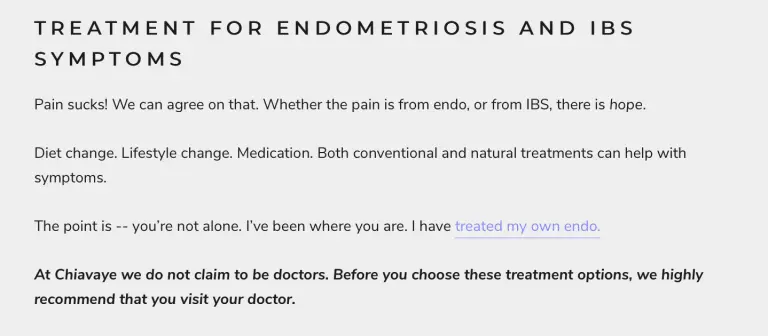
    Right tone

    3. Catchy Headlines

    The headline gives the first impression of your content to the audience. It should be intriguing enough that the audience would want to click it and read the entire post.

    One effective headline technique is to use numbers in the headlines. A study by Conductor found that headlines with numbers were the most preferred headline types, with 36% preference. They are also likely to generate more social shares and attention.

    If you open the BuzzFeed homepage, you’ll see that most of its headlines are listicles with specific numbers. Now you know one reason why the site gets so many clicks, views, and visitors.

    4. Early Demonstration of Relevancy

    Writing lengthy introductions might work for scoring on your term papers, but they hardly work for SEO purposes. Remember, your goal is to write relevant content so that Google puts you at the top of search results. An effective way to prove relevancy is to target the main keywords early on in the content.

    Here’s a HubSpot article that demonstrates the point. The piece talks about writing email lines, and within the first 50 words, the writer has already targeted the main keyword three times.

    Take the lesson from HubSpot and try increasing the keyword density at the beginning of your next blog to see how it fares for you.
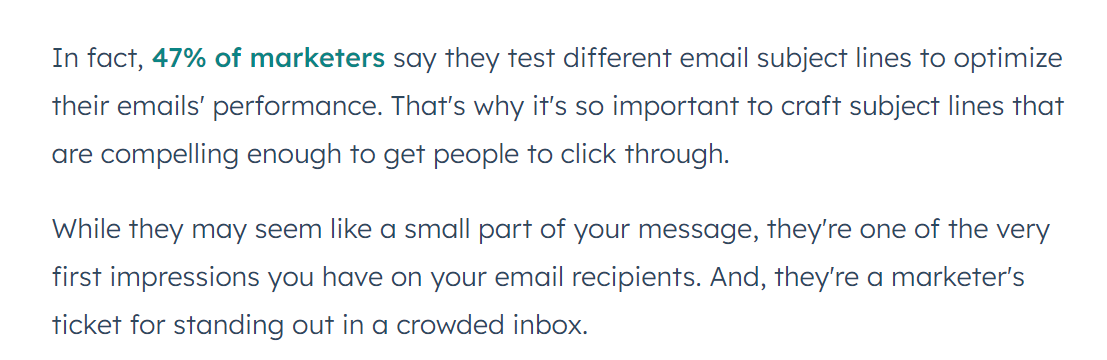
    demonstration of Relevancy

    5. Crisp and Professional

    Writing SEO articles on technical content can often be jargon-heavy, making them difficult to comprehend. Flexbase, an automated payment platform for contractors based in San Francisco, tackles the problems quite diligently.

    Here’s a screenshot from their page talking about Lien Wavers in Texas. Flexbase has presented the supposedly boring content in a way that is easy to read and digest.

    Though the style is formal and the content does contain construction-related jargon, readers will have no problem understanding what Flexbase offers, that too very quickly!

    crisp and professional

    How to Implement SEO Writing for Your Business?

    Now that you’re equipped with all the essential tips about SEO-based content writing, let’s look at how to implement SEO writing for your business.

    1. Creating an SEO Writing Strategy

    Creating a solid SEO strategy is the first step toward winning the SEO game. It helps you organize the content to gain maximum organic traffic from search engines. This way, search engine bots will identify your area of authority and better rank your site.

    Having an SEO strategy is essential to stay on track while creating content. With a strategy in place, you can write SEO articles users search for instead of random articles. Creating a solid SEO strategy should entail the following steps:

    • Making a list of topics
    • Researching keywords based on the topic
    • Building pages for each topic
    • Creating a consistent blogging schedule
    • Creating a link-building plan
    • Staying up-to-date on new SEO practices
    • Monitoring your success

    2. Hiring an SEO Writer or Agency

    The next step is hiring an expert SEO content writer or agency to help you meet your SEO goals.

    Outsourcing is a popular option in SEO blog writing since it helps businesses leverage the expertise of professional writers. But before you start hiring, you need to decide whether you want an in-house writer, a freelancer, or an agency. All options have pros and cons, which you need to gauge before deciding.

    Alternatively, you can choose Wittypen as your content partner. We have a pool of over 1400 talented SEO writers specializing in various domains. Plus, our platform provides management, quality, flexibility, and the ability to scale, to help your brand reach new heights. Sign up today to see how we work!

    CTA

    3. Tips for Working with an SEO Writer

    To make your partnership with the SEO content writer successful and generate awesome content that drives results, follow the tips below:

    • Be clear about the scope of the project. This includes payment terms, deadlines, number of revisions, etc.
    • Provide the writer with essential project information such as the target audience, business information, brand voice, content length, links you want to add, etc.
    • Communicate the specific content creation tasks they are responsible for. Will they do the keyword research, or will you do that from your end? Do they need to supply images as well?
    • Determine the communication process. They could be video-friendly platforms like Google Workspace or instant chat platforms like Slack.
    • Choose collaborative writing platforms like Google Docs for easy edits.
    • Provide feedback.

    Get Started With SEO Writing!

    In the end, SEO content writing boils down to satisfying the searcher’s intent with the best possible answer and presenting it in a manner that’s easily skimmable and digestible.

    Follow the ten best practices mentioned above and climb your way to the top of the SEO ladder! Also, note that search engines’ ranking algorithms change from time to time. Make sure to stay abreast of the latest updates and guidelines.

    FAQs

    1. What is SEO writing, and how does it work?

    SEO writing is following SEO best practices while creating and optimizing content to rank on search engines like Google. While writing articles for SEO, you should not only answer user queries but also present the answer in an attractive and digestible manner.

    2. How do I optimize my website for SEO?

    You can optimize your website for SEO by following these SEO content writing practices:  

    • Use keywords strategically
    • Write for humans and search engines
    • Use header tags
    • Optimize images
    • Create high-quality backlinks
    • Use meta tags
    • Use internal linking
    • Use external linking
    • Use structured data
    • Monitor your progress

    3. How can I improve my website’s search engine ranking?

    You can improve your website’s search engine ranking by creating high-quality content that answers user queries and optimizing them for SEO. If you aren’t an expert in writing SEO articles, you can hire a professional SEO web content writer to do the job.

    4. What are the best practices for SEO writing?

    The best practices for SEO writing include:

    • Structuring the content
    • Using relevant keywords
    • Using header tags and meta tags
    • Backlinking
    • Adding internal and external links
    • Optimizing images

    5. How important is keyword research for SEO ranking?

    Keyword research is an essential part of writing articles for SEO. It helps you find out what users are searching on search engines. You can then create quality content using the keywords to outrank your competitors.

    6. How do I create SEO-friendly content?

    Article writing for SEO is mainly about following the SEO guidelines and best practices. At the same time, you must ensure that you don’t write specifically for search engines but more so for your readers.

    7. How can I track my website’s SEO performance?

    You can track your website’s SEO performance by monitoring key KPIs such as revenue, conversions, website traffic, rankings on search engines, website health, visibility, crawl efficiency, and backlinks.

  • Writing Skills 101: The Ultimate Guide

    Writing Skills 101: The Ultimate Guide

    Writer’s block is the ultimate nightmare for those who hail from the land of words.

    Whatever you do, wherever you go, it ultimately finds you and devours your will to churn out coherent sentences.

    Whether you’re a professional writer or a blogger testing the waters, it isn’t always easy to have your thoughts flow articulately onto paper to create write-ups that rattle your readers and leave them craving for more.

    But like all arts, the key to improving your writing skills is in finding an environment that suits your thought process, getting feedback and evolving along with it, practicing, and developing techniques to make your writing a smooth sailing process, as opposed to the mind-wrecking catastrophe everyone makes it seem like.

    Improve Your Writing Skills with These Platforms

    1. Daily Page & 750 words

    Stats

    If you’re looking for motivation to get you off your bed and onto your writing chair, search no more! Here are a few websites that have your back-

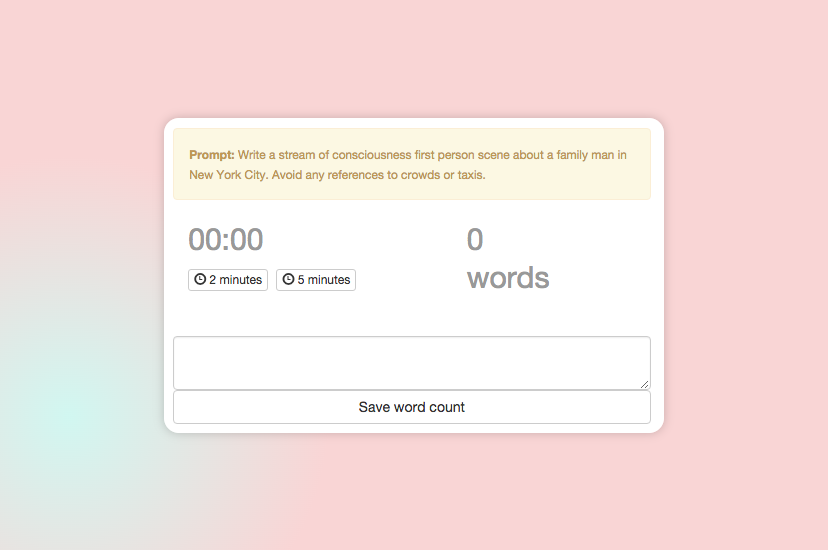
    Daily Page emails you a writing prompt every morning for which you can create a response that you can either share with people or keep private, then repeat the process with a brand new prompt you receive the next day.

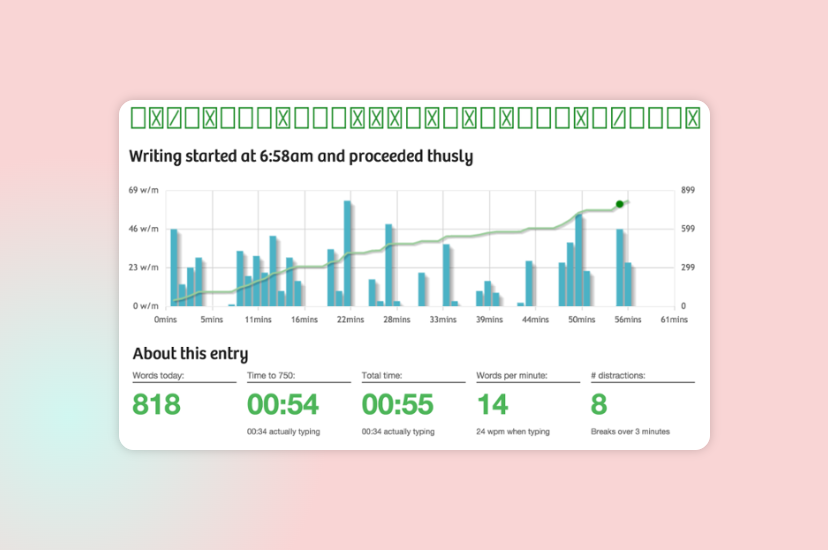
    750 Words is another website to help you improve writing skills in their purest form, the brain dump, where you can jot down without having to worry about them being incomplete or all over the place. It has no time limits or no risks of intrusions— It’s just you and your words on an entirely private platform.

    2. Twords:

    Twords

    “The app that nudges you to write.”

    Everyone needs an alarm that blares through their consciousness to wake them up and get on with the day. Twords is that alarm for the writers out there who need a push in the direction of their writing spree.

    Twords notifies you when you haven’t written in a while so you can keep yourself answerable. It also gives you the option to connect with others who will keep you accountable and track your writing patterns from the days your blogging remains consistent to when it reduces.

    It also offers a bunch of remarkable resources like a prompt library, articles about habit formation, writing skills resources, etc.

    3. Help me Write

    Help me write

    The best way to get a third-person insight into your ideas is to sign up for help me write. By making an account on this website, you can post ideas on what you’re thinking of writing about and also share these ideas with a variety of communities via Facebook, Twitter, email, and so on.

    By sharing your thoughts, you can take a poll and see which of your ideas the viewers would love to read the most and save a lot of the time you spend on an internal debate.

    4. OTranscribe:

    oTranscribe

    An ideal tool to make a transcription process hassle-free and quick, thus giving you more time to work on your analysis and writing skills. This feature is extremely helpful when conducting interviews or when you’re feeling particularly lazy!

    5. Memos And More:

    clip articles from web

    Ever been in a completely different state of mind or situation when a brilliant idea strikes you? How do you push it at the back of your mind thinking that you can reproduce it later when you’re home, but when you get home, the idea is long gone, along with your hopes of writing?

    Yes, that happens to everyone, and the easiest solution to this problem is creating memos on your phone or writing them down on a piece of paper!

    By simply signing into your Google calendar or Google keep, you can store your ideas for future reference. It not only ensures that you have a compilation of themes to work on but also gives you the satisfaction of knowing that you haven’t lost a great idea.

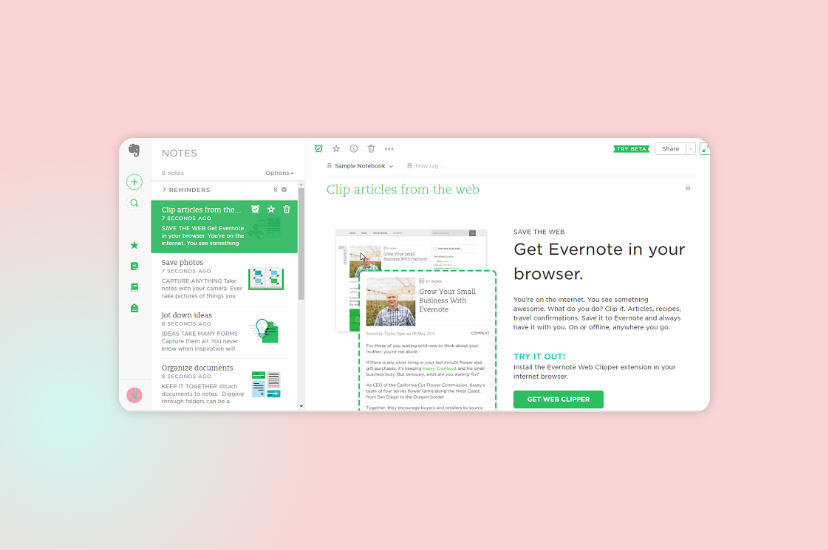
    Evernote is another handy application that can be used on your PC as well as your phone, just like the other two. Even Trello provides such facilities and is the ideal help for your desktop writing.

    6. Swipe File’ Folders

    In the traditional sense, a swipe file is a folder of tested and proven advertising and sales letters that can be accessed physically, but the coming of the digital age has enabled the use of this feature on your PCs and phones too.

    Whenever you come across something, like a certain image, that acts as a trigger for your imagination, you can screenshot it and store it in your very own swipe file and access it when you feel like you need a pinch of inspiration.

    Wittypen-Blog-Banners-01

    7. Topic Generators

    blog idea generator

    Sometimes, the simplest of things can pose a difficulty for the greatest of minds, like finding a suitable topic for your work.

    Fear no more because there are applications that help you with creating the perfect topic for your write-up.


    • Hubspot’s Blog Topic Generator


      This tool enables you to create substantial topics by simply typing in three keywords. It auto-generates five potential topics for your posts and can display five more topics if you click the ‘Try Again’ button.


    • Portent’s Content Idea Generator


      Portent’s Content Idea Generator not only gives you a variety of promising topics but also provides you with content options to choose from.


    • Hemingway


      Inspired by Ernest Hemingway’s concise writing skills style, this application analyses your text for readability, highlighting sentences that are a bit too complex or dense.

      It sums up how readable your writing is with a grade, and then it suggests how to improve readability.

      Hemingway enables you to get a better idea of what you need to write in order to connect with a majority of people but also helps you condense unnecessarily long sentences into refined and crisp versions of themselves.


    • Cliché finder


      One of the fears of being a writer is falling prey to clichés. When you read something, your mind stores some of the frequently read material that threatens to subconsciously emerge in your writing. The Cliché Finder software helps you get rid of such clichés by highlighting them so that you can replace them or make them slightly more detailed and unrecognizable.

    8. Editors

    While human grammar checkers can be quite annoying, their application versions of them are pretty useful!


    • Correctica


      This is a great editor that facilitates you to recheck your write-ups for grammatical errors before hitting the send button.


    • Grammarly


      You can copy and paste your article into Grammarly’s online grammar checker to know how it performs against checks for spelling, sentence structure, punctuation, style, and more. Along with rechecking for errors, Grammarly also searches for plagiarism.

    9. Fact-Attack

    Many times, you need to research and read up on some elements that you wish to include in your write-ups.


    • Factbrowser


      Optimizes your search for facts, statistics, studies, surveys, and reports for a variety of topics.


    • Brainy Quote


      Offers you an array of quotes by famous people to improve your writing skills, and stir your readers to keep reading!

    Read More: 22+ Content Writing Examples, Useful Tools & Best Practices

    10. Free Stock Photos

    Every Blog post is enhanced by adding the perfect pictures that go hand in hand with the theme. There are some websites that offer free stock photos for the writing community to use.

    Pexels

    Another website for free stock photos that can be incorporated into your articles.

    11. Photo Editors

    • Canva makes image creation super easy (especially for non-designers) with their premade templates, custom image sizes for every social media channel, drag-and-drop interface, cool fonts, and more.
    canva

    • Gimp is like a free version of Photoshop. Most major features are there, and amateur designers can get all sorts of things done with layers, masks, photo effects, and more.

    With these simple tricks of the trade, you can boost your writing skills and productivity and have a ball while doing so.

    So, the next time you’re tethering at the brink of writer’s block, you know what to do! Feel free to share your views on these suggestions, and tell us which of them helped you the most!

  • 25+ Trending Article Ideas to Rank #1 on SERPs

    25+ Trending Article Ideas to Rank #1 on SERPs

    Have you been staring at the computer screen searching for the best topics to write an article on? What you actually need is the right approach for deciding on a blog topic. Confused about where to start? This guide will help you navigate more than 25 article ideas for creating engaging blogs your audience will love to read and search engines will love to rank.

    Best Article Ideas and Topics to Make a Splash

    The secret of a successful content writer’s magic lies in their research. The better your research, the more meaningful and informative your content will be—which is what your readers come to the web for.

    Let’s take a look at some trending topics to write about across various industries.

    How-To Guides

    How-to guides have become the most sought-after blog form writers love to write and readers love to read. These blogs focus on delivering step-by-step instructions to the audience, guiding them on “how to” do things.

    For example, some trending topics to write about in how-to guides would be:

    Topic: A step-by-step guide to investing in ABC

    Topic: How to update XYZ software

    Such guides are information-focused and often targeted to help the reader achieve a certain goal. Unless your how-to guide does that, there’s no point in writing it.

    By nature, how-to guides are best suited for the SaaS and finance industries. Why? With technology and finance, there’s always scope for doing better and gaining more. People want to know how they can maximize their returns from technology and investments.

    Finance

    People have become more financially responsible after the shock of the pandemic and are seeking ways to grow a corpus to support them during the rainy days. This forms the backbone of most personal finance blogs today. The blog topic below hit the mark:

    Topic: “A step-by-step guide to build a personal financial plan” by Principal

    SaaS

    The digital revolution has brought forth a huge wave in the adoption of cloud technology. SaaS has become ingrained in the network of work and business.

    How-to guides that help professionals make the most of their SaaS products have thus gained popularity today. This How-to-Geek blog is a good example:

    Topic: “The Beginner’s Guide to Google Docs” by How-to-Geek

    Interview-Based Blogs

    Consider this: what would you rather believe—your relative’s adventures with his investments or a finance professional’s own words regarding how to handle your money?

    In situations where credibility is important, you should turn to interviewing industry professionals and writing blogs (with their permission, of course) with insight. This is the kind of knowledge that the audience seeks.

    Words coming straight from an experienced expert’s mouth are more likely to be followed, shared, and believed rather than your own take on the capabilities of complex technology or on which stocks to invest in.

    Needless to say, sensitive, ripple-creating industries like finance do best with interview-based blogs.

    Some of the most trending topics to write a blog in the interview-based form would be:

    Topic: What’s trending in crypto? In interview with XYZ

    Topic: Fixed deposits: What to expect?

    Finance and Crypto

    Companies like Forbes and Forrester do a lot of interviews to corroborate the information and insight they deliver through their content. This is one of the major reasons their blogs are highly regarded, referenced, quoted, and cited by many other bloggers.

    In the example below, Forbes broadly covers the same topics and quotes insights from an interview:

    “Forbes’ First Crypto Exchange Rankings | Exclusive Interview With Our Data Director” by Forbes

    Listicles

    Listicles: blogs that are written in the form of a list. This blog form is suitable for when you wish to tell your readers about a lot of things, but you know that the audience is impatient. How do you deliver loads of information in a precise manner without losing out on the engagement midway? You make a list.

    Lists allow you to quickly let your readers scan what you would be talking about. It throws the ball in their court—you’ve made a list; now they can choose what they’d like to read about.

    Listicles are best suited for eCommerce and SaaS industries where there are more products than stars in the sky. You can cover a lot of bases by picking one kind of product and creating ideas for content writing through listicles.

    Here are a few best topics to write an article in listicle format:

    Topic: “Top 10 best [product] in India 2022”

    Topic: “The Ultimate List of [SaaS technology products/services] for [Month/Year]”

    eCommerce

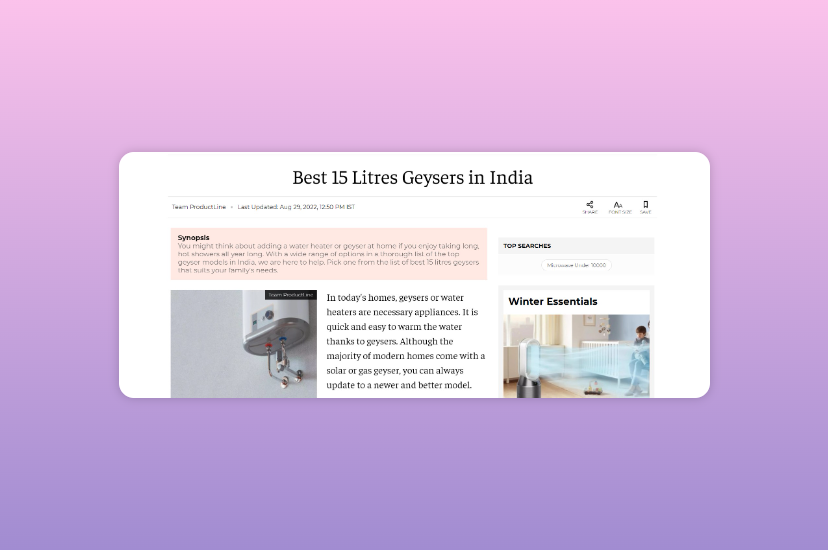
    The Economic Times really capitalizes on eCommerce listicles:

    “Best 15 Litres Geysers in India” by The Economic Times

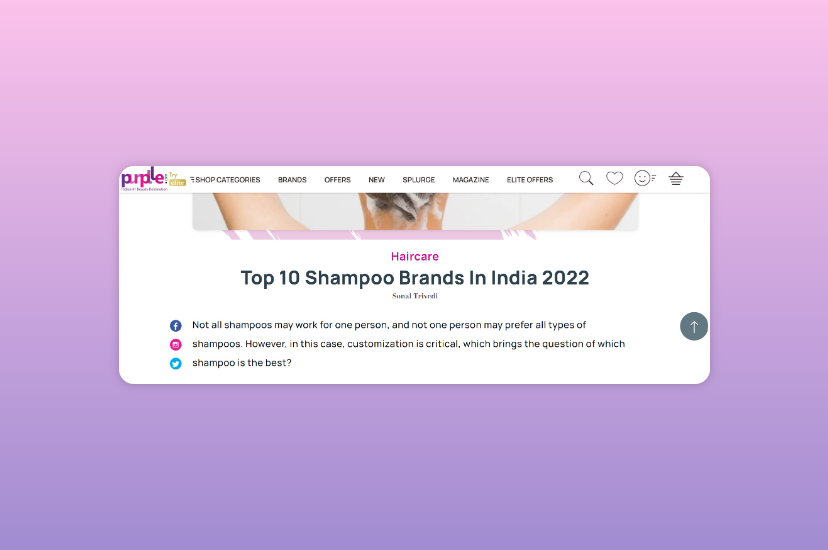
    And so does the eCommerce brand, Purplle:

    Topic: “Top 10 Shampoo Brands In India 2022” by Purplle

    SaaS

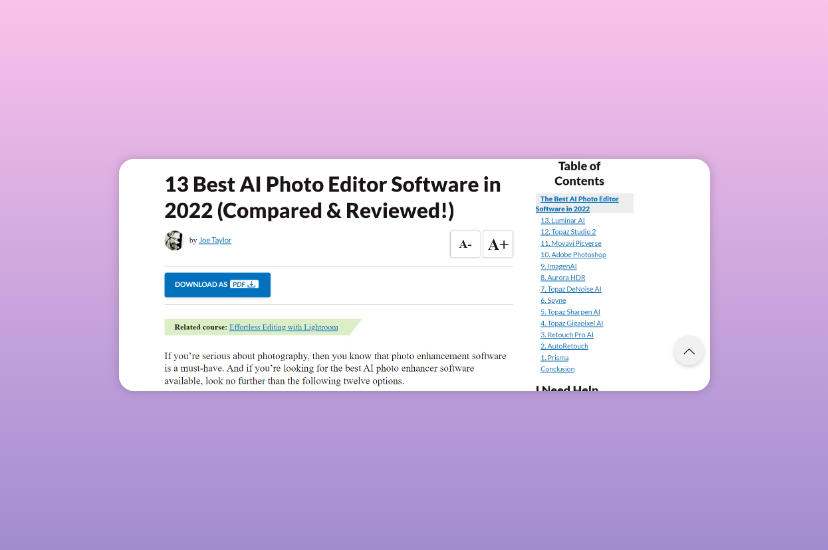
    With more and more competing SaaS tools in the industry today, the audience needs to be given a bird’s eye view of their options. The SaaS listicles shown below really help drive the point home:

    Topic: “The 14 Best Free Note Taking Apps to Use in 2022” by ClickUp

    Topic: “13 Best AI Photo Editor Software in 2022 (Compared & Reviewed!)” by Expert Photography

    User/Customer Story Blogs

    Relatability drives empathy. Empathy is a great way of connecting with the audience. The best way to do that is through content writing ideas that center on telling a real-life story.

    If you’re a business and seek to connect with your target audience, you can request one of your happy customers to tell their story of transformation while using your products.

    Because of the nature of customer story blogs, they’re best suited for healthcare and EdTech industries—both are extremely user-centric and directly impact their lives and futures. This weighs heavily on the readers’ minds and urges them to try the product or service being talked about.

    A few great examples of easy articles to write about in customer story blogs are:

    How [product/service] is transforming the lives of [community]

    What our customers are saying about [service/product]

    The important thing to note about these blogs is that you should have actual results to show for the blog you’re writing—numbers, statistics, and a measurable impact, preferably. You can also include the methodology adopted, solutions used, and technologies involved to drive more awareness.

    Wittypen-Blog-Banners-01

    Healthcare

    In healthcare, people want to know that patients get better. CTOAM does this beautifully:

    Topic: “Patient Presentation: Squamous Cell Parotid Gland” by CTOAM

    Remember: healthcare is also about technologies, not just treatment. A B2B blog can also be successfully written in that vein:

    Topic: “Southern Cross Healthcare Migrates Critical Patient Records to AWS” by ORION HEALTH

    EdTech

    Since eLearning, remote schooling, upskilling, and reskilling became big after the pandemic, brands like Cisco capitalized on customer success stories:

    Topic: “Customer Spotlight: How One Montessori School Delivers Engaging and Inclusive Learning Experiences with Webex Rooms” by Cisco

    EdTech runs on technologies, which is showcased beautifully by the blog shown below: a combination of customer story and interview blogs:

    Topic: “A Full-Circle Connection Customer Success Story with Microsoft in Education” by Connected

    Product Comparison/Alternative-to Blogs

    With high purchasing power, people want to know what they’re investing their money in. Detailing how various products and services stack up against each other gets consumer attention very quickly.

    Some catchy titles for articles in the comparative niche could be:

    Topic : [Product 1] v/s [product 2]: which is best for you?

    Topic: Features to consider when choosing the best [product/service]

    When you think about it, such blogs are the best-suited formats for the SaaS and eCommerce industries. You can also write comparative blogs for OTC products in the healthcare industry.

    SaaS

    Countless cloud-based apps hound the internet today, and users are left confused about which ones they should use. Zapier expertly capitalizes on this conundrum:

    Topic: “Evernote vs. OneNote: Which note-taking powerhouse is right for you? [2022]” by Zapier

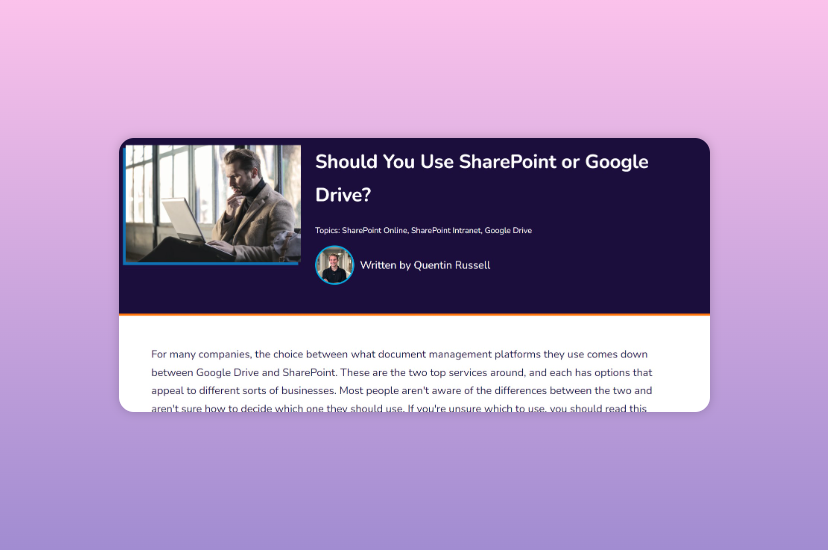
    Every tech industry has its own take on various SaaS apps and technologies:

    Topic: “Should You Use SharePoint or Google Drive?” by Dock

    eCommerce

    Writing alternative-to blogs is a great way to insert desired products in the list as a second option for your customers. Shopify proves it with this blog:

    Topic: “Conquering Our Caffeine Addiction: 8 Surprising Substitutes for Coffee” by Shopify

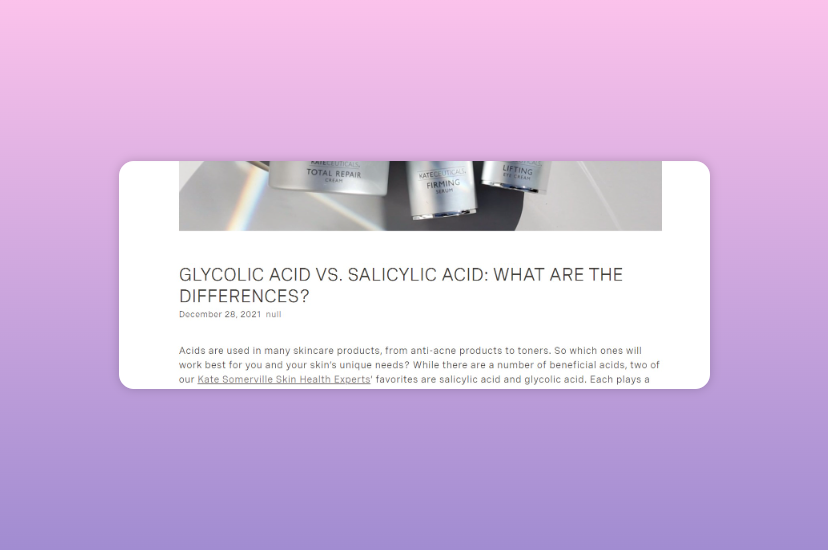
    There are also plenty of content writing ideas for educating customers about products that your eStore offers:

    Topic: GLYCOLIC ACID VS. SALICYLIC ACID: WHAT ARE THE DIFFERENCES? by Kate Somerville

    Product Update Blogs

    Product update blogs can be a bit tricky to write—they must be timed correctly to generate the kind of audience traffic you need.

    You need to be engaged in following a product and related news like a hawk in order to quickly put together a blog whenever something new is announced. This seems daunting but is actually easy when you’re an avid follower of a technology or product.

    These blogs, needless to say, work best for SaaS and Healthcare. eCommerce is a contender industry in the list, but with the wide range of content already available in the niche, your update blog may get lost in the noise.

    Some good examples of content writing topics in the niche are:

    [Product update]: everything you need to know

    How to prepare for [product update]

    What to expect from [Product update]

    Suggested Reading: 25+ Best WordPress SEO Checklist for 10x Traffic: Full Guidance

    SaaS

    Search Engine Journal demonstrates how product update blogs are written best:

    Topic: Yoast SEO 19.10 Update – Know This Before Updating by SearchEngineJournal

    You can also cover update history timelines for SaaS marketers, like SemRush:

    Topic: These Are the Most Important Google Algorithm Updates (That Still Matter Today) by Semrush

    Healthcare

    Blogs that focus on medical innovations are a great topic for update-oriented articles:

    Topic: “GlucoRx showcases “world’s first” multi-sensor non-invasive CGM at MEDICA” by MED-TECH Innovation

    Company Culture Update Blogs

    Company culture blogs are all about letting the outside world know about how a company is responding to trends or keeping its employees happy.

    The topics can also focus on social and community issues, new launches, major overhauls, and a lot more—that’s what makes these blogs interesting. Think about Tesla: aren’t you always curious to know what happens behind the scenes?

    Such blogs can have topics like:

    Topic: How [Company name] is responding to XYZ crisis

    Topic: How XYZ initiative helps employees boost productivity

    Topic: Coming Soon: [Company news]

    Even better if you write about your own company after running the blog through the content administrators. These blogs do best in healthcare and finance.

    Healthcare

    Look at how CHG creates healthcare blogs about how to improve company culture:

    Topic: “5 key strategies for strengthening your company culture after the pandemic” by CHG Healthcare

    Finance

    And finally, Great Place to Work shows how to write company culture blogs for finance:

    Topic: “Great Companies Show Finance Can Be Fun: by Great Place To Work

    Tips to Generate Content for Topics Faster

    Getting to the market first is everything today. With this much competition, how do you get content writing ideas and bring them to fruition faster? 

    Follow the steps below to streamline and accelerate your content creation process:

    1. Develop a Content Strategy: You need to figure out why you’re creating content. You also need to know the kind of readers you have to align the content better.
    2. Make a Schedule: There’s no greater motivator than a deadline. When all your topic ideas are in place, put them on a calendar.
    3. Prepare Extra Headlines: Headlines are subtle CTAs. Unless they are catchy, the content won’t get read. Have a few extra headlines for each content handy.
    4. Speed up Content Generation: Gather interviews, request users to create their own content for you to share, and compile something like “insider stories”—it helps fill the content gaps and is highly relevant.
    5. Be Channel Agnostic: Ensure all your posts are responsive and can be inter-shared between platforms.
    6. Know When You Work Best: Clock your productive times. This is when you should be writing to create content the fastest.
    7. Let the First Draft Be: Don’t over-criticize your writing. Just write the first draft uncensored, and start editing from there to save time.

    Read More: 22+ Content Writing Examples, Useful Tools & Best Practices

    Conclusion

    Content marketing is a surefire way to increase traffic on your digital channels. The more interesting and SEO-polished your content is, the higher hits you will receive.

    Leverage the guide above to make a smart selection of content writing ideas and create content on schedule.

    Go on, get writing!

    Frequently Asked Questions

    What is content writing?

    Content writing is an arm of digital marketing that involves planning, creating, editing, and posting content for the web that aims to generate online traffic for a business.

    How to become a content writer?

    Content writing is skill-based; you don’t need a formal education to begin your career in content writing. If you have a strong command of any language, you can build your own brand online. Alternatively, you can sign up as a writer on content writing platforms like WittyPen.

    What are content writing skills?

    As a content writer, you should possess the following skills:

    • Capability to write in different styles
    • Strong skills in information research
    • Understanding of SEO
    • Clear, expressive writing skills

    How can I get ideas for content writing?

    The best way to get content writing ideas is to follow the topics that are trending. It can be in any industry, like entertainment, politics, technology, lifestyle, or travel.

    What are the ways to improve my content writing?

    You should write catchy headlines, keep your content easy on the reading scale, stick to the word count, always do a fact-check and keep content relevant, and most importantly—keep practicing!

  • 22+ Content Writing Examples, Useful Tools & Best Practices

    22+ Content Writing Examples, Useful Tools & Best Practices

    Site experience and value-addition have become the biggest growth drivers for businesses globally. And content writing has proven to be a game-changer in this regard.

    Content writing is the practice of writing relevant web pieces that provides information to users about a certain topic. Writing adds value to users and provides them insight into what your business is all about. However, the content creation process can be time-consuming for even large organizations. 

    Writing in a dull tone or providing unrelated information often turn users away. To ensure you don’t make the same mistake, we’ve prepared this guide to help you understand what is content writing, its different types, some content writing examples and a few best practices you can follow. Let’s dig in!

    What is Content Writing and What Are Its Benefits?

    Content writing is widely discussed across various industries due to its strategic importance in business communication.

    At its core, content writing is a strategy implimented by businesses to aid customers in making informed decisions about their products. This strategy includes creation of different forms of web content such as guides, blog posts, short copies, advertisements, and whitepapers, all designed to enhance customer understanding of a business offerings.

    To ensure relevance and effectiveness, companies often rely on analysis of past customer data, industry trends, and targeted research when crafting content. This approach ensures that the content not only informs but also addresses customer problems and questions.

    Content writing possesses the significant ability to convert visitors into loyal customers. But how exactly does this happen? Let’s briefly dive into the impact of content writing on customer engagement and loyalty.

    1. Content Represents Your Brand

    The content on your website is a direct reflection of your brand’s values and offerings. Through your writing, you communicate to customers what you offer and why they should prefer your products over competitors’. It’s crucial that this message is both impactful and consistent to effectively persuade them.

    To stand out and resonate with the audience, many brands use humor, facts, and various other elements into their content. These additions make the content unique and enhance its appeal, making it more engaging and memorable for readers.

    2. Content Helps You Reach More People

    Effective writing can significantly broaden your business’s reach. By optimizing content for SEO, you enhance your visibility on search engines, which connects you with a larger audience.

    Additionally, crafting user-friendly and engaging content boosts its shareability across various platforms, further extending your reach and impact. This strategic approach to content creation attracts more viewers and fosters greater interaction and communicates your message.

    3. Publishing Content Regularly Gives People a Reason to Come Back to Your Site

    We’ve briefly discussed the definition of content writing as something that educates, informs, and inspires your audience. By regularly publishing articles that provide value on recent industry trends, you give them a reason to come back to your site.

    Companies with targeted and value-added content have found that it can help them increase conversion rates, and more than 78% of CMOs believe that content is the future of marketing.

    What are the Different Types of Content Writing?

    Choosing the type of content writing that best suits your brand can be confusing— understandably so. Each material creates a different impact. 

    Don’t sweat. We’ve compiled a list of all the content writing types to help you gain a competitive edge. Let’s explore them one by one. 

    Copywriting

    Ads, micro-copies, CTAs, ads, etc., fall under copywriting. The goal of copywriting is to attract customers and sell your product. They are brief messages that may appear on website landing pages, sales pages, search engines, and home pages. 

      SEO Writing

      As the name suggests, SEO writing helps you rank higher on search engines, and it is the propeller behind your digital marketing strategy. It includes keyword-rich content with interlinking to help you gain visibility. Blog posts, landing pages, home pages, ad descriptions, etc., use SEO content to improve engagement.

      Long-Form Content

      Many companies create long-form content such as case studies, product guides, whitepapers, and more to introduce users to their products and how they work. 

      Emails 

      This type of content writing is distinct. It connects you directly to the audience and helps you create personalized content. You can send targeted email campaigns to potential and existing customers about offers, recommendations, etc. It increases engagement and keeps them invested in what you’re offering. 

      eBooks

      These are downloadable versions of printed books that users can download after signing up. They cover a topic comprehensively and give readers the information they need.

      Top Examples Content Writing Examples

      A content writing strategy works when you understand your customers’ needs. Rather than existing, these pieces only work when you write them with intention.

      Let’s explore excellent Seo content writing examples from brands who have perfected the art of content writing and increased customer engagement:

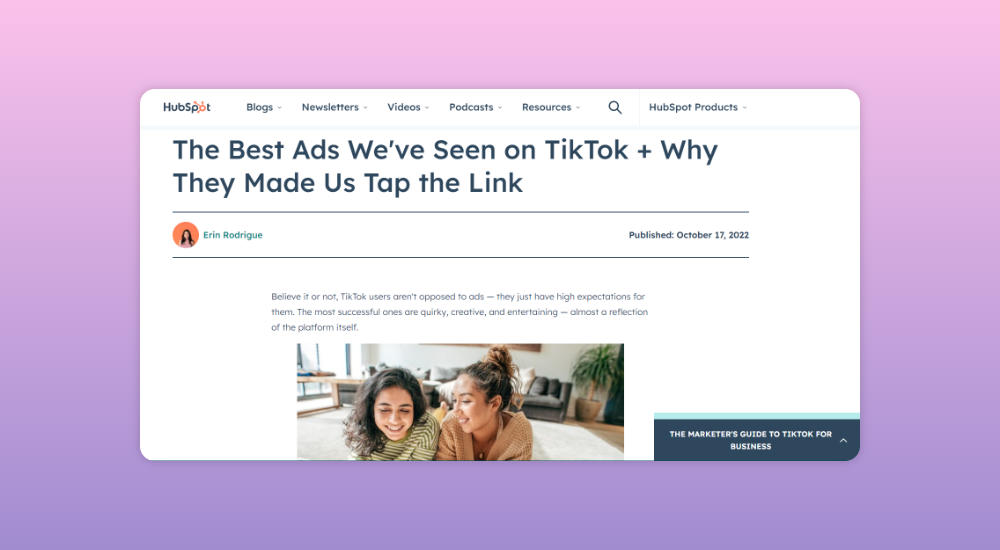
      1. Hubspot

      A stellar example of good writing is Hubspot. They have ebooks, case studies, and research papers on almost every topic related to marketing.

      Being the best CRM software for global businesses, Hubspot has many free and paid tools to help companies achieve growth. Instead of pushing out content aimlessly, the company is focusing on creating an ecosystem that educates growing businesses on creating successful marketing strategies. 

      The company successfully focuses on its customers by giving them easy access to hundreds of how-to guides and industry trends. They’ve also designed courses for budding marketers to ensure that they kickstart their marketing journeys with ease. 

      You can check out their blog and other content marketing resources to understand how they help companies. 

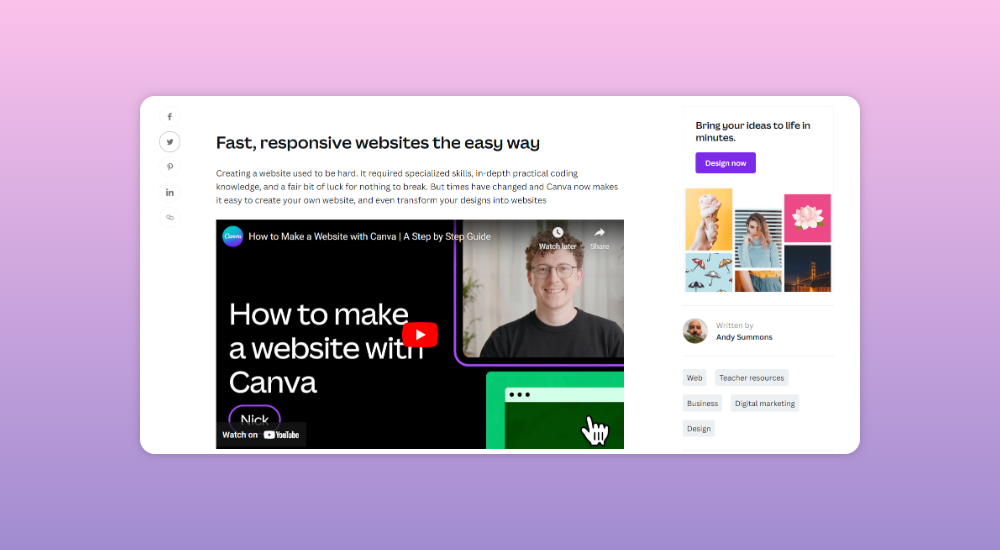
      2. Canva

      As one of the most innovative companies in the world, Canva has empowered designers worldwide, unlocking creativity and collaboration at scale with its platform. Canva in itself is a masterclass on SEO content writing examples

      In today’s competitive market, it’s not enough to create a product. Canva realized it from the start, and they created content that helped their users. They have blogs, content templates, how-to guides, and more to educate their users on designing the best social media posts and presentations. 

      The company uses a professional and user-friendly tone to help designers innovate at scale. Unlike investing too much in paid marketing, Canva utilizes the best content writing tools and uses social proof to build trust and loyalty. 

       3. Basecamp

      If you’re running a SaaS company or in the tech space, Basecamp has excellent samples of content writing that you may want to take inspiration from.

      The company uses excellent copywriting to capture the essence of its project management tool. It uses short and easy-to-read snippets that provide value to users. 

      With its targeted writing approach, the company publishes value-added content for business owners, freelancers, and IT professionals. Apart from using smarter and tighter copies for its product, the company also uses social proof uniquely and engagingly.

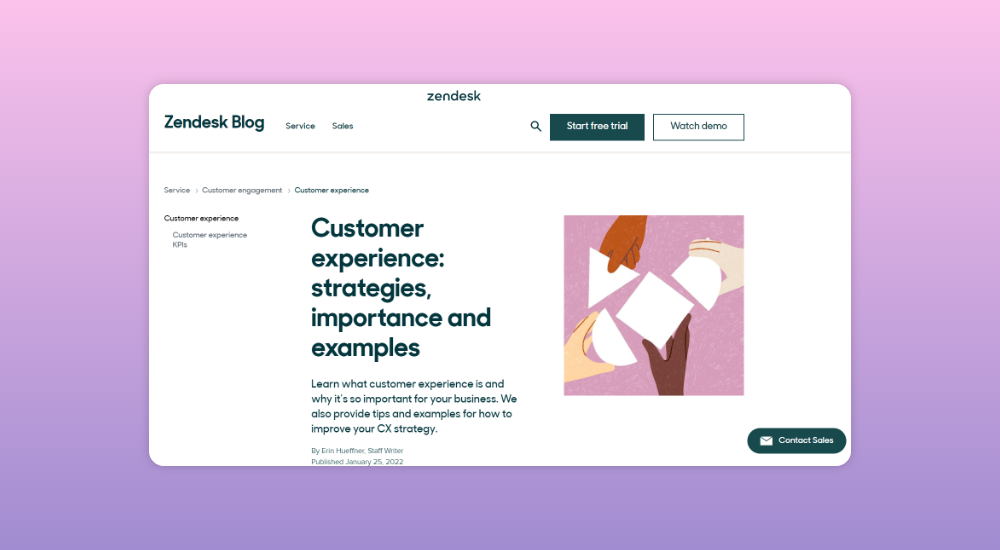
      4. Zendesk

      Zendesk is a CRM software that helps businesses manage customer service. Like Hubspot and Basecamp, Zendesk’s writing style is easy-to-read and to the point.

      The unique content portfolio of Zendesk includes blog posts, how-to guides, videos, and infographics to encourage businesses to build growth momentum. 

      The company also has a dedicated section about how users can derive value from their product. From customer success stories to training videos, the tech company has perfected the art of adding value to businesses through its writing.

      The above image showcases the company’s unique and humourous messaging and Zensar is an excellent case study for SEO content writing.

      5. Bumble

      Bumble is a dating application that curates its content around its mission—to help people develop meaningful connections.

      Along with creating messages showcasing the dating app’s uniqueness, the company invests significant time in capturing the different stories and emotions of people that use the application. 

      The company uses digital films and is loud on social media about pertinent topics like inequality and women empowerment. Their most famous campaign is around ‘women making the first move’:

      6. Investopedia

      Another example of good writing is Investopedia. Founded in 1999, Investopedia publishes financial content that helps users gain better insights into complex finance terms and strategies. It also publishes articles on investing knowledge and stock market updates, empowering users to control their finances better. 

      Although it began as a source for financial terms, today, it is the largest source of financial content for its readers, with diverse topics ranging from personal finance to family planning.

      Through its easy-to-understand writing style, the company deconstructs critical economic strategies and advises investors, small businesses, and professionals about different financial products. The company aims to empower readers to manage every aspect of their financial life and fulfill their goals. 

      Read Investopedia’s blogs and articles to see how they educate users on a wide array of topics.

      Which are the Best Content Writing Tools?

      While most marketers think creating top-notch content is the key to meaningful conversations, publishing frequently can be overwhelming. 

      Implementing the right content writing tools can help you collaborate and optimize the creation process by streamlining workflows and saving time. Here are some of the best content writing tools you can use for planning, drafting, and editing flawlessly:

      1. Answer the Public

      This content marketing tool helps writers find the most relevant topics for businesses. It has a database with millions of searches that will help you write on topics your customers are searching for and test different keywords.

      You can use the automated tool when you’re out of ideas on what to write next. 

      2. Google Docs

      There are plenty of benefits to using Google Docs. It helps writers create and collaborate on online documents from anywhere. The writing tool also helps writers track document changes, insert tables and images, and leave suggestions for a streamlined content creation process. 

      Whether you want to write long-form content or create ad copies for your landing page, Google Docs is the go-to content-writing tool for almost every business. 

      3. Grammarly

      Grammarly is a staple for those looking to edit their copy and make it flawless. It corrects your grammar, fixes your sentence structure, and even offers suggestions on how you can improve your writing.

      As the go-to content writing tool for professional writers, Grammarly is quick, convenient, and cost-friendly. With the premium version, you can also check for plagiarism. 

      4. Google Trends

      Google Trends is for writers who want to know what’s trending across search engines and curate content with a competitive edge. It shows the popularity of a search term and helps you gauge whether a trend is on the rise.

      You can also search for demographic information, related topics, and queries to simplify your content creation process. 

      5. Canva

      Canva helps businesses create compelling social media posts, infographics, and presentations. With thousands of free templates and graphics, you can build attractive visual designs to catch users’ attention in less than 5 minutes. 

      Suggested Reading: 25+ Content Marketing Tools – Drive Growth For Your Business

      6. Coschedule

      Your headlines are your most critical hook. They are what makes users click on a post. With Coschedule, you can analyze how click-worthy your headlines are and make changes accordingly. 

      7. Semrush

      Semrush is one of the most critical tools for content marketing. From analyzing the performance of your marketing campaigns to scheduling your social media posts, this paid tool is a must-have for digital marketers. 

      8. WittyPen

      WittyPen is a content creation platform where we help you create content across channels seamlessly. We have a user-friendly platform, a diverse pool of vetted writers, as well as dedicated account managers and editors who manage your content requirements, end to end.

      At WittyPen, we facilitate content creation for industries ranging from Lifestyle and Healthcare to SaaS and eCommerce, enabling you to build a repository of content that your audiences find meaningful and relevant. 

      You can easily place orders for blogs, white papers, landing pages, website content, press releases, product descriptions, and so much more. You can then oversee your projects on the platform without any hassles and use the tool to collaborate with your team—all in one place!

      9. Yoast

      Yoast is an SEO tool that lets markers optimize their content marketing campaigns. If you want to increase your search rankings and use the best SEO hacks, you can use Yoast for the best results. 

      Top Content Writing Practices You Should Know!

      Content without context is of no use. You can create engaging articles, landing pages, social media posts, whitepapers, and more assets with proper planning. Here are the best content writing practices to help you create an impact:

      1. Remember to Prioritize Quality Over Quantity

      Nobody will waste time reading stuff that does not offer any value. Writing original, informational, and relevant content is the key to unlocking growth, so you shouldn’t compromise the quality of your writing.

      You can use the best content writing tools to find trending topics, spend significant time on research, and then write a draft. 

      2. Write a Hook to Grab Readers’ Attention

      The headlines and the intro part are the first things readers will notice. So make sure it’s as intriguing and exciting as possible. If the hook doesn’t grab users’ attention, they will not continue reading the article. 

      3. Integrate Appropriate Calls-to-Action

      The aim of writing any marketing material is to convert. It’s your job to create content that helps convert potential prospects into loyal customers, so make sure to use relevant CTAs. 

      4. Understand the Intent

      Before writing anything, it’s crucial to know the intent. For instance, if you’re writing a blog about recent industry trends, you should add a unique angle and make it useful for your audience. On the other hand, if you’re writing a guest post, ensure that you have done the requisite interlinking. 

      5. Incorporate Facts and Research in Your Content

      With credible sources like research, social proof, and facts, you can build trust that you are an expert at what you do. This can come in handy, especially when proving a point. Whether you’re writing a blog or putting out an ad, you can use facts and research to back your claims. 

      Parting Thoughts

      Today, content marketing is a priority for global companies, and most of them are killing it out there. How? Because they prioritize customer experience and follow SEO guidelines to boost their rankings. 

      As search engines become complex, you need to amp up your skills and write content that resonates with the audience.

      If you need help creating the most compelling content for your users, our content-writing services can help transform how your customers engage with your brand. Drop us a line and get started with content writing today. 

      Wittypen-Blog-Banners-01
    1. Boost Your Rankings: Top Content Optimization Tools 

      Boost Your Rankings: Top Content Optimization Tools 

      Assuming that just by writing, you can satisfy the audience and impress search engines can stick you between a rock and a hard spot. Even the best-written content fails to rank well on search engines without proper content optimization.

      To ensure your content reaches the right audience, it’s important to optimize it with relevant keywords, meta tags, and descriptions. After all, there are already over 600 million blog posts out there, so you want to make sure yours stands out! 

      But don’t worry, I’ve got your back. I’ve compiled a list of 12 amazing content optimization tools that will help you create content that resonates with your audience and boosts your search engine visibility. With these tools, you’ll be able to create content that’s both engaging and optimized for success!

      12 Best Content Optimization Tools You Must Know

      Clearscope

      Clearscope is a widely-used SEO optimization tool that boasts an intuitive interface. It is well-suited for teams of any size and includes a convenient Google Docs add-on that enables users to leverage the power of Clearscope within the Google Docs platform.

      Here are some features-

      • Keyword suggestions and analysis for content optimization and content grading.
      • Comprehensive analysis of competitor’s content.
      • Recommendations for content length, readability level indicator, and structure.
      • Identification of keyword gaps and outline generator.
      • G2 rating – 4.9 out of 5

      Clearscope offers a monthly subscription for $350, allowing you to generate reports for up to 50 keywords. At roughly $7 per report, it is an affordable option for both niche affiliate bloggers and businesses seeking to optimize their SEO content.

      SurferSEO

      Surfer SEO is the most popular SEO optimization tool that offers keyword suggestions and content gap analysis. What sets SurferSEO apart is that it only focuses on data-driven on-page SEO optimization, whereas all other tools focus on a broad range of functions.

      Here are some features-

      • Content editor with keyword suggestions.
      • Integrations with Google Docs and WordPress.
      • SEO audit tool to identify content gaps.
      • Content planner for strategic optimization ideas.
      • G2 rating – 4.8 out of 5

      Surfer SEO is an affordable tool with pricing ranging from $59 to $239 per month, making it a valuable solution for businesses seeking to enhance their content strategy and improve their search engine visibility.

      Rank Math

      Rank Math can be considered as a “Swiss Army knife of WordPress” as it has a comprehensive suite of features to ensure that your content is optimized to achieve your desired keyword density. It offers a user-friendly interface, schema markup, keyword optimization, and other tools to enhance on-page SEO. The plugin is free to download and install, making it a popular choice for WordPress users.

      Here are some features-

      • Keyword optimization for up to 5 focus keywords per page/post.
      • Advanced SEO analysis with recommendations for improvement.
      • Automated image SEO optimization and XML sitemap generation.
      • Rich snippets and schema markup options for better search results.
      • Integration with Google Search Console and other third-party SEO tools.

      Rank Math is a free SEO plugin for WordPress. However, there is a premium version called Rank Math Pro, which starts at $59/year, offering advanced features and support.

      BrightEdge

      BrightEdge is a powerful SEO platform designed for businesses, enabling digital marketers and SEO professionals to develop effective content marketing strategies, enhance website optimization, and identify SEO opportunities while measuring results in terms of ROI. 

      Here are some features-

      • Comprehensive SEO analysis and reporting with actionable insights.
      • Content optimization and recommendations based on audience and competition.
      • Site and mobile optimization recommendations to improve user experience.
      • Backlink analysis and management to improve domain authority.
      • Customizable dashboards and reporting to measure SEO performance and ROI.
      • G2 rating – 4.4 out of 5

      BrightEdge offers tailored pricing to the business based on their requirements. However, it starts at $3,000 per month.

      Conductor SEO

      Conductor SEO is a content optimization tool designed to help businesses increase their online visibility and drive traffic to their website. With its advanced analytics and reporting capabilities, Conductor SEO can help you improve your search engine rankings and boost your online presence.

      Here are some features-

      • Keyword and content analysis to improve relevance and ranking.
      • Insights into audience behavior and intent to optimize content strategy.
      • Integration with Google Analytics and Adobe Analytics for comprehensive reporting.
      • Customizable dashboards for real-time visibility into SEO performance.
      • Collaboration tools to streamline communication between teams and departments.

      Conductor SEO offers custom pricing to the business based on their requirements. 

      Yoast SEO

      Yoast SEO is a well-known WordPress plugin that ensures your content is both readable and optimized for SEO. It uses a traffic light system to display your content’s performance and updates in real-time as you make changes in the WordPress editor. If your content doesn’t receive a green light for SEO-friendliness, Yoast provides a list of recommendations to improve it.

      Here are some features-

      • Readability and SEO analysis with traffic light system.
      • Real-time content optimization in WordPress editor.
      • Keyword optimization and density analysis.
      • Schema.org integration for rich snippets in search results.
      • Redirect manager and internal linking suggestions for better site structure.
      • G2 rating – 4.6 out of 5

      Yoast SEO’s premium plan costs $89 per year for one site. 

      Hemingway Editor 

      Hemingway Editor is a useful writing tool that can enhance the clarity and readability of your content. It enables you to detect and fix grammar errors on a per-page basis while highlighting areas for improvement with color-coded indicators.

      Here are some features-

      • Highlights complex sentences and common errors to improve readability.
      • Provides a readability score based on the grade level required to understand the text.
      • Identifies adverbs, passive voice, and other weak constructions that can be replaced with stronger words.
      • Suggests changes to improve clarity, conciseness, and overall impact of writing.
      • Integrates with popular writing tools like Microsoft Word and Google Docs.
      • G2 rating – 4.4 out of 5

      The desktop version of Hemingway costs a one-time fee of $19.99, while the online version is free to use.

      Ahrefs

      Ahrefs SEO optimization tool is known for its advanced backlink analysis features, including the ability to analyze competitors’ backlinks, track new and lost backlinks, and identify link-building opportunities.

      Here are some features-

      • Keyword research and analysis for competitor analysis.
      • Site auditing and backlink analysis.
      • Rank tracking and content analysis tools.
      • Keyword explorer and content explorer for finding new content ideas and opportunities.
      • Advanced reporting and analysis features for SEO campaigns.
      • G2 rating – 4.6 out of 5

      AHREFS offers several pricing plans starting at $99 per month for the Lite plan, $179 per month for the Standard plan, $399 per month for the Advanced plan, and $999 per month for the Agency plan. There is also a 7-day trial for $7.

      Title Case

      An empowering and compelling headline is very important to attract readers. If you’re someone who struggles to create such headlines, Title Case ensures your headlines and titles are perfectly capitalized to maximize click-through rates and readability.

      Say goodbye to awkward title capitalization and enhance your content that engages and converts your audience. With Title Case, your titles will be sure to stand out and make a lasting impression.

      Here are some features-

      • Title Case helps optimize your content titles by analyzing them against various title capitalization styles and best practices.
      • Title Case also supports bulk title processing, saving time for those with large amounts of content.
      • Its user-friendly interface makes it easy for anyone to use.

      Frase

      Frase is an SEO content creation tool that assists you in producing high-quality and search-intent-optimized articles using relevant keywords. Its advanced algorithms generate detailed content briefs in a matter of minutes, allowing you to streamline your content creation process.

      Additionally, Frase provides a consolidated summary of the most valuable information available on the web in a single location.

      Here are some features-

      • Provides keyword and topic research to optimize content for search engines.
      • Generates detailed content briefs in minutes to speed up the content creation process.
      • Offers real-time content optimization suggestions to improve the quality of your content.
      • Provides a centralized hub for collecting and organizing information from the web.
      • Offers integrations with popular content management systems like WordPress and HubSpot.
      • G2 rating – 4.9 out of 5

      Frase offers three pricing plans: Basic ($44/month), Pro ($94/month), and Business (custom pricing). The pricing is based on the number of searches and content briefs, AI optimization features, and team collaboration features.

      seoClarity

      seoClarity is a powerful SEO platform that leverages machine learning to provide insights and recommendations for improving search rankings. Additionally, it offers customizable dashboards for monitoring SEO performance and competitive analysis, as well as a content optimization tool that integrates with popular CMS platforms.

      Here are some features-

      • Comprehensive keyword research and tracking with detailed metrics and insights.
      • AI-powered content optimization with recommendations for improving relevance and rankings.
      • Site health monitoring and technical SEO auditing for identifying and fixing website issues.
      • Competitive analysis and tracking to help stay ahead of competitors.
      • Customizable reporting and analytics to measure and showcase SEO results.
      • G2 rating – 4.4 out of 5

      seoClarity offers tailored pricing to the business based on their requirements. Although the core plan starts from $3,000 per month.

      MarketMuse

      MarketMuse is a content intelligence platform that helps you create and optimize content for improved search rankings and better user engagement. With MarketMuse, you can create high-quality, SEO-optimized content that meets user intent and drives traffic to your website.

      Here are some features-

      • AI-powered content research and optimization tool.
      • Generates detailed content briefs in minutes.
      • Provides real-time feedback to improve the quality of your content.
      • Offers topic suggestions and analysis to ensure SEO-friendly content.
      • Integrates with various platforms such as WordPress, HubSpot, and Google Docs.
      • G2 rating – 4.6 out of 5

      MarketMuse offers pricing based on customized plans tailored to the needs of each individual user, so there is no fixed pricing available on their website. Users can contact the MarketMuse team directly to discuss their specific needs and get personalized quotes.

      Conclusion 

      As more businesses shift their focus online, creating high-quality and optimized content has become a crucial factor in staying ahead of the competition. To achieve better rankings on search engines, you must be persistent with content optimization. 

      Content optimization can be time-consuming, which is why you need some good tools. Luckily, there are several content optimization software tools available to help you achieve this goal.

      If you’re on a budget, Frase and Surfer SEO are both affordable options that can boost your traffic and leads.

      For larger budgets, MarketMuse and Clearscope can provide more advanced features and help optimize your content at scale, freeing up more time for your writers to focus on what they do best.

      FAQs

      What are the best content optimization tools?

      The best content optimization tools you can use to improve your chances of ranking well in search engines are MarketMuse and Clearscope. 

      How do content optimization tools work?

      Content optimization tools use advanced algorithms and data analysis to identify keywords, analyze competitor content, and suggest improvements to your content to improve its quality and relevance for search engines and readers.

      What are the benefits of using content optimization tools?

      Using content optimization tools can help you create high-quality content that is SEO-friendly, drives traffic to your website, engages your audience, saves time and effort, and ultimately improves your ROI.

      Can content optimization tools improve my website’s search engine rankings?

      Yes, content optimization tools can improve your website’s search engine rankings by helping you create content that is more optimized for search engines and user intent, which can result in higher visibility and organic traffic.

      Are there any free content optimization tools available?

      Yes, there are several free content optimization tools available such as Yoast SEO and Hemingway Editor. However, their functionality may be limited compared to paid tools.

      What metrics should I look for when using content optimization tools?

      When using content optimization tools, you should look for metrics such as keyword density, readability, search volume, keyword competition, and search intent alignment to ensure that your content is optimized for both readers and search engines.