Author: Vedangi Kuralkar

  • Top-Rated 10 On-Page SEO Tools for Enhanced Search Visibility

    Top-Rated 10 On-Page SEO Tools for Enhanced Search Visibility

    Introduction

    On-page SEO tools are magic wands that transform your website content into high-ranking pages on Google. These tools optimize your website’s internal elements, like content, keywords, meta tags, URLs, and site speed, to maximize organic viewership.

    The best on page analysis tools not only fine-tune your website for search engines but also for humans. They create a seamless user experience for your target audience, ensuring not just visitors but real engagement and conversions. Here are the best on page SEO tools that can give your website the traction it deserves!

    Best 10 On-Page SEO Tools for #1 Position on SERP

    Wittypen on-page SEO tool

    Source

    1. Wittypen: On Page SEO Checker

    Wittypen’s free OnPage SEO Checker ranks among the best on-page SEO tools with its superior SEO analysis and usability. At the click of a button, this tool analyzes numerous website parameters, including keywords, content, site structure and speed, and images.

    The tool goes beyond basic keyword optimization and deep dives into technical SEO and code refinement to further boost SERP rankings. It generates in-depth reports on exhaustive SEO parameters to enhance the user experience and improve website performance. This multi-tasking tool offers all the essential features for on page SEO to simplify content optimization and bring your website to the first page of Google.

    Key Features:

    Unique Advantage:

    It combines all the must-have features for efficient on-page SEO management, from comprehensive SEO reports to content improvement and technical SEO.

    2. Google Search Console

    Google Search Console On Page SEO Analysis

    Source

    Google Search Console is among the top on-page SEO tools favored by SEO professionals and website owners alike. It provides automated website performance insights directly from Google that offer actionable tips to improve search rankings.

    Google Search Console displays useful keyword analytics, site performance data, URL analysis, and crawlability reports. Furthermore, it offers user insights that can help you optimize your website for your target audience.

    Key Features:

    • In-depth website performance data, including clicks, views, and impressions for all keywords ranking on Google.
    • Valuable user insights, such as the device used and the location of each unique visitor to your website.
    • Individual analysis of each web page or URL to evaluate performance and detect crawlability and speed issues.
    • Submission of sitemaps or new web pages for indexing.
    • Tracking and troubleshooting of rank changes due to Google algorithm updates.

    Unique Advantage:

    Provides useful user insights directly from Google, along with keyword performance data to help fine-tune content strategies.

    3. Google Lighthouse Audit
    Google Lighthouse On Page SEO tools

    Source

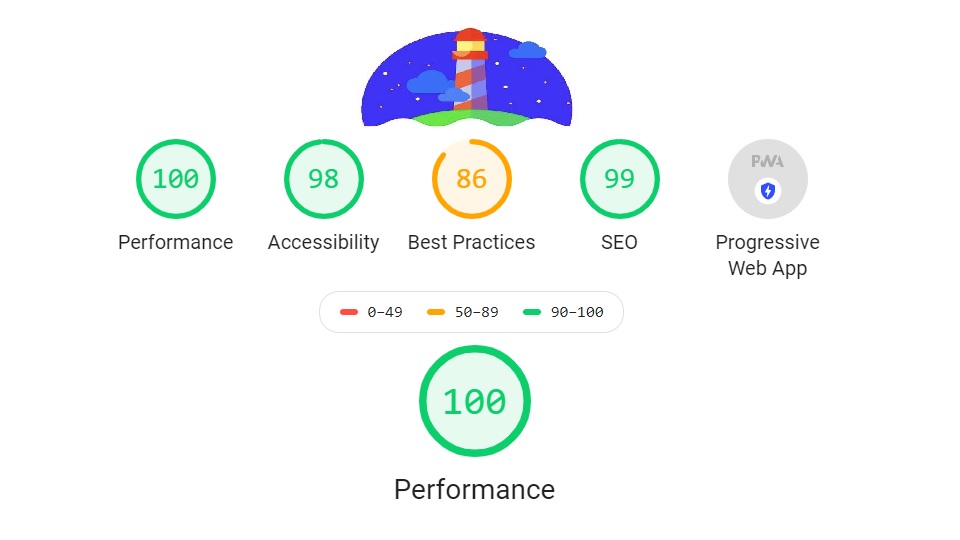
    Google Lighthouse Audit is another free on page analysis tool offered by Google. Lighthouse analyzes a web page based on the following parameters: performance, accessibility, best practices, SEO, and progressive web app optimization. It then generates a Lighthouse report that assigns a score to each parameter, along with tips to improve the score.

    You can run a Lighthouse audit from the Inspect -> Lighthouse (DevTools) option on Google Chrome. Alternatively, you can also install the Lighthouse extension on Chrome for faster access.

    Key Features:

    • Evaluation of various website parameters like First Contentful Paint, Cumulative Layout Shift, and Speed Index, with tips to enhance performance.
    • Ensures that your web page is compliant with technical SEO and website design best practices.
    • While Google Search Console offers keyword insights, Lighthouse focuses on page structure, alt text, links, robots.txt, etc.
    • Creates an Issues panel that lists problems on your web page with recommended solutions that can boost your web rankings.

    Unique Advantage:

    Offers individual scores for various technical website parameters, helping you optimize and monitor webpage performance on the go.

    4. Woorank

    woorank best on page seo tools

    Source

    Woorank offers free and paid on-page SEO tools that audit the sitemap and website structure, along with keyword optimization. It analyzes the page for SEO best practices like meta title length, headers, meta description, and alt tags. It also checks for domain indexing, trust indicators, and traffic.

    The paid versions additionally offer keyword research and website optimization tools for SEO professionals and enterprise clients.

    Key Features:

    • Evaluation of both content and website parameters to improve SEO performance.
    • Free tool for a quick overview of on-page SEO issues with solutions to address the same.
    • Paid options for integrated keyword research and comprehensive website optimization.

    Unique Advantage:

    Generates a Woorank score for your website based on crucial SEO metrics, helping you monitor and optimize website performance.

    5. Moz

    moz on page seo optimization tool

    Source

    Moz ranks among the best on page SEO analysis tools due to its domain analysis capabilities. You can enter your URL in the search bar to view your domain’s authority, top keywords, backlinks, and spam score. The tool also offers an in-depth website audit for detailed analytics.

    Digital marketers can choose between free and premium versions, with the latter providing more extensive website performance data.

    Key Features:

    • Provides a domain authority score and top keywords to help track website performance.
    • Besides on page SEO analytics, it also offers information about backlinks and monitors off-page SEO efforts as well.
    • Contains capabilities for detailed keyword research to fine-tune content and on-page SEO strategies.
    • Moz Pro suggests content improvements and on page SEO optimizations to boost your website rankings and traffic.

    Unique Advantage:

    Provides domain authority score, top-ranking keywords, and backlink information to help you track your website’s performance.

    6. Yoast

    yoast on page seo analysis tools

    Source

    Yoast is among the best on page SEO tools for WordPress users. It is available as a WordPress plugin that performs real-time SEO analysis and optimization of your web content. It recommends essential on page SEO elements like meta tags, alt tags, 301 redirects, internal links, and keyword density.

    The paid version of the Yoast plugin also provides keyword research capabilities.

    Key Features:

    • Real-time page-level optimization of WordPress content for parameters like keyword density, readability, meta descriptions, and linking.
    • Offers automatic Schema in the admin panel of WordPress.
    • Facilitates 301 redirects.
    • Suggests optimized titles and headers.
    • Recommends internal linking opportunities.

    Unique Advantage:

    Real-time on page SEO optimization of WordPress content, combined with advanced keyword research features.

    7. Screaming Frog

    screaming frog seo optimization tool

    Source

    Screaming Frog is among the best on page analysis tools for SEO professionals demanding a deeper insight into technical SEO. Its SEO spider tool crawls your website to find broken links, crawlability issues, and improper redirects. It also performs on page SEO analysis to optimize metadata and titles.

    Website owners often use Screaming Frog for solving crawlability issues, with another tool for on-page SEO and content planning.

    Key Features:

    • Analyzes server log files to detect crawlability issues.
    • Flags broken links, bad redirects, and bad bots, to improve website performance.
    • Offers on page SEO optimization of meta tags, titles, and headers.
    • The free version allows you to crawl up to 500 URLs. The paid version offers unlimited crawls and advanced features.

    Unique Advantage:

    Best-in-class spider simulator that crawls your website to identify hard-to-spot crawlability issues and bad links.

    8. Webconfs

    webconfs on page seo tools

    Source

    Webconfs boasts a wide range of free tools for both on-page and off-page SEO. Its popular features include the keyword density checker, dead link finder, keyword planner, and a spider simulator for site crawling. The simple user interface and plethora of free on page SEO tools can be particularly useful for new website owners.

    Additionally, Webconfs provides off-page SEO tools like a backlink summary and a backlink builder to improve domain authority.

    Key Features:

    • Efficient content optimization facilitated by the keyword planning tool and keyword density checker.
    • Dead link checker to improve search rankings by eliminating broken links.
    • A unified platform that assists with both on-page and off-page SEO.

    Unique Advantage:

    A vast range of free SEO tools to perform SEO analysis and optimizations effortlessly.

    9. SEOCrawl

    seocrawl best on page seo analysis

    Source

    SEOCrawl is another popular on-page SEO tool, famous for its holistic SEO dashboard. This tool simplifies SEO management for businesses and SEO professionals alike. It offers numerous capabilities, such as website rank tracking, SEO monitoring, and crawl stats.

    Moreover, it displays easy-to-implement recommendations for quick and efficient on-page SEO improvements.

    Key Features:

    • Handy tools for SEO management, rank monitoring, SEO reporting, and SEO crawling.
    • In-depth SEO reports with actionable tips to improve website performance.
    • User-friendly SEO dashboard to manage all on-page SEO tasks seamlessly.

    Unique Advantage:

    Intuitive and insightful SEO dashboard for efficient management of all SEO tasks.

    10. GrowthBar
    growthbar content optimization tool

    Source

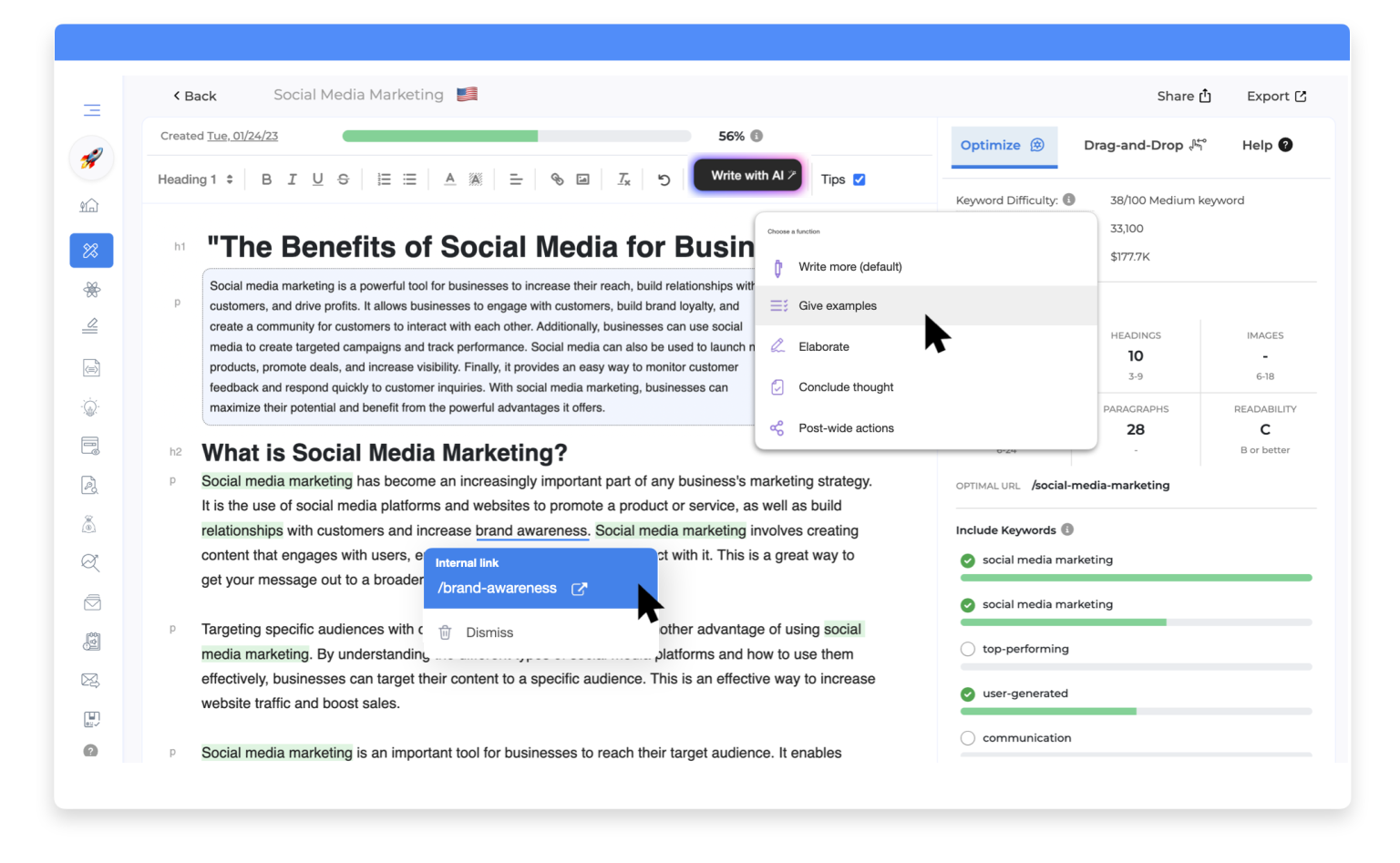
    GrowthBar is an AI-driven content generation and optimization tool. It allows website owners to produce long-form text from scratch or optimize existing content on their web pages. It offers on page SEO tools to fine-tune word count, keyword density, URLs, and readability.

    Moreover, it also offers keyword suggestions to improve your website’s rankings. GrowthBar is a paid tool with a free trial period. Custom packages are available for website owners, SEO professionals, and digital marketing agencies.

    Key Features:

    • AI-driven technology to produce SEO-optimized long-form content at scale.
    • On page SEO analysis of existing content to improve keyword optimization and readability.
    • Integrated keyword research and suggestion capabilities.

    Unique Advantages

    • Helps churn out SEO-optimized content at a rapid pace for large websites and businesses.

    “Content is what the search engines use to fulfill user intent”

    says Dave Davies, co-founder of Beanstalk Internet Marketing.

    Final Thoughts

    On page SEO tools can propel your website to the first page of Google, giving it the engagement it deserves!

    In today’s competitive and overcrowded digital space, simply building a beautiful website with compelling content is not enough. Optimizing your website for on-page SEO metrics like keyword density, readability, text length, and site speed is non-negotiable for growth.

    On page optimization tools make the job easier by analyzing your website’s performance at the click of a button. Moreover, these tools provide effective guidance to optimize each web page and boost your SERP rankings.

    Armed with monitoring tools and reports/dashboards, leading on page SEO tools help track your SEO efforts and make continuous improvements.

    With versatile tools like Wittypen’s on-page SEO checker, you can create content that rules search engine results and maximizes conversions. Try our efficient and intuitive on-page SEO tool today to open the floodgates of digital success!

  • Stop Scrolling, Start Clicking: How to Create LinkedIn Carousels that Convert

    Stop Scrolling, Start Clicking: How to Create LinkedIn Carousels that Convert

    Source

    If you’ve been active on LinkedIn over the past few years, chances are you’ve come across their nifty carousel posts.

    These posts are part of a document-sharing feature that the professional social networking giant released in 2018 that allows your audiences to view documents without having to leave LinkedIn. They offer immense benefits in terms of engaging your audiences and offering higher Click Through Rates (CTR), making them worth the invested time and resources. 

    If you’re wondering how to create a carousel post on LinkedIn to promote your products and services, we’ve got you covered. In this guide, we will take you through the benefits of using LinkedIn carousels, how to make them, and answer some frequently asked questions. Read on!

    LinkedIn Carousel Post Size and Specifications 

    • Use an upper limit of 255 characters to name and introduce your carousel post. However, it’s recommended that you stick to 150 characters to avoid the text getting cut off on certain devices.
    • The maximum file size for your carousel should be 10 MB. 
    • The maximum image dimensions should be 4320 x 4320 pixels.
    • The file types that LinkedIn accepts include JPG, PNG, and GIFs. 
    • The destination URL should have a “http://” or a https://” prefix. 
    • Carousels that link to a destination URL should stick to a limit of 45 characters.
    • Carousels with a Lead Gen Form CTA must stick to a limit of 30 characters. 

    Sticking to these general guidelines helps you understand how to create a carousel post on LinkedIn and allows your carousel to stand the best chance of optimization for the platform and the various devices it may be viewed on. 

    How to Post a Carousel on LinkedIn?

    Source

    The steps to create and post a LinkedIn carousel post are as follows – 

    Step 1 – Select the subject matter of your carousel and conduct all the necessary research. For example, lets take and example of the following carousel with the topic: 5 ways to use AI in Digital Marketing. Research on the topic and marketing statistics to keep in mind for 2024, finalize which statistics you want to include. Write the copy basis of the research of the primary topic.

    Step 2 – Create graphics that will correspond to each individual slide on your carousel. Draft the content and remember to include an attention-grabbing hook or headline, keep the text short, and not include any links, or they won’t be clickable. 

    Step 3 – Design the visual aspect of your carousel post. The benefit of carousels is that they allow you to design your carousels in your brand’s colors and theme, thereby reinforcing your brand image. Make sure the graphic elements are in sync with the topic being discussed in each slide.

    Image Source

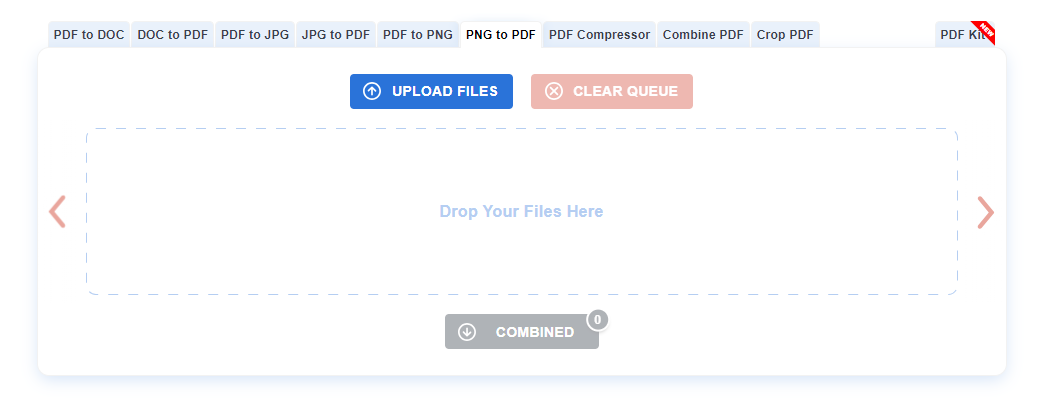
    Step 4 – Once you’re done designing the carousel and adding the content to it, save it as a PDF. You can use PFD converters that are widely available on the internet to convert your graphics to PFD as a document.

    Image Source

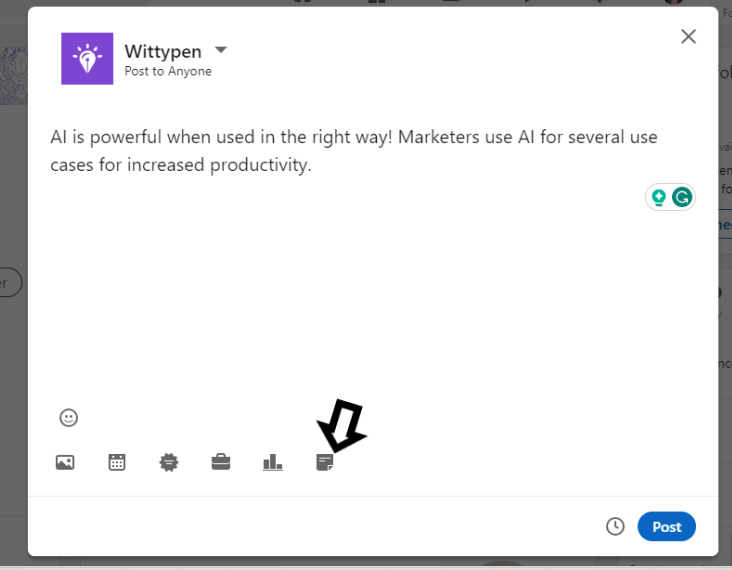
    Step 5 – Open your LinkedIn profile and select Create a Post. Then, tap Add a document and upload the PDF you saved. Add an attention-grabbing headline or a caption, and it’s ready to be posted.  

    Step 6: Make sure to add hashtags that are relevant to the subject that you have chosen to increase the reach of your post

    Best Practices and Use Cases of Carousel Posts on LinkedIn 

    Carousel posts can be used for a variety of purposes on LinkedIn, some of which include – 

    • Sharing infographics 
    • Offering step-by-step instructions for certain processes 
    • Sharing conference slides about events. 
    • Showing relevant listicles with your audiences. 
    • Highlighting career opportunities at your organization. 
    • Compiling customer stories and case studies. 
    • Sharing thought leadership, and more. 

    Additionally, there are certain best practices to keep in mind when using carousel posts on LinkedIn. These include – 

    • Use about 5-6 high-quality images. You can use more, provided they’re highly relevant. 
    • Using images that are 1080 x 1080p allows you to share the same content on other platforms, such as Instagram. 
    • Make the first slide attention-grabbing with a powerful headline or visual. 
    • Aim for a maximum of 10-15 words per slide, which means cutting down on fluff. 

    Check out this example of a carousel posted by Wittypen. The images used are of high quality, with crisp text on each slide. The first slide grabs the reader’s attention, with the forthcoming slides explaining the concept at hand, all of which seamlessly culminate in a CTA. 

    Image Source

    Similarly, Adobe’s creative tips series showcased the power of carousels in presenting step-by-step guides and design features. This strategy not only positioned Adobe as a creative authority but also spurred engagement and discussions within its LinkedIn audience.

    Benefits of Creating Carousel Posts on LinkedIn

    LinkedIn carousel posts offer a host of different benefits in driving user engagement and generating clicks.

    In this section, we take a quick glance at these benefits to show you why you should consider them as a part of your LinkedIn marketing strategy. 

    Increased Engagement

    When compared to regular LinkedIn posts that generally tend to be text-heavy, carousels allow you to add your brand’s logo, contact information, and more. In fact, studies show that the engagement rate for a typical text post was roughly 6.67%. By contrast, the engagement rate of a carousel post was 24.42%. This highlights the remarkable impact of carousels on engagement.

    Great for Storytelling

    Carousel posts give you the opportunity to present a problem and then a solution to it while adding a subtle call to action for your services. Doing so in the form of a story makes your content relatable and more engaging. 

    Improved Brand Image

    Studies reveal that individuals retain 65% more information when it’s paired with relevant visual content. 

    When brands make an effort to create high-quality carousel posts, they strengthen their brand image due to the value they offer their audiences. It not only enhances the visual appeal but also capitalizes on the cognitive advantage of visual content.

    Incredibly versatile

    You can use carousel posts to summarise case studies, present problems and their respective solutions, and even highlight customer testimonials. 

    One of the best examples of a carousel post is this one by HubSpot. You can see how the company has described how MSM scales its sales team in an engaging and visually appealing manner, thereby driving immense engagement. 

    How to Optimize LinkedIn Carousels for Conversions 

    Aside from simply posting carousels, you must optimize them for maximum conversion.

    Here are two things you can do: 

    Make Use of Carousel Analytics

    Carousel analytics offer deeper insights into the performance of your carousels. You can get information such as which slide drew the most attention or led to maximum engagement, where engagement decreased, and so on. These insights can help you tailor your carousels for maximum engagement and conversions in the future. 

    Leverage A/B Testing and Iteration

    A/B testing offers you the benefit of experimenting with different headlines, content lengths, CTAs, and so much more to analyze which characteristics draw the most conversions.

    These results can form the basis of your future carousels. However, remember that checking your analytics must be an ongoing process and not a one-time affair. 

    To Sum It Up 

    Carousel posts on LinkedIn offer businesses a host of different benefits, allowing them to promote their products and services in a visually engaging manner. If done right, they can offer significantly higher engagement than posts in other formats. 

    Thoughtful planning and attention to detail in each card of the carousel can enhance the user experience, encouraging your audience to interact, share, and explore more about your brand.

    Make sure you don’t just create carousel posts for the sake of it; instead, focus on presenting compelling and cohesive narratives that align with your overall marketing strategy. 

  • 10 Content Collaboration Tools to Streamline Your Team Workflow

    10 Content Collaboration Tools to Streamline Your Team Workflow

    With competition in the market being as stiff as it is today, effective collaboration is no longer just a luxury for most businesses; it’s a necessity. This is where team collaboration tools come into the picture, as they allow businesses to streamline their operations and collaborate in real time to yield the best results.

    These tools offer a host of different benefits, and in this guide, we take you through ten of the best tools you can use for your business, no matter the industry you’re a part of.

    We’ll also take you through the key features to look out for when choosing a content collaboration tool so you can make the best decision for your business needs.

    Table of Contents

    1. The Top 10 Content Collaboration Tools in the Market
      1. Wittypen
      2. Document360
      3. Trello
      4. Google Docs
      5. Notion
      6. Coda
      7. ClickUp
      8. ProofHub
      9. DropBox
      10. Confluence
    2. Key Features to Look For in Content Collaboration Tools
    3. Best Practices for Implementing Content Collaboration Tools
    4. FAQs
    5. In Conclusion

    The Top 10 Content Collaboration Tools in the Market

    In this section, we take a look at the 10 best content collaboration tools you can consider for your business.

    1. Wittypen 

    Source

    The first tool on this list is Wittypen. With a seamless content order process, you can offer the team at Wittypen all your requirements (content and SEO) and leave it to the 1000+ expert writers associated with Wittypen to create it for you.

    Powered by the use of various AI tools, such as a Blog Outline Generator, Content Calendar Generator, and more, you can ideate, plan, and create content for your brand in no time. From creating landing pages, blogs, and whitepapers to performing content refreshes, Wittypen can seamlessly take care of all your branding needs.

    All you need to do is select the domain your brand is a part of, the type of content you need, the length of the content, and the package you need, and answer a few questions that help the team understand your requirements. Wittypen then takes care of your requirements from start to finish, delivering content that can significantly help you scale your business.

    2. Document360

    Image Source

    Document360 is an AI-powered knowledge base for customers and teams that you can use to create and share self-service knowledge bases. The platform offers a range of different tools that include documentation creation, editing, categorization, and a whole host of branding features.

    The tool offers a wide range of use cases, including creating a customer knowledge base and an internal knowledge base and outlining standard operating procedures. It offers customers and users a 360 view of all their documentation, making it easier to manage and collaborate with team members in real-time.

    3. Trello

    Image Source

    Trello is among the most well-known project management and collaboration tools that offer a wide range of customizations. The system uses a mix of cards, lists, and boards that make it easy for team members to manage tasks and projects and monitor their progress over time.

    Trello is ideal for a range of different use cases, from project management, onboarding, meetings, task management, and even for brainstorming, making it ideal for both small and large teams alike.

    What’s more, the tool also offers a range of different integrations, making it easy to incorporate it into your existing tech stack.

    4. Google Docs

    Image Source

    Ever since its release back in March 2006, Google Gocs has been the go-to tool for document processing and collaboration, and with a range of updates, it continues to remain the top choice across industries.

    This web-based word-processing software comes with various collaborative features that allow users to share documents with multiple team members while even setting permissions for role-based access.

    Additionally, it allows you to add comments, ask questions, or offer feedback, and also offers version control, so each member works on the latest information at all times. This negates the duplication of effort, saving teams a great deal of time in their day-to-day operations.

    5. Notion

    Image Source

    Notion is among the most popular cloud-based content collaboration platforms that allows users to share a range of content types, from to-do lists, notes, project management workflows, and more.

    It allows users to create, share, and organize their content in real-time while offering a customizable interface that allows for all workflows to be managed from a centralized location.

    Additionally, users can filter and sort tasks based on urgency, allowing for better time management while also offering them the ability to label, tag, and sort tasks to ensure greater overall organization.

    6. Coda

    Image Source

    Coda is an all-in-one collaborative workspace that allows teams to organize all their tasks and projects, allowing for greater efficiency. Users can create, organize, and automate a wide range of tasks, thereby saving precious time that they can dedicate to crucial operations.

    Coda uses hubs to allow teams to collaborate on projects while also being able to track progress, changes, and more with centralized version control, thereby eliminating any duplication of work.

    One of the key highlights of this platform is its commitment to secure content collaboration, with granular permissions for individual users and features like two-factor authentication that ensure the highest standards of data protection at all times.

    7. ClickUp

    Image Source

    ClickUp is a project management tool that allows teams of all sizes to collaborate in real time, thereby allowing them to maximize productivity. ClickUp uses a host of different tools that allow teams to manage various tasks. These include Docs, Whoteboards, Dashboards, and Goals, among several others.

    The tool is ideal for teams across industries, from engineering to design and even marketing and software development. The tool offers a unique feature that allows you to view your work as you choose, be it in the form of lists, boards, or calendars.

    This results in granular levels of customizability, making ClickUp a versatile option for a host of different niches.

    What’s more, ClickUp is ideal for a range of different use cases, from project management to organizing remote work and even using it as a CRM to manage all your client’s information in one place.

    8. ProofHub

    Image Source

    ProofHub is yet another cloud-based team collaboration and project management platform that offers unique in-built file management software. This allows teams to create, upload, and organize files in one seamless interface, allowing for improved real-time collaboration, even within large teams.

    The tool also allows users to attach documents to tasks, chats, and discussions, allowing for greater access to all the relevant information when needed. It also offers seamless integration with Google Drive, allowing you to access the benefits of its whole suite of tools, from Google Docs and Sheets, among several others.

    9. DropBox

    Image Source

    DropBox is one of the most popular cloud storage tools that allows individual users and teams to access all their files in one place. With a desktop and mobile app, it offers easy access from a wide range of devices, allowing users to access from anywhere, seamlessly enabling remote work.

    DropBox uses shared links that you can use to share files both within and outside of your organization. You can also use it to gather feedback and invite members to edit files collaboratively.

    One of its biggest USPs is that it can be integrated with over 100,000 third-party apps, making it ideal for organizations across all industries and scales.

    10. Confluence

    Image Source

    Confluence offers teams a unified interface that allows them to create, share, and edit files in real-time seamlessly. Users can easily access and organise company information that allows companies to allow their customers to access key information themselves.

    Confluence allows teams to store content across a range of formats, including PDFs, images, documents, and more while allowing easy synchronization to Jira that allows for projects and tasks to be easily created, managed, and cleared.

    One of the key highlights is that team members can also leave feedback on documents in various ways, making it one of the best platforms for collaboration.

    Key Features to Look For in Content Collaboration Tools

    In this section, we take a look at five things you must look for when choosing content collaboration software. These include –

    • Real-time collaboration and editing – The ability to collaborate and edit documents in real time is one of the biggest advantages of a cloud-based collaboration tool and a must-have.
    • Version control and document management – Version control allows each user to track all the changes made to a document, along with who, when, and why, thereby ensuring each user works off the latest version of the data.
    • Task management and workflow automation – Effective task management makes it easier for large teams to organize tasks and projects based on urgency, thereby ensuring seamless workflows.
    • Communication and messaging capabilities – The right tool must allow team members to be able to communicate in real-time, thereby ensuring seamless collaboration.
    • Integration with other tools and platforms – A wider scope for integration means you can seamlessly introduce a tool into your existing tech stack.

    Best Practices for Implementing Content Collaboration Tools

    Some of the best practices to keep in mind when using a content collaboration tool include –

    • Assemble all the relevant stakeholders from each team to learn and understand how to use the tool and make use of its features.
    • Make use of clear briefs to help streamline processes and ensure seamless division of labor.
    • Ensure the use of project management best practices. Appoint a project lead to help streamline all the facets of the project to ensure timely delivery.
    • Make use of organizational features to break up projects into smaller, more achievable targets.
    • Allow time for each user to learn and understand how the tool works and incorporate feedback wherever necessary.

    In Conclusion

    As you can see, there are a host of content collaboration tools available in the market today, each of which offers its benefits. From shared workspaces to version control, each of them is designed for seamless collaboration for teams of all sizes.

    However, if you’re looking for a platform that offers content that’s tailored to your business’s needs while allowing all relevant stakeholders the ability to access the content, provide feedback, and more, Wittypen is your top choice. Powered by a host of AI tools, this platform is ideal for businesses looking to scale their content needs while driving revenue.

    Schedule a call to find out how Wittypen can seamlessly manage all your content needs and ensure your business’s growth in a competitive marketplace.

  • How to Smartly Insert Keywords in a Blog Post – A Complete Guide

    How to Smartly Insert Keywords in a Blog Post – A Complete Guide

    If you wish to drive more traffic to your website, it is imperative that you implement the right search engine optimisation (SEO) strategies in your blog. Any proactive blogger or digital marketer knows that keywords play a crucial role in boosting a site’s ranking on search engines, such as Google, Yahoo, Bing, etc. However, you cannot insert keywords the way you please.

    You have to find relevant keywords and then insert them in different places in your blog. Keep in mind that you should avoid overstuffing keywords because it is a black-hat SEO practice and can get you penalized. If you don’t know the most relevant keywords for your blog content, you can always rely on keyword research tools to find them.

    This article will provide a detailed review of how to smartly insert keywords in your blog to help increase its SEO rankings. But first you need to understand what is SEO ranking.

    What is SEO Ranking?

    SEO ranking refers to the position of a website on search engine results pages (SERPs), determined by various factors like content relevance, user engagement, and keyword optimization. Optimizing these factors improves a website’s visibility and increases its likelihood of appearing at the top of search results.

    Understanding and improving your SEO score, which quantifies how well your site adheres to best practices recommended by search engines, is crucial. This score is typically calculated based on aspects like page speed, mobile-friendliness, and the quality of backlinks. By focusing on enhancing your SEO score, you can directly influence your site’s ranking. Regularly monitoring this score allows for real-time adjustments to your SEO strategies, ensuring ongoing optimization and a higher return on investment compared to traditional marketing methods. This proactive approach to SEO not only boosts your site’s visibility but also enhances overall digital marketing effectiveness.

    With understanding of how SEO score works, one can proceed with understanding of keywords and how to rank for those keywords.

    8 Effective Ways To Insert Keywords In A Blog

    1. Insert Keywords in Your Headings and Content

    One of the smart ways to insert keywords in a blog is by placing them in your headline and content. When inserting a keyword, you have to make sure that their usage isn’t forced and they fit the bill naturally. Don’t make it seem as if you want your readers to focus on the keywords instead of your content.

    To enhance the visibility of your blog on search engine results pages, it is essential to incorporate keywords strategically within your headings and subheadings, specifically using the <h1>, <h2>, and <h3> HTML tags.

    Lets consider the above blog: Only On-Page SEO Guide to Read in 2024. The keyword ‘On-Page SEO’ is very evidently used, multiple time, in the H1, H2 etc and smartly placed wherever possible.

    This practice helps search engines discern the subject matter of your content. Ensure that these keywords are integrated seamlessly to maintain the natural flow of your writing.

    Additionally, embedding relevant keywords throughout the body of your text is crucial. This not only assists search engines in understanding the context of your blog but also avoids the pitfalls of keyword stuffing. To further optimize your content, consider using Latent Semantic Indexing (LSI) keywords. These variants help prevent penalties from search engines for excessive keyword repetition and broaden the thematic reach of your posts.

    When crafting a new blog entry, it is advisable to include pertinent keywords in both the introductory and concluding paragraphs. Search engines prioritize these sections when indexing content, which can significantly enhance your blog’s search rankings.

    The overarching objective is to make your content SEO-friendly. Utilizing LSI keywords throughout your articles supports high rankings for a variety of search terms, thereby increasing traffic to your blog and improving its competitive edge in search engine rankings.

    2. Image File Names

    To boost your blog’s visibility, incorporating relevant keywords into the images you use is crucial. Utilizing alternative text, or “alt text,” for images is a strategic approach that can significantly improve your blog’s search engine rankings.

    It’s common to find that images can lead to relevant content during online searches. By applying the same method—optimizing images with appropriate keywords—you can enhance your blog’s search engine visibility.

    Additionally, before uploading images to your blog, make sure to optimize each image by including targeted keywords in their file names. This step is essential for improving the SEO potential of your visual content, making it more likely for your images to appear in search results and drive traffic to your site.

    3. Title Tags

    Before writing your blog post, you spend a significant amount of time coming up with a creative title that will captivate your readers. Why? That’s because the title plays a significant role in your blog posts. It informs users what your content is all about.

    As a result, you should ensure to incorporate relevant keywords in your titles. Title tags should have long-tail keywords because they not only help to improve your blog’s SEO rankings but also bring more organic traffic.

    Title tags that feature the relevant keywords intrigue people to read your posts and they also help to increase the time spent by viewers on each of your posts. When you’re adding a title tag, you should write terms that are related to the content you post.

    Do not try to trick people into reading your content by writing a title that is unrelated to your content. Relevant titles help in retaining loyal readers and they also attract new ones. If you don’t know the most appropriate titles to use for your blog posts, you can always rely on title generating tools to come up with suitable titles.

    4. Meta Description

    Every blogger or website owner finds it struggling to get their content to rank at the top of the first page of search engines. One of the tactics that can help you achieve that is optimising keywords, and one of the places that you can insert these targeted keywords are in the meta description.

    The meta descriptions are short descriptions that appear under each search result that a search engine throws up. They can enhance the click-through rate of your site and that’s why you should ensure to have relevant keywords in the meta descriptions.

    Frankly, when people conduct a specific search online, they have to skim through the meta descriptions to ensure that they click on the most relevant results. A well-written description should captivate the users and motivate them to click on your blog.

    When writing the meta descriptions, incorporate the right strategies so that you can optimise your content. Including keywords in the descriptions will increase your blog’s rankings and generate more organic traffic. Bloggers use this as an effective digital marketing strategy to ensure that their posts rank on the first page of Google.

    5. The URLs

    Another way to smartly insert keywords in a blog is to include them in the URL. Why should bloggers do that? It helps users to locate links much easier. Instead of rewriting your URL with numbers and letters, you should rewrite it with a readable content.

    People tend to trust links that have readable content that is related to what they were searching for. When writing your URL, you should not only focus on the search engines but also on the users. Inserting keywords in the URL informs the users what your blog post is about, but you shouldn’t stuff them.

    6. Blog Post Comments

    The majority of blog posts have a comment section, and this is one part that you should not ignore. It can help drive organic traffic to your blog and increase SEO rankings alike. Readers will most likely return to a blog where there is some interaction, and where their questions are answered or responded to.

    When you reply to your readers’ comments, you should optimise the keywords. Ensure to incorporate relevant keywords in every comment that you respond to, but don’t fix the terms for the sake of filling them and make that they are as natural as possible. Using long-tail keywords in your blog’s comment section could also help to boost your SEO rankings.

    7. Use One or Two Keyword Phrases in Every Blog Post

    If you wish to maximize your blog’s traffic using keywords, you should only use one or two keyword phrases per post. You should not add too many keyword phrases because your content may end up not making too much sense.

    Too many keywords make your blog post seem out of context and they can make your content look like spam to search engines. You wouldn’t want that now, would you? One or two keyword phrases are enough to generate more traffic to your blog and boost your rankings.

    8. Blog Post Labels

    Your post labels can also help improve your rankings and bring more traffic to your blog. You should not look at your blog labels as if they are only meant to optimise your posts. You can incorporate targeted keywords in the labels to help optimise your blog posts.

    Interestingly, even if you forget to incorporate relevant keywords in your labels, it is possible to rename them to include the relevant terms.

    How to Select Better Keywords for Your Blog Posts

    Optimising your blog posts using keywords does not simply mean using them strategically with the help of the above practices. You also need to learn how to select better keywords to use. The more relevant the keywords are, the better the chances of your blog gaining more traffic and ranking higher on search engines. Here are some of the skills that come in handy.

    Get Keyword Suggestions from the Source

    When searching online, using search engines like Google, Yahoo, and Bing is a common practice. Typing a topic into the search bar often prompts the engine to suggest potential matches, which not only streamlines your search but also reveals what keywords and phrases are currently trending or relevant.

    This feature of search engines can be leveraged to identify keywords that are pertinent to your blog content. By observing these suggestions, you can refine your keyword strategy to better target your audience.

    However, if manually searching for keywords seems too time-consuming or less effective, consider utilizing a keyword research tool. These tools are designed to provide detailed insights into which keywords to focus on. They help determine the relevance of keywords, optimal keyword density, and even suggest the appropriate length of your content to enhance SEO effectiveness.

    Using a keyword research tool not only saves time but also assists in finding keywords and phrases that integrate seamlessly with your content, enhancing your blog’s search rankings and driving organic traffic. With numerous keyword research tools available online, selecting one that suits your needs can significantly improve your content strategy.

    Ahrefs, Google Analytics, SEMrush, SurferSeo are some of the top tools one can use to get started with keyword research.

    Look into Related Searches

    Another effective way to find better keywords for your blog is by looking into related searches. Don’t get it wrong, this is not the same as Google Suggest which comes up when you type in related words in the search bar. No.

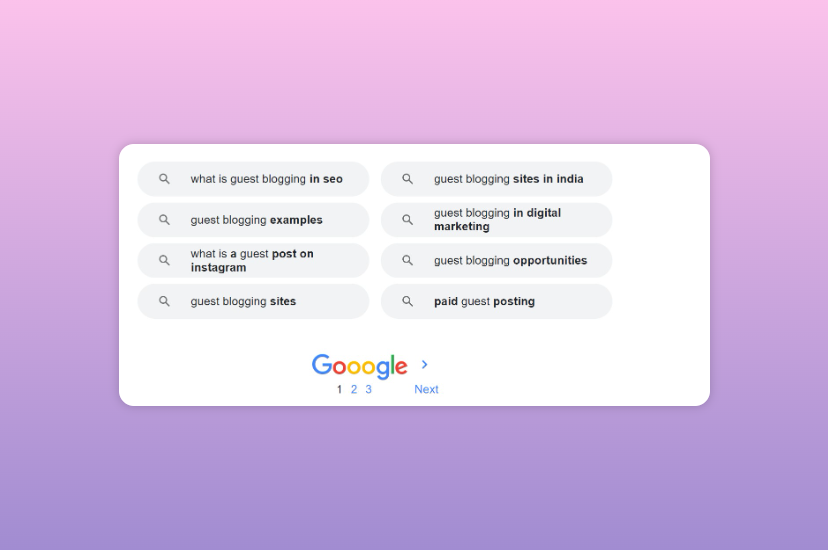
    If you scroll down the search engine, you will find ‘searches related to’ a particular topic that you searched for.

    searches related to the keywords

    You can use the related search results to select a focus keyword for your blog. You can also use the phrases you see in your blog for semantic search purposes and you can also use the words or phrases to dig deeper to find other relevant keywords.

    Rely on Google AdWords Keyword Planner

    Google Keyword Planner is an effective tool that bloggers can use to find related keywords or the approximations of the search volume for the terms you type in. The tool is not hard to use, but you have to create an account first.

    The tool can be beneficial to your blog because it offers plenty of valuable data. You only need to type in a keyword or a keyword phrase and then Google AdWords Keyword Planner will give you tons of suggestions that it obtains from Google’s database.

    Look for the Questions People Ask That Are Related to Your Blog’s Content
    When users conduct an online search, they mostly ask questions because they want to find answers to something they are curious about.

    Users usually ask the how, the when, and the why of it. Therefore, if you want to be successful in your blog’s keyword planning strategy, then you need to find out the questions your target audience asks.

    By discovering the questions, you can tailor your blog posts to answer the most relevant questions. Keep in mind that you’re supposed to answer questions that are related to your topic and ensure to incorporate the keywords so that users can find them.

    Read More: 25+ Trending Topic Ideas for Content Writing to Rank #1 on SERPs

    Consider Pay-Per-Click Advertising

    This might not be a popular option among bloggers, especially those who are just starting up their blogs. Why? Because it is not free. However, it would be wise to consider the option even if you don’t want to. You can consider it as an investment because it will give you clear insights into the keywords that generate the most traffic.

    Pay-per-click advertising can give you the actual data concerning high-quality keywords and keyword phrases. When you have a clear grasp of the keywords that generate more organic traffic, you can start incorporating them into your articles. They could help improve your SEO rankings.

    Look for Hack Books and Courses

    If you would like to know the most relevant keywords that are related to your topic, then you can obtain them from hack books and courses. The online world is filled with plenty of instructors and authors. The books are comprehensive and they have plenty of topics. You can select a topic or two and see keyword ideas that might work for your blog.

    Link Your New Blog Posts to Your Old Posts

    Another effective strategy is adding old links from your blog to your recent blog posts. As a blogger, you should ensure that you regularly review your old posts to try and find target keywords that you might have used. When you find similar keywords to the new content you’re creating, consider adding the link.

    Discover Trends

    One of the best things about Google is that it has Google Trends which looks at historical search data to show the searches that users have made over time. You can use the tool to filter searches based on the region, categories, time frame, and much more.

    Uncovering the trends can be very helpful, especially to bloggers that create content for the local community. By reviewing the historical data, you can customize your articles to incorporate the keywords that your target audience has looked up most.

    Double-Down on Your Keywords

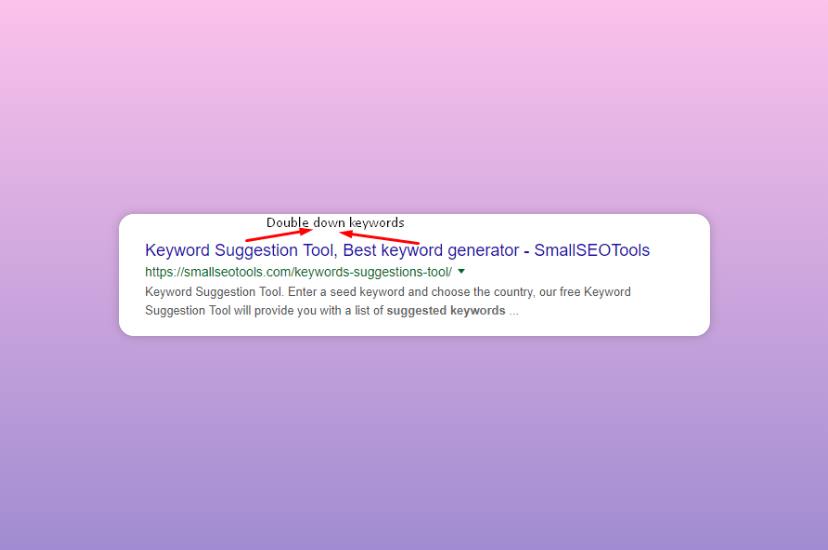
    The key to making your blog successful is ensuring that your keywords work for you double time, if not multiple times. What does this mean? It means that you should optimise your blog titles to have numerous keywords or overlapping keyword phrases.

    Double down keywords

    You should conduct your research and find a two or three-keyword phrase related to your topic that demonstrates a high level of search activity. You should then expand it to form a long-tail keyword. Alternatively, you can create an article that focuses on two keyword phrases. That way, you make it easier for search engines and users to locate your content.

    Plan Your Keywords Semantically

    Keyword planning for your blog should always be done semantically. As Google’s algorithm continues to advance, it has become a semantic search engine. What does this mean? It implies that Google considers the relationship between signifiers in phrases and words in SEO rankings.

    When users search for a specific topic on Google, the results displayed will not only indicate the exact word(s) that has/have been typed, but it will also show the results of what it considers relevant to the search conducted.

    Therefore, if you wish to optimise your blog posts using keywords, ensure to focus on topics instead of exact phrases. Doing so will rank your blog higher in search engines and it will make it easier for users to find your content.

    For easier audit you can check out Wittypen’s On-Page SEO Checker to have a better understanding on what all you can implicate while diving deep in your SEO exercise.

    Conclusion

    Keywords play a vital role in boosting your blog’s SERP ranking. They also help to generate more traffic, which is what every blogger wishes for. However, you cannot achieve positive results if you fail to employ viable strategies. Your main focus needs to be optimising your blog to search engines.

    Search engines will rank blogs with relevant keywords that are well used higher than blogs that omit targeted terms. You may consider implementing some if not all of the strategies mentioned above to generate SEO rankings.

    Wittypen-Blog-Banners-01