Category: Uncategorized

  • Topical Authority Mapping: A Complete Framework

    Topical Authority Mapping: A Complete Framework

    Topical authority mapping is the structured process of organising pillar pages, semantic clusters, intent layers, and internal-link pathways into a unified content architecture that improves search visibility and drives measurable funnel outcomes. It moves brands beyond keyword lists by connecting every page to a clear purpose, intent signal, and buyer-stage action.

    Ever wondered why your keyword spreadsheets look solid but still fail to move rankings or revenue? Or why content teams keep publishing, yet nothing meaningful happens in search?

    Here’s the reality: 75% of searchers never go past page one. This means content that isn’t structured around clear themes, intent, and the buyer journey is practically invisible.

    That’s where a Topic Authority Map (TAM) comes in. Instead of isolated keywords, you get a clear, connected system that shows how every page works together, how intent flows across the funnel, and how authority is built internally.

    In this post, we’ll walk you through how to build a TAM from the ground up, so your marketing and SEO teams can create content that actually ranks, supports the funnel, and drives measurable organic growth. Read on!

    Core Components of a Topic Authority Map

    Infographic showing the core components of Topical Authority Mapping

    A high-quality TAM looks complex, yet every node shares seven required fields that make it operational.

    • Core Topic / Pillar Page (Primary Node): Defines the central theme and search intent it will own. This acts as the anchor page that distributes authority to all supporting content.
    • Supporting Subtopics / Cluster Pages: Semantic groupings that form SEO topical clusters around the pillar. These pages build depth and help search engines understand your expertise in the topic.
    • Intent Tag + Buyer-Stage Label: Informational, commercial, or transactional intent matched to awareness, consideration, or decision stages. This ensures every page has a clear purpose in the buyer journey.
    • Suggested Format & CTA Type: Guide, blog, comparison, calculator, FAQ, or tool, plus the on-page conversion cue. Choosing the right format increases relevance and improves user engagement.
    • Internal-Link Matrix: Which pages link to which pillar, preferred anchor phrases, and maximum links per asset. This structure helps distribute authority and strengthens your topical hierarchy.
    • Editorial Rules Summary: Minimum depth (subhead count, unique examples), refresh cadence, and canonical rules to prevent duplication. Strong editorial standards ensure consistency and prevent thin or redundant content.
    • KPI Tags: Visibility, engagement, and conversion-assist metrics, so each node has an owner and a number. This makes reporting straightforward and keeps each asset accountable.
    • Localisation Notes: Wording or example tweaks for US versus India audiences where search behaviour differs. Adapting content by region improves relevance and search performance across markets.

    Collectively, these elements turn topical authority mapping from a conceptual diagram into an executable content strategy.

     👉 Also Read: 27 Chrome Extensions For SEO To Outrank Your Competitors

    How to Build a Topic Authority Map?

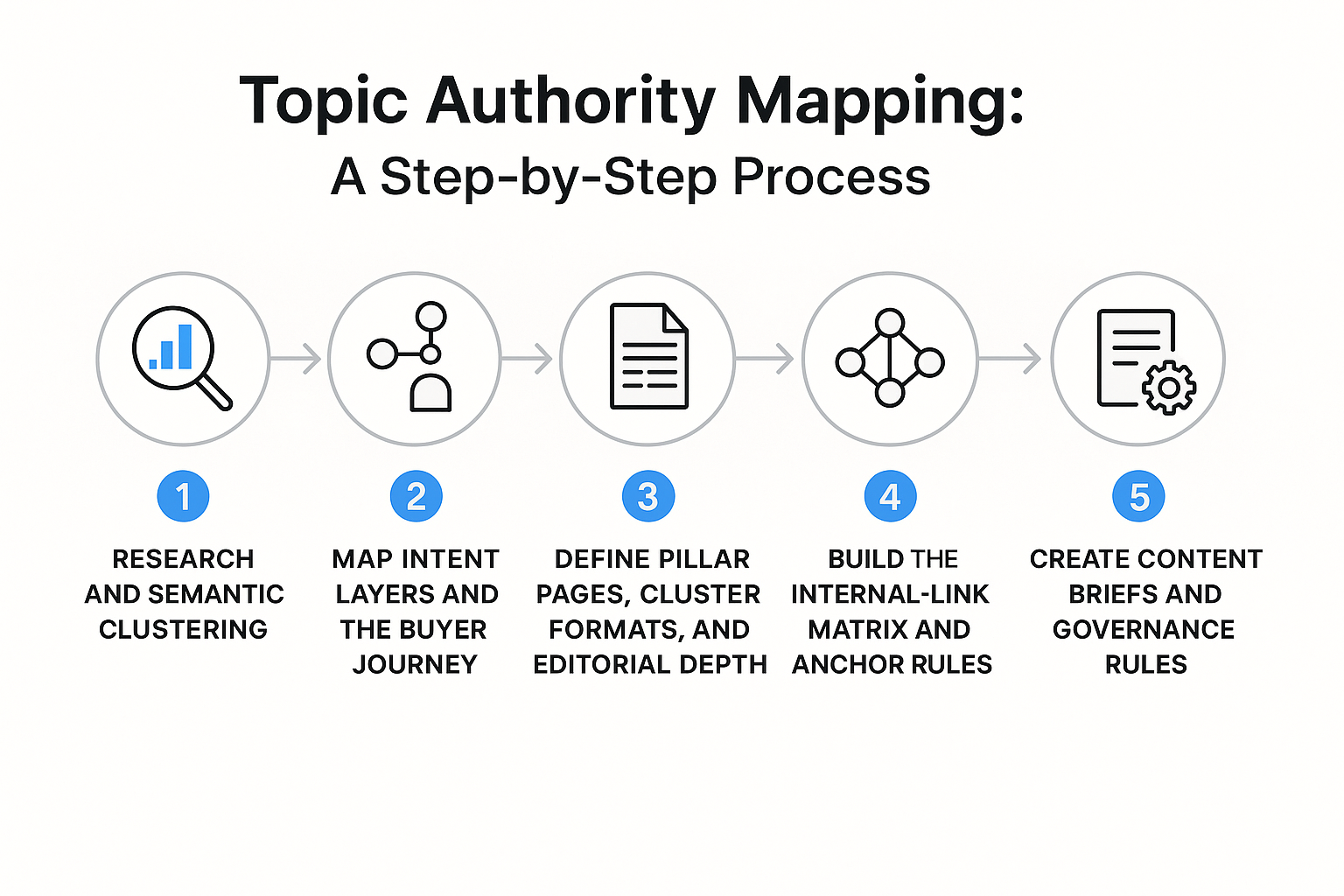
    Infographic illustrating a step-by-step process do topical authority mapping and build content strategy

    Now that you know what goes into a TAM, let’s break down the exact steps to build one effectively:

    Step 1: Research and Semantic Clustering

    Begin with seed topics from stakeholder interviews and competitive gaps, then run semantic clustering tools to surface related queries rather than chasing raw volume.

    Prioritise clusters by commercial relevance and the size of the content gap in the client’s vertical. The output is a shortlist of pillar page candidates, each with grouped cluster topics labelled by intent: a foundation for a robust content cluster strategy.

    Step 2: Map Intent Layers and the Buyer Journey

    Tag every proposed asset with both search intent (informational, commercial, or transactional) and buyer stage (awareness, consideration, or decision).

    This dual label ensures each piece plays a defined role in moving a prospect forward, a principle central to buyer journey content mapping. Focus production on assets that close stage gaps or plug funnel leaks.

    Step 3: Define Pillar Pages, Cluster Formats, and Editorial Depth

    Define the scope of each pillar page. A pillar should be a comprehensive, evergreen resource that owns the core topic and links to all related cluster pages.

    Match cluster formats to the corresponding intent signals:

    • How-to guides for informational intent
    • Comparisons for consideration content
    • Calculators or ROI tools for decision-stage queries

    Make sure you enforce a minimum depth per cluster (at least four H2s, original visuals, and two internal links) to avoid thin content that Google down-ranks.

    Step 4: Build the Internal-Link Matrix and Anchor Rules

    Draft a matrix that routes authority from every cluster to its pillar using contextual, descriptive anchors, reserving exact-match phrases for the highest-value links. Cap internal links at a sensible number (often 6–8) to preserve equity and user focus, and schedule quarterly link health checks to prevent decay.

    Step 5: Create Content Briefs and Governance Rules

    For each node, generate a brief that lists target intent, semantic keywords, H2/H3 outline, required internal links, and CTA.

    Assign an owner, production SLA, and refresh cadence, then store all briefs in one governed workspace so editorial and SEO stay aligned. Link each brief back to its KPI tag; this makes reporting turnkey and supports retainer renewals.

    💡 Pro Tip: Use semantic SEO tools to group related queries by meaning, not keywords. This helps you uncover hidden subtopics that strengthen your topical authority.

    Visual Templates and Client-Facing Deliverables

    A Topic Authority Map is most effective when clients can see how everything connects. That’s why professional marketers present the TAM through a set of clear, visual deliverables that make strategy instantly understandable.

    1. Interactive Board (Miro or Notion): A dynamic workspace showing pillar–cluster relationships, intent layers, buyer-stage paths, and last-updated timestamps. Ideal for collaborative reviews and ongoing optimisation.
    2. Executive Summary PDF: A concise, one-page map designed for leadership teams. It highlights the overall structure, strategic priorities, and the metrics that definewhat success looks like”.
    3. Link Matrix Spreadsheet: A tactical sheet for SEO and editorial teams detailing internal-link routes, anchor text rules and link-health status. This becomes the operational blueprint for maintaining authority flow.

    For example, a SaaS brand like HubSpot might map a “CRM Software” pillar with clusters such as “CRM Benefits”, “CRM Comparisons” and “Best CRM Tools”, each colour-coded by intent and linked back to the main pillar.

    Similarly, an e-commerce brand like Shopify could centre its TAM on “Start an Online Store”, with clusters for “Business Ideas”, “Marketing Tips” and “Store Design” that clearly guide users from awareness to decision.

    Measurement Framework: KPIs and Reporting

     🔎 Did you know: Pages in the top Google results have 3.8x more backlinks than pages that don’t rank. This highlights how important authority signals and consistent link optimisation are within your TAM.

    A Topic Authority Map only proves its value when it’s backed by measurable outcomes. To demonstrate impact, track performance at both the node level and the map level.

    • Topical Coverage Growth: The percentage of planned nodes published across each pillar.
      Organic Visibility by Intent Layer: Search Console impressions are segmented by intent tags to show which stages are gaining traction.
      Internal-Link Health: Implemented versus planned internal links, including any broken or decayed paths.
      Engagement by Buyer Stage: Time on page and scroll depth mapped to the asset’s assigned buyer stage.
      Funnel Assists: Content-influenced leads, demo requests or trial starts captured through CRM touchpoints.

    Pair these metrics with a monthly operational report and a quarterly strategic review that connects content activity to funnel movement. Use Search Console, GA4 and CRM data together to establish a single, reliable source of truth for both teams and leadership.

    How to Package and Monetise Your Topic Authority Map
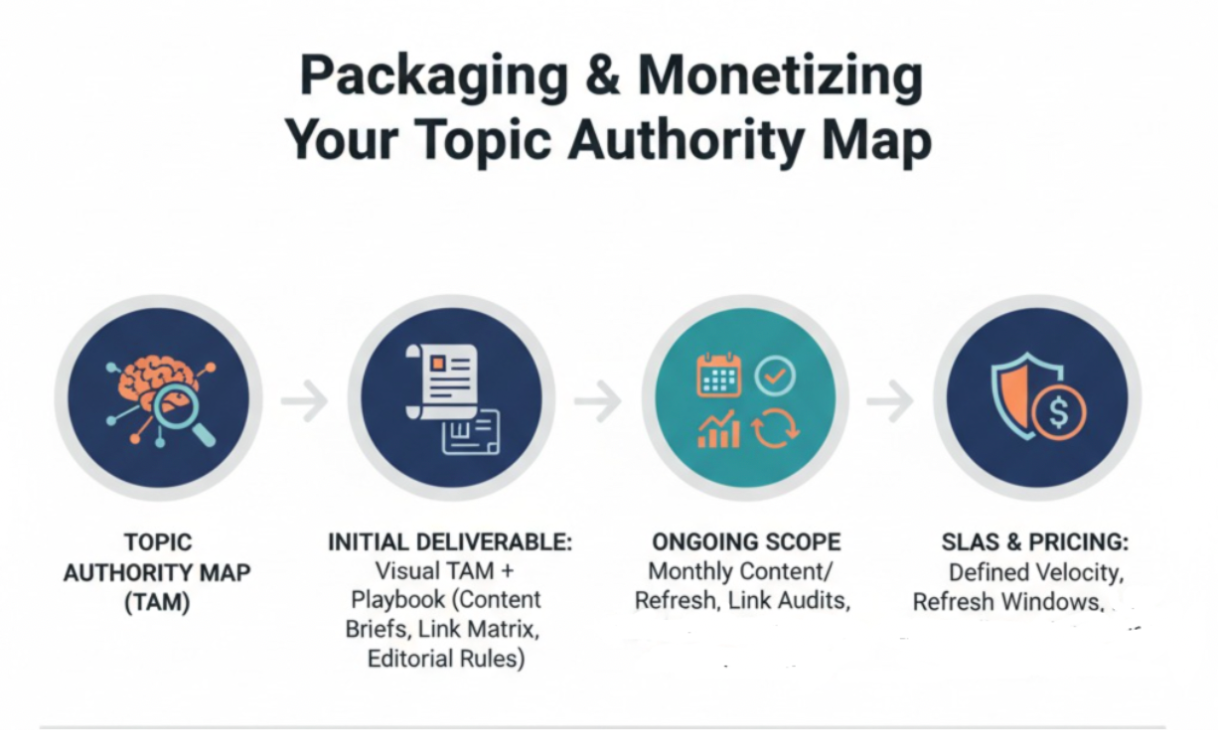
    Agency roadmap infographic showing topic mapping, deliverables, content, SLAs, and pricing

    Successful marketers position the TAM as both a one-time deliverable and a roadmap for recurring services.

    • Initial Deliverable: The visual TAM plus the playbook (content briefs, link matrix, editorial rules).
    • Ongoing Scope: Monthly content production and refresh slots, link audits, KPI reporting, and quarterly strategy updates.
    • SLAs: Defined content velocity (for example, six briefs per month), refresh windows, and link-implementation cadence.
    • Pricing Logic: Value-based, tied to funnel impact and coverage growth instead of per-article rates

    This structure aligns marketing revenue with client growth while keeping workloads predictable.

    👉 Also Read: 21 Best SEO Blogs Every Website Owner Should Check Out

    Common Pitfalls and Governance Controls

    Here’s a snapshot of the most common pitfalls teams face and the governance controls that prevent them:

    1. Thin Cluster Pages: Enforce minimum depth requirements and reject outlines that fail to add unique insight or value.
    2. Keyword Cannibalisation: Maintain strict canonical ownership within the map and audit drafts before publishing to prevent overlap.
    3. Link Decay: Run quarterly link checks and fix or redirect broken or outdated paths to preserve authority flow.
    4. Rigid Templates: Allow localisation adjustments, especially for markets like the US and India, to maintain relevance.
    5. No KPI Alignment: Assign at least one measurable outcome to every node before it enters production to ensure accountability.
    💡 Pro Tip: Use on-page SEO essentials like semantic headings, focused intent and smart internal links to keep your TAM clean and prevent keyword overlap.

    Here’s how it’ll help:

    • 🎯 Write to one clear intent so each page has a distinct purpose 
    • 🔗 Use contextual internal links to reinforce pillar–cluster authority
    • 🧩 Use unique examples or data points to avoid thin or duplicate content 

    Move From Strategy to Execution Today!

    Topical authority mapping turns content strategy from a keyword wish list into an operational system that earns topical authority, matches buyer intent, and fuels retainer economics.

    To put this into motion:

    • Draft a TAM for one high-priority client pillar this quarter.
    • Spin out three content briefs, each mapped to a distinct intent layer.
    • Implement the internal-link matrix and book monthly link audits.
    • Set up a simple dashboard combining Search Console, GA4, and CRM proxies.

    At Wittypen, we help marketing and SEO teams put this entire system into action. From building your Topic Authority Map to producing high-quality cluster content at scale, we support you with the structure, governance, and execution needed to drive predictable organic growth.

    Ready to see how this works for your organisation? Speak with our team today.

    FAQs

    1. How many cluster pages do I need for a strong Topic Authority Map?

    Most pillars require between 8 and 25 cluster pages, depending on the topic’s competitiveness. Highly saturated niches often require deeper clusters and more supporting content to build topical authority.

    2. How long does topical authority mapping take to show results?

    You’ll usually see impact within 8 to 16 weeks once enough clusters and internal links are live.

    3. What tools help build a Topic Authority Map?

    Semrush, Ahrefs, and Keyword Insights help with clustering, while Miro or Notion work well for mapping.

    4. Is a TAM useful if we already have a content strategy?

    Yes. It strengthens your strategy by identifying content gaps, aligning intent, and highlighting opportunities for improvement.

  • Link Building Without Guest Posts: 7 Scalable Strategies for 2026

    Link Building Without Guest Posts: 7 Scalable Strategies for 2026

    Keeping a steady flow of high-quality backlinks is one of the toughest challenges for link acquisition teams. Guest posting still has its place, but approval rates are falling, inboxes are crowded, and many publications now restrict external contributions or label them as sponsored. Today we will talk about 7 non-guest posting link building strategies.

    If you depend heavily on guest posts, scaling link building gets harder every year. Especially when $508.95 is the average acceptable price for acquiring one high-quality backlink, according to The 2025 State of Link Building study by Editorial Link.

    This guide breaks down seven proven, scalable link-building strategies that don’t rely on guest blogging. You’ll learn how to build stronger authority, earn editorial citations, and generate referral traffic, all through assets and outreach processes that compound over time.

    Table of Contents:

    Why It’s Time to Look Beyond Guest Posting

    7 Non-Guest Posting Link Building Strategies Agencies Can Use in 2026

    1. Data-Led Research and Digital PR
    2. Interactive Tools and Embeddables
    3. Visual Assets and Infographics
    4. Link Reclamation and Broken Link Replacement
    5. Resource Pages and Curated Lists
    6. HARO, Quoted and Direct Journalist Outreach
    7. Partnerships, Podcasts and Reverse Guesting

    A Simple Outreach Workflow to Operationalise Link Building Strategies

    • Key Team Roles

    Measurement Framework: Proving Value vs. Guest Posting

    1. Primary Metrics
    2. Secondary Metrics
    3. Attribution Tools
    4. Reporting Cadence

    Guest Posting vs. Non-Guest Link: Tactics to Implement in 2026

    A Quick 5-Step 90-Day Pilot Plan for Link Building

    Building Links That Actually Last

    Why It’s Time to Look Beyond Guest Posting

    Guest posting still works, but it’s no longer the easiest, fastest, or most sustainable way to earn links.

    Here’s what’s changed –

    • Editorial teams receive more pitches

    • Acceptance rates are shrinking

    • Anchors are tightly controlled

    • Many publishers now tag guest content as “sponsored”

    • Scaling requires more writers, more editing, and more back-and-forth

    Shifting to asset-driven, earned link strategies helps you secure placements on –

    • News sites

    • Resource pages

    • Community platforms

    • EDU and NGO websites

    • Industry reports

    • Curated tools lists

    These links usually have the four USPS: higher authority, stronger referral traffic, better longevity, and less algorithm risk.

    Also Read – 8 Reasons Why Your Website Is Not Showing up on Google

    7 Non-Guest Posting Link Building Strategies Agencies Can Use in 2026

    We’ve listed seven tactics that work across B2B, SaaS, fintech, e-commerce, and local service brands. Prioritise them based on your client’s goals, whether that’s link authority, referral traffic, digital PR visibility, or fast turnaround.

    1. Data-Led Research and Digital PR

    Journalists, editors, and industry bloggers constantly look for new insights. If you publish original data, they quote it and they link to you.

    This is one of the most reliable ways to earn authoritative, editorial backlinks.

    What You Can Create

    1. Short surveys

    2. City-level rankings

    3. State-wise comparisons

    4. Industry benchmarks

    5. Yearly trend reports

    How to Execute

    1. Pick a narrow, newsworthy angle closely tied to your client’s niche

    2. Use transparent, defensible methods

    3. Turn the data into charts, tables, pull-quotes, and visuals

    4. Package everything into a simple press kit

    5. Pitch the story to pre-qualified journalists in India, the US, and industry-specific media

    KPIs to Track

    • Media pickups

    • Unique referring domains

    • Referral traffic

    Watch out for – Higher upfront research costs and the need for clear, compelling storytelling

    2. Interactive Tools and Embeddables

    Lightweight tools, like calculators, widgets, maps, and checkers, get embedded on blogs and resource pages because they solve a real problem in seconds.

    Every embed includes a link back to your site.

    Examples

    1. EMI calculators

    2. Savings or ROI calculators

    3. Industry benchmarking tools

    4. Local-market price checkers

    5. Compliance or eligibility check widgets

    How to Execute

    1. Build a mobile-friendly embeddable

    2. Include copy-and-paste embed code with a mandatory do-follow credit link

    3. Optimise the landing page with proper metadata and schema

    4. Pitch the tool to niche blogs, educators, and directories

    KPIs

    • Number of embeds

    • New referring domains

    • Organic traffic to the tool

    Pro Tip – Budget for occasional maintenance and data updates.

    3. Visual Assets and Infographics

    Infographics remain shareable because they compress information into quick, easy snapshots. When publishers embed them, you win backlinks.

    How to Execute

    1. Produce multiple sizes (full, half, social, vertical)

    2. Include an HTML embed code with attribution

    3. Pitch listicle writers, creators, and community curators

    4. Seed the asset through social channels

    KPIs

    • Backlinks earned

    • Number of placements

    • Social shares

    Pro Tip – Some sites may reuse the visual without linking. Have a polite reclamation process ready.

    4. Link Reclamation and Broken Link Replacement

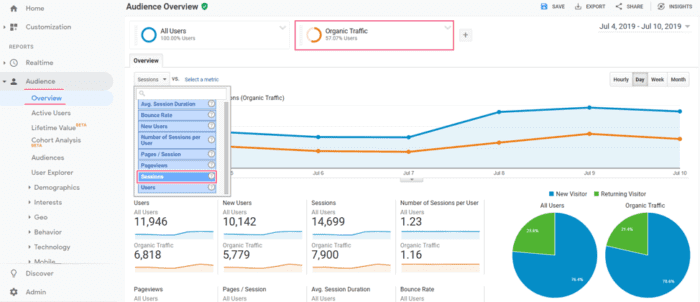
    A real-life screenshot of a broken link.

    Did you know that 4.11% of links are pages that are not found? This can happen for two reasons: the linking page has been deleted, or the content, including the link, is missing.

    Where These Links Come From

    1. Unlinked brand mentions

    2. Lost backlinks

    3. Outbound broken links on other websites

    How to Execute

    1. Crawl weekly for unlinked mentions and 404-replacement opportunities

    2. Sort by domain authority and relevance

    3. Offer the publisher a higher-quality, updated resource

    KPIs

    • Reclamation success rate

    • Time-to-link

    • Authority of recovered domains

    Tools – Backlink monitors + an outreach CRM for follow-ups

    5. Resource Pages and Curated Lists

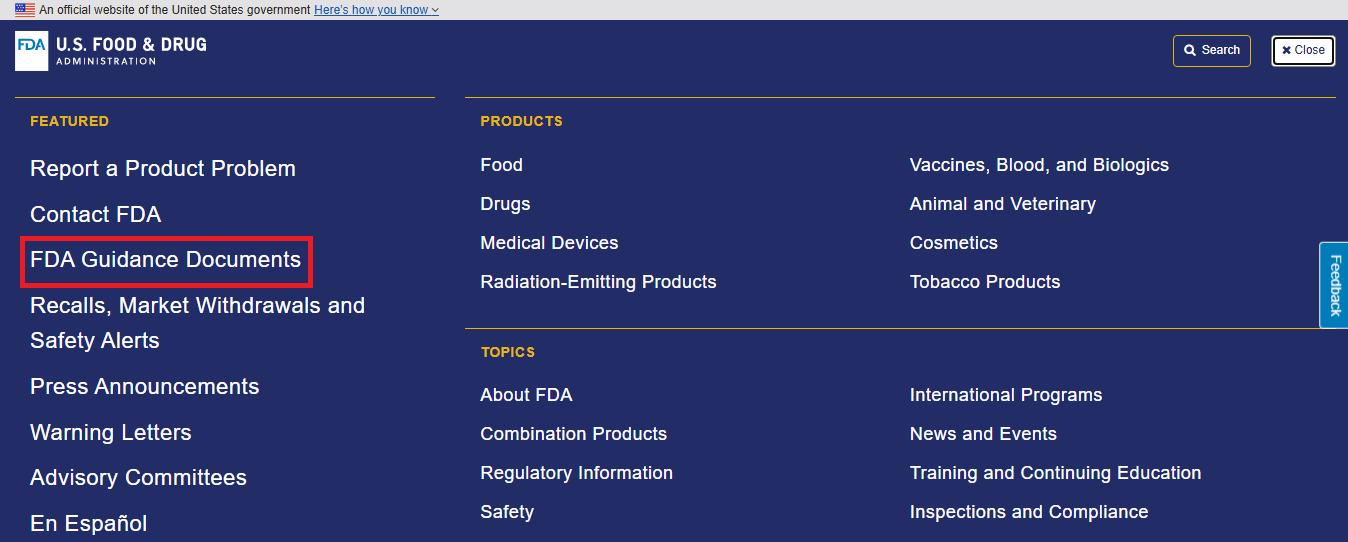
    A real-life screenshot of the FDA’s official website, highlighting the FDA Guidance Documents.

    Universities, NGOs, government sites, and niche blogs maintain evergreen resource pages that link to –

    1. Guides

    2. Tools

    3. Templates

    4. Educational content

    These are excellent for earning consistent, high-authority links.

    How to Execute

    1. Find resource pages linking to similar content

    2. Pitch your asset with a short, clear value statement

    3. Provide an optional blurb to save the curator’s time

    4. Maintain relationships by offering periodic updates

    KPIs

    • Number of placements

    • Diversity of referring domains

    • Referral traffic

    Also Read – Outsourcing 101: A Complete Guide on Outsourcing Content Writing

    6. HARO, Quoted and Direct Journalist Outreach

    Journalists often need expert quotes for stories, and they reward credible responses with backlinks.

    How to Execute

    1. Assign someone to monitor queries twice a day

    2. Respond quickly (within hours)

    3. Give crisp, expert commentary

    4. Include a relevant link to a helpful on-site resource

    5. Build long-term relationships through social engagement

    KPIs

    • Placements earned

    • Authority of publications

    • Speed from pitch to placement

    Trade-off – Speed matters more than volume.

    7. Partnerships, Podcasts and Reverse Guesting

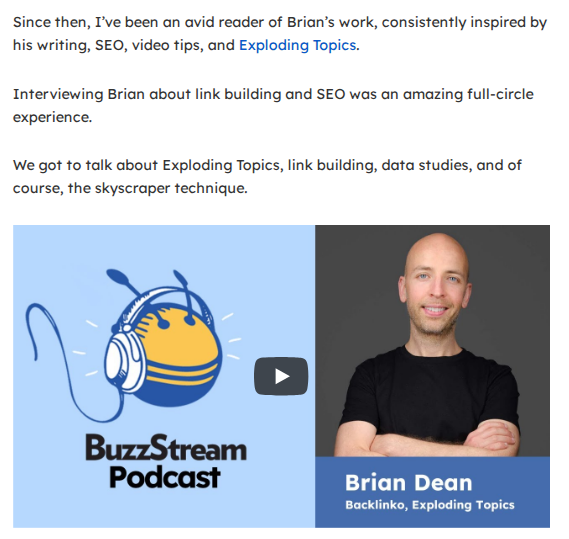
    A real-life screenshot referring to Brian Dean's podcast posted on Backlinko. 

    Source

    Relationship-driven links compound over time and diversify your link profile.

    What This Includes

    1. Co-created content

    2. Podcast appearances

    3. Interviews

    4. Joint studies

    5. Webinars and panels

    6. Reverse guest posts; showcasing experts on your site

    How to Execute

    1. Identify complementary companies or influencers

    2. Pitch a co-created piece or interview swap

    3. Secure podcast appearances for client spokespeople

    4. Publish event recaps or summaries with linkable takeaways

    KPIs

    • Partner backlinks

    • Recurring mentions

    • Referral traffic patterns

    Scaling Note – Slower ramp-up, but very strong long-term payoff.

    A Simple Outreach Workflow to Operationalise Link Building Strategies

    Once your assets are ready, the real impact comes from how you execute outreach. This easy-to-follow workflow will help you organise your efforts, personalise pitches, and consistently win quality links.

    Step 1 – Audit and prioritise assets. Catalogue high-performing content, tools, data sets, and ideas. Score based on linkability and India/US relevance.

    Step 2 – Prospect and segment. Build lists of the following and segment by authority, topic, and region.

    • Journalists

    • Resource pages

    • Tool curators

    • Communities

    • Roundup writers

    Step 3 – Tailor your pitches and lead with value. Include –

    • A stat

    • An embed

    • A broken link fix

    • A helpful tool

    • A fresh dataset

    Step 4 – Follow up smartly. Two or three follow-ups are enough. Use CRM sequences to track status and deadlines.

    Step 5 – Close and capture the win. Record every placement in your CRM –

    • Domain

    • URL

    • Anchor

    • Screenshot

    • Authority metric

    Step 6 – Amplify. Share the asset on social, newsletters, and communities to spark secondary links.

    How to measure link-building efforts

    Measuring link-building impact goes far beyond counting emails or pitches. This framework helps you prove real value by tracking authority, performance, and outcomes that matter to stakeholders.

    Primary Metrics

    1. Referring domains (volume + authority)

    2. Editorial/resource-page placements

    3. Referral traffic

    4. Assisted conversions

    Secondary Metrics

    1. Pitch-to-placement conversion

    2. Time-to-link

    3. Media pickup speed

    Attribution Tools

    1. Backlink trackers

    2. UTMs for embeddables

    3. GA4 for traffic patterns

    Reporting Cadence

    1. Weekly – Outreach productivity

    2. Monthly – Link metrics and authority

    3. Quarterly – Cost, time-to-link, and guest-posting comparison

    Building Links That Actually Last

    Guest posting alone can’t support the kind of authority, diversity, and scalability agencies need today. Asset-led link building delivers stronger long-term results and positions your clients as credible, newsworthy brands.

    Start with one high-value asset, systemise your outreach, and track impact from day one. Over time, these strategies build resilient link profiles, bring in consistent referral traffic, and deliver measurable results that clients can see.

    Executing non-guest link tactics starts with strong assets, and that’s where Wittypen can be your partner. From data-backed reports and visual summaries to detailed guides and expert commentary, we create the kind of content journalists cite, curators feature, and communities share.

    Reach out to us and let’s build your next link-worthy asset together.

    FAQs

    1. Is link building without guest posting enough to grow organic traffic?

    Yes. Asset-led link building, like data studies, tools, and resource-page links, can drive stronger authority and referral traffic than guest posts, especially when scaled consistently.

    2. How long do earned link-building tactics take to show results?

    Most non-guest tactics begin showing traction in 30–90 days. Data PR and reclamation deliver quick wins, while partnerships and tools compound over time for stronger long-term impact.

    3. How do I choose which non-guest tactic is right for my client?

    Match the tactic to the client’s strengths: data-rich brands choose PR; SaaS can offer tools; content-heavy sites benefit from reclamation and resource pages. Let goals and available assets guide you.

    4. How do I track ROI for non-guest link-building campaigns?

    Use backlink trackers, UTMs, and GA4 to measure referring domains, authority, referral traffic, and assisted conversions. Compare these quarterly with guest-posting results for a clear ROI picture.

  • 5 Best SaaS SEO Agencies

    5 Best SaaS SEO Agencies

    Source

    The market for Software as a Service (SaaS) companies has become highly competitive. In fact, the SaaS industry has grown by almost 500% in size in the past 7 years!

    In this landscape, it can be quite difficult to stay relevant or even visible to prospective customers. And that’s why you need the best SaaS SEO agency to enhance your business!

    These agencies specialize in improving SaaS businesses’ online visibility, traffic, and conversion rates. A general SEO agency can’t offer the same results, because the strategies in SaaS are much more complex in nature.

    So, if you’re curious about which SaaS SEO agency to connect with, how to choose one, or how they can help you, let’s dive in!

    Top 5 SaaS SEO Agencies in Detail 

    The market for SEO agencies is saturated, to say the least. It can be difficult for you to tell apart the top SaaS marketing agencies. We have curated a list of the top five SaaS SEO agencies, along with their offerings to save you the hassle. Let’s take a look:

    1. Wittypen

    Image Source

    Wittypen is India’s best SaaS SEO agency. With 8 years of experience in the industry, the agency has served over 400 businesses, building a reputation for producing unique, engaging, and high-quality content.

    Consisting of a team of highly skilled freelance SEO writers with years of experience, this company excels in crafting captivating and original content across a broad spectrum. From blog posts and how-to guides to product descriptions, white papers, and even comparison pages, their focus is on creating high-quality SEO content that propels your business to the top of search results.

    To get customized content for your SaaS product, you simply need to place an order and specify the details of the content you require. The team of experts matches you with the most qualified writers for your project, and then edits the content meticulously to ensure it meets your standards. You can also request up to two rounds of revisions so that the final content perfectly matches your requirements. 

    The agency consists of vetted experts specializing in various fields such as marketing, fintech, and blockchain. That means it can tackle even complex technical content. If you want to boost your business’s position in the digital world, you might just have found your best pick!

    2. Accelerate Agency

    Image Source

    Accelerate Agency is a data-driven agency with a proven track record. With over 100 SaaS experts on their team, they offer impressive content strategies and assimilate technical, onsite, and off-site SEO and content marketing seamlessly.

    They secure high-authority links from the best SaaS websites to boost your website rank. The company combines human expertise with machine learning and data to offer you the best results.

    3. Codeless

    Image Source

    Codeless is a medium-sized agency that specializes in SEO content production for SaaS companies. They have a great reputation for enhancing website traffic and improving ranks in search engine results.

    They offer personalized plans to ensure the content appeals to your target audience. Codeless boasts a huge team of qualified writers, editors, and other experts.

    4. Titan Growth

    Image Source

    Titan Growth is known to specialize in SEO and paid media. With 18+ years of experience in digital marketing and a team of more than 50 employees, the agency has supported some of the greatest brands with organic traffic and revenue boosts.

    They specialise in paid advertising on Google, Bing, and Facebook’s ad platforms. They also offer technical SEO audits and content optimization services.

    5. Growthner

    Image Source

    Growthner is a classic B2B SaaS SEO agency with a detailed approach to ensure organic growth for your business. They offer accurate SaaS link building and well-planned content optimization with the help of their team of experts.

    They are reputed for creating high-quality leads and increasing the monthly recurring revenue of their customers. With custom-made strategies, user-centric content, and effective outreach, they help your business fly high in the competitive digital world.

    They offer full-service SEO, on and off-page SEO, technical SEO, SEO consulting and coaching, and content marketing services.

    Criteria for Selecting the Best SaaS SEO Agency 

    While choosing an SEO agency for SaaS companies, you need to keep an eye out for certain factors, like the following:

    Expertise in the SaaS Industry

    The agency must be familiar with SaaS dynamics and relevant challenges. To ensure that an agency has enough expertise in this industry, you can research common metrics like Customer Acquisition Cost (CAC), Monthly Recurring Revenue (MRR), and Lifetime Value (LTV).

    Find out whether the agency has worked with other SaaS companies. Ask about the most common challenges they face, and how they have dealt with similar challenges in the past.

    Proven SEO Strategies

    Research the kinds of SEO strategies the agency uses for SaaS companies. For instance, the link-building strategy is extremely important in SaaS SEO. You need trustworthy and authoritative links to make the SERP rank work in your favour.

    Ask the team about how they plan to secure quality and appropriate backlinks. A good strategy can help your platform get the necessary and desired organic reach and lead generation.

    Discuss their processes for keyword research, technical SEO, on and off-page optimization, and content creation. Additionally, ask whether they use specific SEO tools for SaaS businesses.

    Ensure they don’t use any black-hat techniques. Otherwise, your website might get penalized or even banned. This is a good reason to be wary of agencies that offer “too good to be true” pricing.

    Client Success Stories

    Ask the agency about their client success rates. Check their portfolio and SaaS SEO case studies to understand how they supported each client with their services.

    Read up about the agency’s past clients and contact them for feedback about their experience with the agency. If the agency is unable to share contacts because of confidentiality, check for the mentioned businesses on their website/portfolio and try to find those businesses yourself. 

    These conversations will help you understand the agency’s responsiveness, adaptability, and customization abilities according to client needs and operational dynamics.

    Benefits of Hiring a Specialized SaaS SEO Agency 

    Besides improving your website traffic, search ranking, brand awareness, and reach, partnering with a SaaS SEO agency can offer the following benefits:

    Competitive Edge for Products

    The right SaaS SEO agency has specialized knowledge in SaaS products. Thus, they can offer you valuable insights, understand your customers’ needs, and study market trends. They help you and your SaaS products stay one step ahead of competitors.

    Lead Generation & Customer Conversion

    SaaS SEO experts have established strategies and use effective tools like CRM software to monitor customer interaction. They can strengthen relationships and generate leads using email marketing and other methods.

    Lower Cost-Per-Acquisition (CPA)

    The best SaaS SEO agency can reduce the financial burden on your business. They allocate resources to the most useful strategies and channels to ensure your marketing budget doesn’t go overboard.

    For instance, they drive organic growth with positive reviews. They publish relevant content to transport potential customers through the sales funnel. They also use PPC ads to help with lead finding and conversions. Additionally, hiring a SaaS SEO agency is more cost-effective than hiring an in-house team.

    Conclusion

    Source

    The best SaaS SEO agency can help your business reach its peak even in a complicated and competitive market. With their expertise and thorough strategies, they will help you slowly but steadily become relevant to your target audience.

    All you have to do is entrust the task to them and collaborate until your digital presence is maximized. Whether you’re looking for SaaS SEO services for startups or established businesses, WittyPen has carved a niche for reliable SEO content services. With the best team onboard, it has been creating magic for years! 

  • SaaS Content Writing 101: How to Write for Leads

    SaaS Content Writing 101: How to Write for Leads

    The competition in the SaaS sector is beyond fierce—it’s relentless. Success hinges not only on the innovation of your product but also on your ability to create a robust lead-generation pipeline.

    According to Forbes, 74% of companies report an increase in lead generation through content marketing. Add to this the fact that organic search accounts for 51% of content consumption, and you can gauge its critical importance. The numbers highlight the undeniable impact and effectiveness of content marketing strategies in the SaaS industry.

    SaaS content writing stands out as one of the most effective strategies to achieve this and gain a competitive edge. It not only helps attract prospects but also plays a crucial role in converting them into valuable leads.

    Read on as we explore the intricacies of content writing for SaaS and discuss how it can be leveraged to not only attract but also convert leads effectively. Let’s dive in!

    The Impact of Content in SaaS

    Source

    When it comes to SaaS, having an innovative and feature-rich product alone won’t suffice if you lack the visibility to attract potential prospects. That is where content comes into the picture. 

    Content serves as the gateway to securing prime real estate on search engine results pages (SERPs)—specifically, the coveted first page. Why is this important, you may ask? The answer is that only 0.44% of internet search users ever get to page two of the SERPs. 

    The first few organic listings on page one also boast an average click-through rate of nearly 28%. This makes it easier to comprehend why 45% of B2B marketers plan on increasing their content marketing budgets this year.

    Additionally, content plays a crucial role in establishing thought leadership and credibility within the SaaS industry. It allows SaaS companies to educate their target audience, address pain points, and showcase expertise, which ultimately helps them build trust and rapport with potential customers.

    How to Create Compelling SaaS Content for Effective Lead Generation?

    When it comes to B2B SaaS content writing, creating engaging content that drives effective lead generation requires a strategic approach.

    Here’s a comprehensive guide to crafting SaaS content that attracts and converts leads:

    1. Understand Your Target Audience

    Source

    The foundational step to effective content writing for SaaS begins with a deep understanding of your target audience (TA).

    While this may seem obvious, unlike generic content, SaaS content writing involves a lot more complexity.

    Here’s why:

    1. Your target audience is not looking for a product; they are seeking a solution to a specific problem.
    2. Generic content is more focused on entertainment and awareness, SaaS content needs to be tailored in a manner that leads your target audience further down the sales funnel.
    3. There are several stakeholders involved in the decision-making process of investing in a SaaS product. Your content will have to target everyone, from the primary decision-makers to the users who benefit most from your solution. 

    So how do you get to know your target audience better? This answer is Customer analysis. Simply put, customer analysis involves using your existing customer data from all touchpoints to understand their pain points and needs.

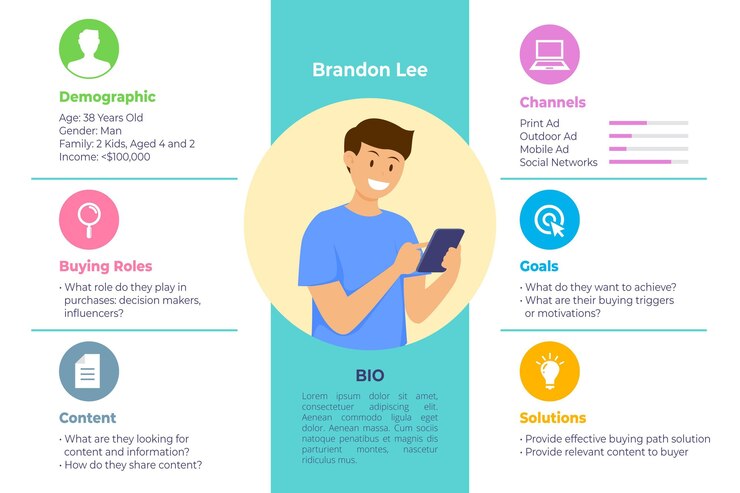
    The next step is to build detailed customer profiles, which, in essence, are fictional representations of your ideal customer base. At this stage, your focus should be on demographics, firmographics, and general buyer behavior. 

    Once you have this data, your focus should shift to building elaborate buyer personas. The data involved here includes psychographics, preferred information channels, and challenges, to name a few. 

    With these personas in place, you will now be equipped with all the information you need on how to tailor your SaaS content writing for maximum impact.

    2. Craft Compelling Headlines and Introductions

    No matter how well-written the meat of your content is, it won’t bear any fruit if you cannot get your target audience to read it in the first place.

    The internet is awash with content, and in fact, we generate about 0.33 Zettabytes of data (that’s about 328.77 million terabytes if you are unfamiliar with the term) every single day. 

    Swiping every few seconds is now muscle memory, thanks to the abundance and excessive consumption of short-form content. That leaves you a few seconds to capture your target audience’s attention and here is why you need to pay special attention to your headlines and introductions. 

    Your content’s headlines are the first touchpoint that captures attention and determines whether a reader will engage further with your content.

    Here are a couple of key pointers to keep in mind when crafting engaging headlines:

    • Your headline should be clear, concise, and reflect your value proposition. Prioritize clarity of creativity. 
    • Use headlines that create FOMO and use action verbs that will encourage users to interact with your content. 

    Once your headline has grabbed your target audience’s attention, your introduction should continue to hold that attention, as it will set the stage for the value your content will provide.

    Craft your introduction with the following points in mind:

    • Start with a hook that piques your reader’s curiosity. This can be a fact or a question that highlights the customer’s pain point. 
    • Then, quickly establish relevance and demonstrate how your product can address that pain point. A sneak peek of the benefits can be that gentle nudge to encourage them to engage further with your content. 

    3. Structure Your Content for Lead Generation

    Source

    Your next order of business is to source your content in a manner that makes it a lead-generation powerhouse. 

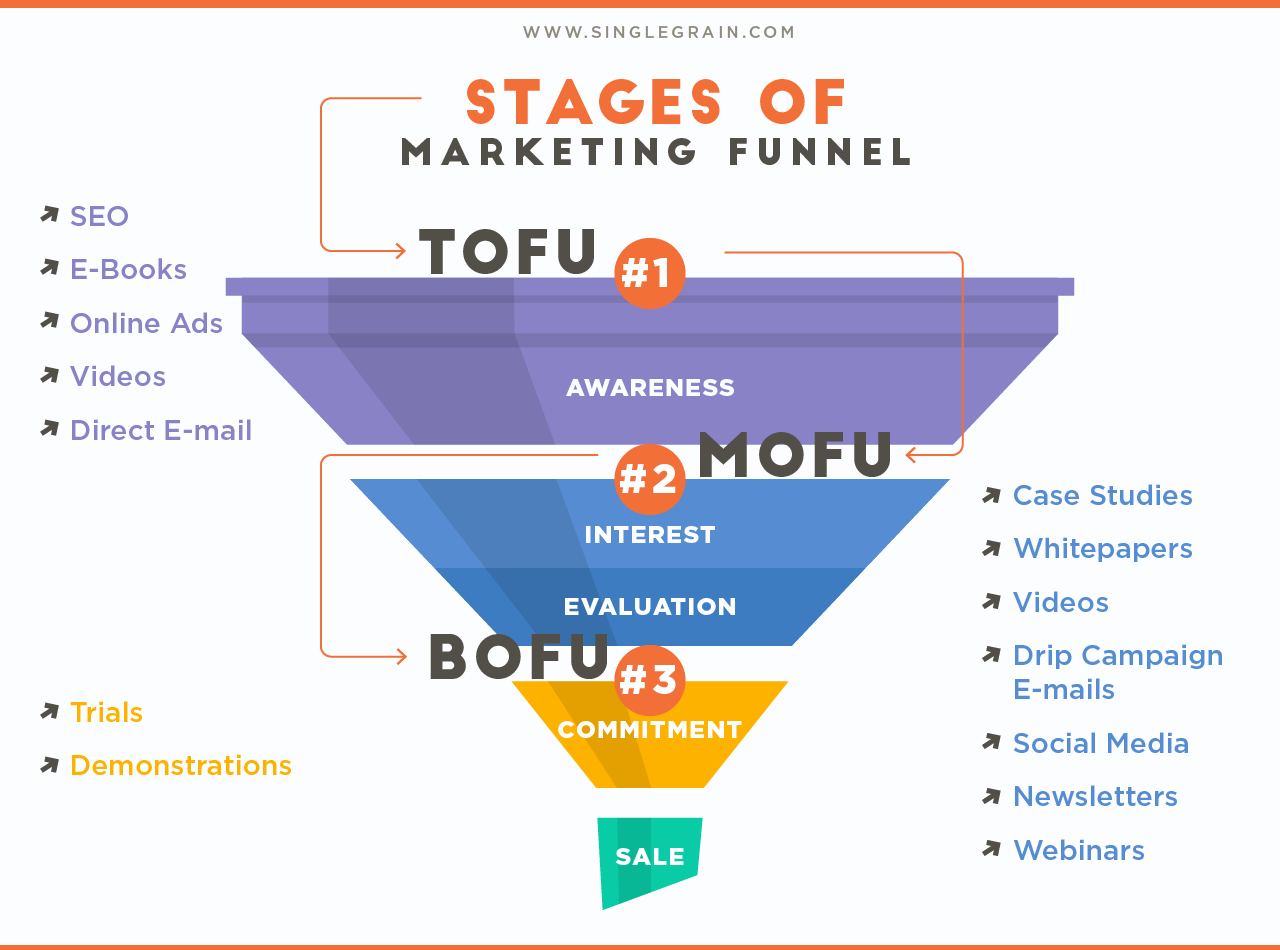
    If you are writing top-of-the-funnel content:

    • Your content should capture the attention of potential leads with broad, informative topics that address common industry challenges.
    • The agenda here is to establish authority and trust and lay the foundations for deeper engagement. 

    As leads move down the funnel, your content must evolve to reflect their journey. In the middle, focus on demonstrating the unique benefits of your SaaS solution.

    • Highlight any case studies and comparative analyses to differentiate your offering from the competition.
    • Your content here should start to address more specific problems, and you should align your content with the nuanced needs of your audience.

    If you are writing Bottom of the Funnel, content should be conversion-oriented. Here, use detailed product guides, free trial offers, and compelling calls to action. The goal here is to reassure leads that your solution is the right choice and to provide them with all the necessary information to make an informed decision.

    You can also tailor individual pieces of content to contain all three types of content strategically. The key is to be informative and walk the fine line between being persuasive and not being too salesy. 

    4.  Utilize SEO Best Practices for SaaS Content

    While there is no specific playbook for SaaS content writing, the following SEO best practices can have an impact on how you rank on search engine results pages (SERP): 

    1.  Focus on understanding user intent and semantics

    The nature of search is changing and so are search engines themselves. Google’s Search Generative Experience (SGE) is but a snippet of where we are headed. Keywords and keyword stuffing no longer cut the mustard, you need to understand user intent and the context behind searches and ensure your content addresses the users’s specific problems.

    Pro Tip: Google’s algorithm takes into consideration over 200 parameters to rank content and it regularly updates it too. (There have been about 36 changes in the past five years.) Stay on top of these updates and alter your SaaS content writing strategy as needed.

    2.  Concentrate on the mobile ecosystem

    As of March 2024, the Mobile vs Desktop Market share stands at 59.91% vs 37.89%. Website visits on mobile were nearly 4x as much as on desktops in 2023 (~40 billion vs ~10 billion). In short, Google prioritizes content optimized for mobile devices.

    Make sure your content is optimized for mobile devices. That said, the focus should not only be on readability, you also need to take into account responsiveness, security, and the overall user experience to rank higher. 

    5. Utilize The Power Of Visuals In Your SaaS Content Writing

    Visuals, when used strategically, are equally, if not more effective, than text when it comes to SaaS content writing.

    That said, here’s how you can leverage them to prove your outcomes:

    1. Use infographics and charts to distill complex data into digestible visuals. This can be a game-changer for sales content writing. 
    2. Maintain a consistent use of brand colors, logos, and imagery to create your unique visual identity to enhance brand recognition and recall among your audience.
    3. Incorporate screenshots and product demos to showcase your SaaS solution in action and provide a tangible understanding of its features and benefits.
    4. Utilize videos to explain concepts, demonstrate processes, or share customer testimonials in a more engaging and dynamic format.

    In short, visuals possess the unique ability to engage with your target audience in a manner that can evoke a reaction and send them further into the sales pipeline. 

    6. Measure the Success of Your Content

    Just like any marketing strategy, data is king when it comes to B2B SaaS content writing.

    Tracking key metrics will give you a holistic view of your content’s real-world impact and give you the insights you need to refine your strategy for maximum lead generation. 

    For example, a high bounce rate (percentage of visitors leaving after one page) could indicate your content isn’t addressing the user’s intent.  This insight directs you to revisit and optimize the content to better align with your audience’s needs. 

    Conversely, a significant increase in time spent on your website or downloads of gated content suggests that you are on the right path. You can recreate what is working in those sections of your SaaS content writing onto those bits of content that aren’t performing as expected. 

    Take Your SaaS Content Writing up a Notch!

    In the highly competitive sphere of SaaS, your content can make all the difference between standing out and getting lost in the crowd.

    The points covered in this blog will help you elevate your SaaS content-writing game, but remember, organic growth does not happen overnight. You need to consistently apply these strategies and stay committed to refining your approach over time.

    If you’re seeking professional writing services, consider Wittypen’s SaaS Content Writing Services. Our team can assist you in crafting a winning content strategy that not only attracts attention but also engages and converts your target audience effectively.

    Let’s work together to make your SaaS content shine!

  • Celebrating Our Woman Warrior: Vinita’s Remarkable 5-Year Journey with Wittypen!

    Celebrating Our Woman Warrior: Vinita’s Remarkable 5-Year Journey with Wittypen!

    At Wittypen, women have always been at the heart of our success. As International Women’s Day inches closer, we’re delighted to highlight one such woman who has shaped Wittypen into the vibrant community it is today. Join us in celebrating our woman warrior. Meet Vinita, our Lead of Operations, whose journey personifies the spirit of growth, strength, and teamwork that defines our company culture.

    Vinita’s journey with Wittypen over the past five years has been nothing short of extraordinary. From her earliest days as a Project Manager to her current role overseeing up to 1000+ writers and 80+ projects, she has been an integral part of every conversation and decision.

    Celebration of Vinita's work Anniversary
    Celebrating Vinita’s 5th Work Anniversary at Wittypen Office

    The Journey and Milestones

    Joining Wittypen in 2019, Vinita brought with her an infectious zeal and a drive to excel. As a Project Manager, she collaborated with clients, ensuring their project requirements were met seamlessly. Little did she know that within three years, she would be at the helm of a dynamic team, leading numerous projects with finesse.

    “It’s been an incredible journey,” Vinita reflects, her eyes gleaming with pride. “When I started, Wittypen was a small team led by Anshul and Preetesh. But what drew me in was the culture—supportive, collaborative, and focused on growth.”

    Carving Her Niche

    Vinita’s rapid rise reflects her commitment to personal and professional growth. Starting as a Project Manager, she steadily climbed the ranks, acquiring a deep understanding of the industry, nurturing strong client relationships along the way.

    Reflecting on her journey, Vinita acknowledges the pivotal role of her mentor, Anshul. “Anshul has been my pillar of support,” she affirms gratefully. “He empowers me to aim higher while providing steadfast guidance during challenges.”

    Recalling a challenging encounter with a writer, Vinita highlights the importance of her team’s support. “Addressing issues head-on can be tough, but with Anshul and my team behind me, I felt empowered to guide the situation with fineness and professionalism.”

    About Her Teammates

    At Wittypen, collaboration is the driving force behind everything we do. Vinita speaks fondly of her colleagues, noting the camaraderie that defines their interactions. “We wear many hats here,” she shares with a smile. “But through it all, Anshul and Preetesh ensure we maintain a healthy work-life balance.”

    Wittypen team celebrating Diwali

    Above and Beyond

    As Wittypen continues to innovate and grow, Vinita looks to the future with excitement. “There’s a tangible sense of innovation here,” she confesses. “We’re always encouraged to think outside the box, promoting both personal and professional development.”

    Vinita’s journey encapsulates the values of Wittypen—an organization that cherishes empowerment, collaboration, and continuous growth. As we celebrate her achievements, we’re reminded of the strength that lies in a supportive and inclusive work culture. Here’s to Vinita and the countless other women who inspire us every day.