
Author: Anushka Massand

  • 9 Evergreen Types of Content: Learn How to Choose Ideal Content for Your Brand

    9 Evergreen Types of Content: Learn How to Choose Ideal Content for Your Brand

    Every brand is different from the other so we cannot use the same types of content for every brand. Finding the right content for your brand is like finding a right key that unlocks the door to your brand. Your readers must be able to connect the content to your brand. To successfully match the ideal types of content to your content marketing strategy and your brand we must be clear of the base of what a brand and what are the various types of brands.

    What is a brand? A brand is a name, concept, service, term, design or other features that together distinguishes an organisation or a product from its competitors for a customer. It helps the company or the product stand out. According to advertising copywriter and ad agency founder David Ogilvy’s definition of a brand is “The intangible sum of a product’s attributes: its name, packaging, and price, its history, its reputation, and the way it’s advertised.”
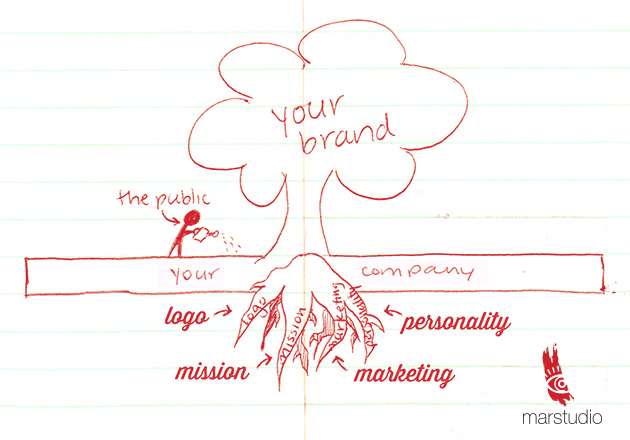
    Source: Marstudio

    Now Lets Identify your Brand

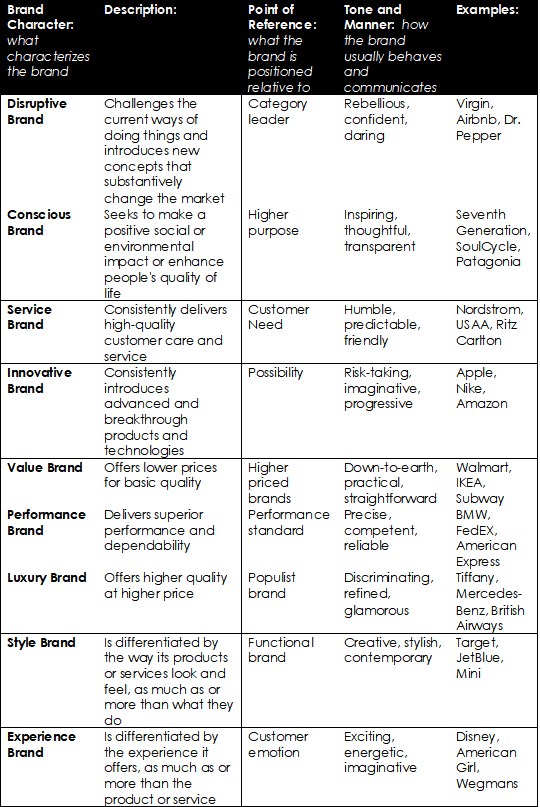
    There are different types of brands, it is necessary to identify your type of brand so you can jumpstart the development of your brand strategy by identifying the one that’s right for you. By selecting one type for your brand, you’re more likely to end up with a powerful brand strategy. Denise Lee Yohn, a brand leadership expert has classified brands in nine major categories, labelled by what characterizes or differentiates them the most from the others. They are as follows:

    1. Disruptive Brand: A Disruptive brand challenges the current ways of doing things and introduces new concepts that substantively change the market.

    2. Conscious Brand: A Conscious brand is on a mission to make a positive social or environmental impact or enhance people’s quality of life.

    3. Service Brand: A Service brand consistently delivers high-quality customer care and service.

    4. Innovative Brand: An Innovative brand consistently introduces advanced and breakthrough products and technologies.

    5. Value Brand: A value brand offers lower prices for basic quality.

    6. Performance Brand: A Performance brand offers products that deliver superior performance and dependability.

    7. Luxury Brand: A Luxury brand offers higher quality at higher price.

    8. Style Brand: A Style brand is differentiated through the way its products or services look and feel, as much as or more than what they do.

    9. Experience Brand: An Experience brand is differentiated through the experience it provides, as much as or more than the product or service. Here’s an image that will help you identify your brand better.
    Source: deniseleeyohn.com

    There are 5 guidelines to be followed to classify your brand in one of these nine categories:

    1. There are some characteristics that need to be and should be followed by all types of brands i.e. All brands should offer good service to their customers even brands not in the Service Brand. Service brand’s strategies, operations, and ultimately customer value propositions are all centered around service first. This puts added pressure on the Service Brands to deliver high quality customer care and service consistently.
    2. Identify your primary brand type, even though there maybe two or three brand types that might seem relevant to your brand type. A Primary brand type should be the one that aligns best with your brand’s goal resonates most with your organization, and gives you the most impact with your customers.
    3. Pick a brand type which is seems most evergreen or sustainable as your brand type has chances of evolving over the years with change in trends, culture, competitors and growth of customers.
    4. You might want to evolve your brand over the years to another brand type but the plans about such should be realistic as a value brand is likely to become a luxury brand.
    5. The difference between the purpose, scope, target customer and personality between different performance brands must be considered. Brand should establish an unique brand identity and a precise brand position for your brand.

    Identifying the type of your brand will not only help find the ideal content of it but will also determine the audience or customers your brand caters to which makes it easier to create content. A Luxury Brand and a Value Brand will have a different set of customers therefore their content strategy will be different too.

    What Types of Content are there?
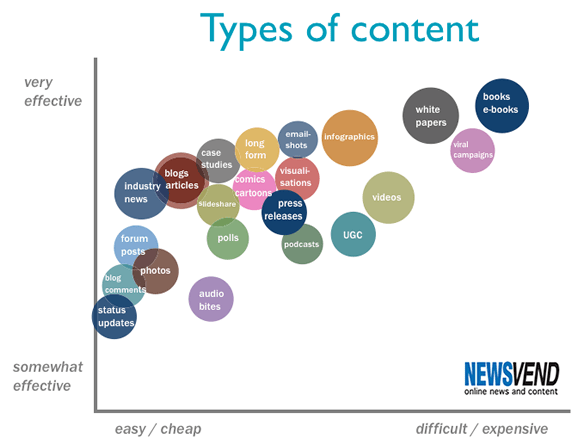
    Source: NewsVend

    Content Marketing goes beyond just traditional business blogs and social media marketing. Yes, they are an essential part of it but there is way more to it than just that. It is essential to know the various types of content so you can match the ideal one with your brand type. Here are nine different types of content:

    1) Blogging: Apart from being a traditional content type it is also the most effective content which makes it the most used content type therefore the first on this list. Blogs makes the central marketing strategy for many brands. They aren’t much time consuming and are relatively low cost. They attract a lot of audience and form a base of loyal readership by building a relationship with your readers. Maintaining a consistent blog with frequent, high quality posts can drive significant amount of traffic to your website. One must avoid these common mistakes while blogging:

    • Not posting regularly
    • Not optimizing your blog for leads or sales
    • Not linking to your own content
    • Ignoring keywords

    2) White papers: White papers are content type filled with information that contains data and solutions about a specific subject. White Papers focus on details and help build respect among their readers. Being it a filled it information a white paper takes a longer time to write and is a bit more expensive than a typical blog. White Papers are meant to focus on a very specific problem and then offer a solution to the problem. A white paper comes a long way to create your brand and sell your product.

    3) Case Studies: A content marketing case study explains what your product or service is and how it helped a client. They are in-depth examinations covering a specific scenario or an example, which should provide both knowledge and actionable information. A case study basically says, “Here is what we do, how we do it, and the results we get.” Case studies are highly sharable and unique as it comprises data of your brand. Your case study should be written in such a way that it doesn’t come off as pure marketing.

    Treat your case study like a blog post and use storytelling elements, focusing on the “why” and “how” parts of the equation. A good case study can really be an inspiring “success story.”

    4) Long form Content or Guides: Long-form content or Guides is available for free online for the readers. It helps readers build trust as they can depend on your brand for guidance hence increasing the subscribers. Ultimate Guides are one of the best types of long-form content that you can create. Many businesses have them separated from the regular blog. This content won’t just be 1,000 words; it might be 5,000-15,000 words.

    There will be several chapters, each on their own URL page. Because of this, they offer immense value. Users don’t have to go anywhere else for information on a subject, because you have literally covered it all. These guides are also free and available online, making them accessible. Remember to break guides down into comprehensible sections, and promote them heavily. You want users to know that they’re there.

    5) E-Books: An E-book is a long content compiled together in a PDF usually. E-books are often a downloadable product, available for free in exchange for joining a mailing list. They do take more time and money to make; you can outsource the process to a freelance writer who has experience with writing them. They can be five pages long or thirty pages long, but they must offer value and must offer real solutions. A good design of the E-book is essential. E-books without colours, graphics, and great formatting are considered not worth reading.

    6) Info graphics: Info + Graphic, as the name suggests Info graphics present information or data visually. They put a ton of information in one image making it visually interesting and easily digestible. Info graphics are perfect for communicating almost any idea or concept.

    Data, research, statistics, and findings work especially well. Info graphics are shared, viewed and loved more. They are a viral potential. As the back link to your info graphic is embedded within it, anyone who shares it properly will give you the valuable back links we all need for our content marketing.

    7) Templates & Downloadable Content: Templates and Downloadable content attract a wide range of visitors. They are a great resource for users to utilize again and again. They are not time consuming or require a lot of money to create. Templates and Downloadable content should have a clean organization along with a lot of white spaces, have a concise copy, and include your branding somewhere on it. They can be offered to the readers in an email subscription sign-up and can be promoted at the end of your blogs and videos.

    8) Listicles and How-to Content: Most articles you read these days on the internet do have lists. List appeals to masses. Even if a visitor doesn’t want to read the whole article, they can scroll through it and still get information. They are the most convenient content to read. One cannot go wrong with this content type. The more detailed your list is, the better.

    How-To Content is also extremely popular. It drives the curiosity and the want to learn something in the readers. One must identify a problem and then come up with a solution for it. You can never run out of How-To content and this type of explained content could be put up daily with diagrams, videos and pictures to enhance it.

    9) Videos: Most users prefer watching a video than reading a long post. They are engaging a nd ever changing. This is particularly true for both tutorials and product content; 4x more users would rather watch a video about a product than read about it. Done well, a video can be extraordinarily persuasive.

    These types of content can be used for social media marketing. The easiest way to use them in your content marketing is to upload them to YouTube, coordinate them with blog posts, and embed them in the relevant posts you write. You could also add a link at the end of the video to send them to your site. Videos aren’t supposed to be long. A good length could be two to three minutes.

    Putting videos on sharing sites like YouTube and Vimeo are great ways to improve your search results. Audience Before finding the right content for your brand, an organisation must study their audience. They must be aware of the type of content their audience consumes or will consume.

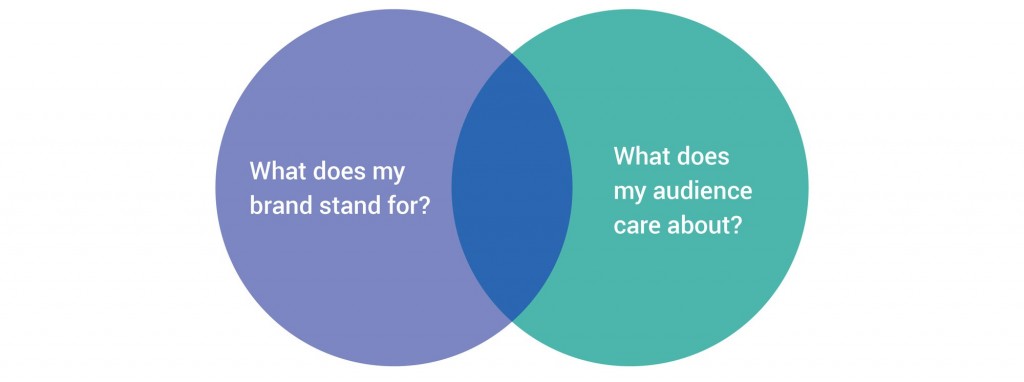
    Younger audience seems to prefer more of Listicles and Videos over white paper and e-books while professionals working would prefer that type of content. This makes it essential for a brand to study and know their audience. Most people prefer to buy from a brand they are familiar with, making it essential for the brand to know their audience’s preferences as familiarity for a brand comes from knowing that they will provide the audience with what they need. Variety of content helps reach out to different types of people. Video content is for social media marketing.
    Source: Think with Google

    Matching your Brand with the Ideal Content

    To find the types of content for your brand, you must be clear about your brand type, audience and the variety of content that is available to you. Let’s say you are a Value Brand or a Conscious Brand which is just starting up. You have specific set of target audience you cater to with not much finances at your disposable for content.

    The ideal type of content for you would be Blogs, Listicles and How-Tos related to your product. While for a Luxury Brand, Performance Brand or an Experience Brand, the audience wants to see the product rather read about it therefore Videos are the way to go for them For Innovative Brands like Apple, Amazon etc. they should opt. for long form content, whitepapers and case studies. Disruptive Brands like Zomato, Zostel etc. should consider content such as Info graphics and Blogging. Service Brands can provide their users with E-books and Guides along with Downloadable content whereas Style Brands like Vogue, Koovs etc. resort to Blogging, Listicles and How-Tos as their ideal content.

    As a brand you should also be aware of the type of content that meets your goal. The right type of content will have an direct impact on your Brand’s growth. Here are some examples of appropriate content for different situations:

    1. Brand awareness: You need to grab your target customer’s attention. Create relevant blog posts, exciting social media content, simple yet informative how-to videos, interesting Info graphics, and Slide Share presentations. Many brands are even creating memes to hook people with humour.

    2. Website traffic: You need to drive people to your website and keep them there. Consider long-form content, how-to guides, whitepapers, eBooks, case studies, info graphics, and videos. Offering original information, research, and data will mark you as an expert in your field and keep the visitors rolling in.

    3. Lead generation: You need to motivate your customers to fill out a contact form with their personal information. The best types of content for this task include contest submissions, eBook downloads, product demos, and podcasts.

    4. Customer retention: You need to keep buyers coming back for more. Get personal with your content, using data to tailor your content and make it relevant for your existing customers. Update your blog regularly, send email updates, and offer coupons for existing customers.
    Source: QuantamBooks

    Conclusion

    A brand will not have only one set of audience. There will be variations in the type of users. Therefore one ideal content type for a brand is not possible in this dynamic world. A brand must mix and match types of content with their brand identity and the need of their audience. People learn differently. Some people are visual learners, while others are more hands-on.

    Similarly, certain types of content will appeal more to different people. If you have more than one target audience, mix up your content to meet the needs of different consumers. Consider rotating the content on your blog or creating different landing pages for certain people. They must also realise that there is a lot of “Content” out there but most brands aren’t providing their audience with the right content type.

    Creating content takes effort and the effort should be put in consistently. Social Media is not the only channel to put your content and content is not created just to talk about the brand and their product. Just remember the 3 things before selecting your content:
    1. The type of your brand.
    2. Your goal.
    3. Your target audience.

  • How Can the Sales Team and the Content Marketing Can Work Together?

    How Can the Sales Team and the Content Marketing Can Work Together?

    Does your company want to see similar benefits of sales and marketing working together?

    Most companies keep their sales and marketing teams separate. They don’t know what the other is working on, they aren’t updated on the happenings in the other team nor do they have access to each other’s data which leads to a lot of lost opportunities. Marketing team doesn’t get to know what is working in the market or not and the sales do not get to communicate to the marketing team about what marketing material actually works in the market even if those are minute changes that could be made in the structure or the style of content created. A recent survey showed that “51 percent of marketers are not satisfied with the level of communication between the teams and 53 percent of sales professionals are not pleased with marketing’s support.” Therefore, it’s time to restructure the two teams to facilitate better workflow between them and to optimize the resources of the company as a whole.

    12 Ways in which content marketing and sales team can work together:

    1. Sharing data:

    The data collected by one can be and should be shared with the other. A sales team will know the buyer personas and the target audience better than the marketing team with their practical knowledge. The two can work together by sharing the data they have already or have come across recently. Making it easier for the other to strategize. A content marketing team could create content according to the data that a sales team provides to them.

    2. Creating a buyer personas:

    A unified buyer’s persona goes a long way to help the company grow. To sell anything one must know their target audience. A sales team functions around getting to the target audience while the marketing team works in the backend on creating content for the target audience according to their preferences. The image of the target audience or the buyer must be the same in both teams for the growth which would otherwise lead to a chaos. A sales team would be pitching the product to Young Adults while the marketing team would be making the content for Senior citizens. Therefore both the sales and marketing depts should be and need to be clear on who their buyers are.

    3. Making a Customer Journey Process:

    The sales and marketing team should sit together in a weekly meeting and form the customer journey cycle. Once the cycle is defined it will make them aware of the phase they are in as a company and what is the next step. The cycle should be understood by both teams about how qualified leads transform into a client with quality content. Over 68% B2B marketers haven’t identified their sales funnel. Both the teams need to define and understand the sales funnel. This will help improve the process as well as keep up with the changes in the process.

    4. Identifying leads:

    The sales team must help the marketing team understand the various ways in which a lead can be identified or what qualifies someone as a lead. Lead are of two types: a marketing-qualified lead (MQL), and a sales-qualified lead (SQL). Both the teams need to find a common ground to define a lead, if they continue to define the leads differently it will result to a lot of missed opportunities and improper crediting of leads within the company but if worked on it together, there could be content created for the common lead else it was leading to creation of content by the marketing team which didn’t match the sales leads needs.

    5. Creating content based on the sales funnel:

    The content needs of marketing and sales haven’t been clear which leads to creation of content by the marketing team that isn’t used by the sales team. Upto 70% of the marketing content goes unused. The content needs to get aligned to the interests and needs of the target audience for which sales team should make the marketing aware about the sales funnel and the direct outreach to the marketing as they know their target audience the best. They know the content that is desired by the audience and they should make their content needs clear to the marketing team, who can then create content which will inspire, inform, educate and attract the leads.

    Image Source: freepik.com

    The sales team will be able to utilize every marketing content created. This will optimize the use of resource and will increase efficiency dramatically to give better results.

    6. Using progressive profiling:

    Most leads produced by marketing team are rejected by the sales team. They don’t take those leads in the account or don’t use it at all which results in wasted efforts put in by the marketing team. The sales team needs to make the marketing team understand why a particular lead is not a fit. Else they will keep creating content for leads and working on leads which aren’t the right fit. Sales team ignores 80% of the lead created by the marketing team. Sales and marketing can together form a more effective technique to produce more qualified lead which will be the base for effective content marketing.

    7. Consulting one another:

    Before using, posting or sending off any content to the readers or the customers, sales and marketing teams must consult with each other about the content marketing strategy. Most buyers are looking for content that doesn’t talk much about sales. This is where content marketing comes in and this is where both the teams need to collaborate. A lot of times, the sales team writes emails and start a campaign without consulting the marketing team. Marketers have a better idea and experience in writing and creating content that will attract more visitors.

    8. Training Together:

    The sales and the marketing should also be trained together in technology. If the system remains the same for both teams, the flow of content creation smoothens too as both the teams know each other and won’t be hesitant to ask each other for help. This minimizes the problems due to the communication gap.

    Image Source: freepik.com

    9. Defining ‘Bad Leads’:

    Marketers must be informed by sales about what bad leads and how do they affect the business rather than simply labeling a bad lead. As for who their content is getting created for. Ideally, their content should be desirable by everyone a lead or not. Sales and content marketing should work on creating content that doesn’t fit every shoe.

    10. Recycling the sales leads to marketing:

    A lead that might not be converted must be given to the marketing team by sales. This is where content marketing comes in. If a lead who is looking for soaps and doesn’t want to buy our product produced soap, we can forward them to marketing with content related to types of soaps and its uses. Around 95% of buyers choose the product that provides them with knowledge and solution related content, helping the consumer through each stage of the buying process.

    11. Brainstorming together:

    Ideas about new content or campaigns can come up from both teams but it should match the expectation level of both as well. To avoid further more time dedicated towards changes. Brainstorming between sales and marketing team will help come up with content together. The business has a higher chance of increasing your ROI by focusing on KPIs that are significant to both departments: Lead generation, Email sign-ups, Social media engagement, Cost per lead and Landing page conversion rates.

    Image Source: freepik.com

    12. Company’s culture:

    It’s not just about only two specific teams in the company working together, the sales and the marketing team but also the company’s culture as a whole should also be encouraging enough for both the teams to work together. The other teams as well should be comfortable about working with each other on things like content.

    For example, if a customer is reading an email or following the company on social media, and then they get a sales call with a completely different tone and personality, it’s off-putting and detrimental to their buying process. When sales and marketing don’t work together it creates not only a divided office but a fragmented brand image and confused and dissatisfied customers. If sales don’t act as the left hand to marketing’s right, growth is a whole lot tougher. The whole experience a customer or a reader goes through must be standardized as per the brand the company represents as.

    “Culture eats strategy for breakfast.” was said by Peter Drucker.

    Collaboration and working can be encouraged by going on outings with the whole company’s office as a one team, working on a volunteer project together, creating standard processes, and agreeing on mutually-beneficial goals.

    The Takeaway:

    The benefits are astounding when there is a sales and marketing alignment — they are 67% better at closing deals. Almost 90% of companies that do collaborate sales and marketing teams to work together report measurable increases in lead conversion. A lot more can be achieved if two teams start working together towards an aligned goal.

    “Companies that align their sales and more practices in place generated 208% more revenue from marketing efforts” (Marketing Profs). “Companies with dynamic, adaptable sales and marketing processes report an average 10% more of their salespeople meet their quotas compared to other companies” (CSO insights). To conclude, working together is beneficial for every single team in a company. Sales and content marketing especially  as they go hand in hand because content created must be as per as the sales needs. Collaboration increases e the efficiency of the employees along with increasing profits.Use these content marketing tips and enjoy the benefits of sales and marketing working together!

  • Enhancing SEO Through the Use of Embedded Videos & Images

    Enhancing SEO Through the Use of Embedded Videos & Images

    How Embed Video & Images Will Help to Enhance SEO

    Search engine optimization (SEO) is an area of website development that seeks to improve the way webpages are ranked by search engines in organic search results. Multiple approaches are taken to achieve that goal, including making sure the web-page architecture makes it easy for visitors to find content, mobile friendly and quick loading pages and of course, the content itself.

    Including videos and images as a part of your content enhances ranking like nothing else. It is like adding color to a black and white canvas. Websites and blog posts that use a combination of media, especially including embedded video and images are ranked much higher on google search than those with just plain text.

    Power of Videos and Images

    According to Cisco’s 2014 Visual Networking Index, video already makes up 64 percent of all internet traffic, and this is forecasted to grow to 80 percent of all traffic by 2019 The reason for such rapid growth in video, is its effectiveness. If a picture is worth a thousand words, a video is worth much more. Forrester estimates that one minute of video equates to 1.8 million words of text in the message communicated.

    Also, there is the matter of convenience – most users are more likely to watch a video than read text, as watching a video takes lesser effort than even skimming through written content. With video – the decision is binary – either consumers watch the video or they do not.

    According to Nielson – Norman’s research, eye-tracking studies show internet readers pay close attention to information-carrying images. In fact, when the images are relevant, readers spend more time looking at the images than they do reading text on the page Infographics are “liked” and shared on social media three times more than other any other type of content

    Why is it important to include videos & images to enhance your SEO?

    1. They give you a better SEO ranking:

    Embedded video has a better chance of getting highly ranked in Google search results, according to Toby Balsiger, CEO of website design and SEO consultant firm Website Tigers. “This means the video needs to be relevant to the keywords you’re going after, as well as helpful to your audience,” he says. Also, a site that featured video was fifty times more likely to rank on the first page of Google, as compared to a site without video.

    2. Increase the number of visitors coming to your site:

    Over time, high-quality content attracts links naturally. So there is a direct relationship between embedding videos & images and the number of views. This increase in organic traffic also improves ranking.

    Embedding images onto your webpage

    After building or selecting the most relevant image to complement your content, the next step is to prepare that image to be put on your web page in a way best suited for Search Engine Crawlers. The following steps can be taken to ensure this objective is achieved:

    1. Selecting the right film name:

    SEO begins with selecting an apt file name. Even if the search engine is unable to process the image, you want for it to be able to know what the image is about. So for example, if your webpage was about the lovely city of San Francisco and your image is of the San Francisco skyline, then you should name is as San-Francisco-skyline.jpg, as compared to DSC3345.jpg. So, the search engine will catch these keywords and boost you up the ranking charts.

    2. Adding a relevant caption:

    In 2012, KissMetric stated that “Captions under images are read on average 300% more than the body copy itself, so not using them, or not using them correctly, means missing out on an opportunity to engage a huge number of potential readers.”

    So, just like the file-name is important for the SEO algorithms to understand what the picture could be about – having a caption to go with the image is important for the potential readers of the article, which in turn makes it important for SEO algorithms. Captions are valued more than the body of the text for this very reason.

    3. Scaling the image:

    Another important factor in SEO is how fast a web page loads. If your file size is very large, it will invariably result in slow loading and slow indexing. A common mistake that is made is uploading a full size image, even, though the display size is much smaller. For example, loading an HD image in 1920×1080 pixel size when the display is only 400×300 pixels size will result in the entire picture being loaded. So, the solution to this is to scale your image to display size and then loading it.

    4. Using mobile friendly and responsive images:

    Of late, this factor has become extremely important. These days the number of views of a website on mobile is generally more than that on a laptop. So, it is vital to ensure that your content is both mobile friendly, i.e. easy to read on a mobile, and responsive, i.e. the content and the web page architecture adapts to mobile screen size. A good mobile experience improves ranking and this factor will only keep on increasing in importance. There are many tools and plug-ins that make this easy to do.

    5. Optimizing the file size:

    The final step in optimizing images for SEO is to make sure the file size is as low as possible, of course, without compromising on quality. As a general rule however, it is best to make sure that the scaled image is exported in the smallest size possible. Another way to reduce file size is to remove the EXIF data. The tools to do this are available online such as ImageOptim or websites like Kraken.io

    Additional Tips on making the most of embedded images

    1. The alt text ranking factor:

    Alternative text or alt text, (also known as ‘alt attributes’ or ‘alt descriptions’) is used to describe the appearance and function of an image on a page. Alt text uses: Adding alternative text to images is primarily and most importantly, a principle of web accessibility. Alt tags are displayed in place of an image if the image file does not load Alt tags also play an important role in providing descriptions or context to search engine algorithms. This helps in indexing an image properly.

    2. Creating an Image Sitemap:

    Building and uploading an image sitemap to capture all of your images in one location gives search engine algorithms the ability to discover and peruse through all the images on your site. This increases the probability of your images being selected as top search results.

    3. The possibility of linkbait:

    Link-baiting is the practice of intentionally creating content which is designed to get other content creators to link to it. The aim is to increase the number of links that direct to your content and therefore improve ranking as per search engine results. Adding value adding, relevant and compelling content is the most important aspect of link-baiting. This could be through infographics, images that stand out, humorous or compelling content, news or any other content of relevance. Such content always leads to sharing and virality.

    Embedding Videos onto your Webpage:

    Uploading a video to YouTube and embedding it on your site is one of the easiest ways leverage video seo. If you don’t have a video to upload, try simply embedding one that’s relevant to your business and industry. Most videos on YouTube allow for embedding, and just because it’s not yours doesn’t necessarily mean you can’t use it. Be sure to choose video content that compliments your business and brand, while not distracting or taking away from what you’re trying to accomplish with your visitor

    Tips on using video effectively for SEO

    Use the following tips to make SEO work in your favour:

    1. Video integration:

    The most important criterion in SEO ranking is the content, of which video is the king. So by integrating video onto your web page, you are sending the a message to Search engine algorithms that your content is not only relevant, but also premium. As the popularity and importance of video increases, this factor will become increasingly important in improving page rank.

    2. Keyword labels:

    Just as labeling pictures and infographics improves search engine ranking, adding a crisp label to your embedded video makes it much easier for search engines to understand your content. This simple but effective practice can go a long way in improving your ranking. This could be in the form of a title, or tags, names, descriptions or even the file name.

    3. Video transcript:

    Similar to keyword labels, adding a transcript of the audio that you have embedded helps the search engine even further and builds up your score, especially in terms of relevance.

    4. Video sitemap:

    While a video sitemap might seem like an unnecessary addition, it is in fact a separate factor as per search engine algorithms. In a video sitemap one can include information that the label, transcript or even the video may not contain such as – rating, PG ratings (age appropriateness), number of views, Metadata, duration and any other information that you might deem fit. Create a video sitemap, it is just an extension to the website’s native sitemap

    5. Hosting the video on YouTube:

    This is a very important practice that has many positive implications. Firstly, after Google, YouTube is the second largest search engine in the world (on basis of number of queries). Also, YouTube is owned by Google. So hosting your video on YouTube works in your favour.

    Secondly, whilst many developers disagree with this practice and suggest hosting the video on your own website, it should be noted that YouTube takes the load off your website for hosting, which in turn improves the speed at which your page loads – which is also an important criterion for ranking. So, this advantage is dual

    6. Optimizing videos for load time:

    As mentioned above, page performance is an important factor for search engine algorithms. According to Radware, 57 percent of mobile users abandon a slow loading site after just 3 seconds of waiting. So it is crucial that your page loading is smooth and quick.

    7. Backlink from your YouTube video:

    This is a little complicated, but it’s a neat trick that improves your ranking. A link to your YouTube video does not count as a link to your web page. So, the aim is to create a back link from YouTube itself. To do this, first create a channel on YouTube and insert your web page into the channel’s profile. Finally, in the video description, insert the link to your website.

    8. Traction and Social Media:

    Search Engine Algorithms improve ranking based on how popular content is, or in other words how much traction it has received. Thus, social sharing or getting people to like/share your video will improve the relevance score of your content, which in turn will improve your page ranking.

    Conclusion:

    Implement an affordable content strategy that makes use of embedded video and images Many times content creators are reluctant to include high quality images or videos on their web pages because they believe it is either too difficult or too costly. However, with the deluge of new video and image tools that have flooded the Internet space, it is not at all difficult – even if you are a beginner. These tools are easy to use, free and give an output that is clean and professional. Today, it is possible to build quality content at a very affordable cost. By embedding this rich media onto your webpage, you go a long way in improving user experience and your ranking by search engines.

    Here is a 7 SEO checklist for you to follow before you post your next blog.

  • How to Build Traction and Generate Leads for Education Business Through Content Marketing?

    How to Build Traction and Generate Leads for Education Business Through Content Marketing?

    Education businesses have always been service oriented. Advancement of technology, especially the widespread proliferation of the internet has disrupted the Education industry. This has lead to the growth of multiple e-learning portals and education websites. They are easy to access and help one study in a more creative and diverse way, with the help of visuals which won’t be possible in a school classroom.

    Also, students now have access to knowledge and subjects that may not have been available in their educational programs. Thus, the ways of learning have been amplified. The education industry has grown and is filled with competition all around, with multiple portals and websites coming in the Internet space world-wide. So, even Indian companies are available everywhere in the world but face a lot of competition. So, it is necessary for a business to stand out from the rest. And to achieve this, content marketing is a must.This blog will tell you how to build traction for education business through content.

    Other marketing strategies versus content marketing

    Most marketing strategies, like standard advertising, are put in front of the consumers, readers and audience without considering their preferences. The audience feels as if they have been forced to watch it. Also, research has shown that this force-feeding isn’t an effective way to attract consumers. On the other hand, content marketing draws the audience to you. They come to your website to read it. So, all you have to do is to make your content powerful enough to attract them and target the right audience.

    What is important for customer acquisition & retention

    1. Know your customer:

    It is vital to know who your customer is, to build a service that he will use. In this business, it is generally difficult to differentiate between visitors/readers and customers

    2. The buyer is not always the user:

    One who pays for the service isn’t the one who will use it. Most of the times parents, teachers or even the company enable the student to learn from the educatsites.ites .Therefore, this makes it important to know your target audience and your end users.

    3. Satisfying the needs of both the buyer and the user:

    The needs of the user and the buyer are quite different. For the buyer, the service must give value for money and for the user – it must teach or supplement his education. Doing both of these things simultaneously will build trust amongst not only the consumer base, but also within the Educational fraternity comprising of students, parents, educators and peer groups.

    4. Compete with yourself:

    In order to succeed, education businesses need to compete with their own content rather than competing with other websites. This can be done by adding variety and enhancing the existing content to based on feedback or changing needs. Hence, this will go a long way in retention of customers.

    5. Customisable content:

    Rather than a one-size-fits-all approach, companies should allow the customer to customize this course based on his requirement.

    6. Keeping your content updated:

    Apart from constantly updating and enhancing content, there should also be frequent updates about trending topics in the education industry.

    7. Building Trust:

    By mentioning the well-known institutions and educators that your company is associated with, customers too will associate the trust, that they have for these institutions with your brand. Therefore, this will go far in building goodwill for your brand. Education companies must keep these points in mind while building a content strategy.

    Power of content in Education arena

    Education businesses survive and thrive on content. As their product offering is content based – it is extremely vital to build quality content especially in lieu of the growing competition. There are several effective ways to generate content ideas. Content in the education arena is generally, but not limited to, lessons in subjects compromising of e-books, visuals like videos and infographics The effectiveness of content depends upon simplicity, relevance and creativity.

    As a general rule, the simpler the content – the more users that are drawn towards it So, content needs to be in a simple language & must convey the relevant information at the same time, making it easy for students to understand even complex things The content in the education sector can widen the readers from students to their parents to teachers content makes the readers aware of the new opportunities and the latest trends in their field It helps readers plan ahead of time for upcoming career opportunities, exams etc. Content makes readers dependable on it for their life choices in education

    How to build traction for Education Business through Content Marketing?

    Generating traction is basically bringing readers to your website instead of a competitor’s. In today’s world of cutthroat competition, generating traction has become difficult and every business feels needs to one-up each other in one-way or another while attract new readers/users.

    The product you are selling is not the only thing that will drive readers to your website, no matter how amazing the product is. Therefore, as a business, one needs to come up with many alternate ways to build traction. These methods can be so effective that sometimes they will help you sell the product, more than the product can be based upon its merits! Content marketing plays a major role in building traction for education.

    Best practices to follow

    Search Engine Optimisation (SEO) is one of the best solutions to boost up your traction. But it doesn’t give immediate results. It takes at least 6 to 8 months for good results. Either way, it has to be a priority for your business to succeed in the long run. SEO gets people who do not know about your product already. It doesn’t help in retaining existing customers.

    To do so and generate more users along with creating a buzz about your product & business in the market, one can follow these practices: One can start by listing out all the ways in which your product is better off and useful to your target audience followed by approaching these readers through customised emails and various social media channels.

    Utilizing social media channels through ads, campaigns, creating content that will attract your target audience As an Education business, you could also put up daily quizzes and case studies relating to different subjects Writing and posting informative blogs on a continuous basis, with relevant keywords can get you straight to the viewers. Make full-fledged use of social media marketing. Here is a post on Instagram content marketing examples to get you started. Make use of content marketing resources and use AI in content marketing to keep pace with changing times. Building PR via avenues such as forums, groups, communities, LinkedIn and other forms of print media too.  

    There are also some strategies that will always help increase your readers if done the right way:

    Evergreen Strategies

    • Visuals: Education businesses on the internet need to have visuals for students to remain interested in the content. Visuals comprise of videos, infographics and visual effects. They are the icing to your content making it more engaging.
    • SEO: Powerful Search Engine Optimisation will boost your content in the long run. It is the most effective method to boost your visitors. Many education businesses depend only on a powerful SEO for survival.
    • Plugins: Make use of the plugins to tap into Google directories allowing your content to be optimized, so that it can be searched as and when required. Though this would take some time but would yield results in a long run.
    • Users needs: Customising as well as making your content as per the user’s needs will maintain a consistent amount of readers who will keep coming back. Prioritising their needs helps in earning their loyalty.
    • Social Media: Frequent and relevant social media posts on most media channels along with a blog helps to make your user circle bigger and keeps your current users constantly engaged with your business.

    Create marketing resources & collateral

    Creating content marketing resources and collateral like catalogues and booklets will act as a proof about your product. Many Educational businesses include success stories of their previous students along with other content on their websites.

    Create downloadable content

    Any student needs material to study or read from and so, education websites should provide students with downloadable content apart from their study material. For any user getting content which is downloadable is a freebie which makes them come back to the website for more. Creating downloadable content according to user’s journey Being well aware of your buyer’s needs and journey makes it easy to generate content for specific stages of their journey.Below is a shortlist of downloadable content that always works for a student’s journey:

    • E-books: These about a specific topic provides additional practical knowledge about the subject they are studying.
    • Timetables: There are so many exams for entrance and other competitive exams to keep track of. Providing students with an academic calendar with application deadline would help them and they would always see your business’s name when they check it.
    • Whitepaper: Reports also work as great downloadable content.
    • Case studies: Case studies are interesting to read and not difficult to create. Provides the users with real-life examples of what they are studying.
    • Assignments/Quizzes: For an education website, providing the users with quiz of the day or week will keep them engaged with your brand on a daily basis.

    How do you generate leads with content marketing?

    The above-mentioned methods are driven by content. One must know their target audience for effective generation of leads with content marketing, For example, A parent could be looking at the website for their children, a student might be accessing the website for help with his studies. Knowing your target audience helps to ensure that you create content that is targeting that specific segment of the audience.

    1. User-Student Journey

    In education businesses, the user journey gets replaced by the student journey. It is critical to engage with prospective students from the stage of awareness. A student navigates from a level of emotions that range from fear, doubt, excitement,overwhelmment, motivation, and inspiration in their journey. As an education business, your content marketing must help a student by providing them with knowledge throughout their journey which will create an impact on the student from the stage one.

    “Good Content along student journey sets stage for high impact at decision time”

    2. Create landing pages

    An education website is visited by students, teachers and their parents along with some passing readers. There are these different segments of the audience. It only makes sense to create unique landing pages based on specific categories. Since each visitor is unique, they will react in a different way towards the landing pages. Segmentation helps you in building landing pages that is a mixture of videos, images, documents and call-to-action for a particular user. Segmentation also helps in focusing on elements of the web page such as emails or PPC ads, through which there is an increase in traffic on the website.

    The Takeaway

    Build traction for your education business through content. Great content marketing will help a low profile – low budget company go a long way with flowing benefits. Content marketing is the verified way to make a lasting impact on prospective consumers, driving traffic and generating sales.