Category: WittyPen Resources

  • WittyPen launches Content Marketing Resources

    WittyPen launches Content Marketing Resources

    The need for good content resources

    Great experiences matter. This holds very true for brands like yours and mine. If your audience is not satisfied with the kind of content you provide, then your brand is up to no good. That is why it is very critical to have a content hub of sorts, i.e a place for all sorts of content marketing resources for your audience

    Why did we go for content marketing resources?

    We wanted to have a hub where we had all the content centralized. Like a one-stop shop for our audience. The idea stemmed from the fact that we often hop on to different places on the web to get the “right” content and it consumes a lot of our time.

    Therefore, we have built a content hub that has brand’s content, curated content, social media content etc in just one place. We as a brand believe that these content marketing resources will help us in stitching the disparate content together and also give us a better control. We also believe that the content marketing resources are evergreen and will be utilized for longer as opposed to the content that is viral now, but might not be tomorrow.

    Through this we will be able to speak to the right person in the right content, because we will be able to target specific person/s, industries or verticals.

    Furthermore, this will help our audience to find a steady flow of helpful information and entertaining snippets.

    Before we proceed ahead, we would like to share our logo for our brand new project.

    content marketing resources

    You can check out our project here.

    Let us also have a look at some brands that have their own pool of content marketing resources.

    1.Txchnologist is a content hub created in partnership with GE. The Txchnologist hub shares content related to the great content marketing challenges of industry, technology and ingenuity. They post content that examines ideas that will shape societies, from the developing world to our frenetic and growing cities.

    Click on the link to know more about it.

    2. Condé Nast owned publication, GQ showcases its content in a beautiful interactive hub. GQ consistently shares content about success, style, fashion and has a provocative mix of great writing & strong visuals.
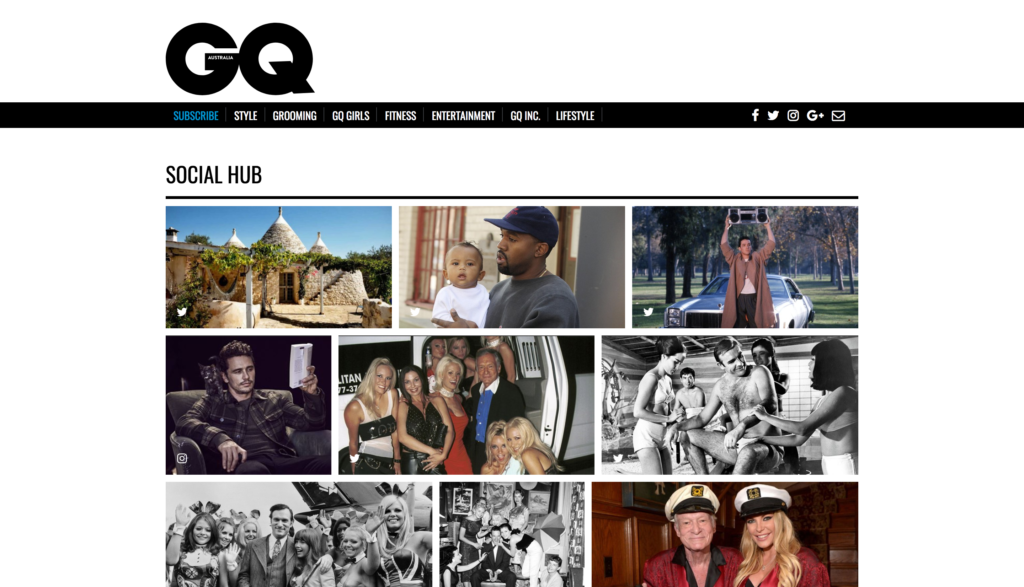
    content marketing resources

    Follow GQ to know more about it.

    In conclusion, we would like to mention that content marketing resources for us is a way to diversify the type of content we produce. And through this we want to benefit our users in skipping the hassle of looking out for content.

    Our suggestion to you marketers: Make a content pool of your own and improve your content distribution strategy 🙂

    Our suggestion to you customers: If you are looking out for good content, then ours is the right place.

    We love feedbacks(Positive, more ;)). So, keep showering your valuable feedbacks on us, we are eager to know how you like our platform.

  • 7 Content Writing Best Practices Unearthed by WittyPen

    7 Content Writing Best Practices Unearthed by WittyPen

    Website Content is a more personalized form of story-telling. However, a writer must follow these content writing practices nonetheless. The tips given below will guide you how to become the best content writer there is.

    Image Source: pexels.com

    What Is a Website?

    A website is simply a collection of related web pages identified with a common domain and published on at least one web server.

    A website can be identified by:

    1. The presentation of online content in HTML, CSS, Java, JavaScript, Python, PHP or any other format comprises a website
    2. A Landing Page
    3. Structured/ Home page/ Portfolio/ Blog/ Terms & Conditions/ Company Vision, policies/ Feedback etc.

    Content Writing Best Practices

    Here are some of the SEO content writing best practices in order to create relevant website content for your clients.

    1. 3-30-3 RULE of Engagement**

    In order to engage your prospect reader’s into reading your website content, WittyPen suggests you follow these thumb rules:

    • 3 Seconds to grab your reader’s attention. So be thoughtful about the Title/ Heading of your Website content.Write catchy headlines.
    • 30 Seconds to engage the reader’s interest. Include interesting points in your Introduction. Write engaging content for websites.
    • 3 Minutes for prospect audience to read your content. Now that you have managed to surpass the 30-second rule, make your content Readable. Use crisp and precise sentences/paras.

    2. Write like a Search Engine Optimizer

    SEO and Keyword Compliance is crucial while creating content for websites. It is wise to keep the end goal in mind of “ranking well” for your audience. Include keywords, relevant headings, and sub-headings

    Image Source: pexels.com

    3. Ability to Tell a Story**

    Writing content for websites demands a way of SEO storytelling that paints a picture of the product/company/website while still being realistic. Some of the best About Us pages are the ones that narrate an honest story.

    Image Source: pixabay.com

    4. Grammatically Sound Writing

    Precision is key to writing good website content. Keep it short and sound. Edit your content at least twice before sending it to the client. Use language and content enhancing tools to refine your work.Not proofreading is one of the common mistakes professional writers make.

    Image Source: pixabay.com

    5. Hyperlink Sources Correctly

    Website Storytelling nowadays follows a nonlinear navigation structure. All image sources and URLs must be hyperlinked and named correctly.

    Image Source: pixabay.com

    6. Relevance and Relatability

    The website content you design must comply with company’s vision, goals, and products.

    7. Address the Universal Community

    While writing website content, make sure you address your audience in a way that is uniform and applicable to every reader. Converse with them. These were content writing best practices for you to follow to enhance and engage your audience.

  • Witty White Paper – Best Content Practices

    Witty White Paper – Best Content Practices

    What Is a White Paper?

    A white paper is a persuasive essay that uses facts and logic to promote a certain product, service, technology or viewpoint. Should not be confused with a Manifesto, brochure, green paper, annual report or case studies.
    -Gordon Graham

    Other Terminologies: Competitive Review, Evaluation Guide, Executive Briefing, Market Overview, Position Paper, Product Briefing, Special Report

    According to Graham Gordon, a white paper must consist

    • A document containing narrative text
    • At least 5-6 pages or minimum 1000 words
    • Oriented in portrait format (landscape format tends to be for B2B e-books)
    • Educational, practical and useful, not a sales pitch
    • Used before a sale, not after a sale
    • Provides facts, not just opinion
    • Includes an introduction or executive summary.

    Types of White Papers

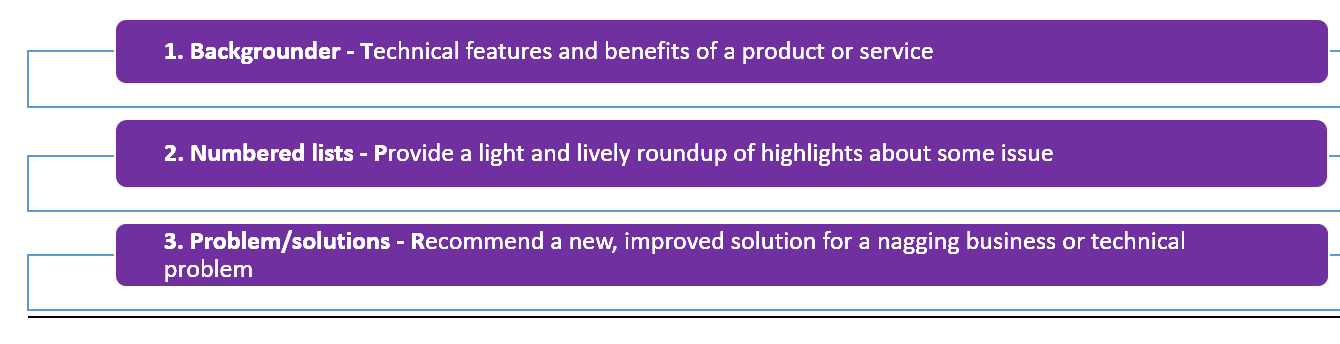
    In Business, White Papers can be considered as a part of extended marketing to persuade clients and customers and promote company products and viewpoints. It can be used to generate leads as well as boost business conversations. For a better understanding of Business White Papers, kindly read:

    In Politics, government White Papers can be used to educate the audience about firm policies, while receiving an opinion on the same. For a better understanding of Government White Papers, kindly read:

    White Paper Structure

    White Papers are authoritative essays that are written keeping specific issues, products, audience, and decisions in mind. One of the earliest publication includes The Churchill White Paper. Going through some of the texts of this paper, it becomes clear that a White Paper must involve facts, dates, verified news, citations, references and thorough knowledge of white paper writing styles.

    Since it involves the Palestine situation and the Arab-Jewish subject, the Churchill White Paper consists of subject research, official statements, governmental press releases, specific event dates, reference to the Senate and Constitution, etc.

    Apart from techniques and content writing best practices, a White Paper must be built around a definite Structure. A Well Structured White Paper has the following flow of elements:

     _

    The 5-W Approach Towards Writing a Well Structured White Paper

    To achieve a successfully written White Paper, kindly ask the following 5 Questions before writing.

    • What is the purpose (statement) of this White Paper?
    • Why is the White Paper being written?
    • Who will read it?
    • Where will It be published?
    • When will it be published?

    Best Practices for Writing a White Paper

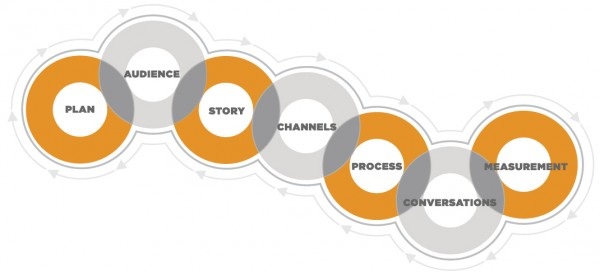
    According to Joe Pulizzi and Robert Rose, the following framework must be followed for best practices:


    Source: Content Marketing Institute

    1. DISCUSSING ideas and making a plan in the early stages of white paper documentation will help generate a clear process outline.
    2. BUILDING FRAMEWORK is crucial for achieving the set targets and goals of the final white paper.
    3. DEADLINES are important and must be decided upon in advance.
    4. DRAFTING a copy at early stages will go a long way.
    5. VISUALS/IMAGES must enhance the textual content and not distract from it. Kindly use only official and verified images, data, charts, and graphs.
    6. COLLABORATE/COMMUNICATE with other writers/editors in the event of a team effort with regards to white paper development so that all ideas, thoughts, and facts are incorporated and structured.
    7. FOLLOW APA REFERENCE method and kindly use Citations wherever required. Number your references well. APA Citation Guidelines
    8. HYPERLINK wherever required. Citations for Electronic Referencing is also mandatory. APA Guide to Electronic References
    9. PLAGIARISM will not be tolerated. Always cite references, wherever required, e_specially_ while quoting others.
    10. FOLLOW the 3-30-3 RULE for Whitepapers
    • You have 3 seconds to grab your reader’s attention. A couple of seconds to get the audience to click on your ad or link, so they become interested in your paper.
    • You have 30 seconds to engage your reader. Once they have clicked, you need to engage them with a summary of the paper either to get them to read the white paper or to get them to download it.
    • You have 3 minutes for your prospect to read the paper. No matter how amazing your content is, people are busy and tend to skim them.  Don’t make the content too dense.  It is better to simplify the content and offer an additional white paper than to include too much information in one white paper.

    The above blog gave you information on what white paper is,and some of the best white paper practices. Use the best tools for researching,curating and writing great content to have maximum impact.

    Use them well!

    Happy writing!

  • Witty Content and Blogging Practices

    Witty Content and Blogging Practices

    “Content is king, but distribution is queen and she wears the pants.”  Jonathan Perelman

    Image Source: pexels.com

    A good writer is one who seeks to continuously improve and learn. WittyPen believes there is always room for reform and growth when it comes to content.  A well-written content piece, whether, for blog, website or academic papers needs to have:

    1. Structure – mainly; Headline, Introduction, Body, Conclusion, etc.
    2. Relevance of Topic
    3. Thorough background research
    4. SEO (keyword) compliance(What are LSI keywords?)
    5. Originality & Accountability of Content

    Among other things, you can approach the elements mentioned above in numerous ways, WittyPen suggests you follow these two basic thumb rules:

    1. 3-30-3 Rule of Engagement

    • 3 Seconds to grab your reader’s attention. So be thoughtful about your article’s Title/ Heading.Write catchy headlines
    • 30 Seconds to engage the reader’s interest. Include interesting points in your Introduction. Or better yet, start with a brief Meta Description or Executive Summary, etc.
    • 3 Minutes for prospect audience to read your content. Now that you have managed to surpass the 30-second rule, make your content Readable. Use crisp and precise sentences/paras. Write in Active Voice and use Sub-Headings.

    2. Inverted Pyramid Structure

    A good Introduction to an article is of extreme importance and high relevance. It can make or break the rest of your content. Follow Best Practices for writing the introduction.  

    3. Blog Basics

    When Thomas L. Friedman said, “The world is flat, and we are in the phase of individual-oriented globalization”; maybe he was referring to the blogging culture of the 21st century.

    Today, anyone anywhere in the world can become a blogger. From politics, technology, terrorism, tourism to sharing personal diaries online with strangers, Blogging is the most effective way of communicating with millions across borders. It gives you the freedom to share opinions or ideas without restrictions and regardless of externalities. Although blogging demands a personal style of writing, it is rudiment to choose your words correctly since the online community is on the rise and your words may influence the most juvenile member of the society. Hence, at WittyPen, we seek to inspire our writers to create blog content that speaks volumes. It’s good practice to write in active voice, however, remain detached from the Blog.

    Following are a few examples of identifying a Blog from a Website:

    1. The chronological order of post usually starting with the most recent.
    2. A visible communicating channel between author and reader for comments and feedback including Really Simple Syndication (RSS) feeds.
    3. Post archive usually categorized by tags, author, date, categories,

    Best Practices for Creating Content for Blogs

    1. 3-30-3 RULE for engaging your readers
    2. Always create the Word Doc in BLOG format
    3. PLAGIARISM is taken very seriously at WittyPen, so make sure your content is 100% original. If not, you will be penalized, and your pay will be subject to deductions.
    4. Use a TONE which justifies the subject and goal of the client/product. Comply with Client Guidelines and go through Project Information sheets before
    5. CALL TO ACTION must be decided before writing and must be (client) need specific.
    6. Avoid COMPLICATED jargon and obscure terms.
    7. STRONG introduction and conclusion win half the battle.
    8. GRAMMATICALLY correct writing is mandated.
    9. PRECISION is key to a good blog post. Use sub-headings, paragraphs, crisp sentences.
    10. STICK TO THE POINT of the topic and avoid irrelevant Information.
    11. HYPERLINK all the research references and rename them. Kindly follow Best Hyperlinking Practices and learn about Hyperlink Basics
    12. Use images and Source them to only the Image Follow Image Sourcing Compliance and DO NOT use images from competitor’s blogs.
    13. List REFERENCES wherever required.
    14. RESEARCH referred in Blogs must be latest or post 2015.
    15. Adhere to the WORD LIMIT. However, it is not an excuse to miss out valuable information.
    16. Be willing to work on FEEDBACK at all times.
    17. Stick to DEADLINES and maintain open communications.
    18. DO NOT SHY AWAY from seeking content clarification.
    19. HIGHLIGHT primary Keywords
    20. PROOFREAD your article at least thrice.
    21. FOLLOW single Font/Color/Format.
    22. Learn the Technicalities regarding Help with Blogging in Word

    These were some successful blogging practices you need to follow,in order to have successful long form content. Happy writing!