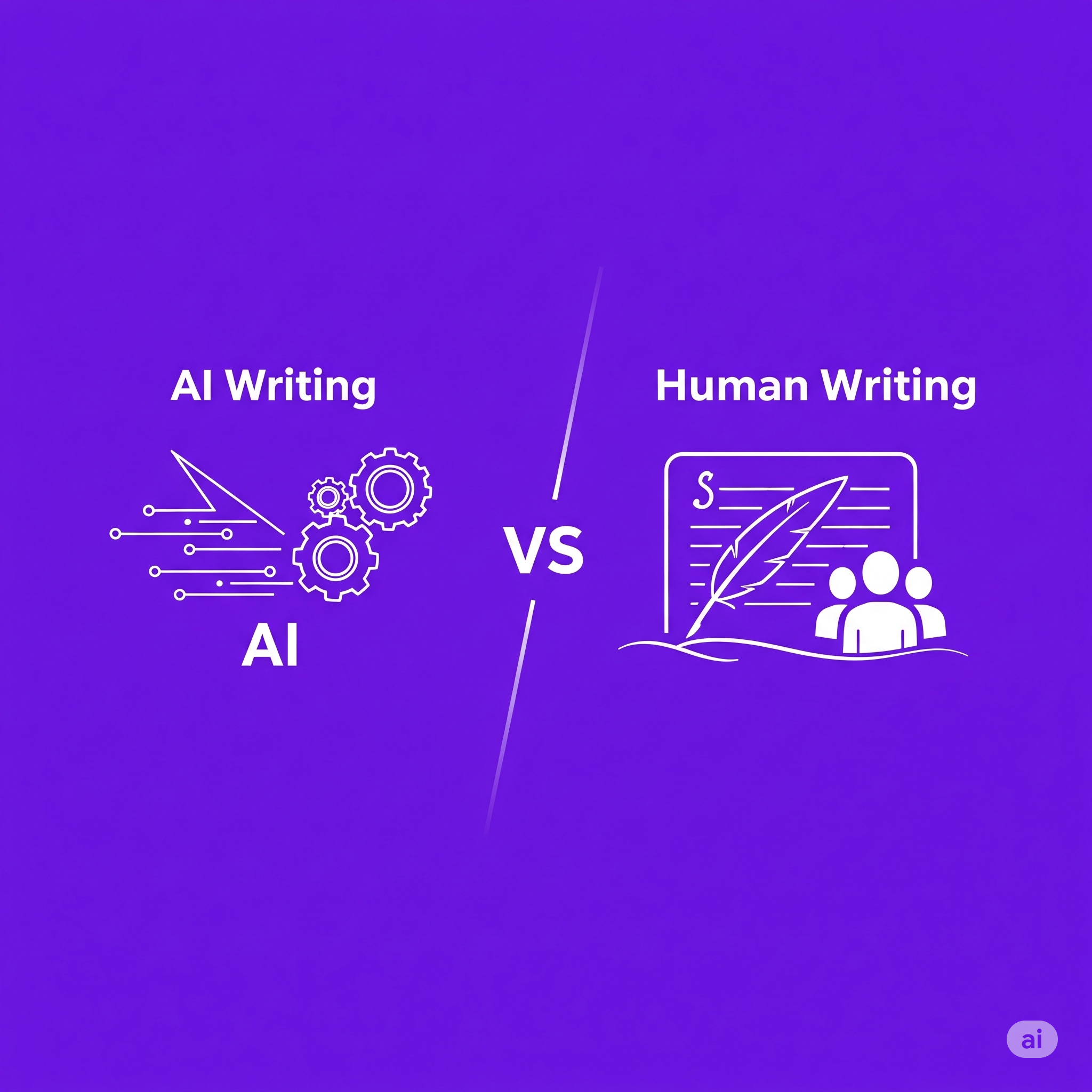
By the time you finish reading this sentence, AI could have written a 500-word article. But is it any good?
As AI continues to reshape industries, content creation has become one of its most visible battlegrounds. Marketers, writers, and business leaders turn to AI content writing solutions for speed, efficiency, convenience, and scale. Given only a simple prompt, AI can churn out blog posts, captions, newsletters, or even poems in seconds.
Here’s the kicker: content is not merely about filling a vacancy. It’s about fostering connections that matter, earning trust, and delivering results. Human writers can still, therefore, stand apart.
While AI remains revolutionary, it cannot replicate the core elements that make content truly exceptional. We discuss five core elements of human writing: creativity, emotional depth, strategy, brand voice, and critical thinking. Read on!
Table of Contents
- The Evolution of Content Creation: From Typewriters to Algorithms
- Factors to Consider When Choosing Between AI and Human Writers
- Embracing the Hybrid Approach: Human-Led, AI-Enhanced Content
- Choosing the Right Approach: When to Use AI, Human Writers, or Both
- Blending AI Efficiency with Human Creativity Is the Future of Great Content
- FAQs
The Evolution of Content Creation: From Typewriters to Algorithms
There has been a significant change in content creation. For many years, it was mostly an industry consisting of human writers: journalists, marketers, copywriters, and storytellers who would use creativity, research, and emotional insight to write every message.
The digital age has created tools to increase productivity, but writing remains in human hands. Changes began to occur in 2022 when powerful AI tools like ChatGPT and other large language models entered mainstream use.
Starting with simple text suggestions, it soon escalated into writing full blog posts, social media captions, product descriptions, and more.
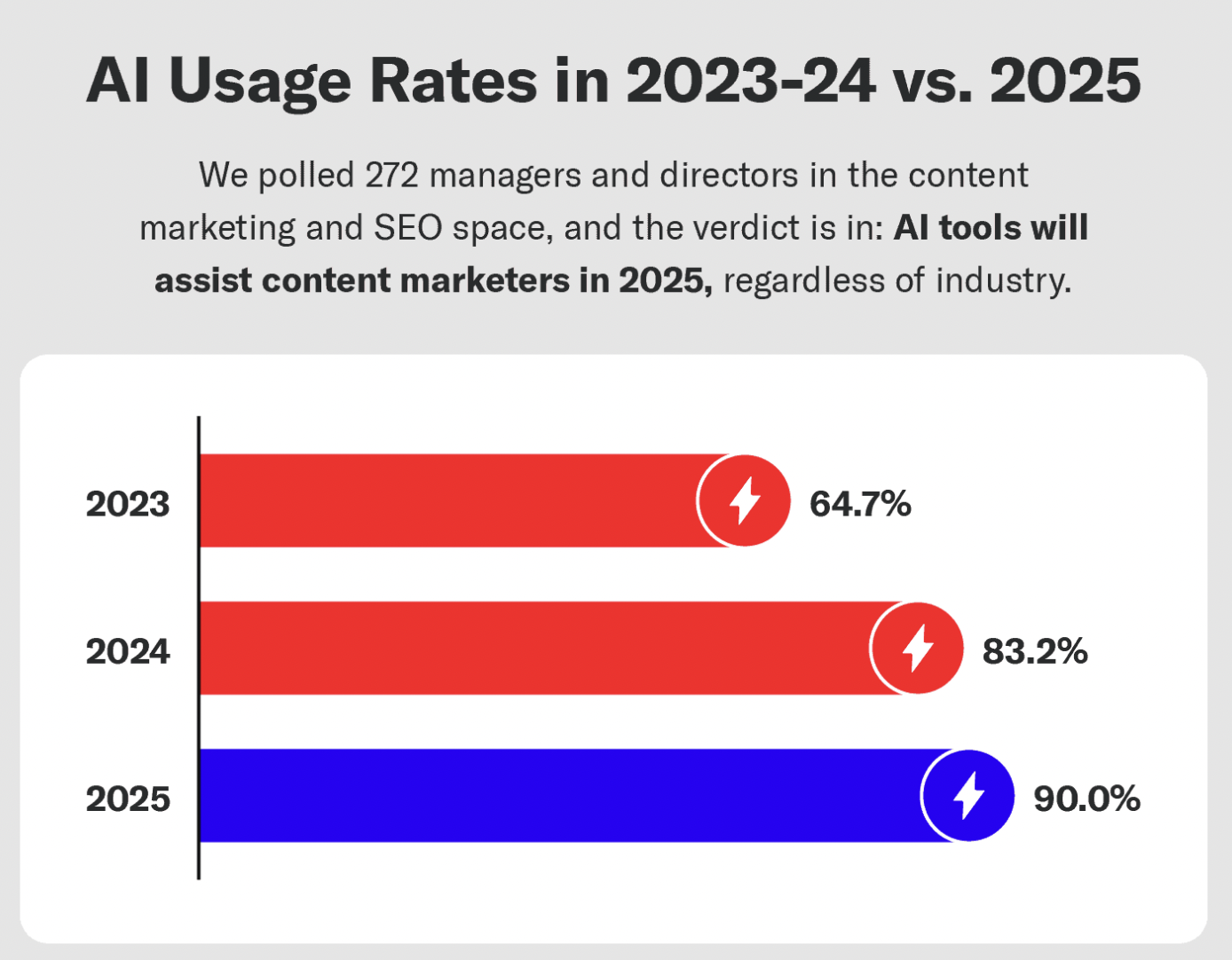
AI content writing is now widely used in marketing and business to save time and scale production. But speed alone is not enough. The most impactful content still needs the human touch to deliver emotion, strategy, and originality.
| Did you know? A recent study by Bynder found that 50 % of consumers can correctly identify AI-generated content versus human-written copy. This highlights that while AI content is improving, readers are becoming increasingly adept at spotting it and may disengage when they do. |
Factors to Consider When Choosing Between AI and Human Writers
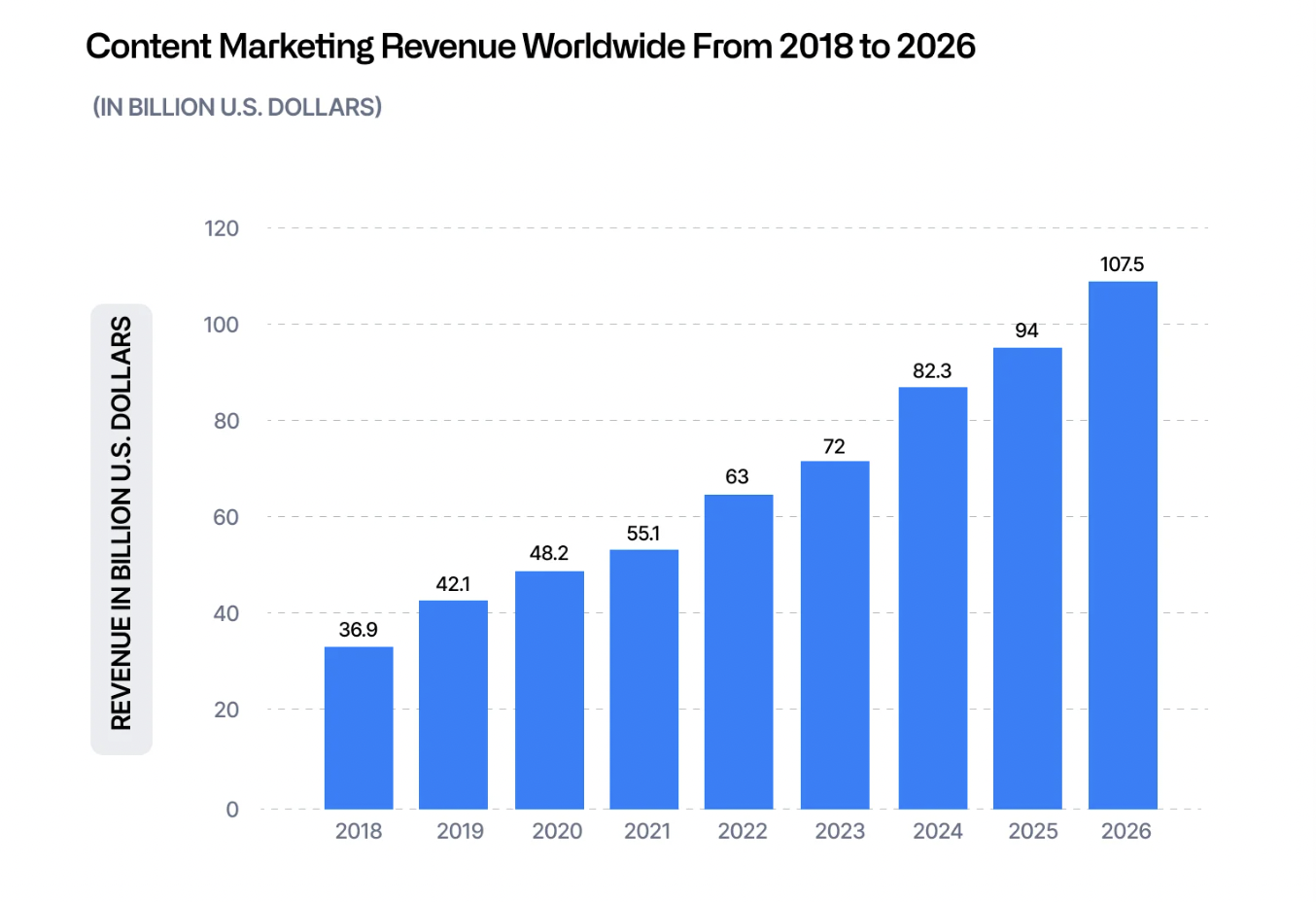
When it comes to content marketing, startups need speed and scalability, while brands aim for deeper audience connections. Understanding the strengths of both AI and human writers helps you make the right choice.
Below are the five most important factors to consider when deciding between AI-generated content and human-written content:
Factor 1: Creativity and true originality
Human approach:
Humans use personal experiences, insights, and abstract thinking to create truly original content. They make unique connections, craft vivid metaphors, and spark fresh, thought-provoking ideas.
- Humans generate new concepts rather than remixing old ones
- They create analogies and metaphors that emotionally resonate
- They can push boundaries, inspire change, and spark new conversations
AI’s approach:
AI is incredibly efficient at identifying patterns in existing data. It pulls from millions of sources and recombines them into coherent text. This is where AI content writing excels. But it does not create from scratch in the way humans do. What may seem original is often just a reshuffled version of existing content.
- AI mimics originality by recombining existing phrases
- It lacks lived experience and true creative intuition
- It may produce content that sounds polished but lacks soul
Factor 2: Emotional intelligence and empathy
Human approach:
By matching tone, vocabulary, and narrative to the reader’s emotions and frame of mind, human authors are able to create content that resonates by understanding emotional nuance.
- Humans can naturally modify tone to fit the message.
- To keep the reader interested, they employ cultural context and personal tales
- They write with sincere feeling, kindness, and consideration
AI’s approach:
Though AI lacks true understanding and is unable to feel or empathize like a human, it may approximate emotional tone using patterns and keywords.
- AI mimics human emotions without realizing the consequences
- In delicate situations, tone can come out as strange or unsuitable
- Even when employing emotive language, responses can seem robotic
Factor 3: Strategic nuance and understanding intent
Human approach:
Effective content is rooted in strategy. Human writers can see beyond the prompt to understand the purpose of a piece, whether it’s to educate, convert, rank in search results, or build trust. They tailor content to match the reader’s intent and align it with business goals.
- Writers consider the buyer journey and user intent
- They optimize content not just for search engines but also for humans
- They adapt messaging for different platforms, personas, and goals
AI’s approach:
AI creates SEO-friendly text using keywords and structure, but it often misses context and struggles with strategic alignment.
- AI focuses on surface-level optimization
- It may miss the underlying intent behind a search or prompt
- It often lacks alignment with the brand’s broader strategy
Factor 4: Authentic and consistent brand voice
Human approach:
A human writer understands your brand’s tone and values, ensuring consistency across formats while keeping the voice authentic and relatable.
- Writers embody your brand’s personality with nuance
- They can adapt their tone for different platforms and audiences
- They add subtle voice traits that make your brand memorable
AI’s approach:
AI can replicate a brand’s tone to an extent if it is fed style guides and examples. This makes AI content writing a feasible option for many businesses. However, consistency can waver over time. Without ongoing refinement, AI may revert to a generic tone or fail to capture the subtle traits that make your brand unique.
- AI mimics voice but often lacks emotional nuance
- Tone can shift unexpectedly between outputs
- Quirks, humor, and cultural cues may be missed or misused
Factor 5: Critical thinking, ethics, and accountability
Human approach:
Human writers are not just content creators—they are fact-checkers, editors, and ethical gatekeepers. They verify sources, apply sound judgment, and take responsibility for what they publish. This ensures the content is both accurate and aligned with your brand’s integrity.
- Humans critically evaluate sources and information
- They understand ethical boundaries and potential implications
- They are accountable for truthfulness, tone, and messaging
AI’s approach:
AI can generate content quickly, but it cannot reliably fact-check or assess credibility. It has been known to fabricate statistics, misattribute quotes, or present fiction as fact. Since it has no sense of right or wrong, it cannot be held accountable for what it creates.
- AI may invent facts or use unreliable sources
- It lacks the ability to assess fairness or ethical considerations
- It cannot take responsibility for misinformation
Embracing the Hybrid Approach: Human-Led, AI-Enhanced Content
Rather than viewing AI and human writers as competitors, many forward-thinking teams are combining their strengths to create better, faster, and more scalable human-edited AI content.
How the hybrid model works:
- AI as a drafting tool: To reduce time spent on tedious activities and expedite the early development of ideas, an AI can assist in creating outlines, first drafts, headlines, or content variations.
- Human as the creative lead: After that, a human writer edits, reorganizes, and refines the text to add originality, nuance, brand voice, and strategic direction.
- Editorial oversight: Human editors evaluate facts, assess clarity and tone, and confirm that the content satisfies company goals and ethical standards.
Benefits of the hybrid model:
- Faster production without sacrificing quality
- More consistent content across channels
- Lower cost than fully human-generated workflows
- Flexibility to scale while preserving originality and brand integrity
Ideal use cases:
- High-volume marketing campaigns
- SEO content with storytelling layers
- Email sequences with emotional appeal
- Thought leadership supported by research and insight
Choosing the Right Approach: When to Use AI, Human Writers, or Both
In content marketing, different goals require different approaches.
The table below helps you decide when to use AI, human writers, or a hybrid model based on your content type, objectives, and desired outcomes:
| Scenario | Best approach | Why it works |
| High-volume content creation | AI | Fast, scalable, and cost-effective for simple or repetitive formats |
| Complex or emotionally sensitive topics | Human | Requires empathy, context, and ethical judgment |
| Tight deadlines with limited resources | AI or Hybrid | AI can speed up drafting; human input can fine-tune where needed |
| Content that must reflecta unique brand voice | Human or Hybrid | Ensures personality, consistency, and emotional depth |
| SEO-focused blog posts | Hybrid | AI can handle structure and keywords, while humans optimize tone and value |
| Strategic thought leadership | Human | Demands original thinking, insight, and credibility |
| Social media copy at scale | AI or Hybrid | Quick generation of variants, with human review for tone and relevance |
| Long-form storytelling or creative writing | Human | Creativity, flow, and narrative require a human touch |
| Pro Tip: To get the most out of your content strategy, use smart online tools like Grammarly, Surfer SEO, Jasper, or Hemingway Editor. These tools help refine grammar, boost SEO, spark ideas, and improve readability, saving time and enhancing content performance. |
Blending AI Efficiency with Human Creativity Is the Future of Great Content
AI has transformed content creation, offering unmatched speed and efficiency. However, truly impactful content still requires the creativity, empathy, and strategic thinking that only humans can bring. The future isn’t AI or human; it’s both. By combining the strengths of each, you can create content that not only connects but also converts and stands out.
At Wittypen, we blend technology with human expertise to deliver high-quality, results-driven content. Whether you prefer 100% human-crafted pieces or want to scale faster with AI-assisted writing and professional editing, we’ve got you covered.
Connect with our team to find what works best for your brand!
FAQs
1. Does AI content rank well in the search results?
AI content can rank well if it is well-structured and optimized. However, human-edited AI content tends to perform better, as it reflects improved user intent alignment and meets Google’s preference for helpful, people-first content.
2. Should AI be used to write emotional content and that which drives storytelling?
AI can replicate a tone. However, when an insight is truly critical, human understanding is indeed necessary. The stories with a heart, with a soul, and that can activate brands need the skills of at least one passionate human being.
3. How can one get the best from a collaboration between AI and human beings?
Let AI generate quick drafts and initial ideations; then bring in human writers or editors to incorporate nuance, strategically related implications, and the brand’s voice, ensuring both quality and the creation of ethical AI content that aligns with audience expectations and values.
4. What are the best AI content tools to use?
The best AI content tools include ChatGPT, Jasper, Copy.ai, Writesonic, and Grammarly, each offering unique strengths for drafting, editing, and optimizing content.