The market for Software as a Service (SaaS) companies has become highly competitive. In fact, the SaaS industry has grown by almost 500% in size in the past 7 years!
In this landscape, it can be quite difficult to stay relevant or even visible to prospective customers. And that’s why you need the best SaaS SEO agency to enhance your business!
These agencies specialize in improving SaaS businesses’ online visibility, traffic, and conversion rates. A general SEO agency can’t offer the same results, because the strategies in SaaS are much more complex in nature.
So, if you’re curious about which SaaS SEO agency to connect with, how to choose one, or how they can help you, let’s dive in!
Top 5 SaaS SEO Agencies in Detail
The market for SEO agencies is saturated, to say the least. It can be difficult for you to tell apart the top SaaS marketing agencies. We have curated a list of the top five SaaS SEO agencies, along with their offerings to save you the hassle. Let’s take a look:
Wittypen is India’s best SaaS SEO agency. With 8 years of experience in the industry, the agency has served over 400 businesses, building a reputation for producing unique, engaging, and high-quality content.
Consisting of a team of highly skilled freelance SEO writers with years of experience, this company excels in crafting captivating and original content across a broad spectrum. From blog posts and how-to guides to product descriptions, white papers, and even comparison pages, their focus is on creating high-quality SEO content that propels your business to the top of search results.
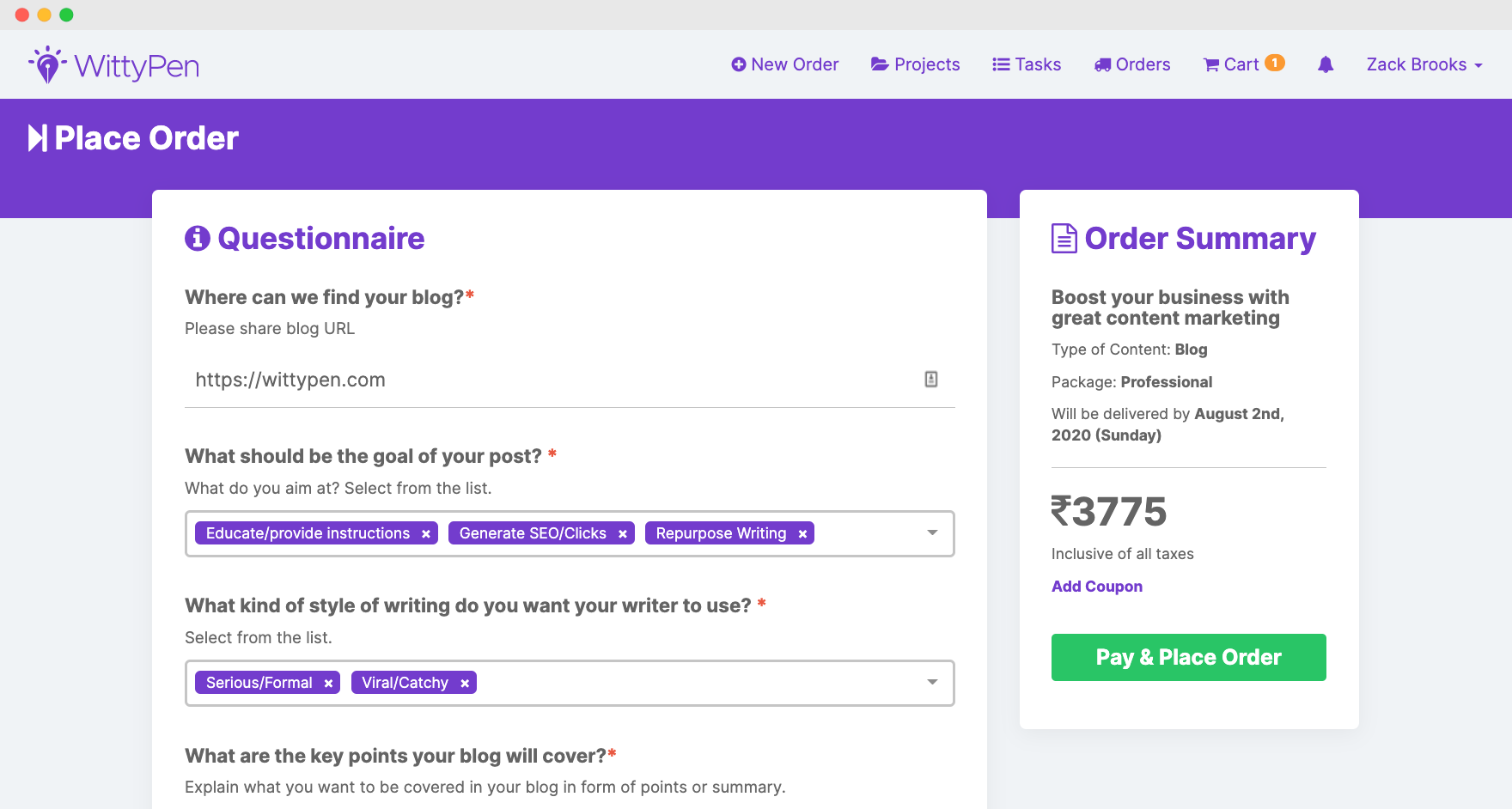
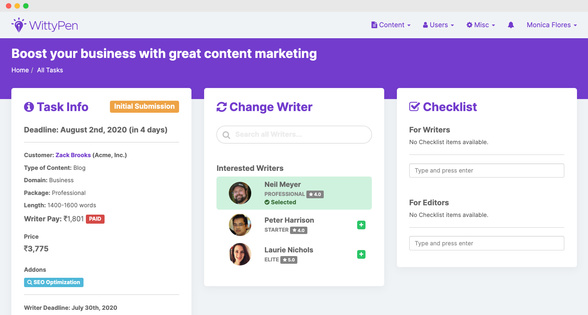
To get customized content for your SaaS product, you simply need to place an order and specify the details of the content you require. The team of experts matches you with the most qualified writers for your project, and then edits the content meticulously to ensure it meets your standards. You can also request up to two rounds of revisions so that the final content perfectly matches your requirements.
The agency consists of vetted experts specializing in various fields such as marketing, fintech, and blockchain. That means it can tackle even complex technical content. If you want to boost your business’s position in the digital world, you might just have found your best pick!
Accelerate Agency is a data-driven agency with a proven track record. With over 100 SaaS experts on their team, they offer impressive content strategies and assimilate technical, onsite, and off-site SEO and content marketing seamlessly.
They secure high-authority links from the best SaaS websites to boost your website rank. The company combines human expertise with machine learning and data to offer you the best results.
Codeless is a medium-sized agency that specializes in SEO content production for SaaS companies. They have a great reputation for enhancing website traffic and improving ranks in search engine results.
They offer personalized plans to ensure the content appeals to your target audience. Codeless boasts a huge team of qualified writers, editors, and other experts.
Titan Growth is known to specialize in SEO and paid media. With 18+ years of experience in digital marketing and a team of more than 50 employees, the agency has supported some of the greatest brands with organic traffic and revenue boosts.
They specialise in paid advertising on Google, Bing, and Facebook’s ad platforms. They also offer technical SEO audits and content optimization services.
Growthner is a classic B2B SaaS SEO agency with a detailed approach to ensure organic growth for your business. They offer accurate SaaS link building and well-planned content optimization with the help of their team of experts.
They are reputed for creating high-quality leads and increasing the monthly recurring revenue of their customers. With custom-made strategies, user-centric content, and effective outreach, they help your business fly high in the competitive digital world.
They offer full-service SEO, on and off-page SEO, technical SEO, SEO consulting and coaching, and content marketing services.
Criteria for Selecting the Best SaaS SEO Agency
While choosing an SEO agency for SaaS companies, you need to keep an eye out for certain factors, like the following:
Expertise in the SaaS Industry
The agency must be familiar with SaaS dynamics and relevant challenges. To ensure that an agency has enough expertise in this industry, you can research common metrics like Customer Acquisition Cost (CAC), Monthly Recurring Revenue (MRR), and Lifetime Value (LTV).
Find out whether the agency has worked with other SaaS companies. Ask about the most common challenges they face, and how they have dealt with similar challenges in the past.
Proven SEO Strategies
Research the kinds of SEO strategies the agency uses for SaaS companies. For instance, the link-building strategy is extremely important in SaaS SEO. You need trustworthy and authoritative links to make the SERP rank work in your favour.
Ask the team about how they plan to secure quality and appropriate backlinks. A good strategy can help your platform get the necessary and desired organic reach and lead generation.
Discuss their processes for keyword research, technical SEO, on and off-page optimization, and content creation. Additionally, ask whether they use specific SEO tools for SaaS businesses.
Ensure they don’t use any black-hat techniques. Otherwise, your website might get penalized or even banned. This is a good reason to be wary of agencies that offer “too good to be true” pricing.
Client Success Stories
Ask the agency about their client success rates. Check their portfolio and SaaS SEO case studies to understand how they supported each client with their services.
Read up about the agency’s past clients and contact them for feedback about their experience with the agency. If the agency is unable to share contacts because of confidentiality, check for the mentioned businesses on their website/portfolio and try to find those businesses yourself.
These conversations will help you understand the agency’s responsiveness, adaptability, and customization abilities according to client needs and operational dynamics.
Benefits of Hiring a Specialized SaaS SEO Agency
Besides improving your website traffic, search ranking, brand awareness, and reach, partnering with a SaaS SEO agency can offer the following benefits:
Competitive Edge for Products
The right SaaS SEO agency has specialized knowledge in SaaS products. Thus, they can offer you valuable insights, understand your customers’ needs, and study market trends. They help you and your SaaS products stay one step ahead of competitors.
Lead Generation & Customer Conversion
SaaS SEO experts have established strategies and use effective tools like CRM software to monitor customer interaction. They can strengthen relationships and generate leads using email marketing and other methods.
Lower Cost-Per-Acquisition (CPA)
The best SaaS SEO agency can reduce the financial burden on your business. They allocate resources to the most useful strategies and channels to ensure your marketing budget doesn’t go overboard.
For instance, they drive organic growth with positive reviews. They publish relevant content to transport potential customers through the sales funnel. They also use PPC ads to help with lead finding and conversions. Additionally, hiring a SaaS SEO agency is more cost-effective than hiring an in-house team.
The best SaaS SEO agency can help your business reach its peak even in a complicated and competitive market. With their expertise and thorough strategies, they will help you slowly but steadily become relevant to your target audience.
All you have to do is entrust the task to them and collaborate until your digital presence is maximized. Whether you’re looking for SaaS SEO services for startups or established businesses, WittyPen has carved a niche for reliable SEO content services. With the best team onboard, it has been creating magic for years!
Did you ever think about how some businesses can create quality content so frequently? The astonishing answer is that they are not alone in this. These companies use white-label content, a smart strategy that allows them to publish customized content without requiring a large creative team.
This method involves working together with external experts who create content that businesses then integrate as their own. It is similar to having an invisible extension of your marketing team dedicated to producing high-quality content that perfectly matches your brand’s style and objectives.
Come explore the simple basics of white-label content marketing, discover how it works, and see how it can enhance your business content strategy.
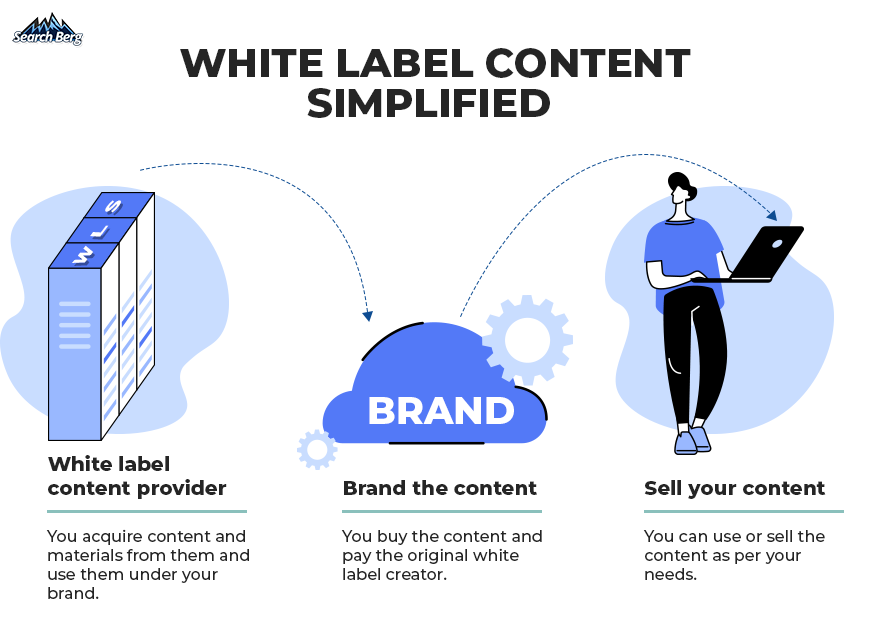
You must be wondering, what is white labeling? To put it simply, businesses opt to partner with a third-party agency to create products or services that they (the business) can rebrand or sell under their name.
White-label content marketing involves working with a freelancer, marketing agency, or copywriter to develop branded content that aligns with your marketing strategy.The material generated by them will be published under your brand, giving you full ownership.
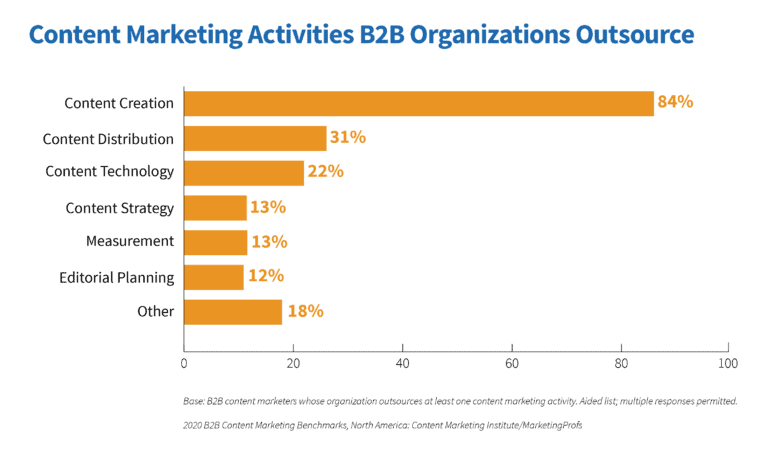
You can publish and share the content the way you want. In case you are seeking information about ‘Is white label legal?’ don’t worry because it is totally within legal bounds. According to a survey by Content Marketing Institute half of respondents’ businesses are involved in the outsourcing of certain marketing tasks.
Applications of White Label Content
There are different forms taken by white-label content, including articles, blog posts, updates made on social media, videos, product descriptions, eBooks just to mention a few. Thus, you can employ different content forms depending on your specific needs.
For instance, 9 out of 10 marketers use blog posts, and about 91% of businesses use video to achieve their content marketing goals.
Here are a few instances of how agencies use white-label content in their marketing campaigns:
Digital marketing firms commonly use white-label copywriting services to produce marketing materials for their clients, such as articles, blog posts, email campaigns, and social media posts.
Content marketing agencies may hire white-label content writers to produce content for their clients’ websites or social media channels. With over 2 billion monthly active Instagram users, about 67% engage with branded Instagram Stories, this approach can be highly impactful.
Media companies may use white-label content marketing to develop content for targeted campaigns. Similarly, e-learning platforms may use white-label content services to create online courses or educational materials for their clients.
Businesses frequently work with freelance writers to create high-quality, accurate content. They rely on experts to handle content, courtesy of their knowledge and hands-on experience in crafting materials aligning with the business goals. From sales to SEO, here’s how white-label content can help businesses:
1. Saves Time and Money
You can save resources on recruiting, training, and managing workers and eliminate overhead costs associated with maintaining an internal content team.
Further, you can dedicate your precious time to core business tasks while the writers take care of your writing and marketing needs from conception to completion.
2. Improves Scalability
White-label content services offer swift production of large volumes of content. You have access to skilled writers and streamlined processes, all of which let you adjust content production based on demand fluctuations. This way, you can focus on core activities without compromising quality content delivery.
3. Original, High-quality Content
85% of marketers attribute increased success to higher quality, more efficient content creation. Outsourcing gives you access to specialized writers with industry-specific knowledge.
Skilled writers can produce tailored content that resonates with your brand’s target audience and is credible in your industry. This way, you receive effective content marketing strategies and maintain a competitive position in the market.
Tips to Consider When Choosing a White-Label Content Provider
Your brand’s content marketing success rate depends on choosing the right white-label content provider. Here are the key factors you must consider before finalizing one:
1. Quality
The first step is to check to see if the provider can deliver quality content based on your business requirements. You can start by reviewing the provider’s portfolios or samples and evaluating the style, tone, and quality of the content in light of your brand objectives.
2. Reliability
Another very important consideration before you hire a content provider involves judging their credibility. Conduct some online research and see if you can find reviews and testimonials. You must be able to trust this provider to deliver content on time while ensuring consistency.
3. Industry Specialization
When you’re outsourcing content creation, seek providers with expertise in your field. Specialized industry knowledge can enhance the relevance and impact of the content for your readers. It can also help ensure that the tone of voice resonates with your target audience.
4. Pricing
Once you have narrowed your search down based on the factors mentioned above, verify which one suits your price range. Do this by browsing through many providers’ pricing structures and packages and trying to bargain for lower rates if you intend to order in bulk.
White-Label Content Outsourcing: How Does it Work?
Outsourcing content creation is beneficial for businesses; especially when they wish to increase their online presence without setting up an enduring in-house team. The process includes the subsequent stages:
1. Consultation and Needs Assessment
In order to ensure that the final content meets your goals and standards, the service agency carefully assesses your business objectives, target audience, and content requirements.
2. Content Creation
Skilled writers and content strategists meticulously create captivating content that is both relevant to the industry and appeals to the target audience. Throughout the process, they maintain your brand’s unique voice and style.
3. Review and Feedback
Communication and transparency are key components throughout the entire process. Clients are encouraged to review the content and offer their input to guarantee it aligns with their requirements and preferences.
4. Final Delivery
After incorporating any revisions, the finalized content is delivered promptly, ready for publication across desired platforms.
Wittypen’s white label content services allow you to concentrate on essential tasks such as strategic planning and client interactions while taking advantage of our content creation expertise. Our customized approach, focus on quality, and commitment to fulfilling client needs position us as the perfect partner for all your content requirements.
Read along to learn more about the benefits we offer our clients.
How Has Wittypen Helped Its Clients
Our proven approach to white-label content creation has helped numerous clients achieve their marketing goals:
Increased Engagement
Our expertise lies in providing customized, top-notch content that has proven to enhance audience engagement and drive meaningful interactions for our clients.
Improved Brand Visibility
We have successfully improved the visibility of brands, establishing our clients as leaders in their respective industries and fostering natural growth.
Cost Savings
By utilizing Wittypen’s services, clients have found a way to reduce the costs typically involved in recruiting and training employees for content creation within their own organizations.
Scalability
With our adaptable solutions, clients have the ability to adjust their content production according to their evolving needs, guaranteeing a reliable delivery process even when faced with increased demand.
Final Words
Ready to take your content strategy to the next level? Explore the advantages of white label content services for your business. Research potential providers, review their work samples, and find the one that best suits your needs.
With white-label content, you can save time, improve quality, and maintain a cohesive online presence. Begin your journey toward content excellence today.
With ever-increasing demand and a rapidly changing landscape, content is almost at the threshold of its next evolution. When it comes to content writing, AI can be inconsistent and downright annoying at times. And we all know that writing with a limited group of content writers is equally arduous.
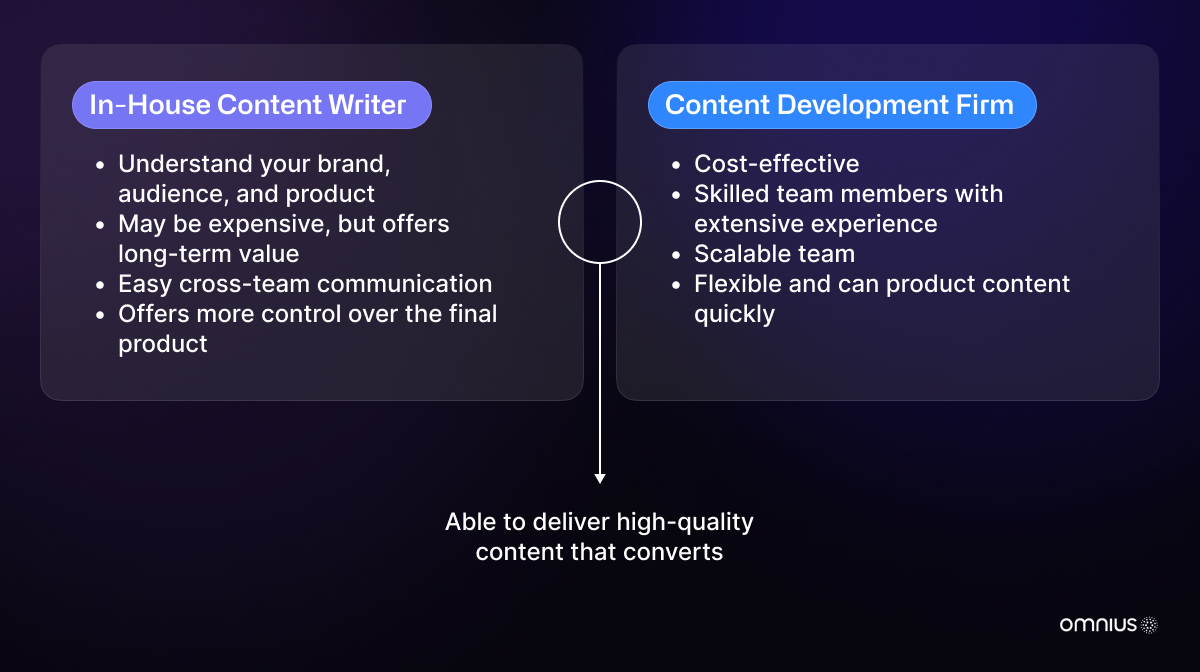
This is where the debate arises concerning whether to look at outsourcing content writing or keeping it in-house. While some organizations go half-and-half by running in-house content parallelly with outsourced content, others stick to one method.
Outsourcing content writing is quickly becoming the norm as more and more organizations aim to meet their content creation requirements to attract their target audience and boost conversions.
When it comes to smaller businesses, especially, outsourcing content writing can quite literally become a boon as it allows businesses to concentrate on other activities. Outsourcing content writing is a quick and very effective way to ensure the efforts taken with a super quick turn around time. And the fact that it’s also cost-effective can not be overlooked, however, as outsourcing content writing can also free up significant portions of the budget.
In spite of the apprehensions, understanding how to outsource content is sure to be of great help in scaling your content marketing efforts. You’ll be amazed to know that as much as 55% of B2C marketers outsource their content marketing efforts.
What is Outsourcing Content?
Outsourcing content writing involves hiring external content writers to create content. As such, content writers who work on outsourced projects create fresh content from scratch.
Outsourced content writers help strategize a monthly or weekly content calendar, finalize the visuals to accompany the content, and select trending content formats, to increase readership.
These content writers can be freelancers or even affiliated with content marketing agencies. It is therefore essential to identify the considerations when deciding whether to outsource or create in-house. As such, outsourced content needs an initial understanding of expectations, content production gaps, and budgeting.
Why Should Companies Start Outsourcing Content Writing?
Running a business comes with its own set of responsibilities and hurdles that require time and immediate attention for smooth operation. On top of this, creating content regularly and publishing it as per the latest SEO trend or Google update can spiral pretty quickly.
In 2023, at 84%, content creation became the largest domain that businesses outsourced, and the future of content outsourcing is looking just as bright. Marketing statistics show that the primary industry using outsourcing is the content industry.
There are quite a few factors that can help companies decide whether to outsource content or keep it in-house. Here are a few reasons why businesses can consider outsourcing content writing.
SEO Boost: Let’s face it. Not everyone is going to have their SEO game on point. And little knowledge is often more dangerous than no knowledge. Thus, businesses should consider taking help from content writing outsourcing companies.
Reduced Workload: At some companies, increased workload can hinder the proper functioning of different departments, in which case outsourcing can help with productive time management and sharing some of the workload.
Shorter Turn Around Time (TAT): Time management is crucial for any and all success. Likewise, businesses can save a lot of time by outsourcing content writing. If there’s an in-house team available, outsourcing every once in a while also allows them to come up with fresh ideas due to the additional time on their hands.
Efficient Utilization of Resources: Outsourcing content writing also holds the potential to save on money, time, and resources. Imagine how much you can save by doing away with the need to find, onboard, and train people. Outsourcing truly is a way to go.
Benefits of Outsourcing Content Writing
Running an organization comes with a whole host of inherent responsibilities. In such circumstances, outsourcing content writing can quite literally be a godsend. Here are some benefits that businesses enjoy when they outsource content writing.
1. Value Addition:
When outsourcing content, you can choose to go to subject matter experts. This enables the ‘value’ part of the content.
The process and TAT of activation of any writing activity involves hiring the writer, training them, etc., whereas when outsourcing content writing, you already have access to a seasoned writer, reducing the time and effort, thereby opening doors to better ROI. Regarding value addition, Wittypen happens to be one of the best if your considering outsourcing your content writing.
2. Cost Savings:
With the advent of outsourced freelance writers or writing agencies, a business only pays when it needs content. This can have a significant positive impact on the monthly budget.
Costs are an integral consideration for any and all organizations, and likewise, small businesses must look to cost-saving ideas, so they can utilize their budget correctly and spend strategically. It is no surprise, therefore, that at 83%, small businesses are willing to either maintain or increase their outsourcing budgets.
Outsourcing content writing is a better option with regards to using the company budget effectively. And because most content writing outsourcing companies have flexible pay models that they tailor to work best for their specific needs, this only acts as further incentive.
Outsourcing can also allow organizations to scale up significantly to meet production requirements while cutting down on costs.
2. Access to Expert Content Writing
Nowadays, it’s very easy for organizations to fall victim to mediocrity as a result of rehashing the same content into various formats. This can affect viewership and, eventually, the company’s ROI because readers will get bored and probably abandon the website in the future.
However, fresh perspectives from outside sources will allow the content to take on a new tone and direction. Outsourcing content writing will bring in new ways of engaging the audience and, most likely, untried ways of promotion as well.
It’s worth noting that content writing outsourcing companies, in most cases, are industry experts. They know what will increase the views and likes and the types of content that will keep the viewers hooked.
With writers from sites like Fiverr, Wittypen, or Upwork, you open doors to a vast pool of talented writers who work in various niches. For example, if a company deals with pet grooming, it is always a good idea to go for a writer with previous experience in writing for the niche.
3. Productive Time Management
Time management is integral, regardless of what it is that you are trying to achieve. We know that, when it comes to content marketing, trends keep changing. And marketers have to keep up with them to produce content so as to maximize readership. Now, if the in-house content team handles all the content-related tasks, they won’t have enough time to deal with new clients, which can ultimately affect the bottom line.
By outsourcing content writing, the in-house team can take a substantial bit of the burden off of them and can concentrate on the necessary tasks that the company requires them to deal with immediately.
Streamlining the content production process becomes easy once a company decides where to outsource content writing.
With partners such as Wittypen, businesses can save a lot of time and use it to focus on increasing their profits. Boasting an expansive pool of diverse writers, Wittypen ensures quick content delivery across various niches. Even the writers associated with Wittypen are close to operating on the level of SMEs (Subject Matter Experts), having worked on specific niches for prolonged periods.
Additionally, the transparency and ease allowed in the payment process and being able to select and pay as per the level of content required only adds to Wittypen’s credence. Wittypen is also making strides on the Artificial Intelligence front with the introduction of AI brief generators and the likes.
How Do Businesses Outsource Content to the Right Writing Companies?
Finding outsourcing companies that meet your content needs and strategy requirements can be quite a hassle. Here are a few pointers that businesses can consider when deciding on the right outsourcing partners so that their content queries meet sound solutions:
1. Defining Goals and Needs:
To effectively outsource content writing, a business must have a clear understanding of its content marketing strategy and the goals it wants its content to achieve.
Some may wish to inform or educate their readers, while others aim to entertain or sell their products. Before outsourcing content writing, a business must determine which objectives they want their blogs to fulfill.
The tone, style, format, language, and perspective are building blocks that help a company convey its message and engage the target audience effectively.
Outlining content goals helps narrow down the possible content writing outsourcing companies. Here are a few things that can help define the needs of any company looking into outsourcing content:
What is the KPI for your content? What do you want the audience to do with your content, like and comment on, or interact with your website?
Who is your target audience, and what channels do they use to communicate with your company? In what ways does your content fail to meet their demands and expectations?
How frequently are you expecting content when outsourcing content writing?
How much can your company invest in an outsourced content writer?
What type of content do you want the outsource writer to handle?
2. Research and Evaluate Content Writing Services:
Thorough research is crucial before investing in content writing outsourcing companies. It’s only after recognizing the pain points and gaps that businesses should select the writer or agency that best suits their content creation needs.
When outsourcing content writing, it is essential to pick experienced and well-reviewed content creators specializing in the company’s niche. This ensures quality content that meets market standards and ranks on Google.
Numerous online platforms have a selection of creators who specialize in specific niches and are transparent about the pricing models they accommodate. They have client testimonials on their sites to help businesses make a firm decision as well. Detailed client reviews can assist businesses in understanding the benefits of choosing a freelance company by evaluating experience, response time, revision process, and other essential factors.
These websites show the previous work that their writers have provided, and some offer free consultations, which allows first-time users to understand their services better.
A great example of such an online platform is Wittypen, which offers transparency regarding pricing models and the niches that they handle. They even boast case studies on their website for added impact.
The platform offers free samples so that companies can understand the workings of the platform clearly and make a well-informed decision that can help expand readership with their collaboration.
Clear and timely communication is key to the timely completion of requirements and the effective use of resources.
Online tools like Hive, Zoho Projects, and many others allow effective project management among team members, providing them with an effective communication platform. Likewise, online content writing outsourcing companies utilize well-known tools like Trello, Wrike, and Slack to ensure smooth communication and efficient content production.
That said, platforms like Wittypen have ensured that writers and editors have a space to interact so that they produce high-quality content by allowing them to comment on and discuss content pieces.
With seamless communication between the writers and editors, the outsourcing content writing process is error-free, making sure the content reaches companies through thorough quality checks to ensure unique and informative content each time.
Managing Outsourced Content Writing Projects
Outsourcing content writing can be an excellent solution for content production, and with the right approach, it can be a smooth and efficient process to boot. While it may be daunting initially, effective project management skills and strategic planning can make outsourcing a profitable venture.
Let’s look at some ways to manage outsourced content writing projects.
1. Setting Clear Expectations:
When a business decides to outsource content writing, providing clear and specific instructions to the content creators can greatly impact the quality and effectiveness of the content. By providing precise guidelines and expectations, businesses can ensure that the writers understand the brand’s tone, style, and objectives.
Here’s a look at a few things a business can provide content writing outsourcing companies with for seamless content production.
Why you are optimizing your content: Chalking the end goal is essential to creating satisfactory content. Do you want to educate, entertain, instruct, recommend, or sell? Understanding this can help writers deliver content that’s tailored to your unique needs.
The SEO you want in your blogs: Businesses must be precise about the links or CTAs they want to see in their content so that potential clients can connect with them in their desired way. Businesses must also be clear about the keywords they want to use and the ones they want to avoid in their content.
What visuals would you like in your content: Businesses must be clear about the images or other visuals that are to be included in the content pieces, so the content doesn’t miss out on this important aspect.
What will be the frequency of the content: How frequently a business needs content forms part of the foundation on which content companies will build their content calendars. There needs to be clear communication on this, or unfulfilled deadlines can pile up.
The revision process and the revision rounds for a content piece: Discussing the revision round with the content writing team beforehand allows them to be aware of the time within which they have to close an assignment.
2. Communicate with the Content Writers:
When businesses outsource content writing, effective communication becomes paramount. Constant, to-the-point feedback can help writers see the errors and changes they need to make in the content.
Rapid digitalization has blessed us with tools that have made it easy to maintain clear communication. Tools like Brosix, Slack, Basecamp, and ProofHub smooth out communications substantially. Furthermore, tools like Slack also allow trackers and reminders for tasks and upcoming deadlines for effective work completion.
Timely communication of expectations allows companies to avoid delays and shortens the content production cycle as well as the revision expectations, thereby ensuring smoother long-term content creation processes.
Content writing outsourcing companies like Wittypen offer a platform that provides businesses with transparency regarding how content writers and editors work in collaboration to tailor each content piece and project. And due to Wittypen’s transparent way of going about things, businesses can better understand how to outsource content and integrate it effectively into their marketing strategy.
Wittypen also boasts great project management capabilities due to the fact that project expectations and requirements are communicated clearly and timely to the writers.
3. Review and Feedback Process:
It’s no secret that review processes must be elaborate and easy to comprehend, so everyone on the team can understand the shortcomings, which in this case can be outsourced content. As such, swift action is necessary to address any issues arising in the content to prevent loss of viewership and ensure a seamless user experience.
That said, feedback forms and annotation tools can be a great way of addressing such issues, as they allow businesses to put forward their dilemmas in a structured and detailed way.
Content writing agencies, like Wittypen, have taken things a step further by incorporating features such as commenting, thereby opening the doors to timely, to-the-point feedback. The editorial process strives to meet the highest standards of quality, making Wittypen an even more worthwhile avenue.
Pitfalls to Avoid When Outsourcing Content Writing
Businesses new to outsourcing content writing can find themselves facing certain drawbacks. Let’s look at a few common mistakes and how to avoid them for a smoother content production process.
1. Unclear Instructions and Irregular Communication:
When outsourcing content writing, ambiguity can lead to errors that take time to rectify. If a business is unclear about the tone and structure they want to incorporate into their content, the content will fail to get the desired attention, affecting readership and resulting in an inability to build a target audience.
To avoid confusion, businesses can draft a detailed content brief to help content writing outsourcing companies understand the content that they need to deliver. Such briefs can contain details like frequency, content format, keywords, deadlines, tone, and the visuals a business would want.
When a business begins working with a writing platform, it is a good idea to conduct regular meetings to discuss the content writing and follow-up revision process in detail. Regular and timely exchange of vital information can help writers and content managers address doubts and get immediate responses to queries.
Clear and concise communication results in fewer problems. Moreover, making expectations and requirements clear at the beginning can be time-saving for the business and content writing outsourcing company, as there will be less ambiguity to deal with.
Wittypen is quite the gold standard when it comes to communication and project management as there are dedicated managers to take care of all operational tasks.
2. Choosing the Cheapest Option:
Say you get your content generated by AI because you don’t want to incur the costs associated with hiring writers. This is kind of risky, as AI content often contains a high degree of plagiarism and requires fact-checking, which can be time-consuming.
Likewise, outsourcing content writing may seem expensive, but it is a more cost-effective option in the long run, as it often leads to an increased return on investment (ROI).
Outsourcing relies on human-generated content crafted by talented writers with years of experience in specific niches, and rich portfolios. These professional creators possess the essential writing skills to produce engaging content, which they have acquired over years of working in the industry. Most experienced writers have a portfolio, which gives businesses a glimpse at the work they have handled in the past.
As such, establishing long-term collaborations with writers or content platforms can be an effective way for businesses to produce high-quality and well-informed content.
Such collaborations can result in a better understanding of the company’s goals, values, and target audience, which can help content creators tailor their work to meet specific needs and expectations. It can create a sense of trust and familiarity between the company and the writers, leading to more creative and innovative content outcomes.
3. Lack of Feedback and Revision:
If you’re considering outsourcing your content writing, you must remember how important it is to provide regular feedback to save time and streamline the process. Detailed feedback is always the best option because it helps fill in the gaps better, and businesses also get work that’s as per their requirements.
Businesses need to remember that they must communicate clearly with their content writing outsourcing company of choice to let them know their expectations. Deadlines, revision timelines, structure, tone, formats, and visuals might seem like inconsequential details, but they are equally crucial.
Case Studies and Success Stories of Outsourcing Content Writing
Catching up on the success stories of companies that have benefited from outsourcing content writing can help gain significant clarity on how to outsource content writing. Specific names and ranking differences can help businesses make informed decisions when deciding from where to outsource content writing.
Here are some companies that have seen impressive changes by outsourcing their content.
With content managers, editors, and writers boasting expertise in the real estate domain, Square Yards managed to scale organic traffic to 1 million+ viewers each month.
With the help of Wittypen, Square Yards has transformed into an integrated firm that includes multi-faceted services like mortgages and property management services. And for this, Wittypen has employed several content formats to scale up organic growth.
With Wittypen’s efficient and fast-running content engine, Square Yards reached its monthly goals without hiccups and saw exponential growth with localized content that engaged the target audience.
2. Webmyne: Building Organic Growth with 1500+ Blogs
Communicating their brand’s requirements and voicing their goals clearly allowed Webmyne to experience a noticeable uptick in traffic.
In an incredibly fruitful partnership with Webmyne, Wittypen divided the content into lead-generating pieces, which expedited their reach by 2X in 2022.
Webmyne also scaled its content to over 1500 diverse blogs with the help of Wittypen’s efficient team of content creators.
Wittypen’s expertise in digital marketing allowed them to produce high-quality content on the topic and go beyond expectations with a tremendous increase in organic growth.
Acquire helps companies elevate the customer experience, so they see a better turnaround.
In collaboration with Wittypen, Acquire increased its DR to 80 in under two years with over 630 guest posts. The brand was also able to connect better with other reputed names in the industry and establish itself as a thought leader in the niche.
As such, Wittypen’s expert team understood the multi-faceted problem at Acquire and tweaked the articles accordingly. Timely and regular adjustments to the blog’s requirements and outcomes allowed the team to meet Acquire’s standards very well.
Empower Content Marketing by Outsourcing Content Writing
One of the key components of a successful marketing strategy is creating high-quality content that engages and informs potential customers. It can be a time-consuming and challenging task, especially for businesses with limited resources or expertise in the niche.
That’s precisely why outsourcing content writing can be a smart move for businesses looking to empower their marketing efforts. By outsourcing content writing, businesses can tap into the expertise of professional writers and enjoy compelling, informative content that resonates with their target audience.
Businesses with a working understanding of how to outsource content need to find suitable providers who meet their expectations with regards to niche specialization.
Platforms like Wittypen have changed the content writing game with their easy-to-use platform and reasonable price plans. Their pricing models have been divided based on the pay that a company can afford and how much content assistance they need.
Both copywriting and content writing serve marketing and content creation purposes in the digital space.
Generally, both terms are used interchangeably. When it comes to enhancing your online presence through effective content, the decision to hire an efficient, professional, and experienced writer becomes crucial.
However, the confusion lies in whether to hire a copywriter or a content writer; for many, both terms mean the same thing!
Let’s set the record straight right away—content writing and copywriting are not synonymous!
Copywriting uses a persuasive style for ads and emails, aiming to engage and prompt actions. On the other hand, content writing focuses on creating informative and engaging material to educate, entertain, or inspire, fostering collaborations and brand loyalty.
Read on as we take you through the major differences between these two to help you make informed decisions when choosing between a copywriter and a content writer for your digital needs.
The Words That Sell: Exploring Copywriting and Content Writing
Let’s look at the popularity of both professions in the modern digital world.
The global market for copywriting services is poised for significant growth, with a projected CAGR of 7.6%, enhancing the market from $25.29 billion in 2023 to an estimated $42.22 billion by 2030.
Concurrently, the content marketing industry is expected to witness substantial revenue growth, surpassing $135 billion by 2026.
Here is an analogy to clarify copywriting vs content writing that will help you understand the difference in the content created by both experts:
Take Nike’s slogan, “Just Do It,” as the epitome of copywriting—energizing consumers to take decisive action, showcasing the persuasive prowess inherent in this form of writing.
On the flip side, consider a captivating Instagram caption paired with a product photo as a prime example of the engaging and informative content that content writing delivers. It sparks interest, invites interaction, and goes beyond mere persuasion to boost genuine engagement.
Copywriting: Your Persuasion Powerhouse
Copywriting is the skill of using words to communicate convincingly and prompt action. It’s the secret weapon behind impactful advertisements, engaging emails, and persuasive product descriptions.
With copywriting, you can influence and guide your audience’s decisions by creating messages that resonate and inspire.
Here are some significant characteristics of a Copywriter:
Persuasive Tone: Copywriting employs language to influence the reader to take a specific action, utilizing techniques like storytelling and compelling arguments.
For example, Google Ad for a Fitness Brand: Get Fit Fast! Join Our Online Fitness Program Today.
Targeted Call to Action: Effective copywriting includes clear and compelling calls to action. These are placed strategically throughout the content.
For example, “Buy Now” or “Download Now” are examples of calls to action
Emotional Triggers: Copywriting considers the reader’s emotions. It uses storytelling and multimedia elements to create a strong emotional connection with the audience.
For example, let us look at how brilliantly the GHD brand has used storytelling, employing the art of emotionally connecting with people and empowering them:
The Truth – While business owners may understand their products or services best, conveying this effectively through copy requires specialized skills and an understanding of audience psychology.
Myth 2- AI Copywriting is Better
The Truth – While AI tools can aid in generating initial drafts, they lack human emotion which is essential for compelling copywriting.
Myth 3- Embracing Complexity in Copy is Key
The Truth – Clear, concise language is more effective in copywriting, which enhances audience understanding and engagement.
Myth 4- Personalized Approach Can be Ignored
The Truth – Effective copywriting requires content creation for specific audiences, contexts, and objectives, emphasizing the importance of personalized messaging for desired outcomes.
Content Writing: Your Information Hub
Content writing is the art of crafting engaging and informative material for digital platforms designed to captivate audiences, add value, and achieve goals.
This includes writing:
Engaging and long-form blog posts
Informative articles
Thoughtful website content
Impactful social media posts
Insightful email newsletters
Role of Content Writing in Building Brand Awareness, Trust, and SEO
Effective content writing can turn readers into leads and leads into customers, making the consistent creation of engaging content crucial for business success.
Here’s how:
Content writing enhances brand awareness through the uniform communication of brand values across various channels, reinforcing brand identity.
It creates emotional connections with the audience and highlights brand knowledge and thought leadership through insightful content.
Content writers personalize content to address audience needs and challenges, strengthening connections and optimizing content for search engines.
Develops a loyal audience by consistently offering valuable content that educates or entertains.
Here’s what a typical list of proficiencies in content writing expertise might look like:
Versatility
Content writers adapt their writing style to suit diverse project requirements. They enhance their value by delivering versatile and impactful content. Thorough research is conducted for effective content writing that guarantees credibility and resonance with readers.
Thorough Understanding of SEO
A profound understanding of SEO principles is essential for content writers to create content effectively and drive visibility and engagement.
Follow Industry Trends
Content writing resonates with brand values and enhances content relevance and impact. Staying updated on industry trends and digital dynamics empowers content writers to remain relevant and deliver compelling content.
The Great Divide: Exploring the Key Differences
Let us start by referring to an example.
Notion, a SaaS, helps centralize your team’s workflow and processes in one platform, which is pivotal for increasing transparency. The brand has effectively used copywriting and content writing in various forms and is gaining benefits from it from all ends -higher ROI, customer attention, conversions, and a better brand reach.
The brand has diligently used copywriting for CTA, website pages, and social media platforms. An example is:
The table below simplifies the distinctions between these two types of writing:
Points of Difference
Copywriting
Content Writing
Call to Action (CTA)
Copywriting includes clear and compelling calls to action (CTAs) that prompt the audience to take immediate action. Examples are “Buy Now,” “Sign Up Today,” or “Learn More.”
Content writing may include CTAs, but they are usually less direct. They focus on encouraging further engagement.
Target Audience
– Decision-Makers – Prospects in Sales – Targeted Demographics – Potential Customers – Audience with Immediate Needs
– Information Seekers – General Audience – Educational Seekers – Industry Professionals – Existing Customers
Tone of Writing
A professional and compelling tone.
The tone is primarily conversational or informative.
Consider these interview questions when hiring an SEO copywriter or content writer:
Can you provide examples of your past content writing experience?
Have you collaborated with brands similar to ours previously?
How proficient are you in grammar?
Do you offer services such as keyword research or content strategy?
Which tools do you utilize for keyword research?
How do you determine the effectiveness of a keyword for a website?
Do you use SEO or content optimization tools?
Red Flags to Watch Out for When Hiring
Lack of Portfolio: A concerning sign is when a copywriter doesn’t have a steady profile, as it’s used to showcase their previous work, client testimonials, and service offerings.
Failure to Research: Similar to interviewing a potential employee, meeting with a copywriter involves assessing their ability to understand your business needs and marketing goals.
Pressure for Long-Term Contracts: Be cautious if a content expert insists on signing a long-term contract immediately. Instead, reputable professionals often suggest starting with a short-term agreement or even a trial project.
Lack of Professionalism: Effective communication is vital in remote collaborations. A Reliable expert responds promptly to inquiries, meets deadlines, and conducts themselves with professionalism in all interactions.
Wittypen’s Writer Vetting Process and Unique Strengths
In this age, good content is key for brands online. This is the reason implementing a thorough vetting process for selecting writers becomes essential.
Wittypen stands out in choosing writers who match the brand, work well together, and create excellent content.
By investing in skilled writers who not only mirror their brand values but also have the expertise to produce outstanding content, Wittypen makes sure their clients reach their digital goals and establish a powerful online presence.




 Source
 Source