Author: Survasree Bandyopadhyay

  • AI Content Writing vs. Human Content: Top 5 Factors That Separate the Two

    AI Content Writing vs. Human Content: Top 5 Factors That Separate the Two

    By the time you finish reading this sentence, AI could have written a 500-word article. But is it any good?

    As AI continues to reshape industries, content creation has become one of its most visible battlegrounds. Marketers, writers, and business leaders turn to AI content writing solutions for speed, efficiency, convenience, and scale. Given only a simple prompt, AI can churn out blog posts, captions, newsletters, or even poems in seconds.

    Here’s the kicker: content is not merely about filling a vacancy. It’s about fostering connections that matter, earning trust, and delivering results. Human writers can still, therefore, stand apart. 

    While AI remains revolutionary, it cannot replicate the core elements that make content truly exceptional. We discuss five core elements of human writing: creativity, emotional depth, strategy, brand voice, and critical thinking. Read on!

    Table of Contents

    1. The Evolution of Content Creation: From Typewriters to Algorithms
    2. Factors to Consider When Choosing Between AI and Human Writers
    3. Embracing the Hybrid Approach: Human-Led, AI-Enhanced Content
    4. Choosing the Right Approach: When to Use AI, Human Writers, or Both
    5. Blending AI Efficiency with Human Creativity Is the Future of Great Content
    6. FAQs

    The Evolution of Content Creation: From Typewriters to Algorithms

    There has been a significant change in content creation. For many years, it was mostly an industry consisting of human writers: journalists, marketers, copywriters, and storytellers who would use creativity, research, and emotional insight to write every message. 

    The digital age has created tools to increase productivity, but writing remains in human hands. Changes began to occur in 2022 when powerful AI tools like ChatGPT and other large language models entered mainstream use.

    Starting with simple text suggestions, it soon escalated into writing full blog posts, social media captions, product descriptions, and more.
    AI content writing

    Source

    AI content writing is now widely used in marketing and business to save time and scale production. But speed alone is not enough. The most impactful content still needs the human touch to deliver emotion, strategy, and originality.

    Did you know? A recent study by Bynder found that 50 % of consumers can correctly identify AI-generated content versus human-written copy. This highlights that while AI content is improving, readers are becoming increasingly adept at spotting it and may disengage when they do.

    Factors to Consider When Choosing Between AI and Human Writers
    AI content writing

    Source

    When it comes to content marketing, startups need speed and scalability, while brands aim for deeper audience connections. Understanding the strengths of both AI and human writers helps you make the right choice.

    Below are the five most important factors to consider when deciding between AI-generated content and human-written content:

    Factor 1: Creativity and true originality

    Human approach:

    Humans use personal experiences, insights, and abstract thinking to create truly original content. They make unique connections, craft vivid metaphors, and spark fresh, thought-provoking ideas.

    • Humans generate new concepts rather than remixing old ones
    • They create analogies and metaphors that emotionally resonate
    • They can push boundaries, inspire change, and spark new conversations

    AI’s approach:

    AI is incredibly efficient at identifying patterns in existing data. It pulls from millions of sources and recombines them into coherent text. This is where AI content writing excels. But it does not create from scratch in the way humans do. What may seem original is often just a reshuffled version of existing content.

    • AI mimics originality by recombining existing phrases
    • It lacks lived experience and true creative intuition
    • It may produce content that sounds polished but lacks soul

    Factor 2: Emotional intelligence and empathy

    Human approach:

    By matching tone, vocabulary, and narrative to the reader’s emotions and frame of mind, human authors are able to create content that resonates by understanding emotional nuance.

    • Humans can naturally modify tone to fit the message.
    • To keep the reader interested, they employ cultural context and personal tales
    • They write with sincere feeling, kindness, and consideration

    AI’s approach:

    Though AI lacks true understanding and is unable to feel or empathize like a human, it may approximate emotional tone using patterns and keywords.

    • AI mimics human emotions without realizing the consequences
    • In delicate situations, tone can come out as strange or unsuitable
    • Even when employing emotive language, responses can seem robotic

    Factor 3: Strategic nuance and understanding intent

    Human approach:

    Effective content is rooted in strategy. Human writers can see beyond the prompt to understand the purpose of a piece, whether it’s to educate, convert, rank in search results, or build trust. They tailor content to match the reader’s intent and align it with business goals.

    • Writers consider the buyer journey and user intent
    • They optimize content not just for search engines but also for humans
    • They adapt messaging for different platforms, personas, and goals

    AI’s approach:

    AI creates SEO-friendly text using keywords and structure, but it often misses context and struggles with strategic alignment.

    • AI focuses on surface-level optimization
    • It may miss the underlying intent behind a search or prompt
    • It often lacks alignment with the brand’s broader strategy

    Factor 4: Authentic and consistent brand voice

    Human approach:

    A human writer understands your brand’s tone and values, ensuring consistency across formats while keeping the voice authentic and relatable.

    • Writers embody your brand’s personality with nuance
    • They can adapt their tone for different platforms and audiences
    • They add subtle voice traits that make your brand memorable

    AI’s approach:

    AI can replicate a brand’s tone to an extent if it is fed style guides and examples. This makes AI content writing a feasible option for many businesses. However, consistency can waver over time. Without ongoing refinement, AI may revert to a generic tone or fail to capture the subtle traits that make your brand unique.

    • AI mimics voice but often lacks emotional nuance
    • Tone can shift unexpectedly between outputs
    • Quirks, humor, and cultural cues may be missed or misused

    Factor 5: Critical thinking, ethics, and accountability

    Human approach:

    Human writers are not just content creators—they are fact-checkers, editors, and ethical gatekeepers. They verify sources, apply sound judgment, and take responsibility for what they publish. This ensures the content is both accurate and aligned with your brand’s integrity.

    • Humans critically evaluate sources and information
    • They understand ethical boundaries and potential implications
    • They are accountable for truthfulness, tone, and messaging

    AI’s approach:

    AI can generate content quickly, but it cannot reliably fact-check or assess credibility. It has been known to fabricate statistics, misattribute quotes, or present fiction as fact. Since it has no sense of right or wrong, it cannot be held accountable for what it creates.

    • AI may invent facts or use unreliable sources
    • It lacks the ability to assess fairness or ethical considerations
    • It cannot take responsibility for misinformation
    Also Read: 22+ Content Writing Examples, Useful Tools & Best Practices

    Embracing the Hybrid Approach: Human-Led, AI-Enhanced Content

    Rather than viewing AI and human writers as competitors, many forward-thinking teams are combining their strengths to create better, faster, and more scalable human-edited AI content.

    How the hybrid model works:

    • AI as a drafting tool: To reduce time spent on tedious activities and expedite the early development of ideas, an AI can assist in creating outlines, first drafts, headlines, or content variations.
    • Human as the creative lead: After that, a human writer edits, reorganizes, and refines the text to add originality, nuance, brand voice, and strategic direction.
    • Editorial oversight: Human editors evaluate facts, assess clarity and tone, and confirm that the content satisfies company goals and ethical standards.

    Benefits of the hybrid model:

    • Faster production without sacrificing quality
    • More consistent content across channels
    • Lower cost than fully human-generated workflows
    • Flexibility to scale while preserving originality and brand integrity

    Ideal use cases:

    • High-volume marketing campaigns
    • SEO content with storytelling layers
    • Email sequences with emotional appeal
    • Thought leadership supported by research and insight

    Choosing the Right Approach: When to Use AI, Human Writers, or Both
    AI content writing

    Source

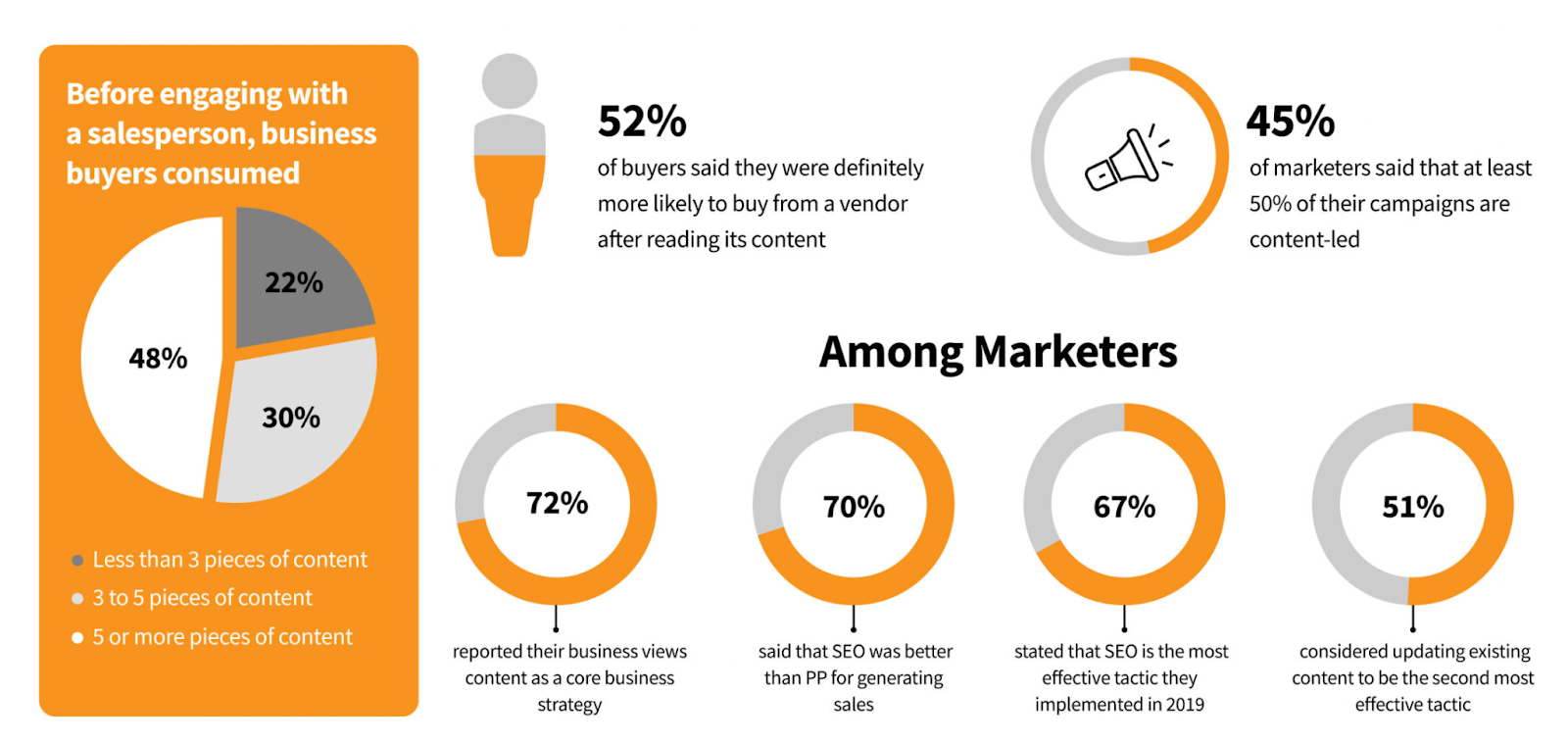
    In content marketing, different goals require different approaches. 

    The table below helps you decide when to use AI, human writers, or a hybrid model based on your content type, objectives, and desired outcomes:

    ScenarioBest approachWhy it works
    High-volume content creationAIFast, scalable, and cost-effective for simple or repetitive formats
    Complex or emotionally sensitive topicsHumanRequires empathy, context, and ethical judgment
    Tight deadlines with limited resourcesAI or HybridAI can speed up drafting; human input can fine-tune where needed
    Content that must reflecta unique brand voiceHuman or HybridEnsures personality, consistency, and emotional depth
    SEO-focused blog postsHybridAI can handle structure and keywords, while humans optimize tone and value
    Strategic thought leadershipHumanDemands original thinking, insight, and credibility
    Social media copy at scaleAI or HybridQuick generation of variants, with human review for tone and relevance
    Long-form storytelling or creative writingHumanCreativity, flow, and narrative require a human touch
    Pro Tip: To get the most out of your content strategy, use smart online tools like Grammarly, Surfer SEO, Jasper, or Hemingway Editor. These tools help refine grammar, boost SEO, spark ideas, and improve readability, saving time and enhancing content performance.

    Blending AI Efficiency with Human Creativity Is the Future of Great Content

    AI has transformed content creation, offering unmatched speed and efficiency. However, truly impactful content still requires the creativity, empathy, and strategic thinking that only humans can bring. The future isn’t AI or human; it’s both. By combining the strengths of each, you can create content that not only connects but also converts and stands out.

    At Wittypen, we blend technology with human expertise to deliver high-quality, results-driven content. Whether you prefer 100% human-crafted pieces or want to scale faster with AI-assisted writing and professional editing, we’ve got you covered.

    Connect with our team to find what works best for your brand!

    FAQs

    1. Does AI content rank well in the search results?

    AI content can rank well if it is well-structured and optimized. However, human-edited AI content tends to perform better, as it reflects improved user intent alignment and meets Google’s preference for helpful, people-first content.

    2. Should AI be used to write emotional content and that which drives storytelling?

    AI can replicate a tone. However, when an insight is truly critical, human understanding is indeed necessary. The stories with a heart, with a soul, and that can activate brands need the skills of at least one passionate human being.

    3. How can one get the best from a collaboration between AI and human beings?

    Let AI generate quick drafts and initial ideations; then bring in human writers or editors to incorporate nuance, strategically related implications, and the brand’s voice, ensuring both quality and the creation of ethical AI content that aligns with audience expectations and values.

    4. What are the best AI content tools to use?

    The best AI content tools include ChatGPT, Jasper, Copy.ai, Writesonic, and Grammarly, each offering unique strengths for drafting, editing, and optimizing content.
  • 14 Best B2B Content Marketing Examples and Success Stories

    14 Best B2B Content Marketing Examples and Success Stories

    Ever wondered what makes the business world spin? It’s not just about having the most eye-catching product or the loudest ads anymore. It’s the magic of B2B marketing that’s stealing the show.   

    Guess what? Studies show that almost 71% of B2B marketers caught on to the growing significance of content marketing in 2022. But here’s the plot twist – only 29% of organizations feel like they’ve nailed the content marketing game. 

    Now, that gap might seem a bit intimidating, but here’s the catch: there are some pretty awesome success stories out there that go against the odds. 

    In this post, we’re exploring 14 examples that don’t just get the importance of content marketing but also excel at it. 

    Ready for a dose of inspiration? Read on!

    14 Best B2B Content Marketing Examples 

    B2B content marketing is a strategic approach that focuses on creating and sharing valuable, relevant, and consistent content to attract and retain a clearly defined audience — and, ultimately, to drive profitable customer action.

    B2B content marketing strategies not only attract buyers but also help brands establish lasting connections that extend far beyond a transaction. 

    Here are 14 best B2B content marketing examples and success stories that showcase how these strategies effectively engage and build lasting relationships with business clients:

    1. Asana
    Asana

    With a strategic focus on welcoming new users, Asana utilizes email marketing as a key component of their approach. 

    When someone signs up, Asana doesn’t just say ‘hi’ – they give them the full tour of what the platform can do. And the best part? They offer a 30-day free trial, which is like giving new users VIP treatment from day one.

    This personalized outreach includes a 30-day free trial, essentially rolling out the red carpet for users as if they were VIP guests.

    The platform’s distinction is further highlighted by its impressive clientele, boasting reputable names such as Google, Amazon, Vodafone, Spotify, and Suzuki. The fact that these industry giants entrust Asana for their work management speaks volumes about the platform’s reliability and effectiveness. 

    View Site

    1. IBM
    IBM

    IBM stands as a giant in the tech industry, not just for its products but also for its innovative content marketing strategies. They’re not just throwing ads out there; they create content that actually teaches and builds trust. Like, they’re a go-to source for tech knowledge.

    Take their “Smarter Planet” initiative, for instance. They combined insightful articles, social media, and engaging videos to discuss how technology can be used to address complex societal issues. It wasn’t just a marketing stunt – it really put IBM in the spotlight as a leader in solving global challenges.

    In 2010 alone, this campaign brought over 3 billion dollars and sparked a huge growth in their business, with thousands of new clients. It’s like IBM showed the world they’re not just tech geeks; they genuinely care about making a difference.

    View Site

    1. Google Workspace
    Google Workspace

    Google Workspace has emerged as a collaboration powerhouse, and their content marketing game is no exception. What sets them apart is their user-centric approach and a clever strategy to reward users who spread the word about their tools.

    Google Workspace understands the value of word-of-mouth marketing. They’ve created a referral program that not only encourages users to recommend their tools to newbies but also rewards them for doing so. It’s like earning extra credit for spreading the word.

    With this program, users can earn up to USD17 per recommendation. This approach not only helps in expanding their user base but also creates a sense of community around their products. Users feel appreciated and motivated to share their positive experiences, creating a ripple effect of recommendations. 

    View Site

    1. YouGov
    YouGov

    YouGov is a UK-based analytics firm that specializes in market research and public opinion polling. 

    Their strategy typically involves gathering data from a large panel of participants who have signed up to take part in surveys. These participants are selected to be representative of the population, allowing YouGov to provide insights that are reflective of broader public opinion or consumer trends.

    The data collected is then analyzed and used to generate reports and insights that are valuable for businesses, governments, and other organizations. And, by keeping up with the latest hot topics, they’re not just staying relevant; they’re also building trust with their clients who depend on this kind of data to make big decisions.

    View Site

    1. Slack
    Slack

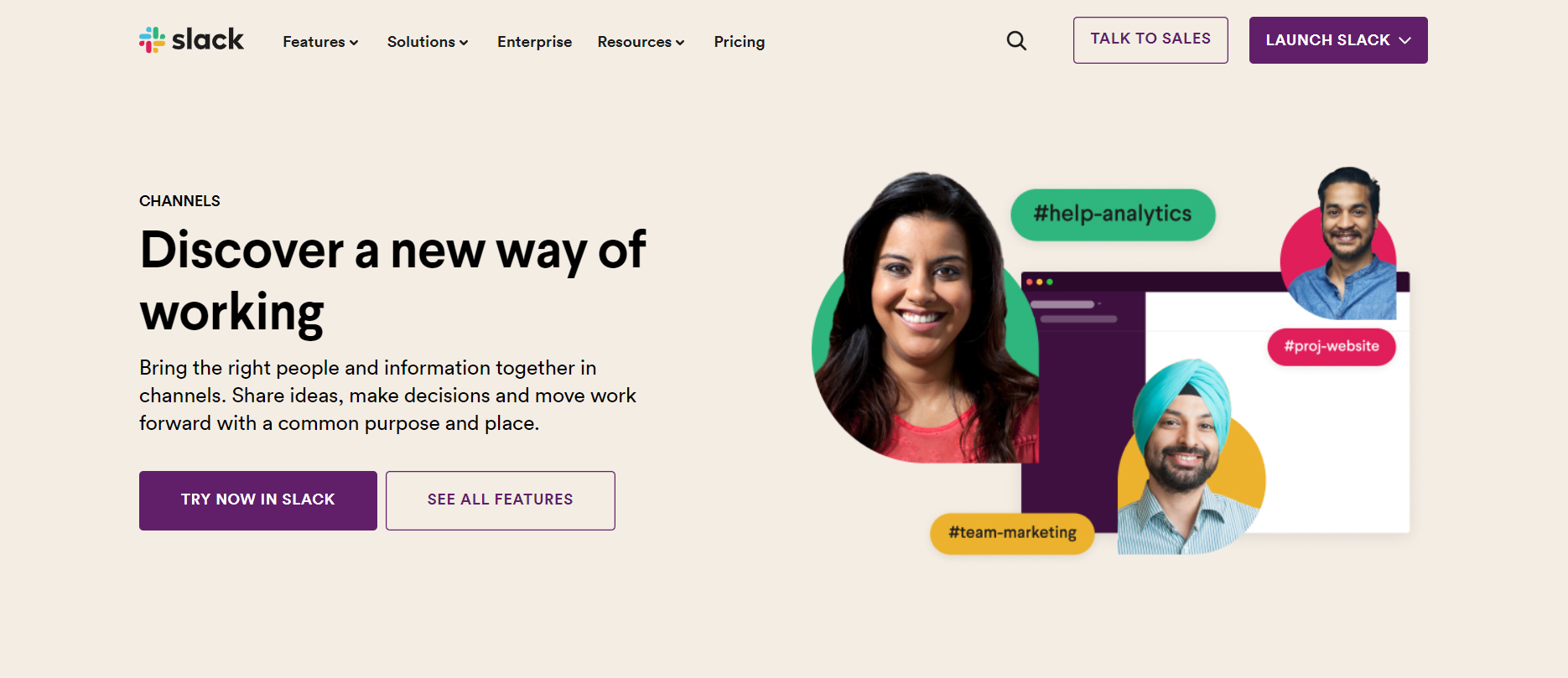
    Slack is a widely used business communication platform known for its efficiency in facilitating team collaboration. Their big sell? They’re all about making work conversations smoother and getting rid of that dreaded email clutter. 

    The platform’s success is underlined by impressive growth metrics: a 30% increase in usage and an 80% rise in daily messages sent. This growth signifies more than just rising popularity; it reflects Slack’s effectiveness in meeting the evolving communication needs of modern businesses.

    Slack’s prime marketing strategy involves targeting businesses with the promise of streamlined communication and enhanced productivity. 

    Key to this strategy is the emphasis on Slack’s ability to centralize workplace communication, reduce email overload, and integrate seamlessly with a multitude of other business tools and applications. 

    This strategy has been conveyed through various channels, including targeted online advertising, social media campaigns, and content marketing through blogs, and so on. 

    View Site

    1. Zoom
    Zoom

    Zoom, a leading video conferencing platform, has seen remarkable success and widespread adoption in both the business world and personal communication, particularly highlighted by its surge in popularity during the COVID-19 pandemic. 

    The cool part about Zoom’s success story? They had this massive growth spurt, like 418% in just a couple of months. That’s huge! Their marketing magic? They really focused on showing off how easy and reliable Zoom is for video calls. It’s like, no matter who you are – a big company, a small team, or just someone wanting to catch up with friends – Zoom’s got you covered.

    Emphasizing its intuitive design, Zoom appeals to a broad user base, from businesses to individual users. And it plays well with other apps too, which is super handy. They’ve been smart about spreading the word, making sure everyone knows just how user-friendly and versatile Zoom is.

    View Site

    1. Airbnb
    Airbnb

    Established in 2008, They totally flipped the script on how we look at travel stays. But it’s not just their cool platform that’s got everyone talking; it’s also how they get the word out with some really smart content marketing.

    One such strategy is their collaboration with Domino, a design expert, to create an engaging quiz for their users. This quiz, which helps users find their “dream vacation home” based on their preferences, not only increases user engagement but also cleverly showcases the wide variety of unique listings available on Airbnb.

    This marketing effort helped Airbnb stand out in a crowded market by not just offering a service, but also an experience. It’s a perfect blend of fun, engagement, and practical utility, which resonates well with their target audience.

    View Site

    1. Adobe Software
    Adobe Software

    Adobe Software’s content marketing strategy goes beyond traditional methods. A notable example is their partnership with the Sundance Film Festival, where Adobe became the official editing platform. This collaboration not only boosted Adobe’s visibility in the creative industry but also established it as a preferred tool among professionals.

    By linking up with such a big deal in the film world, Adobe tapped into the heart of storytelling and artistry. It’s a powerful message: they’re not just selling software; they’re fueling creativity and innovation.

    View Site

    1. Glassdoor
    Glassdoor

    Glassdoor is a unique example in the realm of B2B content marketing, primarily because its entire platform is content-centric. Known for its employee reviews, salary data, and company insights, Glassdoor has built a brand synonymous with workplace transparency and career insights.

    Their content marketing strategy is multifaceted. It involves not just providing a platform for employee reviews, but also publishing insightful articles, salary reports, and industry trend analyses. These resources are invaluable for both job seekers and employers, making Glassdoor a go-to destination for career-related information.

    One of the key successes of Glassdoor’s content strategy is its ability to engage both sides of the job market. For job seekers, it offers a window into company cultures and salary expectations. For employers, it provides an avenue to build their brand reputation and attract top talent. This dual approach helps Glassdoor cater to a wide range of users, establishing it as a leader in the employment information sector.

    View Site

    1.  Lincoln Electric
    Lincolin Electric

    Lincoln Electric, a global leader in welding products, showcases their expertise through targeted content marketing. Their strategy is particularly effective on platforms like LinkedIn, where they connect with industry professionals and decision-makers.

    Their content typically involves detailed insights into welding technology, industry trends, and product innovations. This approach not only reinforces their position as industry leaders but also fosters trust and credibility among their B2B audience.

    For instance, Lincoln Electric, in collaboration with BusinessOnline, revolutionized its content marketing strategy by implementing HubSpot’s marketing automation. It led to a 923% increase in Marketing Qualified Leads (MQLs) and a 550% higher conversion rate through media efforts compared to direct traffic. 

    This multi-channel approach, focusing on myth-busting about welding automation and tailored messaging, resulted in a net gain of $3M from new customers and a 600% increase in ROI, showcasing a highly effective strategy in a traditionally offline-dominated industry.

    View Site

    1. Maersk
    Maersk

    As a global container logistics company, Maersk’s content marketing shines on LinkedIn and other social media platforms. They share insights and stories that resonate with their audience, including updates on global logistics, sustainability efforts, and corporate news.

    This strategy helps Maersk stay connected with their audience, building a brand image that goes beyond just logistics services. It positions them as a thought leader in the industry, engaged with global issues and committed to transparency and innovation.

    The impact of their content marketing is marked by their impressive operational scale. As of 2022, Maersk held a significant position in the global market, operating 15.3% of the world’s container ship fleet. By May 2023, their fleet had grown to 682 container ships with a total capacity of around 4.13 million TEUs

    These figures are not just numbers; they reflect Maersk’s substantial presence and influence in the global logistics scene, highlighting the effectiveness of their content marketing in building a brand that’s recognized and respected worldwide.

    View Site

    1. Cisco 
    Cisco

    The effectiveness of Cisco’s content strategy is mirrored in its robust financial performance. The company boasts annual revenues of around 50 billion U.S. dollars, alongside a net income exceeding 10 billion U.S. dollars in recent years. 

    This technology giant utilizes YouTube and social media to disseminate content that showcases their technological advancements and industry leadership. Their content strategy includes informative videos, interviews, and insights into tech trends.

    This approach helps Cisco maintain its position as a leading authority in technology, engaging with a diverse audience ranging from tech enthusiasts to industry professionals.

    View Site

    1. Chainlink
    Chainlink

    Chainlink uses a mix of videos, infographics, and visuals to make complex topics accessible to a broader audience. This strategy helps them demystify their offerings and communicate their value proposition effectively.

    Their content not only educates but also engages, making it easier for their audience to understand and appreciate the nuances of their technology.

    View Site

    1. Kinsta
    Kinsta

    Kinsta, a renowned player in the web hosting industry, has established itself as a leader through a unique and effective content marketing strategy. 

    Their approach is particularly distinguished by their focus on SEO and what’s known as “error message marketing.” This innovative strategy involves creating content that specifically addresses common errors and issues encountered by users, thereby attracting traffic through search queries related to these problems.

    By providing solutions to these common errors, Kinsta not only drives significant traffic to its site but also establishes itself as an authoritative and helpful resource in the web hosting community. This approach is a clever twist on traditional SEO tactics, targeting specific, often-searched queries and offering valuable content in response.

    View Site

    Key Takeaway

    Your venture into B2B content marketing is more than a mere strategy; it’s an opportunity to innovate, connect, and grow in ways beyond conventional boundaries.

    Remember, the future of B2B content marketing is not limited to reaching your audience; it’s about engaging a community, and your story could be the next to lead the way.

    So, go ahead and write your own success story – the world is waiting to hear it!

    FAQs

    1. What are the best B2B content writing examples?

    The best B2B content writing examples often include in-depth whitepapers, thought leadership articles, comprehensive case studies, and industry-specific blog posts. Companies like HubSpot, Salesforce, and LinkedIn are notable for their compelling B2B content that combines expertise with engaging storytelling.

    1. What are the examples of content marketing on social media?

    Content marketing on social media can range from educational infographics on LinkedIn, interactive polls on Twitter, and informative video content on YouTube to behind-the-scenes stories on Instagram. 

    Brands like Adobe and Cisco Systems excel in utilizing social media platforms to share valuable content tailored to their B2B audiences.

    1. How can storytelling be utilized in B2B content marketing?

    Storytelling in B2B content marketing can be utilized by sharing customer success stories, illustrating the journey of product development, or presenting company milestones. It’s about crafting narratives that resonate with the target audience, demonstrating real-life applications and benefits of products or services.

    1. What are the best practices for implementing B2B content marketing strategies?

    Best practices include understanding your audience, creating a content calendar, focusing on quality over quantity, utilizing SEO techniques, and incorporating a mix of formats such as blogs, videos, and podcasts. Regularly analyzing performance metrics and adapting strategies accordingly is also crucial.

    1. How can B2B content marketing success be measured?

    Success can be measured through various metrics such as website traffic, lead generation, engagement rates on social media, content download numbers, and conversion rates. 

    Tools like Google Analytics, social media analytics, and CRM systems can provide valuable insights into the effectiveness of content marketing efforts.

  • 27 Chrome Extensions For SEO To Outrank Your Competitors

    27 Chrome Extensions For SEO To Outrank Your Competitors

    Let’s face it- coming up with an effective SEO strategy takes a lot of time and effort. Especially when it comes to small in-house marketing teams, the process becomes even more time-consuming. 

    Does that mean you should abandon your dream of dominating the SEO rankings? Absolutely not! 

    According to research, businesses that invest in building solid SEO strategies with the right tools have an average conversion rate of 14.6%- it is significantly higher than traditional strategies with an average conversion rate of 1.7%. This proves that with the right resources and tools, you can easily streamline your SEO efforts and achieve exceptional results in no time.

    Although there is no secret pill when it comes to SEO success, integrated software programs, such as Chrome extensions, can immensely help you make data-driven decisions and gain a competitive edge in the long run. 

    Read on to discover the top 27 SEO Chrome extensions and explore how they can help you streamline your workflow this year.

    Let’s get exploring!

    27 Top Chrome Extensions For SEO to Explore in 2023

    Before we dive into the various extensions, it is important to understand the different kinds of extensions that can help you strengthen your SEO strategy. 

    • Keyword extensions provide comprehensive insight into the proper keywords you can target, their search volumes, competition levels, and various other factors.
    • Technical/backlink analysis SEO extensions help you identify and fix site optimisation and technical issues. 
    • On-page extensions primarily focus on analysing individual web pages to determine whether they’re well-optimised for search engines or not.

    Now, let’s take a look at the top 27 SEO Chrome extensions that can help you boost your website’s rankings effectively.

    1. MozBar
    Moz

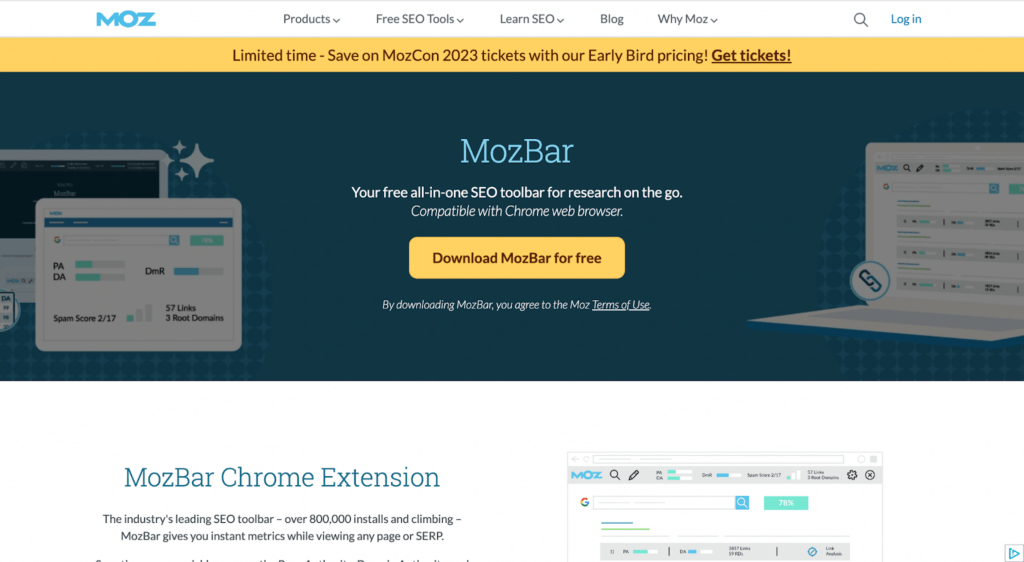
    With over 800,000 instals in a short span, MozBar has become one of the top free browser extensions that give you instant metrics when reviewing SERP or a page. 

    It helps marketers, SEO professionals, and website owners check broken links, analyse domain and page authority, and target the right keywords.

    1. Whatsmyserp

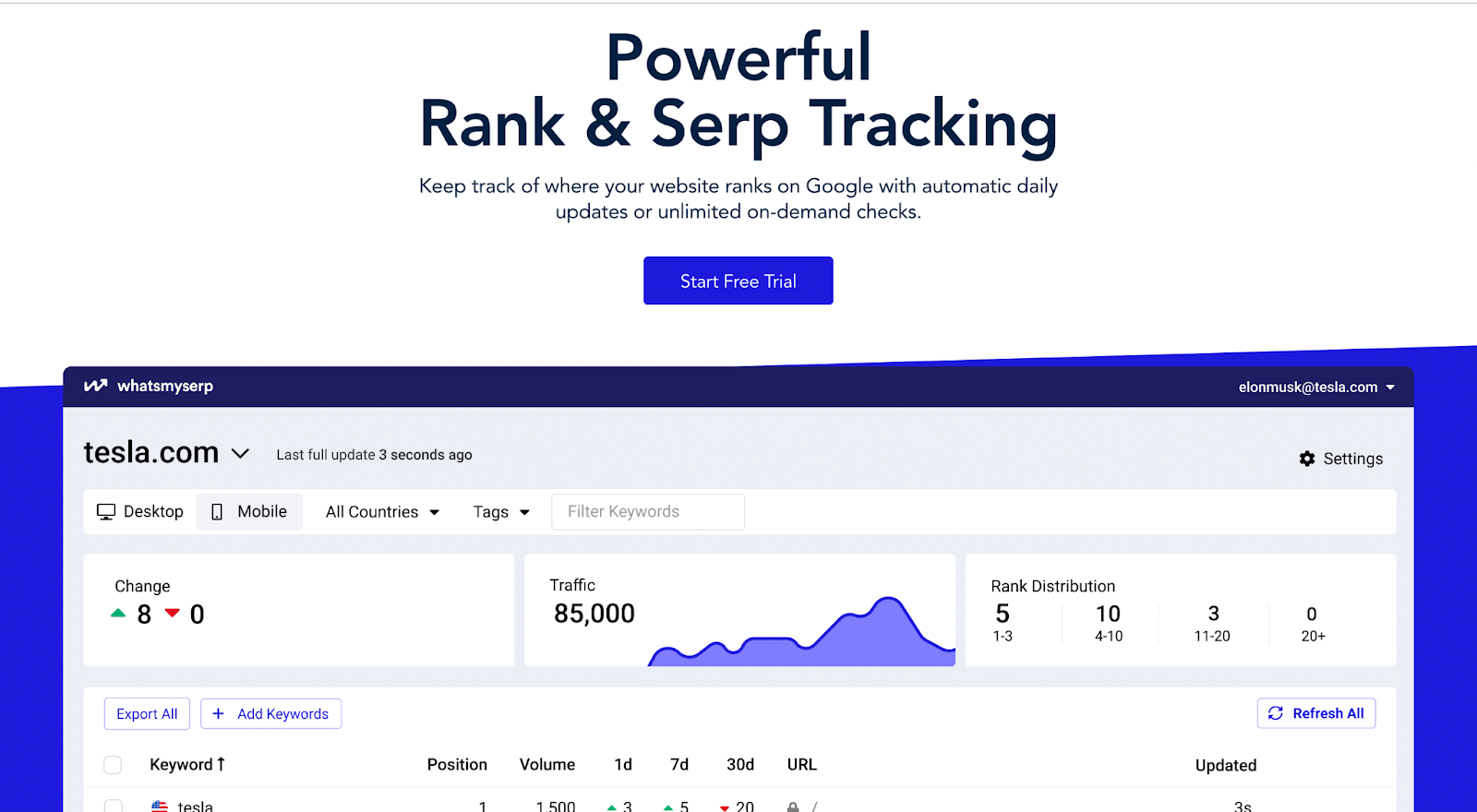
    Whatsmyserp is a free tool that allows marketers to use specific phrases and keywords to analyse their engine ranking position (SERP). It is updated on a daily basis, ensuring timely, accurate, and updated SERP results in no time.

    1. SEMSTORM: Keywords

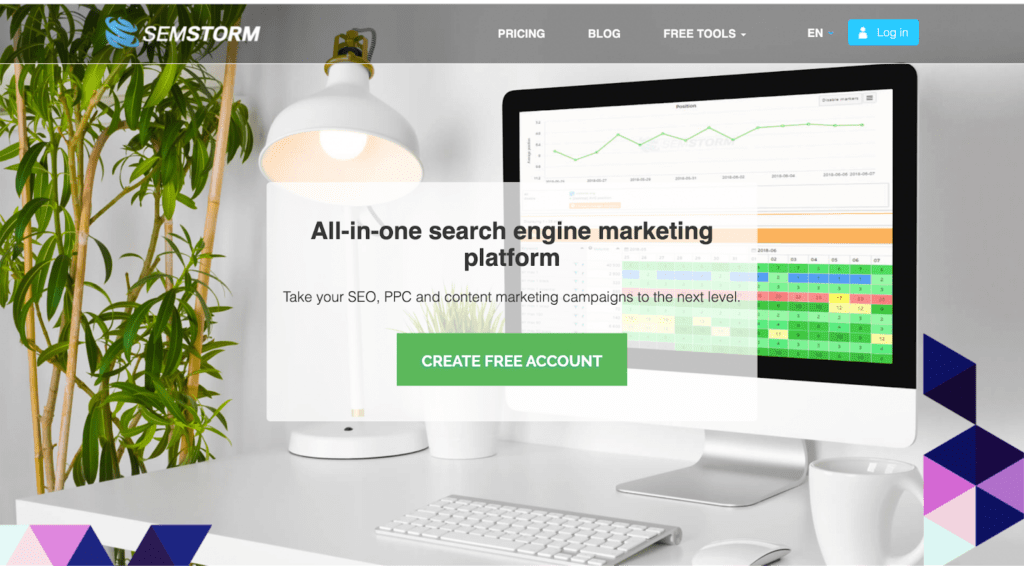
    SEMSTORM: Keywords is a smart digital marketing tool that enables users to conduct detailed competitive analysis and keyword research. It also comes in handy when it comes to PPC optimisation and overall content optimisation.

    1. SEOquake
    SEO Quake

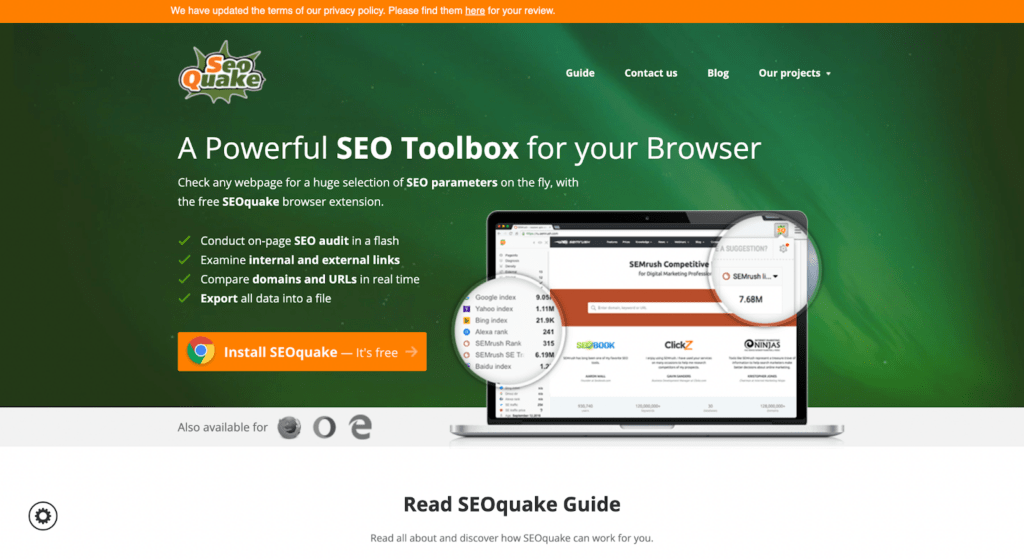
    SEOquake enables marketers and website owners to analyse internal and external links, conduct on-page SEO audits, and compare existing URLs to improve the overall ranking of a website.

    1.  Link Grabber

    Link Grabber is an extension that allows marketers to find and extract meaningful links from various web pages on HTML pages. It helps marketers conduct link research, find and eliminate broken links, and find group links by domain.

    This extension also helps in filtering useful links and copying them to the clipboard for further analysis.

    1. SEO Meta in 1 Click

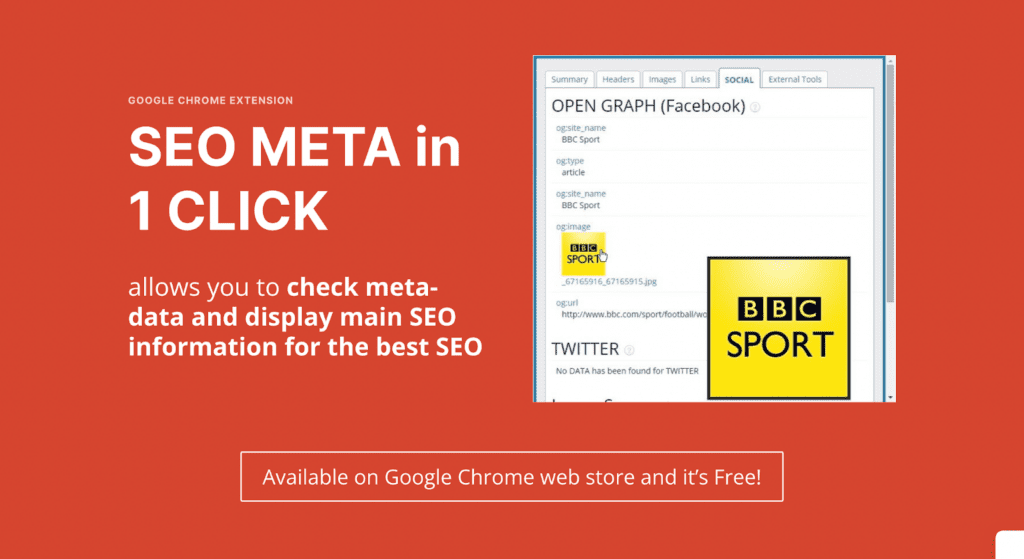
    SEO Meta in 1 Click is a Chrome extension that allows users to analyse several essential meta-data, such as page titles, meta tags, header tags, keywords, open graph tags, and so on. It has a user-friendly interface, allowing users to make the most out of it when it comes to analysing valuable SEO insights.

    1.  SEO Minion

    Trusted by over 300,000+ users, SEO Minion is a free tool that allows marketers with their daily SEO tasks, such as broken link checking, on-page SEO analysis, SERP preview, and more.

    This tool enables you to check all external and internal links on your web page. Apart from that, it has a unique feature that can export “People Also Ask” queries from the search engine page.

    1. Ahrefs

    With the record of updating metrics for 300M+ pages every 24 hours, Ahrefs has become one of the top search engine optimisation (SEO) tools in the content marketing industry today.

    It primarily helps marketers improve their overall online presence and visibility. 

    It also helps users improve several SEO tasks, which include, but are not limited to, competitor analysis, backlink analysis, keyword research, and overall content analysis.

    1. Serpstat

    Serpstat is a trusted online tool that enables its users to conduct thorough backlink analysis and keyword research. It is best suited for marketing professionals who aim to analyse insights into traffic distribution among domains.

    It can also help professionals get an overview of market share fluctuations and local search history by offering an advanced competitor analysis.

    1.  ChatGPT Content Brief Assistant
    ChatGPT

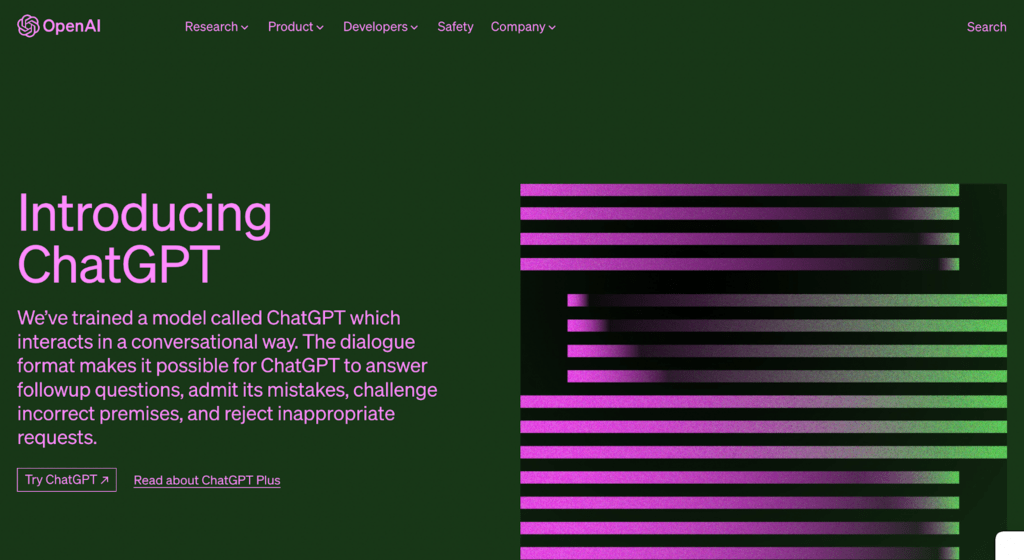
    Trained by Open AI, ChatGPT is a versatile language model that revolves around solving challenges in a conversational way. It asks follow-up questions and challenges incorrect premises to come to the best possible solution for its users.

    For content marketers, it offers a variety of applications. It can be used for content generation and high-quality brief generation. It also helps the users get an overview of the latest audience insights and trend analysis.

    1. LinkMiner

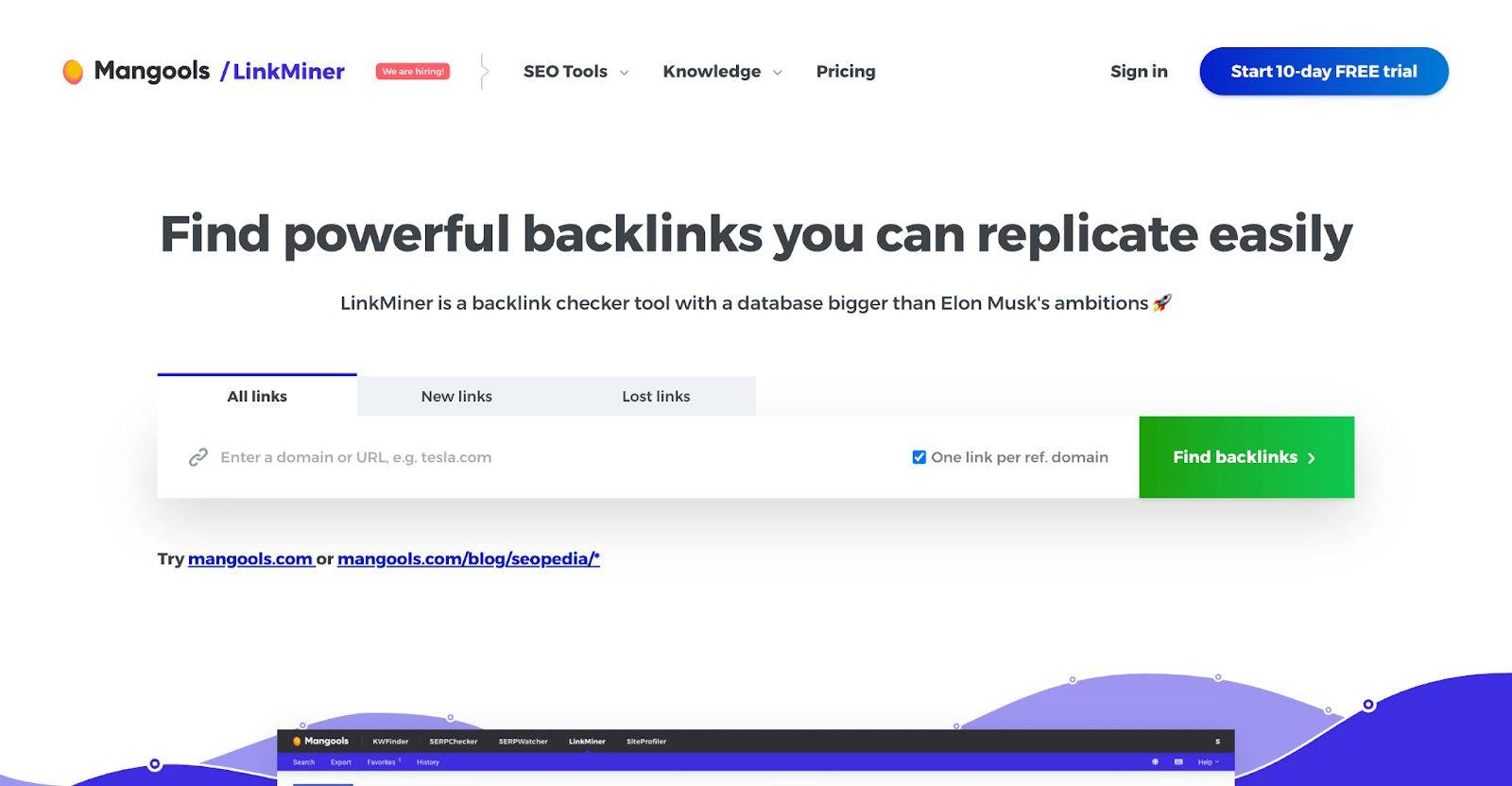
    Trusted by renowned brands like Airbnb, Alexa, and Adidas, LinkMiner is a powerful backlink checker that helps marketers analyse the nitty gritty of backlink analysis.

    It provides a detailed analysis of the backlinks of any URL or website- whether you want to analyse the number of backlinks/referring domains or a comprehensive overview of the competitors’ backlink-building strategy, this tool offers it all.

    It also enables you to explore new link-building strategies by offering a competitive analysis of websites to ensure you stay on top of your marketing game.

    1.   RocketReach Chrome Extension

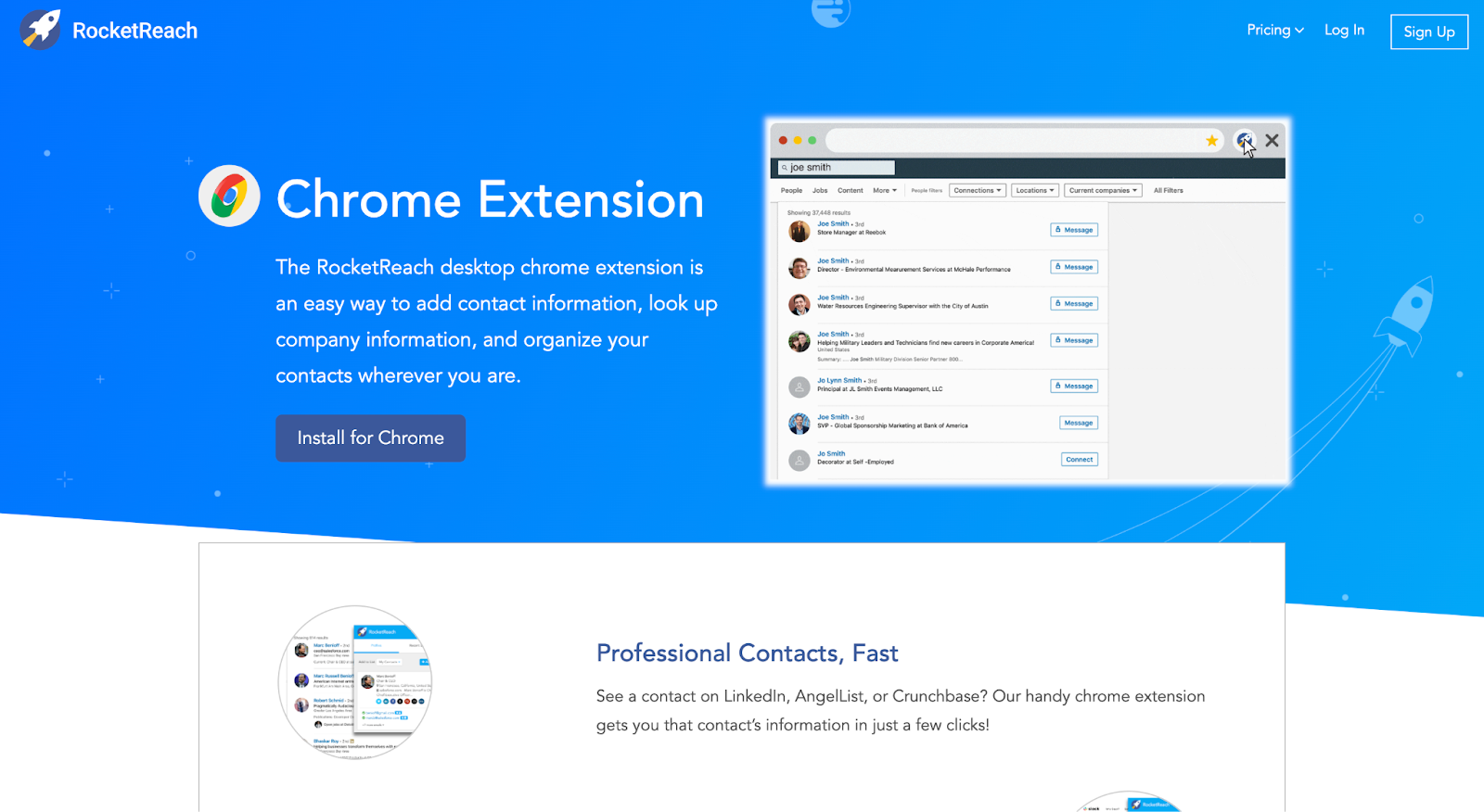
    Trusted by over 16 million users, RocketReach Chrome Extension offers quick navigation when it comes to looking up company information, the contact information of organisations, and other contact-related details associated with a specific company or website. Its clientele includes renowned names like Facebook, Disney, Amazon, Microsoft, Google, and Intel.

    1. WooRank Chrome Extension

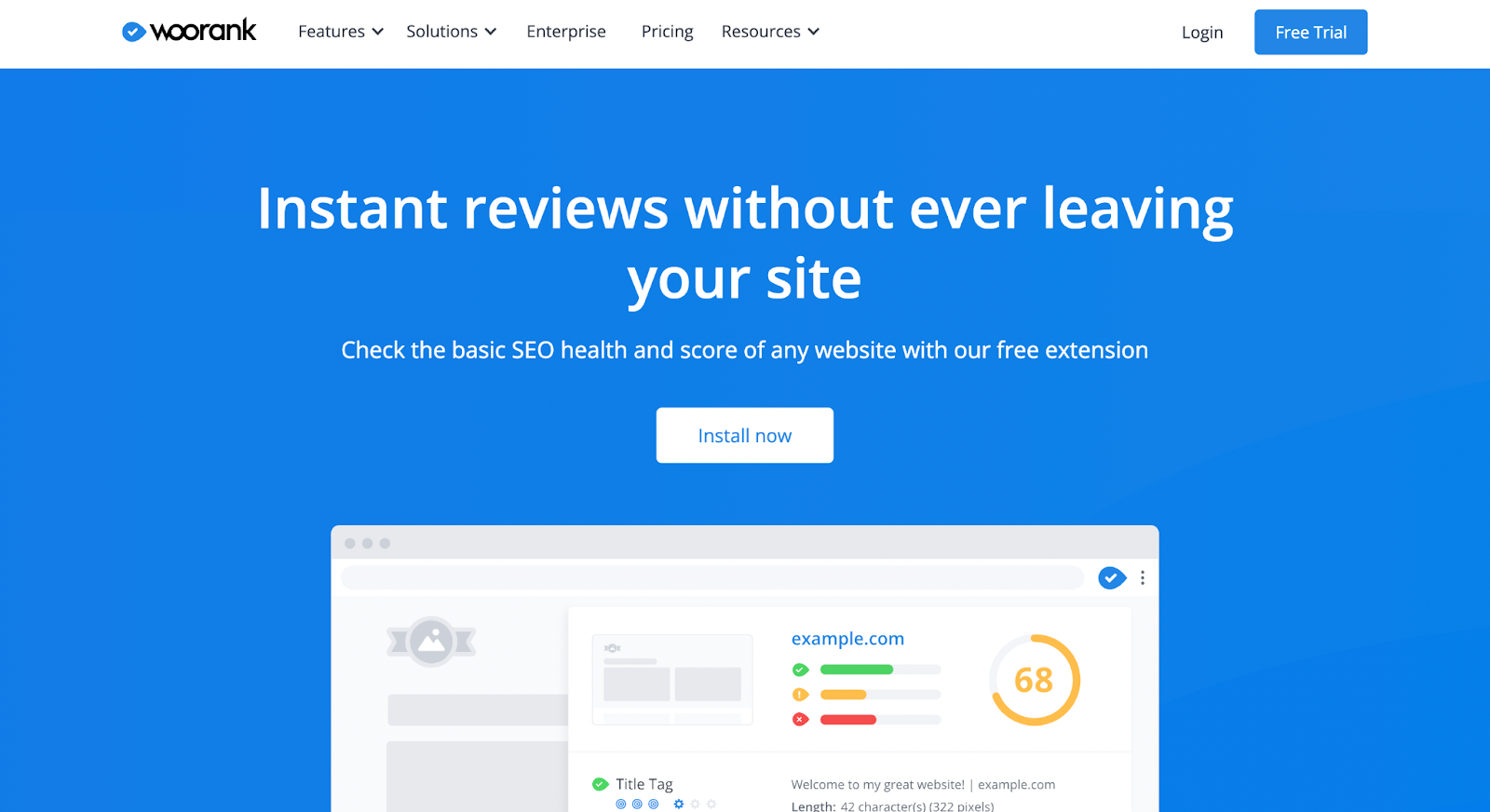
    WooRank Chrome Extension helps users get an overview of their website’s overall performance. It helps them improve their online presence with the help of helpful SEO tactics and performance tips. 

    It comes with a free and a paid version- depending on your SEO requirements- select any one version based on your requirements. You can also choose to use the free version for a while and then switch to the paid one later.

    1.  FatRank 

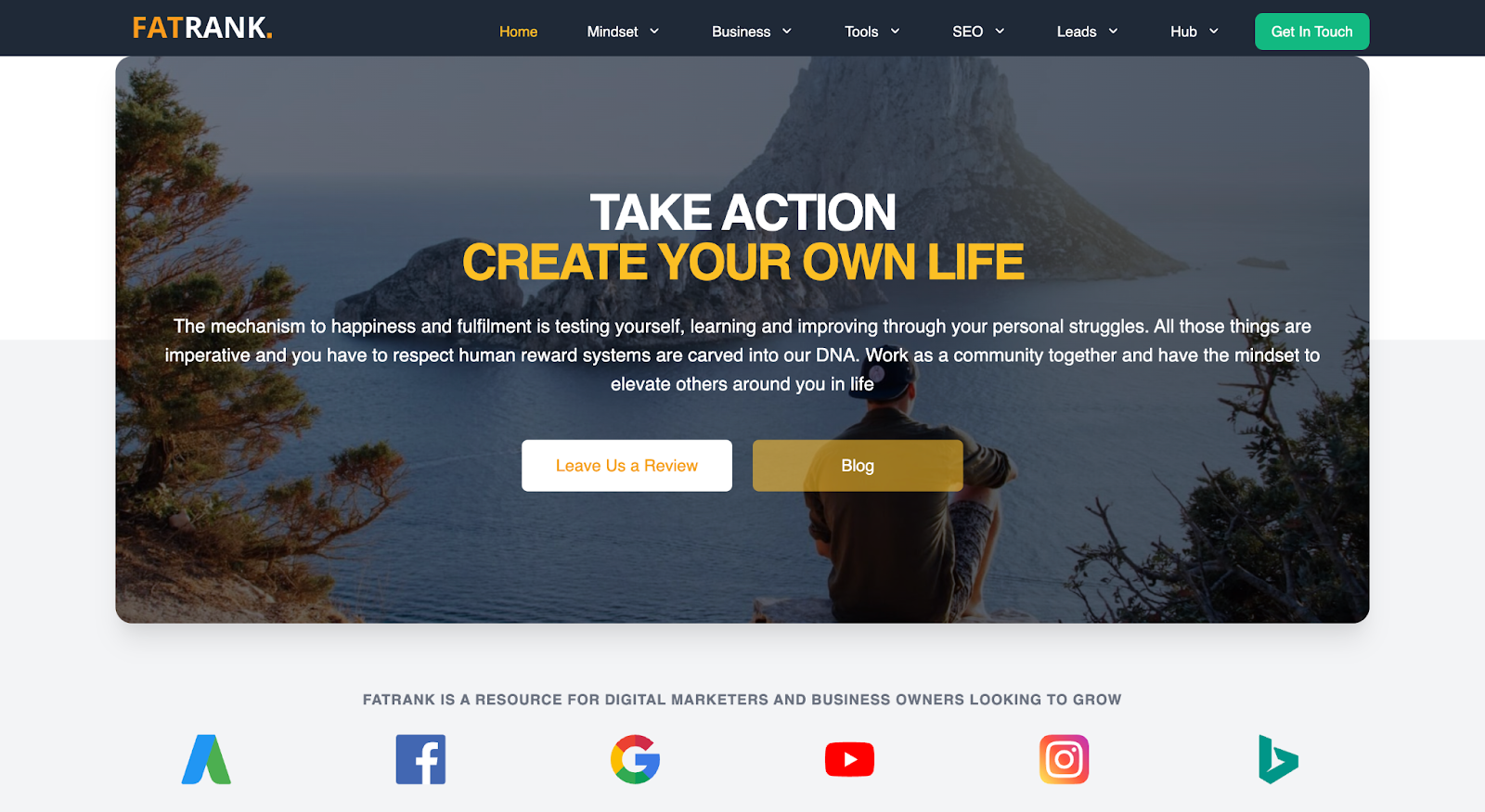
    FatRank is a trusted extension that allows you to track your website’s rankings for specific keywords. It offers an extensive list of keywords and their website URLs, which helps you get a detailed ranking report. This report can help you understand your website’s current position on various search engines.

    1.  SEO Spider 

    SEO Spider is a website crawler that primarily aims at improving users’ online SEO by auditing for common SEO issues. The on-page optimisation tactics it offers help users identify areas for improvement and improve their overall online presence in the long run. You can try their free version first before purchasing their paid offers.

    seo content writing services
    1. Free Backlink Checker by LRT

    As the name suggests, the Free Backlink Checker by LRT is a free online tool that helps website owners improve their SEO performance and overall backlink profile. 

    With this tool, you can easily identify potentially harmful links that could lead to negative results. You can also identify spammy or broken, invalid, and low-quality links- it will help you eliminate such links and add proper backlinks that will boost your website’s rankings.

    1. Keywords Everywhere

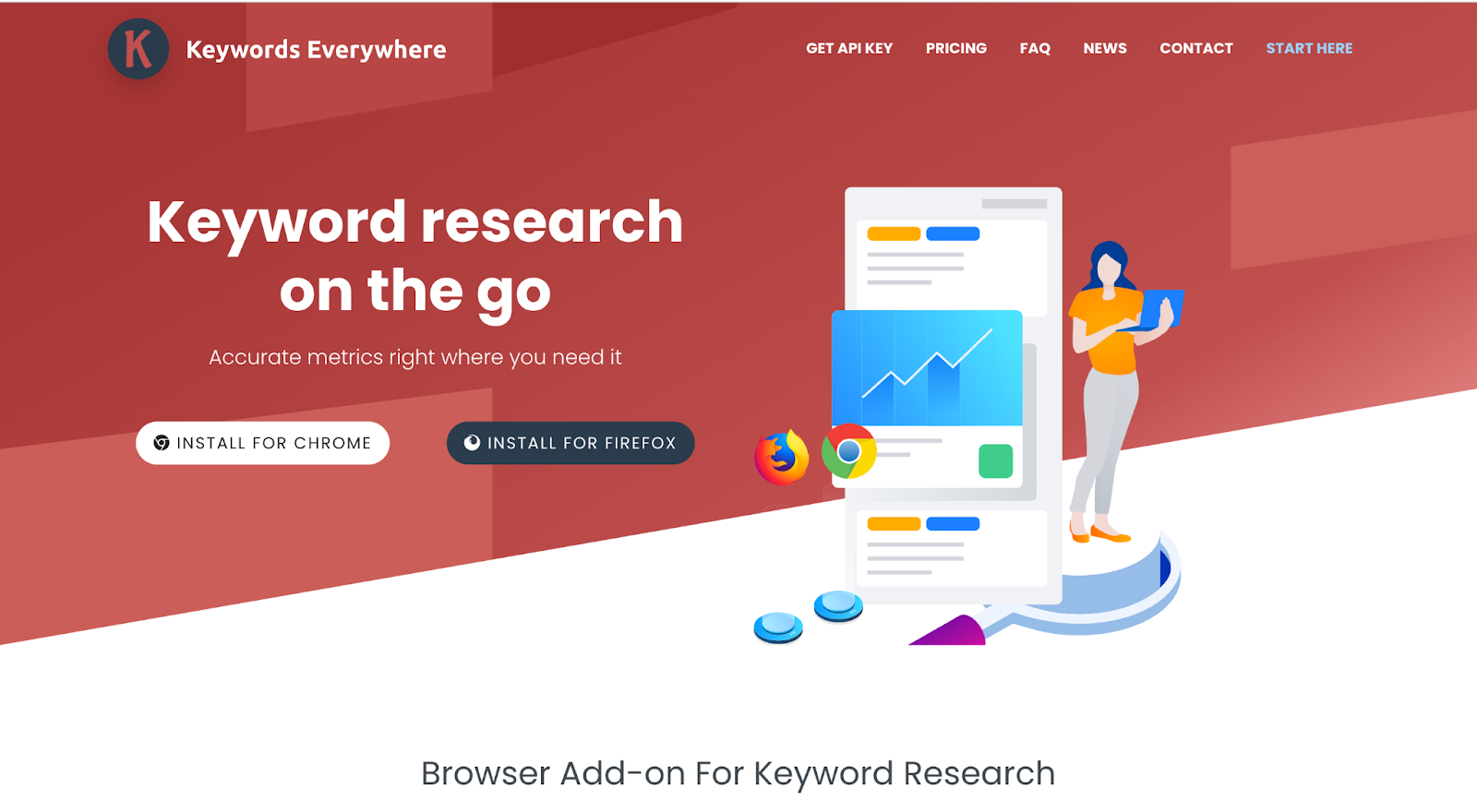
    Keywords Everywhere can be installed on both Chrome and Firefox. It allows users to analyse important data about keywords, search volumes, and competition levels of keywords. 

    1. Portent’s SEO Page Review 

    If checking basic onsite SEO is what you’re looking for, Portent’s SEO Page Review can be helpful. It can be highly beneficial in terms of analysing meta tags, meta descriptions, title tags, canonical links, on-page links, open graphs, and the overall content of your existing website.

    1. Open SEO Stats

    Formerly known as PageRank Status, Open SEO Stats is a tool that allows website owners to deeply analyse the existing backlinks along with several essential SEO metrics. Due to its user-friendly and updated interface, this tool is now trusted by over 200,000 users across the globe.

    Along with the SEO metrics, this tool also helps marketers analyse their indexed pages, cached pages, Google page rank, etc.

    1.  SeoStack Keyword Tool

    Brought to you by SEOStack, SeoStack Keyword Tool is a free online tool that enables users to find long tail keywords for their websites. 

    With over 70,000+ marketers and SEO professionals relying on this tool as the go-to long-tail keyword generator, it has become a staple for many looking to improve their SEO rankings today.

    One of the top features of this tool is the fact that it helps you get keyword suggestions from various search engines, such as Google and Youtube, among others. It also helps marketers to generate a list of related keywords to incorporate into their SEO strategies.

    1.  PageImprove

    Pagelmprove is one of the best SEO extensions for Chrome that allows website owners to tweak their existing pages quickly. It helps with tweaking the existing H1 pointers, meta tags, titles, and canonicals, among other things.

    This is a detailed SEO extension that can save you a lot of time and effort you’d otherwise put into revamping your web content. You don’t have to wait for developers to refresh your content- this tool will take care of that for you. 
    The best part is that the entire process takes very little time while making the existing content of your page as up-to-date and accurate as possible.

    1.  Robots Exclusion Checker 

    Robots Exclusion Checker helps website owners analyse whether any exclusions or robots are harming the search engine rankings of their sites. The tool reports on various elements, such as Meta Robots tag, X-robots-tag, Robots.txt, Rel=Canonical, etc.

    1. Meta SEO Inspector

    Meta SEO Inspector is a brilliant tool when it comes to analysing meta information of web pages. Marketers use this tool to find issues with meta tags, Open Graph tags, canonicals, structured data, and subheadings.

    This tool also comes in handy to analyse advanced data about the external and internal scripts used on web pages.

    1.  Schema Builder for Structured Data

    If generating and testing structured data markup is a concern for you,

    Schema Builder for Structured Data might just be your best friend. It is a free Chrome extension that helps users generate structured data markup for any webpage. It supports all Google-supported markups, making it a convenient tool for both beginners and professionals.

    1. Keyword Surfer

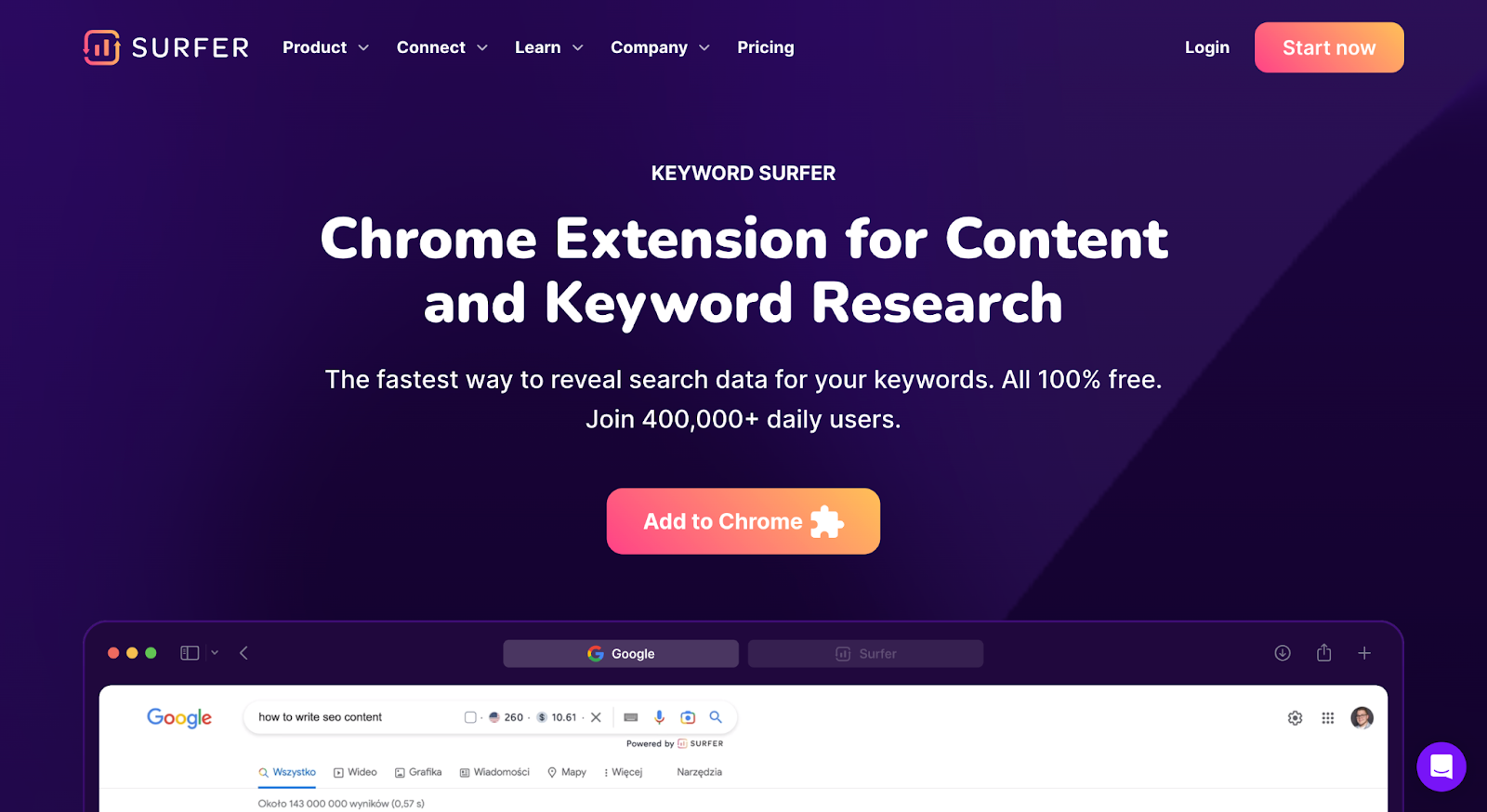
    Keyword Surfer allows you to analyse the cost-per-click, search volume, estimated traffic, number of used keywords, etc. With its user-friendly interface, it comes in handy for both beginners and professionals in the content marketing industry.

    1.  Glimpse

    Glimpse can be highly beneficial for SEO professionals and marketers who want to gain insights into the latest Google trends and user behaviour. 

    This tool can help you analyse related topics, top queries related to a search term, related keywords, and more. Along with that, you can compare and analyse different search terms to determine the latest keywords that can boost your website.

    However, note that the free version only allows ten searches in a month. So, take the paid subscription in case you want to conduct more extensive keyword research.

    1.  Ninja Outreach Lite

    Ninja Outreach Lite is a free Chrome SEO plugin designed to offer unique outreaching tactics to marketers. It primarily helps marketers access relevant contacts for marketing campaigns. Getting access to such contacts helps marketers build successful campaigns. 

    On top of that, this tool comes in handy when checking broken links- it also helps you find relevant replacement links. Consequently, improving your website’s trustworthiness becomes easier if you have access to this tool.

    Conclusion

    The 27 extensions and tools mentioned above are a small glimpse of the variety of Chrome extensions available to users- they help you simplify your daily tasks, improve productivity, provide an excellent browsing experience, and improve your overall search engine optimisation efforts.

    No matter whether you are a writer, developer, marketer, SEO professional, website owner, agency owner, or simply someone who wants to make the most out of your browsing experience, there’s something for everyone on this list. 

    So why wait? Try out a few extensions and see how they improve your browsing experience today!

    Content Writing Services

    FAQs

    1. What are the best Chrome extensions for SEO?

    Some of the best Chrome extensions for SEO include Ahrefs, WooRank, Ninja Outreach, Semrush, SEOStack Keyword Tool, FATRAnk, Portent’s SEO Page Review, SEOquake, and Meta SEO Inspector, to name a few.

    1. How do I use Chrome extensions for SEO?

    Given below are the steps you can take to use Chrome extensions for SEO:

    • Be clear on what kind of extensions will be beneficial as per your SEO strategy
    • Compare different Chrome extensions to determine which ones will be best suited for you
    • Make sure you have the Chrome browser installed on your device
    • Activate it and make the most out of it to improve your marketing game

    Make sure you check reviews beforehand and install trustworthy extensions that will not harm your website or device in any way.

    1. Are there any free Chrome extensions for SEO?

    Yes, there are many free Google Chrome extensions for SEO. Some of them are MozBar, Whatsmyserp, Woorank, SEO Spider, SeoStack Keyword Tool, and SEO Minion. Some of these also come with paid versions, but you can try the free version first before taking the paid subscription if you want to.

    1. What Chrome extensions are good for keyword research?

    Various Chrome extensions can help you conduct thorough keyword research and boost your website rankings. Some of them are Keyword Surfer, Keywords Everywhere, SEOStack Keyword Tool, SEMSTORM: Keywords, Glimpse, and MozBar, to name a few.

    1. How do I choose the right Chrome extension for SEO?

    There are a plethora of Chrome extensions available today. In order to choose the right extension, you have to have a clear understanding of what your SEO strategy looks like and what it requires. Once you have a fair idea of what you want, look for the best Chrome SEO extensions that are popular and have good reviews online.

    On top of that, don’t forget to analyse and compare different extensions and the features they offer. Based on that, select extensions that are easy to use and serve your purpose in a hassle-free manner.

    1. Can Chrome extensions help with website optimisation?

    Yes, Chrome extensions can be highly beneficial when it comes to website optimisation. There are various aspects that can be improved by Chrome extensions, such as keyword research, on-page optimisation, analysing backlinks, identifying technical errors, and more.

    1. What Chrome extensions are useful for backlink analysis?

    There are several Chrome extensions that are useful for backlink analysis. Some of them are Ahrefs, MozBar, SEMrush, Serpstat, Link Miner, and Open SEO Stats, to name a few.