Author: Sharan Ahluwalia

  • Quick Guide to Make a Better Content Distribution Approach

    Quick Guide to Make a Better Content Distribution Approach

    In Jonah Peretti’s words, “Content is King but distribution is queen and she wears the pants”.

    The CEO of Buzzfeed and the co-founder of Huffington Post, Mr. Peretti believes in creating ‘shareable’ content, which has been the USP of the internet media company.

    Content distribution can spread your story among a large pool of a very targeted audience. It can be achieved through many media formats using different channels. Even if you are confident that your content provides value, what good is that value if it does not reach your target audience?

    Content Creation vs. Content Distribution

    Some people might think that content distribution is not as creative as content creation. However, the fact that you have to be creative to distribute what you have produced, requires intricate knowledge of the infinite possibilities and methods in which it can be done.

    Your primary objective after content creation is to circulate it to your audience. As important as content creation sounds, your efforts will get you nothing unless others can see what you have created.

    In short, content distribution and a content distribution strategy is a significant step to see rewards for the efforts you make, and it demands lots of creativity as well. Social media giants such as Facebook, Netflix, and YouTube, etc have developed multiple tools and algorithms based on its user data to distribute content effectively.

    Channels of Content Distribution

    Driving organic data to your website or blog can be quite challenging. An excellent content distribution strategy can help you achieve that. When your audience organically accesses your content, you know that they are genuinely interested in you and are not forced to view your content.

    Further, when the traffic is organically driven, the chances of people linking back to your content increases exponentially and we know what it means – more SEO traffic!

    There are three main channels of content distribution today:

    1. Owned:

    This refers to disseminating content on your blog, social media, email broadcast, etc. Owned channels of content distribution help you build long-term relationships with your existing and potential audiences. You can engage with your audience using different social media platforms and create a dialogue with them by regularly posting on these platforms to attract more traffic towards your content.

    2. Earned:

    Here, the audience distributes your content via guest posts, product reviews, shares, retweets, etc. Earned distribution speaks volumes of your content because it provides “social proof” for you and your content.

    3. Paid:

    This form of content distribution is usually bought. Payments can be made in different forms, but it usually works on CPC (cost per click) model where you pay a certain amount each time somebody clicks to view your content. It can be done using different methods such as display ads, paid search or sponsorships. The major benefit of paid content distribution is that it can be scaled and controlled.
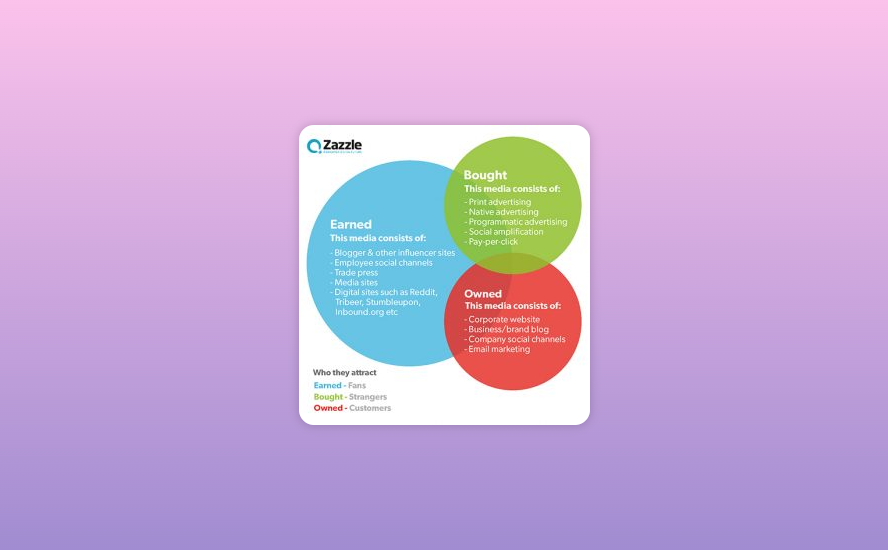
    Content distribution
    Source – Zazzle

    Designing a Valuable Content Distribution Strategy

    Designing a valuable content distribution strategy and executing it well, will definitely add value to your business and its growth. Here is a quick guide to making a better content distribution approach.

    1. Know your Audience:

    Businesses always have a target audience, however, you never know whose ears or eyes the content may fall on. Identify active communities, groups and get involved while providing valuable information on multiple platforms and engaging in dialogue. For example Quora, Reddit, LinkedIn, etc.

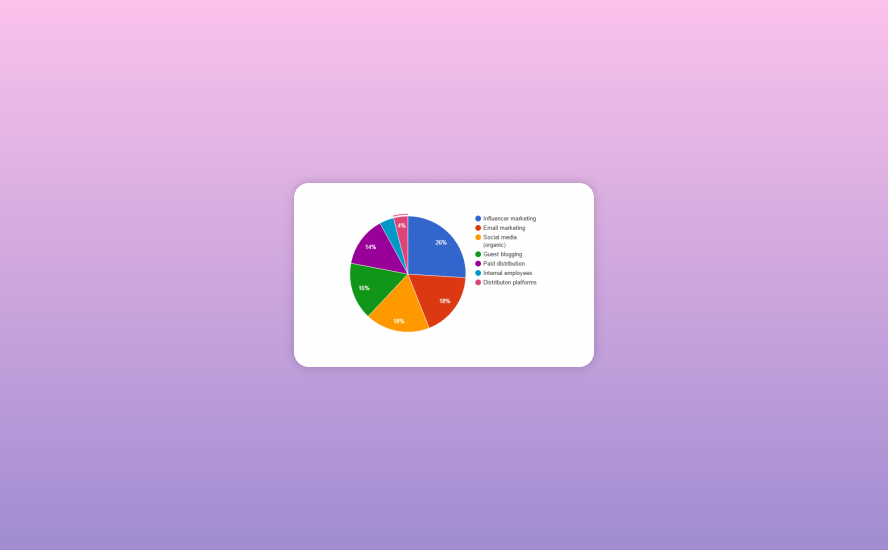
    2. Influencer Marketing:

    Forbes predicts that Influencer Marketing will explode in 2017 as it is only the beginning of personal branding. Top notch brands are integrating with personalities who have a recognizable level of influence over audience and fans. For instance, in July 2017 WATConsult along with Motilal Oswal launched a digital campaign #TheOnlyTIP featuring stand-up comedian Mallika Dua and actor Manav Kaul.

    There have been multiple instances of brands integrating with comedians, actors, politicians and other social media influencers to market and distribute content in order to reach a broader audience.

    3. Earned Distribution triumphs over Paid Distribution:

    You cannot purchase genuine interest and love. When it comes to building relationships, an earned distribution will leave a bigger impact than paid distribution. When people share your content because they relate to it and genuinely want to share it further, it builds an unbreakable chain. So earn it!

    4. Identifying Distribution Channels:

    Having a pre-defined set of targets and distributive channels, whether owned, paid or unpaid, will only help you execute your strategy well. Capitalize and utilize maximum channels in order to reach a wider audience. Explore!

    5. Email Marketing is Still Relevant:

    Newsletters, publications, white papers, e-Books or general greetings, e-mail marketing has been used for ages and it is here to stay. Make it exciting by using more tools and refining the way you land up in someone’s email. No Spamming!

    6. Tools of Content Distribution:

    In this day and age, there are multiple analytical tools to aid you in managing your distribution channels and strategies. Some of these are discussed later in this article.

    7. Consistency is Key:

    Consistency, and frequency of content distribution are as important as content distribution itself. You do not want your audience/potential customers to lose interest and become disengaged because of it. So keep at it!

    Also Read: 25+ Trending Topic Ideas for Content Writing to Rank #1 on SERPs

    8. Using the best the technology

    Has to offer-Using AI in content marketing and content marketing resources.
    mailmunch
    Source – mailmunch

    Tools of Content Distribution

    Here are some of the tools that can help in executing your content distribution strategy.

    • MailChimp: Email delivery is one of the pillars of content distribution. It can be painful and time-consuming to write personal emails to each of your audience. MailChimp allows you to send automated emails, marketing messages and other content to your target audience.
    • GaggleAmp and Amplify: With the help of these two tools, you can engage your entire company with content distribution. You can invite your employees to your Gaggle or Amplify and distribute your content.
    • Curate it: Another tool that you can use to make your co-workers distribute your content. It focuses on email, and you can use this tool to provide daily content in the form of the newsletter containing your articles, blog posts, etc.
    • Taboola and Outbrain: These place your content on a variety of websites and drive new traffic and readers to your work. Their main focus is to target the audiences that might be genuinely interested in your content. You can use these tools to your advantage
    • Nativo: This is a native advertising tool. It circulates your content as sponsored posts on different websites. Its payment policy is different than other paid content distribution tools. It charges at Viewable Cost per Thousand or CPM rate and not the popular CPC rate.
    • Social Media Sharing Tools: Sharing tools that allow you to access multiple digital platforms, have unique distribution apparatus and an integrated dashboard. Scheduling your messages is easy and your content distribution strategy is more effective with these tools. For e.g. HootSuite, Crowdbooster, Bitly, Social Flow, Social Oomph, etc.

    You can also make use of many other tools including Oneload, Slideshare, Buzzsumo, Columbia, Tribber, Buzzstream, Medium and Click to Tweet.Here is a link with more content discovery tools to get you started.

    To conclude, frequent quality content distribution aided by a solid content distribution strategyis the best way to attract organic traffic to your business. Identifying your business needs and formulating a content distribution strategy combining the best tools and methods will serve your business in the long run.

    Consistent brand story telling must be achieved through an efficient content distribution strategy fostered by effective content distribution tools.


  • Why Freelance Content Writers Need an Online Platform

    Why Freelance Content Writers Need an Online Platform

    Freelancing can seem like heavy work and a dead-end, especially if you are just starting out. The Indian Freelancing scene has expanded tremendously, especially over the past few years. Companies are generating content on a large scale. Brands are winning customers through content marketing, which provides the opportunity for freelance content writers to take advantage of these trends.

    Irrespective of growing opportunities in today’s era of Start-Up India, I often come across many freelancers struggling to find work. I, being a freelancer myself, am no stranger to these struggles. It can be intense and scary if you are wandering in the industry, asking for work without any real direction.

    If you dig deep and keep peeling the onion, artists and freelance writers are the leaders in society – the people who start to get new ideas out – ****Allan Savory

    But if ideas lack direction and medium, what good are they?

    Let’s take a look at some of the challenges we, as freelance writers have faced at one point or another in our writing professions.

    Lack of Credibility

    Let’s face it, there are times when you would reconsider why you became a freelance writer in the first place. And in such times, looking for work can become exhausting and demotivating.

    Especially, when most companies also prefer to generate original in-house content, rather than outsourcing work to freelance writers. Trust and credibility play a major part here.

    It is always helpful to continuously build your CV, work profile and generate credible work samples that can also serve as your working profile or resume. Continuously building a portfolio will also be beneficial in the long run, especially when companies need to connect with you through social media platforms like LinkedIn, Behance etc.

    What may work even better is being associated with an online platform or medium which is accredited with high-prole clients, good projects and credible resources to advance your freelance opportunities.

    Delayed Payments

    The biggest drawback of working as a freelance writer is the part where you don’t get paid.

    Days turn into weeks, weeks into months and some months, you may not even see a paycheck. Finding credible sources of income is tough already and since there is not always a written contract, things may not always go as planned.

    Working with an content writing platform can open doors to many opportunities, especially a one which is well established in the business and works with a mixed bag of clients. It also allows you to focus on your work while thorough professionals take care of payments and settlements. Also, working alongside industry leaders who pay in a timely manner can boost your creativity and you can focus on writing quality content.

    Limited Opportunities

    A lot of freelance writers complain about not being able to find relevant industry-specific work. Just because you are a freelancer, does not mean you take up any work or assignment that comes your way.

    It is impossible to have a great life unless it is a meaningful life. And it is very difficult to have a meaningful life without meaningful work ****– Jim Collins

    You might get an offer to write product descriptions even though you are a technical writer and a thought-leader at that. And you might consider doing a project that does not compliment your work profile or writing styles because you know, desperate times.

    But soon that may become a trend which can make you question your own work ethics. Make sure you work with clients and platforms that offer you projects and tasks that suit your profile and writing skills.Constantly work to improve writing skills.

    So, instead of lowering expectations, say yes to multiple opportunities where you can choose your own work and the load that comes with it.

    After all, it’s all about doing meaningful work!

    GST Hassle Galore

    The GST regime imposed by the government last year makes every goods and service provider liable to pay 18% tax. As content writers are also service providers, the GST rate has been fixed at an 18% for them as well. Being a freelance writer, you need to register for a GST number and comply with the tax regime.

    Irrespective of whether you are selling outside the state or country, GST registration and compliance is mandatory for freelancers. Also, businesses have to pay RCM even if the writer is in the same state and below the 20-Lakh slab.

    As a result, businesses prefer working with credible platforms for the sake of compliance simplicity. If you are a full-time writer, you must consider applying as a freelancer with online platforms.

    This will not only take a load of GST compliance off your plate but also provide you with a plethora of opportunities to design your own workflow and workload.

    Freelancing seems fun but definitely takes more effort than a regular 9-5 job. With more and more people wishing to be their own boss and jump on the freelancing bandwagon, the industry is booming. This, however, does not compensate for the prevalent gaps that still loom the freelance content industry.

    There is a need for freelance content writing platforms and marketplaces that enable freelancers to harbour skills, find work and get paid.

    But how many credible online marketplaces exist to assist them?

    Well, WittyPen definitely takes the cake, with its credible resources, client pool, a community of writers and generous pay.

    About WittyPen

    Ready to Apply as a WittyPen Writer?

  • How Top Brands Are Winning Customers through Content Marketing

    How Top Brands Are Winning Customers through Content Marketing

    “The key ingredient to a better content experience is relevance.” — Jason Miller

    The Global Marketing Leader of LinkedIn, Mr. Miller emphasizes the importance of creating relevant content over anything else. When it comes to content marketing, even the sky is not the limit anymore. The industry has transpired into another universe where contemporary distribution channels (TV, print) have been surpassed by the web, people, comedians, activism, politics, and all the rest.

    Analyzing the trends, one can fathom some common factors that separate successful content marketing practices from the rest.

    1. Narration and Storytelling

    “Humans are not ideally set up to understand logic; they are ideally set up to understand stories.” Roger C. Schank

    Remember the Vicks commercial that went viral earlier this year? Well how can we forget the story of Gauri and Gayatri? The 2017 #TouchofCare campaign left an impact much deeper than it initially intended, through a heart warming real story of a mother- Gauri. While the brand managed to create a strong case for transgender in general, Vicks successfully went viral with the content marketing campaign thanks to its compassionate story telling on the hottest issue of present day India – Section 377.

    Many other global brands like Clean & Clear, Nordstrom , Myntra , Close-Up have not been shy to capitalize on these bold trends through content marketing. Even HSBC came out in support of the LGBT community at the 2016 Pride parade across Philippines, Canada, the UK and the US, adding a feather to its cap with the campaign’s viral video. Tapping on social issues and marketing the voice of people to the people has proved to be a successful brand strategy

    2. Tapping Emotion through Content

    Many brands are selling an experience rather than a product.

    Emotional engagement by brands invokes a personal customer-client bond. As a result ,by investing into emotions through their content, companies are creating a lasting relationship with their audience. Let’s look at Airbnb’s digital marketing strategy. Ranked among the top 8 US start-ups in the $10 Billion Club by the Business Insider, Airbnb has advanced tremendously through marketing its content. The Digital marketing team distributes content through multiple channels like Facebook, Twitter, Instagram, AirbnbMag and Blog.

    The Local Lens section on Airbnb’s Blog is dedicated to individual narratives just like the Stories section on their website. Therefore, by selling a lifestyle through its Magazine, the brand has successfully put forth an experience, rather than a product. With its 2016 #Livethere campaign, Airbnb has topped the cake by becoming a people-community.

    Other content marketing campaigns that instil an instant emotion in the audience, through their content whether happiness, sadness, fear or surprise, are more likely to go viral and become ‘shareable‘ in the social circles. Apple’s Earth-Shot on I phone highlighting Climate Change, Microsoft’s #MakeWhatsNext campaign video- Change the odds, Nike’s bold ad featuring female Arab athletes and #LikeaGirl campaign by Always are some of the best content marketing examples of the past year.

    Therefore,by highlighting stereotypes, visualizing and marketing on relevant social issues and creating thought-provoking content, brands have understood the relationship between emotion and virality.

    3. Meme Marketing

    It’s a great time to be alive!

    Let’s face it! We are the Meme generation and Meme Marketing is real. Memes are synonymous with our everyday conversations and they have become one of the content marketing trends of 2018.. You may run out of emotions but not memes to demonstrate exactly how you feel.Memes often lead to viral marketing campaigns. Another interesting observation involves brands successfully marketing to millennials . And, multiple brands are jumping on this burgeoning band-wagon to keep up with the trend.

    Italian Fashion giant, Gucci couldn’t hold back on the meme magic and launched its TFWGucci campaign dropping bomb memes and amazing visuals for customers.

    Even the Bangaluru Police couldn’t resist it.

    Brands consistently generating shareable content through innovative methods are bound to gain popularity.

    4. Comedic + Episodic Brand Integration

    One of the turning points in the Indian Content Industry was stimulated by AIB (AllIndiaBakchod) and its growing like wildfire.

    AIB has 2.5 million Subscribers on YouTube ,11 million views/month on every video, 6.34 Million Followers on Twitter and 3,551,870 followers on Facebook

    Marketing intelligent content and packaging it with humor, wit, and satire, AIB has become the voice of Indian youth by targeting political and social trends. AIB’s formula for creating viral, shareable and relevant content has transformed it into an international sensation. Through each web-series, AIB has also successfully integrated top brands likes Snapdeal, Ola, Google Duo, Swiggy, Truly Madly, Hyundai, One Plus, Netflix, Hotstar, etc into its content strategy

    It’s a win-win for everyone.

    According to Arunabh Kumar, Founder & Group CEO, The Viral Fever (TVF), “Web Series” is not the future but the present of content marketing. TVF’s original web-series “Tripling”  is the perfect example of content marketing, integrating a brand into storytelling and narration. The Tata Tiago, TVF and Maxus collaboration crossed 12 million views by the end of its last (5th) episode.

    To conclude, brands have identified the soul of it’s audience and some of the most hard-hitting and thought provoking content have been the ones which tell a story, engage the audience and are relevant enough to go viral.

    Most brands also use multiple channels and are winning customers one story and one meme at a time. 

  • 7 Content Writing Best Practices Unearthed by WittyPen

    7 Content Writing Best Practices Unearthed by WittyPen

    Website Content is a more personalized form of story-telling. However, a writer must follow these content writing practices nonetheless. The tips given below will guide you how to become the best content writer there is.

    Image Source: pexels.com

    What Is a Website?

    A website is simply a collection of related web pages identified with a common domain and published on at least one web server.

    A website can be identified by:

    1. The presentation of online content in HTML, CSS, Java, JavaScript, Python, PHP or any other format comprises a website
    2. A Landing Page
    3. Structured/ Home page/ Portfolio/ Blog/ Terms & Conditions/ Company Vision, policies/ Feedback etc.

    Content Writing Best Practices

    Here are some of the SEO content writing best practices in order to create relevant website content for your clients.

    1. 3-30-3 RULE of Engagement**

    In order to engage your prospect reader’s into reading your website content, WittyPen suggests you follow these thumb rules:

    • 3 Seconds to grab your reader’s attention. So be thoughtful about the Title/ Heading of your Website content.Write catchy headlines.
    • 30 Seconds to engage the reader’s interest. Include interesting points in your Introduction. Write engaging content for websites.
    • 3 Minutes for prospect audience to read your content. Now that you have managed to surpass the 30-second rule, make your content Readable. Use crisp and precise sentences/paras.

    2. Write like a Search Engine Optimizer

    SEO and Keyword Compliance is crucial while creating content for websites. It is wise to keep the end goal in mind of “ranking well” for your audience. Include keywords, relevant headings, and sub-headings

    Image Source: pexels.com

    3. Ability to Tell a Story**

    Writing content for websites demands a way of SEO storytelling that paints a picture of the product/company/website while still being realistic. Some of the best About Us pages are the ones that narrate an honest story.

    Image Source: pixabay.com

    4. Grammatically Sound Writing

    Precision is key to writing good website content. Keep it short and sound. Edit your content at least twice before sending it to the client. Use language and content enhancing tools to refine your work.Not proofreading is one of the common mistakes professional writers make.

    Image Source: pixabay.com

    5. Hyperlink Sources Correctly

    Website Storytelling nowadays follows a nonlinear navigation structure. All image sources and URLs must be hyperlinked and named correctly.

    Image Source: pixabay.com

    6. Relevance and Relatability

    The website content you design must comply with company’s vision, goals, and products.

    7. Address the Universal Community

    While writing website content, make sure you address your audience in a way that is uniform and applicable to every reader. Converse with them. These were content writing best practices for you to follow to enhance and engage your audience.

  • Witty White Paper – Best Content Practices

    Witty White Paper – Best Content Practices

    What Is a White Paper?

    A white paper is a persuasive essay that uses facts and logic to promote a certain product, service, technology or viewpoint. Should not be confused with a Manifesto, brochure, green paper, annual report or case studies.
    -Gordon Graham

    Other Terminologies: Competitive Review, Evaluation Guide, Executive Briefing, Market Overview, Position Paper, Product Briefing, Special Report

    According to Graham Gordon, a white paper must consist

    • A document containing narrative text
    • At least 5-6 pages or minimum 1000 words
    • Oriented in portrait format (landscape format tends to be for B2B e-books)
    • Educational, practical and useful, not a sales pitch
    • Used before a sale, not after a sale
    • Provides facts, not just opinion
    • Includes an introduction or executive summary.

    Types of White Papers

    In Business, White Papers can be considered as a part of extended marketing to persuade clients and customers and promote company products and viewpoints. It can be used to generate leads as well as boost business conversations. For a better understanding of Business White Papers, kindly read:

    In Politics, government White Papers can be used to educate the audience about firm policies, while receiving an opinion on the same. For a better understanding of Government White Papers, kindly read:

    White Paper Structure

    White Papers are authoritative essays that are written keeping specific issues, products, audience, and decisions in mind. One of the earliest publication includes The Churchill White Paper. Going through some of the texts of this paper, it becomes clear that a White Paper must involve facts, dates, verified news, citations, references and thorough knowledge of white paper writing styles.

    Since it involves the Palestine situation and the Arab-Jewish subject, the Churchill White Paper consists of subject research, official statements, governmental press releases, specific event dates, reference to the Senate and Constitution, etc.

    Apart from techniques and content writing best practices, a White Paper must be built around a definite Structure. A Well Structured White Paper has the following flow of elements:

     _

    The 5-W Approach Towards Writing a Well Structured White Paper

    To achieve a successfully written White Paper, kindly ask the following 5 Questions before writing.

    • What is the purpose (statement) of this White Paper?
    • Why is the White Paper being written?
    • Who will read it?
    • Where will It be published?
    • When will it be published?

    Best Practices for Writing a White Paper

    According to Joe Pulizzi and Robert Rose, the following framework must be followed for best practices:


    Source: Content Marketing Institute

    1. DISCUSSING ideas and making a plan in the early stages of white paper documentation will help generate a clear process outline.
    2. BUILDING FRAMEWORK is crucial for achieving the set targets and goals of the final white paper.
    3. DEADLINES are important and must be decided upon in advance.
    4. DRAFTING a copy at early stages will go a long way.
    5. VISUALS/IMAGES must enhance the textual content and not distract from it. Kindly use only official and verified images, data, charts, and graphs.
    6. COLLABORATE/COMMUNICATE with other writers/editors in the event of a team effort with regards to white paper development so that all ideas, thoughts, and facts are incorporated and structured.
    7. FOLLOW APA REFERENCE method and kindly use Citations wherever required. Number your references well. APA Citation Guidelines
    8. HYPERLINK wherever required. Citations for Electronic Referencing is also mandatory. APA Guide to Electronic References
    9. PLAGIARISM will not be tolerated. Always cite references, wherever required, e_specially_ while quoting others.
    10. FOLLOW the 3-30-3 RULE for Whitepapers
    • You have 3 seconds to grab your reader’s attention. A couple of seconds to get the audience to click on your ad or link, so they become interested in your paper.
    • You have 30 seconds to engage your reader. Once they have clicked, you need to engage them with a summary of the paper either to get them to read the white paper or to get them to download it.
    • You have 3 minutes for your prospect to read the paper. No matter how amazing your content is, people are busy and tend to skim them.  Don’t make the content too dense.  It is better to simplify the content and offer an additional white paper than to include too much information in one white paper.

    The above blog gave you information on what white paper is,and some of the best white paper practices. Use the best tools for researching,curating and writing great content to have maximum impact.

    Use them well!

    Happy writing!